

DOJ ends crypto enforcement team, shifts focus to terrorism and fraud


Department of Justice Headquarters in Washington, D.C. on April 18, 2022.
Kent Nishimura | Los Angeles Times | Getty Images
The U.S. Justice Department abruptly shut down its National Cryptocurrency Enforcement Team, signaling a major shift in how the federal government will handle crypto-related crimes going forward, according to a memo sent Monday night by Deputy Attorney General Todd Blanche.
In it, Blanche outlines a decentralized approach in which U.S. attorney’s offices will now take the lead on digital asset cases, focusing primarily on crimes involving terrorism.
Going forward, the document said efforts would now focus on “prosecuting individuals who victimize digital asset investors, or those who use digital assets in furtherance of criminal offenses such as terrorism, narcotics and human trafficking, organized crime, hacking, and cartel and gang financing.”
The disbandment of the unit is the latest in a series of sweeping regulatory reversals under President Donald Trump, who made crypto-friendly policies a centerpiece of his 2024 campaign.
Established in 2022 under former President Joe Biden, the National Cryptocurrency Enforcement Team was tasked with addressing the illicit use of cryptocurrencies.
The unit played a central role in high-profile cases, including the investigation into Binance and its founder, Changpeng Zhao, who pleaded guilty in 2023 to violating U.S. anti-money laundering laws, resulting in a $4.3 billion settlement.
Prosecutors have been instructed to close ongoing investigations that do not align with the new priorities, according to the memo.
The DOJ also explicitly states it will not pursue enforcement against crypto exchanges, mixing and tumbling services, or offline wallets for the actions of their users or “unwitting violations of regulations” — marking a major departure from prior policy. Prosecutors are instructed not to charge violations of financial laws, such as unlicensed money transmission and unregistered securities offerings unless they can prove the defendant knew of the rules and willfully broke them.
This policy change aligns with Trump’s executive order advocating for open access to blockchain networks and reflects his administration’s broader support for easing regulations in the digital assets industry, in which he holds a personal stake.
Trump and his family have branched out into multiple crypto projects in the past year. One is a yet-to-be-launched, decentralized digital bank called World Liberty Financial, which has already sold $550 million in tokens. That venture sends 75% of profits to Trump-linked entities. The family also makes money from the Trump- and Melania-branded meme coins.
As part of the latest action, the Market Integrity and Major Frauds Unit will cease all cryptocurrency enforcement efforts.
The criminal division’s Computer Crime and Intellectual Property Section will continue to play a supporting role by providing guidance and training to Justice Department personnel and acting as a liaison to the digital asset industry.
The memo criticized past efforts to use criminal enforcement as a de facto regulatory tool for the cryptocurrency industry under the Biden administration. The Justice Department will narrow its focus to prosecute individuals who use digital assets to commit or facilitate serious crimes.
The Justice Department emphasized it will continue to investigate and prosecute digital asset-related crimes when they involve investor fraud or are used to support terrorism, human trafficking, cartel operations and cybercrime.
“Litigation or enforcement actions that have the effect of superimposing regulatory frameworks on digital assets” will no longer be pursued, the memo states, deferring that responsibility to financial regulators operating outside the criminal justice system.
The Justice Department did not immediately respond to CNBC’s request for comment.
Since taking office, the Trump administration has rapidly scaled back oversight, with the Securities and Exchange Commission pausing or abandoning several high-profile enforcement actions, and revoking a banking rule that blocked Wall Street banks from adopting crypto.
Despite the deregulatory shift, the digital asset market has plunged in the last month alongside equities. Bitcoin is trading at around $78,000, down from its all-time high near $110,000, and the wider crypto market has erased more than $1.2 trillion from its market cap since December.
Environment
MG begins deliveries of the world’s first mass-produced EV with a semi-solid-state battery

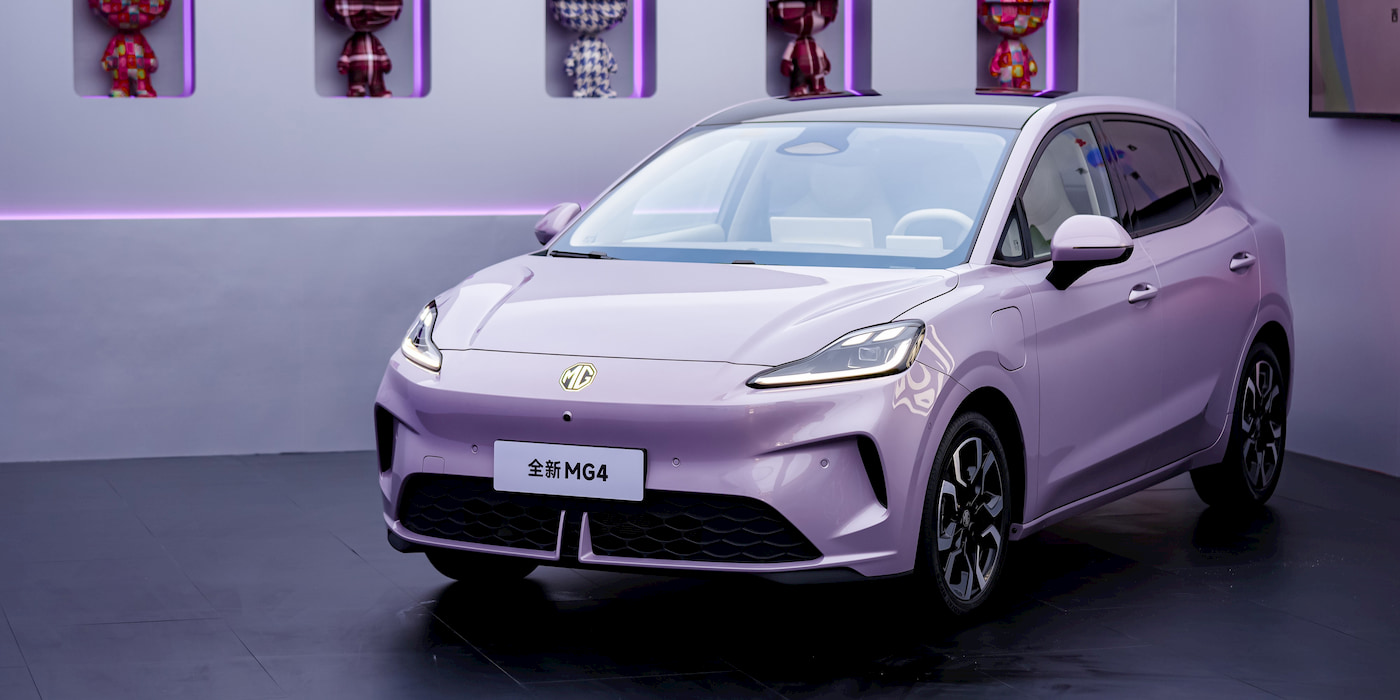
SAIC MG delivered the first MG4 model with a semi-solid-state EV battery in China, starting at under $15,000.
The MG4 is the first EV with a semi-solid-state battery
In August, SAIC MG launched the all-new MG4 at the Chengdu Auto Show, deeming it “the world’s first mass-produced semi-solid-state” electric vehicle.
The new MG4 is available in five different trims: Comfort, Ease, Freedom, Smart, and the semi-solid-state “Secure” edition.
SAIC MG announced on Thursday that it had delivered the first MG4 equipped with the new battery tech. The new MG4 is on sale starting at 68,800 RMB ($9,800), with prices rising to 102,800 yuan ($14,500) for the semi-solid-state battery model.
It’s available with two lithium iron phosphate (LFP) battery sizes: 42.8 kWh or 53.95 kWh. The three lowest-priced trims are equipped with the smaller (42.8 kWh) battery, providing 437 km (271 miles) CLTC driving range, while the Smart version uses the 53.95 kWh battery, delivering 530 km (330 miles) of range.

Meanwhile, the semi-solid-state variant is powered by a 53.95 kWh semi-solid manganese-based lithium-ion battery, delivering 530 km (330 miles) of CLTC range.
All new MG4 models are powered by a single front-mounted “six-in-one” electric motor with 120 kW (161 hp) and 250 Nm torque. Using DC fast charging, it can recharge from 30% to 80% in 20 minutes.
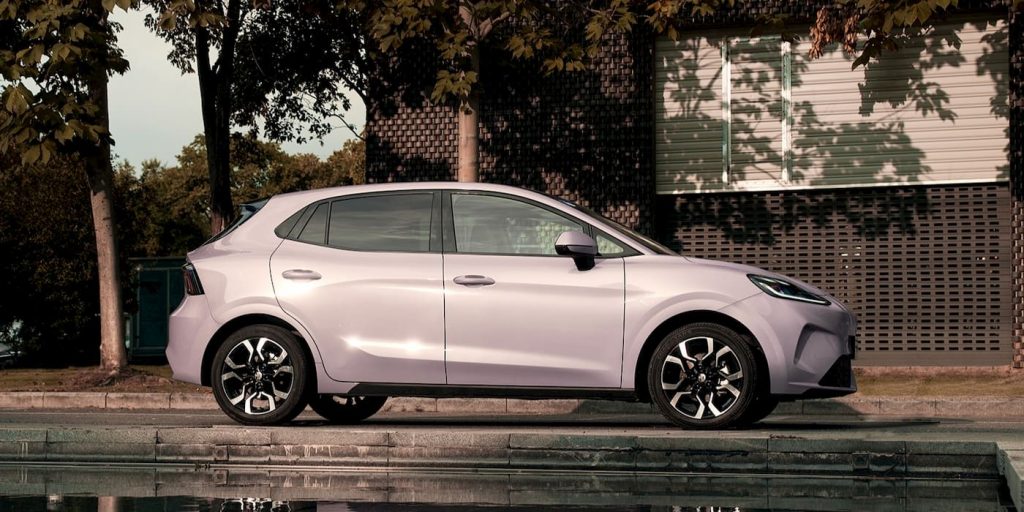
The electric hatch is 4,395 mm long, 1,842 mm wide, and 1,551 mm tall, with a wheelbase of 2,750 mm. That’s about the size of the BYD Dolphin.
Like most Chinese EVs nowadays, the new MG4 is loaded with modern tech and features. The smart cockpit is powered by a Qualcomm Snapdragon 8155 in-car chip.
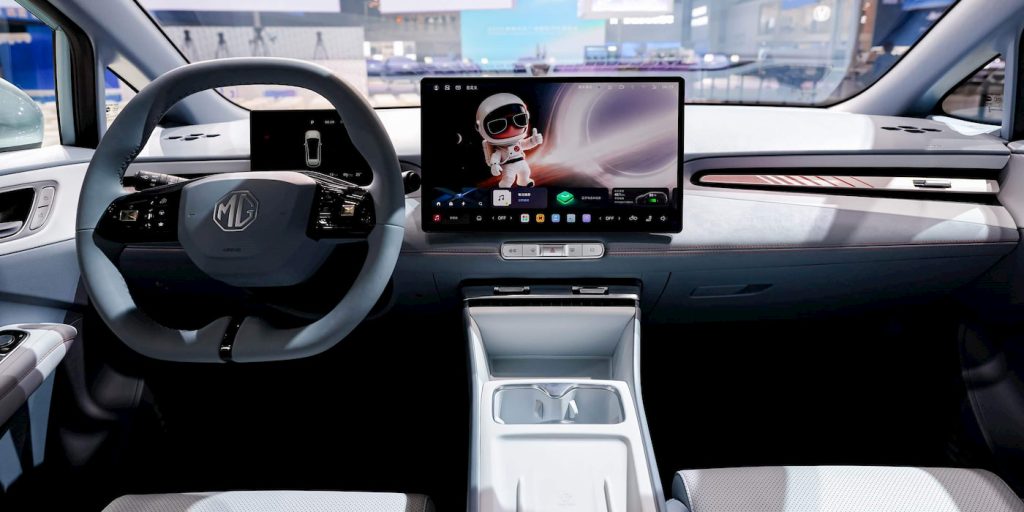
While the three lower-priced trims feature a 12.8″ central infotainment screen, upgrading to the Smart and semi-solid-state models adds a bigger 15.6″ display with 2.5K resolution.
The company said that by reducing the liquid electrolyte content to just 5%, the semi-solid-state EV battery significantly reduces the risk of combustion and improves the cycle life.
In two recent needle penetration tests, the new battery produced no smoke, no fires, and no explosions after two hours. SAIC MG said it was an industry first, exceeding industry standards by 20%.
SAIC MG delivered over 13,000 new MG4 models in November. It’s also the best-selling independent Chinese car brand overseas, A “beacon of Chinese automotive success,” in the EU and British markets, the company said.
Source: CarNewsChina, SAIC MG


FTC: We use income earning auto affiliate links. More.


GM CEO Mary Barra is reportedly considering Sterling Anderson, the former head of Tesla Autopilot and co-founder of Aurora, as her potential successor. But first, she is putting him through a “tough test” in his new role as Chief Product Officer.
We reported back in May that GM hired Anderson as its new Chief Product Officer in a surprising move that put a tech executive in charge of the legacy automaker’s entire vehicle development program.
Anderson is well-known in the EV community. He led the Model X program at Tesla and was the director of the Autopilot program during its formative years (2015-2016). He later left to co-found Aurora Innovation, a self-driving startup that has focused heavily on autonomous trucking.
Now, a new report from Bloomberg states that Barra sees Anderson as a frontrunner to replace her when she eventually steps down.
According to the report, Barra is “gauging” Anderson for the top job by giving him a massive portfolio that serves as a trial by fire. Since joining in June, Anderson has been tasked with overseeing the end-to-end lifecycle of GM’s products, both gas and electric, including the critical integration of hardware and software.
The “test” essentially boils down to whether Anderson can successfully execute Barra’s vision of transforming GM into a tech-first company. This involves untangling the automaker’s software woes and delivering on the promise of “eyes-off” autonomous driving for personal vehicles, a pivot away from the robotaxi-focused strategy of its former Cruise unit.
While Barra, 63, hasn’t announced a retirement date, the pressure is on to find a leader who can navigate the rapid transition to electric and software-defined vehicles. If Anderson passes this “test,” he could become the first outsider with a tech background to lead the 117-year-old automaker.
Electrek’s Take
“Tech background” is not entirely true, but mostly accurate. He has spent a few years at Tesla and then built Aurora; both are in the auto industry, but certainly on the techy side of it. Before that, he spent years at MIT, and the ‘T’ stands for technology.
I’ve only had a few interactions with Sterling, but from what I could tell, he is a smart guy who was among the most realistic about autonomy at Tesla, which is probably why he didn’t last long at the head of the program and went on his own.
He helped build Aurora into a multi-billion-dollar company that is now seen as the leader in autonomous trucking.
GM is starting to build an extensive and impressive EV lineup, but it still has issues committing to high volume due to the political landscape, which, in my opinion, the company itself often lobbied the wrong way.
I think some fresh blood could help.
FTC: We use income earning auto affiliate links. More.


The House of Representatives on Thursday passed a bill aimed at making it easier to get federal permits to build infrastructure for artificial intelligence projects.
The bill, known as the SPEED Act, is backed Big Tech giants such as OpenAI, Micron and Microsoft
The bill cleared the House in a 221-196 vote, overcoming a conservative rebellion that nearly sank the legislation in a procedural vote earlier this week.
The bill now heads to the Senate, where it is likely to be part of a larger conversation around permitting reform.
The SPEED Act’s proponents argue it is critical to help the U.S. outpace China and other global competitors in the race for AI dominance.
“The electricity we will need to power AI computing for civilian and military use is a national imperative,” said Rep. Bruce Westerman, R-Ark., the bill’s sponsor and chair of the House Natural Resources Committee.
The SPEED Act would reform the 1969 National Environmental Policy Act, which mandates federal reviews for projects that would impact the environment.
It would tighten the timelines for NEPA reviews and shrink the statute of limitations for NEPA litigation to 150 days from the current six years.
Permitting reform has drawn bipartisan support recently as clean energy projects supported by Democrats became ensnared in permitting delays.
Pressure has built on Congress to act as AI has emerged as a key sector and power-hungry data centers have placed an increased strain on the electric grid.
The Democratic cosponsor of the bill, Rep. Jared Golden of Maine, said the SPEED Act would allow the U.S. to be “nimble enough to build what we need, when we need it.”
Most Democrats opposed the SPEED Act, however, demanding that any permitting bill overturn President Donald Trump‘s moves to choke renewable energy sources like offshore wind.
Democratic resistance was only compounded after GOP leadership inserted language to exempt Trump’s efforts to block renewables from provisions in the SPEED Act that would limit the White House’s ability to arbitrarily yank permits it does not like.
The amendment was added after a standoff on the House floor during a procedural vote, where conservatives opposed to renewable energy demanded concessions for their votes.
“That provision codifies a broken permitting status quo,” said Rep. Scott Peters, D-Calif., who supports permitting reform but opposed the SPEED Act.
“I look forward to working with my colleagues across the aisle in the Senate to craft a bipartisan product that can become law.”
-
 Sports2 years ago
Story injured on diving stop, exits Red Sox game
-
 Sports3 years ago
‘Storybook stuff’: Inside the night Bryce Harper sent the Phillies to the World Series
-
 Sports2 years ago
Game 1 of WS least-watched in recorded history
-
 Sports3 years ago
Button battles heat exhaustion in NASCAR debut
-
 Sports3 years ago
MLB Rank 2023: Ranking baseball’s top 100 players
-
Sports4 years ago
Team Europe easily wins 4th straight Laver Cup
-
 Environment3 years ago
Japan and South Korea have a lot at stake in a free and open South China Sea
-
 Environment1 year ago
Here are the best electric bikes you can buy at every price level in October 2024