

Elon Musk shut down internal Tesla analysis that showed Robotaxi would lose money

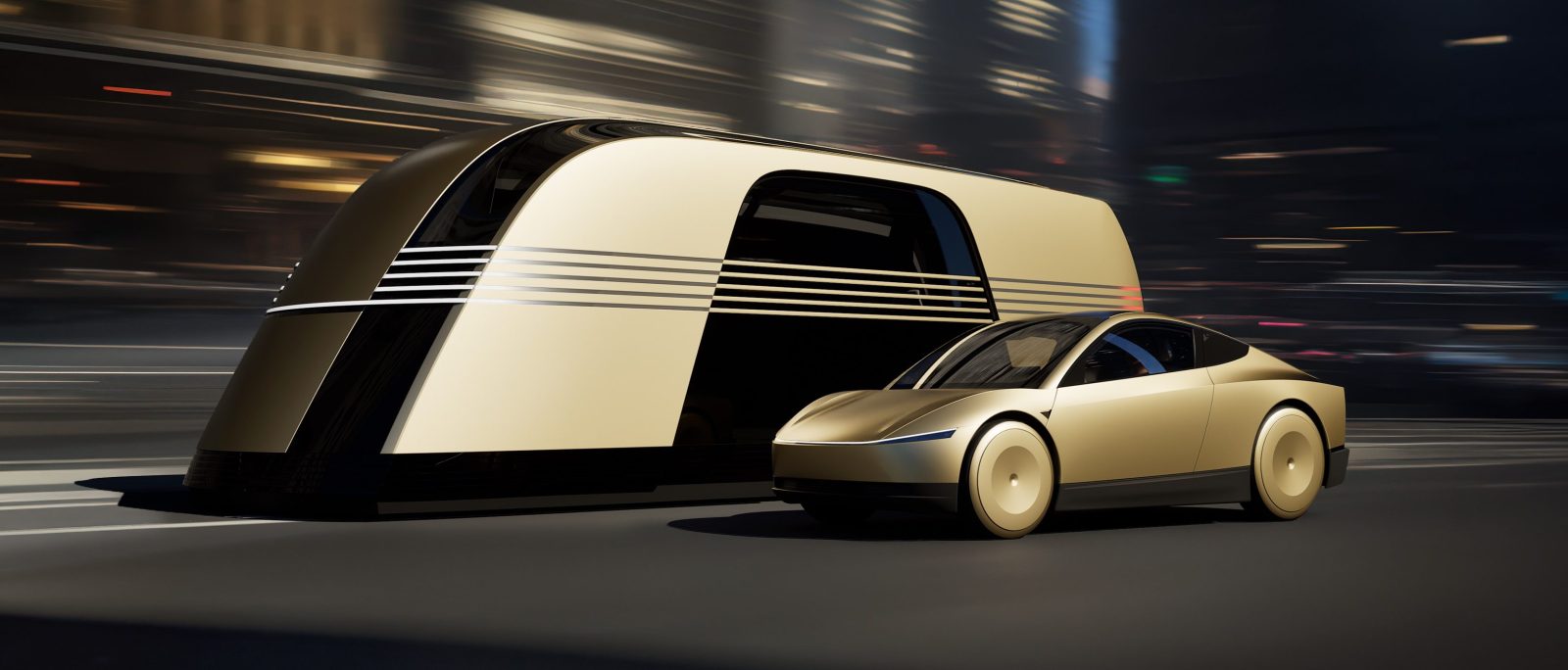
According to a credible new report, Elon Musk has reportedly shut down an internal analysis from Tesla executives that showed the company’s Robotaxi plans would lose money and that it should focus on its more affordable ‘Model 2’.
In early 2024, we reported that Musk had canceled Tesla’s plan for a new affordable electric vehicle built on its upcoming ‘unboxed’ vehicle platform, often referred to as ‘Model 2’ or ‘$25,000 Tesla’.
Instead, Musk pushed for only its new Robotaxi, also known as Cybercab, to be built on the new platform, and replaced the plans for a next-gen affordable EV with building cheaper versions of the Model Y and Model 3 with fewer features.
This decision culminated a long-in-the-making shift at Tesla from an EV automaker to an AI company focusing on self-driving cars.
We credit that shift initiated by Musk for the current slump Tesla finds itself in right now, where it has only launched a single new vehicle in the last 5 years, the Cybertruck, and it’s a total commercial flop.
Now, The Information is out with a new in-depth report based on Tesla insiders that describe the decision-making process around the cancellation of the affordable Tesla and the focus on Robotaxi.
The report describes a meeting at the end of February 2024 when several Tesla executives were pushing Musk to greenlight the $25,000 Tesla:
In the last week of February 2024, after a couple of years of back-and-forth debate on the Model 2, Musk called a meeting of a wide range of executives at Tesla’s offices in Palo Alto, Calif. The proposed $25,000 car was on the agenda—a final chance to air the vehicle’s pros and cons, the people said. Musk’s senior lieutenants argued intensely for the economic logic of producing both the Model 2 and the Robotaxi.
After unveiling its next-generation battery in 2020, Musk announced that Tesla would make a $25,000 EV in 2020, but he had clearly soured on the idea by 2024.
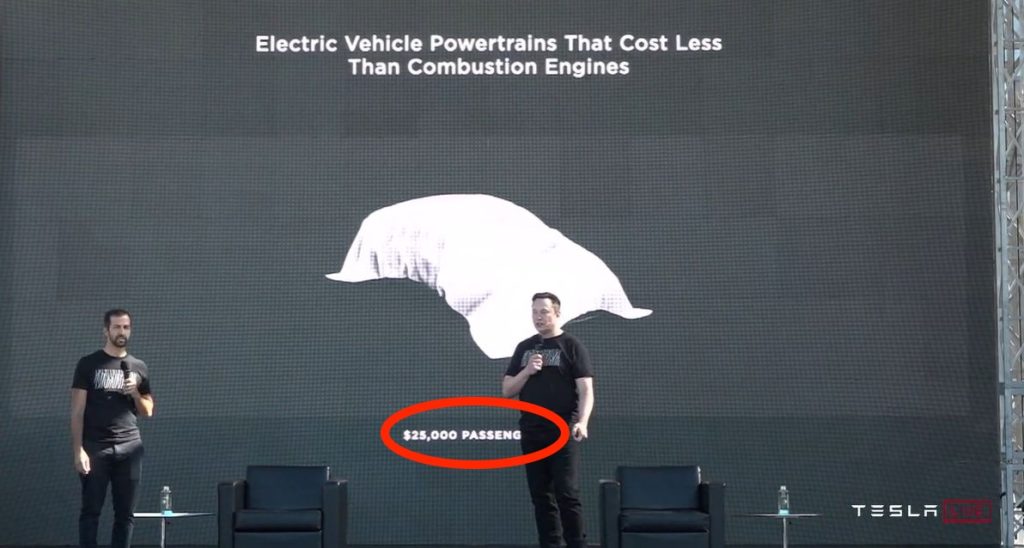
He said in October 2024:
I think having a regular $25,000 model is pointless. Yeah. It would be silly. Like, it’ll be completely at odds with what we believe.
The Information says that Daniel Ho, head of Tesla vehicle programs, Drew Baglino, SVP of engineering, and Rohan Patel, head of business development and policy, Lars Moravy, vice president of vehicle engineering, and Franz von Holzhausen, chief designer, all pushed for Musk to greenlight the production of the new $25,000 model.
Omead Afshar, a Musk loyalist who started out as his chief of staff and now holds a wide-ranging executive role at Tesla, reportedly said, “Is there a mutiny?”
The executives pointed to an internal report that didn’t paint a good picture of Tesla’s Robotaxi plan. The report has credibility as Patel commented on it:
We had lots of modeling that showed the payback around FSD [Full Self Driving] and Robotaxi was going to be slow. It was going to be choppy. It was going to be very, very hard outside of the U.S., given the regulatory environment or lack of regulatory environment.
Musk dismissed the analysis, greenlighted the Cybercab, and killed the $25,000 driveable Tesla vehicle in favor of the Model Y-based cheaper vehicle with fewer features.
The information describes the analysis:
Much of the work was done by analysts working under Baglino, head of power train and one of Musk’s most trusted aides. The calculations began with some simple math and some broad assumptions: Individuals would buy the cars, but a large portion of the sales would go to fleet operators, and the vehicles would mostly be used for ride-sharing. Many people would give up car ownership and use Robotaxis. Tesla would get a cut of each Robotaxi ride.
The analysis followed a lot of Musk’s assumptions, such as that the US car fleet would shrink from 15 million a year to roughly 3 million due to Robotaxis having a 5 times higher utilization rate.
They subtracted people who wouldn’t want to switch to a robotaxi for various reasons, arriving at a potential for 1 million self-driving vehicles a year.
One of the people familiar with the analysis said:
There is ultimately a saturation of people who want to be ferried around in somebody else’s car.
After accounting for competition, Tesla figured it would be hard for robotaxis to replace the ~600,000 vehicles it sells in the US annually.
Tesla calculated that the robotaxis would bring in about $20,000 to $25,000 in revenue at the sale and about three times that from Tesla’s share of the fares it would complete over their lifetimes:
The analysts figured Robotaxis would sell for between $20,000 and $25,000, and that Tesla could make up to three times that over the lifetime of the cars through its cut of fares. They added in capital spending and operational costs, plus services like charging stations and parking depots.
The internal analysis assigned a much lower value to Tesla robotaxis than Musk had previously stated publicly.
In 2019, Musk said:
If we make all cars with FSD package self-driving, as planned, any such Tesla should be worth $100k to $200k, as utility increases from ~12 hours/week to ~60 hours/week.
Furthermore, Tesla’s internal analysis pointed toward difficulties expanding into other markets, which could limit the scale and profitability of the robotaxi program. Ultimately, it predicted that it could lose money for years.
Electrek’s Take
For years, this has been one of my biggest concerns about Tesla: Musk surrounding himself with yesmen and not listening to others.
This looks like a perfect example. It was a terrible decision fueled by Musk’s belief that he was smarter than anyone in the room and encouraged by sycophants like Afshar.
Musk has been selling Tesla shareholders on a perfect robotaxi future, but the truth is not as rosy, and that’s if they solve self-driving ahead of the competition, which is a big if.
It’s not new for the CEO to make outlandish growth promises, but it’s another thing to do at the detriment of an already profitable and fast-growing auto business.
The report also supports our suspicions that the shift in strategy contributed to some of Tesla’s talent exodus last year.
FTC: We use income earning auto affiliate links. More.

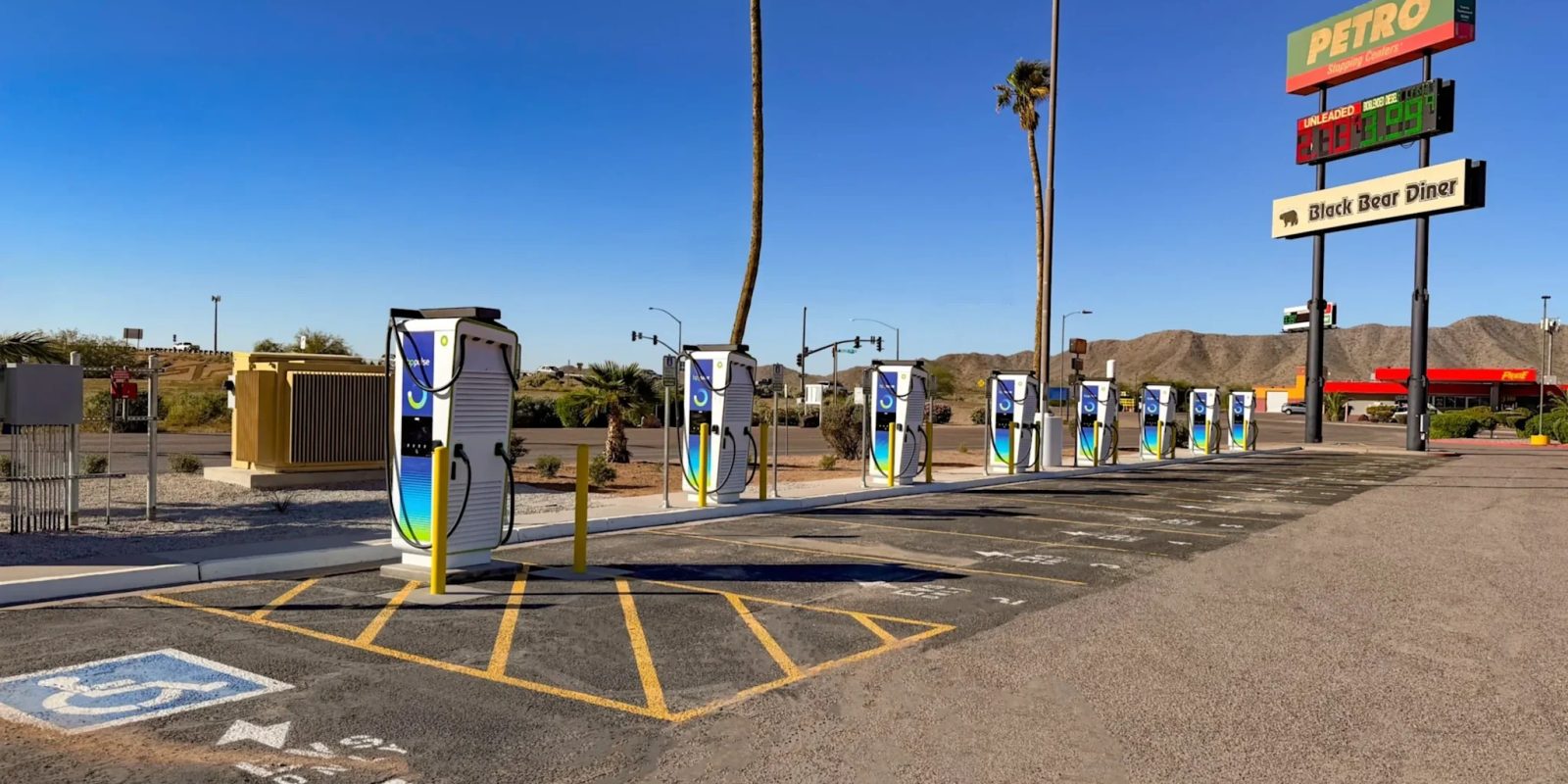
bp pulse is continuing to roll out public DC fast charging across the US, and the company has opened its first-ever site in Arizona, along with new fast-charging locations in Texas, Florida, and Ohio.
In Arizona, bp pulse’s first site is now online at the Petro Travel Center in Eloy, just off Interstate 10 at Exit 200 (pictured). The location features 16 charging bays delivering up to 400 kilowatts, with both CCS and NACS connectors available. While charging, drivers can take advantage of the travel center’s onsite diner, convenience store, ATM, barber shop, and restrooms.
In South Florida, bp pulse’s new fast-charging site is at 2400 Miami Road in Fort Lauderdale, about three miles from Fort Lauderdale–Hollywood International Airport. The site features 16 charging bays, offering a mix of 150 kW and 400 kW speeds, with both CCS and NACS connectors. Its proximity to the airport makes it a handy stop for ride-hail drivers, EV rental returns, and airport pickups and drop-offs, with hotels, restaurants, and convenience stores nearby.
Texas is also getting more high-power charging, with a new bp pulse site at the Petro Travel Center in El Paso, located off Interstate 10 at Exit 37. This location offers 12 charging bays capable of delivering up to 400 kW, again with both CCS and NACS connectors. Drivers can take advantage of the diner, convenience store, barber shop, and restrooms while they charge.
In Ohio, bp pulse has opened a smaller but still high-powered site at a TravelCenters of America location in Hebron, just off Interstate 70 at Exit 126. The site includes six 400 kW charging bays with CCS and NACS connectors, along with access to a convenience store, fast-food options, and restrooms.
These openings are part of bp pulse’s broader plan to build out EV charging across bp’s retail footprint, including bp, Amoco, ampm, Thorntons, and TravelCenters of America locations. Many of those sites are designed to combine fast charging with food, restrooms, and other travel amenities. bp has also said it plans to begin adding EV chargers at Waffle House locations starting in 2026.
Read more: bp pulse opens a huge airport EV fast charging hub in Houston
If you’re looking to replace your old HVAC equipment, it’s always a good idea to get quotes from a few installers. To make sure you’re finding a trusted, reliable HVAC installer near you that offers competitive pricing on heat pumps, check out EnergySage. EnergySage is a free service that makes it easy for you to get a heat pump. They have pre-vetted heat pump installers competing for your business, ensuring you get high quality solutions. Plus, it’s free to use!
Your personalized heat pump quotes are easy to compare online and you’ll get access to unbiased Energy Advisors to help you every step of the way. Get started here. – *ad


FTC: We use income earning auto affiliate links. More.

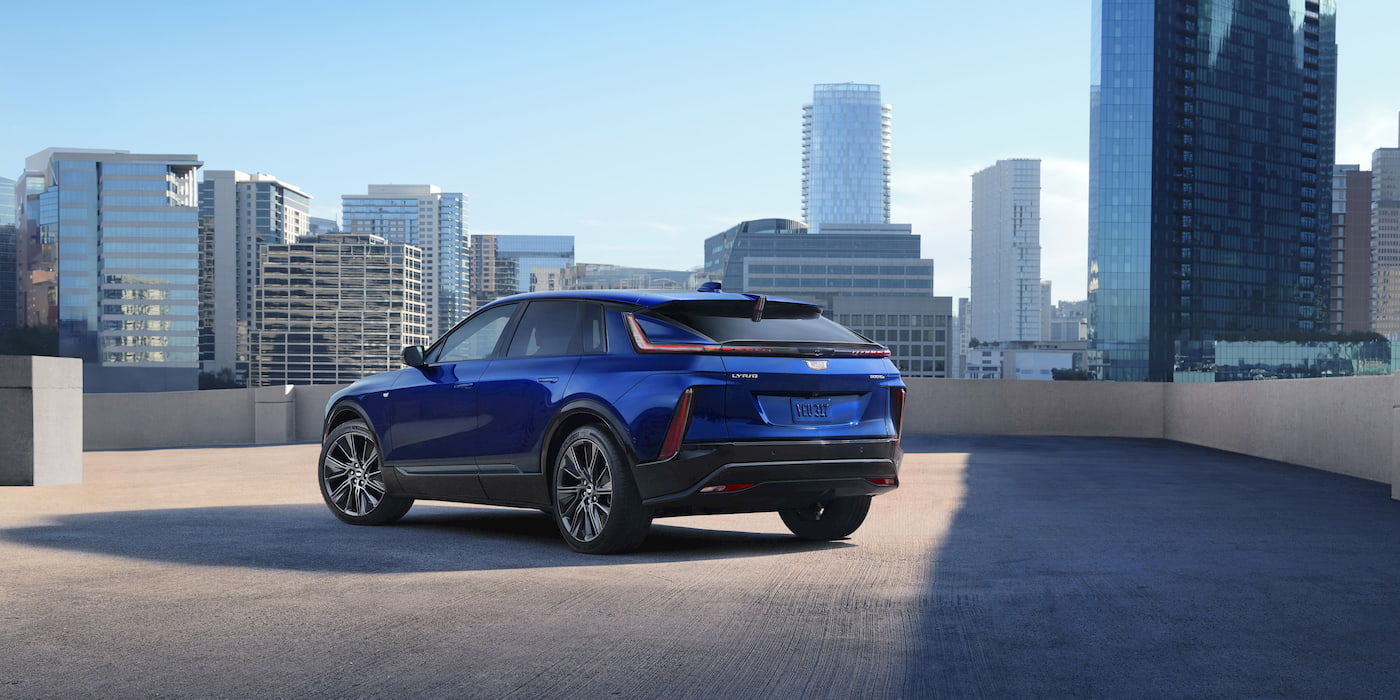
The Cadillac Lyriq and Chevy Blazer EV were among the vehicles that saw the biggest lease price drops in December.
Cadillac and Chevy EV lease prices drop in December
With the $7,500 federal EV tax credit now gone, automakers are filling the gap with their own incentives. Some are passing on the savings as bonus cash, conquest cash, lease discounts, and more.
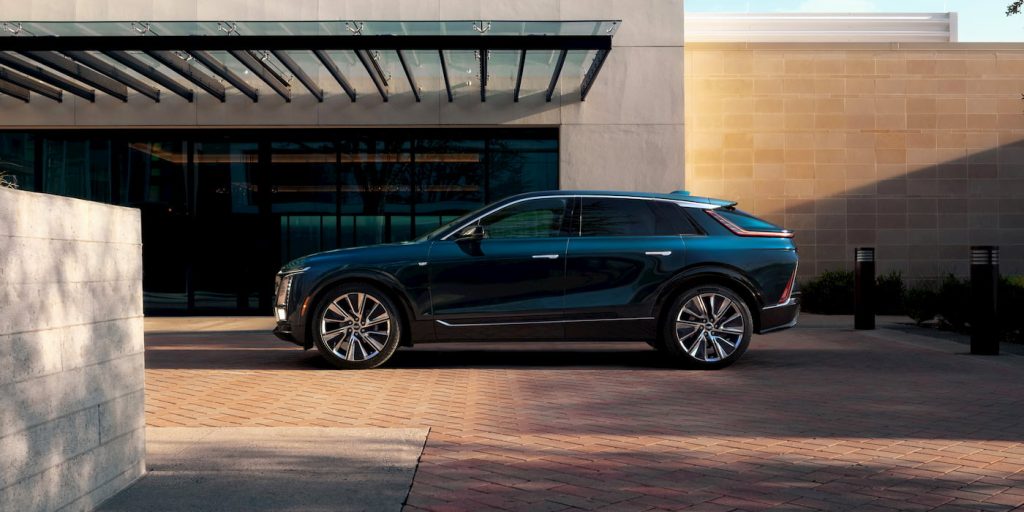
Two General Motors electric SUVs, the Chevy Blazer EV and the Cadillac Lyriq, had some of the largest lease price drops of any vehicle in December.
The 2026 Cadillac Lyriq AWD Luxury model is now listed at $439 per month for 24 months. With $4,979 due at signing, the effective rate is $646, or $28 less per month than in November.
That’s after the Lyriq already saw prices drop by $115 a month from October. However, the December deal includes a $2,000 competitive bonus for owners and lessees of a 2011 model year or newer non-GM vehicle.
The 2026 Chevy Blazer EV FWD LT is now available to lease for as low as $319 a month for 24 months. With $6,039 due at signing, the effective rate is $571 per month, about $60 less than in November. The deal includes a $750 competitive bonus and $1,000 customer cash allowance.
Chevy and Cadillac are offering discounts across their entire EV lineup. All 2025 Chevy electric vehicles, including the Blazer EV, Equinox EV, and Silverado EV, are available with 0% APR financing for 60 months.


Intestingly, the 2026 Chevy Equinox EV is also available with 0% APR financing, while the 2026 Blazer EV is listed with 1.9% APR for 36 months.
Cadillac is offering a $2,000 conquest or loyalty bonus for the 2026 Cadillac Vistiq and select 2025/2026 Optiq and Lyriq models, plus 2.9% APR for 60 months.
The 2026 Cadillac Optiq is available to lease for as low as $319 per month for 24 months, while the 2026 Vistiq is available to lease for $619 per month for 24 months.
Want to try one out? We’ve got you covered. Check out the links below to see what Cadillac and Chevy EVs are nearby.
FTC: We use income earning auto affiliate links. More.

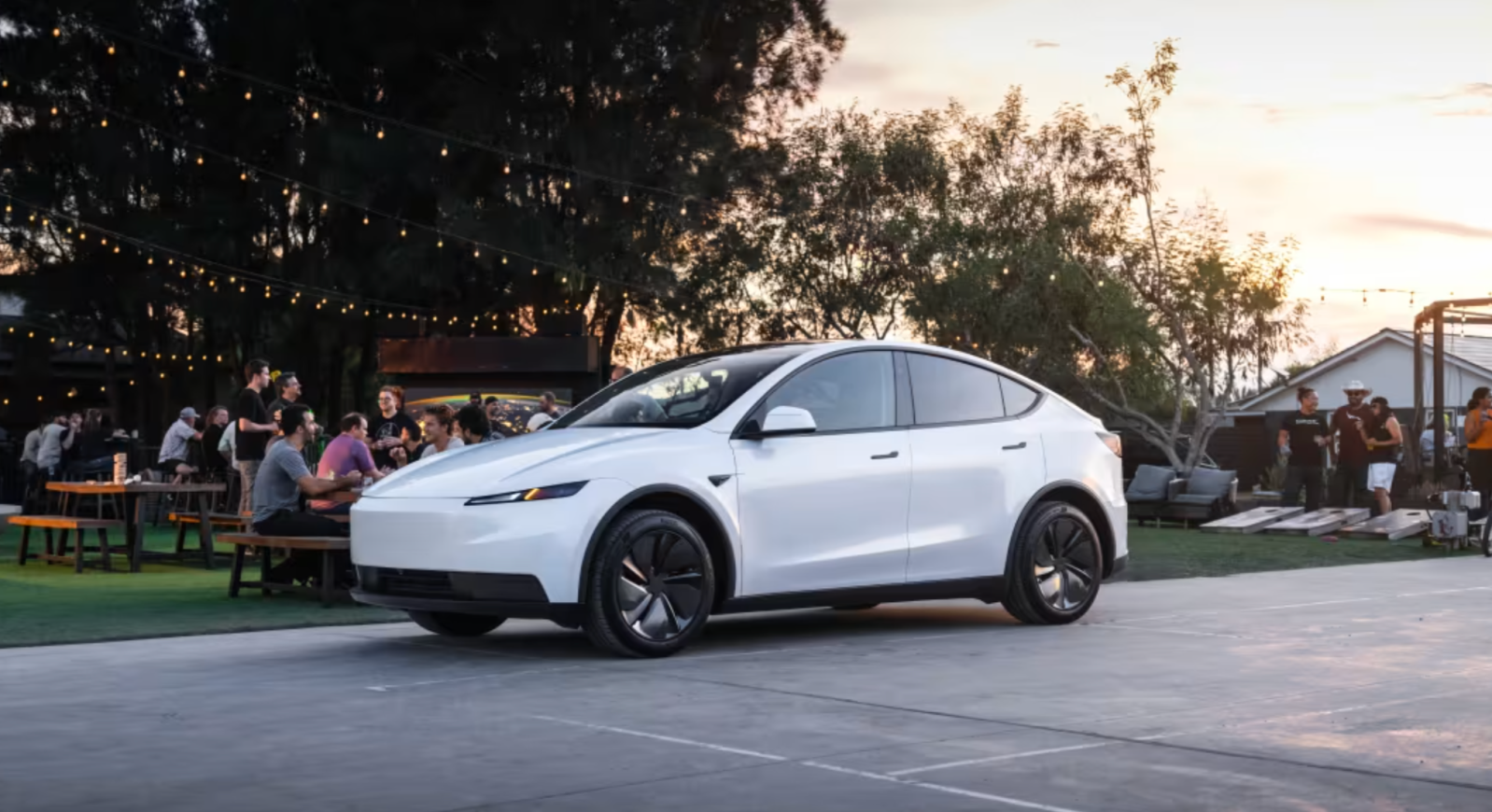
Electric vehicle prices edged lower and incentives jumped in November, but the month still saw a sales slowdown as the US EV market continues to hunt for a new normal.
Initial estimates from Kelley Blue Book show that EV sales came in at just over 70,000 units in November, more than 40% lower than a year ago and about 5% below October’s level.
The average transaction price (ATP) for a new EV in November was $58,638. That’s up 3.7% year-over-year but down 0.8% from October. Incentives told a different story: Discounts averaged 13.3% of ATP, which is lower than in November 2024 but jumped 20.1% compared to October.
Tesla continued to feel the pressure. The automaker’s ATP was $54,310 in November – down 1.7% from the same period a year ago but up 1.5% month-over-month. Sales declined for the second straight month and were down 22.7% year-over-year, mainly because of a drop in Model 3 demand.
Model 3 sales slid 42.1% compared to November 2024 and fell 11.9% from October. Meanwhile, the Model Y, still the best‑selling EV in the US, saw prices increase 0.9% year-over-year and month-over-month. Model Y sales were slightly lower than last November, down 0.5%, but rose 2.5% compared to October.
The Tesla Cybertruck showed signs of cooling. Once the best‑selling vehicle priced above $100,000, Cybertruck sales fell to 1,194 units in November, the lowest monthly total of 2025 so far. Its average price was $94,254, higher both year-over-year and compared to October.
Taken together, the numbers paint a picture of an EV market in transition: prices are easing, incentives are rising, but buyers are still holding back as the industry tries to settle into its next phase.
Cox Automotive executive analyst Erin Keating said, “It’s important to remember that the KBB ATP is a measure of what is bought, not what is available. Nearly half of new-vehicle buyers are over the age of 55 and in their peak earning years. These buyers are more likely shopping for a high-end SUV, not something cheap and cheerful. In November, the over-$75,000 price point saw more volume than under-$30,000.”
Read more: October EV sales slid, but deals and rebates are still in play

If you’re looking to replace your old HVAC equipment, it’s always a good idea to get quotes from a few installers. To make sure you’re finding a trusted, reliable HVAC installer near you that offers competitive pricing on heat pumps, check out EnergySage. EnergySage is a free service that makes it easy for you to get a heat pump. They have pre-vetted heat pump installers competing for your business, ensuring you get high quality solutions. Plus, it’s free to use!
Your personalized heat pump quotes are easy to compare online and you’ll get access to unbiased Energy Advisors to help you every step of the way. Get started here. – *ad
FTC: We use income earning auto affiliate links. More.
-
 Sports2 years ago
Story injured on diving stop, exits Red Sox game
-
 Sports3 years ago
‘Storybook stuff’: Inside the night Bryce Harper sent the Phillies to the World Series
-
 Sports2 years ago
Game 1 of WS least-watched in recorded history
-
 Sports3 years ago
Button battles heat exhaustion in NASCAR debut
-
 Sports3 years ago
MLB Rank 2023: Ranking baseball’s top 100 players
-
Sports4 years ago
Team Europe easily wins 4th straight Laver Cup
-
 Environment3 years ago
Japan and South Korea have a lot at stake in a free and open South China Sea
-
 Environment1 year ago
Here are the best electric bikes you can buy at every price level in October 2024