
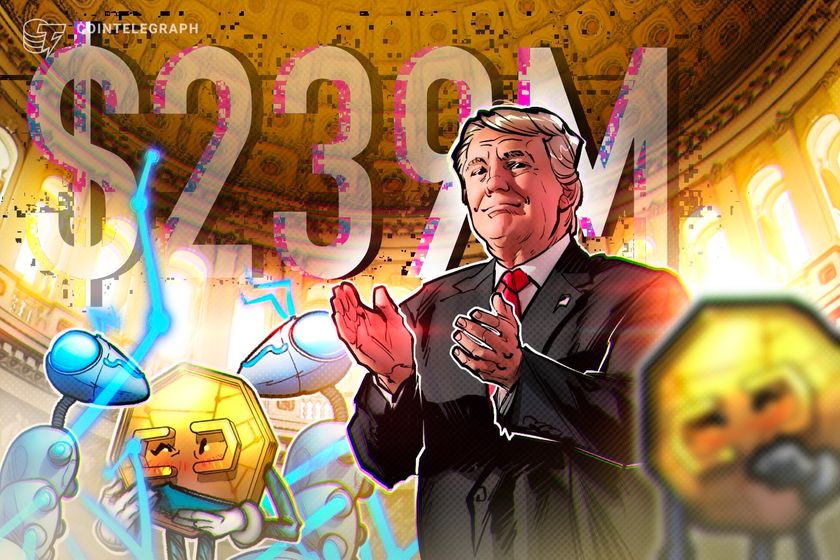
Consensys, Solana, and Uniswap CEO donated to Trump’s $239M inauguration fund

New filings from the Federal Election Commission (FEC) reveal that several cryptocurrency firms and their executives made significant contributions to US President Donald Trump’s inauguration fund after the results of the 2024 election.
According to FEC filings made public on April 20 by the Trump-Vance Inaugural Committee, Uniswap CEO Hayden Adams donated more than $245,000, Solana Labs donated $1 million, and software firm Consensys sent $100,000 in January 2025 to support the then-president-elect’s inauguration. Many major crypto firms had previously announced their support of Trump through donations to the inaugural fund, including Coinbase, Ripple Labs, Kraken, Ondo Finance, and Robinhood.

Altogether, the fund reported more than $239 million in net donations between Nov. 15 and April 20 from companies and individuals. These included $1 million from McDonald’s, $1 million from Meta, $1 million from Apple CEO Tim Cook, $1 million from OpenAI CEO Sam Altman, and various contributions from Delta Air Lines, ExxonMobil, FedEx, Nvidia, PayPal, Target, and Coca-Cola.
Since Trump took office on Jan. 20 and appointed Mark Uyeda as acting chair of the US Securities and Exchange Commission (SEC), the agency has dropped multiple investigations and enforcement actions against crypto firms, including those that donated to the president’s 2024 campaign or inauguration fund. In February, Uniswap reported that the SEC had dropped its probe into the firm, and Consensys founder Joseph Lubin said the agency had agreed to end a separate lawsuit.
Memecoins, stablecoin issuers, and future elections
Trump’s memecoin, launched on Jan. 17 on the Solana blockchain — along with his wife Melania’s, which was available a few days later — has many in the crypto industry and the US government questioning the president about conflicts of interest by capitalizing on his position. The president’s family is also behind the launch of World Liberty Financial, a crypto firm responsible for a US dollar-pegged stablecoin at a time when lawmakers are considering legislation to regulate the technology.
In addition to the Consensys case, the SEC said it intended to drop enforcement actions or investigations into Ripple, Kraken, Robinhood and Coinbase. The three firms donated a combined $9 million to the inauguration fund.
Related: Trump’s next crypto play will be Monopoly-style game — Report
The 2024 US election cycle saw crypto-backed political action committees (PACs) spending more than $131 million to influence races in crucial congressional districts. The Fairshake PAC has already said it had more than $100 million available, in part from contributions from Coinbase and Ripple, to spend on the 2026 midterms.
Magazine: Trump’s crypto ventures raise conflict of interest, insider trading questions
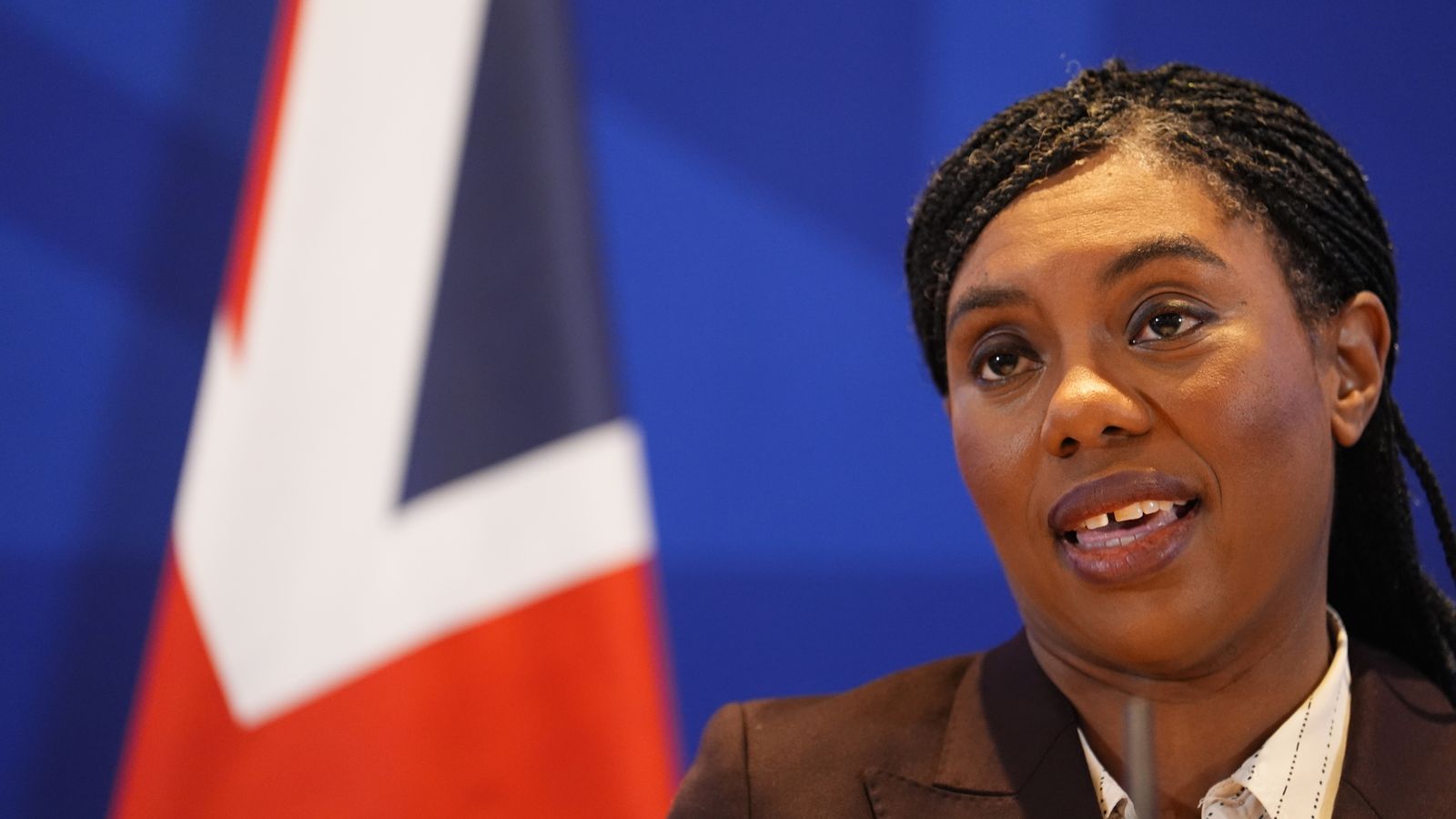
Kemi Badenoch has refused to say that the Conservatives are intending to win next May’s local elections, despite being repeatedly pushed on the issue.
Asked twice to define success for her party at the elections, the Tory leader merely said that she is “going to be fighting for every vote”.
Speaking to Sky News, she added: “Success is going to be people seeing the Conservative Party as the only party that is competent and credible enough to do the tough stuff that this country needs.”
The comments come as the Conservatives continue to trail in the polls.
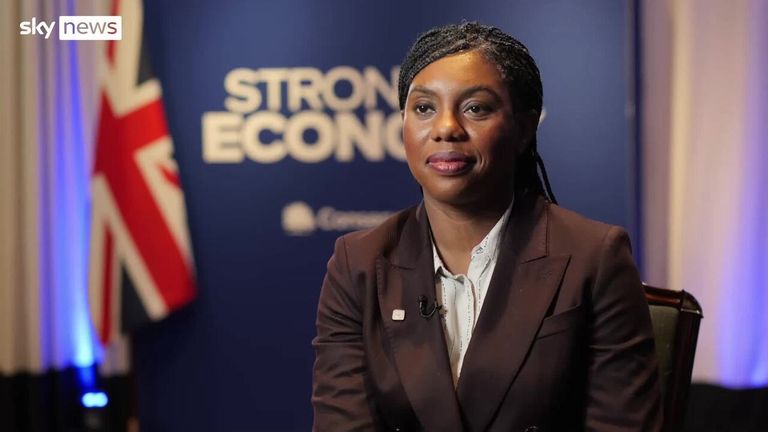
Watch Kemi Badenoch’s interview with Sky News in full
New data released by YouGov this morning has put the Tories in third place behind Reform and Labour, a space they have largely occupied throughout the year. The pollster’s weekly voting intention analysis put Ms Badenoch’s party on 18%, down one percentage point.
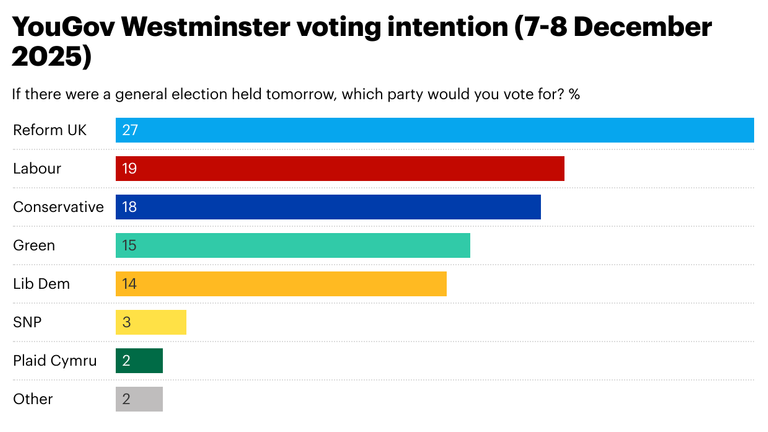
YouGov’s weekly voting intention poll has the Tories down one percent on last week, and just three above the Greens. Pic: YouGov
Ms Badenoch gave a speech on welfare costs in London on Tuesday, where she attacked the government’s plans to tackle child poverty. Afterwards, she sat down with Sky News political correspondent Sam Coates.
Asked about the local elections, she said: “There are going to be local elections all over the country, and there’s a conservative message that I want everyone to hear: Our country’s not working properly.
“There are fundamental things that need to change. We need to create jobs. Otherwise, we’re not going to have money for councils.”
She added: “We’ve seen new parties like Reform come in. They’re making a hash of things at council level. We need to make sure that people can see the benefits of voting Conservative.”
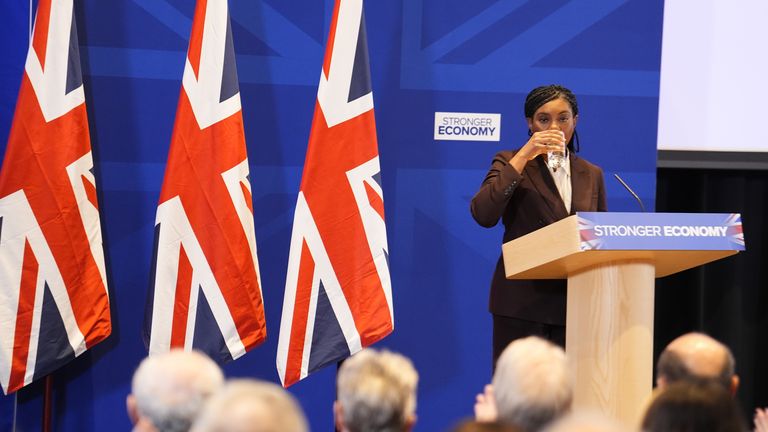
Ms Badenoch also refused to score her party’s performance out of 10. Pic: PA
When it was pointed out that she had not defined success as winning the local elections, Ms Badenoch said: “The country is going to decide. We’re going to put out an offer, and we’re going to fight for every vote.”
May will see local council elections, as well as votes for the Senedd in Wales and the Scottish Parliament. They are seen as a crucial moment for the Tory leader – and also for Prime Minister Sir Keir Starmer.
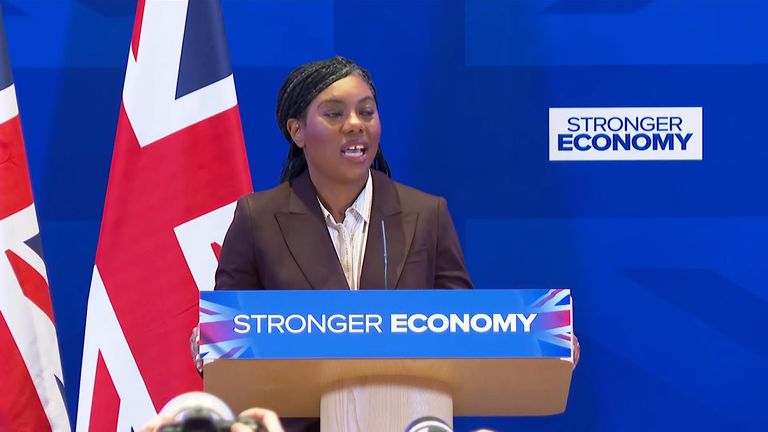
‘Of course poverty bothers me’
Ms Badenoch also refused to score the party’s performance out of 10, as the year draws to a close, and she marks a little over 12 months as leader.
She told Sky News: “When I look at the historic defeats which Conservatives suffered last year, things are definitely better.”
Read more:
Tory-Reform pact ‘not happening’
Badenoch dismisses Reeves’s ‘mansplaining’ claim
Challenged on the Tories’ position in the polls, Ms Badenoch said: “Of course, we have a mountain to climb.
“We lost more seats [in 2024] than we’ve ever done in our 200-year history. This was always going to be a long road ahead.”

Wyoming Senator Cynthia Lummis, a member of the US Senate Banking Committee and one of the most prominent proponents for addressing digital asset market structure in Congress, said she wants to take the next step in advancing the bill sometime next week.
Speaking at the Blockchain Association Policy Summit on Tuesday, Lummis said she anticipated that the markup hearing for the Responsible Financial Innovation Act — the Banking Committee’s version of market structure — would happen before Congress broke for the holidays.
The senator said the crypto industry “was getting a little concerned” about the progress of the bill, adding that drafts were “changed so much every few days” during bipartisan discussions.
“Our staffs are exhausted,” said Lummis, referring to her and Senator Kirsten Gillibrand’s teams. “I think that we’re to the point where it’s better to go ahead with a product and mark it up next week and then give everybody a break over the Christmas break to catch their breath.”

She added:
“My goal […] is to share a draft at the end of this week that is our best efforts [sic] to date and let industry vet it, let Republicans and Democrats vet it, and then go to markup next week.”
A markup hearing involves lawmakers considering amendments and changes before a bill is sent to the Senate for a vote.
Although the banking committee released a discussion draft of the market structure bill in July, after the Digital Asset Market Clarity Act passed the US House of Representatives, progress was slowed by the longest government shutdown in the country’s history and reports of pushback from some lawmakers over DeFi provisions in the bill.
Related: How market structure votes could influence 2026 crypto voters
A Monday report from Politico signaled that bipartisan negotiations over market structure were proceeding with plans for a markup in December. Lummis said in September that she expected the bill to be signed into law by 2026.
However, it’s unclear whether Republicans’ timeline will pan out. Even if senators were to proceed with a markup, other obstacles — such as partisan pushback — could lengthen the time for a vote.
What will a US market structure bill mean for the crypto industry?
Although the bill has yet to work its way through the Senate Banking Committee and Senate Agriculture Committee, many in the crypto industry have been championing Congress’ efforts to advance the legislation, citing clarity and benefits to the market.
“More and more finance will move onchain under the leadership of [SEC Chair Paul Atkins] once a market structure is passed into law by Congress,” said Coinbase chief legal officer Paul Grewal on Wednesday. “Our leaders need to align on the last details in the bill without delay […].”
Although the final version of the bill to be considered by the US Senate was not public at the time of publication, previously released drafts indicated that it would grant the Commodity Futures Trading Commission more authority over digital assets. This would represent a significant change from the Securities and Exchange Commission essentially handling regulation and enforcement.
Magazine: When privacy and AML laws conflict: Crypto projects’ impossible choice

Major tokenization platform Securitize has doubled down on its push to bring tokenized equity to US investors, naming a former PayPal executive as its new general counsel.
Securitize on Tuesday announced the appointment of ex-PayPal executive Jerome Roche, who led the company’s expansion into digital asset projects, including the PayPal USD (PYUSD) stablecoin.
Securitize also said its tokenized securities are already available to US investors, challenging the notion that most issuers prefer to offer such products abroad due to local stock access.
“There’s been a perception that tokenized securities must be offered primarily outside the US, but our experience shows the opposite,” Securitize CEO Carlos Domingo told Cointelegraph.
“Clear regulatory path” for tokenized stocks in the US
According to Securitize, operating real-world asset (RWA) tokenization offerings inside the US regulatory perimeter is “not only possible, but scalable, at institutional quality.”
“We’ve demonstrated that there is a clear regulatory path for issuers to natively tokenize assets for US investors,” Domingo said.
“These are not synthetic representations, or derivatives, but real securities onchain,” the CEO said, adding:
“We operate using SEC-regulated infrastructure, including a registered transfer agent broker-dealer, and fund admin, which allows US investors to access and legally hold tokenized securities in a fully compliant framework.”
Securitize’s optimistic outlook on the US tokenization comes days after the platform obtained regulatory approval to operate as an investment company and a trading ánd settlement system in the European Union on Nov. 26. According to the company, the approval positioned it as one of the first operators for regulated digital securities infrastructure in both the US and EU.

“For the first time, modern ledger technology is giving us the ability to record ownership, settle transactions, and move value in ways that are fundamentally better than the fragmented systems we’ve inherited,” Securitize’s newly appointed general counsel, Roche, said in the announcement.
“Innovation only works when it fits squarely within the guardrails of applicable law,” he added, underscoring Securitize’s global push for regulated tokenized securities.
Related: US Treasurys lead tokenization wave as CoinShares predicts 2026 growth
Securitize’s news is another sign of the US warming to tokenization. On Monday, the Securities and Exchange Commission dropped its investigation into rival tokenization platform Ondo Finance.
Ondo said the decision marks a new chapter for tokenized securities in the US, where they are poised to become a “core part of the capital markets.”
Magazine: When privacy and AML laws conflict: Crypto projects’ impossible choice
-
 Sports2 years ago
Story injured on diving stop, exits Red Sox game
-
 Sports3 years ago
‘Storybook stuff’: Inside the night Bryce Harper sent the Phillies to the World Series
-
 Sports2 years ago
Game 1 of WS least-watched in recorded history
-
 Sports3 years ago
Button battles heat exhaustion in NASCAR debut
-
 Sports3 years ago
MLB Rank 2023: Ranking baseball’s top 100 players
-
Sports4 years ago
Team Europe easily wins 4th straight Laver Cup
-
 Environment3 years ago
Japan and South Korea have a lot at stake in a free and open South China Sea
-
 Environment1 year ago
Here are the best electric bikes you can buy at every price level in October 2024