
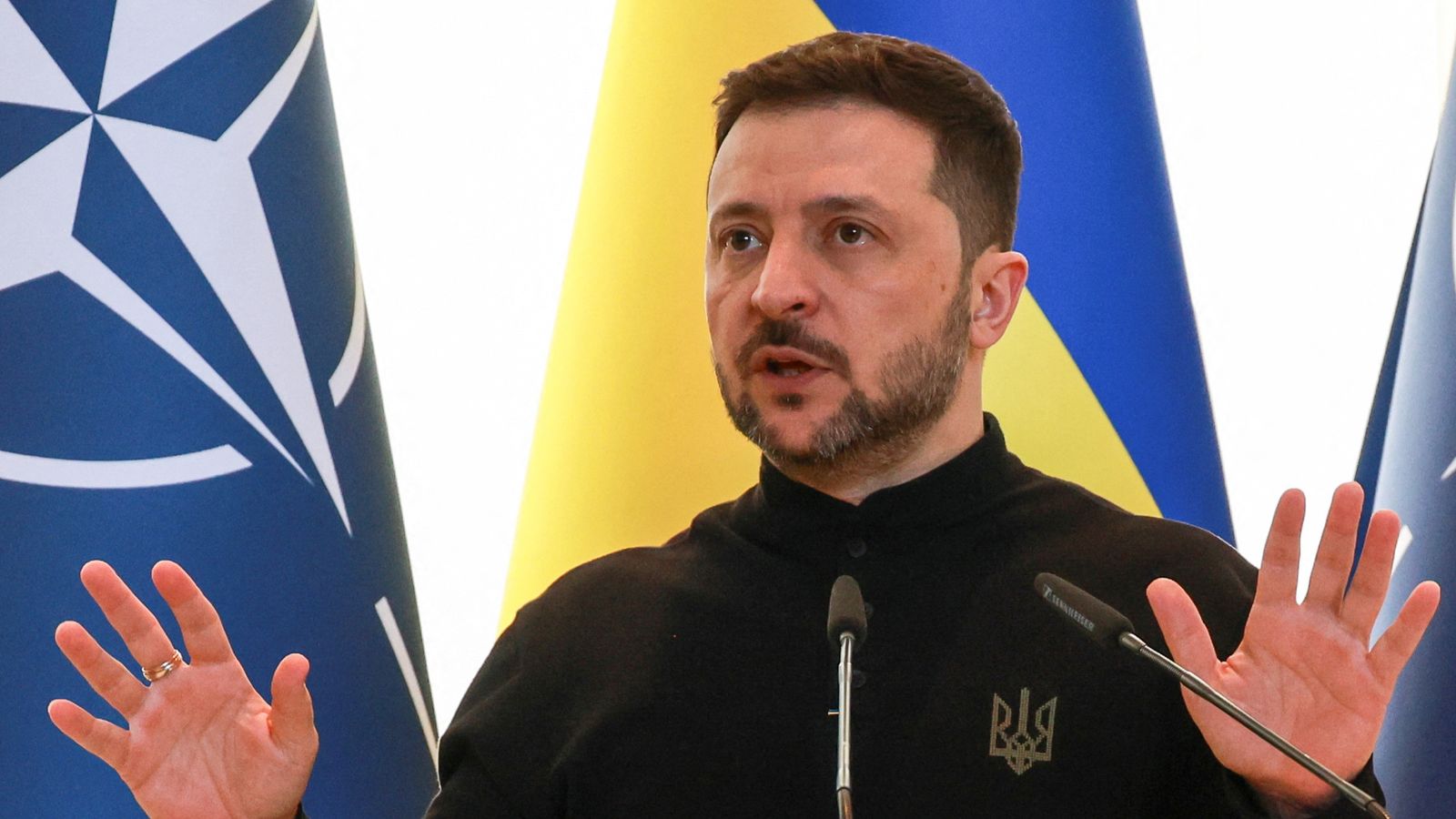
Starmer and Zelenskyy discuss ending Russia’s ‘brutal war’ – as Putin says says he is open to bilateral talks on longer ceasefire

Sir Keir Starmer and Volodymyr Zelenskyy spoke about ending Russia’s “brutal war” on Ukraine in their latest phone call on Easter Monday, as Vladimir Putin said he was open to bilateral talks.
The prime minister and Ukrainian president spoke on Monday afternoon, when Sir Keir “reiterated his iron-clad support for Ukraine“.
A Downing Street spokesperson added that the prime minister “said that the UK supports Ukraine’s calls for Russia to commit to a full ceasefire and that now is the time for Putin to show he is serious about ending his brutal war”.
“They discussed the latest developments on the Coalition of the Willing, and looked forward to further progress towards a just and lasting peace,” the spokesperson added.
Mr Zelenskyy later said on social media that he had a “good and detailed conversation” with the prime minister, and added Ukrainian officials will be in London for talks on ending the war with Russia on Wednesday.
“We are ready to move forward as constructively as possible, just as we have done before, to achieve an unconditional ceasefire, followed by the establishment of a real and lasting peace,” he added.
The Ukrainian president added that the 30-hour Easter truce, which both Kyiv and Moscow accuse the other of violating, showed that Russia “are prolonging the war”.
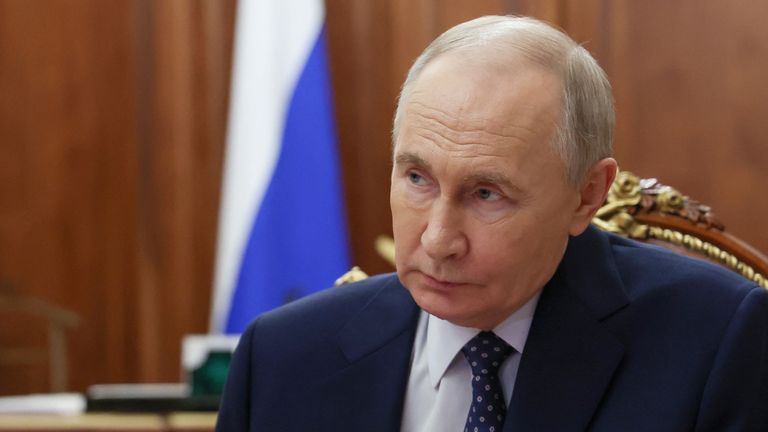
It comes as Mr Putin proposed bilateral talks with Ukraine on a longer ceasefire, which would mark the first time Russia held such talks since a failed peace deal soon after the invasion in 2022.
Speaking to a state TV reporter, the Russian president said: “We always have a positive attitude towards a truce, which is why we came up with such an initiative (the Easter truce), especially since we are talking about the bright Easter days.”
When asked about Mr Zelenskyy’s calls to extend the 30-hour ceasefire into a 30-day pause on civilian targets, he added: “This is all a subject for careful study, perhaps even bilaterally. We do not rule this out.”
The Ukrainian president said on Sunday evening that the Russian army had “violated Putin’s ceasefire more than 2,000 times” during the day, and accused Russia of “failing” to “uphold its own promise of a ceasefire”.
From Saturday: Why Putin offered an Easter truce?
It also comes after Donald Trump has said he hopes Russia and Ukraine “will make a deal this week,” after he and his secretary of state Marco Rubio warned that the US will walk away from efforts to broker a peace deal unless there are clear signs of progress soon.
The US president said on his Truth Social platform that both countries would “start to do big business” with the US after ending the war.
Read more from Sky News:
Murder arrest after woman stabbed to death
Who could be the next pope?
Last month, Ukraine accepted Mr Trump’s proposal for a 30-day truce, but Mr Putin refused to back a full 30-day ceasefire, saying crucial issues of verification had not been sorted out.
He then said he would agree not to target Ukraine’s energy infrastructure. However, both sides have accused each other of breaking the moratorium on attacks on energy targets and at sea.


Representatives of the Bitcoin Policy Institute (BPI), a nonprofit Bitcoin advocacy organization, warned that US lawmakers have not included a de minimis tax exemption for Bitcoin transactions below a certain threshold.
“De Minimis tax legislation may be limited to only stablecoins, leaving everyday Bitcoin transactions without an exemption,” Conner Brown, BPI’s head of strategy, said on X, adding that the decision to exclude Bitcoin (BTC) is a “severe mistake.”
In July, Wyoming Senator Cynthia Lummis introduced a bill proposing a de minimis tax exemption for crypto transactions of $300 or less, with a $5,000 annual limit on tax-free transactions and sales.
The bill proposal also included tax exemptions for digital assets used for charitable donations and tax deferment for crypto earned through mining proof-of-work (PoW) protocols or staking to secure blockchain networks.
Allowing a tax exemption for small Bitcoin transactions would increase its use as a medium of exchange rather than just as a store of value asset, allowing a new financial system built on a Bitcoin standard, BTC advocates say.
The discussion around de minimis tax exemptions has also raised questions about whether such relief should apply to stablecoins, which are designed to maintain a stable value.
“Why would you even need a De Minimis tax exemption for stablecoins,” Marty Bent, founder of media company Truth for The Commoner (TFTC), wrote on X. “They don’t change in value. This is nonsensical.”
Cointelegraph reached out to BPI about the proposed legislation, but had not received a response at time of publication.
Related: Japan’s new crypto tax could wake ‘sleeping giant’ of retail investors
Bitcoin is gaining value, but it isn’t being used as peer-to-peer electronic cash
The Bitcoin white paper, authored by its pseudonymous creator Satoshi Nakamoto in 2019, describes Bitcoin as a “peer-to-peer electronic cash system.”
However, relatively high transaction fees, average block times of about 10 minutes, and capital gains taxes on Bitcoin stifle BTC’s use as a payment method for goods and services.
Many Bitcoin investors choose to hold BTC for the long term, sometimes borrowing fiat currency against their BTC holdings to pay expenses and fund everyday purchases.

The Bitcoin Lightning Network is a second-layer protocol designed for BTC payments, which works by locking a specific amount of BTC in a payment channel between two or more people.
Users connected through a payment channel can conduct multiple transactions offchain, with only the final net balance recorded on the Bitcoin ledger for settlement once the channel is closed.
This makes Bitcoin transactions faster and cheaper, as the users in the payment channel do not have to wait for new blocks to be mined or pay a network fee for each transaction between parties in the channel.
Magazine: The one thing these 6 global crypto hubs all have in common…


A US court is once again being asked to weigh in on maximal extractable value practices after a judge allowed new evidence to be added to a class-action lawsuit tied to a memecoin platform.
The judge granted a motion to amend and refile to include new evidence a class-action lawsuit against memecoin launch platform Pump.fun, the maximal extractable value (MEV) infrastructure company Jito Labs, the Solana Foundation, which is the nonprofit organization behind the Solana ecosystem, and others.
The motion said over 5,000 pieces of evidence in the form of internal chat logs were submitted by a “confidential informant” in September that were previously unavailable. The filing said:
“Plaintiffs assert that the logs contain contemporaneous discussions among Pump.fun, Solana Labs, Jito Labs, and others concerning the alleged scheme, and that they materially clarify the enterprise’s management, coordination, and communications.”
The lawsuit, originally filed in July, alleges that the Pump.fun platform deliberately misled retail investors by marketing memecoin launches as “fair,” but engaged in a scheme with Solana validators to front-run retail participants through maximal extractable value (MEV).
Maximal extractable value is a technique that involves reordering transactions within a block to maximize profit for MEV arbitrageurs and validators.
The plaintiffs allege that Pump.fun used MEV techniques to give insiders preferential access to new tokens at a low value, which were then pumped and dumped onto retail participants, who were used as exit liquidity by insiders.
Cointelegraph reached out to Burwick Law, the legal firm representing the plaintiffs, as well as Pump.fun, Jito Labs and the Solana Foundation, but did not receive any responses by the time of publication.

The lawsuit could set a precedent for MEV cases in the United States, as the ethics of the practice continue to be debated within the crypto industry and legal bodies struggle to define proper regulations about the highly technical subject.
Related: Pump.fun co-founder denies $436M cash out, claims it was ‘treasury management’
The MEV bot trial leaves questions unanswered
Anton and James Peraire-Bueno, the brothers accused of using a MEV trading bot to make millions of dollars in profit, went to trial in November in the US.
Prosecutors argued that the brothers tricked victims out of their funds, but defense attorneys said that they were executing a legitimate trading strategy and did not do anything illegal.
The jury struggled to reach a verdict in the case, and several jurors requested additional information to clarify the complexities surrounding the technical specifics of blockchain technology.
The case ended in a mistrial after the jury was deadlocked and failed to reach a verdict, highlighting the complexity of adjudicating legal disputes surrounding the application of nascent financial technology.
Magazine: Meet the onchain crypto detectives fighting crime better than the cops
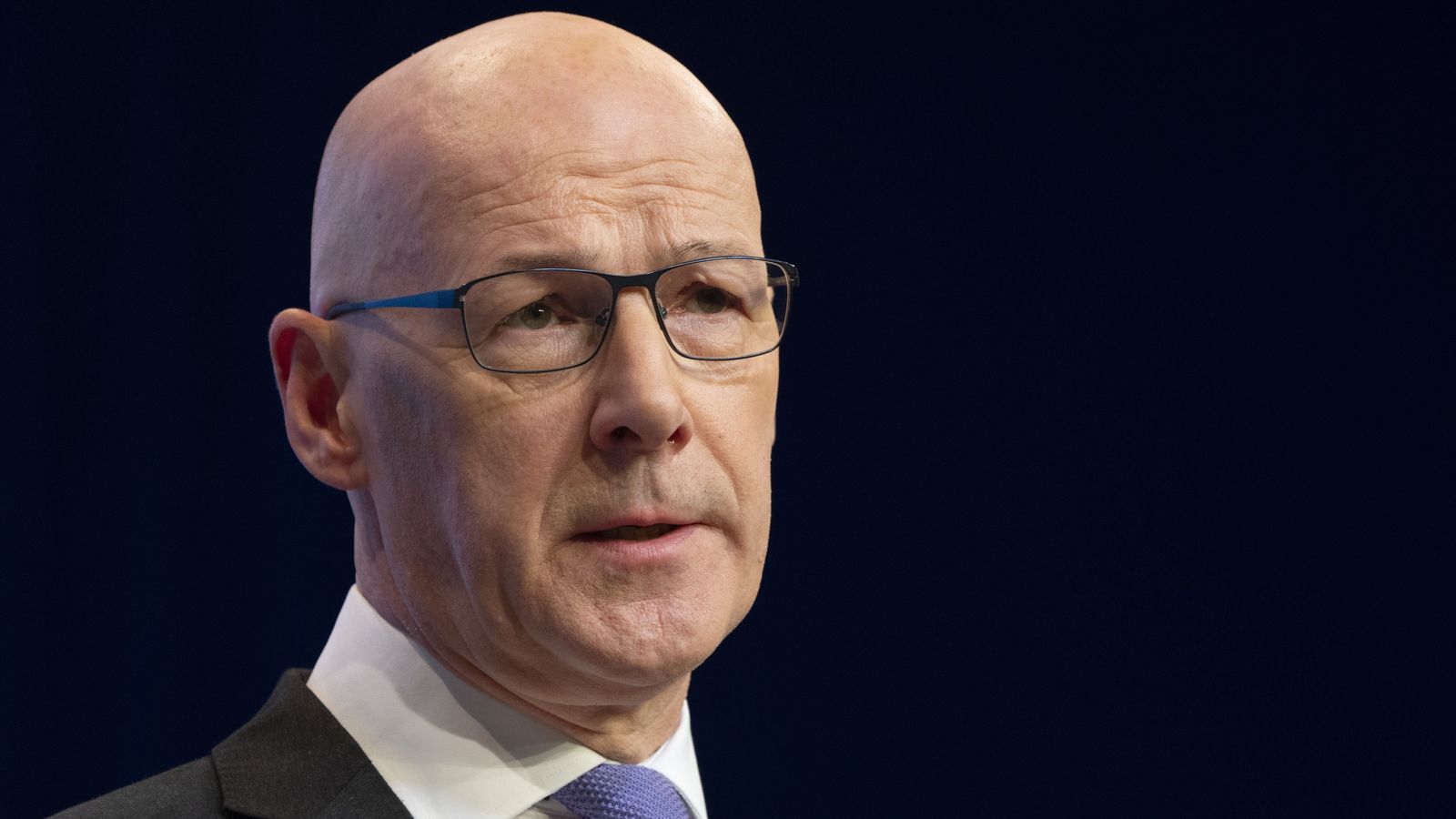

Reports a female MSP had a secret recording device planted in her office by a member of her own staff are “completely and utterly unacceptable”, SNP leader John Swinney has said.
Scottish parliament officials are investigating the alleged bugging incident by a man, which is said to have taken place in 2023 at Holyrood.
The Scotsman newspaper reported the staffer is still involved with the SNP and moved on to work with a male MP after the issue came to light.
Sky News has yet to independently verify the details, but one senior party source with knowledge of events has said it is “100% true”.
The source alleges “the SNP did nothing; indeed he simply got moved and continued to be promoted by very senior members of executive”.
It is suggested the female MSP, who has not been publicly named, is liked, rated and respected by her colleagues.
The Scottish parliament building in Edinburgh. Pic: PA
First Minister Mr Swinney was stopped by reporters in Edinburgh on Thursday where he said he was “not familiar with all of the details… but that type of conduct is completely and utterly unacceptable”.
“Individuals are entitled to operate in an open and transparent environment that shouldn’t be subjected to that kind of behaviour,” he concluded.
Read more from Sky News:
Millions could see council elections delayed again
Bank of England rate cut to 3.75% following fall in inflation
MPs and MSPs employ staff directly, rather than the political party.
Sky sources confirmed the victims of the incident had to get counselling in the aftermath before suggesting the SNP “definitely has a woman problem”.
The source claims it is “not a one-off incident”, adding: “Women are habitually treated differently.”
An SNP spokesperson said: “The SNP has no involvement in the employment processes of parliamentarians. That is a confidential matter between elected members, employees, and Scottish parliament authorities.
“The reports outline a very traumatic situation for those involved and nobody should ever have to experience fear or harassment for doing their job.”
Scottish Labour deputy leader Jackie Baillie said: “These jaw-dropping revelations pose serious questions for the SNP top brass.
“It appears a grave breach of privacy and potentially criminal behaviour has been swept under the carpet by the SNP.
“Once again it looks like the SNP chose to close ranks and protect their own, rather than dealing with serious misconduct head-on.”
A spokesperson for the Scottish parliament said: “Each MSP is an employer in their own right and is responsible for managing staff welfare issues and employment disputes.
“Complaints about staff conduct are investigated by an independent adviser, and it is for the member to act on their findings accordingly.
“As a matter of standard practice, we do not comment upon or confirm any individual cases.”
-
 Sports2 years ago
Story injured on diving stop, exits Red Sox game
-
 Sports3 years ago
‘Storybook stuff’: Inside the night Bryce Harper sent the Phillies to the World Series
-
 Sports2 years ago
Game 1 of WS least-watched in recorded history
-
 Sports3 years ago
Button battles heat exhaustion in NASCAR debut
-
 Sports3 years ago
MLB Rank 2023: Ranking baseball’s top 100 players
-
Sports4 years ago
Team Europe easily wins 4th straight Laver Cup
-
 Environment3 years ago
Japan and South Korea have a lot at stake in a free and open South China Sea
-
 Environment1 year ago
Here are the best electric bikes you can buy at every price level in October 2024