
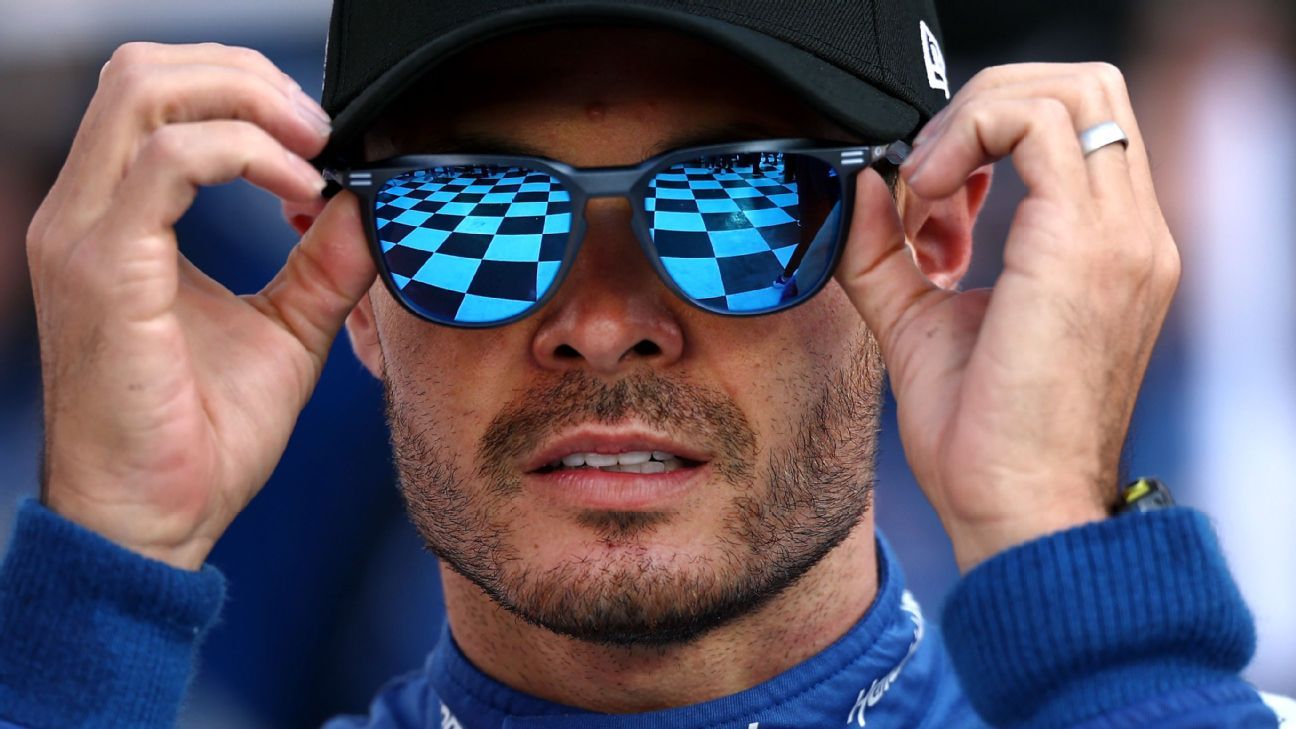
Handing out grades for every full-time Cup driver: From four A’s to a painful F


-
Neil Paine
NASCAR’s All-Star Race festivities are in North Wilkesboro, North Carolina this weekend — a track where the stars always came out to shine in an earlier era of Cup Series history. And just like in any other sport, All-Star time represents a chance to take stock of what has happened in the 2025 season so far, recognizing the drivers who have excelled and the ones who haven’t quite met their expectations.
To do that, I’ve graded every full-time Cup Series driver through a weighted combination of key performance indicators — not only using wins or standings points, but a more complete picture of how each driver is performing and, just as importantly, whether they’re meeting preseason expectations.
The formula included a variety of components, each standardized in order to compare drivers on an even scale. In rough order of importance, they were:
• Adjusted points+ index (a measure of performance where Cup average is always 100)
• Total wins
• Standings rank
• Average driver rating per race
• Average finish (indexed relative to average)
• Performance vs. preseason expectations (based on a combination of team/car quality and a driver’s own previous track record)
• Head-to-head record vs. teammates (and the strength of those teammates)
• Rate of finishing races (indexed relative to average)
From there, I created a weighted “combo” score and assigned letter grades accordingly — reflecting not only raw results, but also context, consistency and surprise value. (Remember, this isn’t just a straight ranking of drivers — you can find that here. Instead, they’re being graded on a curve relative to not only the field, but also themselves and their team.)
With all of that in mind, here’s how the field stacks up ahead of Sunday’s All-Star Race (8 p.m. ET, FS1) and at the sport’s midseason:
Jump to a grade tier:
A | B | C | D | F

Grade A tier
No. 5 Kyle Larson, Hendrick Motorsports: A+

2025 stats: 3 wins, 8 top-fives, 9 top-10s, 9.8 avg. finish
Standings rank: 1st
Adjusted pts+ index (100 = Cup avg.): 241
Avg. driver rating (70 = Cup avg.): 102.6
Another season, another elite drive for Larson — just business as usual for the No. 5 car. Larson found his way into Victory Lane at Homestead, Bristol and, most recently, Kansas, the latter two of which saw him record a pair of near-perfect driver ratings (149.6 and 149.7, respectively) in the span of four races. Further, he has been an immovable fixture up front with nine top-10s in 12 races.
According to pts+, Larson is tracking for his best season (241) since winning the Cup Series title in 2021 (244), and nobody in the series is capable of super-dominant runs quite like Larson. He’s the championship favorite for a reason.

2025 stats: 3 wins, 6 top-fives, 8 top-10s, 11.2 avg. finish
Standings rank: 3rd
Adjusted pts+ index: 224
Avg. driver rating: 92.8
This would have been an A-plus when Bell was racking up three consecutive wins earlier in the season, but a recent run of “only” five top-10s in the past eight races drops Bell down to A-grade status. This has still been an impressive year for the 30-year-old Bell, who is having a career season, already matching his high for wins less than a third of the way into the schedule.
Denny Hamlin fans might not want to hear this, but Bell is the No. 1 driver at JGR now, with an 86-58 record against teammates head-to-head over the past two years.
No. 24 William Byron, Hendrick Motorsports: A

2025 stats: 1 win, 5 top-fives, 7 top-10s, 10.2 avg. finish
Standings rank: 2nd
Adjusted pts+ index: 202
Avg. driver rating: 103.9
After a 2024 season that, while still good enough to make the Championship 4, wasn’t quite as statistically dominant as in 2023, Byron has possibly been the most consistently excellent driver in Cup this season. (Witness his series lead in average running position at 10.3.) Despite Larson’s near perfection at Kansas, Byron still leads the series in average driver rating, and his second straight win at the Daytona 500 in February solidified his place in the history of the Great American Race.
Even on the same team with fellow stars such as Larson and Chase Elliott, Byron has a 22-14 head-to-head record against his fellow Hendrick drivers.
No. 11 Denny Hamlin, Joe Gibbs Racing: A-

2025 stats: 2 wins, 5 top-fives, 6 top-10s, 15.2 avg. finish
Standings rank: 7th
Adjusted pts+ index: 178
Avg. driver rating: 87.6
Any notions that Hamlin’s on-track career would start to wind down as he aged (he’s 44) and took on other business ventures have proved to be wrong. If anything, Hamlin’s 2025 form — he has two wins, with his best pts+ index since 2021 — shows how hungry he is to shed the label of “NASCAR’s Greatest Driver Without A Cup Title.”
Will this finally be his year? He has seemed ready for that breakthrough many times before, only for the “black cat of death” to cross his path again and again. But there’s no doubt Hamlin will be squarely in the mix at the end of the season.
Grade B Tier
No. 12 Ryan Blaney, Team Penske: B+

2025 stats: 0 wins, 5 top-fives, 6 top-10s, 16.1 avg. finish
Standings rank: 5th
Adjusted pts+ index: 148
Avg. driver rating: 92.6
No star driver has been more snakebit this year than Blaney, who has no wins and nearly as many DNFs (four) as top-five finishes (five). But the overtaking speed is still there; Blaney has a 92.6 average driver rating — fifth best in Cup — and the best per-race pass differential (+13.5) for any driver with more than half of their passes taking place under green and among the top 15 cars in the field. With greater reliability, Blaney ought to contend for another championship by season’s end.
No. 9 Chase Elliott, Hendrick Motorsports: B+

2025 stats: 0 wins, 3 top-fives, 6 top-10s, 11.7 avg. finish
Standings rank: 4th
Adjusted pts+ index: 143
Avg. driver rating: 84.6
There is a paradox to Elliott in recent seasons: Despite his popularity and superstar reputation — and in contrast with his championship form of 2020 — he seems to have traded dominance for increased consistency. In 2025, this has manifested itself in a fourth-place spot in the standings and consistently solid finishes, but no wins and a lack of real contention for them on a weekly basis.
That’s why he doesn’t grade higher; Elliott is well on track to make the playoffs and even advance in them, but at a certain point we need to see the Elliott of old again.

2025 stats: 0 wins, 3 top-fives, 4 top-10s, 13.7 avg. finish
Standings rank: 6th
Adjusted pts+ index: 138
Avg. driver rating: 93.4
Reddick has driven well enough to score an A, but it hasn’t manifested in a victory yet. Only Hendrick teammates Byron and Larson boast a higher average driver rating, and Reddick’s average running position of 10.6 ranks second to Byron this year.
He has come close to winning a few times, so it could happen eventually (he has won multiple races in each of the previous three seasons), though a recent streak of four finishes in 14th or worse isn’t ideal.
No. 21 Josh Berry, Wood Brothers Racing: B+

2025 stats: 1 win, 2 top-fives, 3 top-10s, 21.2 avg. finish
Standings rank: 17th
Adjusted pts+ index: 103
Avg. driver rating: 80.5
This feel-good grade is all about outperforming expectations. While the iconic Wood Bros. No. 21 did win a race — and therefore appeared in the playoffs — with Harrison Burton at the wheel last season, that win came at the notoriously chaotic Daytona night race … after Burton already had learned he would not be returning to the team in 2025. Berry’s win this season in the 21, by comparison, came at Las Vegas — in theory, a much more predictable mile-and-a-half track (and therefore a place where it’s much tougher to fluke into a win).
Beyond just the victory, Berry is crushing what was expected in pts+ and driver rating, whether the comparison point was his own previous career or what the once-proud Wood Bros. team had gotten in recent years.
No. 22 Joey Logano, Team Penske: B

2025 stats: 1 win, 1 top-fives, 3 top-10s, 17.3 avg. finish
Standings rank: 9th
Adjusted pts+ index: 114
Avg. driver rating: 89.2
Confusingly, Logano’s 2025 season could warrant a higher or lower grade here. On the positive side, he does have a win, picking up the checkered flag at Texas a few weeks ago, and he has posted driver ratings of 89.2 or higher in eight of 12 races — including four in the triple-digits. But that win was his only top-five finish of the season, and he has only a pair of top-10s outside of it. Unlike his teammate Blaney, Logano can’t blame crashes or blown engines either; he has simply not been consistent in his finishes relative to his potential during those races. It’s something that will need to be cleaned up as the season progresses, but then again, nobody has a better track record of in-season improvement than the three-time champ.

2025 stats: 1 win, 1 top-fives, 3 top-10s, 17.3 avg. finish
Standings rank: 14th
Adjusted pts+ index: 114
Avg. driver rating: 82.8
Despite being a playoff driver in both 2022 and 2024, Cindric has often felt like the forgotten man at Penske, driving in the shadow of a couple of all-timers in Logano and Blaney. But this is shaping up to be a career year for the driver of the No. 2 car, tying his career best in pts+ while blowing away his previous norms in average driver rating.
Better yet, Cindric continues to refine his skills as an all-around driver; instead of a superspeedway specialist who is solid on road courses and subpar everywhere else, he has an 88.4 driver rating on ovals this season. (Compare that to his previous career high of 67.8 from 2022.)
No. 19 Chase Briscoe, Joe Gibbs Racing: B

2025 stats: 0 wins, 4 top-fives, 5 top-10s, 15.2 avg. finish
Standings rank: 13th
Adjusted pts+ index: 134
Avg. driver rating: 77.1
Taking over the No. 19 ride at JGR for retiring legend Martin Truex Jr., there was always the expectation that Briscoe would show great improvement from his previous years spent at the fading Stewart-Haas Racing. And that has been true this year, with Briscoe on pace for the best season of his career by far.
Although Briscoe doesn’t have a win yet, he has been a factor in a handful of races and his 19-17 head-to-head record against JGR teammates is better than both Hamlin this year (18-18) and Truex last year (49-59).
No. 48 Alex Bowman, Hendrick Motorsports: B-

2025 stats: 0 wins, 2 top-fives, 7 top-10s, 16.9 avg. finish
Standings rank: 8th
Adjusted pts+ index: 134
Avg. driver rating: 83.1
After years as the fourth wheel at Hendrick — having to share a garage with Jimmie Johnson (whose No. 48 car he later inherited), Larson, Elliott and Byron at various times — Bowman won a race in 2024 (only his second of the Next-Gen car era) and began to close the gap against his prominent teammates.
But that progress has stalled some in 2025: Bowman’s pts+ is 61 points behind his teammate average, his driver rating lags by 13.9 points and he has his worst head-to-head record against teammates (12-24) since going 8-22 as Dale Earnhardt Jr.’s injury replacement in the No. 88 car in 2016. At the same time, Bowman would comfortably make the playoffs on points if the season ended today, so it’s not all bad news for the 48.
No. 1 Ross Chastain, Trackhouse Racing: B-

2025 stats: 0 wins, 2 top-fives, 6 top-10s, 13.9 avg. finish
Standings rank: 11th
Adjusted pts+ index: 145
Avg. driver rating: 77.6
Chastain is sort of the opposite of Reddick — aside from a lack of wins, his steady finishes have been very good, reminiscent of his early breakout with Trackhouse in 2022 and 2023 … but the fundamentals are less impressive. Chastain’s driver rating and 16.8 average running position are OK, but nothing special, and certainly less than we would have expected from a driver who seemed as if he were on the cusp of stardom as recently as a few years ago.
It would help to see Chastain win a race when he wasn’t already eliminated from championship consideration for the first time since June 2023.

2025 stats: 0 wins, 1 top-fives, 6 top-10s, 15.5 avg. finish
Standings rank: 12th
Adjusted pts+ index: 122
Avg. driver rating: 76.6
Buescher has quietly done his job and maintained playoff position in the standings, rising above the up-and-down performances of his RFK teammates. For that alone, he deserves a B-tier grade, but he is dragged down a bit simply by the standards he set in the past few seasons. In 2023 and 2024, Buescher won four races with a pts+ index of 143 and an average driver rating of 82.3, the best stretch of performances in his decade-long Cup career.
This year’s numbers are tracking for something a notch below what we’re used to from the No. 17 car, but that’s as much a statement on Buescher’s breakout in previous years as anything happening in 2025.
No. 60 Ryan Preece, RFK Racing: B-

2025 stats: 0 wins, 1 top-fives, 4 top-10s, 19.8 avg. finish
Standings rank: 16th
Adjusted pts+ index: 97
Avg. driver rating: 80.2
Speaking of RFK drivers, Preece earns a spot here in his first season with the team, on the strength of his solid fundamentals: a driver rating well above the average for both the Cup Series and his teammates (who collectively sit at just 69.1), an average running position (15.8) that ranks 12th best among regular drivers and a .500 record (12-12) against teammates head-to-head.
Aside from a seventh-place run at Kansas, Preece’s finishes haven’t been as good as earlier in the year, but it’s still fair to say he is beating expectations for the No. 60 in its first year running a full schedule.
Grade C tier

2025 stats: 0 wins, 2 top-fives, 4 top-10s, 19.6 avg. finish
Standings rank: 10th
Adjusted pts+ index: 102
Avg. driver rating: 85.0
Wallace was tracking for a career year (and a much better grade) about a month ago, but it has been a struggle for the No. 23 lately. After a pair of top-five finishes at Homestead and Martinsville, Wallace has scored only one top-10 finish in the past five races, with three finishes outside the top 20 in that span, capped off by a pair of consecutive crashes at Texas and Kansas.
The slump has left him barely above average in pts+ and with a bad 11-14 record against his 23XI teammates — but there’s still reason to believe. His driver rating (eighth best) and average running position (sixth best) suggest he has been unlucky, but a ranking like this still has to assign some weight to actual results rather than potential ones.

2025 stats: 0 wins, 1 top-fives, 4 top-10s, 18.2 avg. finish
Standings rank: 19th
Adjusted pts+ index: 91
Avg. driver rating: 56.1
Nemechek earns a C-plus for now, in part because his near-average pts+ and top-20 standings placement represents a massive leap over what we saw out of the No. 42 car in any of the previous few seasons. But under the hood, predictive metrics such as driver rating are less sold on whether this form can continue.
No. 38 Zane Smith, Front Row Motorsports: C+

2025 stats: 0 wins, 0 top-fives, 1 top-10, 18.8 avg. finish
Standings rank: 23rd
Adjusted Pts+ index: 80
Avg. Driver Rating: 64.1
Though his numbers won’t exactly wow you, Smith has improved in his second full Cup season — his typical finish is now better than the Cup average, he has a positive head-to-head record (13-11) against his teammates and a slightly better driver rating than teammate Todd Gilliland had in the No. 38 car last season. He also started on pole at Talladega and led some laps at Homestead as well.
No. 8 Kyle Busch, Richard Childress Racing: C

2025 stats: 0 wins, 1 top-five, 4 top-10s, 18.1 avg. finish
Standings rank: 18th
Adjusted pts+ index: 96
Avg. driver rating: 75.8
The cases of Busch and Nemechek illustrate how important expectations are to consider when grading NASCAR drivers. Despite near-identical results, one man’s surprisingly half-decent start to the season can be a supremely frustrating year for another — as is the case with Busch, for whom an early run of three straight top-10s in the first four races is now a distant memory.
More recently, Busch has one top-10 in the past eight races, with five finishes of 20th or worse over that same stretch. The hope has been that Busch’s rare winless 2024 (the first time he hadn’t driven to Victory Lane in 20 years) was simply a down year for one of the greatest stock car drivers, but it’s looking more like an average performance is about what we can expect from the No. 8 car at this point.

2025 stats: 0 wins, 1 top-five, 2 top-10s, 17.3 avg. finish
Standings rank: 15th
Adjusted pts+ index: 91
Avg. driver rating: 59.0
Stenhouse is difficult to grade, because it’s tough to say whether he’s driving well or not. On the one hand, he hasn’t finished worse than 25th in any race this year, with eight appearances among the top 20 in 12 starts (including two top-10s and a top-five at Atlanta — no surprise for the superspeedway master). On the other hand, he has been the opposite of dominant, even in most of those decent runs — his driver rating has broken 90 only once, 80 twice and 70 three times, with a dreadful 51.3 mark or worse in half of his races.
So while Stenhouse would sneak into the playoffs on points if the season ended today, it’s doubtful that will remain true (for many reasons), and he doesn’t have the form of a winning driver unless he can luck into a win at one of the two remaining drafting-style tracks before the playoff cut.
No. 3 Austin Dillon, Richard Childress Racing: C

2025 stats: 0 wins, 0 top-fives, 3 top-10s, 18.4 avg. finish
Standings rank: 22nd
Adjusted pts+ index: 86
Avg. driver rating: 62.9
Dillon is the very definition of a C-grade driver this season. Having long since shed the expectations of being anything more than a mid-pack mainstay who can occasionally play spoiler with a chaotic win, Dillon is actually doing better this year than in either 2023 or 2024, when he ranked among the most disappointing drivers in the Cup Series.
In 2025, he has seven finishes of 18th or better, and his driver rating has strayed outside the 60s only five times in 12 races. He still might need to wreck the field to even think about making the playoffs, but Dillon has nonetheless been far from terrible.
No. 34 Todd Gilliland, Front Row Motorsports: C

2025 stats: 0 wins, 0 top-fives, 2 top-10s, 18.8 avg. finish
Standings rank: 24th
Adjusted pts+ index: 82
Avg. driver rating: 62.1
Swapping to the No. 34 from former teammate Michael McDowell, Gilliland has held steady in his overall form as compared with a year ago. On the plus side, his average finish is now 4% better than the Cup average, versus 8% worse last season; on the minus, his driver rating is down from 64.3.
But while Gilliland’s first year as Front Row’s lead driver has had ups and downs, he’ll go into the All-Star Race coming off an 11th-place finish at Texas and a 12th-place finish at Kansas.

2025 stats: 0 wins, 0 top-fives, 0 top-10s, 19.1 avg. finish
Standings rank: 21st
Adjusted pts+ index: 77
Avg. driver rating: 63.1
Like many drivers in this C-tier group, McDowell’s mark reflects a complicated picture of performance relative to many different expectations. After seven years driving for Bob Jenkins at Front Row, where he had experienced his greatest highs as a driver — winning the Daytona 500 — and transformed himself from a journeyman to a perennial playoff contender and race winner, McDowell moved to Spire for 2025, where he has beaten teammates head-to-head (15-9 record) and improved vastly on Zane Smith’s numbers behind the wheel of the No. 71 a year ago.
At the same time, he has no top-10s and uniformly subpar metrics relative to Cup average this season.
No. 77 Carson Hocevar, Spire Motorsports: C-

2025 stats: 0 wins, 1 top-five, 2 top-10s, 22.2 avg. finish
Standings rank: 20th
Adjusted pts+ index: 85
Avg. driver rating: 73.2
Hocevar, 22, has had his flashes of brilliance this season — including a pole at Texas, leading laps in half of his starts (he’s currently riding a streak of four straight races led), and three different races with a triple-digit driver rating. But Hocevar earns a C-minus because of what he has left to learn, from greater respect for his fellow racers to better racecraft to turn that above-average driver rating into something better than a 22.2 average finish.
Hocevar’s head-to-head record against teammates has gone from a incredible 51-21 last season to 10-14 this year, and though that reflects the improved talent of teammates McDowell and Justin Haley, they are still collectively below .500 against all other drivers — yet Hocevar can’t consistently finish ahead of them despite his speed.
No. 99 Daniel Suarez, Trackhouse Racing: C-

2025 stats: 0 wins, 1 top-five, 3 top-10s, 20.9 avg. finish
Standings rank: 27th
Adjusted pts+ index: 87
Avg. driver rating: 64.8
Coming off one of the best seasons of his career (with a memorable three-wide photo finish win at Atlanta and a second-round playoff run), Suarez was expected to further build on that success in 2025. Instead, it has been an uneven start to the season, with the No. 99 car finishing outside the top 30 more times (four) than it has been inside the top 10 (three).
The only things keeping Suarez’s grade from dipping into D territory are that his underlying performance hasn’t necessarily been much different — his driver rating is up from 64.6 — and that Trackhouse as a whole has been much worse in 2025. Rather than only Suarez losing ground, his average teammate pts+ has also dipped from 127 to 88. In part, that has been due to the addition of a third chartered car, but the net result has been Suarez carrying a far better head-to-head record (15-11) against teammates than the 13-23 mark he had a year ago.
Grade D tier
No. 54 Ty Gibbs, Joe Gibbs Racing: D+

2025 stats: 0 wins, 1 top-five, 2 top-10s, 20.6 avg. finish
Standings rank: 26th
Adjusted Pts+ index: 80
Avg. Driver Rating: 64.9
The Ty Gibbs breakout appeared to be upon us at various times last season, and though he fell off down the stretch of the 2024 schedule, expectations were high that the 22-year-old would win his first Cup race — at the very least, if not more — in 2025. But that hasn’t happened; if anything, Gibbs has taken a nosedive in practically all of his major indicators so far this year.
On a team with the equipment to contend in every race, it has been highly disappointing for Gibbs to remain winless with a single top-five, two top-10s and only four races with an above-average driver rating.
No. 10 Ty Dillon, Kaulig Racing: D+

2025 stats: 0 wins, 0 top-fives, 0 top-10s, 22.3 avg. finish
Standings rank: 30th
Adjusted Pts+ index: 58
Avg. Driver Rating: 50.0
Dillon has improved his pts+ and driver rating from the last time we saw him as a full-time Cup entrant, with Spire in 2023, but he still ranks fifth-to-last in average driver rating among regular drivers this season.
No. 4 Noah Gragson, Front Row Motorsports: D

2025 stats: 0 wins, 1 top-five, 2 top-10s, 22.2 avg. finish
Standings rank: 31st
Adjusted pts+ index: 73
Avg. driver rating: 61.2
Gragson rescued his career in Stewart-Haas’ swan song last season, following a season from hell with Legacy Motor Club in 2023. But after moving on to Front Row for 2025, Gragson has taken a tumble backward again.
Granted, the fall hasn’t been as steep as it was in ’23, but he looks worse by every major indicator, and he has not kept pace with his new teammates — posting a 9-15 head-to-head record (a year after going a solid 60-48 against his SHR counterparts).
No. 43 Erik Jones, Legacy Motor Club: D

2025 stats: 0 wins, 1 top-five, 1 top-10, 22.2 avg. finish
Standings rank: 29th
Adjusted pts+ index: 68
Avg. driver rating: 57.1
While Legacy teammate John Hunter Nemechek has improved this season, Jones has stayed roughly the same in his performance level as the past few years. A driver who once had the talent to secure a full-time ride at JGR, and then rose above his equipment with Richard Petty Motorsports, seems to have stalled out now.

2025 stats: 0 wins, 0 top-fives, 3 top-10s, 22.5 avg. finish
Standings rank: 25th
Adjusted pts+ index: 72
Avg. driver rating: 62.9
Allmendinger’s celebrated return to a full-time Cup drive in 2025 has been hit or (mostly) miss. Though he has a trio of top-10s (at Las Vegas, Homestead and Bristol), his overall performance is quite a bit lower than it was in partial duty over the previous handful of seasons. Allmendinger is just 4-8 head-to-head against his Kaulig teammates this season, after going a combined 48-31 versus Kaulig competition from 2021 to 2024.
No. 7 Justin Haley, Spire Motorsports: D-

2025 stats: 0 wins, 0 top-five, 1 top-10, 21.1 avg. finish
Standings rank: 28th
Adjusted pts+ index: 65
Avg. driver rating: 58.2
What began as a potentially promising 2025 season for Haley — being paired with Kevin Harvick’s former championship-winning crew chief, Rodney Childers — has already gone sideways, with the recent divorce between Childers and Spire only nine races into their partnership. Aside from that shake-up, Haley’s results are somewhat better than they were when split between Spire and Rick Ware Racing last season … though they are far from what Haley seemed he might be capable of in an earlier phase of his career.
No. 41 Cole Custer, Haas Factory Team: D-

2025 stats: 0 wins, 0 top-fives, 0 top-10s, 25.6 avg. finish
Standings rank: 34th
Adjusted pts+ index: 42
Avg. driver rating: 45.5
The 2023 Xfinity Series champion made his return to Cup as the lone driver for the team formerly known as SHR (where Custer drove in 2020-22), and the results have been as much of a struggle as you might expect. Only two full-time drivers have a worse average driver rating.

2025 stats: 0 wins, 0 top-fives, 0 top-10s, 24.7 avg. finish
Standings rank: 32nd
Adjusted pts+ index: 47
Avg. driver rating: 48.1
Despite having a good team behind him at 23XI, Herbst’s first full season at the Cup level has been trending in the wrong direction: After four top-20 finishes in his first five starts of the season, Herbst boasts one (a 14th-place run at Texas) in the seven races since. He has gone just 8-17 head-to-head against a combination of Tyler Reddick, Bubba Wallace and Corey Heim this year.
Grade F tier

2025 stats: 0 wins, 0 top-fives, 1 top-10, 26.8 avg. finish
Standings rank: 35th
Adjusted pts+ index: 45
Avg. driver rating: 45.1
This is one of the most painful grades to hand out because Van Gisbergen had been such an exciting and promising driver in part-time action over the preceding two seasons. Though a decent amount of that came at his specialty in road courses — where he won his Cup debut at Chicago, and nearly won at The Glen before Buescher tracked him down with a final-lap pass — he also ran eight non-road course races in Cup last year, plus a full 33-race Xfinity schedule in which he appeared to acquit himself decently well on other track types.
All of which makes it more puzzling that SVG has such terrible numbers in 2025, including the second-worst average driver rating in the Cup Series. Though he led 23 laps and posted a 120.6 rating at COTA in March, that was his lone finish of better than 20th, and he carries an average rating below 50 at ovals (36.0), short tracks (28.3) and superspeedways (49.2) alike.

2025 stats: 0 wins, 0 top-fives, 0 top-10s, 27.2 avg. finish
Standings rank: 33rd
Adjusted pts+ index: 41
Avg. driver rating: 61.5
The other real shocker on the grading sheet, Keselowski’s 2025 season has been completely out of character for the 2012 Cup Series champion. We thought his performance upon leaving Penske for RFK in 2022 (80 pts+, 67.9 driver rating) was what a bad Keselowski season looked like. We had no idea that a year this miserable was even possible for a driver of his historic caliber — but Keselowski has only three finishes better than 26th all year, an adjusted pts+ index 59% (!) worse than Cup average, and a stunning 42% of his races have been DNFs (including crashes in each of the past three weekends).
Maybe the All-Star Race will be a natural break in the schedule to try to salvage something going forward, because it’s hard to imagine a worse start to the season than what Keselowski has produced so far.
No. 51 Cody Ware, Rick Ware Racing: F

2025 stats: 0 wins, 0 top-fives, 0 top-10s, 30.8 avg. finish
Standings rank: 36th
Adjusted pts+ index: 22
Avg. driver rating: 32.4
Ware’s best finish of the year is 24th, he has been 30th or worse nine times in 12 races, and he hasn’t cracked a 50 driver rating all season. Enough said.



-
 Sports2 years ago
Story injured on diving stop, exits Red Sox game
-
 Sports3 years ago
‘Storybook stuff’: Inside the night Bryce Harper sent the Phillies to the World Series
-
 Sports2 years ago
Game 1 of WS least-watched in recorded history
-
 Sports3 years ago
Button battles heat exhaustion in NASCAR debut
-
 Sports3 years ago
MLB Rank 2023: Ranking baseball’s top 100 players
-
Sports4 years ago
Team Europe easily wins 4th straight Laver Cup
-
 Environment3 years ago
Japan and South Korea have a lot at stake in a free and open South China Sea
-
 Environment1 year ago
Here are the best electric bikes you can buy at every price level in October 2024