

Post-Brexit EU reset negotiations ‘going to the wire’, says minister

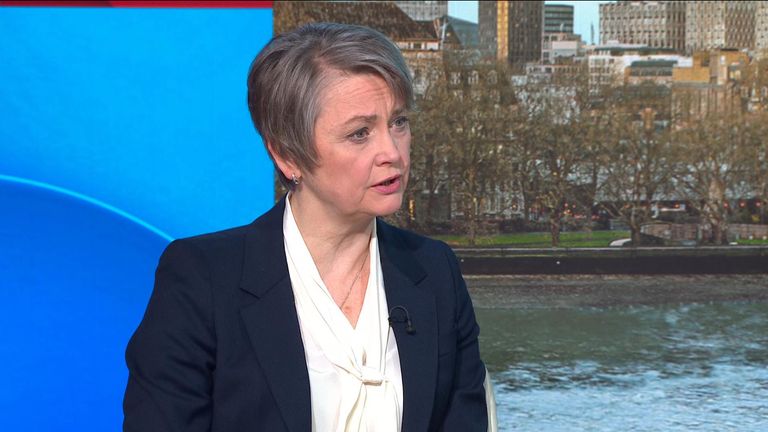
Negotiations to reset the UK’s post-Brexit relationship with the EU are going “to the wire”, a Cabinet Office minister has said.
“There is no final deal as yet. We are in the very final hours,” the UK’s lead negotiator Nick Thomas-Symonds told Sky’s Sunday Morning with Trevor Phillips.
On the possibility of a youth mobility scheme with the EU, he insisted “nothing is agreed until everything is”.
“We would be open to a smart, controlled youth mobility scheme,” he said. “But I should set out, we will not return to freedom of movement.”
Politics latest: PM outlines ‘benefits’ for UK from closer EU ties
The government is set to host EU leaders in London on Monday.
Put to the minister that the government could not guarantee there will be a deal by tomorrow afternoon, Mr Thomas-Symonds said: “Nobody can guarantee anything when you have two parties in a negotiation.”
But the minister said he remained “confident” a deal could be reached “that makes our borders more secure, is good for jobs and growth, and brings people’s household bills down”.
“That is what is in our national interest and that’s what we will continue to do over these final hours,” he said.
“We have certainly been taking what I have called a ruthlessly pragmatic approach.”
On agricultural products, food and drink, Mr Thomas-Symonds said supermarkets were crying out for a deal because the status quo “isn’t working”, with “lorries stuck for 16 hours and food rotting” and producers and farmers unable to export goods because of the amount of “red tape”.
Asked how much people could expect to save on shopping as a result of the deal the government was hoping to negotiate, the minister was unable to give a figure.
Read more:
What could a UK-EU reset look like?
Starmer’s stance on immigration criticised
On the issue of fishing, asked if a deal would mean allowing French boats into British waters, the minister said the Brexit deal which reduced EU fishing in UK waters by a quarter over five years comes to an end next year.
He said the objectives now included “an overall deal in the interest of our fishers, easier access to markets to sell our fish and looking after our oceans”.
Turning to borders, the minister was asked if people would be able to move through queues at airports faster.
Again, he could not give a definitive answer, but said it was “certainly something we have been pushing with the EU… we want British people who are going on holiday to be able to go and enjoy their holiday, and not be stuck in queues”.
PM opens door to EU youth mobility scheme
A deal granting the UK access to a major EU defence fund could be on the table, according to reports – and Prime Minister Sir Keir Starmer has appeared to signal a youth mobility deal could be possible, telling The Times that while freedom of movement is a “red line”, youth mobility does not come under this.
The European Commission has proposed opening negotiations with the UK on an agreement to facilitate youth mobility between the EU and the UK. The scheme would allow both UK and EU citizens aged between 18 and 30 years old to stay for up to four years in a country of their choosing.
Earlier this month, Home Secretary Yvette Cooper told Phillips a youth mobility scheme was not the approach the government wanted to take to bring net migration down.
Return to customs union ‘remains a red line’
When this was put to him, Mr Thomas-Symonds insisted any deal on a youth mobility scheme with Europe will have to be “smart” and “controlled” and will be “consistent” with the government’s immigration policy.
Asked what the government had got in return for a youth mobility scheme – now there had been a change in approach – the minister said: “It is about an overall balanced package that works for Britain. The government is 100% behind the objective of getting net migration down.”
Phillips said more than a million young people came to the country between 2004 and 2015. “If there isn’t a cap – that’s what we are talking about,” he said.
The minister insisted such a scheme would be “controlled” – but refused to say whether there would be a cap.
👉 Click here to follow Electoral Dysfunction wherever you get your podcasts 👈
‘It’s going to be a bad deal’
Shadow cabinet office minister Alex Burghart told Phillips an uncapped youth mobility scheme with the EU would lead to “much higher immigration”, adding: “It sounds very much as though it’s going to be a bad deal.”
Asked if the Conservatives would scrap any EU deal, he said: “It depends what the deal is, Trevor. And we still, even at this late stage, we don’t know.
“The government can’t tell us whether everyone will be able to come. They can’t tell us how old the young person is. They can’t tell us what benefits they would get.
“So I think when people hear about a youth mobility scheme, they think about an 18-year-old coming over working at a bar. But actually we may well be looking at a scheme which allows 30-year-olds to come over and have access to the NHS on day one, to claim benefits on day one, to bring their extended families.”
He added: “So there are obviously very considerable disadvantages to the UK if this deal is done in the wrong way.”
Jose Manuel Barroso, former EU Commission president, told Phillips it “makes sense” for a stronger relationship to exist between the European Union and the UK, adding: “We are stronger together.”
He said he understood fishing and youth mobility are the key sticking points for a UK-EU deal.
“Frankly, what is at stake… is much more important than those specific issues,” he said.
Politics
Young people may lose benefits if they don’t engage with help from new £820m scheme, government warns

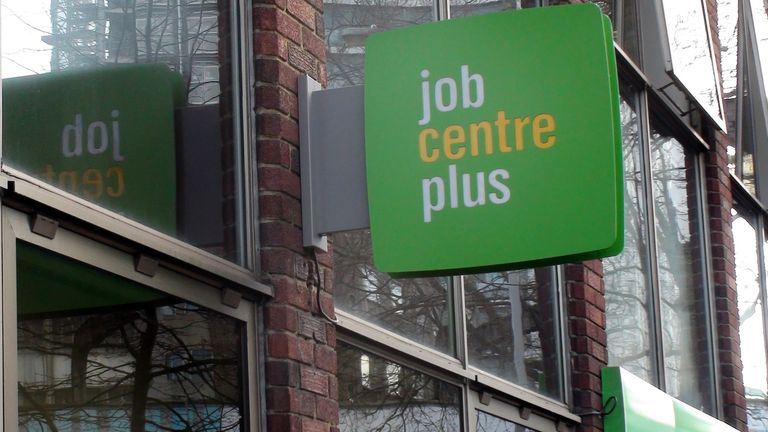
Young people could lose their right to universal credit if they refuse to engage with help from a new scheme without good reason, the government has warned.
Almost one million will gain from plans to get them off benefits and into the workforce, according to officials.
Latest updates from the Politics Hub
Pic: iStock
It comes as the number of young people not in employment, education or training (NEET) has risen by more than a quarter since the COVID pandemic, with around 940,000 16 to 24-year-olds considered as NEET as of September this year, said the Office for National Statistics.
That is an increase of 195,000 in the last two years, mainly driven by increasing sickness and disability rates.
The £820m package includes funding to create 350,000 new workplace opportunities, including training and work experience, which will be offered in industries including construction, hospitality and healthcare.
Around 900,000 people on universal credit will be given a “dedicated work support session”.
That will be followed by four weeks of “intensive support” to help them find work in one of up to six “pathways”, which are: work, work experience, apprenticeships, wider training, learning, or a workplace training programme with a guaranteed interview at the end.
However, Work and Pensions Secretary Pat McFadden has warned that young people could lose some of their benefits if they refuse to engage with the scheme without good reason.
“Doing nothing should not be an option,” he told Sky News’ Sunday Morning with Trevor Phillips.
“If someone just took that attitude, yes, they would then be subject to, you know, the obligations that are already part of the system.”
“What I want to see is young people in the habit of getting up in the morning, doing the right thing, going to work,” he added.
“That experience of that obligation, but also the sense of pride and purpose that comes with having a job.”

Some young people on benefits will be offered job opportunities in construction. Pic: iStock
Read more from Sky News:
Child poverty strategy unveiled – but not everyone’s happy
Universal credit claimants soar by over million in a year
The government says these pathways will be delivered in coordination with employers, while government-backed guaranteed jobs will be provided for up to 55,000 young people from spring 2026, but only in those areas with the highest need.
However, shadow work and pensions secretary Helen Whately, from the Conservatives, said the scheme is “an admission the government has no plan for growth, no plan to create real jobs, and no way of measuring whether any of this money delivers results”.
She told Sky News the proposals are a “classic Labour approach” for tackling youth unemployment.

Youth jobs plan ‘the wrong answer’
“What we’ve seen today announced by the government is funding the best part of £1bn on work placements, and government-created jobs for young people. That sounds all very well,” she told Sunday Morning with Trevor Phillips.
“But the fact is, and that’s the absurdity of it is, just two weeks ago, we had a budget from the chancellor, which is expected to destroy 200,000 jobs.
“So the problem we have here is a government whose policies are destroying jobs, destroying opportunities for young people, now saying they’re going to spend taxpayers’ money on creating work placements. It’s just simply the wrong answer.”
Ms Whately also said the government needs to tackle people who are unmotivated to work at all, and agreed with Mr McFadden on taking away the right to universal credit if they refuse opportunities to work.
But she said the “main reason” young people are out of work is because “they’re moving on to sickness benefits”.
Ms Whately also pointed to the government’s diminished attempt to slash benefits earlier in the year, where planned welfare cuts were significantly scaled down after opposition from their own MPs.
The funding will also expand youth hubs to help provide advice on writing CVs or seeking training, and also provide housing and mental health support.
Some £34m from the funding will be used to launch a new “Risk of NEET indicator tool”, aimed at identifying those young people who need support before they leave education and become unemployed.
Monitoring of attendance in further education will be bolstered, and automatic enrolment in further education will also be piloted for young people without a place.
-
 Sports2 years ago
Story injured on diving stop, exits Red Sox game
-
 Sports3 years ago
‘Storybook stuff’: Inside the night Bryce Harper sent the Phillies to the World Series
-
 Sports2 years ago
Game 1 of WS least-watched in recorded history
-
 Sports3 years ago
Button battles heat exhaustion in NASCAR debut
-
 Sports3 years ago
MLB Rank 2023: Ranking baseball’s top 100 players
-
Sports4 years ago
Team Europe easily wins 4th straight Laver Cup
-
 Environment3 years ago
Japan and South Korea have a lot at stake in a free and open South China Sea
-
 Environment1 year ago
Here are the best electric bikes you can buy at every price level in October 2024