
Easing trade and signing a defence pact would be manifesto promises delivered – and Starmer could use a win

This EU-UK summit has for months been openly billed by Sir Keir Starmer’s Downing Street as a hugely significant moment for this government.
The Labour leader promised in his 2024 election manifesto that the UK would sign a new security pact with the EU to strengthen cooperation and improve the UK’s trading relationship with the continent.
Since winning power in July, he has embarked on a charm offensive across European capitals in a bid to secure that better post-Brexit deal.
Monday is set to be when the PM makes good on those promises at a historic summit at Lancaster House in London.
Read more: What exactly could the UK-EU reset look like?
From Sunday: ‘No final deal yet’ with EU
There, the EU and UK are expected to sign a security and defence partnership, which has taken on a new sense of urgency since the arrival of President Trump in the White House.
It is an agreement that will symbolise the post-Brexit reset, with the PM, European Commission president Ursula von der Leyen and European Council president Antonio Costa are also expected to sign off on a communique pledging deeper economic cooperation.
But, rather like the torturous Brexit negotiations I covered for years in London and Brussels under Conservative prime ministers, Sir Keir’s post-Brexit reset talks are going down to the wire.
As of 10.30pm on Sunday, discussions were set to continue overnight, the two sides snared up over details around fisheries, food trade and youth mobility.
It’s not that both sides don’t want the reset: the war in Ukraine and the spectre of the US becoming an unreliable partner have pushed London and Brussels closer together in their common defence interest.
👉 Click here to follow Electoral Dysfunction wherever you get your podcasts 👈
Fishing and youth mobility – the two snags
But the pressure for this deal weighs more heavily on our prime minister than his European colleagues. He’s been talking for months about securing a reset and better trading relationship with the EU to bolster the UK economy.
His need to demonstrate wins is why, suggests one continental source, the Europeans are letting talks go to the wire, with London and Brussels in a tangle over fishing rights – key demands of France and the Netherlands – and a youth mobility scheme, which is a particular focus for Berlin.
“The British came with 50 asks, we came with two – on fishing and the youth mobility scheme,” says one European source.
The EU is asking for longer-term access to UK fishing grounds – a 10-year deal – which the British government has rebuffed, insisting it will not go beyond a four-year deal.
In response, Brussels is saying it will not lift regulatory checks on food, agricultural and animal products unless the UK moves on fishing. This has left the two sides at an impasse.
EU sources say Brussels had offered a time-limited deal to lift checks on animal products – replicating London’s offer on fisheries – but the UK is reluctant to do this as it leaves too much uncertainty for farmers and supermarkets.

Poland’s Prime Minister Donald Tusk, Germany’s Chancellor Friedrich Merz, France’s President Emmanuel Macron and Sir Keir Starmer talk to the press after their meeting on May 16, 2025 Pic: Reuters
Scotland election weighing on talks
A deal on food products, known as sanitary and phytosanitary (SPS) goods, would be a boost for the economy, with potentially up to 80% of border checks disappearing, given the breadth of products – paint, fashion goods, leather as well as foods – with an animal component.
Any deal would also mean the UK would have to align with rules made in Brussels and make a financial contribution to the EU to fund work on food and animal standards.
Both elements will trigger accusations of Brexit “betrayal”, as the UK signs up as a “rule taker” and finds itself paying back into the EU for better access.
Government figures had been telling me how they were more than prepared to face down the criticisms likely to be thrown at them from the Conservatives.
But sensitivities around fishing, particularly in Scotland, where Labour is facing elections next year, have weighed on talks.
Read more from Sky News:
UK has not asked about asylum return hubs, other Balkan countries say
‘Ouch’: Starmer condemned for telling MP ‘she talks rubbish’
Joe Biden diagnosed with ‘aggressive’ form of prostate cancer
The other area of huge tension is over a youth mobility scheme, which would enable young adults from member states to study and work in the UK and vice versa.
Government sources familiar with the talks acknowledge some sort of scheme will happen, but want details to be vague – I’m told it might be “an agreement about a future agreement”, while the EU sees this a one of its two core demands.
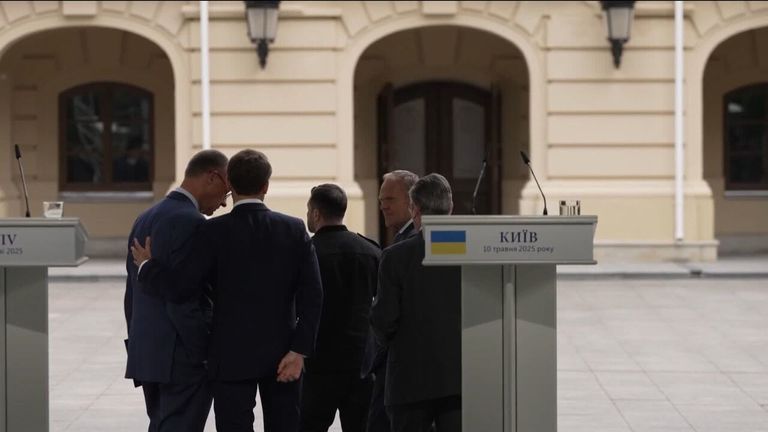
European leaders gather in Ukraine
In talks late on Sunday night, the UK government appeared to be softening on re-opening the pre-Brexit Erasmus student exchange scheme as perhaps a way to get around the impasse, according to one EU source.
The UK rejoining this scheme had been rebuffed by Sir Keir last year, but was raised again last night in talks, according to a source.
Common ground on defence and security
Wherever the economic horsetrading lands, the two sides have found common ground in recent months is on defence and security, with the UK working in lockstep with European allies over Ukraine and relationships deepening in recent months as Sir Keir Starmer has worked with President Macron and others to try to smooth tensions between Kyiv and Washington and work on a European peace deal for Ukraine.
If details on trade, youth mobility and fisheries are fudged on Monday, the expectation is that the two sides will sign a security partnership that will reiterate the UK’s commitment to build up the continent’s defence capability and stand united against Russian aggression with its partners.
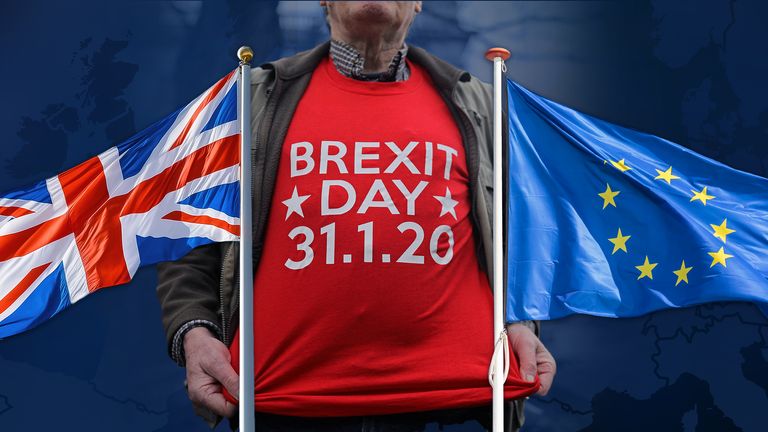
Five years of Brexit explained
The deal should also mean British arms companies will be able to access the EU’s €150bn rearmament programme, which has been set up to create a massive surge in defence spending over the next five years as Europe prepares itself to better repel threats.
As I write this, talks are ongoing, but it is clearly in neither side’s interest for Monday to go wrong.
The EU and UK need to maintain a united front and, more importantly for Keir Starmer domestically, the PM needs to show an increasingly sceptical public he can deliver on his promises.
Easing trade barriers with Britain’s biggest trading partner and signing an EU defence pact would be two manifesto promises delivered.
And with his popularity sinking to a record low in recent days, he could really do with a win.
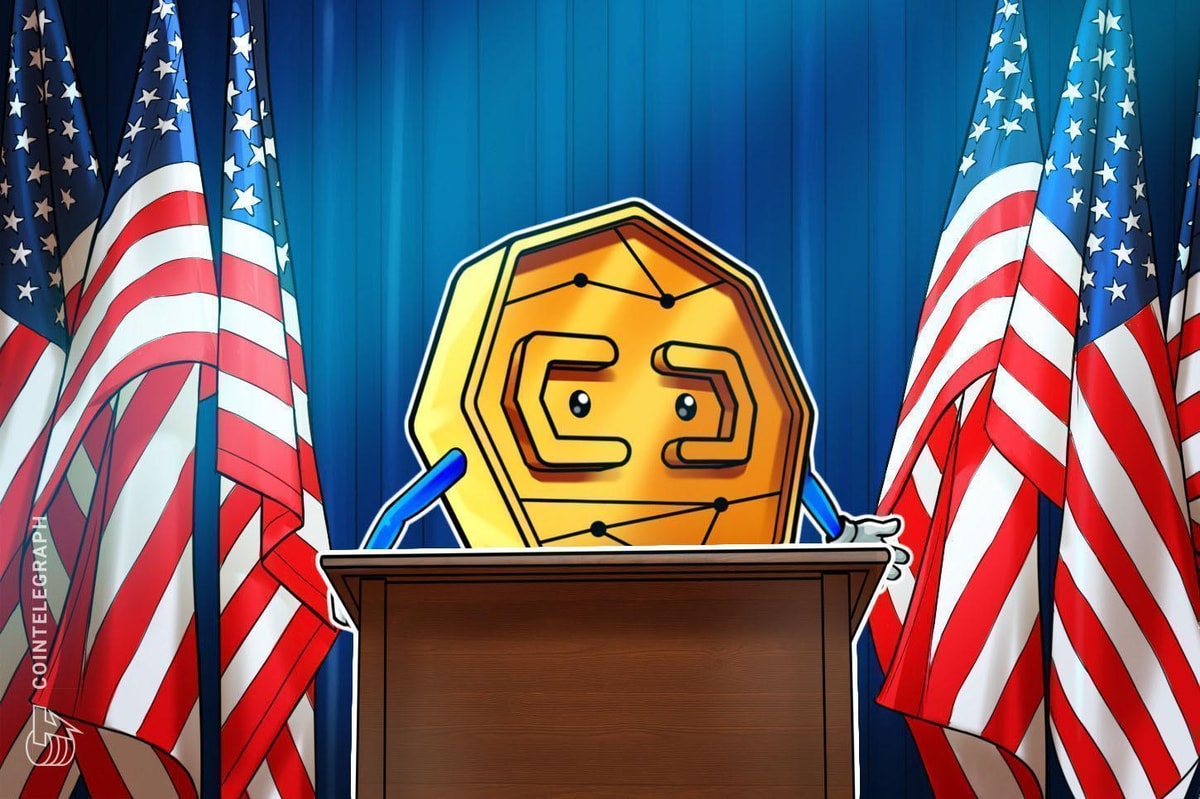

US lawmakers have introduced a discussion draft that would ease the tax burden on everyday crypto users by exempting small stablecoin transactions from capital gains taxes and offering a new deferral option for staking and mining rewards.
The proposal, introduced by Representatives Max Miller of Ohio and Steven Horsford of Nevada, seeks to amend the Internal Revenue Code to reflect the growing use of digital assets in payments. The draft is set “to eliminate low-value gain recognition arising from routine consumer payment use of regulated payment stablecoins,” per the draft.
Under the draft, users would not be required to recognize gains or losses on stablecoin transactions of up to $200, provided the asset is issued by a permitted issuer under the GENIUS Act, pegged to the US dollar and maintains a tight trading range around $1.
The bill includes safeguards to prevent abuse. The exemption would not apply if a stablecoin trades outside a narrow price band, and brokers or dealers would be excluded from the benefit. Treasury would also retain authority to issue anti-abuse rules and reporting requirements.
Related: Crypto Biz: Bank stablecoins get a rulebook; Bitcoin gets a land grab
US bill defers taxes on crypto staking rewards
Beyond payments, the proposal addresses long-standing concerns around “phantom income” from staking and mining. Taxpayers would be allowed to elect to defer income recognition on staking or mining rewards for up to five years, rather than being taxed immediately upon receipt.
“This provision is intended to reflect a necessary compromise between immediate taxation upon dominion & control and full deferral until disposition,” the draft said.
The draft also extends existing securities lending tax treatment to certain digital asset lending arrangements, applies wash sale rules to actively traded crypto assets, and allows traders and dealers to elect mark-to-market accounting for digital assets.
Related: Galaxy predicts stablecoins will overtake ACH transaction volume in 2026
Crypto groups urge Senate to rethink stablecoin rewards ban
Last week, the Blockchain Association sent a letter to the US Senate Banking Committee, signed by more than 125 crypto companies and industry groups, opposing efforts to extend restrictions on stablecoin rewards to third-party platforms.
The group argued that expanding the GENIUS Act’s limits beyond stablecoin issuers would curb innovation and increase market concentration in favor of large incumbents. The letter compared crypto rewards to incentives commonly offered by banks and credit card companies, warning that banning similar features for stablecoins would undermine fair competition.
Magazine: 2026 is the year of pragmatic privacy in crypto — Canton, Zcash and more
Politics
Watchdog criticises ‘unprecedented’ government offer to delay local elections – as five councils confirm requests for postponement
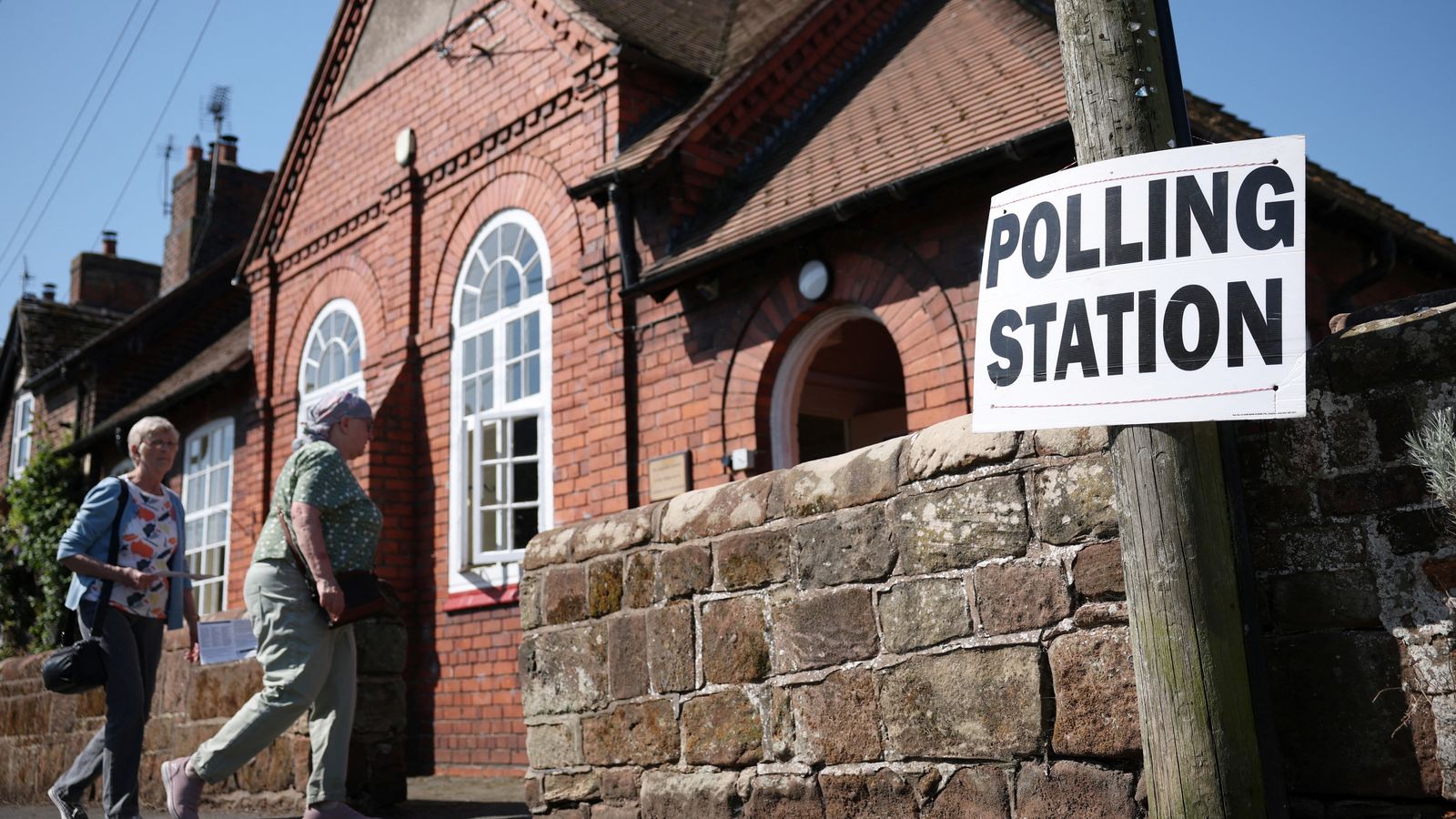
The elections watchdog has criticised the government for offering to consider delaying 63 local council elections next year – as five authorities confirmed to Sky News that they would ask for a postponement.
On Thursday, hours before parliament began its Christmas recess, the government revealed that councils were being sent a letter asking if they thought elections should be delayed in their areas due to challenges around delivering local government reorganisation plans.
The chief executive of the Electoral Commission, Vijay Rangarajan, hit out at the announcement on Friday, saying he was “concerned” that some elections could be postponed, with some having already been deferred from 2025.
“We are disappointed by both the timing and substance of the statement. Scheduled elections should, as a rule, go ahead as planned, and only be postponed in exceptional circumstances,” he said in a statement.
“Decisions on any postponements will not be taken until mid-January, less than three months before the scheduled May 2026 elections are due to begin.
“This uncertainty is unprecedented and will not help campaigners and administrators who need time to prepare for their important roles.”
Mr Rangarajan added: “We very much recognise the pressures on local government, but these late changes do not help administrators. Parties and candidates have already been preparing for some time, and will be understandably concerned.”
He said “capacity constraints” were not a “legitimate reason for delaying long planned elections”, which risked “affecting the legitimacy of local decision-making and damaging public confidence”.
The watchdog chief also said there was “a clear conflict of interest in asking existing councils to decide how long it will be before they are answerable to voters”.
Sky News contacted the 63 councils that have been sent the letter about potentially delaying their elections.
At the time of publication, 17 authorities had replied with their decisions, while 33 said they would make up their minds before the government’s deadline of 15 January.
Many councils told Sky News they were surprised at yesterday’s announcement, saying that they had been fully intending to hold their polls as scheduled.
They said they were now working to understand the appropriate democratic mechanism for deciding whether to request a postponement of elections. Some local authorities believe it should be a decision made by their full council, while others will leave it up to council leaders or cabinet members to decide.
Multiple councils also emphasised in statements to Sky News that the ultimate decision to delay elections lay with the government.
Reform UK has threatened legal action against ministers, accusing Labour and the Tories of “colluding” to postpone elections in order to lock other parties out of power – a sentiment echoed by Liberal Democrat leader Sir Ed Davey.
But shadow local government secretary Sir James Cleverly told Sky News this morning that the Conservative Party “wants these elections to go ahead”. Sky News understands that the national party is making that position clear to local leaders.
A spokesperson for the Ministry of Housing, Communities, and Local Government, said it was taking a “locally-led approach”, and emphasised that “councils are in the best position to judge the impact of postponements on their area”.
They added: “These are exceptional circumstances where councils have told us they’re struggling to prepare for resource-intensive elections to councils that will shortly be abolished, while also reorganising into more efficient authorities that can better serve local residents.
“There is a clear precedent for postponing local elections where local government reorganisation is in progress, as happened in 2019 and 2022.”
The five councils that confirmed they would be seeking postponements were:
- Blackburn with Darwen Council (Labour);
- Chorley Borough Council (Labour);
- East Sussex County Council (Conservative minority);
- Hastings Borough Council (Green minority);
- West Sussex County Council (Conservative).
The councils in Chorley, and East and West Sussex, had decided prior to Thursday’s government announcement that they would request a delay.
An East Sussex County Council spokesperson told Sky News: “It is welcome that the government is listening to local leaders and has heard the case for focussing our resources on delivery in East Sussex, particularly with devolution and reorganisation of local government, as well as delivering services to residents, such high priorities.”
They also pointed to the cost of electing councillors for a term of just one year, and argued that it would be “more prudent for just one set of elections to be held in 2027”.
Read more from Sky News:
David Walliams dropped by publisher
Woman jailed for plotting to murder husband
Christmas number one revealed
West Sussex County Council echoed those reasons and said it would cost taxpayers across the county £9m to hold elections in 2026, 2027, and 2028, as currently planned.
Chorley and Blackburn councils also cited the cost of delivering elections, and said they would prefer that money be spent on delivering the local government reorganisation and delivering services to local residents.
Meanwhile, 12 councils confirmed to Sky News that they would not be requesting delays:
- Basingstoke and Deane Borough Council (Liberal Democrat-Independents);
- Broxbourne Borough Council (Conservative);
- Colchester City Council (Labour-Liberal Democrat);
- Eastleigh Borough Council (Liberal Democrat);
- Essex County Council (Conservative);
- Hart District Council (Liberal Democrat-Community Campaign);
- Hastings Borough Council (Green minority);
- Isle of Wight Council (no overall control);
- Newcastle-under-Lyme Borough Council (Conservative);
- Portsmouth City Council (Liberal Democrat minority);
- Rushmoor Borough Council (Labour minority);
- Southampton City Council (Labour).
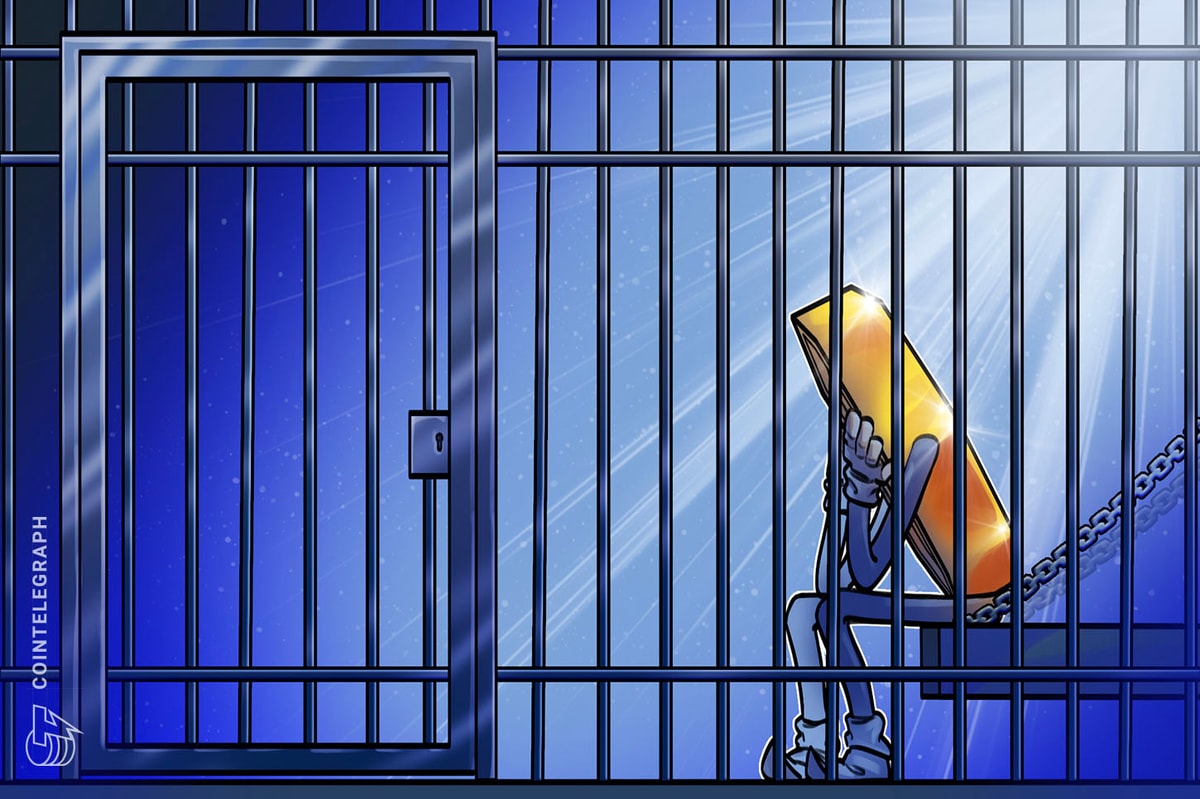

Keonne Rodriguez, who pleaded guilty to one felony count related to his role at Samourai Wallet, is calling on US President Donald Trump to pardon him, citing similar language that has been successful in previous pardon applications.
In a Thursday X post, Rodriguez said he would report to prison on Friday, where he will serve a five-year sentence for operating an illegal money transmitter. The Samourai co-founder claimed there were no “victims” to his crime, and blamed his incarceration on “lawfare perpetrated by a weaponized Biden DOJ.”
In a message tagging Trump, Rodriguez expressed hope that the US president would issue a federal pardon for him and William “Bill” Lonergan Hill, another Samourai executive who pleaded guilty and was sentenced to four years. Rodriguez blamed “activist judges” for his legal troubles, claiming he was targeted by a “political anti-innovation agenda.”
“I maintain hope that [Trump] is a fair man, a man of the people, who will see this prosecution for what it was: an anti innovation, anti american, attack on the rights and liberties of free people,” said Rodriguez. “I believe his team […] and others truly want to end the weaponization of the DOJ that the previous administration wielded so effectively […] I believe he will continue to wield that power for good and pardon me and Bill.”
Related: Samourai Wallet co-founders to now plead guilty to US charges
Rodriguez’s public plea followed Trump’s statement that he would “take a look” at a pardon for the Samourai co-founder, claiming that he had no knowledge of the case. It’s unclear whether Rodriguez filed an official application for a pardon or is relying on public statements to get the president’s attention.
Other crypto execs successfully lobbied for a Trump pardon
One of Trump’s first acts as president in January was to issue a pardon for Silk Road founder Ross Ulbricht, who had been serving a life sentence for his role in creating and operating the darknet marketplace.
Former Binance CEO Changpeng “CZ” Zhao, who pleaded guilty to one felony in 2023 related to the exchange’s Anti-Money Laundering program, served four months in prison but also received a pardon from the president. Trump later said he “[knew] nothing about” Zhao when asked about the pardon in a November interview.
Rodriguez’s language addressing Trump mirrored comments from the White House on previous pardons. For example, Press Secretary Karoline Leavitt said it was a “weaponization of justice from the previous administration” when the president commuted the sentence of David Gentile, who was convicted of defrauding “thousands of individual investors in a $1.6 billion” scheme in 2024.
Crypto users on Polymarket were not given the choice of betting on the odds of a Trump pardon of Rodriguez as of Friday. At the time of publication, Trump ally Steve Bannon had the highest odds, at 9%.
Magazine: When privacy and AML laws conflict: Crypto projects’ impossible choice
-
 Sports2 years ago
Story injured on diving stop, exits Red Sox game
-
 Sports3 years ago
‘Storybook stuff’: Inside the night Bryce Harper sent the Phillies to the World Series
-
 Sports2 years ago
Game 1 of WS least-watched in recorded history
-
 Sports3 years ago
Button battles heat exhaustion in NASCAR debut
-
 Sports3 years ago
MLB Rank 2023: Ranking baseball’s top 100 players
-
Sports4 years ago
Team Europe easily wins 4th straight Laver Cup
-
 Environment3 years ago
Japan and South Korea have a lot at stake in a free and open South China Sea
-
 Environment1 year ago
Here are the best electric bikes you can buy at every price level in October 2024