

Polygon-backed, high-yield blockchain launches for institutional adoption

The Katana Foundation, a nonprofit focused on decentralized finance (DeFi) development, is launching its private mainnet, aiming to unlock greater crypto asset productivity via deeper liquidity and higher yields for users.
The Katana Foundation launched a DeFi-optimized, private blockchain, Katana, on May 28, incubated by GSR Markets and Polygon Labs, with the public mainnet launch set for June.
The new blockchain will enable users to earn higher yields and explore DeFi in a “unique, optimized yield environment” that unlocks latent value through an ecosystem that makes every digital asset “work harder,” according to an announcement shared with Cointelegraph.
“DeFi users deserve ecosystems that prioritize sustainable liquidity and consistent ‘real’ yields,” wrote Marc Boiron, the CEO of Polygon Labs and core contributor at Katana, adding:
“Katana’s user-centric model turns inefficiencies into advantages, establishing a truly positive-sum environment for builders and participants alike.”

Katana aims to solve the crypto industry’s liquidity fragmentation issue, which can cause significant price slippage, as one of the main barriers limiting institutional DeFi participation
Related: Here’s how abstraction minimizes fragmentation in DeFi, making it more fluid
To reduce the value slippage in DeFi, Katana’s blockchain concentrates the liquidity from numerous protocols and collects yields on all potential sources to create an ecosystem with deeper liquidity and more predictable lending and borrowing rates.

Institutional participation in DeFi is set to triple over the next two years to 75% from 24% of 350 surveyed institutional investors, according to management consulting firm EY-Parthenon.
To tackle the growing institutional liquidity needs, Katana’s liquidity pool is composed of multiple protocols, including lending protocol Morpho, decentralized exchange (DEX) Sushi and perpetual DEX Vertex, enabling users to trade “blue-chip assets” without needing crosschain transfers.
Katana has also incorporated Conduit’s sequences and Chainlink’s decentralized oracle network.
Related: Polygon CEO: DeFi must ditch hype for sustainable liquidity
Katana to compound DeFi yield from “Ethereum-based opportunities”
Katana aims to boost sustainable yield by building a cohesive DeFi ecosystem. For instance, VaultBridge deploys bridged assets into overcollateralized, curated lending strategies on Ethereum via Mopho to earn yield, which is routed back and compounded on Katana.
The protocol will reinvest network fees and a portion of application revenue back into its ecosystem.
“This reduces reliance on short-term incentives, generates consistent yield, and as it grows, acts as an increasingly stable backstop during periods of volatility and liquidity shocks,” Polygon Labs’ Boiron told Cointelegraph, adding:
“Yield is distributed pro-rata to each chain using VaultBridge protocol based on their share of total deposits into VaultBridge.”
“So if Katana supplies 20% of the total vault deposits, it receives 20% of the yield back,” he added.
Katana will subsequently allocate its share of yield to users through boosted DeFi incentives across “core apps” such as Sushi, Morpho or Vertex. The yield is generated from “Ethereum-based opportunities and then enhanced through Katana’s core applications,” said Boiron.
Polygon Labs’ CEO previously criticized DeFi protocols for fueling a cycle of “mercenary capital” by offering sky-high annual percentage yields (APYs) through token emissions.
Beyond infrastructure-related limitations, regulatory uncertainty remains another significant barrier to institutional DeFi adoption.

Regulatory concerns were the main barrier to entry, flagged by 57% of institutional investors as the main reason for not planning to participate in DeFi activities.
Magazine: DeFi will rise again after memecoins die down: Sasha Ivanov, X Hall of Flame
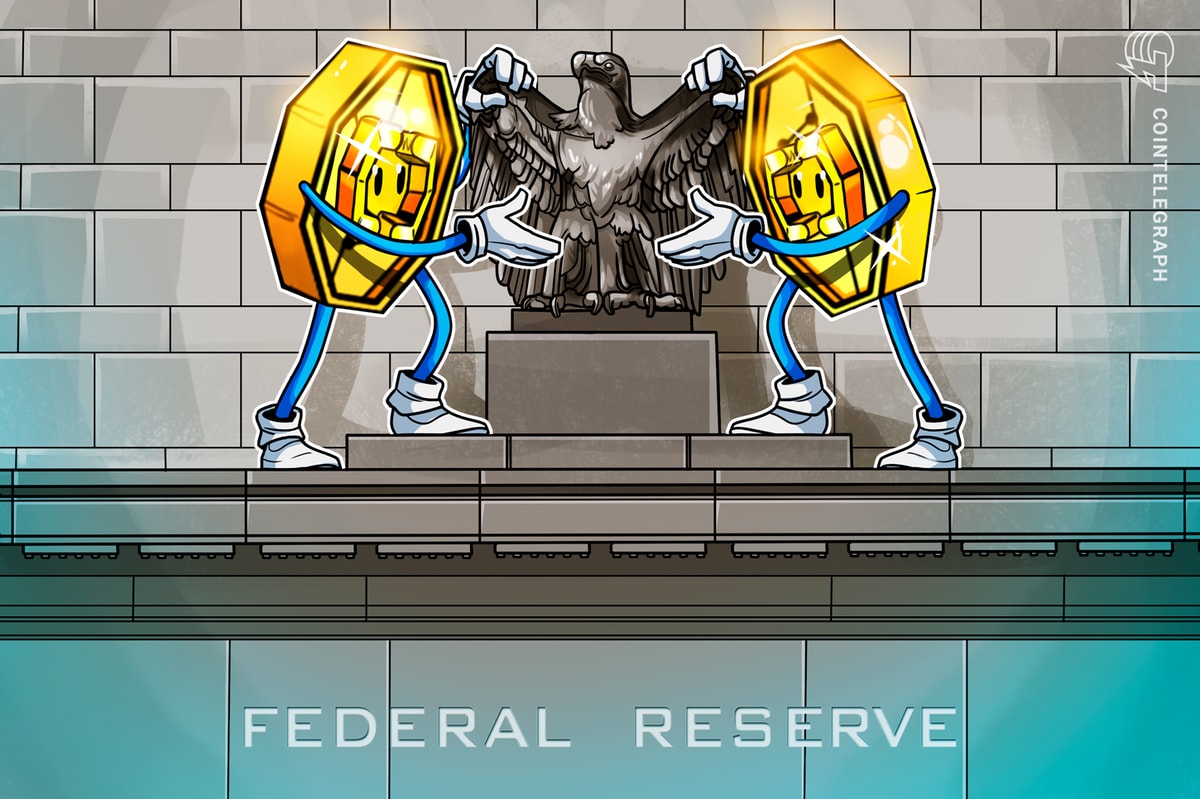
Prediction markets Polymarket and Kalshi view Kevin Hassett, US President Donald Trump’s National Economic Council director, as the favorite to replace Jerome Powell as the next Federal Reserve chair.
The odds of Hassett filling the seat have spiked to 66% on Polymarket and 74% on Kalshi at the time of writing. Hassett is widely viewed as crypto‑friendly thanks to his past role on Coinbase’s advisory council, a disclosed seven‑figure stake in the exchange and his leadership of the White House digital asset working group.
Founder and CEO of Wyoming-based Custodia Bank, and a prominent advocate for crypto-friendly regulations, Caitlin Long, commented on X:
“If this comes true & Hassett does become Fed chairman, anti-#crypto people at the Fed who still hold positions of power will finally be out (well, most of them anyway). BIG changes will be coming to the Fed.”

Related: Crypto-friendly Trump adviser Hassett top pick for Fed chair: Report
Kevin Hassett’s crypto credentials
Hassett is a long-time Republican policy economist who returned to Washington as Trump’s top economic adviser and has now emerged as the market-implied frontrunner to lead the Fed.
His financial disclosure reveals at least a seven‑figure Coinbase stake and compensation for serving on the exchange’s Academic and Regulatory Advisory Council, placing him unusually close to the crypto industry for a potential Fed chair.
Still, crypto has been burned before by reading too much into “crypto‑literate” resumes. Gary Gensler arrived at the Securities and Exchange Commission with MIT blockchain courses under his belt, but went on to preside over a wave of high‑profile enforcement actions, some of which critics branded as “Operation Chokepoint 2.0.”
A Hassett-led Fed might be more open to experimentation and less reflexively hostile to bank‑crypto activity. Still, the institution’s mandate on financial stability means markets should not assume a one‑way bet on deregulation.
Related: Caitlin Long’s crypto bank loses appeal over Fed master account
Supervision pushback inside the Fed
The Hassett odds have jumped just as the Fed’s own approach to bank supervision has received pushback from veterans like Fed Governor Michael Barr, who earned his reputation as one of Operation Chokepoint 2.0’s key architects.
According to Caitlin Long, while he Barr “was Vice Chairman of Supervision & Regulation he did Warren’s bidding,” and he “has made it clear he will oppose changes made by Trump & his appointees.”
On Nov. 18, the Fed released new Supervisory Operating Principles that shift examiners toward a “risk‑first” framework, directing staff to focus on material safety‑and‑soundness risks rather than procedural or documentation issues.
In a speech the same day, Barr warned that narrowing oversight, weakening ratings frameworks and making it harder to issue enforcement actions or matters requiring attention could leave supervisors slower to act on emerging risks, arguing that gutting those tools may repeat pre‑crisis mistakes.
Days later, in Consumer Affairs Letter 25‑1, the Fed clarified that the new Supervisory Operating Principles do not apply to its Consumer Affairs supervision program (an area under Barr’s committee as a governor).
If prediction markets are right and a crypto‑friendly Hassett inherits this landscape, his Fed would not be writing on a blank slate but stepping into an institution already mid‑pivot on how hard (and where) it leans on banks.
Magazine: EU’s privacy-killing Chat Control bill delayed — but fight isn’t over

HashKey Holdings, the parent company of one of Hong Kong’s biggest licensed crypto exchanges, moved a step closer to a public listing, according to new filings from the Hong Kong Stock Exchange (HKEX).
On Monday, the HKEX published a 633-page post-hearing information pack for HashKey Holdings. The document was published at the request of The Stock Exchange of Hong Kong Limited and the local financial regulator, the Securities and Futures Commission (SFC).
A post-hearing information pack is only published after HKEX’s listing committee formally clears an applicant at the listing hearing. In other words, without explicitly stating it, this document indicates that HashKey has moved closer to listing on the exchange and is progressing toward its initial public offering (IPO).
At the same time, the document stressed that the deal is not yet finalized. “The listing application referred to in this document has not yet been approved; the HKEX and the SFC may accept, return, or reject the public offering and/or listing application.”
This is standard HKEX disclaimer language and does not contradict HashKey’s approval. Instead, it refers to the listing being dependent on completing the offering documents.

Related: Bitkub exchange eyes Hong Kong IPO as Thai markets slump to 5-year lows: Report
HashKey’s IPO is likely to attract significant attention
The news follows early October reports that HashKey was aiming for an IPO and a listing in Hong Kong this year. At the time, the report was largely based on rumors, citing anonymous sources with purported knowledge of the matter.
HashKey is Hong Kong’s top crypto exchange with a 24-hour volume of nearly $108 million at the time of writing, according to CoinGecko data. The information pack also listed the world’s top bank, JPMorgan, and local financial institutions Guotai Junan International and Haitong International as joint sponsors for the listing.
Interest in the offering is likely high, considering that in mid-February, China-based Gaorong Ventures reportedly invested $30 million in HashKey, granting it unicorn status. The pre-money valuation of the investment was purportedly almost $1.5 billion, but reports cited unidentified sources that could not be independently verified.
The platform is also looking to expand its reach. In early January, its subsidiary HashKey Europe received approval for a virtual asset service provider license from the Central Bank of Ireland.
Related: Crypto bank AMINA gets Hong Kong license to launch institutional trading
China quarantines Hong Kong’s crypto industry
Hong Kong’s growing crypto industry is not well-received by mainland Chinese authorities. Hong Kong began accepting applications from stablecoin issuers in August after introducing a dedicated regulatory framework.
The introduction of the stablecoin licenses in Hong Kong attracted the interest of Chinese technology giants, including Ant Group and JD.com. At the time, reports suggested that HSBC and the Industrial and Commercial Bank of China (ICBC) planned to apply for stablecoin licenses in Hong Kong.
However, Chinese authorities told local firms to stop publishing research or holding seminars related to stablecoins in early August. In September, a now-deleted report by Chinese financial outlet Caixin claimed that mainland Chinese companies operating in Hong Kong may be forced to withdraw from cryptocurrency-related activities.
This was followed by reports in late October that Chinese technology giants, including Ant Group and JD.com, had reportedly suspended plans to issue stablecoins in Hong Kong due to regulatory concerns. On Saturday, the People’s Bank of China — mainland China’s central bank — said after a meeting with 12 other agencies that “virtual currency speculation has resurfaced,” reiterating that “virtual currency-related business activities constitute illegal financial activities,” in line with its 2021 ban on crypto trading and mining.
Magazine: Hong Kong isn’t the loophole Chinese crypto firms think it is

Sony Bank, the online lending subsidiary of Sony Financial Group, is reportedly preparing to launch a stablecoin that will enable payments across the Sony ecosystem in the US.
Sony is planning to issue a US dollar-pegged stablecoin in 2026 and expects it to be used for purchases of PlayStation games, subscriptions and anime content, Nikkei reported on Monday.
Targeting US customers — who make up roughly 30% of Sony Group’s external sales — the stablecoin is expected to work alongside existing payment options such as credit cards, helping reduce fees paid to card networks, the report said.
Sony Bank applied in October for a banking license in the US to establish a stablecoin-focused subsidiary and has partnered with the US stablecoin issuer Bastion. Sony’s venture arm also joined Bastion’s $14.6 million raise, led by Coinbase Ventures.
Sony Bank has been actively venturing into Web3
Sony Bank’s stablecoin push in the US comes amid the company’s active venture into Web3, with the bank establishing a dedicated Web3 subsidiary in June.
“Digital assets utilizing blockchain technology are incorporated into a diverse range of services and business models,” Sony Bank said in a statement in May.
“Financial services, such as wallets, which store NFT (non-fungible tokens) and cryptocurrency assets, and crypto exchange providers are becoming increasingly important,” it added.

The Web3 unit, later named BlockBloom, aims to build an ecosystem that blends fans, artists, NFTs, digital and physical experiences, and both fiat and digital currencies.
Related: Animoca eyes stablecoins, AI, DePIN as it expands focus in 2026: Exec
Sony Bank’s stablecoin initiative follows the recent spin-off of its parent, Sony Financial Group, which was separated from Sony Group and listed on the Tokyo Stock Exchange in September.
The move was intended to decouple the financial arm’s balance sheet and operations from the broader Sony conglomerate, allowing each to sharpen its strategic focus.
Cointelegraph reached out to Sony Bank for comment regarding its potential US stablecoin launch, but had not received a response by the time of publication.
Magazine: Koreans ‘pump’ alts after Upbit hack, China BTC mining surge: Asia Express
-
 Sports2 years ago
Story injured on diving stop, exits Red Sox game
-
 Sports3 years ago
‘Storybook stuff’: Inside the night Bryce Harper sent the Phillies to the World Series
-
 Sports2 years ago
Game 1 of WS least-watched in recorded history
-
 Sports3 years ago
Button battles heat exhaustion in NASCAR debut
-
 Sports3 years ago
MLB Rank 2023: Ranking baseball’s top 100 players
-
Sports4 years ago
Team Europe easily wins 4th straight Laver Cup
-
 Environment3 years ago
Japan and South Korea have a lot at stake in a free and open South China Sea
-
 Environment1 year ago
Here are the best electric bikes you can buy at every price level in October 2024