

Xiaomi YU7 first drive: a $35,000 Ferrari-looking electric SUV with over 400 miles of real range


I had the chance to test drive the Xiaomi YU7 ahead of its launch today in China, and I came out of the entire experience both impressed and frustrated.
Let me try to explain why, and also why Western automakers are scared of these new Chinese EVs.
When I was a kid, I remember asking my dad why good-looking vehicles, like exotic supercars, cost so much more than regular cars. In my childish innocence, while I could understand that more performance and higher quality materials cost more, I couldn’t wrap my head around why automakers couldn’t make average performing cars with regular materials but with more aggressive and cooler designs.
My dad tried his best to explain the concept of scarcity and the limitations of different form factors in achieving higher sales volumes, but we ultimately agreed that automakers could technically produce more affordable vehicles with better, more aggressive designs.
Of course, concepts like manufactured scarcity are complex to understand as a child, but the thought did stick with me that a company could mass-produce great exotic-looking cars for more reasonable prices.
That’s basically what Xiaomi is doing now.
One of Xiaomi’s taglines is “make innovative technology accessible to everyone.” That sounds like corporate talk, but I have to admit that it is living up to it with its electric vehicles. I’m not as familiar with its electronics, but I am hearing it’s a similar situation.
The company is facing criticism for the SU7’s resemblance to the Porsche Taycan, and now the YU7’s similarity to the Ferrari Purosangue is undeniable. However, you can’t tell me there’s no market for an all-electric Purosangue with actually higher performance, better tech, more utility, and for a tenth of the price?


That’s basically what the Xiaomi YU7 is and more.
Ultimately, every great car design is heavily inspired by other vehicles. Xiaomi CEO Lei Jun has been spotted driving the Purosangue, Ferrari’s latest $400,000 performance SUV, and it sounds like he thought: “Wouldn’t be nice if this were all-electric, with Xiaomi tech, and more affordable so hundreds of thousands of people could experience it?”
It turns out that, yes, it would be nice.
Xiaomi YU7 electric SUV Specs
Xiaomi is calling it an “SUV” due to the true meaning of the word: “sport utility vehicle,” but it doesn’t look like your average SUV.
When you lift the air suspension to the max (3″ of travel), it does look like more like one, but most of the time, it looks like a sporty wagon, which I love.
Xiaomi hasn’t been shy about going after the Tesla Model Y with the YU7, which is not a bad target considering it’s the best-selling vehicle in the world. The goal is drawing a lot of comparisons, so here are the dimensions compared with Tesla’s SUV:
| Model | Wheelbase | Length | Width* | Height | Kerb Weight |
|---|---|---|---|---|---|
| Xiaomi YU7 | 3,000 mm (118.1 in) | 4,999 mm (196.8 in) | 1,996 mm (78.6 in) | 1,600 mm (63.0 in) | 2,140 – 2,460 kg (4,718 – 5,423 lb) |
| Tesla Model Y (2025) | 2,891 mm (113.8 in) | 4,751 mm (187 in) | 1,920 mm (75.6 in) | 1,624 mm (63.9 in) | 1,884 – 1,998 kg (4,154 – 4,404 lb) |
As you can see, it is about a foot longer than the Model Y, 3 inches wider, and a little shorter.
It’s also quite a bit heavier, but that’s because it’s equipped with a significantly larger battery pack.
Tesla doesn’t officially disclose the capacity of its battery pack, but in the latest Model Y, they are estimated to be about 62 kWh for the base version and ~80 kWh for the long range version.
As for the YU7, it features a 96 kWh battery pack with LFP cells from BYD in both the standard and Pro versions.
The YU7 Max, the version I tested, is equipped with a 101 kWh battery pack with NMC battery cells from CATL.
The result is that the base YU7 achieves 835 km of range on a single charge, while the Max version achieves 760 km. The base version is equipped with a single RWD motor, making it the most efficient and therefore, the longest range.
Here are all the ranges of the different variants compared to Tesla’s own CLTC range in China:
| Variant | CLTC Range (km / mi) |
|---|---|
| Xiaomi YU7 (RWD) | 835 km / 519 mi |
| Xiaomi YU7 Pro (AWD) | 770 km / 478 mi |
| Xiaomi YU7 Max (AWD) | 760 km / 472 mi |
| Tesla Model Y RWD | 593 km / 369 mi |
| Tesla Model Y Long Range AWD | 719 km / 447 mi |
The CLTC standard is based on the average driving cycle in China, which is more city driving-based than most other markets, and the range would be slightly lower on the WLTP or EPA cycles.
It is a heavy vehicle, but Xiaomi countered that with significant energy capacity. In my experience with the performance electric SUV, you could easily get 500 km of highway driving on a single charge with the Max as long as you don’t go too much over the speed limit.
I looked at the energy stats of the YU7 Max that Xiaomi let me test, and it had consumed 1,113 kWh over 4,868 km:

However, the vehicle had been used as a press car, with people, including myself, driving it quite aggressively up and down mountain roads, mostly in “sport mode,” for the last week.
Even then, it still achieved an efficiency 4.3 km per kWh. I could see the efficiency improve by double digits if driven more normally, with a higher mix of comfort or eco modes, and with the smaller wheels.
But if I only get a few hours with a vehicle, I’m likely to spend most of my time in sports mode.
If you run out of range, charging can be extremely fast with the YU7. Xiaomi claims a 5.2C peak charging capacity, which on the highest capacity chargers will result in charging from 10 to 80% state-of-charge in 21 minutes for the variants with LFP cells (Standard and Pro) and only 12 minutes for the Max, which is powered by NMC cells.
As for the YU7’s power capacity, here are the different motor variants:
| Variant | Motor Configuration | Power Output (kW) | Torque (Nm) | 0–100 km/h (s) | Top Speed (km/h) |
|---|---|---|---|---|---|
| YU7 (RWD) | Single rear-motor | 235 kW | 528 Nm | 5.88 | 240 |
| YU7 Pro (AWD) | Dual motors (front + rear) | 365 kW total | 690 Nm | 4.27 | 240 |
| YU7 Max (AWD) | Dual motors (220 kW front + 288 kW rear) | 508 kW total | 866 Nm | 3.23 | 253 |
Again, I can only discuss the Max version, which was the one available to us during the press test drives ahead of the launch.
Here’s my video that goes into details about the Xiaomi YU7:
Xiaomi YU7 Driving Impression
A little further down, I’ll talk about all the technology, connectivity, and user interface in the YU7. As Xiaomi is known for its consumer electronics, I had high expectations in that regard, and I was confident that they would impress me.
The vehicle aspect is where I had more doubts, but I kept an open mind. After all, Xiaomi didn’t even have a vehicle division 5 years ago, and now they have the best-selling premium sedan in the world’s largest auto market.
As I write this, I haven’t had the chance to test the SU7, but I’m trying to get some time in the vehicle before leaving China. Talking to other journalists who have driven it, I’m told that it is a fun and impressive vehicle to drive, but that Xiaomi has also managed to make significant improvements and refinements with the YU7 in a short period of time.
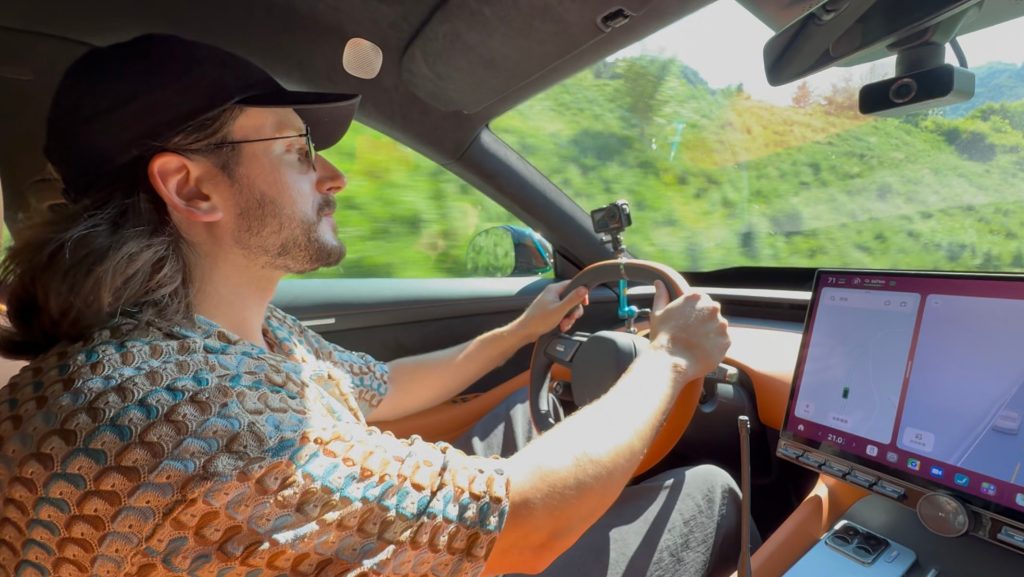
The YU7 is heavy, but with the Max’s more than 500 kW powertrain, the weight disappears instantly when you need to go. The vehicle feels solid and planted to the road, thanks to its low center of gravity, especially at the lowest suspension setting.
Speaking of the suspension, it features a double wishbone in the front and a 5-link independent setup in the back, paired with standard air suspension, which adds 3 inches of adjustable height. For this price point, it’s hard to beat.
We mostly drove the car up and down mountain roads about 3 hours outside of Beijing. I couldn’t reach anywhere near the car’s 253 km/h (157 mph) top speed, but I was able to experience some cornering and handling, and the suspension’s active dampening was useful.
A documentary crew has been following me on my travels in China, and they attempted to film me in a Land Rover Evoque equipped with a crane camera. However, the SUV kept overheating before reaching the top of the 4-km hill climb, whereas the YU7 managed to complete the climb repeatedly all afternoon without issue.
The battery cooling system would be a bit loud, but you would only hear it from the outside, as the cabin isolation is incredible in this car. Xiaomi used double-paned glass everywhere, complemented by active noise canceling. It is exceptionally quiet, which is a big part of a luxury car experience in my book.
Another thing that I’ve found extremely impressive with the YU7 is the level of customization. Even something as simple as regenerative braking can be customized. You have a low, normal, and custom mode. In the custom mode, you can choose to have regen braking anywhere between 0 and 100%. At 100%, it is pretty much one pedal driving.
You can also customize your own driving mode with a ton of different options, including your power distribution from front to back, making the dual motor Max variant a RWD vehicle if you want:

I suggest watching my video about the YU7 for more details on customizing the driving modes.
The head-up display is also highly customizable. It’s not a typical HUD like augmented reality projecting onto the windshield – something the Xiaomi SU7 is equipped with.
The YU7 is instead equipped with a meter-long display that appears to be mounted deep into the dash. It’s an interesting feature that’s genuinely well-implemented. You can set it up to have your instrument cluster information on the driver side, and the position of the display, which almost appears to be floating between the dash and the windshield, is right at the bottom of your field of vision when driving.

The advantage is that everyone inside the car can actually see, unlike an augmented reality heads-up display. With the level customization, it can be useful to all passengers – although primarily the front passenger.
The high level of customization, both at the software level and at the accessory level, makes me feel like YU7 owners could really tune the vehicle to their liking over time, and your experience would get a lot better over the first few months as you learn more about the car.
At the accessory level, Xiaomi even offers a seamless add-on that snaps at the bottom of the main display to add analog buttons for climate control and a media volume dial.
The seats are perforated, ventilated, and extremely comfortable. Both front seats have massaging functions as standard, and they can lie back into zero-gravity position. Yes, even the driver’s seat.

The level of comfort is pretty impressive for a vehicle in that price range.
There’s also a lot of room in the back seats, which are also reclining, albeit not as much as the front seats, but they still go back to 135 degrees:
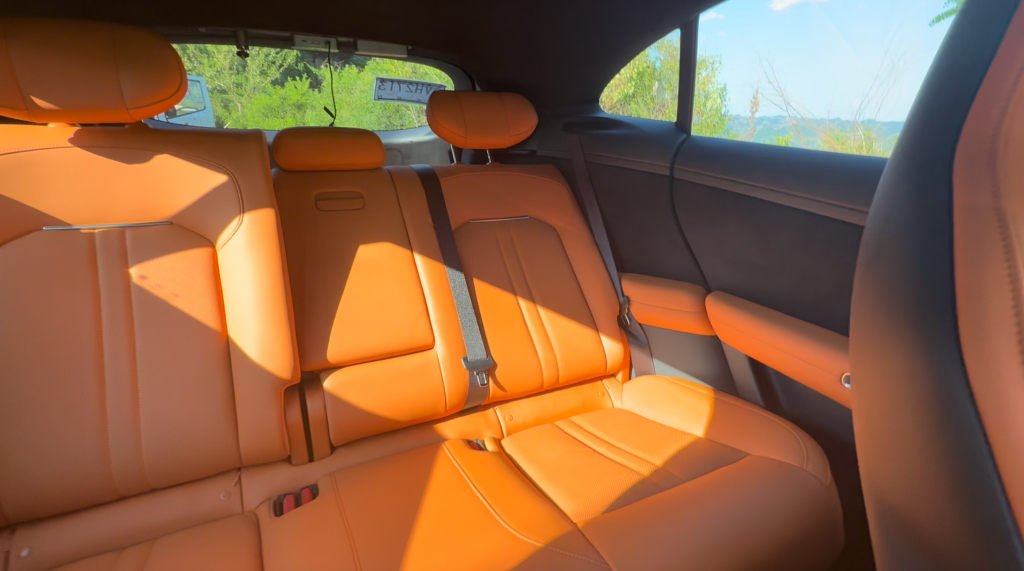
From the back seat, you can also access an optional mini fridge that fits under the center console. There are also optional mounting systems for tablets to fit behind each of the front seats.
Since Xiaomi has many smart home devices, YU7 owners can also purchase magnetic customizable buttons that can snap onto the center console or the B pillars and they can link into the Xiaomi app to initiate functions inside your car or your home if you have smart devices.
Honestly, there are too many tech and connectivity features in this car to list them out, but I do go through a lot of them in my video review.
The last piece of tech I’ll discuss is the ADAS system, which it is Xiaomi HAD. Xiaomi has packed the YU7 with an impressive ADAS hardware suite that includes one roof-mounted LiDAR with a 200-metre (660 ft) range, one 4D mmWave radar, 11 cameras, and 12 ultrasonic sensors, and uses an Nvidia DRIVE AGX Thor-U chip capable of 700 TOPS.
Xiaomi is not talking about achieving unsupervised self-driving capabilities with this yet, but it is future-proofing with the extensive hardware suite and this is currently only sold in China, which currently doesn’t allow level 3 and up automated systems in consumer vehicles.
We were able to test the current level 2 capacity, which includes automated lane changes on the highway, traffic-aware cruise control, and lane keeping, to a level similar to what I’ve experienced with Tesla Autopilot.

They even have a feature in beta that lets you see what the lidar sensor sees around the road in real-time.
The ADAS system also provides all the active safety features that you expect from a modern vehicle.
While it’s too early for the YU7 to have a safety rating, the SU7 had the highest overall score for any vehicle tested with the 2024 standards in the C-NCAP safety testing results.
For the YU7, Xiaomi developed its own ultra-strong steel alloy to reinforce several parts of the vehicle:


We won’t know until there’s indepent crash testing, but Xiaomi appears to be confident that the YU7 will perform well in those.
Xiaomi YU7 Pricing and availability
I drove the YU7 almost a week ago now, but we had an embargo until the launch event today, and Xiaomi didn’t want to elaborate on the price until CEO Lei Jun took the stage.
However, we had a fairly good idea based on the SU7 pricing and Xiaomi’s apparent attempt to target Tesla’s Model Y in the Chinese market.
Here’s the Xiaomi YU7 pricing per variant:
- YU7 Standard: 253,500 RMB (equivalent to $35,300 USD)
- YU7 Pro: 279,900 RMB (equivalent to $39,000 USD)
- YU7 Max: 329,900 RMB (equivalent to $46,000 USD)

As for availability, deliveries are starting now. I visited the factory yesterday and I saw hundreds of them coming out of it.
For now, the vehicle is only available in China, but Xiaomi is aiming to expand globally starting in 2027.
Electrek’s Take
As I mentioned at the beginning of this article, this was a frustrating test drive because I came out so impressed with this vehicle that I was frustrated knowing there’s no chance I or my friends in Canada and the US could buy it anytime soon due to ridiculous protectionist measures.
Honestly, I would trade my Model 3 performance in a heartbeat for a YU7, but that’s unlikely to happen anytime soon. I’m so impressed, I’m looking into ways to import it in Canada myself.
The form factor is incredible and works beautifully with the design. It packs 100 kWh of energy capacity, which is unprecedented for a vehicle in that price range.
Then, you have an incredibly fast-charging capability, and the vehicle is loaded with tech and connectivity features, all backed by an exceptionally smooth user interface. It’s a hard deal to pass on.
Finally, you add that it is packaged in a fit and finish that is on par, if not better than, what we have come to expect from premium automakers from the West.
Considering how quickly Xiaomi was able to ramp up production of the SU7 to over 30,000 units per month, and despite this, it still has a wait time of over 30 weeks for delivery, even though it is only sold in China, I wouldn’t be surprised if the YU7 becomes as popular, if not more so.
I think it will put a lot of pressure on other premium midsize SUVs in China, especially the Tesla Model Y.
The Xiaomi YU7 embodies why Western automakers are so concerned about Chinese EVs and have lobbied for tariffs on them. They can’t compete with this. At least, not now.
FTC: We use income earning auto affiliate links. More.

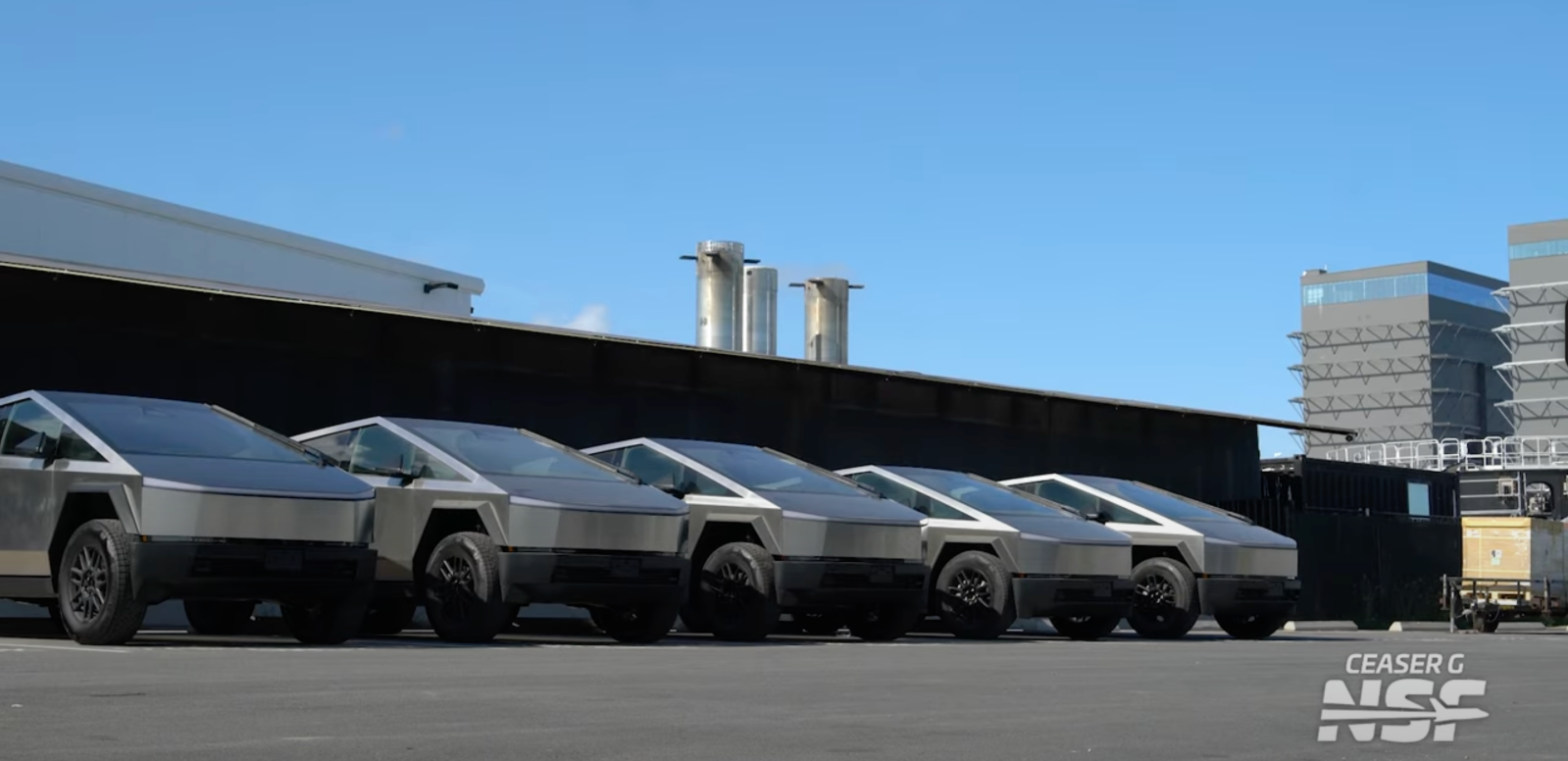
As demand for the Cybertruck can’t reach more than about 10% of Tesla’s planned production capacity, Elon Musk used his privately owned company to try to boost demand.
We now learn that SpaceX has bought tens of millions of dollars’ worth of Cybertrucks – potentially over a hundred million.
Elon Musk said that he expects Tesla to sell as many as 500,000 Cybertrucks per year.
Tesla actually planned to produce up to 250,000 Cybertrucks annually at the Gigafactory Texas. It never came even close to that.
The automaker is extremely opaque about its sales data, bundling Model S, Model X, and Cybertruck sales together.
However, based on registration data and historical split of Model S/X sales, we can estimate that Tesla is having issues selling even 20,000 Cybertrucks per year – less than 10% of its planned capacity.
By definition, the Cybertruck is a commercial flop.
Tesla boasted over 1 million reservations for the vehicle ahead of production, but it is estimated to have converted only about 60,000 of those reservations into orders since production began more than 2 years ago.
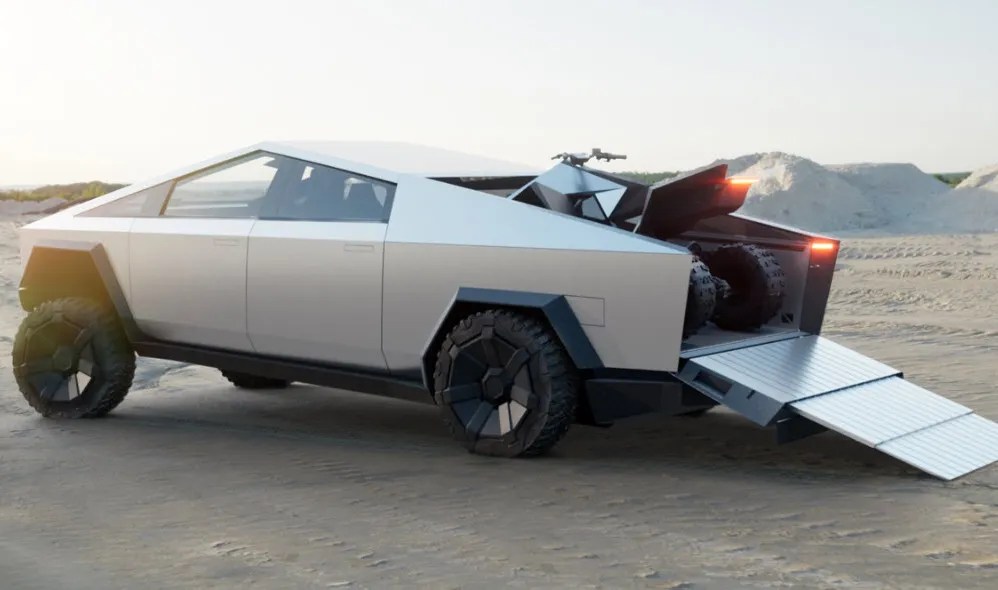
There are many reasons for this, but it is primarily because the Cybertruck costs much more than initially announced at the unveiling in 2019 and has less range and fewer cool features than the prototype.
SpaceX to the rescue
Earlier this year, we reported that Tesla started delivering truckloads of Cybertrucks to SpaceX and xAI, Elon Musk’s privately owned companies.
Now, a source familiar with the matter told Electrek that SpaceX bought over 1,000 Cybertrucks from Tesla and that it could ramp up to about 2,000 over time.
Hundreds of Cybertrucks can currently be seen parked in SpaceX’s lots in Southern Texas:
With a base price of $80,000, it would represent between $80 million and $160 million in sales.
It would be a significant help to Tesla’s performance in the fourth quarter, as the automaker is suffering from EV incentives ending in the US at the end of the third quarter, which remains Tesla’s most important market.
Electrek’s Take
SpaceX has been helping out Elon’s other companies quite a bit lately. It has reportedly committed to invest $2 billion into xAI, which is burning cash at an insane rate. Now, they are buying tens of millions to over a hundred million worth of Cybertruck, which are sitting in Tesla’s inventory, making its 4th quarter look even worse than it already is.
Can’t blame him here. This is legal. Although SpaceX investors might have concerns about how smart a purchase this is and what the utilization rate of those trucks looks like.


FTC: We use income earning auto affiliate links. More.

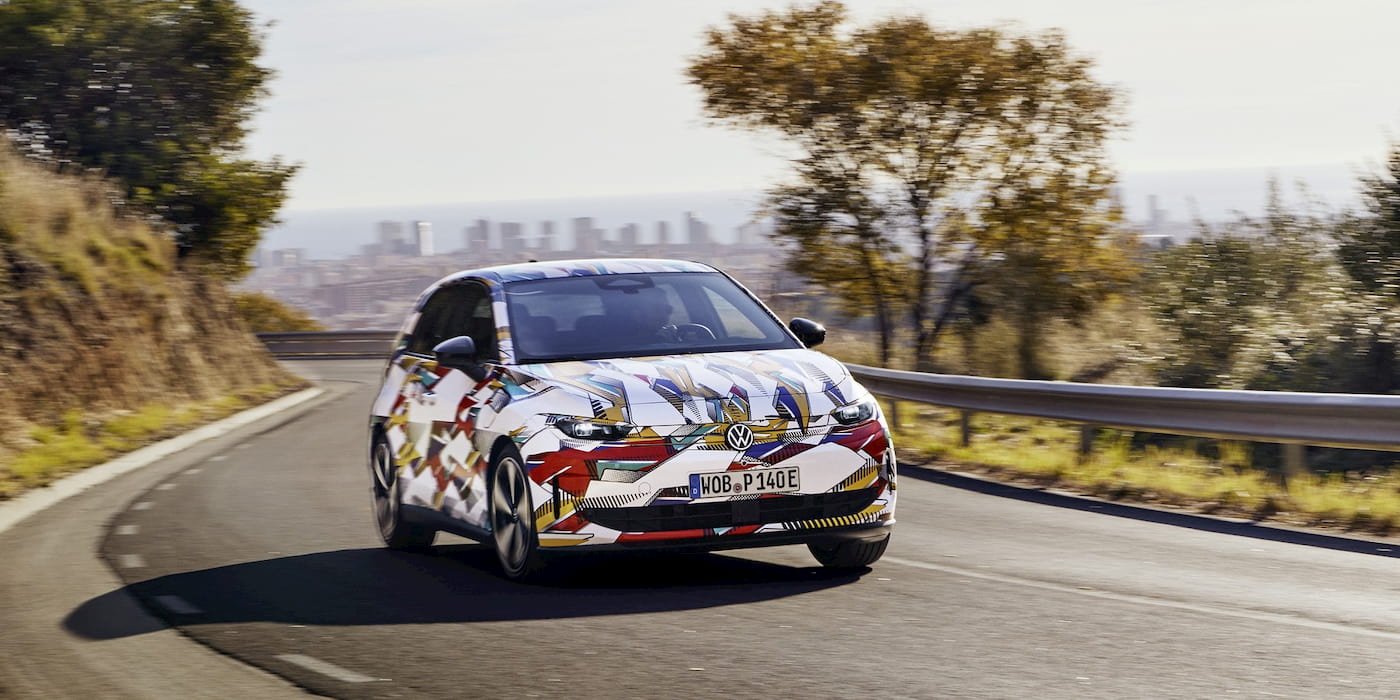
Volkswagen’s upcoming family of smaller, more affordable EVs will not be offered with a gas-powered engine. Volkswagen brand boss Thomas Schäfer said small gas cars make no sense, urging “the future in this segment is electric.”
Volkswagen shifts from small gas cars to EVs
During an interview with Auto Motor und Sport (via Ecomento), Schäfer explained that “Offering new gasoline-powered models in the Polo class and below makes no sense in light of future emissions regulations.”
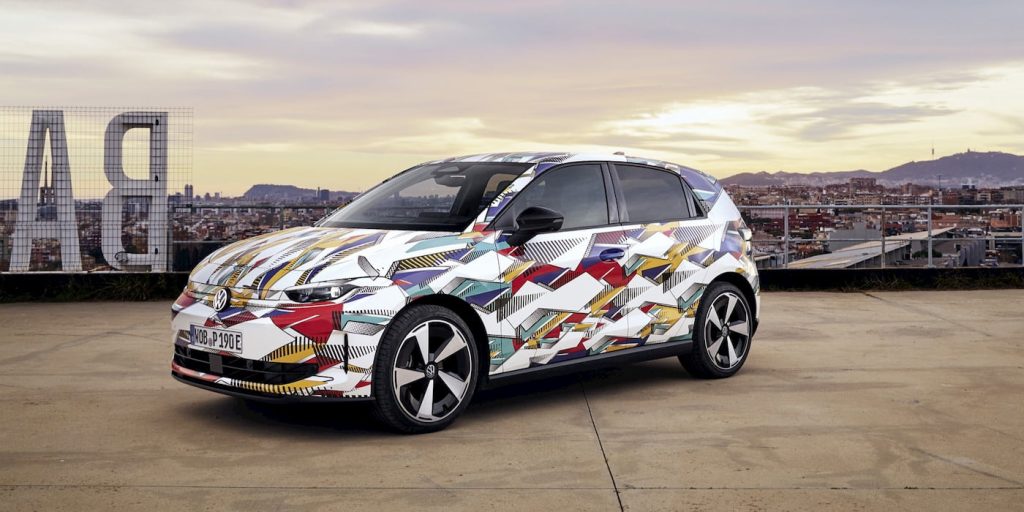
The comments come as the German auto giant prepares to launch its new family of mass-market electric cars, starting with the ID.Polo in Spring 2026.
“The future in this segment is electric,” Schäfer urged, adding that new gas cars would be “too expensive,” and wouldn’t make any sense.
With the Polo-sized electric car due out next year, the report suggests Volkswagen’s upcoming entry-level EVs will not get any sister models with a gas engine. Although the VW brand CEO didn’t say exactly how long it plans to continue selling ICE versions of the Polo and T-Cross, local reports suggest it could still be until 2030.
As for hydrogen-powered cars, Schäfer called them “a sham discussion” for the volume segment. “There simply isn’t enough green hydrogen, the fuel cell is far too expensive, and the technology isn’t efficient either,” he said.
“The only way to quickly decarbonize mass-market cars is through electric drive,” according to Schäfer. The ID.Polo is kicking off a new generation of Volkswagen as its first EV to bear an established brand name.
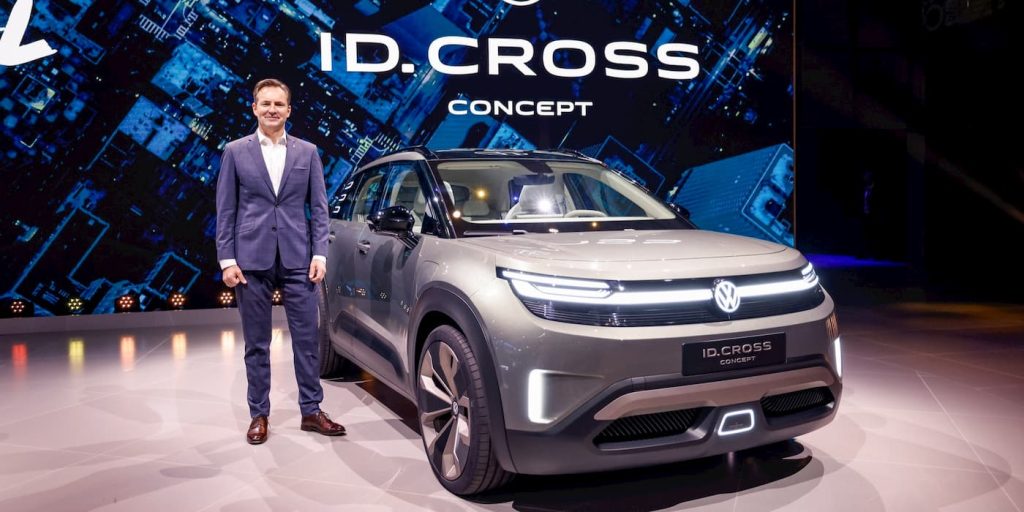
Volkswagen is set to launch the Polo EV in Europe next Spring, starting at around €25,000 ($30,000). The electric version of the T-Cross, the ID.Cross will follow it in mid-2026. Volkswagen has yet to reveal prices, but the ID.Cross is slated to sit below the ID.4, which starts at around €35,000 ($41,000).

Both will be based on VW’s new MEB+ platform, set to underpin Volkswagen’s upcoming entry-level EV series. An even smaller, lower-priced ID.1 is due out in 2027, which will serve as a replacement for the e-UP!.
Electrek’s Take
Finally, a global OEM has the right idea. Volkswagen appears to be finally on the right path with its new entry-level EV lineup.
Schäfer is correct. Small gas-powered cars don’t have a future, but it’s not just because of stricter emissions rules. Buyers are looking for smaller, more efficient electric vehicles.
Through the first 10 months of the year, electric vehicles accounted for 16.4% of vehicle registrations in Europe, up from 13.2% in October 2024.
According to data from the European Automobile Manufacturers’ Association, the market share of gas and diesel-powered cars fell to 36.6% from 46.3% during the same period.
Chinese and Korean brands, such as BYD, Kia, and Hyundai, are seeing early success in Europe with mass-market EVs like the Dolphin Surf, EV3, and Hyundai Inster EV. Volkswagen looks to grab its share with the ID.Polo and ID.Cross arriving in 2026.
FTC: We use income earning auto affiliate links. More.
Environment
Rivian rolls out software update 2025.46, including Universal Hands-Free driving and digital key for Apple and Android users


Rivian has just shared details of its latest over-the-air software update 2025.46, which includes some of the new features announced during its recent AI and Autonomy event last week. The update features a new digital key function for Gen 2 R1 owners, “flavorful” drive styles, kick turns, tuning, and, of course, Rivian’s new Universal Hands-Free driving capabilities.
There’s a lot to unfold with the 2025.46 software update, so we’ll provide a quick recap of our visit to Rivian’s Palo Alto facilities last week for its inaugural AI and Autonomy Day. During the exclusive event, Rivian executives, like founder and CEO RJ Scaringe, unveiled the company’s new in-house designed silicon chip, which will help power its new dedicated autonomy platform.
In addition to adding LiDAR to the upcoming R2 models, Rivian shared plans to expand its Enhanced Highway Assist ADAS to support Universal Hands-Free driving. That includes expanded availability of the feature from 135,000 miles to over 3.5 million miles of roads across the US and Canada.
According to Rivian, this availability is expected to start rolling out in early 2026. However, it appears the process is now underway with its latest software update, which includes a slew of other noteworthy upgrades.

2025.46 includes Rivian’s Universal Hands-Free driving
According to a blog post from Rivian this morning, a key rollout in its end-of-the-year software update is Universal Hands-Free driving, which significantly expands the number of roads on which R1 owners can engage the driving assist feature.
With update 2025.46, Gen 2 drivers can engage Universal Hands-Free on virtually any road where lane lines are clearly marked. Note that this is not a full autonomy feature (yet), so Hand-Free cannot slow or stop at lights or stop signs.
Speaking of autonomy, Rivian is introducing three new Drive Styles for its assisted driving features, including Universal Hands-Free, Highway Assist, Adaptive Cruise Control, and Lane Change on Command. After the update, R1 owners will be able to choose their “spice level” of autonomous functions:
- Mild: A relaxed style with more gap distance and more gradual lane changes.
- Medium: A balanced style to manage cut-ins and accelerate with traffic flow.
- Spicy: A more dynamic style with a tighter gap distance and quicker steering during lane changes.
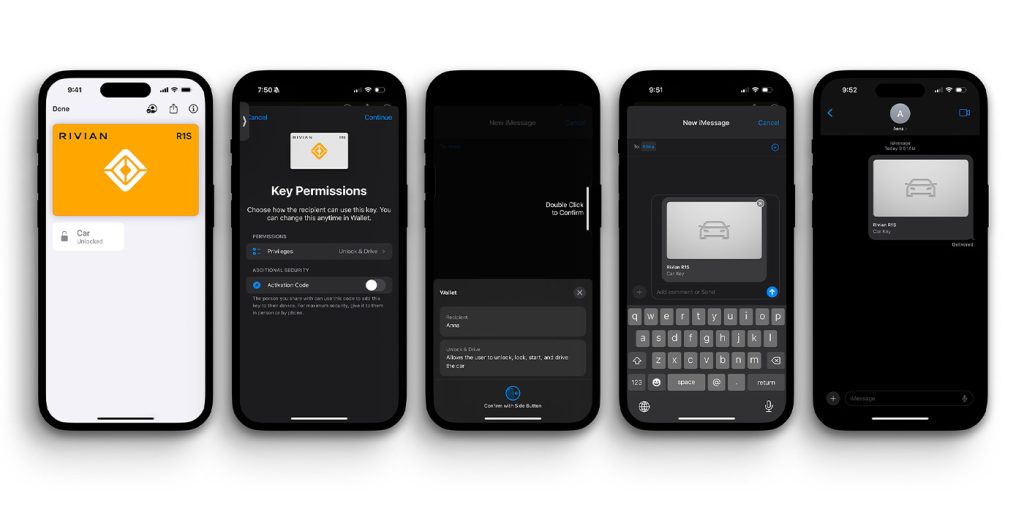
Another significant bonus, in addition to Universal Hands-Free, is Rivian’s new Digital Key feature for Gen 2 R1 owners. Following the 2025.46 update, owners will now be able to add their R1S or R1T key to their digital wallet on iPhone, Apple Watch, Google Pixel, or Samsung devices. Digital Key provides an additional means of easy access to your EV, as well as the ability to share keys with family and friends.
Other features in software update 2025.46 include a new way to view the Driver Display for both Gen 1 and Gen 2 R1 owners. Per Rivian:
Gen 2 drivers can now switch between the Autonomy view, which shows surrounding lanes and vehicles, and the Maps and Navigation view on the driver display. Gen 1 drivers can switch between the Driver Assistance view, which shows vehicles and objects up ahead, and the Maps and Navigation view on the driver display. Press the right thumbwheel on the steering wheel to swap.
Here’s an example:
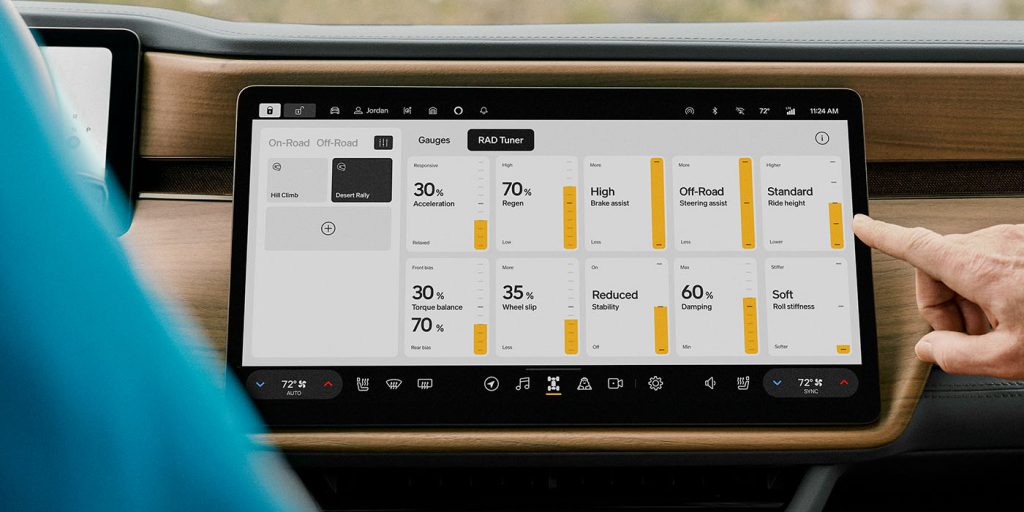
Last but not least, Rivian is introducing some exciting new features for R1 Quad owners. Software update 2025.46 includes a new tuner screen from the Rivian Adventure Department (RAD) – “a team of engineers, software developers, and designers who create and test features that push the boundaries of our vehicles.”
The RAD Tuner (seen below) was initially used by teams at Rebelle Rally and Pikes Peak, but is now available to Gen 2 Quad owners. Those drivers will be able to tune beyond Rivian’s factory presets and customize the vehicle’s behavior to their preferences and/or the terrain. Touch sliders control custom, savable drive modes that include factors such as acceleration, torque balance, and stability.
In addition to RAD Tuning, Rivian’s latest software update also includes the ability for Gen 2 Quad drivers to perform Kick Turns. Per the blog post:
Turn makes it easier to steer in tight off-road conditions while moving at speeds under 15 mph (24 km/h). It works by controlling the power and tire grip, letting the vehicle spin about its center, even when it’s moving. You can now make tighter turns with just a simple button press. When you engage Kick Turn, your R1 Quad smartly adjusts the power to the inside wheels, slowing them down or even reversing them. This precise control over wheel slip ensures your vehicle turns exactly as quickly and smoothly as you intend.
Electrek‘s Seth Weintraub tested it out in Lake Tahoe earlier this year, and it’s absolutely incredible. Check it out:
I have a Gen 2 R1S, so I’m looking forward to Universal Hands-Free rolling out so I can test it and report back. Stay tuned. If you haven’t test-driven a Rivian yet, I highly recommend doing so. You can schedule a demo drive at your nearest Rivian Space here.
FTC: We use income earning auto affiliate links. More.
-
 Sports2 years ago
Story injured on diving stop, exits Red Sox game
-
 Sports3 years ago
‘Storybook stuff’: Inside the night Bryce Harper sent the Phillies to the World Series
-
 Sports2 years ago
Game 1 of WS least-watched in recorded history
-
 Sports3 years ago
Button battles heat exhaustion in NASCAR debut
-
 Sports3 years ago
MLB Rank 2023: Ranking baseball’s top 100 players
-
Sports4 years ago
Team Europe easily wins 4th straight Laver Cup
-
 Environment3 years ago
Japan and South Korea have a lot at stake in a free and open South China Sea
-
 Environment1 year ago
Here are the best electric bikes you can buy at every price level in October 2024