
UK content creators demand formal recognition from the government

The UK’s YouTubers, TikTok creators and Instagram influencers have been surveyed on mass for the first time ever, and are demanding formal recognition from the government.
The creator economy in the UK is thought to employ around 45,000 people and contribute over £2bn to the country in one year alone, according to the new research by YouTube and Public First.
But, despite all that value, its workers say they feel underappreciated by the authorities.
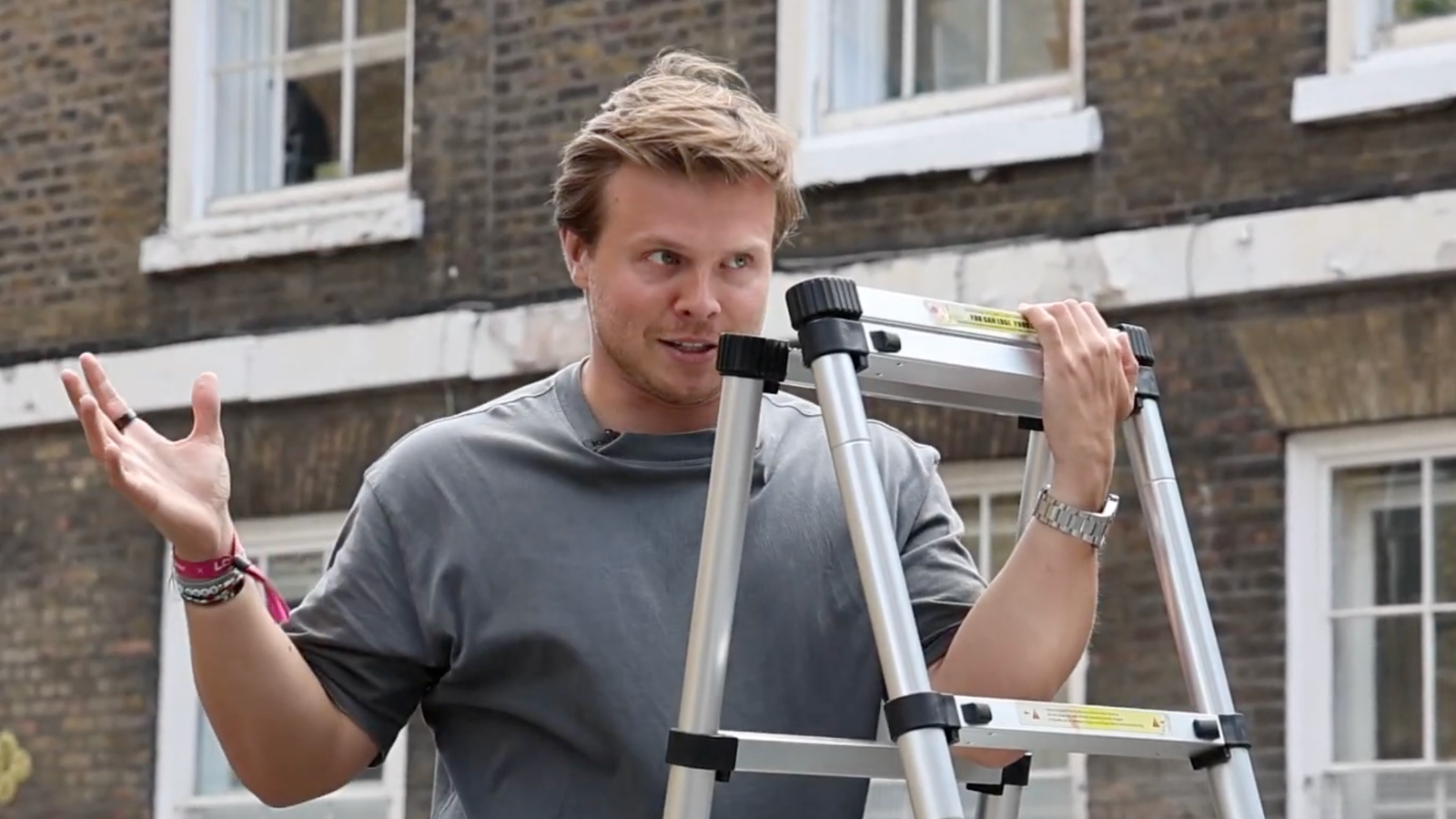
Max Klyemenko, famous for his Career Ladder videos, wants the government to take creators like himself more seriously. Pic: Youtube
“If you look at the viewership, our channel is not too different from a big media company,” said Max Klymenko, a content creator with more than 10 million subscribers and half a billion monthly views on average.
“If you look at the relevancy, especially among young audiences, I will say that we are more relevant. That said, we don’t really get the same treatment,” he told Sky News.
Fifty-six per cent of the more than 10,000 creators surveyed said they do not think UK creators have a “voice in shaping government policies” that affect them.
Only 7% think they get enough support to access finance, while just 17% think there is enough training and skills development here in the UK.
Nearly half think their value is not recognised by the broader creative industry.
The creative industries minister, Sir Chris Bryant, said the government “firmly recognises the integral role that creators play” in the UK’s creative industries and the fact that they help “to drive billions into the economy” and support more than 45,000 jobs.
“We understand more can be done to help creators reach their full potential, which is why we are backing them through our new Creative Industries Sector Plan,” he said.
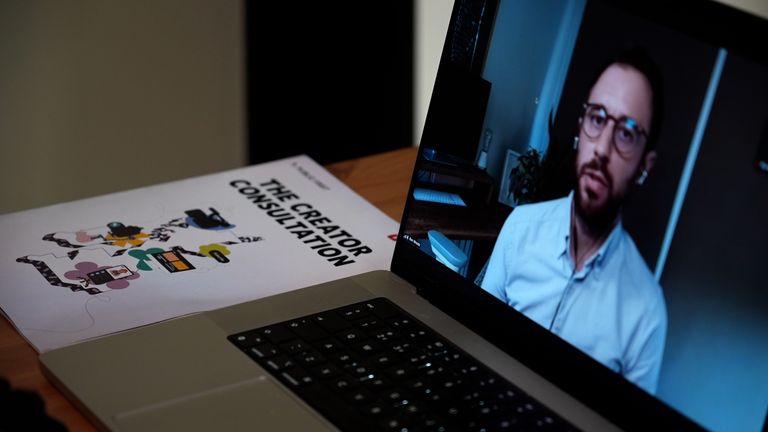
Ben Woods said the government needs to “broaden its lens” to include creators
“The UK has got a fantastic history of supporting the creative industries,” said Ben Woods, a creator economy analyst, Midia Research who was not involved in the report.
“Whether you look at the film side, lots of blockbuster films are being shot here, or television, which is making waves on the global stage.
“But perhaps the government needs to broaden that lens a little bit to look at just what’s going on within the creator economy as well, because it is highly valuable, it’s where younger audiences are spending a lot of their time and [the UK is] really good at it.”
Read more from Sky News:
Trump says ‘very wealthy group’ has agreed to buy TikTok in US
Major porn sites to introduce ‘robust’ age verification in UK
According to YouTube, formal recognition would mean creators are factored into official economic impact data reporting, are represented on government creative bodies, and receive creator-specific guidance from HMRC on taxes and finances.
For some, financial guidance and clarity would be invaluable; the ‘creator’ job title seems to cause problems when applying for mortgages or bank loans.
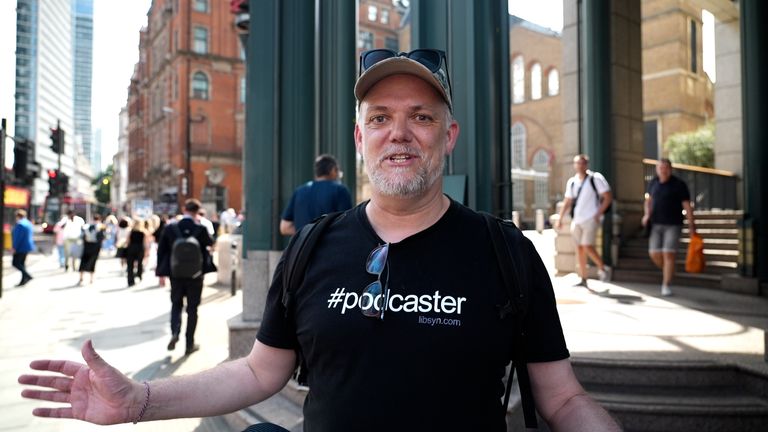
Podcaster David Brown owns a recording studio for creators
“It’s really difficult as a freelancer to get things like mortgages and bank accounts and credit and those types of things,” said podcaster David Brown, who owns a recording studio for creators.
“A lot of people make very good money doing it,” he told Sky News.
“They’re very well supported. They have a lot of cash flow, and they are successful at doing that job. It’s just the way society and banking and everything is set up. It makes it really difficult.”
The creative industries minister said he is committed to appointing a creative freelance champion and increasing support from the British Business Bank in order to “help creators thrive and drive even more growth in the sector”.
The government has already pledged to boost the UK’s creative industries, launching a plan to make the UK the number one destination for creative investment and promising an extra £14bn to the sector by 2035.
These influencers want to make sure they are recognised as part of that.
OpenAI has signed its first major licensing deal to bring well-known characters to life on its Sora video generation tool.
The company said the agreement with Walt Disney was part of a push to ensure the rights of creators in the generative artificial intelligence (AI) space amid growing concerns over copyright, fakes and misinformation.
It forms part of a $1bn Disney investment in OpenAI, that will see the entertainment firm roll out ChatGPT to its staff and grow its AI capabilities.
Money latest: Urgent warning over tumble dryers
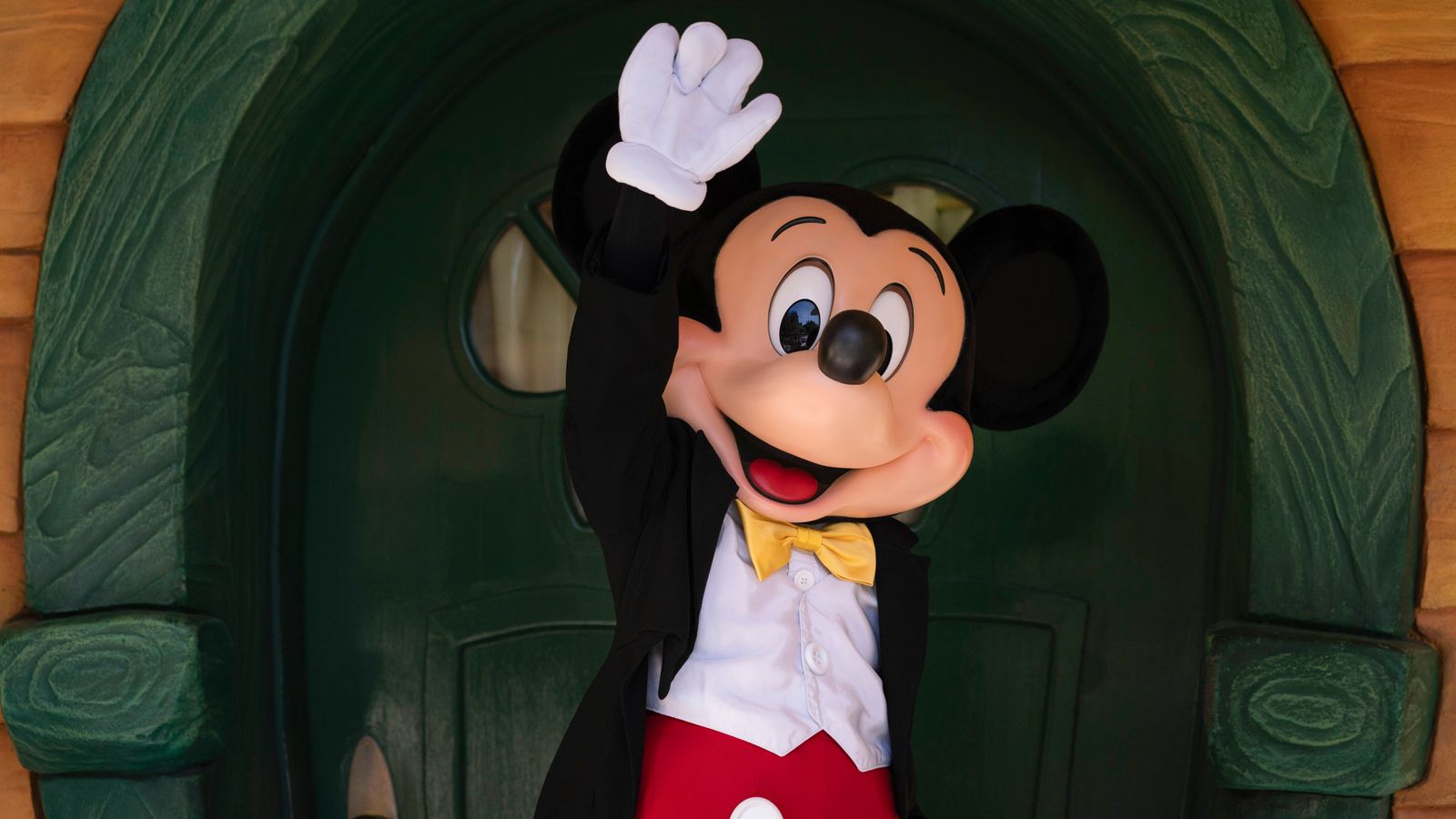
The initial three-year licensing deal will allow Sora users to generate and share videos based on more than 200 Disney, Marvel, Pixar and Star Wars characters.
These include Mickey Mouse, Cinderella and Luke Skywalker.
Sora allows people to quickly create realistic clips based merely on text prompts.
Why authors may be right to fear AI
Disney and OpenAI said they were committed to responsible use of AI amid the backlash from critics who have pointed to widespread misuse of generative AI in the social media space – a practice known as AI slop.
Some have depicted fake messages from celebrities and even used the dead.
OpenAI CEO Sam Altman said: “This agreement shows how AI companies and creative leaders can work together responsibly to promote innovation that benefits society, respect the importance of creativity, and help works reach vast new audiences.
His counterpart at Disney, Bob Iger, added that the partnership would “extend the reach of our storytelling through generative AI, while respecting and protecting creators and their works”.
As part of the deal, some user-generated Sora videos will be made available on the Disney+ streaming service.
Dan Coatsworth, head of markets at AJ Bell, said of the tie-up: “It’s a win-win situation for Disney and OpenAI. Disney gets to deploy its beloved brands in the world of AI while keeping control of the intellectual property.
“Fans can use Disney characters to make videos and take social media content to another level. That could drive significant traffic to OpenAI’s Sora social media platform, turning a relatively unknown entity into a household name in a flash.
“As part owner of the business, Disney will be able to use the equity stake in OpenAI to ensure its characters are used in a controlled environment.
“It’s a significant step forward for the concept of fan fiction”, he concluded.
-
 Sports2 years ago
Story injured on diving stop, exits Red Sox game
-
 Sports3 years ago
‘Storybook stuff’: Inside the night Bryce Harper sent the Phillies to the World Series
-
 Sports2 years ago
Game 1 of WS least-watched in recorded history
-
 Sports3 years ago
Button battles heat exhaustion in NASCAR debut
-
 Sports3 years ago
MLB Rank 2023: Ranking baseball’s top 100 players
-
Sports4 years ago
Team Europe easily wins 4th straight Laver Cup
-
 Environment3 years ago
Japan and South Korea have a lot at stake in a free and open South China Sea
-
 Environment1 year ago
Here are the best electric bikes you can buy at every price level in October 2024