

BLUETTI’s Prime Day deals are up to 65% off with the launch of the Elite 100 V2

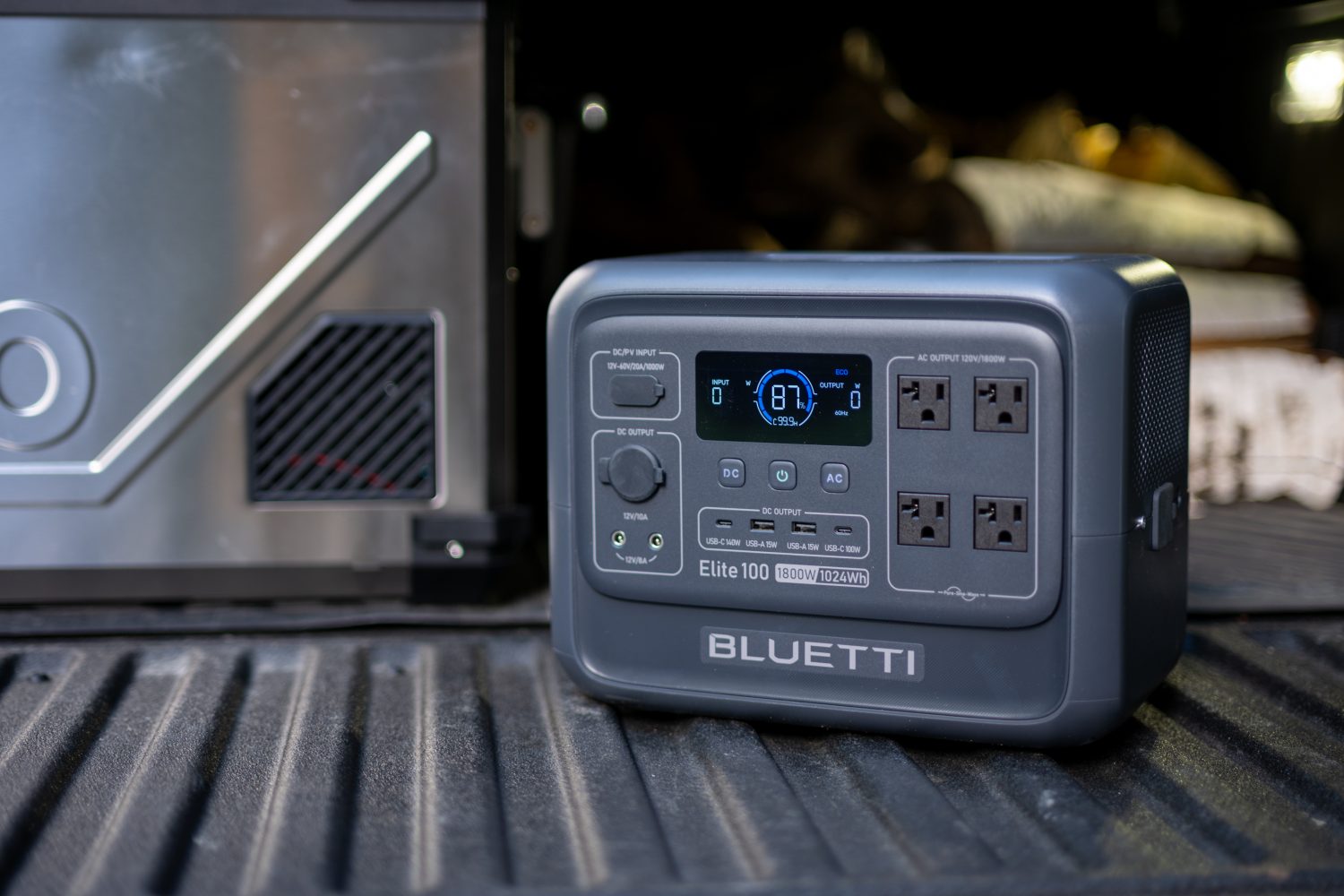
If you’re planning a summer camping trip or backyard cookout, or just want to be prepared for future blackouts, BLUETTI has you covered this Prime Day with up to 65% off portable power stations. And two standout models are turning heads: the all-new Elite 100 V2 and the powerhouse Elite 200 V2.
Electrek readers get an exclusive extra 5% off sitewide with the promo code ELECTREK5OFF, but act fast! These fantastic Prime Day deals only run until July 11.
Compact powerhouse: Elite 100 V2 (now in pre-order!)
Meet the newly launched Elite 100 V2 – BLUETTI’s latest iteration of the AC180 portable power station that packs serious performance in a smaller frame. It’s about 30% smaller than the AC180 yet still delivers a mighty 1,800W output and 3,600W surge capacity. That’s more than enough to handle your coffee maker, induction cooktop, and even a portable AC unit.
With 11 versatile outlets and 1,000W solar input, this little powerhouse is perfect for camping trips, picnics, tailgates, or short-term home backup. It recharges in as little as 70 minutes, making it ideal for quick outdoor stops or unexpected power cuts.
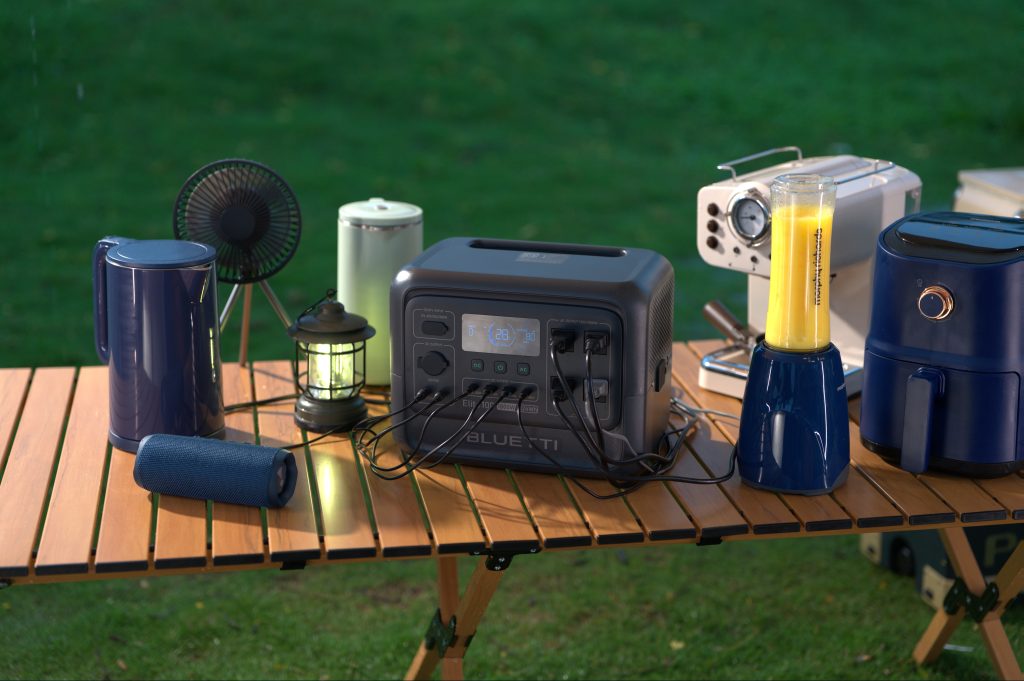
The Elite 100 V2 is available now for pre-order at the early-bird price of $399 plus an extra 5% off on Amazon and at Bluetti’s official store.
The backyard hero: Elite 200 V2 for just $699 (52% off!)
This one’s a total game-changer. With a massive 2,048Wh capacity and 2,400W output (3,900W surge), the BLUETTI Elite 200 V2 powers everything from electric grills and coffee makers to portable fridges and full camping kitchens. It’s great for family cookouts, rooftop movie nights, or camping with serious gear.
The best part? It runs at just 16dB, which is whisper quiet. And inside is a true EV-grade battery with a whopping 17-year lifespan. That’s power you can count on for the long haul.

The Elite 200 V2 is down to just $699 for Prime Day – that’s 59% off and the lowest price ever(!) on Amazon and at BLUETTI’s official store.
More Prime Day BLUETTI power deals until July 11
BLUETTI is going big this year with deep discounts across the board. Here are some more hot picks:
- AC70: Ultra-portable 768Wh station ideal for weekend outings, charging phones, laptops, and drones. $299 (50% off) on Amazon and on BLUETTI’s official store
- AC2A: Lightweight 204.8Wh unit under 8 lbs, perfect for on-the-go charging essentials. $139 (37% off) on Amazon and on BLUETTI’s official store
- AC200L: 2,048Wh unit built for rooftop movie nights or long backyard parties, expandable to 7.6kWh. $899 (44% off) on Amazon and on BLUETTI’s official store
- AC300 + B300K: Modular home battery backup with 3,000W output and expandable capacity up to 22kWh $1,299 (48% off) on Amazon and on BLUETTI’s official store
- AC500 + B300K: High-capacity 5,000W home backup system designed for larger families and serious outage prep. $1,699 (43% off) on Amazon and on BLUETTI’s official store
Whether you need portable power for camping (Elite 100 V2) or a versatile 2kWh powerhouse for multiple uses (Elite 200 V2), or serious home battery backup (AC300 or AC500), there’s a perfect BLUETTI deal for you.
Price protection and bonus savings
Worried about buying early? Don’t be. BLUETTI is offering price protection through Prime Day. If prices drop further, they’ll refund the difference. And don’t forget to use promo code ELECTREK5OFF for an extra 5% off sitewide.
Summer adventures, blackouts, or weekend tailgates – whatever power solution you need, BLUETTI has a product to match. But act fast: these Prime Day deals end July 11.
About BLUETTI
BLUETTI is a committed advocate for sustainability, embedding ESG principles into product design and corporate initiatives. Through programs like LAAF (Light An African Family), it delivers affordable, sustainable energy to African communities. Partnering with Leave No Trace and the Footprint Project (a 501(c)(3) nonprofit), BLUETTI supports responsible outdoor recreation and disaster relief with clean energy solutions that minimize environmental impact. This blend of quality, reliability, and practical focus has earned trust in over 110 countries and regions.
Follow BLUETTI on Twitter/X here and on Facebook here.
FTC: We use income earning auto affiliate links. More.


Toyota’s latest move in its work to harm the environment involves an internal platform where it uses video games to spread propaganda among its North American employees, enticing them with prizes to join lobbying efforts to loosen environmental rules around the automotive industry.
We’ve covered Toyota’s anti-environment lobbying efforts many times before.
For an inexhaustive list of how Toyota lobbies to harm the environment, the company:
Now, an excellent report by the Guardian details how Toyota uses internal communications to encourage its employees to join its propaganda efforts, with anti-EV and anti-environment propaganda in the form of video games where employees can earn points and prizes.
Toyota calls the platform “Toyota Policy Drivers,” and it’s available to some 10,000 employees across North America. The games were created by LGND, a software firm that has also made projects for defense contractors Aurex and Bechtel.
It consists of several videos telling Toyota’s side of the story – like Toyota’s insistence that hybrids pollute less than EVs, which is incorrect – and links to participate by reaching out to public representatives.
But that’s just normal corporate propaganda stuff. What’s different about Toyota’s platform is the gamification of the process, encouraging employees to earn points and play video games while digesting this propaganda.
Video games used as anti-environment propaganda
Games include Monster Mansion, Adventure Quest, Star Quest, and Dragon Quest (no, not the long-running and popular RPG – we wonder if trademark authorities might be interested in that one).


Toyota cycles games in and out each year, but each has a similar goal of showing propaganda videos in exchange for points. The videos were publicly visible until this morning. After the Guardian published its article, Toyota password protected them.
Playing the “games” can earn you points, which can be redeemed for stickers and t-shirts, or even trips. One employee says he earned cupcakes and a trip to Washington, DC.
Adam Zuckerman of Public Citizen had harsh words for the program, which he called “dystopian” and said “treats employees like children.” Specifically referring to Stephen Ciccone, Toyota’s VP of public affairs for North America, Zuckerman said:
It’s fitting that Ciccone calls himself a wartime consigliere because he has gone to war against the standards that protect our communities and the air that we breathe. Like the mafiosos that he fashions himself after, he is pressuring his own workers into doing his bidding against the common good. Ciccone should quit cosplaying mafia, end his dystopian game of poisoning our air, and stop blocking the green vehicles of the future.
Toyota’s actions and its public image diverge
Toyota’s propaganda contradicts its long-held public image. For decades now, Toyota has been considered by the public as one of the more environmentally-friendly automakers, first starting with its small cars in the 70s and later due to the Prius, the vehicle that is known for popularizing the conventional gas hybrid powertrain. In the early 2000s, the Prius was among the most efficient vehicles available.
However, the Prius is no longer particularly efficient comparatively. Just about any electric car is significantly more efficient than a Prius – even the ridiculous Hummer EV roughly matches the Prius in energy efficiency at 53mpge vs. 57mpg. Also, conventional hybrids get 100% of their energy from fossil fuels, and are thus inherently incompatible with climate solutions.
Despite Toyota’s false claims that gas-powered hybrids are the answer to reducing emissions, its own numbers show that its emissions have steadily increased over the years. And its average US fleet mpg is consistently middling-to-poor, according to the EPA’s automotive trends report.
When Toyota owners are educated about Toyota’s opposition to environmental policy, it results in a 32% reduction in favorability for the brand. A large majority of Toyota owners want the company to support stronger environmental policy.
Similarly, a recent appearance of Toyota’s chairman, Akio Toyoda, decked out in US campaign gear supporting Donald Trump helped many in the public to recognize Toyota’s friendliness with anti-environment actors. As former CEO, Toyoda was largely responsible for the company’s current failure to adopt electric vehicles.
But Toyota has dug in its feet in defending hybrid vehicles, which it considers its own territory, whereas electric vehicles are the territory of other brands. So it twists itself into knots trying to defend more-polluting vehicles, despite the harm that they cause to everyone who lives on Earth – yes, including Toyota employees, who breathe the same air and live in the same disrupted climate as the rest of us.
Toyota laughably claims this corporate-led effort is “grassroots”
While Toyota says that employees don’t have to participate, the combination of incentives and implicit pressure from higher-ups means that employees who would not have otherwise lobbied against the public interest would then be encouraged to do so.
It calls the effort “grassroots advocacy,” even though it is being coordinated and pushed upon employees of a one of the largest corporate entities on the planet (that’s not what “grassroots” means…). It also allows employees to participate during working hours, indicating that it sees these videogames as a work activity, rather than natural grassroots advocacy.
Indeed, the company brags about what it sees as the success of the program, taking credit for various harmful policy changes, like republicans’ illegal attempt to force dirty air on 12 US states. Toyota also used the platform to oppose EPA exhaust rules that would save Americans $100 billion in fuel costs, wrongly calling it an “EV mandate,” despite that the Biden rule is actually technology neutral (which Toyota claims to support, even though it opposed a technology neutral measure in practice).
Perhaps now, with the knowledge of yet another way that Toyota spreads anti-environment propaganda, some of the environmental sheen of this company can start to tarnish in the public eye.
The 30% federal solar tax credit is ending this year. If you’ve ever considered going solar, now’s the time to act. To make sure you find a trusted, reliable solar installer near you that offers competitive pricing, check out EnergySage, a free service that makes it easy for you to go solar. It has hundreds of pre-vetted solar installers competing for your business, ensuring you get high-quality solutions and save 20-30% compared to going it alone. Plus, it’s free to use, and you won’t get sales calls until you select an installer and share your phone number with them.
Your personalized solar quotes are easy to compare online and you’ll get access to unbiased Energy Advisors to help you every step of the way. Get started here.


FTC: We use income earning auto affiliate links. More.

In the Electrek Podcast, we discuss the most popular news in the world of sustainable transport and energy. In this week’s episode, we discuss Seth and me (Fred) each buying a new EV, Tesla Robotaxi progress, Ford’s $19 billion charge on EVs, and much more.
The show is live every Friday at 4 p.m. ET on Electrek’s YouTube channel.
As a reminder, we’ll have an accompanying post, like this one, on the site with an embedded link to the live stream. Head to the YouTube channel to get your questions and comments in.
After the show ends at around 5 p.m. ET, the video will be archived on YouTube and the audio on all your favorite podcast apps:
We now have a Patreon if you want to help us avoid more ads and invest more in our content. We have some awesome gifts for our Patreons and more coming.
Here are a few of the articles that we will discuss during the podcast:
Here’s the live stream for today’s episode starting at 4:00 p.m. ET (or the video after 5 p.m. ET:
FTC: We use income earning auto affiliate links. More.

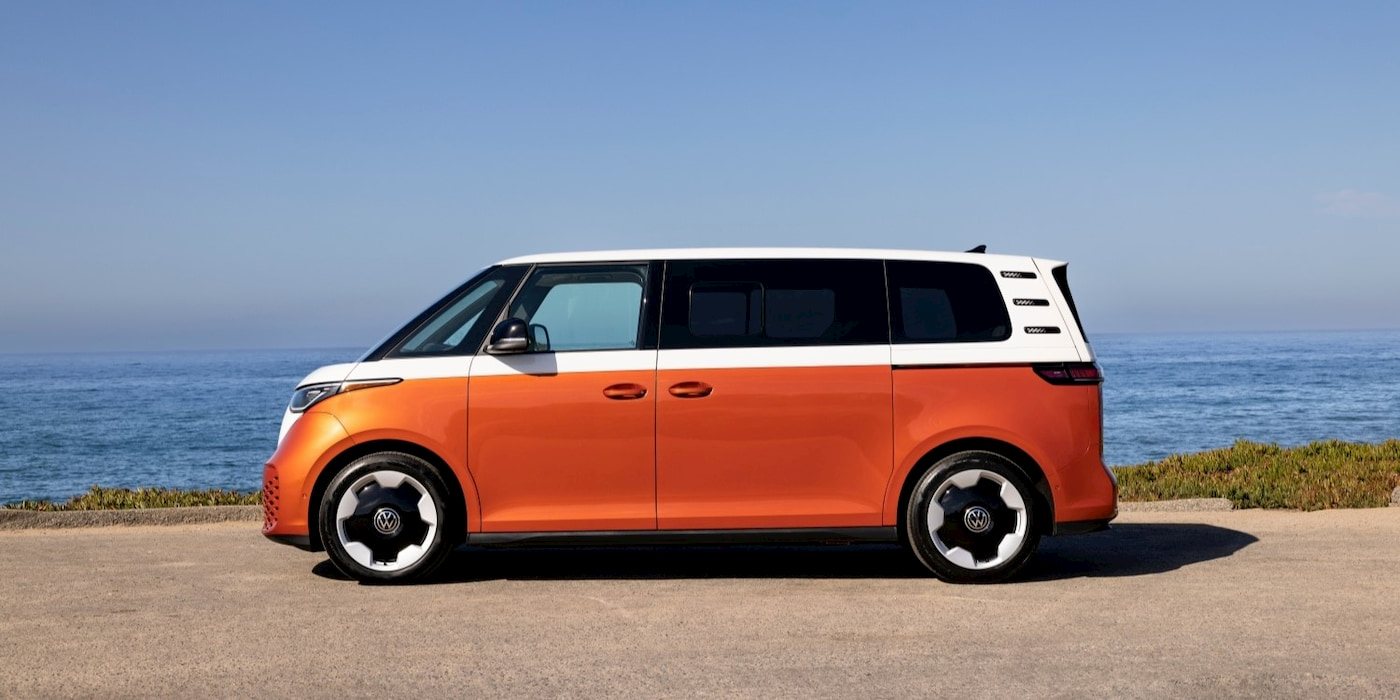
The ID.Buzz will not be available in the US for the 2026 model year, but Volkswagen said this isn’t the end for its electric minibus.
Volkswagen cancels 2026 ID.Buzz for the US market
And just like that, the US loses yet another electric vehicle. Volkswagen is pulling the ID.Buzz from its lineup in 2026, but it apparently won’t be forever.
A company spokesperson confirmed the news to Carscoops on Friday, telling them, “Following a careful assessment of current EV market conditions, we have made the strategic decision not to move forward with MY26 ID.Buzz production for the US market.”
While you won’t be able to get your hands on a 2026MY, Volkswagen suggested the electric minibus is in a “transition” phase and will return in 2027.
According to the company spokesperson, the decision enables VW to use the resources instead to focus on selling down current inventory, “ensuring a strong foundation as we prepare for the MY27 transition next year.”
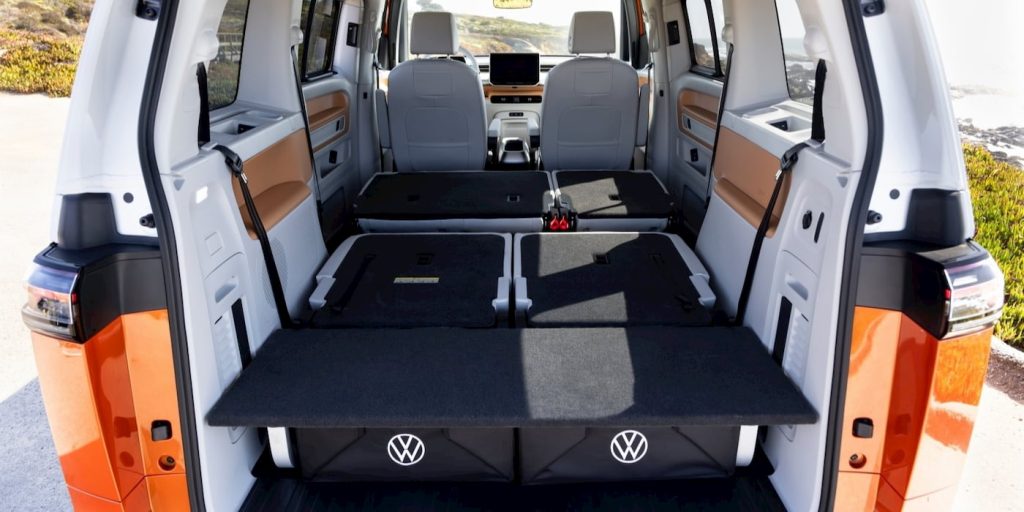
The comments come after a text from a VW dealer surfaced on Reddit, claiming the company notified dealers that the ID.Buzz is being discontinued with no 2026 models planned. The text also stated, “What we currently have in stock will be the final availability.”
Volkswagen’s spokesperson pushed back against the claims, saying that’s not accurate. “We gave dealers this direction: The ID. Buzz continues to serve as an important halo product for the Volkswagen brand, and safeguarding its market presence remains a top priority,” they said.
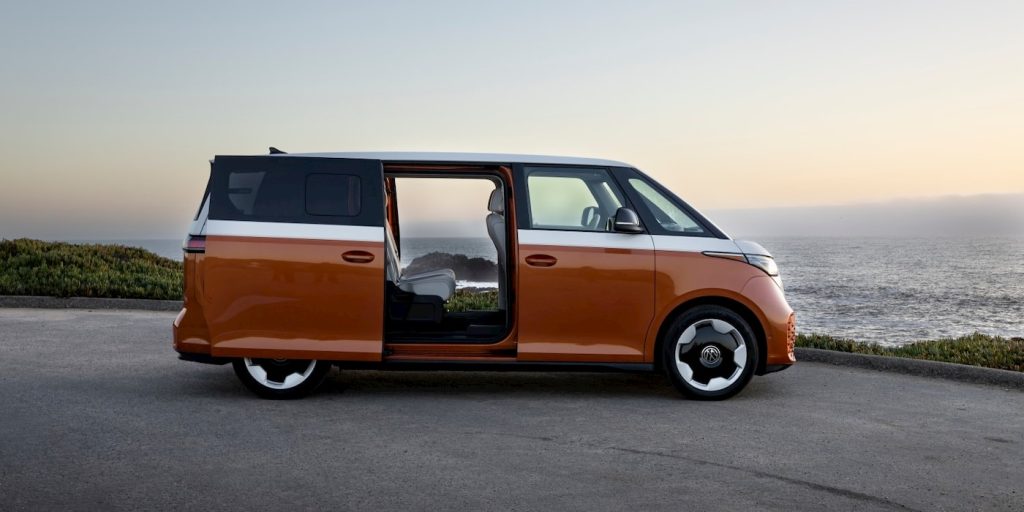
Like the entire US auto industry, VW is facing new headwinds under the Trump administration, including new tariffs and policy changes such as ending the $7,500 federal tax credit for electric vehicles.
Through the first nine months of 2025, Volkswagen sold just under 5,000 ID.Buzz models in the US. The 2025 VW ID.Buzz started at $61,545 with an EPA-estimated driving range of 234 miles.
Electrek’s Take
The Volkswagen minibus was a hit thanks to its open, flexible interior and distinctive look, which became a cultural icon. However, it was also extremely affordable.
While the policy changes under the Trump Administration are forcing automakers to rethink their electrification plans, the $60K electric minibus was a tough sell from the start.
Volkswagen is promising to introduce more affordable vehicles, but the US will miss out on most of them. Will the ID.Buzz return in 2027 at a lower price? It could.
Ford recently announced it has ended production of the current F-150 Lightning and will replace it with an extended-range electric vehicle (EREV) version. The American automaker is also shifting from large, more expensive EVs to smaller, more profitable models.
Once thing is for sure: When, or if, the ID.Buzz returns; it will need to be either at a lower price or offer much more in terms of features, driving range, etc.
FTC: We use income earning auto affiliate links. More.
-
 Sports2 years ago
Story injured on diving stop, exits Red Sox game
-
 Sports3 years ago
‘Storybook stuff’: Inside the night Bryce Harper sent the Phillies to the World Series
-
 Sports2 years ago
Game 1 of WS least-watched in recorded history
-
 Sports3 years ago
Button battles heat exhaustion in NASCAR debut
-
 Sports3 years ago
MLB Rank 2023: Ranking baseball’s top 100 players
-
Sports4 years ago
Team Europe easily wins 4th straight Laver Cup
-
 Environment3 years ago
Japan and South Korea have a lot at stake in a free and open South China Sea
-
 Environment1 year ago
Here are the best electric bikes you can buy at every price level in October 2024