
Trump announces yet more tariffs and praises ‘significant step’ from Apple

Donald Trump has announced 100% tariffs on computer chips and semiconductors made outside the US.
The move threatens to increase the cost of electronics made outside the US, which covers everything from TVs and video game consoles to kitchen appliances and cars.
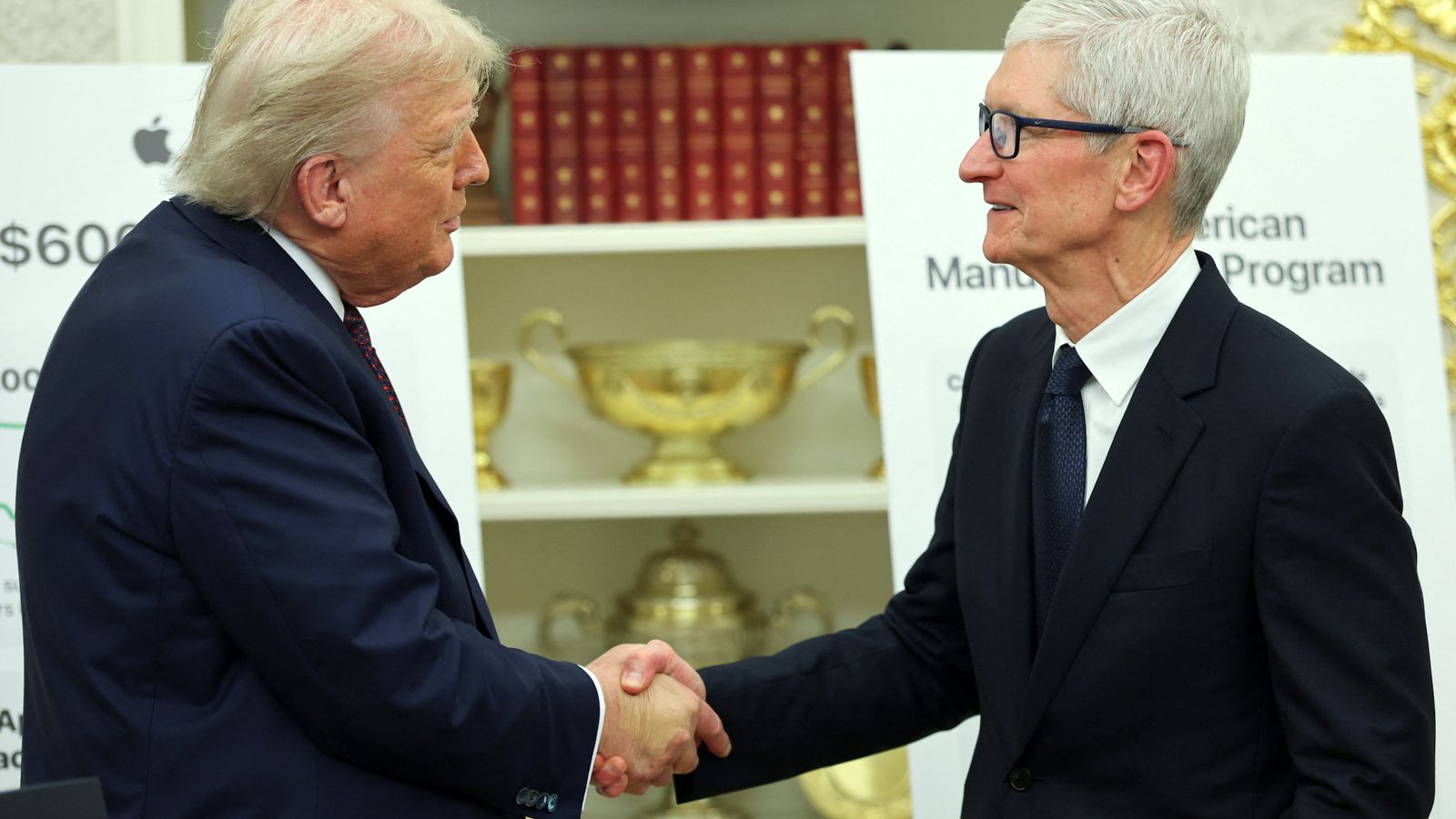
The announcement came as Apple chief executive Tim Cook said his company would invest an extra $100bn (£74.9bn) in US manufacturing.
Soon, all smartwatch and iPhone glass around the world will be made in Kentucky, according to Mr Cook, speaking from the Oval Office.
“This is a significant step toward the ultimate goal of ensuring that iPhones sold in the United States of America are also made in America,” said Mr Trump.
“Today’s announcement is one of the largest commitments in what has become among the greatest investment booms in our nation’s history.”
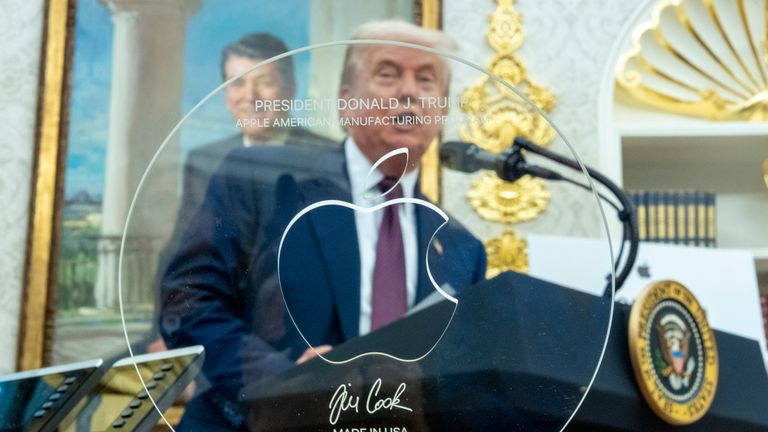
Mr Cook also presented the president with a one-of-a-kind trophy made by Apple in the US.
Trump seen through the trophy given to him by Tim Cook. Pic: AP
Trump’s tariffs hit India hard
Mr Trump has previously criticised Mr Cook and Apple after the company attempted to avoid his tariffs by shifting iPhone production from China to India.
The president said he had a “little problem” with Apple and said he’d told Mr Cook: “I don’t want you building in India.”
India itself felt Mr Trump’s wrath on Wednesday, as he issued an executive order hitting the country with an additional 25% tariff for its continued purchasing of Russian oil.
Indian imports into the US will face a 50% tariff from 27 August as a result of the move, as the president seeks to increase the pressure on Russia to end the war in Ukraine.
Mr Trump told reporters at the White House he “could” also hit China with more tariffs.
Read more:
Trump could meet Putin as early as next week
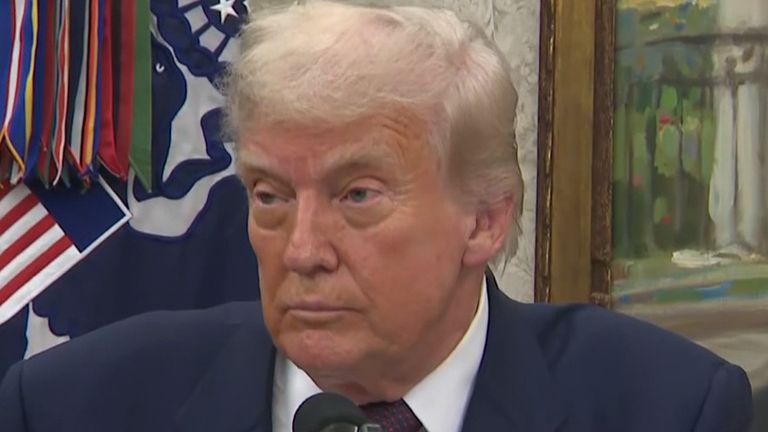
‘Good chance’ Trump will meet Putin soon
Apple’s ‘olive branch’
Apple, meanwhile, plans to hire 20,000 people in the US to support its extra manufacturing in the country, which will total $600bn (around £449bn) worth of investment over four years.
The “vast majority” of those jobs will be focused on a new end-to-end US silicon production line, research and development, software development, and artificial intelligence, according to the company.
Apple’s investment in the US caused the company’s stock price to hike by nearly 6% in Wednesday’s midday trading.
The rise may reflect relief by investors that Mr Cook “is extending an olive branch” to Mr Trump, said Nancy Tengler, chief executive of money manager Laffer Tengler Investments, which owns Apple stock.

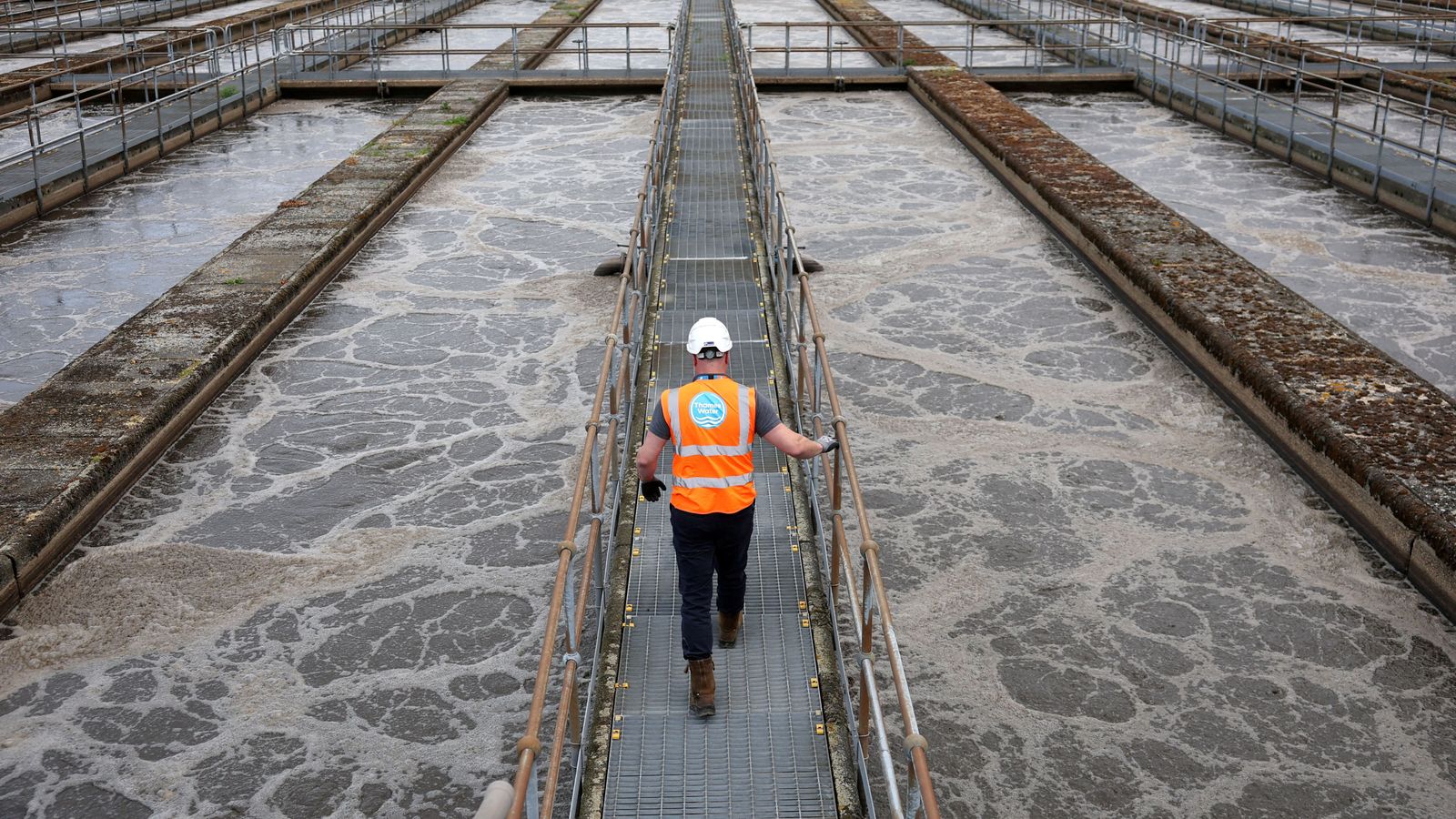
The UK’s biggest water supplier has been dealt another blow as the regulator decided to reduce its income.
Thames Water, which supplies 16 million people in England, has been told by the watchdog Ofwat its revenues will be cut by more than £187m.
It comes as the utility struggles under a £17.6bn debt pile and the government has lined up insolvency practitioners for its potential collapse.
Money blog: Nine-year-old set up Christmas tree business to pay for university
Overall, water firms face a sector-wide revenue reduction of nearly £309m as a result of Ofwat’s determination. Thames Water’s £187.1m cut is the largest revenue reduction.
This will take effect from next year and up to 2030 as part of water companies’ regulator-approved five-year spending and investment plans.
The downward revenue revision has been made as Ofwat believes the companies will perform better than first thought and therefore require less money.
Better financial performance is ultimately good news for customers.
The change published on Wednesday is a technical update; the initial revenue projections published in December 2024 were based on projected financial performance but after financial results were published in the summer and Ofwat was able to apply these figures.
Is Thames Water a step closer to nationalisation?
Thames Water and industry body Water UK have been contacted for comment.
-
 Sports2 years ago
Story injured on diving stop, exits Red Sox game
-
 Sports3 years ago
‘Storybook stuff’: Inside the night Bryce Harper sent the Phillies to the World Series
-
 Sports2 years ago
Game 1 of WS least-watched in recorded history
-
 Sports3 years ago
Button battles heat exhaustion in NASCAR debut
-
 Sports3 years ago
MLB Rank 2023: Ranking baseball’s top 100 players
-
Sports4 years ago
Team Europe easily wins 4th straight Laver Cup
-
 Environment3 years ago
Japan and South Korea have a lot at stake in a free and open South China Sea
-
 Environment1 year ago
Here are the best electric bikes you can buy at every price level in October 2024