

Porsche Cayenne Electric first look and ride: does it outclass Tesla’s Model X?


As Porsche continues its communication campaign for the all-electric Cayenne (Cayenne Electric) the company invited us to get a detailed look at some of the advancements in technology behind it.
They consider the Cayenne Electric to be a platform for innovation and a reflection of Porsche’s commitment to electric, not just a product line update.
A repositioning based on the experience and learnings they have gained over the past few years and they want to share some of these advancements early.
Instead of one big announcement with a release date and a mass of updated performance specs, they are hosting a series of sessions to share what the team at Porsche has been working on over the past 4 years to make the impressive specs possible. We had the opportunity to talk directly with a few of the engineers behind the Cayenne Electric, in order to help share some of the excitement and thought going into the re-envisioned platform.
On the day we visited there were detailed sessions in four areas:
- Interior Highlights
- High Voltage System
- Drive Train
- Then an overview of some overarching design and driver experience principles followed by two ride-alongs (Offroad and the track “Taxi Ride’)
It was a full day.
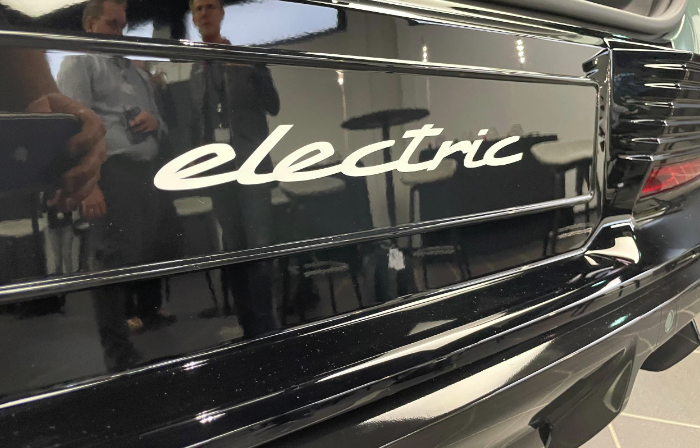
INTERIOR
Our first session was with the interior design team.
As with the current Porsche line, the new era for their driver experience remains grounded and inspired by the 911 with its familiar “tube-layout” driver instrument cluster using a 14.25 horizontally curved OLED screen to “wrap” the driver. This extends to a center area using a vertically curved OLED screen and finally over to an optional 14.9” LED passenger screen all working together to form their “Flow Display” concept.
Below the center screen are physical controls for climate control and navigation functions leveraging digital interfaces where practical while embracing physical / haptic switches for eyes off touch control of certain core functions. An analog / digital approach.

With the placement of those switches, there was thought put into the resting hand position of the driver and overall interior ergonomics for the passenger with consideration for handholds in rough terrain.
There are a plethora of comfort options from mood/massage/wellness modes, passenger entertainment (gaming on the large passenger screen), driver heads up display, customizable Interface and widgets, new interior materials and colors, sliding panoramic roof and sunshine control (liquid crystal shading with variable intensities), a Digital Key system (allowing you to share a key with others and control access levels), moving from Android to Android Auto, and much more.
They are also integrating “Voice Pilot” into the onboard system which is a custom trained LLM to support navigation needs and finding destinations. (requires an active internet connection).
Interior highlights and the driver experience could be an entire writeup on its own – but as we didn’t have the opportunity to drive ourselves or spend road-trip time in the car, I’ll leave it at the list so you can get a flavor for the direction they are headed. We can share more when we are able to immerse in them at a later date.
The focus of these sessions (for me) surrounded the tech they are developing to make the Cayenne Electric a true performer.
The targeted specs (depending on configuration):
- 0 to 100km/h (62mph) in less than 3 seconds
- 0 to 200km/h (124mph) in less than 8 seconds (!!)
- Top speed of more than 250km/h (155 miles)
- Output of more than 1000PS and up to 1,500Nm of torque
- Recuperation capacity of 600kW
- 113kWh (gross) battery
- Fast charging up to 400kW (10% to 80% in less than 16 minutes)
- Range more than 600km (373 miles)
- Towing capacity up to 3.5 tons
To achieve these numbers in a luxury, production, sports, offroad capable vehicle required the team at Porsche to approach several complex engineering problems.
Which leads us to our next sessions.
DRIVE TRAIN
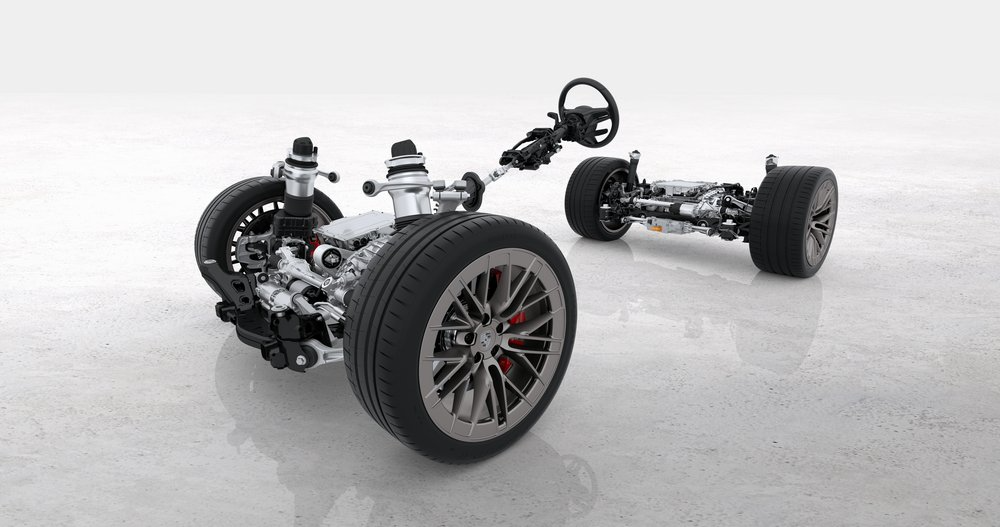
For this session, we received a VR walkthrough of the Drive Train to get a sense of how the Cayenne Electric distributes the torque potential between the front and rear axles.
The primary drive axle is in the rear, with the front passive axle contributing torque as needed.
A fascinating bit of engineering has Porsche incorporating direct and integrated cooling to the rear (primary) motor through an oil circulation system embedded in a closed system.
This keeps the cooling oil in direct contact with the copper windings where the heat is generated.
This handles the heat generated in peak power when launching with 800kW or when using the push-to-pass boost, giving the driver access to an additional 100kW for 10 seconds. (A nod to formula-e)
The cooling system also garners the ability to regen at 600kW with assisted braking.
All of this heat is addressed just about as close to the source as you can get.

Then there was a demonstration for the addition of Active Ride to the platform, which is designed to self-level the body of the car during heavy braking, steering, and acceleration. Witnessing it on a stationary vehicle that was simulating an aggressive drive around a track illustrated how fast the response was, but also how powerful the system can be, including the range of motion. It was impressive and somehow unnerving to see the car bouncing around in place, as if it were racing around a track.
Combining this with the addition of active suspension and driver selectable modes for Gravel/Mud, Sand, and Rock, the team is striving to make for a smooth ride even when traversing complex terrain (which we get to experience later in the off-road ride.)
HIGH VOLTAGE
This led us to our last tech session of the day and the area that brings many of these concepts together since all innovation has little value if the high voltage system and batteries can’t keep up with demand.
Again – another VR walkthrough of the 6 module, 192 cell, 800 volt,113 kWh battery pack illustrating how it is cooled from both sides, serviced/replaced and handles the loads required of it.
A poignant moment for me was when one of the team communicated:
“The Cayenne Electric is a Porsche – and a Porsche needs to be a Porsche.”
What could be more Porsche than going flat out on the Autobahn with max acceleration, brake with max regen, back again max acceleration to a sustained high load maintaining speed as necessary, then pull off and recharge at a max rate (the chart they showed indicated 10% to 80% in about 16 minutes starting at about 375kW to 55%, 300kW to 70%, sub 150kW up to 80%), when charging is complete – jumping back on the Autobahn – rinse and repeat.
That target example is clearly on their mind and would be a fantastic cross-country road trip test I’d be up for helping perform…
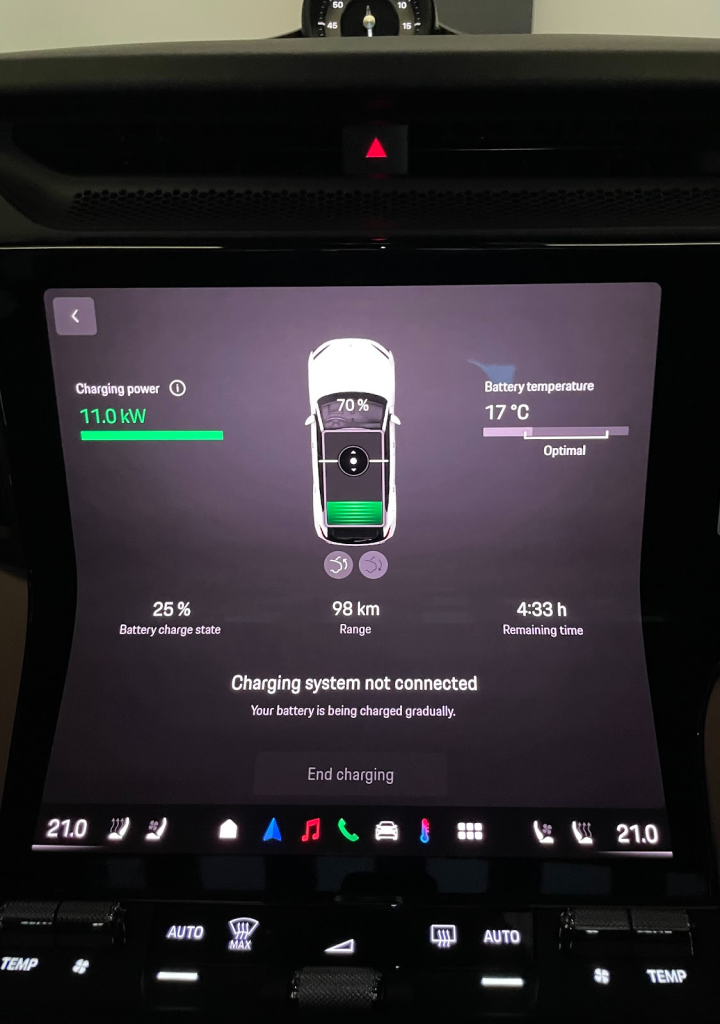
But not everyone is pushing flat out on cross-country road trips, so for the “daily driver,” there are additional practical solutions coming with the Cayenne Electric, such as the previously announced induction charging solution. This provides 11KW from either 2-phase (in the US) or 3-phase AC power sources, so these could be installed in a home.
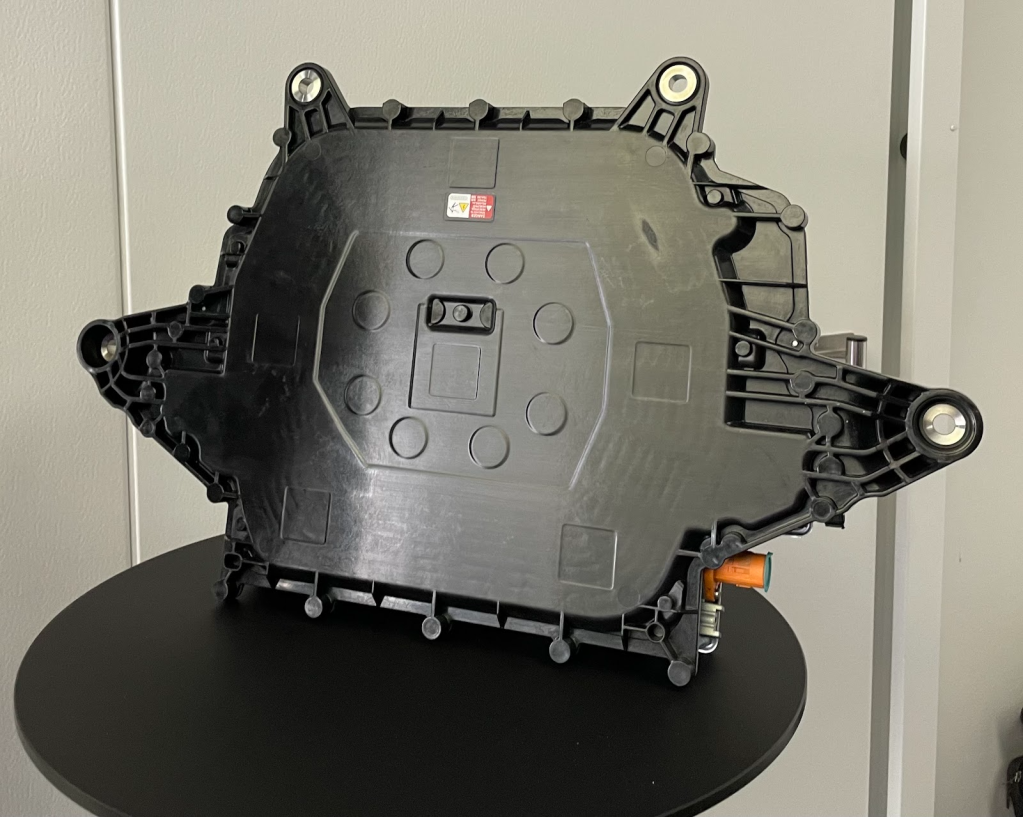


It consists of a floor pad on the ground and a vehicle plate installed in the underbody of the car between the front wheels. The floor pad is heavy at about 50kg so not something you move in and out all the time, but it can be moved out of the way if needed.
Hands-on with the system illustrated how the car will guide the driver to the charging pad using the displays in the car, how the handshake works and ramps up charging (about 15 seconds from handshake to full flow of 11KW), as well at what happens if a “living object” enters an area around the vehicle.
In such a case, it will halt charging momentarily until the risk is gone before resuming the charging on its own.
RIDE ALONGS
The next part of the day consisted of ride-alongs, which, frankly, Porsche could charge admission for.
We did not get the opportunity to drive the car ourselves, but we were driven by professional drivers around two closed courses (off-road and track).

The off-road ride took us to a dirt (mud, rock, and sand) trail to highlight the “off-road mode” with Active Ride.
Much of this was underwhelming, which is what made it so impressive.
That is to say, it felt totally smooth and unremarkable… but this was as we were rolling over potholes, rocks, and a variety of uneven terrain. Essentially gliding over various unpaved surfaces.
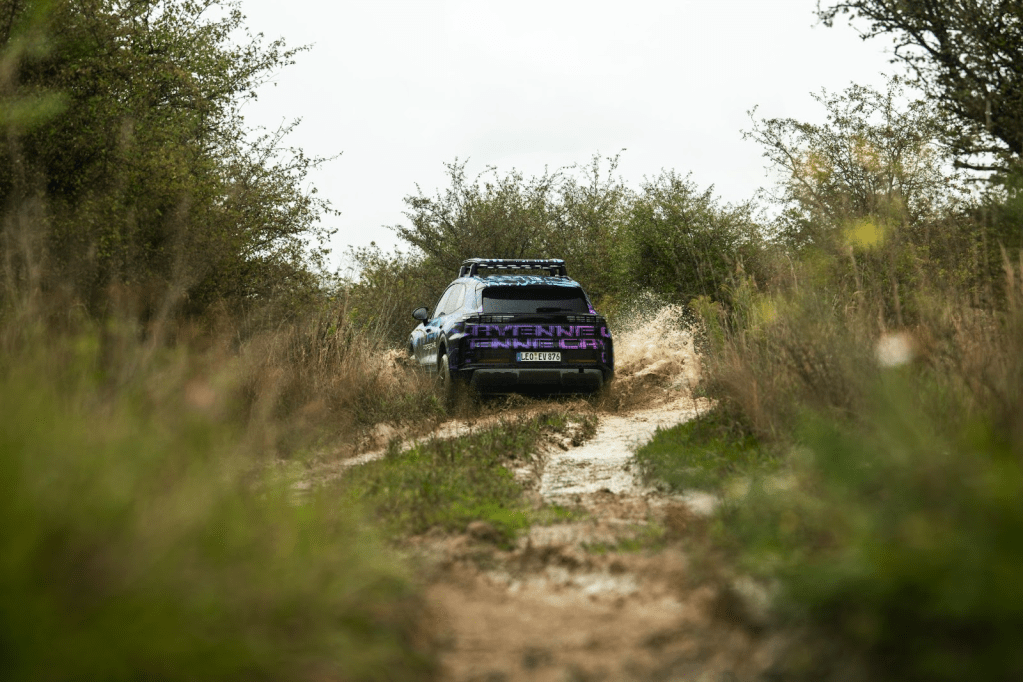
The powerful suspension dynamics we saw bouncing the car around in front of us in the demo I previously mentioned, now made for a very smooth ride and felt like the body wasn’t moving at all.
It was a cool and rainy day in Leipzig so the course was wet and muddy. The car was equipped with standard “summer” tires so this illustrated the dynamic application of power to the gripping wheels.
We effortlessly (and intentionally slowly) climbed up an 80% grade (36º) slope consisting of a wet, corrugated metal path, at the top we traversed a muddy path into a tight turn showing the turning radius of 11.1 meters fully leveraging the rear axle supported range of up to 5º.
As we went over the axle switches (and a few more muddy roads and bumpy climbs), I wished we could have seen a display somewhere showing the Active Ride system in action. It was certainly working hard, but that resulted in us feeling almost nothing (which is the goal, of course).
You do get information like pitch and bank angle in the “flow display,” so we could see we were at times rolling around at a bank angle of 30º (apparently capable of up to 45º for the daring), and 36º pitch on our climb.
On the downhill sections, when entering the drop, you can set the car at a speed you want to maintain (e.g. 2km/h) and it will use a combination of regen and standard braking to hold that pace and keep traction – you can nudge that speed up and down with the accelerator and brake pedals.
So off-road? Sure.
But this would be “European offroad” which is different from “back-country US, winter-fireroad offroad”.
It’s not your weekend rock crawler, but if you have an unmaintained road to traverse, the Cayenne Electric will effortlessly roll you in comfort along a bumpy, rocky road, or a tight, twisting trail, while your kid plays a game on the passenger display – if that is a solution you are looking for.
TAXI RIDE

This was to demonstrate active ride in Sport Plus mode, as well as 0-100km in less than 3 seconds, boost pass, traction control, intense braking, and regen in what would normally be a washing machine of laps around the track.
We calmly rolled out onto the track as the professional driver turned off various overspeed alert systems and explained the sport mode of Active Ride.
We got to a line and stopped.
“Ok – let me know if it is too much or if you feel – not right.”
“All good,” I say as he puts his foot down and we launch down the straightaway.
I’ve experienced various fast accelerations and insane modes – and this was a bit more than I had expected. For sure we hit the 100kph in 3 seconds and we just kept going at what felt like the same acceleration for another several seconds, now I was along for the ride.
I did indeed feel “not right” for a moment, but that transformed into a huge smile.
The straight-away quickly disappeared, and a wet corner awaited us.
The driver let off the acceleration but waited until the last moment to leverage braking, and we whipped around the corner – it felt effortless, and the Cayenne kept the body roll much lower than expected.
A few more zigs and zags, meanwhile, inside felt nothing like a washing machine. It was quite tame.
As mentioned, it was a cool (11ºC) and rainy day in Leipzig, and we were on summer tires.
“The tires are a bit cold,” he matter-of-factly stated as he raced us through another chicane, trying to intentionally get the car to slide. Down the back straight, up and over a hill.
It all felt bonkers, but somehow smooth.
As we started another lap with a bit less brute speed and more “throwing” the car into turns to force it to slide, to demonstrate how quickly it returned to the line each time.
Oversteer, intentional slide, gunning it, braking turn, whatever. The Cayenne Electric complied and recovered and kept everything quite calm in the cabin.
Yes – the driver is a pro and can handle all the power and unstable situations with all the safety and control features “off”.
But also yes – this is a production electric SPORTS utility vehicle built for a normal person to drive.
I hope to see what a non-professional driver can do with all this power and tech as the launch gets closer.
Overall, the day made the impression that the engineering team understood the assignment.
To create an Electric SUV that is “Powerful, Practical, and unmistakably Porsche.”



FTC: We use income earning auto affiliate links. More.

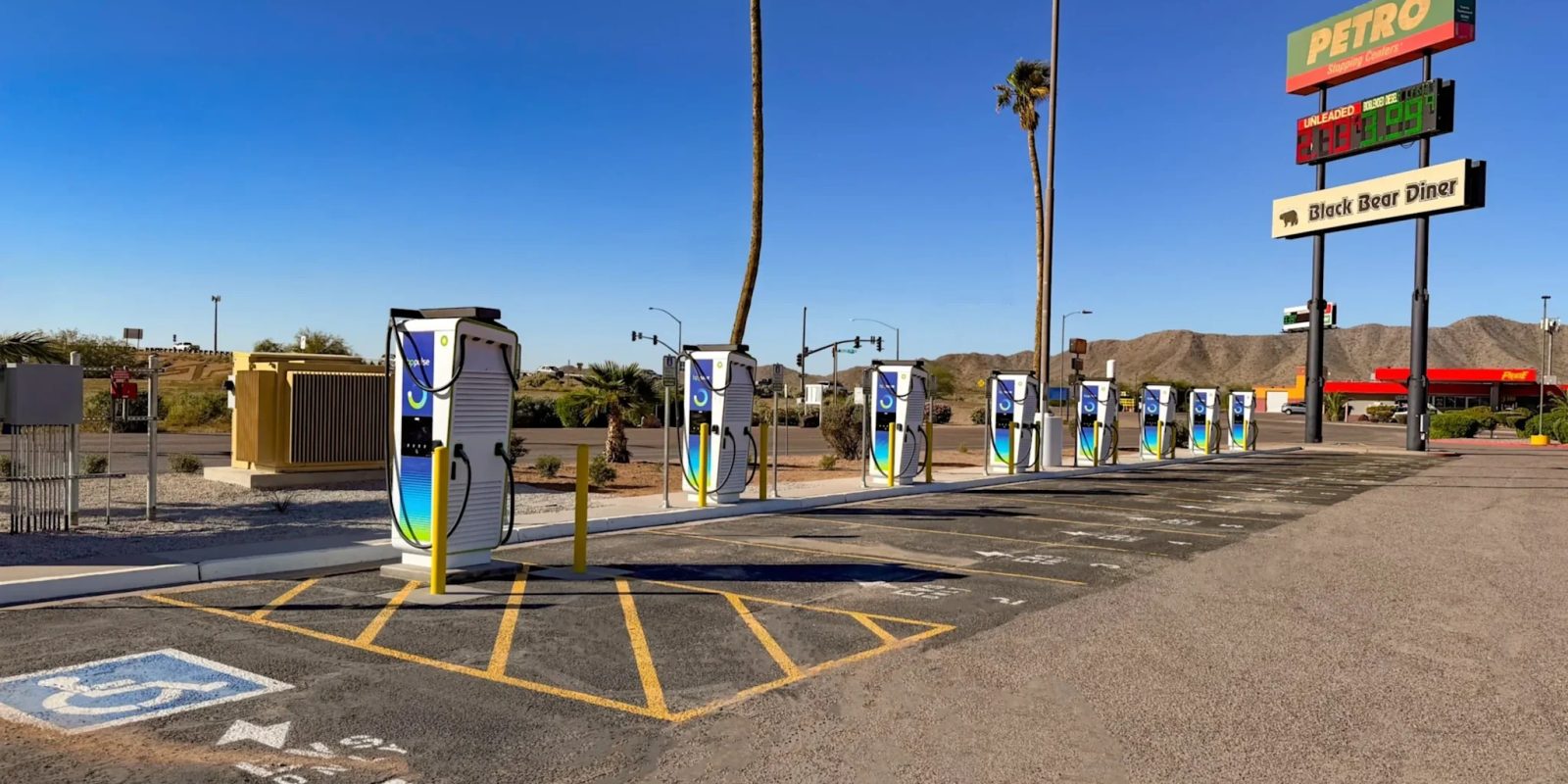
bp pulse is continuing to roll out public DC fast charging across the US, and the company has opened its first-ever site in Arizona, along with new fast-charging locations in Texas, Florida, and Ohio.
In Arizona, bp pulse’s first site is now online at the Petro Travel Center in Eloy, just off Interstate 10 at Exit 200 (pictured). The location features 16 charging bays delivering up to 400 kilowatts, with both CCS and NACS connectors available. While charging, drivers can take advantage of the travel center’s onsite diner, convenience store, ATM, barber shop, and restrooms.
In South Florida, bp pulse’s new fast-charging site is at 2400 Miami Road in Fort Lauderdale, about three miles from Fort Lauderdale–Hollywood International Airport. The site features 16 charging bays, offering a mix of 150 kW and 400 kW speeds, with both CCS and NACS connectors. Its proximity to the airport makes it a handy stop for ride-hail drivers, EV rental returns, and airport pickups and drop-offs, with hotels, restaurants, and convenience stores nearby.
Texas is also getting more high-power charging, with a new bp pulse site at the Petro Travel Center in El Paso, located off Interstate 10 at Exit 37. This location offers 12 charging bays capable of delivering up to 400 kW, again with both CCS and NACS connectors. Drivers can take advantage of the diner, convenience store, barber shop, and restrooms while they charge.
In Ohio, bp pulse has opened a smaller but still high-powered site at a TravelCenters of America location in Hebron, just off Interstate 70 at Exit 126. The site includes six 400 kW charging bays with CCS and NACS connectors, along with access to a convenience store, fast-food options, and restrooms.
These openings are part of bp pulse’s broader plan to build out EV charging across bp’s retail footprint, including bp, Amoco, ampm, Thorntons, and TravelCenters of America locations. Many of those sites are designed to combine fast charging with food, restrooms, and other travel amenities. bp has also said it plans to begin adding EV chargers at Waffle House locations starting in 2026.
Read more: bp pulse opens a huge airport EV fast charging hub in Houston
If you’re looking to replace your old HVAC equipment, it’s always a good idea to get quotes from a few installers. To make sure you’re finding a trusted, reliable HVAC installer near you that offers competitive pricing on heat pumps, check out EnergySage. EnergySage is a free service that makes it easy for you to get a heat pump. They have pre-vetted heat pump installers competing for your business, ensuring you get high quality solutions. Plus, it’s free to use!
Your personalized heat pump quotes are easy to compare online and you’ll get access to unbiased Energy Advisors to help you every step of the way. Get started here. – *ad
FTC: We use income earning auto affiliate links. More.

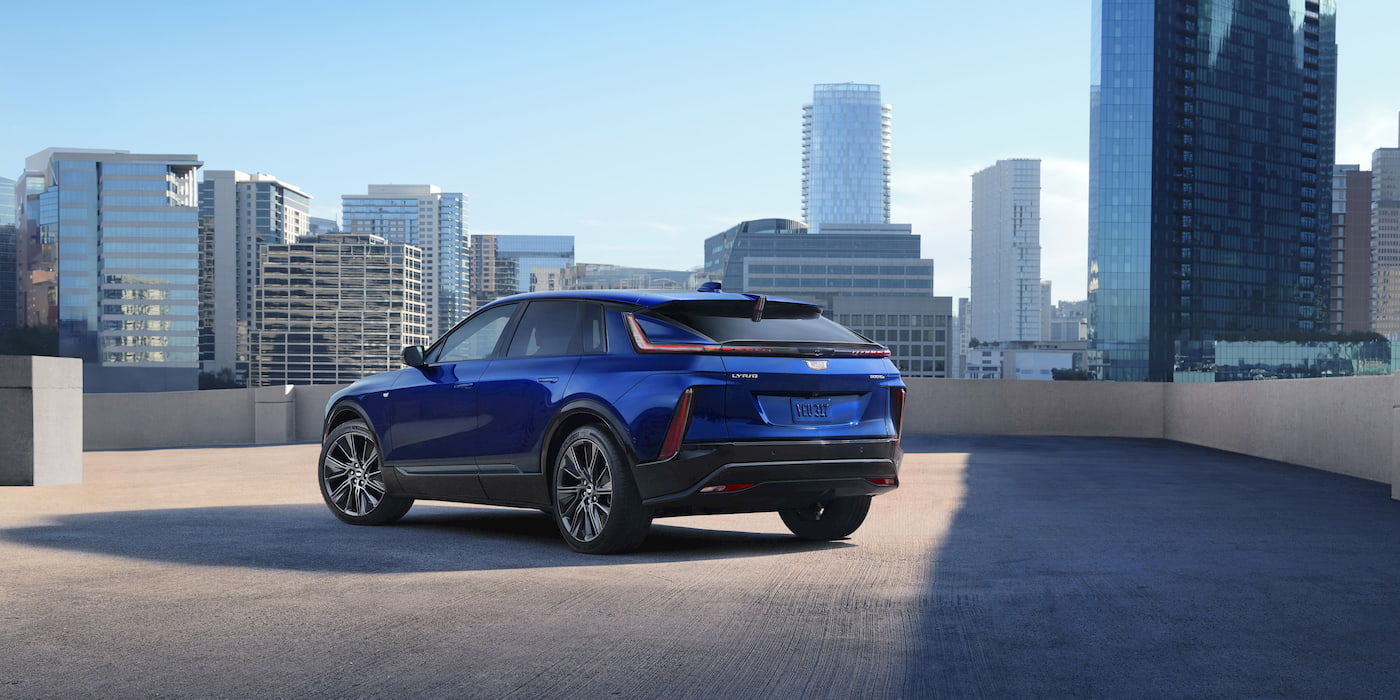
The Cadillac Lyriq and Chevy Blazer EV were among the vehicles that saw the biggest lease price drops in December.
Cadillac and Chevy EV lease prices drop in December
With the $7,500 federal EV tax credit now gone, automakers are filling the gap with their own incentives. Some are passing on the savings as bonus cash, conquest cash, lease discounts, and more.
Two General Motors electric SUVs, the Chevy Blazer EV and the Cadillac Lyriq, had some of the largest lease price drops of any vehicle in December.
The 2026 Cadillac Lyriq AWD Luxury model is now listed at $439 per month for 24 months. With $4,979 due at signing, the effective rate is $646, or $28 less per month than in November.
That’s after the Lyriq already saw prices drop by $115 a month from October. However, the December deal includes a $2,000 competitive bonus for owners and lessees of a 2011 model year or newer non-GM vehicle.
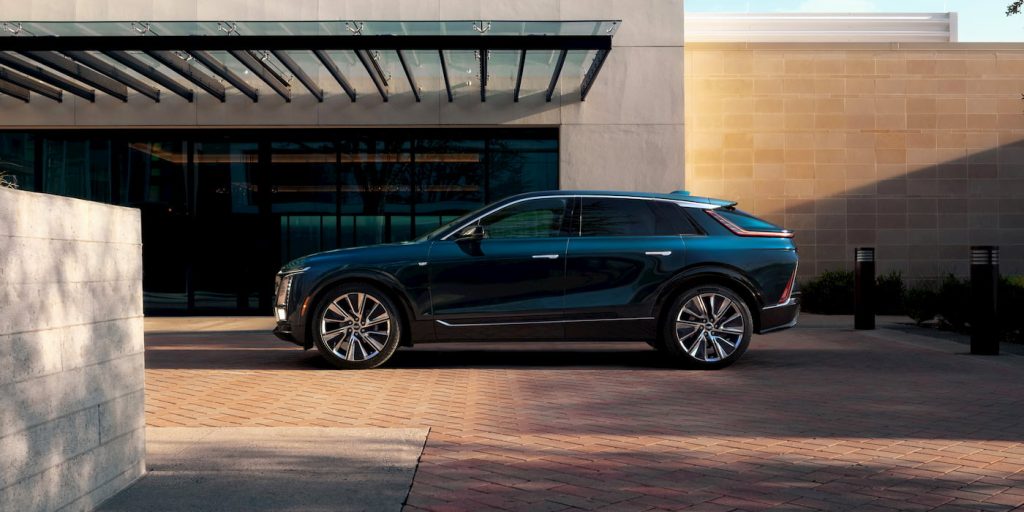
The 2026 Chevy Blazer EV FWD LT is now available to lease for as low as $319 a month for 24 months. With $6,039 due at signing, the effective rate is $571 per month, about $60 less than in November. The deal includes a $750 competitive bonus and $1,000 customer cash allowance.
Chevy and Cadillac are offering discounts across their entire EV lineup. All 2025 Chevy electric vehicles, including the Blazer EV, Equinox EV, and Silverado EV, are available with 0% APR financing for 60 months.


Intestingly, the 2026 Chevy Equinox EV is also available with 0% APR financing, while the 2026 Blazer EV is listed with 1.9% APR for 36 months.
Cadillac is offering a $2,000 conquest or loyalty bonus for the 2026 Cadillac Vistiq and select 2025/2026 Optiq and Lyriq models, plus 2.9% APR for 60 months.
The 2026 Cadillac Optiq is available to lease for as low as $319 per month for 24 months, while the 2026 Vistiq is available to lease for $619 per month for 24 months.
Want to try one out? We’ve got you covered. Check out the links below to see what Cadillac and Chevy EVs are nearby.
FTC: We use income earning auto affiliate links. More.

Electric vehicle prices edged lower and incentives jumped in November, but the month still saw a sales slowdown as the US EV market continues to hunt for a new normal.
Initial estimates from Kelley Blue Book show that EV sales came in at just over 70,000 units in November, more than 40% lower than a year ago and about 5% below October’s level.
The average transaction price (ATP) for a new EV in November was $58,638. That’s up 3.7% year-over-year but down 0.8% from October. Incentives told a different story: Discounts averaged 13.3% of ATP, which is lower than in November 2024 but jumped 20.1% compared to October.
Tesla continued to feel the pressure. The automaker’s ATP was $54,310 in November – down 1.7% from the same period a year ago but up 1.5% month-over-month. Sales declined for the second straight month and were down 22.7% year-over-year, mainly because of a drop in Model 3 demand.
Model 3 sales slid 42.1% compared to November 2024 and fell 11.9% from October. Meanwhile, the Model Y, still the best‑selling EV in the US, saw prices increase 0.9% year-over-year and month-over-month. Model Y sales were slightly lower than last November, down 0.5%, but rose 2.5% compared to October.
The Tesla Cybertruck showed signs of cooling. Once the best‑selling vehicle priced above $100,000, Cybertruck sales fell to 1,194 units in November, the lowest monthly total of 2025 so far. Its average price was $94,254, higher both year-over-year and compared to October.
Taken together, the numbers paint a picture of an EV market in transition: prices are easing, incentives are rising, but buyers are still holding back as the industry tries to settle into its next phase.
Cox Automotive executive analyst Erin Keating said, “It’s important to remember that the KBB ATP is a measure of what is bought, not what is available. Nearly half of new-vehicle buyers are over the age of 55 and in their peak earning years. These buyers are more likely shopping for a high-end SUV, not something cheap and cheerful. In November, the over-$75,000 price point saw more volume than under-$30,000.”
Read more: October EV sales slid, but deals and rebates are still in play

If you’re looking to replace your old HVAC equipment, it’s always a good idea to get quotes from a few installers. To make sure you’re finding a trusted, reliable HVAC installer near you that offers competitive pricing on heat pumps, check out EnergySage. EnergySage is a free service that makes it easy for you to get a heat pump. They have pre-vetted heat pump installers competing for your business, ensuring you get high quality solutions. Plus, it’s free to use!
Your personalized heat pump quotes are easy to compare online and you’ll get access to unbiased Energy Advisors to help you every step of the way. Get started here. – *ad
FTC: We use income earning auto affiliate links. More.
-
 Sports2 years ago
Story injured on diving stop, exits Red Sox game
-
 Sports3 years ago
‘Storybook stuff’: Inside the night Bryce Harper sent the Phillies to the World Series
-
 Sports2 years ago
Game 1 of WS least-watched in recorded history
-
 Sports3 years ago
Button battles heat exhaustion in NASCAR debut
-
 Sports3 years ago
MLB Rank 2023: Ranking baseball’s top 100 players
-
Sports4 years ago
Team Europe easily wins 4th straight Laver Cup
-
 Environment3 years ago
Japan and South Korea have a lot at stake in a free and open South China Sea
-
 Environment1 year ago
Here are the best electric bikes you can buy at every price level in October 2024