

Here it is: the first-ever electric Type D school bus from Thomas Built


The school bus experts at Thomas Built have just released the first all-electric, square-bodied Type D school bus in the company’s storied history – and they’ve given their new bus a friendly, pun-tastic name. Kids, meet Wattson!
Properly called the Saf-T-Liner eHDX2 Wattson, this latest transit-style Type D bus from North Carolina-based Thomas Built combines a flat front, high seating capacity, and superior driver visibility with clean, quiet, electric power from Cummins Accelera.
“Wattson represents our next step in electrification,” said TJ Reed, president and CEO of Daimler Truck Specialty Vehicles. “(Wattson) reflects our belief that the best electric solutions are the ones that feel familiar, fit within your fleet and are built to last. That’s what we’ve heard from our customers, and that’s what we’re delivering.”
The bus offers 150 miles of estimated range thanks to a huge 246 kWh li-ion battery pack. That battery funnels electrons to the same, ultra-efficient 295 hp 14Xe eAxle with 750 lb-ft of peak tq as the recently-revealed Jouley, offering more than enough “get up and go” to get kids safely across multilane highways and up even the gnarliest rural mountain inclines. And, of course, without the freezing concerns that can stop a diesel fleet cold during extreme temperature drops.
And, because Wattson is based heavily on Thomas Built’s existing Type D body, schools’ preferred upfitting solutions should bolt right in. “We know electrification can feel like a big step,” continued Reed. “With Wattson, we’re making that step easier by giving districts a familiar Type D solution they already trust – now in electric.”
Wattson is available for order now, with first deliveries scheduled for early 2026. The bus is capable of 120 kW DC fast charging, and is V2G capable.
Electrek’s Take

It’s almost universally accepted that school buses are prime candidates for electrification. They tend to operate on short, local routes, in stop-and-go traffic, and in close proximity with some of the most vulnerable populations in the country, in terms of respiratory illness and physical safety (just imagine a kid trying to yell “STOP!” at a bus driver and being heard over the din of noisy kids and a revving diesel). The fact that electric school buses can reduce a district’s operating costs and serve the public as a portable power center in an emergency are just icing on the electric cake.
Here’s hoping all our kids’ schools have a chance to trade in their gross diesel school bus for something like Thomas Built’s Wattson sooner than later.
SOURCE | IMAGES: Thomas Built.

If you’re considering going solar, it’s always a good idea to get quotes from a few installers. To make sure you find a trusted, reliable solar installer near you that offers competitive pricing, check out EnergySage, a free service that makes it easy for you to go solar. It has hundreds of pre-vetted solar installers competing for your business, ensuring you get high-quality solutions and save 20-30% compared to going it alone. Plus, it’s free to use, and you won’t get sales calls until you select an installer and share your phone number with them.
Your personalized solar quotes are easy to compare online and you’ll get access to unbiased Energy Advisors to help you every step of the way. Get started here.


FTC: We use income earning auto affiliate links. More.


DHL Express has more than 10,000 eSprinter vans in its global delivery fleet, but none of those have been deployed in North America – until now, that is! The company recently added 45 new Mercedes eSprinter panel vans, and they’ve got plans for plenty more!
While Mercedes offers its eSprinters with a promised 206 mile estimated range, DHL says it’s consistently seen them exceed 240 miles in stop-and-go delivery duty, making them the longest-range battery electric vehicles in DHL’s US fleet.
This extended capacity makes them ideally suited for urban logistics while expanding their potential use in longer delivery routes. The eSprinter vans also offer the same massive cargo capacity as their diesel-powered brothers, making them efficient last-mile delivery solutions that don’t compromise on payload or operational reliability.
And, of course, the eSprinter will do all of that without the noise, vibration, and harmful carbon emissions of diesel.
“Electrifying our fleet is one of the most visible and impactful ways we are moving toward a more sustainable future,” explains Greg Hewitt, CEO of DHL Express, US. “The Mercedes-Benz eSprinter brings an extended range and proven cargo capabilities that allow us to serve our customers with zero emissions, while also advancing our global goal of more sustainable logistics. These vehicles not only strengthen our operations in major US cities but also set the stage for future electric fleet growth across the Americas.”
The 45 eSprinters will see deployment in Chicago, Indiana, and Pittsburg, and will act as a first step DHL’s global Sustainability Roadmap, which will see the company electrify 66% of its last-mile US delivery fleet (and some of its long-haul fleet operations) by 2030.
Electrek’s Take
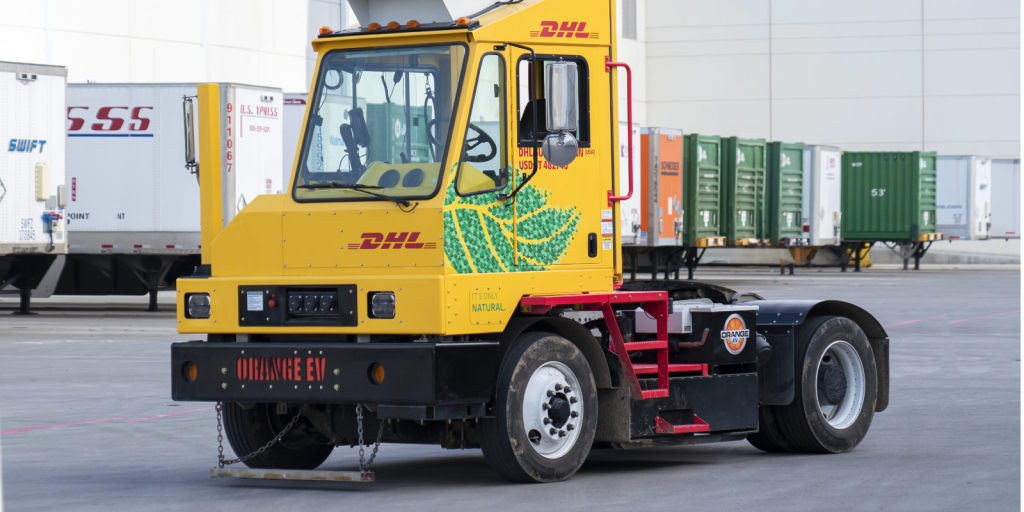
In addition to these 45 vans, DHL is electrifying its European and Asian delivery fleets, ramping up its sustainable aviation fuel use, and even exploring electric semis, eVTOL and hybrid aircraft deliveries, and more.
In short, they’re doing the right thing – or seem to be, anyway. Whether or not that commitment to decarbonization will win them more American customers remains to be seen.
SOURCE | IMAGES: DHL, via PR Newswire.
If you’re considering going solar, it’s always a good idea to get quotes from a few installers. To make sure you find a trusted, reliable solar installer near you that offers competitive pricing, check out EnergySage, a free service that makes it easy for you to go solar. It has hundreds of pre-vetted solar installers competing for your business, ensuring you get high-quality solutions and save 20-30% compared to going it alone. Plus, it’s free to use, and you won’t get sales calls until you select an installer and share your phone number with them.
Your personalized solar quotes are easy to compare online and you’ll get access to unbiased Energy Advisors to help you every step of the way. Get started here.
FTC: We use income earning auto affiliate links. More.


Enphase Energy just launched a new off-grid system that lets homeowners power their homes without a utility connection – even for extended periods. The California-based Enphase says the off-grid setup delivers a seamless way to live independently from the grid while still using solar, batteries, and a standby AC generator.
A full off-grid setup
The new system combines Enphase’s IQ Battery 5P with embedded grid-forming microinverters, IQ8 Series Microinverters with Sunlight JumpStart, and a third-party standby AC generator. The components work together to supply power to a home and automatically manage energy sources to maximize efficiency and reliability.
If the batteries are drained and the generator runs out of fuel, the Sunlight JumpStart feature can automatically recharge the batteries the next morning once the sun comes up.
The IQ Battery 5P delivers 3.84 kVA of power per 5 kWh of capacity, and systems can be scaled up to 40 kWh and 15.4 kVA. That’s enough power to start big household appliances like HVAC systems or water pumps. The IQ System Controller 3G provides the backbone, managing solar, batteries, and generator inputs to deliver up to 46 kVA of off-grid power.
Smarter control and connectivity
Each system connects to the cloud through Enphase’s IQ Combiner 5C HDK, which bundles solar interconnection, communications, and metering into one box. For homes without reliable broadband, the built-in 4G LTE Cat 4 modem keeps the system online for monitoring, firmware updates, and remote support.
Homeowners can manage everything from the Enphase App – from solar generation and battery status to generator integration and load control.
Why it matters
As grid outages become more common and homeowners look for ways to gain energy independence, off-grid systems like this are becoming more appealing.
“With the launch of our off-grid solution, we are giving homeowners a reliable path to complete energy independence,” said Nitish Mathur, Enphase’s SVP of customer experience. Enphase says over 100 homes are already operating entirely off-grid using its technology. The company plans to expand availability beyond the US in 2026.
Read more: Battery boom: 5.6 GW of US energy storage added in Q2

The 30% federal solar tax credit is ending this year. If you’ve ever considered going solar, now’s the time to act. To make sure you find a trusted, reliable solar installer near you that offers competitive pricing, check out EnergySage, a free service that makes it easy for you to go solar. It has hundreds of pre-vetted solar installers competing for your business, ensuring you get high-quality solutions and save 20-30% compared to going it alone. Plus, it’s free to use, and you won’t get sales calls until you select an installer and share your phone number with them.
Your personalized solar quotes are easy to compare online and you’ll get access to unbiased Energy Advisors to help you every step of the way. Get started here.
FTC: We use income earning auto affiliate links. More.
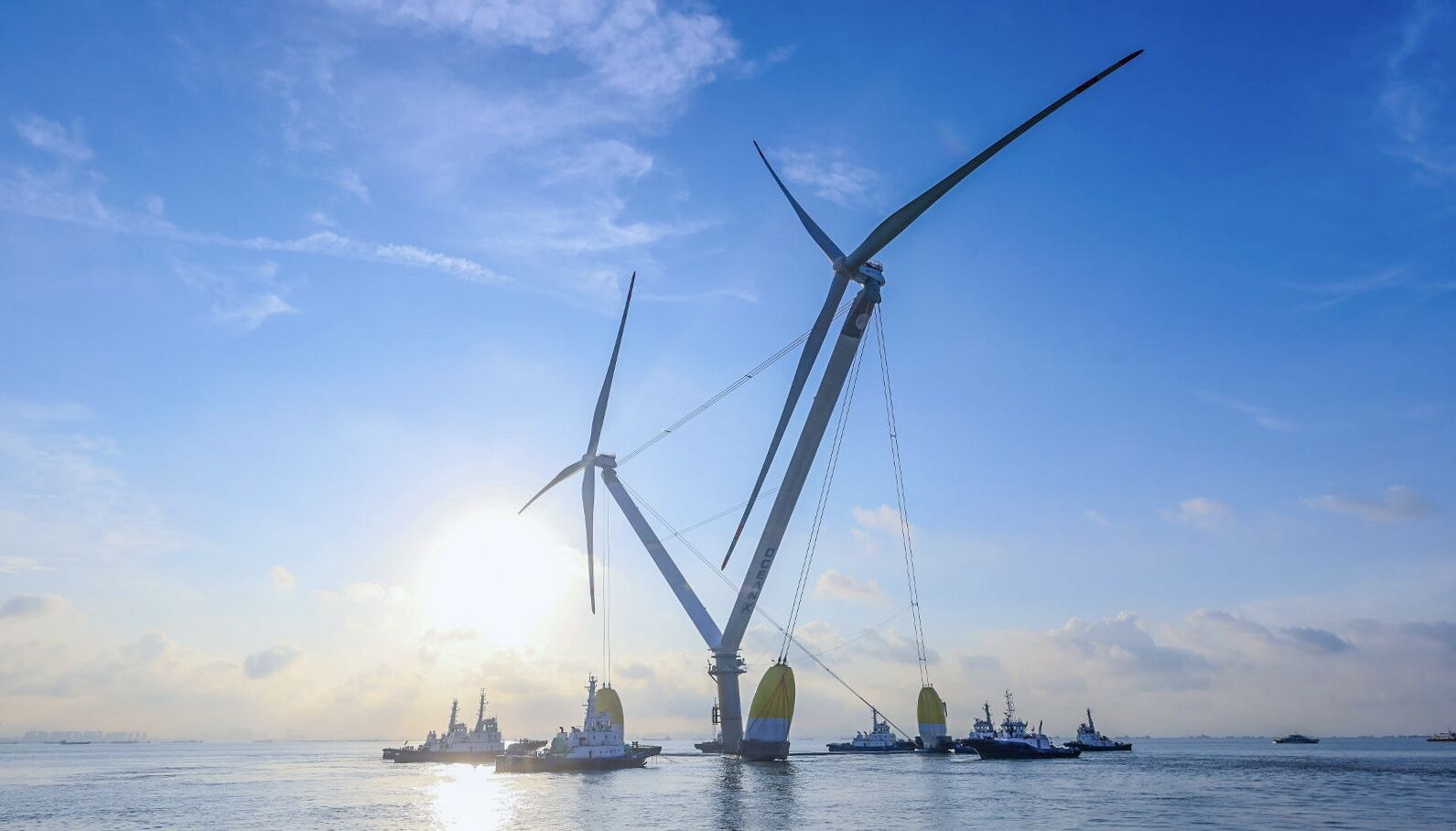
Global offshore wind targets are still strong enough to triple global capacity by 2030, despite the US’s offshore wind stagnation under Trump. A new analysis from energy think tank Ember and the Global Offshore Wind Alliance (GOWA) shows that the rest of the world is charging forward, underscoring confidence in offshore wind as a cornerstone of future clean energy systems.
-
 Sports2 years ago
Story injured on diving stop, exits Red Sox game
-
 Sports3 years ago
‘Storybook stuff’: Inside the night Bryce Harper sent the Phillies to the World Series
-
 Sports2 years ago
Game 1 of WS least-watched in recorded history
-
 Sports3 years ago
Button battles heat exhaustion in NASCAR debut
-
 Sports3 years ago
MLB Rank 2023: Ranking baseball’s top 100 players
-
Sports4 years ago
Team Europe easily wins 4th straight Laver Cup
-
 Environment2 years ago
Japan and South Korea have a lot at stake in a free and open South China Sea
-
 Environment1 year ago
Here are the best electric bikes you can buy at every price level in October 2024