
Defiance in the West Bank – despite encroaching threat from ‘unwanted neighbours’

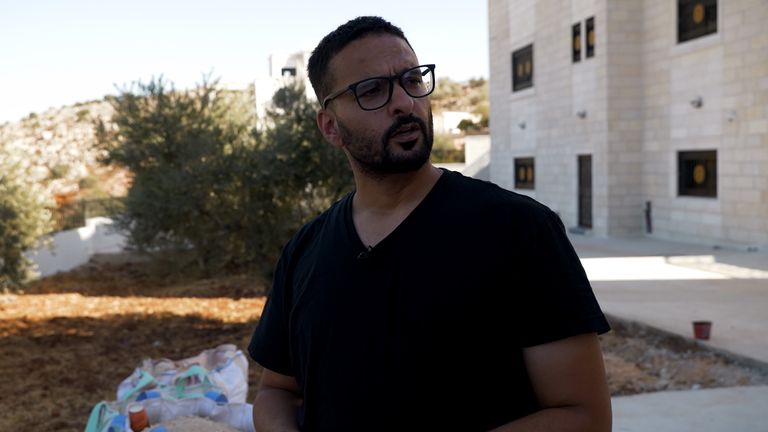
For generations, Keith Asad’s family has owned olive trees in the land near the West Bank town of Turmosayya, but now they are out of his reach.
The trees are still there.
He can see them, clearly, from the backyard of his house, tantalisingly close.
Keith Asad says he can’t go to his olive trees as he’s too frightened
But he can’t go there. He’s too frightened, and with good reason.
Even though he lives in a town where crime is almost unknown, Keith has just installed a wall made of rigid metal spikes, and he’s considering adding barbed wire to the top of them.
He worries about the safety of his wife and children, but why?
Through the gaps between the spikes, we can see a group of vehicles and tents that have been set up in the valley beyond Keith’s house. He calls them his “unwanted neighbours”.
The rest of the world calls them settlers.
“We have some trees over there,” he says, pointing at his land. “This is the first year that we’re not even thinking about going over there.”
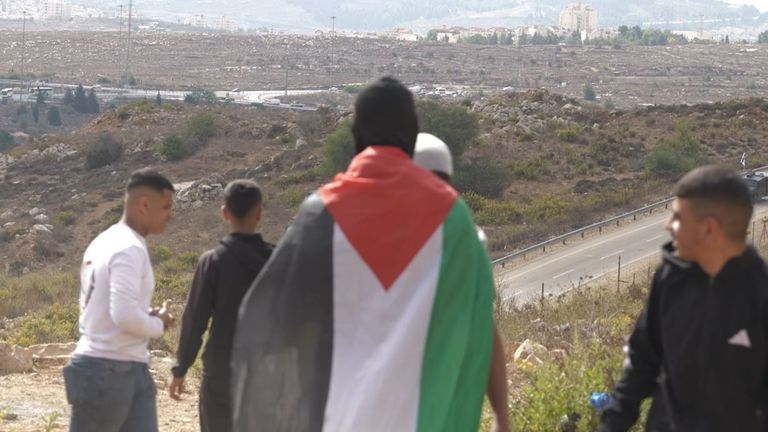
West Bank teenagers: Situation is ‘disastrous’
‘Oh, we’ll be shot… guaranteed’
“What would happen if you went?” I ask, and the answer is immediate.
“Oh, we’ll be shot. That’s guaranteed. One hundred percent.”
This group arrived a few months ago, with just a couple of tents, a couple of cars and an air of menace.
Road blocks appeared, stopping the locals from reaching their ancestral land. Buildings were vandalised and weapons were brandished. And Keith says the Israeli police and military have done nothing to help.
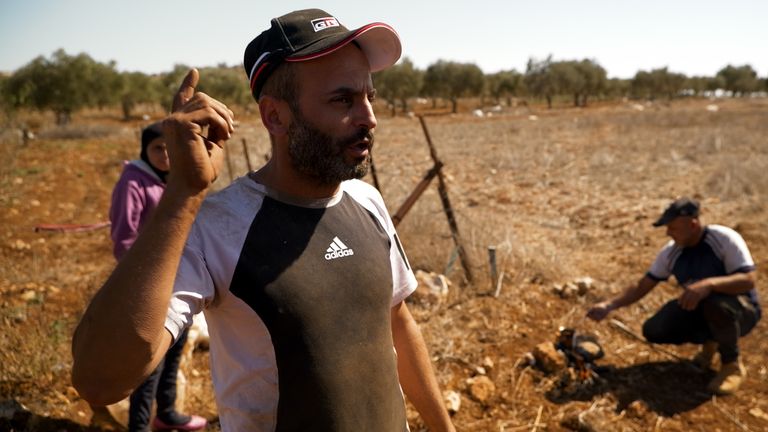
Olive farmers still come out, tending to their trees, knowing armed settlers are lurking
He shows me the damage to a door left behind after Israeli soldiers came to the house in the early hours of one morning, searching it from top to bottom and refusing to explain why.
He feels besieged, and he knows it will get worse. Because more and more of these outposts are being set up in the West Bank, by Israelis who believe they have a historic, or biblical, right to the land.
They are illegal, under both Israeli and international law.
But it is almost unknown for Israeli authorities to do anything to stop them and there is a crop of Israeli politicians, including some in the cabinet, who are passionate about encouraging as many new outposts as possible.
Because over time, they grow, attracting more people.
Military to civilian occupation
Roads and houses are built, Palestinians are intimidated into leaving and eventually those little outposts morph into permanent settlements, signed off and approved by the Israeli government.
And gradually, the Israeli occupation of the West Bank becomes slightly less military and slightly more civilian.
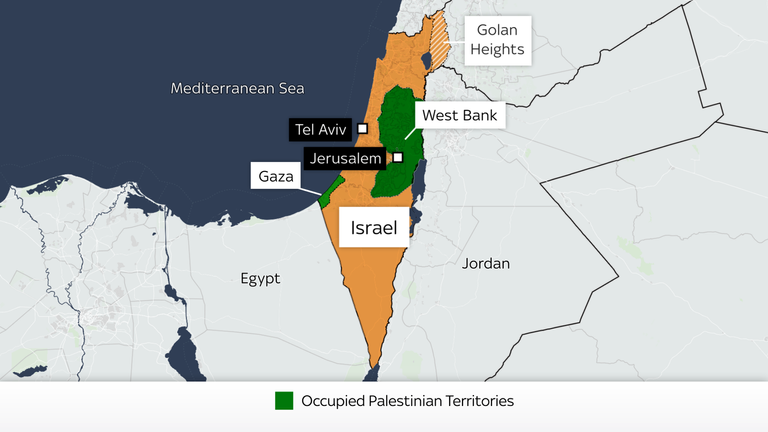
For the Palestinians we spoke to, it feels like an invasion, fuelled by a sense that the settlers act and attack with impunity.
Between 2005 and 2024, only around 3% of police investigations into settler violence ended in conviction. And, of course, many attacks are never investigated.
‘Very, very nervous’
In the olive groves outside Turmosayya, Yasser Alqam is driving me along a rough track, looking warily from side to side.
“I feel very, very nervous,” he says. “I’m looking to my sides, on top of these hills, because, without any warning, stones can come down on your car.
“And it’s going to take you a while before you figure out which way they’re coming from.”

Yasser Alqam says he feels ‘very, very nervous’
Yasser was here earlier in the month when he saw a horrendous attack, in which a settler, armed with a club dotted with nails, beat people – including a 53-year-old Palestinian woman called Afaf Abu Alia.
Video of her being attacked, and then, covered in blood, helped to a car to be taken to hospital, was put on social media and attracted widespread condemnation. So far, despite the video evidence, nobody has been arrested.
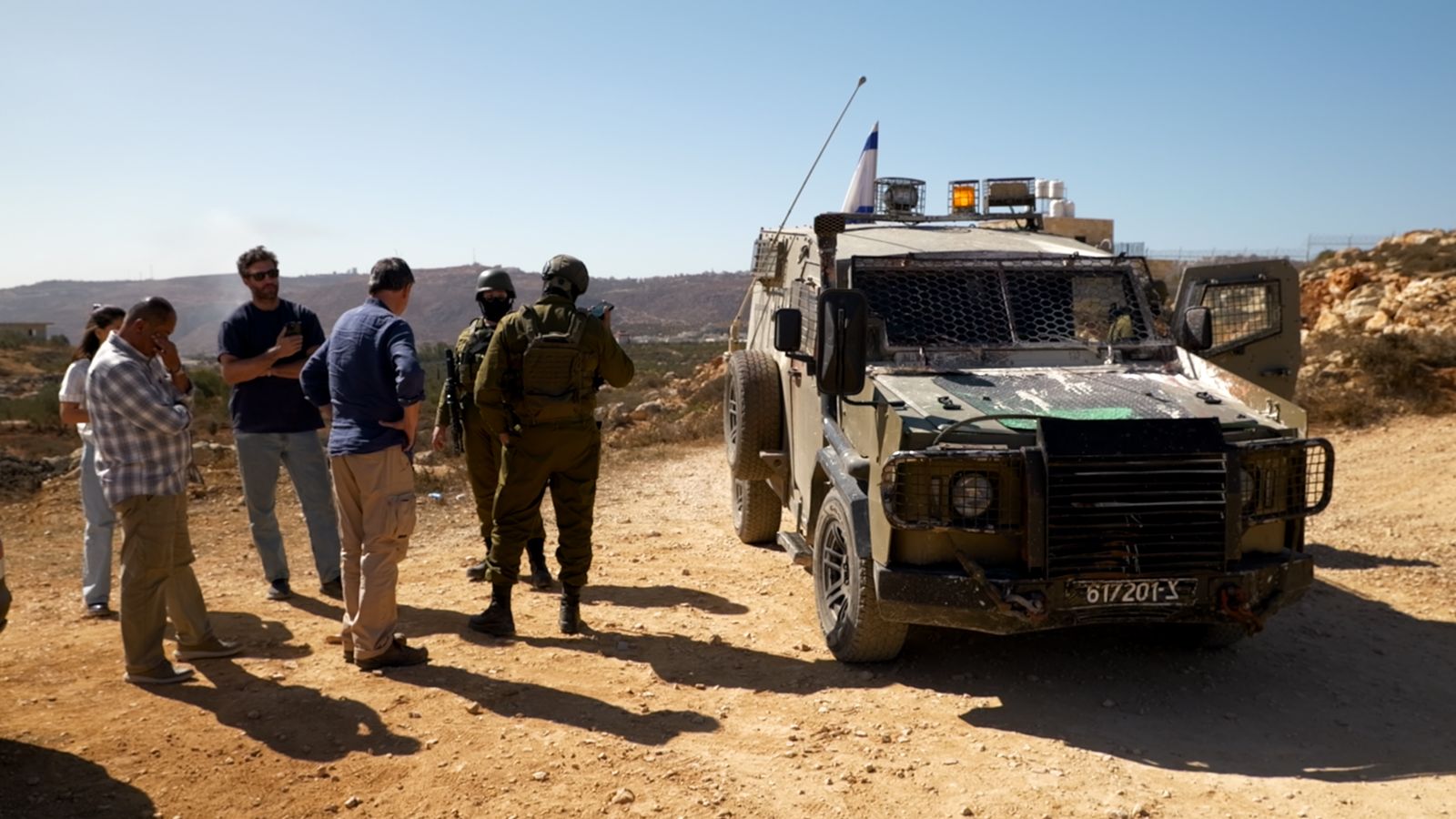
Sky News confronted by Israeli troops
Yasser takes us to the site of the attack. As we film, an Israeli military vehicle comes along a track and stops in a cloud of dust.
The soldiers emerge and tell us we have to leave for our own protection, claiming that this olive grove is, in fact, a closed military zone.
Read more from Sky News:
Andrew to relocate to Sandringham
Man killed in helicopter crash

Sky News team were told police were on their way to arrest them but, as suddenly as it started, it was over
I ask who they are protecting us from, but there is no answer. I’m shown a WhatsApp image of a rudimentary rectangle on a map, and informed that this is a military order.
We’re then told we can’t leave, and that the police are on the way to arrest us. We discuss the law. And then, as suddenly as it started, it’s over – we’re free to go. It’s just another flare-up on the West Bank.
In a statement, the Israel Defense Forces (IDF) told us its mission was to thwart terrorism, and it said it strongly condemned violence of any kind. It said it would conduct a review of the attacks we have reported on here.
But the echoes of violence reverberate here. We go to visit Afaf, the woman who was so grievously attacked.
Her body is badly battered, and she has two blood clots on her brain, but she has been discharged from hospital and is sitting on a sofa, her family around her, frail but sure.
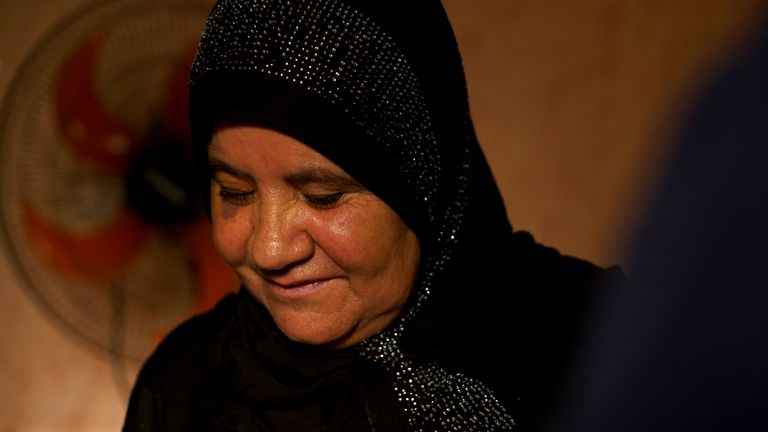
Afra says she was beaten ‘all over her body’
The song of defiance
“They beat me on my head, behind my ears, along my legs, my back, and my neck all over my body, everywhere,” she tells me.
“I was terrified. The first thing that came to my mind was my son – he’s getting married soon. All I could think was that I might never get the chance to celebrate.
“It’s our land. We stand our ground, and we are here to stay. We’re not going anywhere. I won’t give it up to settlers. They can beat us all they want, they won’t break us.”
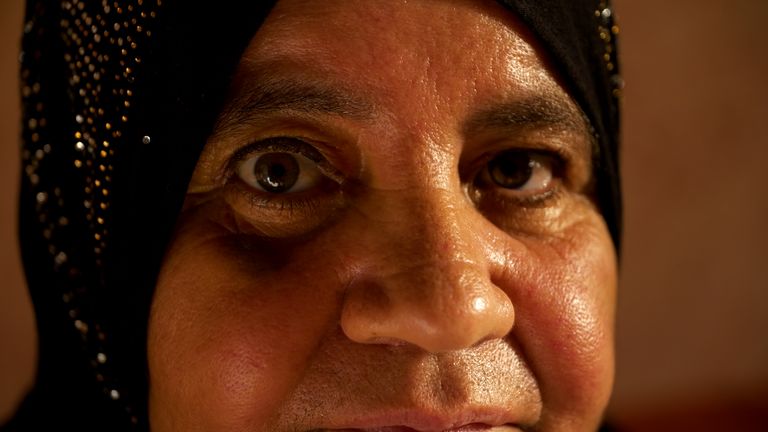
It is a refrain you hear repeatedly on the West Bank – the song of defiance. The olive farmers still come out, tending to their trees, aware that settlers, with their guns and their own belief that this land is rightly theirs, are lurking.
These valleys and fields are, at once, so tranquil, but also so very ominous and menacing.
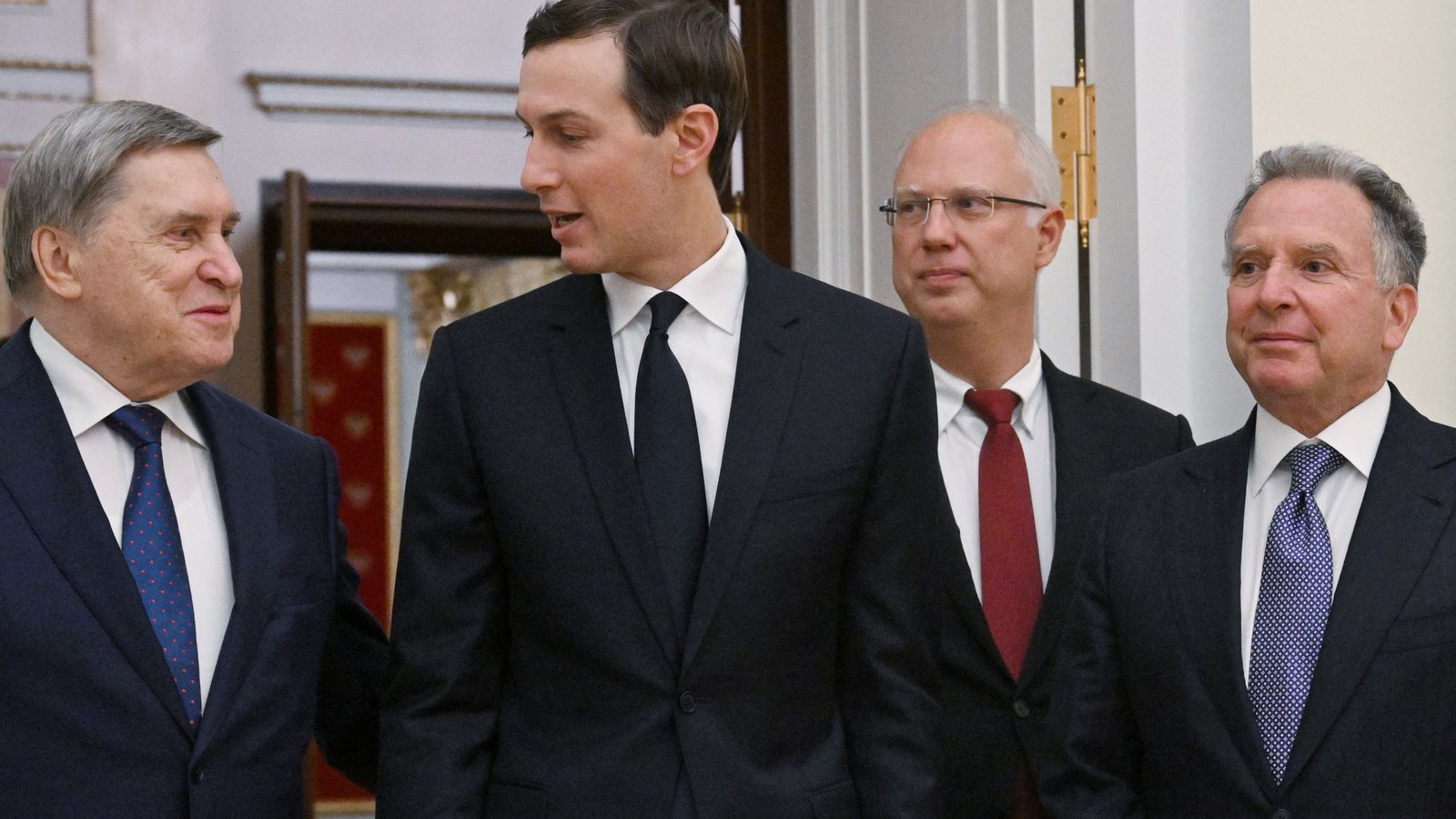
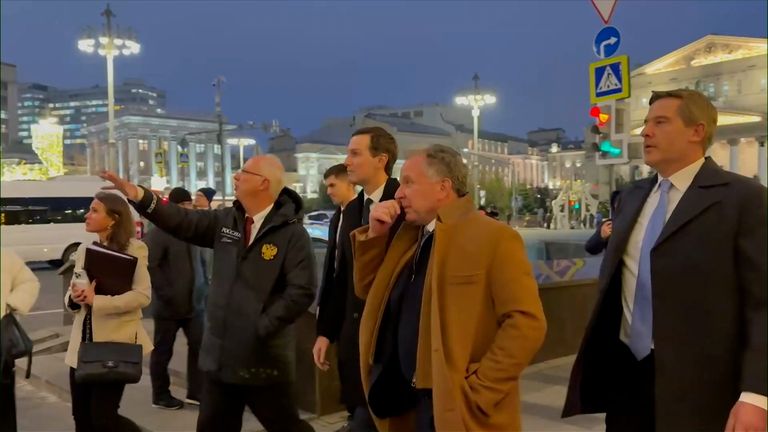
The Americans were given the full VIP treatment on their visit to Moscow.
There was a motorcade from the airport, lunch at a Michelin-starred restaurant, and even a stroll around Red Square.
It felt like Steve Witkoff and Jared Kushner were on more of a tourist trail than the path to peace.
Trump’s envoys walk around Moscow
They finally got down to business in the Kremlin more than six hours after arriving in Russia. And by that point, it was already clear that the one thing they had come to Moscow for wasn’t on offer: Russia’s agreement to their latest peace plan.
According to Vladimir Putin, it’s all Europe’s fault. While his guests were having lunch, he was busy accusing Ukraine’s allies of blocking the peace process by imposing demands that are unacceptable to Russia.
The Europeans, of course, would say it’s the other way round.
But where there was hostility to Europe, only hospitality to the Americans – part of Russia’s strategy to distance the US from its NATO allies, and bring them back to Moscow’s side.
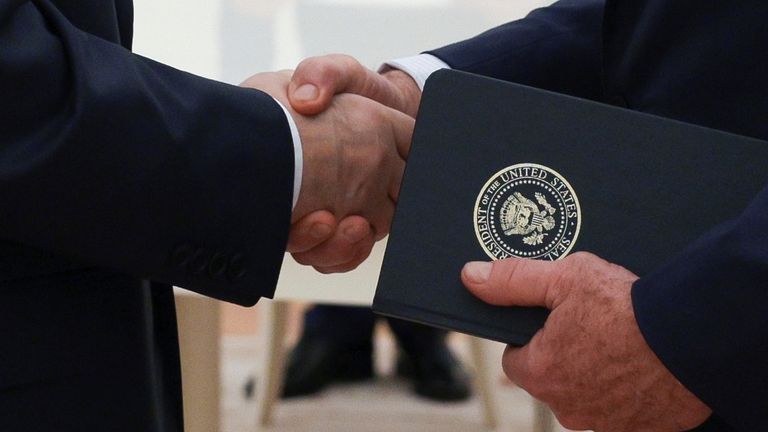
Vladimir Putin and Steve Witkoff shaking hands in August. AP file pic
Putin thinks he’s winning…
Russia wants to return to the 28-point plan that caved in to its demands. And it believes it has the right to because of what’s happening on the battlefield.
It’s no coincidence that on the eve of the US delegation’s visit to Moscow, Russia announced the apparent capture of Pokrovsk, a key strategic target in the Donetsk region.
It was a message designed to assert Russian dominance, and by extension, reinforce its demands rather than dilute them.
Read more:
Michael Clarke answers your Ukraine war questions
‘Thousands’ of Westerners applying to live in Russia

‘Everyone must be on this side of peace’
…and believes US-Russian interests are aligned
The other reason I think Vladimir Putin doesn’t feel the need to compromise is because he believes Moscow and Washington want the same thing: closer US-Russia relations, which can only come after the war is over.
It’s easy to see why. Time and again in this process, the US has defaulted to a position that favours Moscow. The way these negotiations are being conducted is merely the latest example.
With Kyiv, the Americans force the Ukrainians to come to them – first in Geneva, then Florida.
As for Moscow, it’s the other way around. Witkoff is happy to make the long overnight journey, and then endure the long wait ahead of any audience with Putin.
It all gives the impression that when it comes to Russia, the US prefers to placate rather than pressure.
According to the Kremlin, both Russia and the US have agreed not to disclose the details of yesterday’s talks in Moscow.
I doubt Volodymyr Zelenskyy is filled with hope.


FIFA has backed away from using dynamic pricing for all 2026 World Cup tickets amid concerns about the cost of attending the tournament in North America.
The organisers insisted they always planned to ring-fence tickets at set prices to follow your own team.
But the announcement comes just days ahead of Friday’s tournament draw in Washington DC, which Donald Trump plans to attend.
Fans will have to wait until Saturday to know exactly where and when their teams will be playing in next summer’s tournament.
Scotland will be one of the teams in the tournament, held in North America and Mexico
Variable pricing – fluctuating based on demand – has never been used at a World Cup before, raising concerns about affordability.
England and Scotland fans have been sharing images in recent days of ticket website images highlighting cost worries.
But world football’s governing body said in a statement to Sky News: “FIFA can confirm ringfenced allocations are being set aside for specific fan categories, as has been the case at previous FIFA World Cups. These allocations will be set at a fixed price for the duration of the next ticket sales phase.
“The ringfenced allocations include tickets reserved for supporters of the Participating Member Associations (PMAs), who will be allocated 8% of the tickets for each match in which they take part, including all conditional knockout stage matches.”
FIFA says the cheapest tickets are from $60 (£45) in the group stage. But the most expensive tickets for the final are $6,730 (£5,094).
There will also be a sales window after the draw from 11 December to 13 January when ticket applications will be based on a fixed price for those buying in the random selection draw.
It is the biggest World Cup with 104 matches after the event was expanded from 32 to 48 teams. There are also three host nations for the first time – with Canada and Mexico the junior partners.

The tournament mascots as seen in Mexico in October. Pic: Reuters
Read more from Sky News:
Pope urges Trump not to oust Venezuelan president by force
Government delays Chinese ‘super embassy’ decision
FIFA defended using fluctuating pricing.
“The pricing model adopted for FIFA World Cup 26 reflects the existing market practice for major entertainment and sporting events within our hosts on a daily basis, soccer included,” FIFA’s statement continued.
“This is also a reflection of the treatment of the secondary market for tickets, which has a distinct legal treatment than in many other parts of the world. We are focused on ensuring fair access to our game for existing but also prospective fans.”
The statement addressed the concerns being raised about fans being priced out of attending.
FIFA said: “Stadium category maps do not reflect the number of tickets available in a given category but rather present default seating locations.
“FIFA resale fees are aligned with North American industry trends across various sports and entertainment sectors.”
Ireland, Northern Ireland and Wales could also still qualify.
The Americans were given the full VIP treatment on their visit to Moscow.
There was a motorcade from the airport, lunch at a Michelin-starred restaurant, and even a stroll around Red Square.
It felt like Steve Witkoff and Jared Kushner were on more of a tourist trail than the path to peace.
Trump’s envoys walk around Moscow
They finally got down to business in the Kremlin more than six hours after arriving in Russia. And by that point, it was already clear that the one thing they had come to Moscow for wasn’t on offer: Russia’s agreement to their latest peace plan.
According to Vladimir Putin, it’s all Europe’s fault. While his guests were having lunch, he was busy accusing Ukraine’s allies of blocking the peace process by imposing demands that are unacceptable to Russia.
The Europeans, of course, would say it’s the other way round.
But where there was hostility to Europe, only hospitality to the Americans – part of Russia’s strategy to distance the US from its NATO allies, and bring them back to Moscow’s side.
Vladimir Putin and Steve Witkoff shaking hands in August. AP file pic
Putin thinks he’s winning…
Russia wants to return to the 28-point plan that caved in to its demands. And it believes it has the right to because of what’s happening on the battlefield.
It’s no coincidence that on the eve of the US delegation’s visit to Moscow, Russia announced the apparent capture of Pokrovsk, a key strategic target in the Donetsk region.
It was a message designed to assert Russian dominance, and by extension, reinforce its demands rather than dilute them.
Read more:
Michael Clarke answers your Ukraine war questions
‘Thousands’ of Westerners applying to live in Russia
‘Everyone must be on this side of peace’
…and believes US-Russian interests are aligned
The other reason I think Vladimir Putin doesn’t feel the need to compromise is because he believes Moscow and Washington want the same thing: closer US-Russia relations, which can only come after the war is over.
It’s easy to see why. Time and again in this process, the US has defaulted to a position that favours Moscow. The way these negotiations are being conducted is merely the latest example.
With Kyiv, the Americans force the Ukrainians to come to them – first in Geneva, then Florida.
As for Moscow, it’s the other way around. Witkoff is happy to make the long overnight journey, and then endure the long wait ahead of any audience with Putin.
It all gives the impression that when it comes to Russia, the US prefers to placate rather than pressure.
According to the Kremlin, both Russia and the US have agreed not to disclose the details of yesterday’s talks in Moscow.
I doubt Volodymyr Zelenskyy is filled with hope.
-
 Sports2 years ago
Story injured on diving stop, exits Red Sox game
-
 Sports3 years ago
‘Storybook stuff’: Inside the night Bryce Harper sent the Phillies to the World Series
-
 Sports2 years ago
Game 1 of WS least-watched in recorded history
-
 Sports3 years ago
Button battles heat exhaustion in NASCAR debut
-
 Sports3 years ago
MLB Rank 2023: Ranking baseball’s top 100 players
-
Sports4 years ago
Team Europe easily wins 4th straight Laver Cup
-
 Environment3 years ago
Japan and South Korea have a lot at stake in a free and open South China Sea
-
 Environment1 year ago
Here are the best electric bikes you can buy at every price level in October 2024