

Solar and wind are booming in 2025, but global targets lag behind

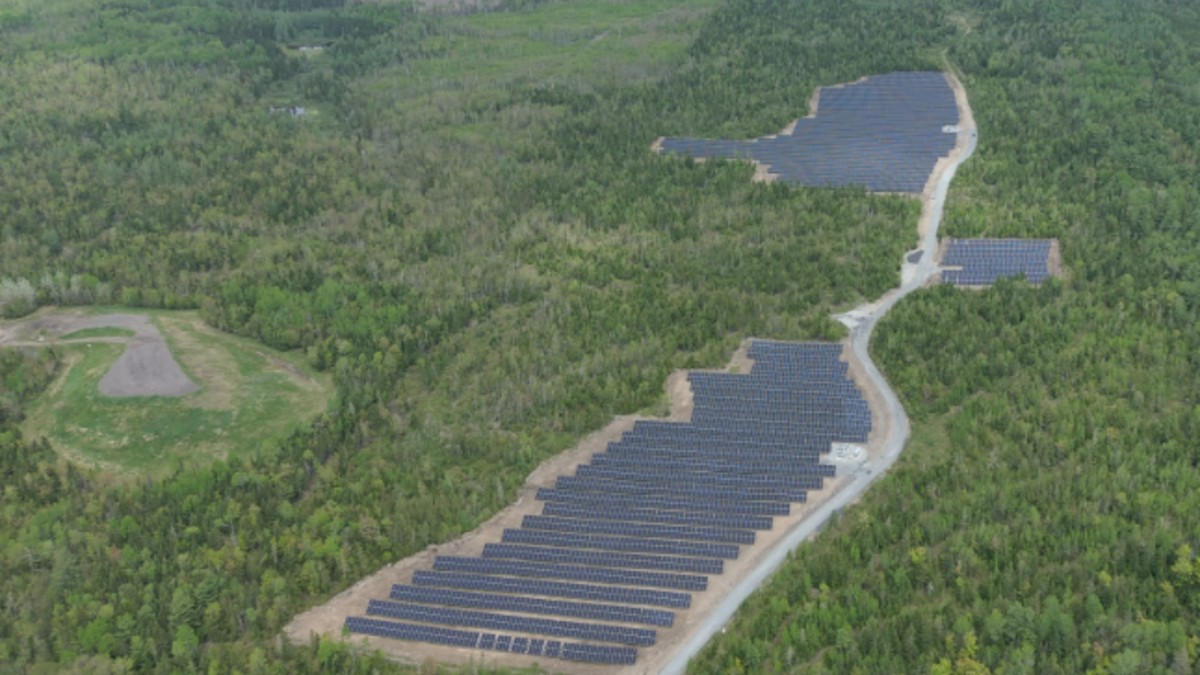
The world is barreling toward another record-breaking year of solar and wind deployment in 2025, says a new analysis from energy think tank Ember. If current trends continue, we could actually triple global renewable capacity by 2030 – but only if governments catch up to what’s already happening on the ground.
Ember’s latest global analysis, which utilizes solar and wind data through September, projects that 793 gigawatts (GW) of renewable capacity will be added in 2025. That’s an 11% bump from the 717 GW added in 2024 – and it builds on a blistering pace: renewable capacity grew 22% in 2023 and 66% in 2022.
Solar continues to do the heavy lifting, followed by wind. Solar capacity is forecast to grow 9% in 2025, while wind is expected to jump 21%. And China is way ahead of everyone – it’s expected to install 66% of the world’s new solar and 69% of new wind next year.
That rapid pace means the world doesn’t have to continually increase new capacity at breakneck speeds to meet the 2030 tripling target agreed upon at COP28. Ember says additions only need to keep rising by about 12% every year between 2026 and 2030. Compare that to the 29% average annual growth from 2023 to 2025, and it feels pretty doable.
So what’s the problem?
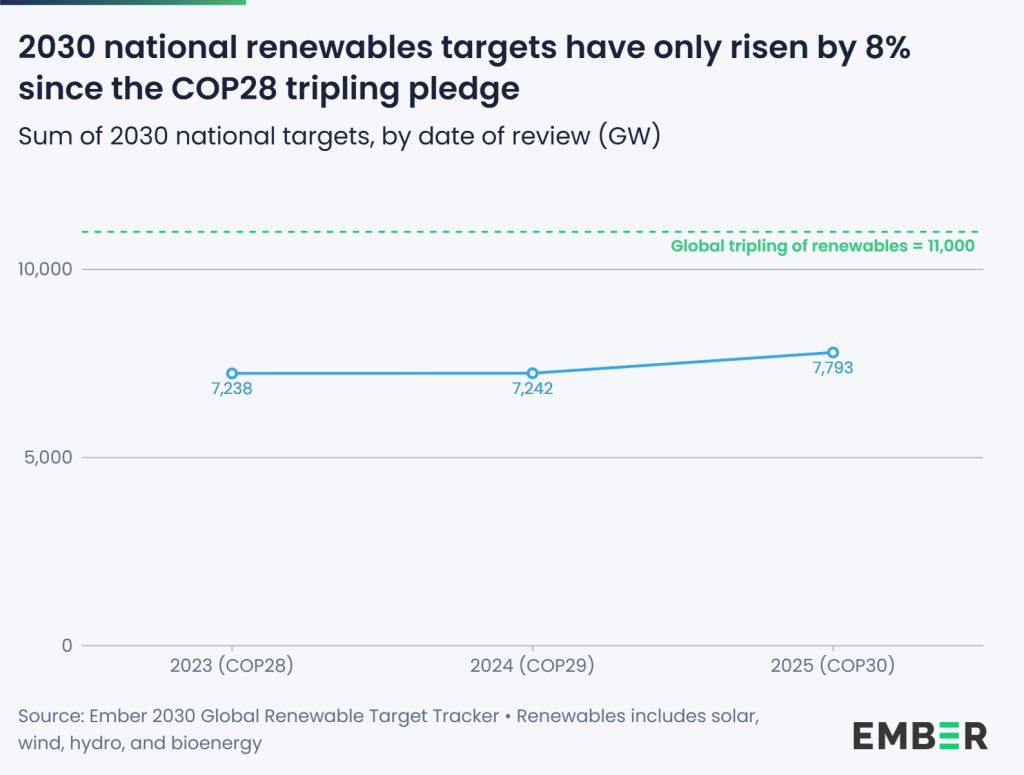
As UN’s COP30 climate conference kicks off in Brazil, government targets aren’t keeping up. Right now, national plans only point toward a little more than doubling renewable capacity by 2030 – nowhere near tripling. Since 2022, global government targets for 2030 have only crept up 8%. China raised its target based on its 2025 climate plan, but the US target declined, keeping the global sum flat at 7.8 terawatts (TW).
“Deployment has accelerated far faster than governments had expected,” says Ember energy analyst Katye Altieri. “Renewables are booming, led by solar. But unless countries urgently update their targets, we risk underbuilding the grids, flexibility, and storage required to support this extraordinary growth.”
Even if clean energy is rocketing ahead, clear targets still matter – they tell utilities, companies, and grid operators the amount to prepare for. With fewer than five years to go, this is the chance for governments to catch up to reality and lock in the systems needed to manage this massive surge in solar and wind.
Read more: FERC: For two years straight, solar leads new US power capacity

The 30% federal solar tax credit is ending this year. If you’ve ever considered going solar, now’s the time to act. To make sure you find a trusted, reliable solar installer near you that offers competitive pricing, check out EnergySage, a free service that makes it easy for you to go solar. It has hundreds of pre-vetted solar installers competing for your business, ensuring you get high-quality solutions and save 20-30% compared to going it alone. Plus, it’s free to use, and you won’t get sales calls until you select an installer and share your phone number with them.
Your personalized solar quotes are easy to compare online and you’ll get access to unbiased Energy Advisors to help you every step of the way. Get started here.


FTC: We use income earning auto affiliate links. More.

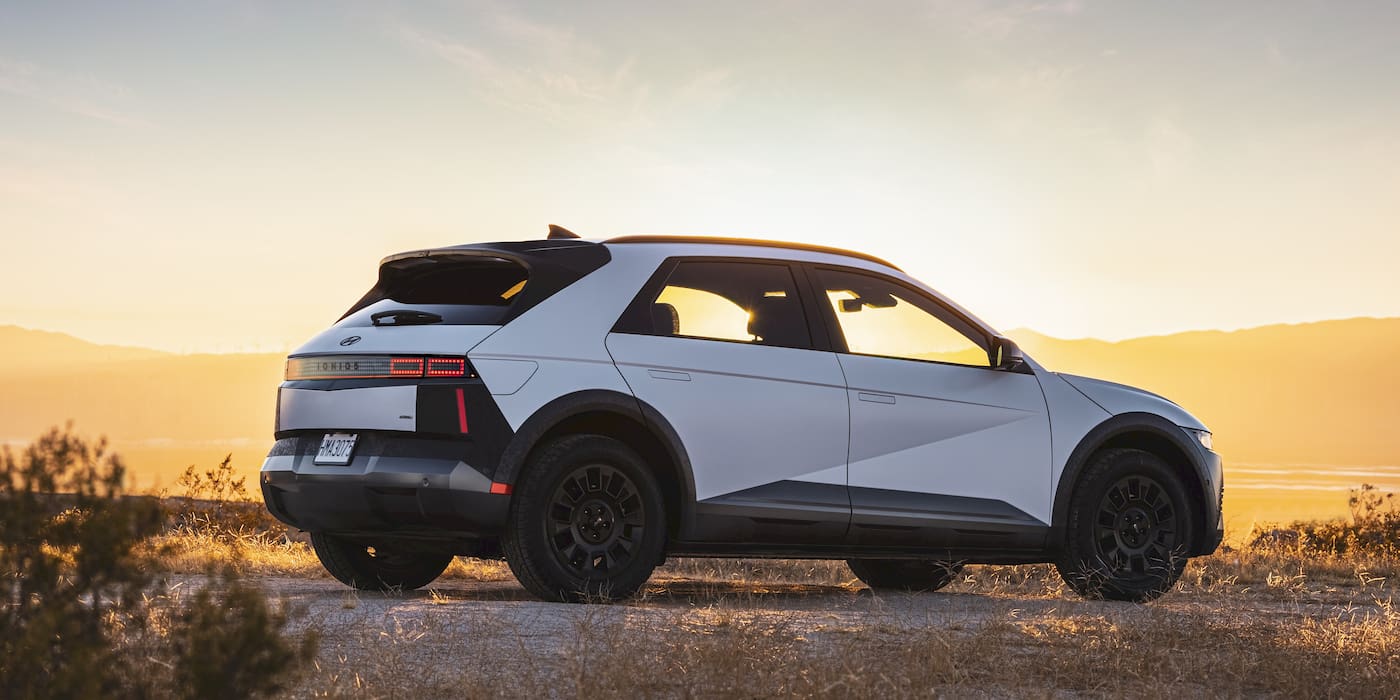
Hyundai is the biggest winner from the US and South Korea’s new trade deal, lowering the tariff rate on imported vehicles to 15%.
Hyundai gets a break with lower US tariffs
Hyundai has committed $26 billion toward its US operations, among the biggest of any automaker. Despite this, the automaker has shelled out billions since the Trump administration slapped a 25% tariff on South Korean imports earlier this year.
The Korean auto giant is catching a break after the US and South Korea signed a new trade deal that lowered the tariff rate to 15%.
A notice posted on the Federal Register on Thursday confirmed the rate cut and other adjustments under the new deal.
Hyundai took a 1.8 trillion won ($1.2 billion) hit from the added tariffs in the third quarter, up from just 828 billion won ($565 million) in Q3 2024.
Although it’s a lower rate, bringing it in line with Japan, which announced a similar deal in September, Hyundai will still have to pay billions in extra costs.
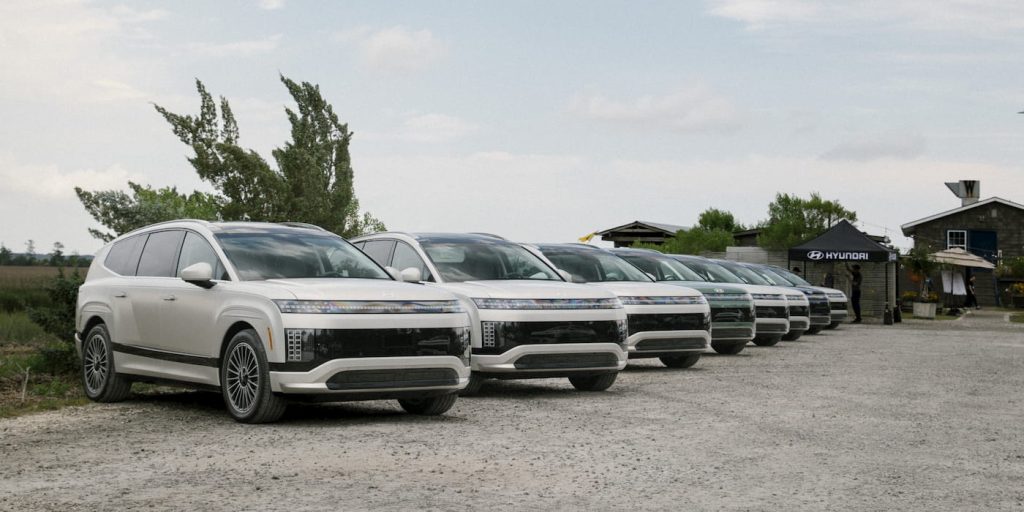
“Fifteen percent is still 15%,” Randy Parker, Hyundai North America CEO, told CNBC during an interview this week.
Parker said the tariffs will be a challenge, but Hyundai is aiming for a sixth consecutive record year of US retail sales in 2026.

Hyundai Motor, including Kia and Genesis, is expected to import nearly 1 million vehicles into the US this year, or about 40% of its sales. By 2030, Hyundai aims to have more than 80% of the cars it sells in the US manufactured locally.
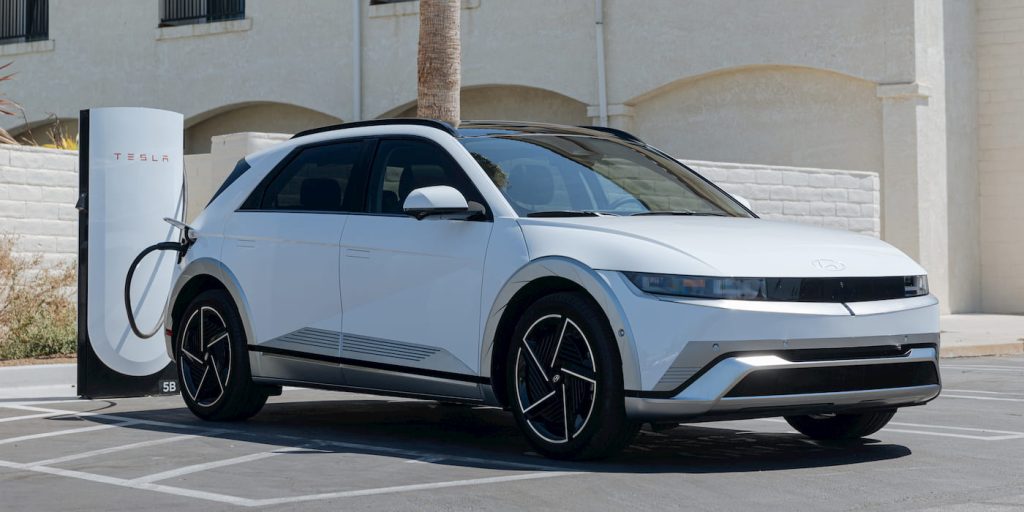
Through November, Hyundai has sold nearly 823,000 vehicles in the US, up 8% from the same period in 2024, putting it on pace for its fifth consecutive annual retail sales record. Parker said Hyundai is “on a record pace and fully expect to go ‘5 for 5 in 2025.’”
To offset the loss of the $7,500 federal tax credit, Hyundai has been offering some of the largest discounts on electric vehicles.
The IONIQ 5, which has consistently been a top-selling EV in the US, is among the most affordable options with leases starting at just $189 a month.
Interested in a test drive? We can help you get started. Check out our links below to find Hyundai’s EVs near you.
FTC: We use income earning auto affiliate links. More.


Elon Musk has confirmed that Tesla’s Full Self-Driving (Supervised) system now allows drivers to text and drive, though he added a caveat that it depends on the “context of surrounding traffic.”
This comes just a month after the CEO promised the feature was coming, despite the obvious legal and safety concerns surrounding it.
Does the law agree with this?
In a post on X (formerly Twitter) today, Musk responded to a question about whether the latest FSD v14.2.1 update allows for texting and driving. The CEO replied:
“Depending on context of surrounding traffic, yes.”
This confirmation follows a statement Musk made at a shareholder meeting in early November, which we reported on at the time. Back then, Musk claimed that Tesla would “allow you to text and drive” within “a month or two” after looking at safety statistics.
It appears Tesla is moving forward with this timeline, even as FSD remains a Level 2 driver-assist system.
Currently, Tesla’s driver monitoring system uses the cabin camera to track eye movement. If a driver looks down at their phone for too long, the system issues a “pay attention” warning (often called a “nag”) and can eventually disengage the system and issue a “strike.” Five strikes result in a suspension of FSD features.
Musk’s comment suggests that Tesla is relaxing these monitoring parameters in specific scenarios, likely in stop-and-go traffic or at red lights, where the system deems it “safe” for the driver to look away.
However, this doesn’t change the legal reality. As we noted last month, texting and driving is illegal in most jurisdictions, including almost all US states. A software update from Tesla does not supersede state laws.
As we suspected at the time, instead of classifying FSD as a level 3 or 4 system, where Tesla takes responsibility for the vehicles under certain conditions and allow the driver not to pay attention, the automaker is instead simply relazing its driver monitoring rules and leaving it to the driver to take on the risk of texting and driving under its level 2 driver assistance system.
This development also comes amidst a rough few weeks for Tesla’s self-driving credibility. Late last month, Musk finally admitted that no other automakers want to license Tesla FSD, a long-time hope for bulls. Furthermore, we just reported on Tesla hinting at a new camera upgrade, casting more doubt on the promise that current hardware (HW3/HW4) is sufficient for true unsupervised autonomy.
To “allow” texting and driving in a legal sense, Tesla would need to take liability for the vehicle and operate at SAE Level 3 or higher. Since FSD is still “Supervised,” the driver is 100% responsible for the vehicle. If you text and drive because Elon Musk said you could, and you crash or get pulled over, it is entirely on you.
Electrek’s Take
This is another dangerous blurring of the lines by Elon Musk.
Let’s be clear: You cannot legally text and drive just because your car’s CEO says it’s okay “depending on context.” If a police officer sees you looking at your phone, they aren’t going to care what version of FSD you are running.
What Musk really means here is that Tesla is disabling the safety feature that stops you from texting and driving in certain situations. He is removing the “nag” that detects phone use. That doesn’t make it legal, and it certainly doesn’t make it safe in a system that still requires constant supervision.
We have seen this pattern before. Tesla makes the driver monitoring looser to make the system feel more capable than it is, encouraging complacency. With FSD v14.2.1, it seems Tesla is confident enough to let you look at your phone at a red light without yelling at you. That’s a convenience feature at the cost of safety, not a step toward autonomy.
Until Tesla is willing to take liability for the drive, which they absolutely are not doing here, FSD is a Level 2 system. Eyes on the road, folks.
FTC: We use income earning auto affiliate links. More.
Environment
Tern’s NYC delivery e-bike fleet crosses 1 million miles, with some bikes rolling past 30k

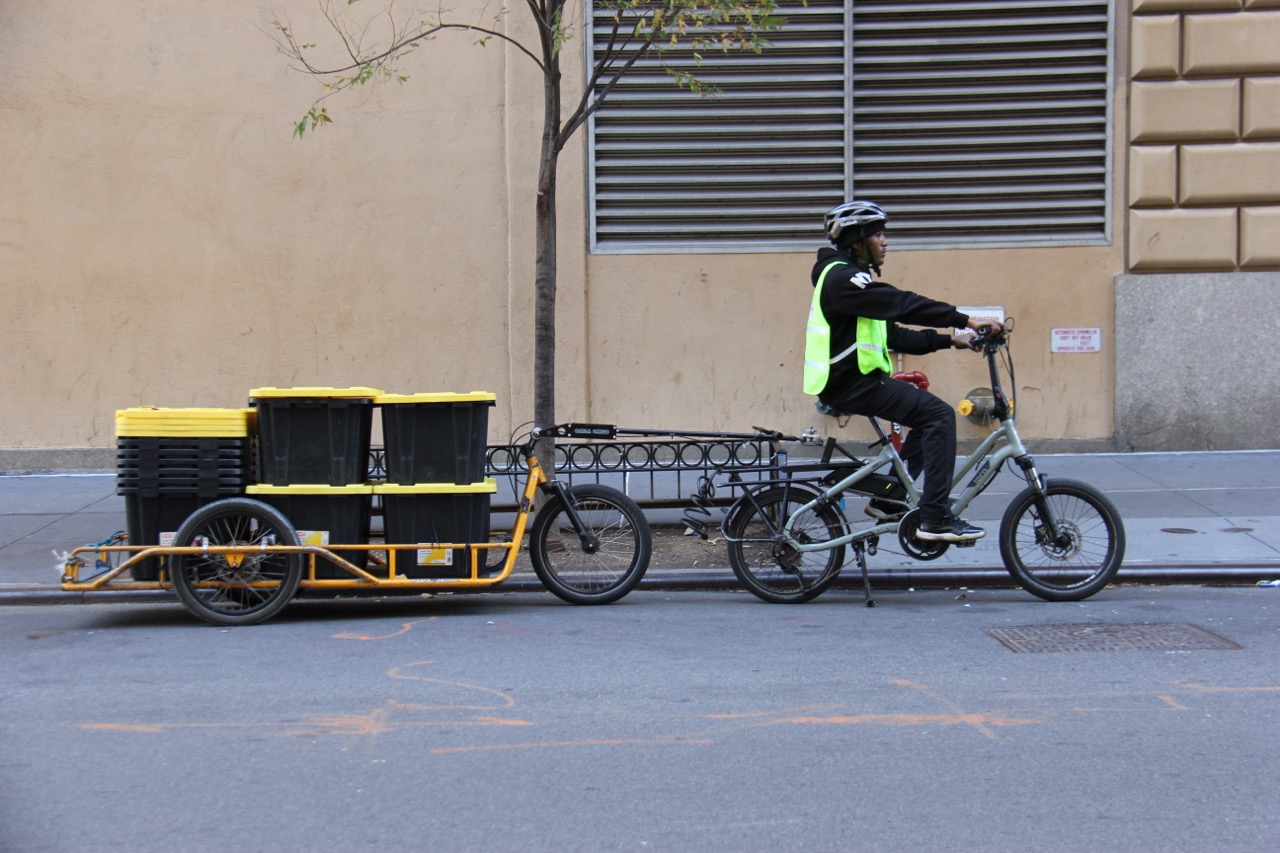
Urban e-bike maker Tern just hit a major milestone in one of the toughest proving grounds on the planet: New York City. The company announced that its fleet partners have now logged more than one million miles (1.6 million km) using Tern electric cargo bikes for commercial delivery work in the city – a figure that reflects not only enormous demand for e-bike logistics, but also the durability of the hardware behind it.
According to Tern, those same cargo bikes are now completing over 13 million deliveries per year in NYC, making the bright-vested riders pulling Carla Cargo trailers an increasingly familiar sight on Manhattan streets. Many of these rigs have been in near-continuous use since their rollout in 2021, sometimes operating 16 to 20 hours a day during peak periods. In the words of Steve Boyd, Tern’s North America GM, “These bikes get hammered, and they have the scars to prove it… but they’re engineered to keep on grinding away, mile after mile.”
Delivery vans, meet your match
One of the most striking takeaways is how closely e-cargo bike efficiency now mirrors that of traditional delivery vans. Tern reports that some fleets are pulling 300-pound (136 kg) loads and hitting 360 deliveries per day, averaging more than 22 deliveries per hour.
That puts these pedal-assist workhorses squarely in van territory – but with far lower operating costs, zero tailpipe emissions, and a much smaller footprint on crowded city streets.

NYC as the ultimate torture test
New York’s harsh winter freeze, summer heat, potholes, and relentless usage have turned the city into a stress test for every part of these bikes. Tern says that some individual units have already surpassed 30,000 miles (48,000 km) while remaining fully operational, with key components like frames and forks showing no failures. And unlike many purpose-built commercial machines that rely on proprietary parts, Tern emphasizes serviceability – most components can be maintained or replaced quickly using standard tools and off-the-shelf parts.
The Bosch motor systems powering the fleet have also held up under extreme use. According to the company, motor failures are rare, batteries continue delivering consistent performance well beyond their rated life, and Bosch’s service network has proven fast and reliable when issues do arise.
Charging at scale – safely
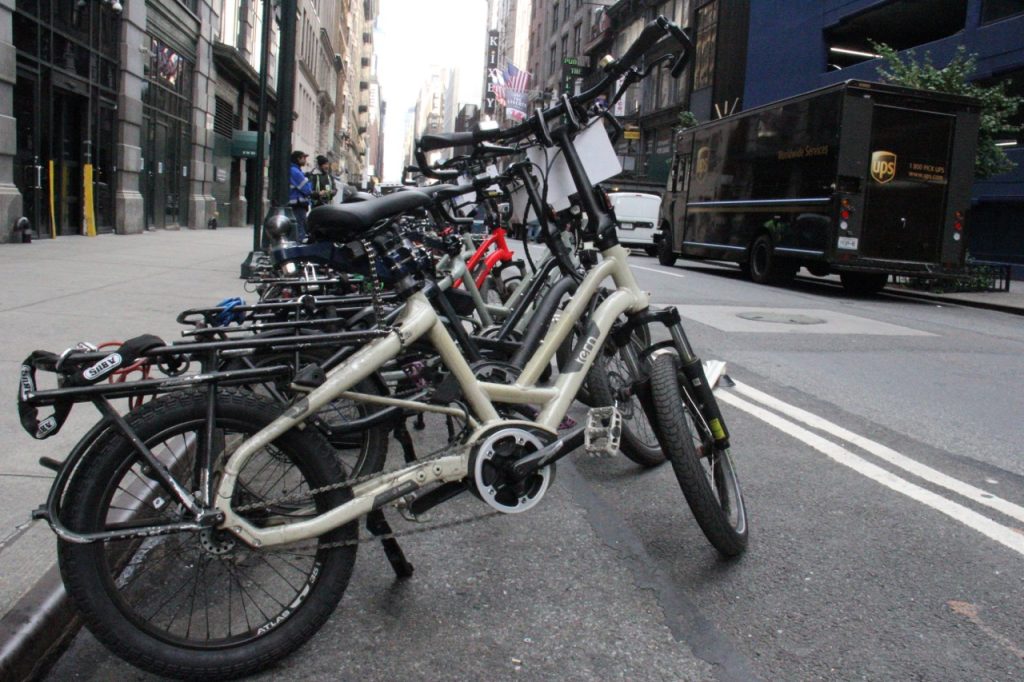
Operating a fleet of cargo bikes in NYC means charging hundreds of batteries every day, often simultaneously. Tern highlights that long before New York mandated UL-certified e-bikes, the company already equipped its commercial bikes exclusively with UL 2849-certified Bosch systems. After hundreds of thousands of charge cycles in dense depot environments, Tern reports zero thermal incidents across the entire fleet.
From delivery fleets to families
While these systems are clearly built to withstand commercial punishment, Tern notes that this is the same hardware sold through its consumer dealers. “Running sixteen hours a day and racking up more than ten thousand miles a year is exactly the kind of performance that shows we designed, tested, and built the bike right,” Boyd said.
That’s huge, since generally speaking, we usually see commercial bikes produced separately from consumer models, but Tern applies its same high standards to all of its bikes.
Electrek’s Take
It’s hard to find a harsher testbed than NYC delivery work. If a cargo bike can survive 20-hour days hauling 300-pound loads over Manhattan potholes, it can survive your grocery runs. What we’re really seeing here is proof that commercial e-bike logistics are scaling, are durable, and are beating vans at their own game in dense cities.
Part of that is due to the advantages of the two-wheeled model, and part of it is due to the extremely high standards to which Tern produces its bikes. I definitely feel better than ever recommending these things when someone asks me about a bike built for the long term. Sure, you pay more. But you also get more.
FTC: We use income earning auto affiliate links. More.
-
 Sports2 years ago
Story injured on diving stop, exits Red Sox game
-
 Sports3 years ago
‘Storybook stuff’: Inside the night Bryce Harper sent the Phillies to the World Series
-
 Sports2 years ago
Game 1 of WS least-watched in recorded history
-
 Sports3 years ago
Button battles heat exhaustion in NASCAR debut
-
 Sports3 years ago
MLB Rank 2023: Ranking baseball’s top 100 players
-
Sports4 years ago
Team Europe easily wins 4th straight Laver Cup
-
 Environment3 years ago
Japan and South Korea have a lot at stake in a free and open South China Sea
-
 Environment1 year ago
Here are the best electric bikes you can buy at every price level in October 2024