

Elon Musk claims Tesla FSD drivers can now text and drive, do police agree?


Elon Musk has confirmed that Tesla’s Full Self-Driving (Supervised) system now allows drivers to text and drive, though he added a caveat that it depends on the “context of surrounding traffic.”
This comes just a month after the CEO promised the feature was coming, despite the obvious legal and safety concerns surrounding it.
Does the law agree with this?
In a post on X (formerly Twitter) today, Musk responded to a question about whether the latest FSD v14.2.1 update allows for texting and driving. The CEO replied:
“Depending on context of surrounding traffic, yes.”
This confirmation follows a statement Musk made at a shareholder meeting in early November, which we reported on at the time. Back then, Musk claimed that Tesla would “allow you to text and drive” within “a month or two” after looking at safety statistics.
It appears Tesla is moving forward with this timeline, even as FSD remains a Level 2 driver-assist system.
Currently, Tesla’s driver monitoring system uses the cabin camera to track eye movement. If a driver looks down at their phone for too long, the system issues a “pay attention” warning (often called a “nag”) and can eventually disengage the system and issue a “strike.” Five strikes result in a suspension of FSD features.
Musk’s comment suggests that Tesla is relaxing these monitoring parameters in specific scenarios, likely in stop-and-go traffic or at red lights, where the system deems it “safe” for the driver to look away.
However, this doesn’t change the legal reality. As we noted last month, texting and driving is illegal in most jurisdictions, including almost all US states. A software update from Tesla does not supersede state laws.
As we suspected at the time, instead of classifying FSD as a level 3 or 4 system, where Tesla takes responsibility for the vehicles under certain conditions and allow the driver not to pay attention, the automaker is instead simply relazing its driver monitoring rules and leaving it to the driver to take on the risk of texting and driving under its level 2 driver assistance system.
This development also comes amidst a rough few weeks for Tesla’s self-driving credibility. Late last month, Musk finally admitted that no other automakers want to license Tesla FSD, a long-time hope for bulls. Furthermore, we just reported on Tesla hinting at a new camera upgrade, casting more doubt on the promise that current hardware (HW3/HW4) is sufficient for true unsupervised autonomy.
To “allow” texting and driving in a legal sense, Tesla would need to take liability for the vehicle and operate at SAE Level 3 or higher. Since FSD is still “Supervised,” the driver is 100% responsible for the vehicle. If you text and drive because Elon Musk said you could, and you crash or get pulled over, it is entirely on you.
Electrek’s Take
This is another dangerous blurring of the lines by Elon Musk.
Let’s be clear: You cannot legally text and drive just because your car’s CEO says it’s okay “depending on context.” If a police officer sees you looking at your phone, they aren’t going to care what version of FSD you are running.
What Musk really means here is that Tesla is disabling the safety feature that stops you from texting and driving in certain situations. He is removing the “nag” that detects phone use. That doesn’t make it legal, and it certainly doesn’t make it safe in a system that still requires constant supervision.
We have seen this pattern before. Tesla makes the driver monitoring looser to make the system feel more capable than it is, encouraging complacency. With FSD v14.2.1, it seems Tesla is confident enough to let you look at your phone at a red light without yelling at you. That’s a convenience feature at the cost of safety, not a step toward autonomy.
Until Tesla is willing to take liability for the drive, which they absolutely are not doing here, FSD is a Level 2 system. Eyes on the road, folks.


FTC: We use income earning auto affiliate links. More.

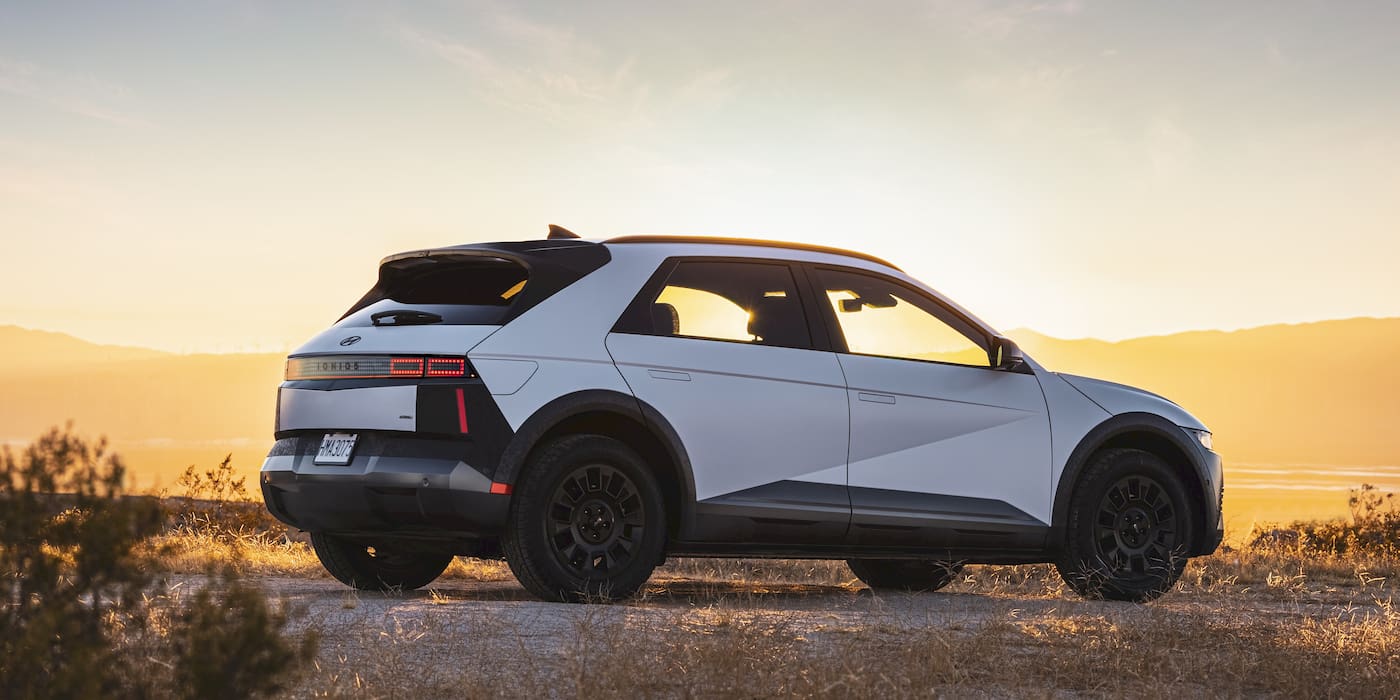
Hyundai is the biggest winner from the US and South Korea’s new trade deal, lowering the tariff rate on imported vehicles to 15%.
Hyundai gets a break with lower US tariffs
Hyundai has committed $26 billion toward its US operations, among the biggest of any automaker. Despite this, the automaker has shelled out billions since the Trump administration slapped a 25% tariff on South Korean imports earlier this year.
The Korean auto giant is catching a break after the US and South Korea signed a new trade deal that lowered the tariff rate to 15%.
A notice posted on the Federal Register on Thursday confirmed the rate cut and other adjustments under the new deal.
Hyundai took a 1.8 trillion won ($1.2 billion) hit from the added tariffs in the third quarter, up from just 828 billion won ($565 million) in Q3 2024.
Although it’s a lower rate, bringing it in line with Japan, which announced a similar deal in September, Hyundai will still have to pay billions in extra costs.
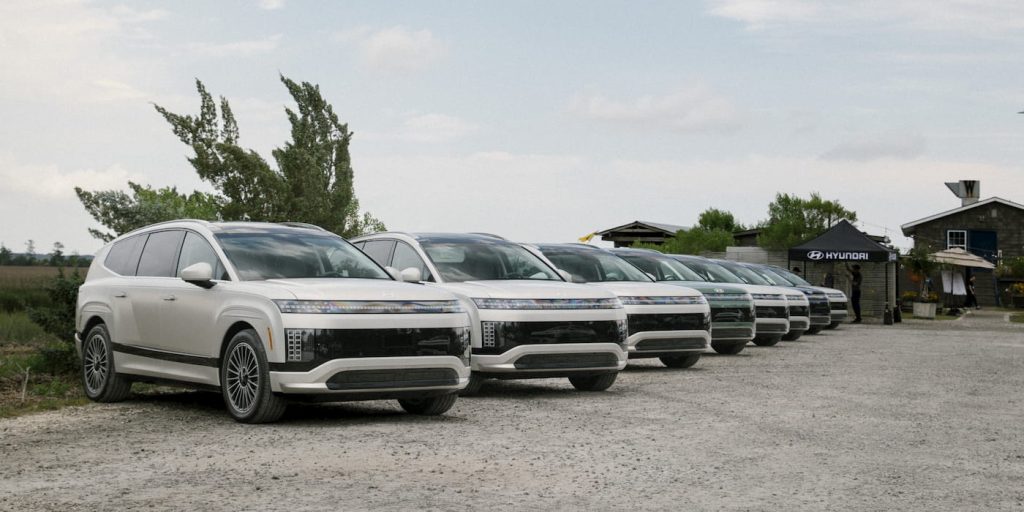
“Fifteen percent is still 15%,” Randy Parker, Hyundai North America CEO, told CNBC during an interview this week.
Parker said the tariffs will be a challenge, but Hyundai is aiming for a sixth consecutive record year of US retail sales in 2026.

Hyundai Motor, including Kia and Genesis, is expected to import nearly 1 million vehicles into the US this year, or about 40% of its sales. By 2030, Hyundai aims to have more than 80% of the cars it sells in the US manufactured locally.
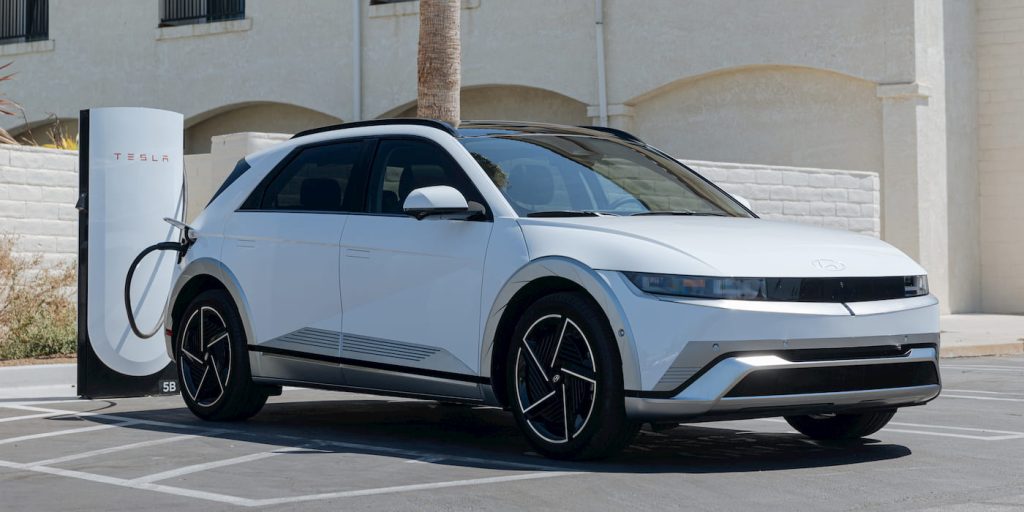
Through November, Hyundai has sold nearly 823,000 vehicles in the US, up 8% from the same period in 2024, putting it on pace for its fifth consecutive annual retail sales record. Parker said Hyundai is “on a record pace and fully expect to go ‘5 for 5 in 2025.’”
To offset the loss of the $7,500 federal tax credit, Hyundai has been offering some of the largest discounts on electric vehicles.
The IONIQ 5, which has consistently been a top-selling EV in the US, is among the most affordable options with leases starting at just $189 a month.
Interested in a test drive? We can help you get started. Check out our links below to find Hyundai’s EVs near you.
FTC: We use income earning auto affiliate links. More.
Environment
Tern’s NYC delivery e-bike fleet crosses 1 million miles, with some bikes rolling past 30k


Urban e-bike maker Tern just hit a major milestone in one of the toughest proving grounds on the planet: New York City. The company announced that its fleet partners have now logged more than one million miles (1.6 million km) using Tern electric cargo bikes for commercial delivery work in the city – a figure that reflects not only enormous demand for e-bike logistics, but also the durability of the hardware behind it.
According to Tern, those same cargo bikes are now completing over 13 million deliveries per year in NYC, making the bright-vested riders pulling Carla Cargo trailers an increasingly familiar sight on Manhattan streets. Many of these rigs have been in near-continuous use since their rollout in 2021, sometimes operating 16 to 20 hours a day during peak periods. In the words of Steve Boyd, Tern’s North America GM, “These bikes get hammered, and they have the scars to prove it… but they’re engineered to keep on grinding away, mile after mile.”
Delivery vans, meet your match
One of the most striking takeaways is how closely e-cargo bike efficiency now mirrors that of traditional delivery vans. Tern reports that some fleets are pulling 300-pound (136 kg) loads and hitting 360 deliveries per day, averaging more than 22 deliveries per hour.
That puts these pedal-assist workhorses squarely in van territory – but with far lower operating costs, zero tailpipe emissions, and a much smaller footprint on crowded city streets.

NYC as the ultimate torture test
New York’s harsh winter freeze, summer heat, potholes, and relentless usage have turned the city into a stress test for every part of these bikes. Tern says that some individual units have already surpassed 30,000 miles (48,000 km) while remaining fully operational, with key components like frames and forks showing no failures. And unlike many purpose-built commercial machines that rely on proprietary parts, Tern emphasizes serviceability – most components can be maintained or replaced quickly using standard tools and off-the-shelf parts.
The Bosch motor systems powering the fleet have also held up under extreme use. According to the company, motor failures are rare, batteries continue delivering consistent performance well beyond their rated life, and Bosch’s service network has proven fast and reliable when issues do arise.
Charging at scale – safely
Operating a fleet of cargo bikes in NYC means charging hundreds of batteries every day, often simultaneously. Tern highlights that long before New York mandated UL-certified e-bikes, the company already equipped its commercial bikes exclusively with UL 2849-certified Bosch systems. After hundreds of thousands of charge cycles in dense depot environments, Tern reports zero thermal incidents across the entire fleet.

From delivery fleets to families
While these systems are clearly built to withstand commercial punishment, Tern notes that this is the same hardware sold through its consumer dealers. “Running sixteen hours a day and racking up more than ten thousand miles a year is exactly the kind of performance that shows we designed, tested, and built the bike right,” Boyd said.
That’s huge, since generally speaking, we usually see commercial bikes produced separately from consumer models, but Tern applies its same high standards to all of its bikes.
Electrek’s Take
It’s hard to find a harsher testbed than NYC delivery work. If a cargo bike can survive 20-hour days hauling 300-pound loads over Manhattan potholes, it can survive your grocery runs. What we’re really seeing here is proof that commercial e-bike logistics are scaling, are durable, and are beating vans at their own game in dense cities.
Part of that is due to the advantages of the two-wheeled model, and part of it is due to the extremely high standards to which Tern produces its bikes. I definitely feel better than ever recommending these things when someone asks me about a bike built for the long term. Sure, you pay more. But you also get more.
FTC: We use income earning auto affiliate links. More.
Environment
EcoFlow RAPID + 25W MagSafe power bank Xmas savings at up to 60% off, Anker SOLIX C300 DC 288Wh station at new $135 low, more


Headlining today’s Green Deals is EcoFlow’s special Christmas promotional sale on its latest RAPID Power Banks and 25W MagSafe models – giving you up to 50% initial discounts and bonus 5% or 10% savings (the latter being on orders over $100) – all starting from $55. Right behind it, we spotted Anker’s SOLIX C300 DC 90,000mAh/288Wh Portable Power Station hitting a new $135 low, as well as Autel’s MaxiCharger Home 50A level 2 EV charging stations in multiple colorways at lows starting from $398, and much more waiting for you below. And don’t forget about the hangover deals from the holiday event and this week that are collected together in our Black Friday/Cyber Monday Green Deals hub, which we will continue to update through the rest of the week, like yesterday’s Jackery Black Friday Encore Sale + the increased exclusive savings on four of the brand’s newest power solutions, and more.
Head below for other New Green Deals we’ve found today and, of course, Electrek’s best EV buying and leasing deals. Also, check out the new Electrek Tesla Shop for the best deals on Tesla accessories.
Save up to 50% on EcoFlow’s latest RAPID power banks and 25W MagSafe models from $55 (Extra 10% off orders of $100)
Running alongside its ongoing Cyber Week power station sale, EcoFlow has launched a special Christmas promotion on its RAPID series of power banks, including its latest Qi2 magnetic solutions that were just released/launched for preorder, which gives you an additional 10% savings when your cart’s order totals $100 or more (with a continuing 5% code available for orders under that amount). If you’re not seeking to buy multiple units to reach that savings threshold, things start with EcoFlow’s RAPID Pro 20,000mAh 230W Power Bank with a built-in 100W cable at $125.99 shipped, after using the code XMASPB10 at checkout, beating its Amazon pricing by $14. Normally going for $180 at full price since hitting the market in later summer, discounts have mostly kept costs above $140, though we did see more recent falls to $130 and the $120 low since October. If you missed that low Black Friday pricing, you’re getting the next-best rate here this month with a combined $54 cut from the tag. Head below to check out the full lineup of power bank deals that you can pick up for your holiday gifts.
There’s a wide array of options among EcoFlow’s expanding RAPID series of power banks, which originally had only the 5,000mAh and 10,000mAh magnetic options, but now start with newer 10,000mAh models (both cable-oriented and Qi2 wireless) and range up to 27,650mAh capacities. Designs vary from model to model, obviously, with some bearing built-in/retractable cables (alongside multiple USB-C ports) while others are standard plug-in solutions. You’ll find a range of output capabilities, too, with 67W, 170W, 230W, or 300W – or the two Qi2 magnetic power banks giving you 15W or 25W wireless charging speeds.
***Note: None of the prices below have had the extra savings factored in, so be sure to use the code EF3CAFF5 at checkout for an extra 5% savings on orders under $100, and the code XMASPB10 at checkout for an extra 10% savings on orders over $100.
EcoFlow’s Xmas Power Bank deals:
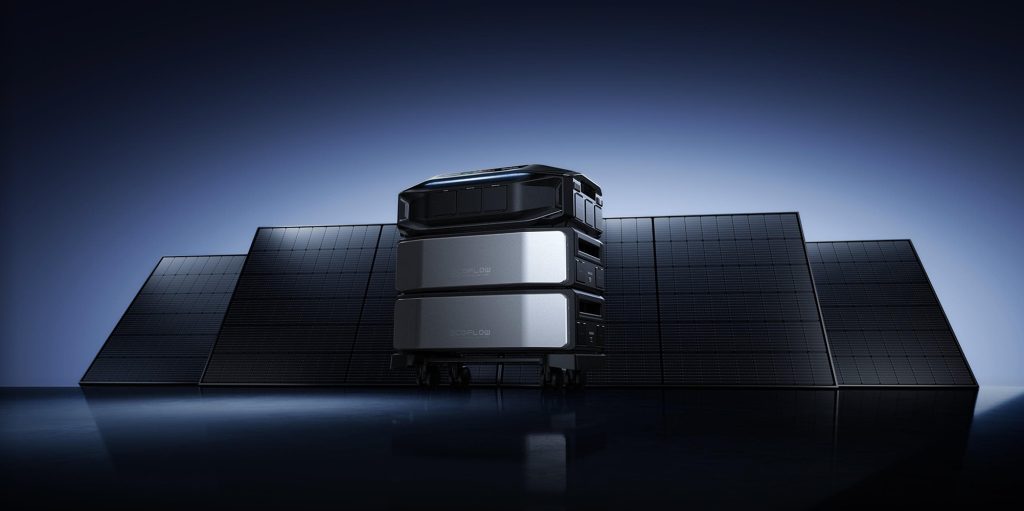
And for larger backup power solutions to cover larger devices/appliances, be sure to check out EcoFlow’s ongoing Cyber Week Sale through the rest of the week, which is continuing up to 80% discounts alongside bonus savings and free gifts – all starting from $75.
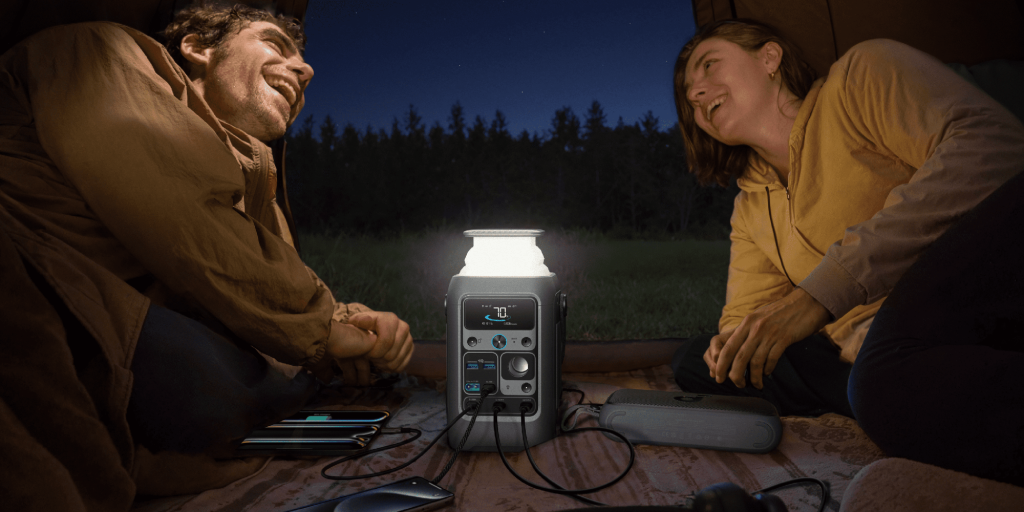
Woot drops Anker’s SOLIX C300 DC 288Wh 6-port power station with a pop-up light to new $135 low
Woot is currently offering the Anker SOLIX C300 DC 90,000mAh/288Wh Portable Power Station at $134.99 Prime shipped for the next few days or until stock runs out. Normally carrying a $250 MSRP direct from Anker, you’ll find it starting lower at $200 at Amazon – with both those marketplaces beaten out by this deal, though you are getting a 3-year warranty over Woot’s 90-day warranty by buying directly from Anker. Over 2025, we’ve only seen discounts take the costs as low as $150, while last year’s Black Friday/Christmas sales saw it go lower to $140. While this deal continues, you’ll be getting $65 cut from the going rate ($115 off the MSRP) for the best new price we have tracked. You can also score larger power stations from the brand at up to 65% off during the extended Black Friday Sale running through the rest of the month.
If you want to learn more about this particular model, be sure to check out our original coverage of this deal here.

Save up to $171 on Autel’s MaxiCharger Home 50A level 2 EV charging stations in multiple colorways at lows from $398
Through its official Amazon storefront, Autel is offering up to 30% discounts on its MaxiCharger Home Level 2 50A EV Chargers, with the Wood Grain model dropping to $398 shipped for the first time, while its Sierra Blue model is keeping to $398 shipped from leftover Black Friday savings, and the other Silver and Dark Grey models sit higher at their second-best rates of the year. These EV charging solutions normally fetch $569 at full price, with the Sierra Blue model keeping to its $398 low since early Black Friday sales, while the Wood Grain model is hitting this new low price here today in post-event savings.
If you want to learn more about these charging stations’ capabilities, be sure to check out our original coverage of these deals here.



Best Fall EV deals!
- Velotric Nomad 2X e-bike (camo) with DELTA 3 Plus station: $3,048 (Reg. $3,298)
- Velotric Nomad 2X e-bike (sage or fig) with DELTA 3 Plus station: $2,948 (Reg. $3,298)
- Velotric Nomad 2X Multi-Terrain Full Suspension e-bike w/ $96 bundle: $2,299 (Reg. $2,399)
- Heybike Hero 750W Mid-Drive Carbon-Fiber All-Terrain e-bike: $2,299 (Reg. $3,099)
- Rad Power Radster Road Commuter e-bike: $1,999 (Reg. $2,199)
- Rad Power Radster Trail Off-Road e-bike: $1,999 (Reg. $2,199)
- Lectric XPedition 2.0 35Ah Cargo e-bike w/ $893 bundle: $1,999 (Reg. $2,761)
- Ride1Up TrailRush German Mid-Drive e-bike (first discount): $1,995 (Reg. $2,095)
- Heybike Hero 1,000W Carbon-Fiber All-Terrain e-bike: $1,899 (Reg. $2,599)
- Tenways Wayfarer e-bike with $277 bundle (launch deal): $1,899 (Reg. $2,199)
- Velotric Fold 1 Plus e-bike (gray or white) with DELTA 2 station: $1,898 (Reg. $2,198)
- Velotric Fold 1 Plus e-bike (mango or blue) with DELTA 2 station: $1,828 (Reg. $2,198)
- Velotric Summit 1 Versatile Multi-Terrain e-bike with $160 bundle: $1,799 (Reg. $1,999)
- Aventon Aventure 3 Smart All-Terrain e-bike (first discount): $1,799 (Reg. $1,999)
- Aventon Aventure 3 Smart Step-Through All-Terrain e-bike (first discount): $1,799 (Reg. $1,999)
- Lectric XP Trike2 750 Long-Range eTrike with $558 bundle: $1,799 (Reg. $2,357)
- Rad Power RadExpand 5 Plus Folding e-bike (lowest price): $1,699 (Reg. $1,899)
- Lectric XPedition 2.0 26Ah Cargo e-bike w/ $744 bundle: $1,799 (Reg. $2,543)
- Aventon Level 3 Step-Over Smart Commuter e-bike (first discount): $1,699 (Reg. $1,899)
- Aventon Level 3 Step-Through Smart Commuter e-bike (first discount): $1,699 (Reg. $1,899)
- Lectric XPeak 2.0 Long-Range Off-Road e-bike with $583 bundle: $1,699 (Reg. $2,282)
- Rad Power RadWagon 4 Cargo e-bike with extra battery: $1,599 (Reg. $1,799)
- Aventon Abound Cargo e-bike: $1,599 (Reg. $1,999)
- Ride1Up VORSA Modular Multi-Use e-bike: $1,595 (Reg. $1,695)
- Rad Power RadRunner Cargo Utility e-bike with extra battery: $1,499 (No pirce cut)
- Lectric XPeak 2.0 Standard Off-Road e-bike with $434 bundle: $1,499 (Reg. $1,933)
- Lectric XP Trike2 with $257 bundle: $1,499 (Reg. $1,756)
- Rad Power RadWagon 4 Cargo e-bike: $1,499 (Reg. $1,799)
- Aventon Aventure 2 All-Terrain e-bike: $1,499 (Reg. $1,999)
- Lectric XPedition 2.0 13Ah Cargo e-bike with $346 bundle: $1,399 (Reg. $1,745)
- Aventon Level 2 Commuter e-bike: $1,499 (Reg. $1,899)
- Rad Power RadRover 6 Plus Step-Thru Fat Tire e-bike: $1,399 (Reg. $1,599)
- Heybike ALPHA All-Terrain e-bike with $266 bundle: $1,299 (Reg. $1,699)
- Lectric XPress 750 Commuter e-bikes with $439 bundle: $1,299 (Reg. $1,703)
- Lectric XP4 750 LR Folding Utility e-bikes with up to $514 bundle: $1,299 (Reg. $1,813)
- Heybike Hauler Dual-Battery Cargo e-bike (new low): $1,299 (Reg. $1,899)
- Rad Power RadWagon 4 Cargo e-bike: $1,299 (Reg. $1,799)
- Heybike Mars 2.0 Folding Fat-Tire e-bike with extra battery: $1,199 (Reg. $1,848)
- Lectric XP Lite 2.0 JW Black LR e-bike with $449 bundle: $1,099 (Reg. $1,548)
- Heybike Hauler Dual-Battery Cargo e-bike with $89+ bundle: $1,099 (Reg. $1,413)
- Lectric XP4 Standard Folding Utility e-bikes with $326 bundle: $999 (Reg. $1,325)
- Lectric XP Lite 2.0 Long-Range e-bikes with $449 bundles: $999 (Reg. $1,448)
- Heybike Mars 2.0 Folding Fat-Tire e-bike with Black Friday gift: $999 (Reg. $1,499)
- Heybike Ranger S Folding Fat-Tire e-bike with Black Friday gift: $999 (Reg. $1,499)
- Segway E3 Pro Electric Scooter: $500 (Reg. $700)
Best new Green Deals landing this week
The savings this week are also continuing to a collection of other markdowns. To the same tune as the offers above, these all help you take a more energy-conscious approach to your routine. Winter means you can lock in even better off-season price cuts on electric tools for the lawn while saving on EVs and tons of other gear.
FTC: We use income earning auto affiliate links. More.
-
 Sports2 years ago
Story injured on diving stop, exits Red Sox game
-
 Sports3 years ago
‘Storybook stuff’: Inside the night Bryce Harper sent the Phillies to the World Series
-
 Sports2 years ago
Game 1 of WS least-watched in recorded history
-
 Sports3 years ago
Button battles heat exhaustion in NASCAR debut
-
 Sports3 years ago
MLB Rank 2023: Ranking baseball’s top 100 players
-
Sports4 years ago
Team Europe easily wins 4th straight Laver Cup
-
 Environment3 years ago
Japan and South Korea have a lot at stake in a free and open South China Sea
-
 Environment1 year ago
Here are the best electric bikes you can buy at every price level in October 2024