
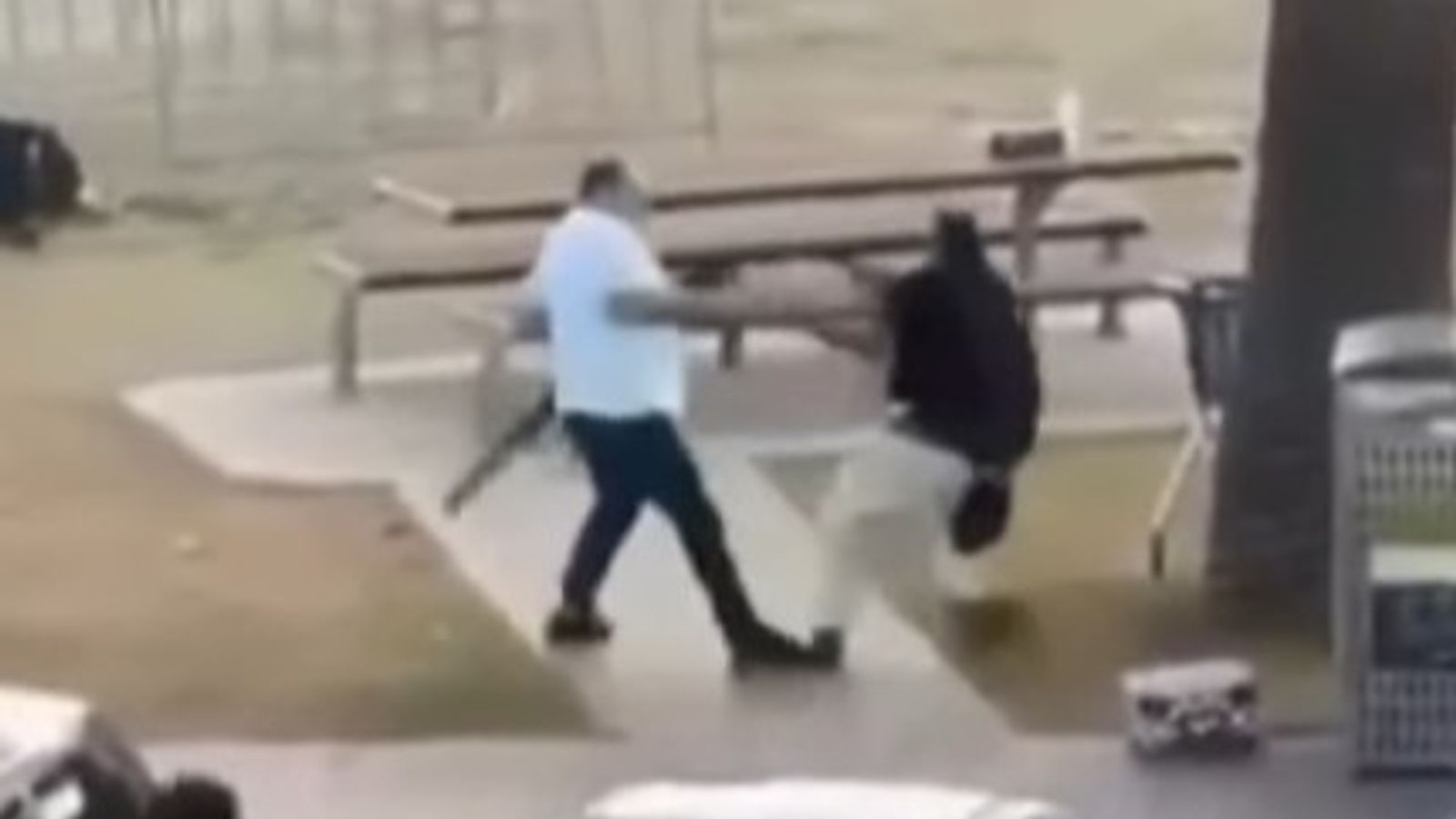
Hero who tackled and disarmed Bondi Beach gunman is Sydney fruit shop owner

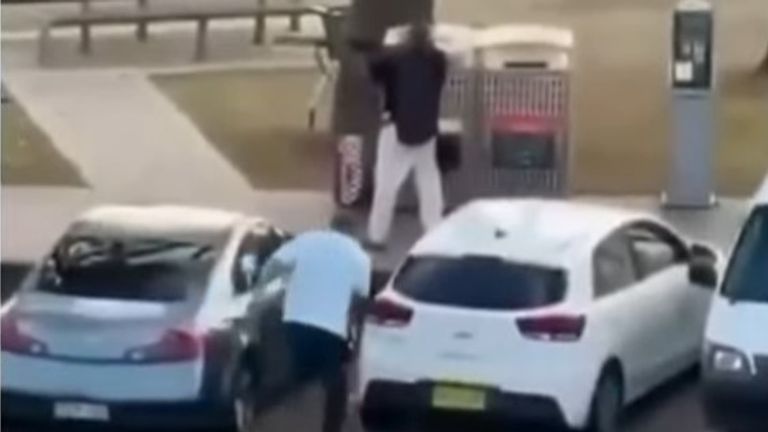
A bystander hailed a hero after he tackled and disarmed one of the gunmen in the Bondi Beach shooting is a shop owner.
The man, named by a relative as 43-year-old Ahmed al Ahmed, was seen in a video running up to the attacker from behind and then grabbing the shotgun from his hands before pointing the weapon back at him.
The footage then showed the terrorist heading towards a bridge where another gunman was located, while the bystander placed the gun beside a tree.
Ahmed al Ahmed (in a white T-shirt) is seen in a video running up to a gunman from behind
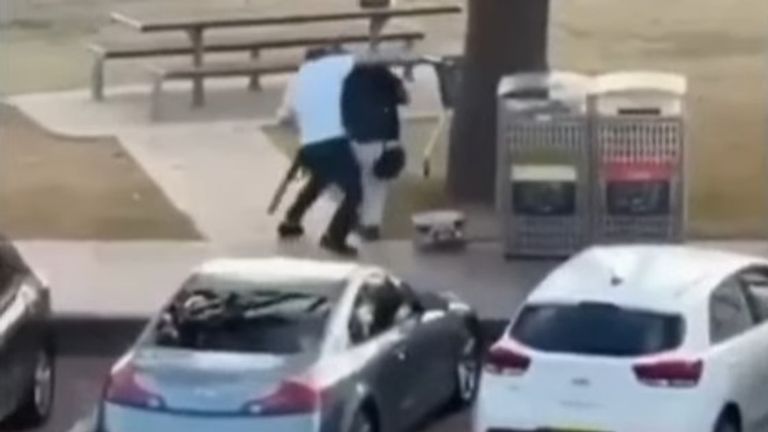
Mr Ahmed then wrestles with the attacker
Live updates on Sydney shooting
Mr Ahmed, who was wearing a white T-shirt, was shot twice in the incident and was due to have surgery, his cousin, Mustafa, has revealed.
In a video on 7News, Mr Ahmed appeared to have a bloodied arm and hand, and was helped by other people near the scene in the Australian city.
At least 11 people were killed and 29 others injured in the attack when two gunmen opened fire from a bridge on crowds at a Jewish event around 6pm local time on Sunday evening.
More than 1,000 people had been at the gathering which was celebrating the festival of Hanukkah.
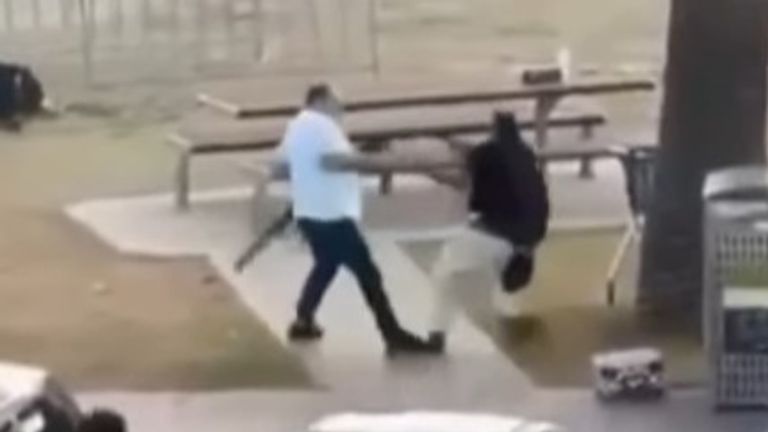
Mr Ahmed manages to get the gun off the terrorist
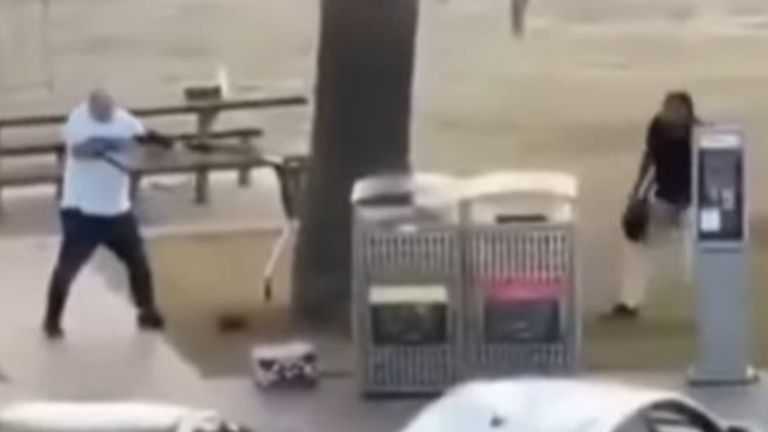
The bystander then points the weapon at the attacker who moves away towards a bridge
A gunman was killed and another was in a critical condition following the shooting.
One of the suspects was 24-year-old Naveed Akram.
His driver’s licence says he lives in Bonnyrigg, a suburb of Sydney. The identity of the other suspected attacker is not known.
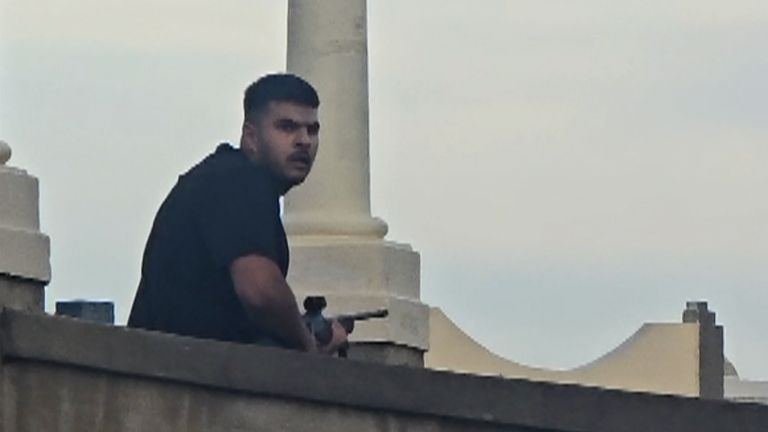
Naveed Akram, 24, was one of the suspects
Mustafa said father-of-two Mr Ahmed, who owns a fruit shop in the Sydney suburb of Sutherland, did not have any experience with guns but was just walking past when he decided to step in.
He told 7News: “He’s in hospital and we don’t know exactly what’s going on inside.
“We do hope he will be fine. He’s a hero, 100%.”
Read more:
What we know about mass shooting
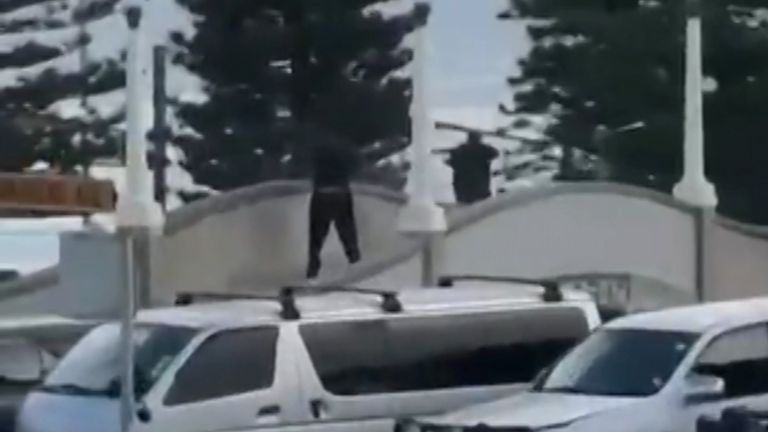
One of the suspected gunmen has been named as 24-year-old Naveed Akram.
The footage of the bystander’s actions spread quickly on social media as people praised the man for his bravery, saying his actions had potentially saved many lives.
“Australian hero (random civilian) wrestles gun off attacker and disarms him. Some people are brave and then some people are… whatever this is,” one person said on X, sharing the video.
“This Australian man saved countless lives by stripping the gun off one of the terrorists at Bondi beach. HERO,” another said.
Chris Minns, the premier of New South Wales state, where Sydney is located, said it was the “most unbelievable scene I’ve ever seen”.
“A man walking up to a gunman who had fired on the community and single-handedly disarming him, putting his own life at risk to save the lives of countless other people.”
“That man is a genuine hero, and I’ve got no doubt that there are many, many people alive tonight as a result of his bravery,” he added.
The country’s prime minister Anthony Albanese praised the actions of Australians who had “run towards danger in order to help others”.
“These Australians are heroes and their bravery has saved lives,” he told a news conference.
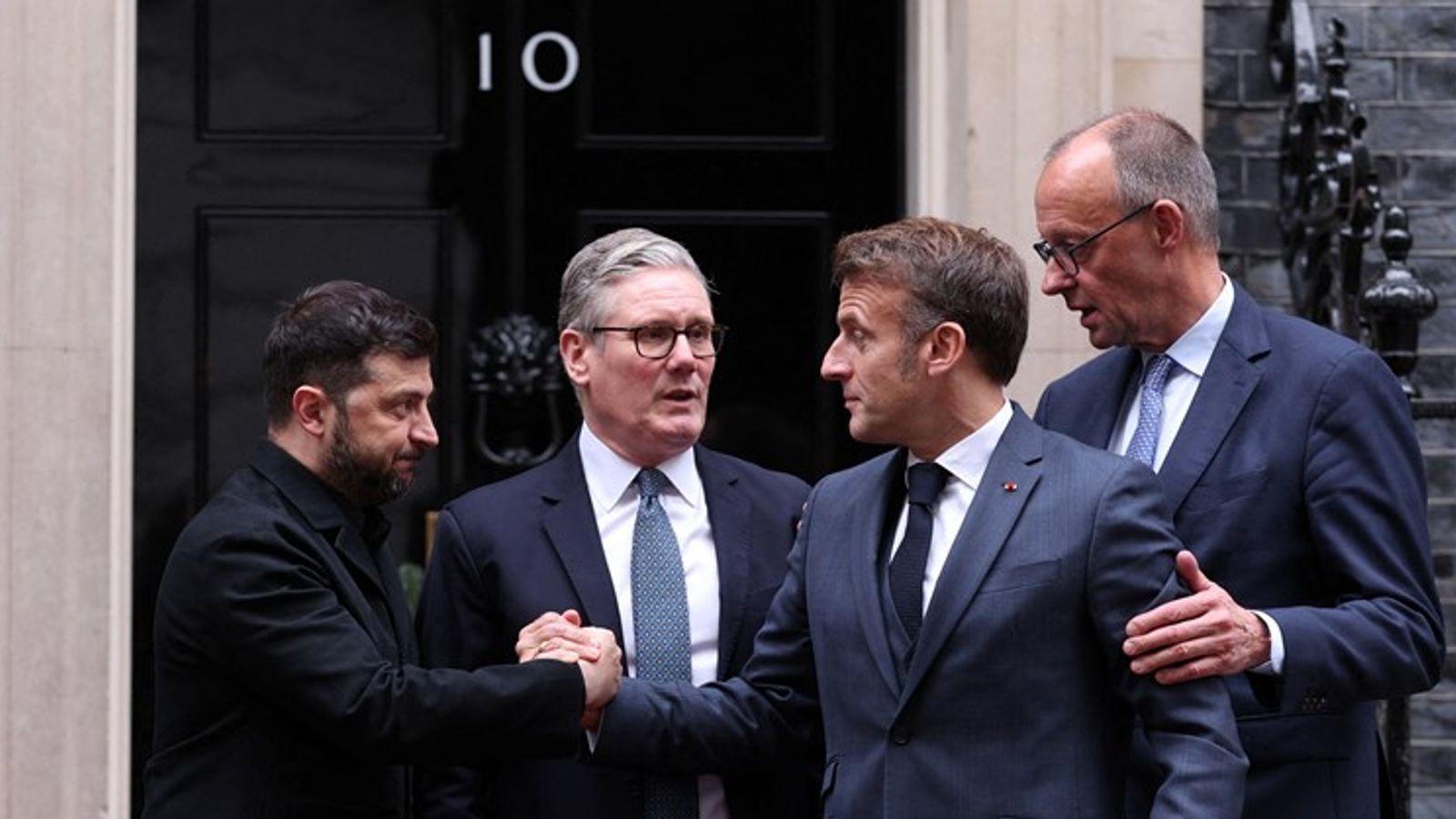
EU leaders will meet in Brussels today to try to agree the release of €210bn (£184bn) to help fund Ukraine’s war with Russia.
The money, which comes from Russian assets frozen after Moscow’s full-scale invasion of Ukraine in 2022, is mostly held in the Belgian-headquartered clearing house, Euroclear.
The money is seen as vital to Ukraine’s ability to keep fighting, because the country faces bankruptcy in early 2026 if it doesn’t receive more international assistance. That means Kyiv would no longer be able to pay soldiers, police and civil servants or buy weapons to defend itself.
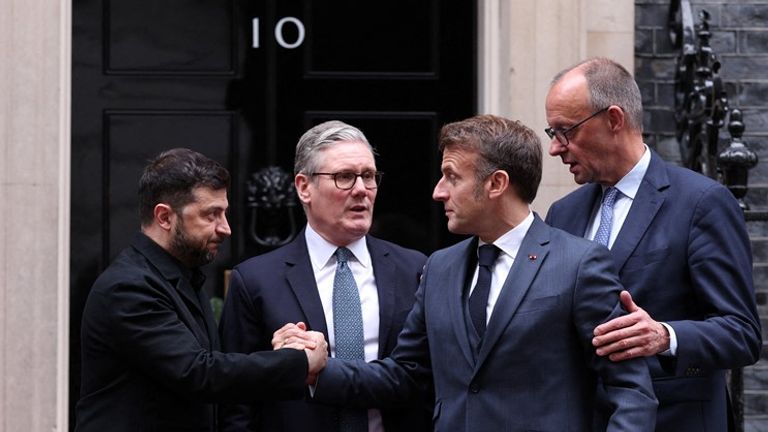
Volodymyr Zelenskyy, Sir Keir Starmer, French President Emmanuel Macron and German Chancellor Friedrich Merz. Pic: Reuters
Last night, Volodymyr Zelenskyy, who is expected to brief the EU leaders today, wrote on X: “The result Europe produces – must make Russia feel that its desire to continue the war next year is pointless, because Ukraine will have support. This rests entirely with Europe.”
The Belgian government has so far prevented the move amid fears it will expose the small country to Russian legal action in the future.
The EU is racing to find solutions to Belgium‘s concerns, including passing an emergency bill that secures the sanctions against Russia indefinitely, superseding the need to renew them every six months and thereby insulating it from veto votes from Russian-leaning EU member states like Hungary and Slovakia.
Belgium also wants guarantees that all EU members will share any financial cost of Russian action against it.
Why the push to use Russian assets?
The US, which has so far given billions of dollars to Kyiv, is losing interest under Donald Trump and can no longer be relied upon for financial support.
Previously, the EU had been giving the interest generated from the frozen assets to Ukraine, but was worried it might destabilise the Eurozone economy if it touched the assets itself.
That has changed, however, as Ukraine’s need has become more acute and fears over Russia’s wider imperialist ambitions have grown in recent months.
This unlocking of seized Russian assets is also being seen as a way to buy Brussels more leverage in peace negotiations, as well as reducing Kyiv’s dependency on Washington.
Read more:
South Africans fighting for Russia
Russia trying to ‘bully’ UK and allies
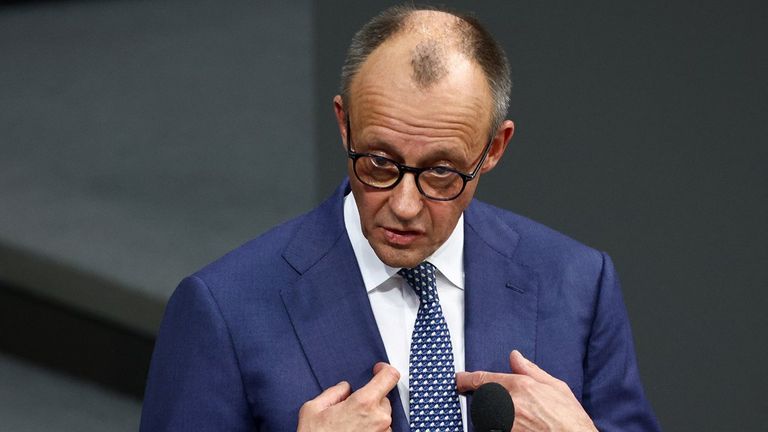
Friedrich Merz. Pic: Reuters
German Chancellor Friedrich Merz, who has been leading the campaign to release the funds, warned that “Europe would be severely damaged for years” if they fail to pass the vote and “this step is not about prolonging the war but about bringing the war to an end as soon as possible”.
In short, the consequences of using the frozen assets are now considered less risky than the consequences of not taking this action.
What’s at stake?
Trump wanted the money to be invested in two US investment funds, something the EU rejects. The US president has recently been scathing of European leaders, and the EU sees Thursday’s meeting as an opportunity to show its strength and unity.
In theory, the EU could pass the policy by majority vote, thereby sidelining the Belgian government, but officials are reluctant to go down this path for fear of alienating Belgium and causing a diplomatic rift in the alliance.
Much is riding on the meeting. If the EU fails to pass the vote, its credibility will take a severe blow. It will likely become even more irrelevant in peace talks, and Vladimir Putin might look to take advantage of a divided Europe.
One of the alleged gunmen in the killing of 15 people on Bondi Beach has been charged.
Naveed Akram, 24, faces 59 counts, including 15 of murder and a terror charge.
The other alleged attacker, his 50-year-old father Sajid, died at the scene in Sydney.
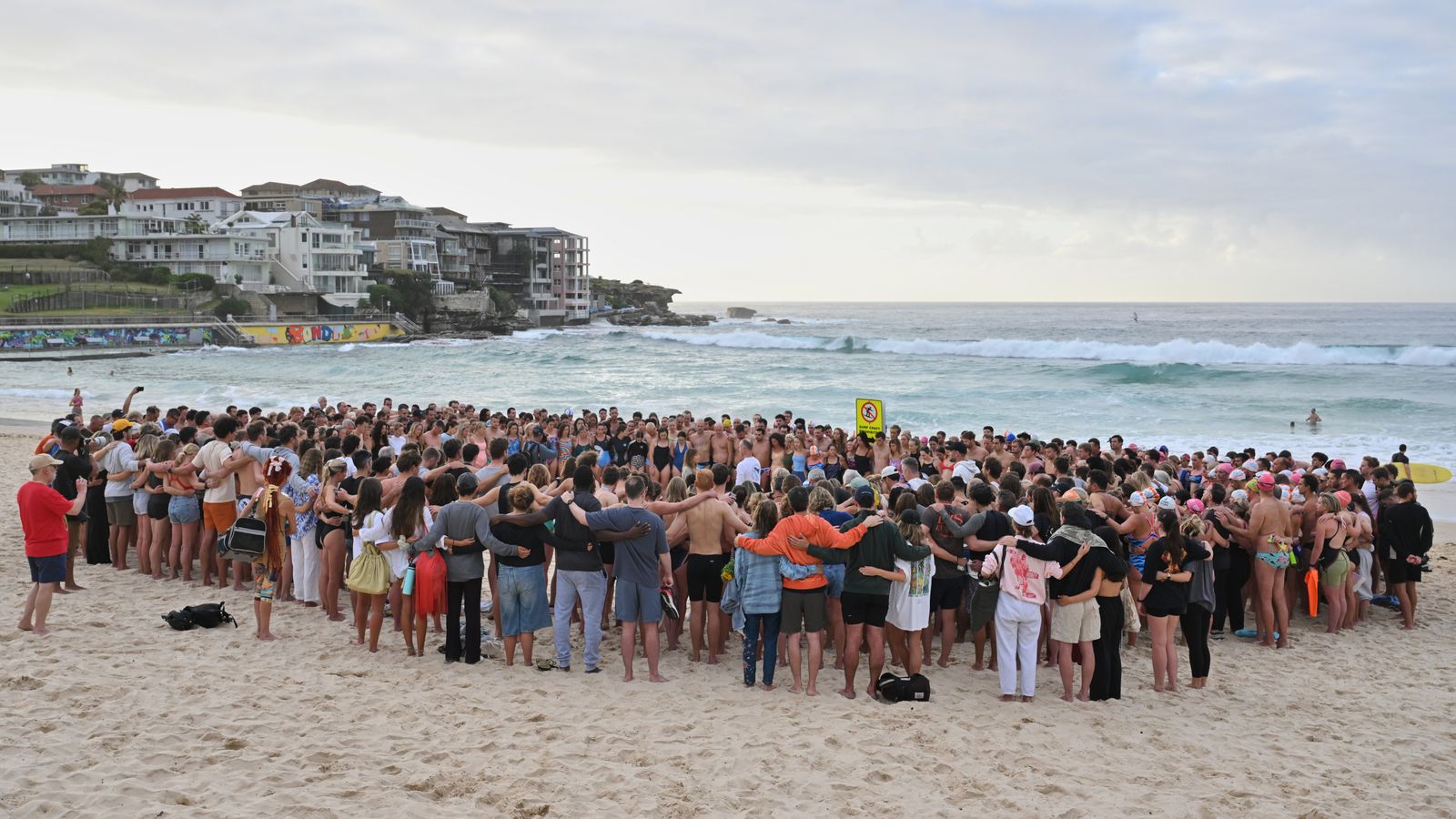
The charges came as people gathered for funerals three days after Sunday’s terror attack shocked Australia and intensified concerns about rising antisemitism.
Some 22 victims remain in hospital following the shooting, carried out at an event marking the start of the Jewish celebration of Hanukkah.
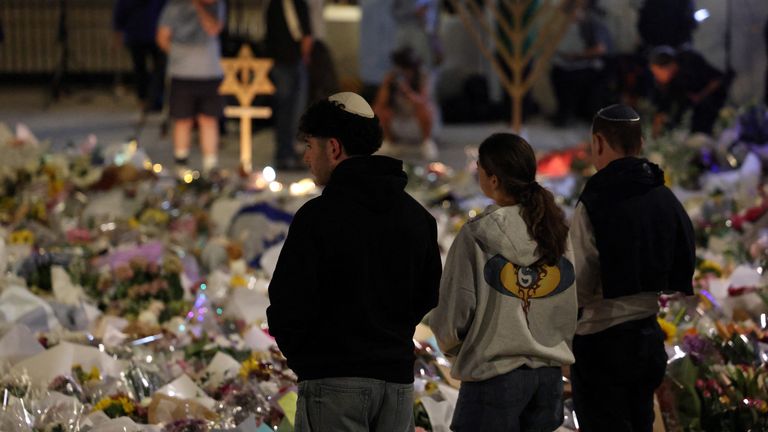
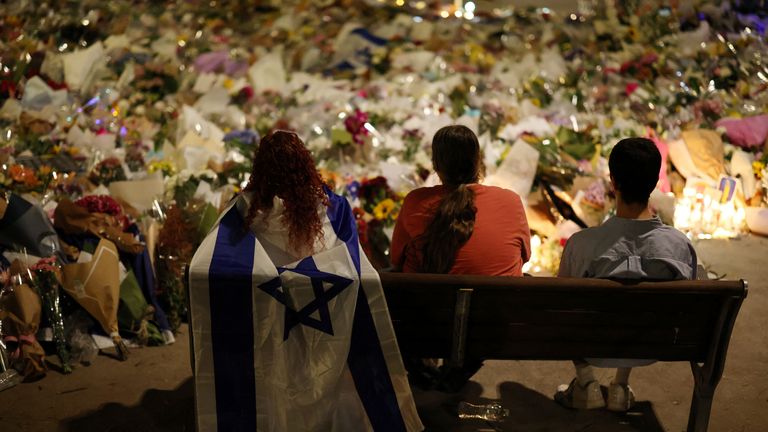
People look at flowers laid out for the victims. Pic: Reuters
At the first of the funerals, relatives mourned the death of British-born Rabbi Eli Schlanger, a 41-year-old father of five, who organised the Chanukah by the Sea event.
Often speaking through tears, his father-in-law, Rabbi Yehoram Ulman, expressed his “biggest regret” that he “could have done more” to tell him “how much we love him”.
“I hope he knew that. I’m sure he knew it,” he added. “But I think it should’ve been said more often.”
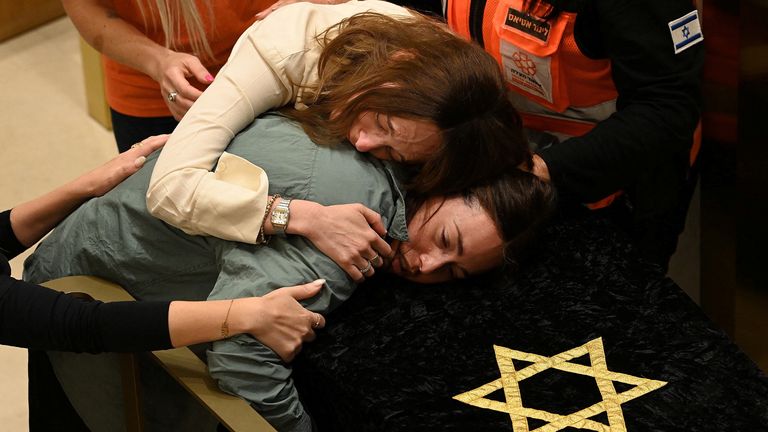
Relatives of Rabbi Eli Schlanger next to his coffin during his funeral. Pic: Reuters
The father of 10-year-old victim Matilda, whose surname has been withheld at her family’s request, spoke at a vigil on Tuesday night.
Local media reported him as saying: “We came here from Ukraine… and I thought that Matilda is the most Australian name that can ever exist.
“So just remember the name, remember her.”
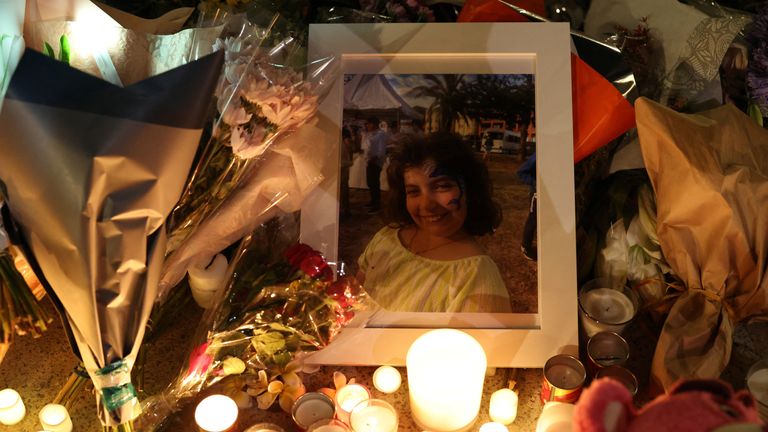
A photo of Matilda. Pic: Reuters
Read more: Who were the suspected gunmen?
Police have said the two alleged gunmen – who were shot by officers – were motivated by Islamic State ideology.
A recent trip to the Philippines is under investigation. The older Akram used an Indian passport to travel, while his son used an Australian one.
The Akrams stayed at the GV Hotel in Davao from 1 November to 28 November, according to a source, who said police had visited on Wednesday.
The pair are said to have only left their rooms for meals and no one was seen visiting them.
Davao is in an area associated with Islamic extremism but a spokesman for the president of the Philippines said he rejected the claim the country is an “ISIS training hotspot”.
New South Wales to debate gun reforms
The Australian government and intelligence services have come under pressure because the alleged attackers were legally able to acquire the high-powered rifles and shotguns used in the attack.
Prime Minister Anthony Albanese has vowed to toughen the country’s gun laws after its deadliest mass shooting in three decades, and the state parliament in New South Wales will reconvene next week to discuss reforms.
They include capping the number of guns allowed by a single person and making some shotguns harder to access.
State premier Chris Minns told a news conference: “We’ve got a monumental task in front of us. It’s huge.
“It’s a huge responsibility to pull the community together.
“We need a summer of calm and togetherness, not division.”
Mr Albanese has vowed to work with the Jewish community to “stamp out and eradicate antisemitism”. The prime minister has been accused of not doing enough to prevent its spread since the war in Gaza began two years ago.
Fellow world leaders have expressed their shock and anguish since the attack, including British Prime Minister Sir Keir Starmer, who hosted a Hanukkah event at Downing Street on Tuesday.
And speaking at the White House last night, US President Donald Trump said: “We join in mourning all of those who were killed, and we’re praying for the swift recovery of the wounded.”
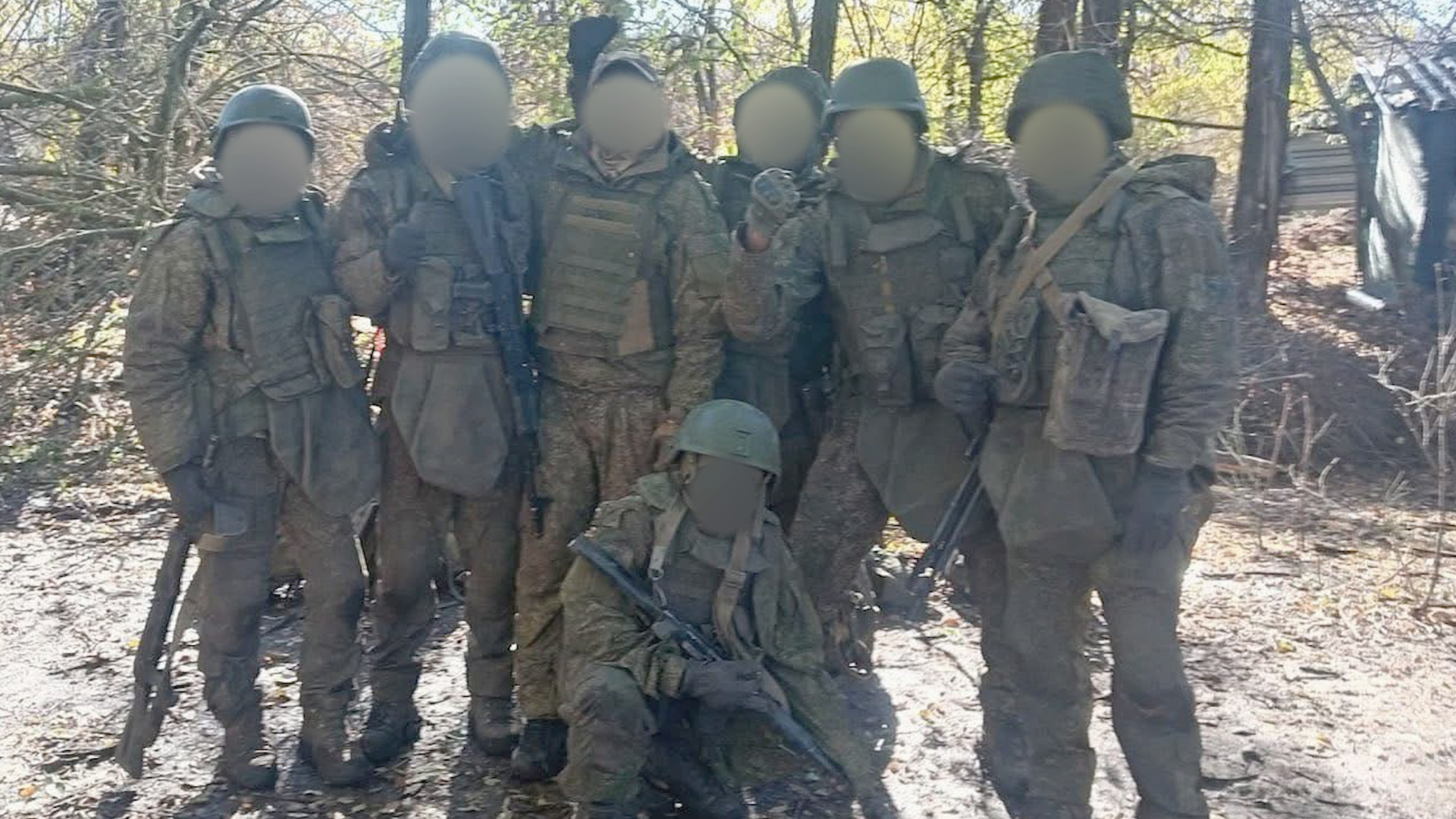
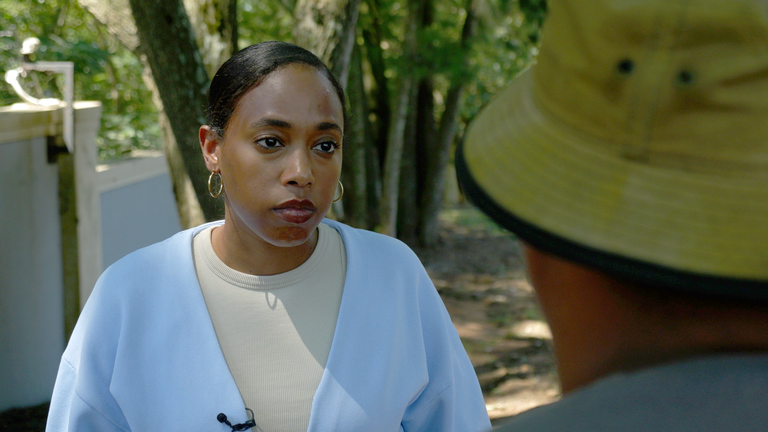
A South African man, with eyes darkened by sleepless nights, tells us his older brother was lured into fighting for Russia on the frontline in Ukraine’s raging Donbas region.
“To them, it’s a suicide mission because they have never been trained for the military. They don’t have military training – they don’t have military experience,” says Bongani, whose name we have changed for his safety.
In the hidden back garden of a modest hotel in KwaZulu-Natal province, he continues: “They don’t have experience of any war. They are just bodyguards who want to get a job and provide for their families. That’s all.”
Bongani says his brother travelled to Russia on a flight via Dubai after being told he would be receiving bodyguard training along with at least 16 other South African men. After signing a contract in Russian, their fate was sealed.
Bongani, not his real name, tells Yousra his brother was on a ‘suicide mission’
“The problems started when they were moved from Russia to Ukraine, and they asked them: ‘Guys – where are we going now because we are here for training?’
“And then the Russians said: ‘Training for what? We don’t know anything about training – what we know is that you’ve signed the contract. You are under our command now – under the Russian army.'”
How is this happening?
Sky News has seen harrowing SOS video messages from South African men who describe entrapment and deployment to the frontline in Ukraine.
In one video, a man in military fatigues details the moment they signed their contracts. He claims Duduzile Zuma-Sambudla, the daughter of former South African President Jacob Zuma, encouraged them to sign away their lives.
“We refused to sign the contract forms because it was written in Russia, which we didn’t understand. We asked them for a translator – someone who can translate the language. They said there was no network,” he says in fluent English.
“That is when Duduzile came with a guy by the name of Khosa. She said we must sign the contract because it is the same thing they did. Duduzile said she is doing the same course we are doing, the same training, and that unfortunately she won’t be with us because she is training somewhere else.”
“Yes, we agreed. We did sign the forms because we trust the lady, Duduzile.”
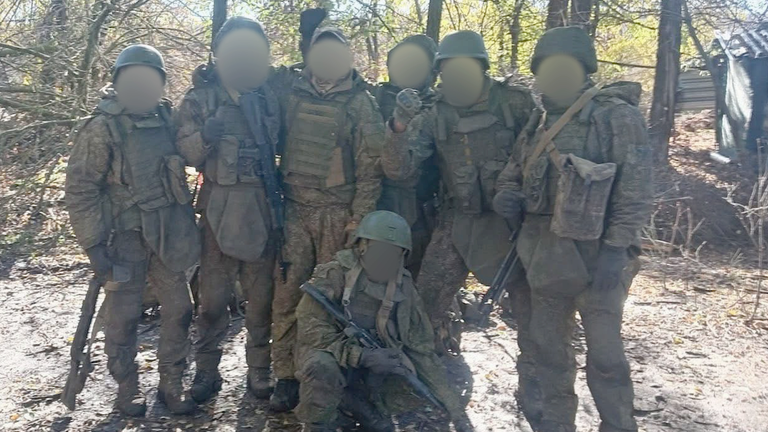
South African men claim they were trafficked by Duduzile Zuma, daughter of the country’s former president – allegations she denies
Duduzile Zuma-Sambudla is accused of trafficking South African men – including eight of her own relatives – for mercenary recruitment by her half-sister Nkosazana Bonganini Zuma-Mncube, who has filed police charges against her.
She denies the allegations and says she was a victim of deception, misrepresentation, and manipulation.
The South African Police Service (SAPS) say they are currently investigating the charges. Duduzile Zuma-Sambudla has resigned as a member of parliament and has not responded to our request for comment.
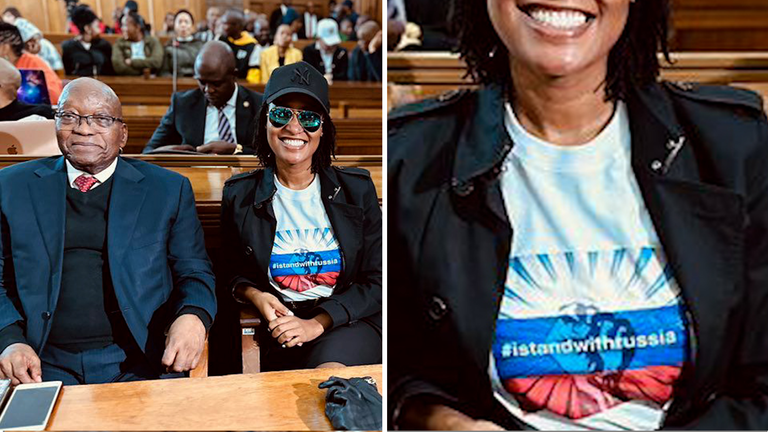
Former president Jacob Zuma with his daughter Duduzile Zuma, wearing “I Stand With Russia” T-Shirt in 2023. Pic: @DZumaSambudla/X
Five hours away in Johannesburg’s Gauteng province, we watched as another case of suspected mercenary recruitment played out in a South African magistrate’s court.
Five suspects were ushered out into a crowded courtroom in Kempton Park after being arrested on their way out of Johannesburg’s Oliver R Tambo airport following a tip-off to the police that they were allegedly travelling to Russia via the United Arab Emirates.
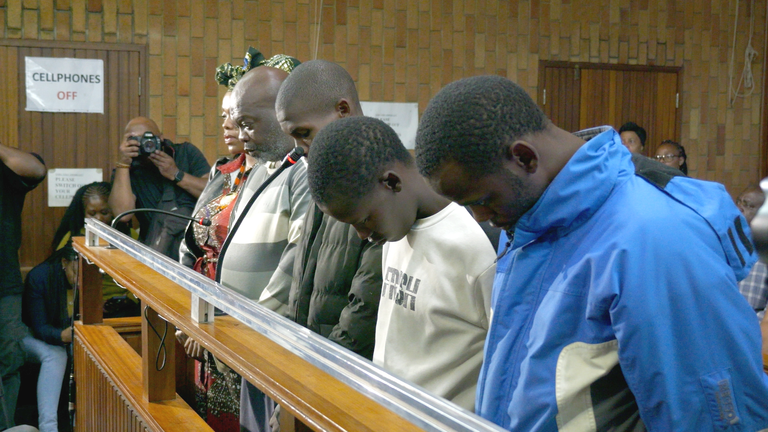
Five people suspected of attempting to join Russia’s war effort in Ukraine appear in a Johannesburg court
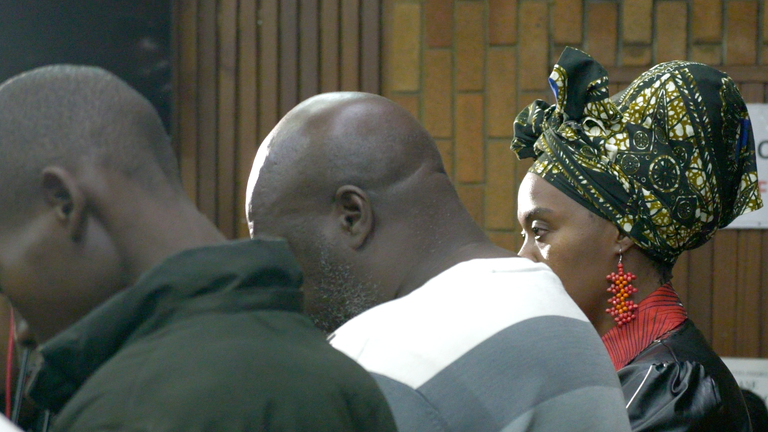
Among the five suspects is Patricia Mantuala, 39, suspected of recruiting the men
The line-up is sullen as the three young men on one end of the stand look down at their hands. The youngest is only 21 years old.
At the other end of the stand is a 39-year-old woman called Patricia Mantuala, who stands accused of recruiting them. The five suspects were eventually granted bail by the court after a postponed hearing.
Read more from Sky News:
G20 overshadowed by Ukraine
Alleged mercenary arrested in London
Is time running out for Ukraine?
Colonel Katlego Mogale, a spokesperson for the Directorate for Priority Crime Investigation (DPCI), also known as the HAWKS, told Sky News and other journalists in a news conference that they are not ruling out the possibility that more suspects will be arrested.
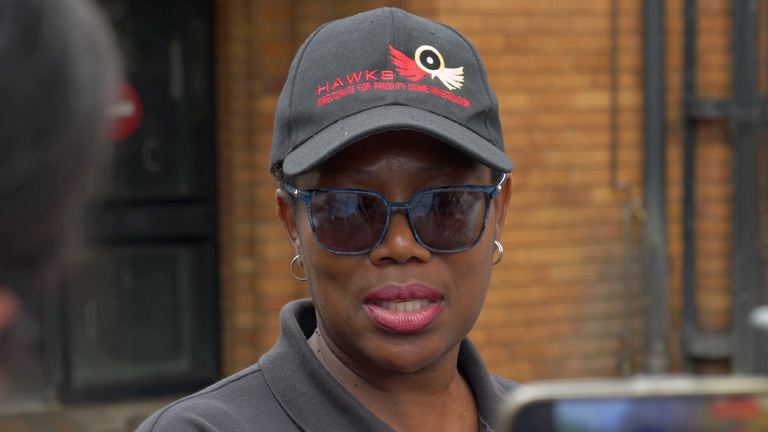
South Africa’s specialised police unit is investigating a growing recruitment drive
Amid signs of a growing recruitment drive, the families of those who say they are trapped fighting for Russia in Ukraine are advocating for their loved ones to return home – against all odds.
“You are dealing with people who are well known in South Africa and in South Africa nobody’s safe and we may never know what’s going to happen next to us,” says Bongani.
“What’s going to happen to our family?”
-
 Sports2 years ago
Story injured on diving stop, exits Red Sox game
-
 Sports3 years ago
‘Storybook stuff’: Inside the night Bryce Harper sent the Phillies to the World Series
-
 Sports2 years ago
Game 1 of WS least-watched in recorded history
-
 Sports3 years ago
Button battles heat exhaustion in NASCAR debut
-
 Sports3 years ago
MLB Rank 2023: Ranking baseball’s top 100 players
-
Sports4 years ago
Team Europe easily wins 4th straight Laver Cup
-
 Environment3 years ago
Japan and South Korea have a lot at stake in a free and open South China Sea
-
 Environment1 year ago
Here are the best electric bikes you can buy at every price level in October 2024