
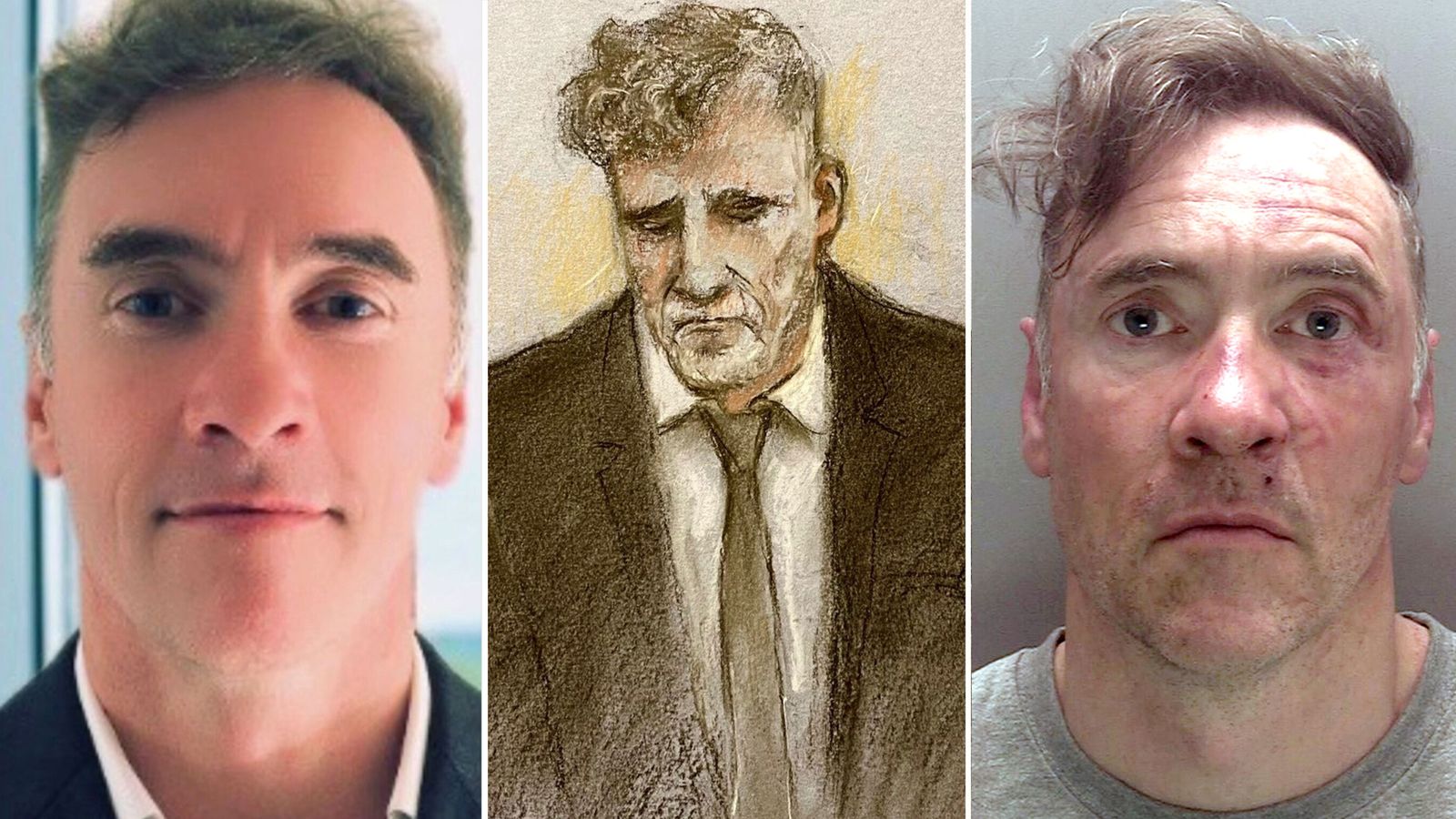
How ‘red mist’ led Paul Doyle to plough into Liverpool parade crowd – as violent past revealed


The dashcam footage from Paul Doyle’s Ford Galaxy, as he ploughs his way through the crowd at the Liverpool parade, is chilling.
Bodies are thrown left and right, people disappear under the front of the car, for a few seconds some appear to be clinging to the bonnet, terror on their faces.
The sound is equally graphic. The screaming and the shouting from outside of the car. And the thumps: as people bang on the car to get Doyle to stop, and as people are hit by it.
Men, women and children hit. A bike, a baby’s pram.
Paul Doyle was seen on CCTV driving into the crowd. Pic: Merseyside Police
Throughout those couple of minutes, Doyle lays on the car’s horn, the parking sensors beep constantly, and he shouts.
“F***ing hell, move,” he repeats. “Get out the f***ing way”, “f***ing move”, “get off the f***ing road, you f***ing p***k”.
Those words, prosecutors say, reveal the truth – that Doyle knew he was driving at people.
He was jailed for 21 years and six months – with Judge Andrew Menary KC telling Doyle he acted in an “inexplicable and undiluted fury” when he drove into the crowds.
The judge told him his “disregard for human life defies ordinary understanding”.
“Your actions caused horror and devastation on a scale not previously encountered by this court,” he said.
“The footage is truly shocking… it shows you, quite deliberately, accelerating into groups of fans time and time again.
“You struck people head-on, knocked others onto the bonnet, drove over limbs, crushed prams and forced those nearby to scatter in terror.”
Follow latest as Paul Doyle is sentenced
“In my 20 years of policing, this is the most graphic and distressing footage I have ever encountered,” said Detective Chief Inspector John Fitzgerald, the senior investigating officer for Merseyside Police.
“Doyle’s total disregard for the safety of others – particularly the many young children present on Dale Street and Water Street that day – is beyond comprehension. It is sheer luck that no lives were lost.”
In the end, that dashcam footage was never shown to a jury as Doyle pleaded guilty on the day his trial was due to begin. The footage will not be released to the public due to its graphic nature.
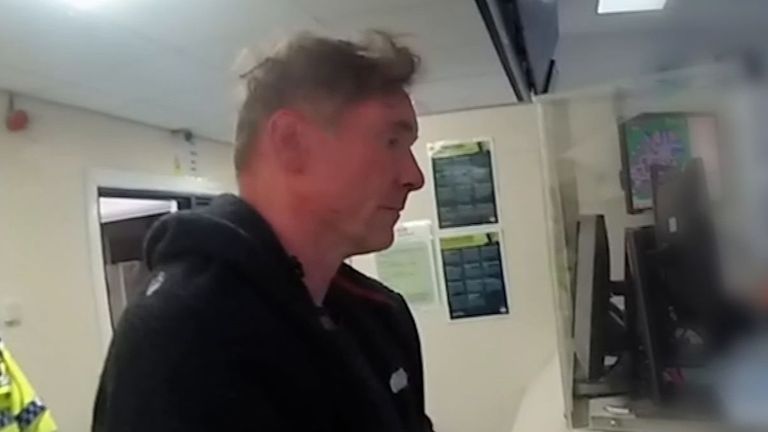
Paul Doyle after his arrest. Pic: Merseyside Police
What motivated his rampage?
“I think Doyle was just determined to get to where he wanted to get to, and there was no stopping him no matter who was in his way,” said DCI Fitzgerald.
“He clearly got angrier and angrier as the dashcam footage rolls on. He was yelling profanities at the people in his way.
“He just clearly got red mist.
“I do not believe that Doyle deliberately set out his journey to injure people on that day, but his actions were deliberate.”
Ex-soldier helped stop attack
Doyle was only stopped by the bravery of former soldier Dan Barr. He managed to climb into the back seat of the car when Doyle briefly paused.

Dan Barr helped stop Doyle
“It was desperation to get him stopped, determination to stop him by whatever means, I think that’s what was going through my head,” Mr Barr said.
“He accelerated off, the door slammed shut and I’d gone from the total chaos of panic and screaming to the relative silence as he’s accelerated off and you can just hear the people being hit and run over.
“It was horrendous, and I could see people’s faces. I could see the looks of them trying to plead but wasting their time, that’s all they could do because there was nowhere to go to get out of the way.
“I do remember seeing he had an automatic and therefore P for park was right at the end so I thought I’ll just jam that forward as far as I could that should stop him, and it did.”
Without Mr Barr’s actions, police say, Doyle would have carried on. They have described him as a hero.

Dan Barr says he hasn’t been the same since the incident
“I don’t think I am,” Mr Barr said. “I think it is standard.
“Who wouldn’t, if they could have, done what I did? I can’t think of anyone, especially on that street.”
It has come at a cost.
“I don’t think I have processed it, to be honest with you,” Mr Barr said.
“I’m not the same since that day. I’m not doing great but I’m getting there.”
By the time it was all over, 134 people had been injured, including two babies and six other children.
Read more:
Liverpool parade victim tells of ‘carnage’
Tens of thousands of Liverpool fans had been on the streets of the city on that spring bank holiday Monday to celebrate the club’s Premier League triumph.
Doyle had driven to the parade to collect a friend he had earlier dropped off there. On his way into the city, his dashcam had recorded him driving erratically, undertaking other cars and running a red light.
But police say there had been no sign earlier that day of what could have triggered his rage.
Doyle’s violent past
It can now be revealed that Doyle has previous convictions for assault.
In the early 1990s, while serving in the Royal Marines, he was convicted of biting off part of someone’s ear during a fight in a pub. He was discharged from the military at that time.
Police say they believe Doyle is a fan of Liverpool’s city rivals Everton, but that this was not a factor in what happened on 26 May.
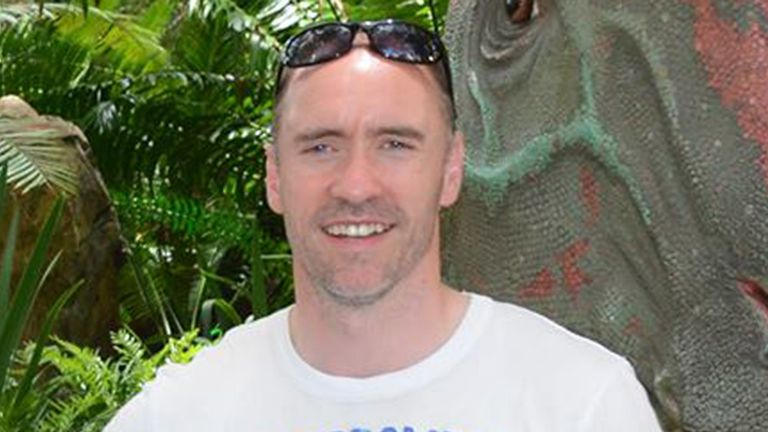
Paul Doyle has previous convictions for assault
In police interviews, Doyle claimed he acted in fear and panic because someone in the crowd with a knife had opened his car door. Investigators say they spoke to 1,500 witnesses and no one else mentioned seeing a knife.
He also claimed he stopped when he hit the first person. In fact, he had hit more than 100 before stopping. His claims, prosecutors say, were lies.
As the incident unfolded, many of those who were there shared their first thoughts.
Debbie Blair said: “People were just screaming, ‘It’s a terrorist, it’s a terrorist, he might have a gun, he might have a knife’.”
“Next minute people were all screaming, ‘kill him, kill him’,” she said.
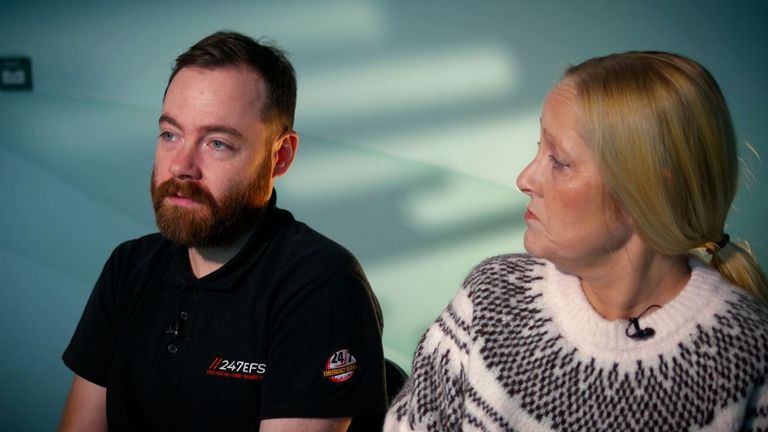
Debbie Blair and her son Mike, who was injured
Her son Mike was with her. Images of car attacks on Christmas markets in Europe, he said, flashed through his mind. His greatest concern was the number of children there.
“It was carnage, total carnage,” he said.
He was treated in hospital for injuries that still affect him.
“It shouldn’t have happened. But for someone to intentionally do that, it’s quite sick really.”
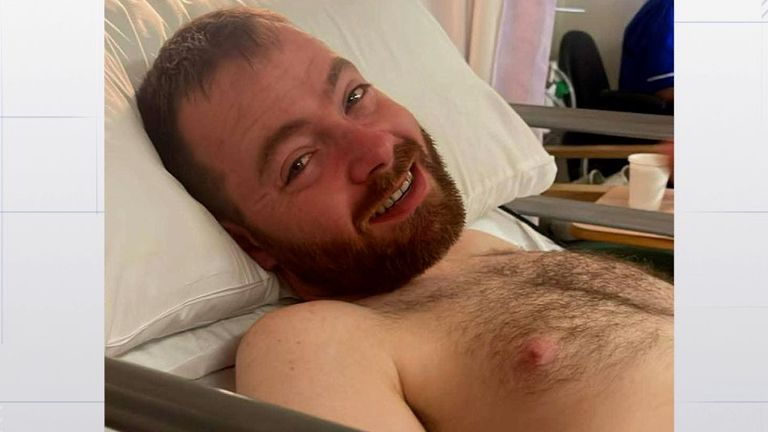
Mike was treated in hospital after the Liverpool parade incident
Police say Doyle has never shown any remorse for his actions. He told officers: “I’ve ruined my family’s lives.”
What he did on 26 May, prosecutors say, devastated lots of people’s lives.

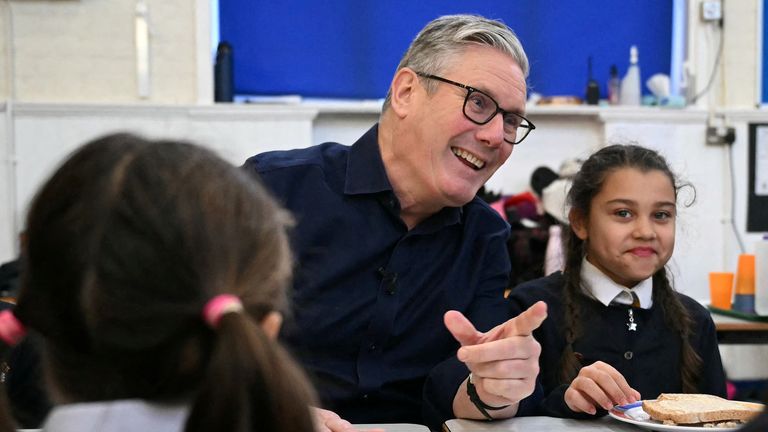
Teachers will be trained to spot early signs of misogyny in boys and steer them away from it as part of the government’s long-awaited strategy to tackle violence against women and girls (VAWG).
Sir Keir Starmer warned “too often toxic ideas are taking hold early and going unchallenged”, with more than 40% of young men said to hold a positive view of misogynistic influencer Andrew Tate.
He has been challenged about his ideology in the past and called the concerns “garbage”.
Sir Keir’s government will formally unveil a £20m package of measures today, with £16m coming from the taxpayer and £4m from philanthropists and partners.
Teachers will also get specialist training on how to talk to pupils about issues like consent and the dangers of sharing intimate images – and all secondary school pupils in England will be taught about healthy relationships.
Such lessons will be mandatory by the end of this parliament in 2029, with schools to be chosen for a pilot scheme in 2026, which experts will be brought in to deliver.
And an online helpline will be set up for teenagers with concerns about their own behaviour in relationships.
The measures are part of the government’s strategy to halve VAWG in a decade, and the prime minister said it’s a “responsibility we owe to the next generation”.
“Every parent should be able to trust that their daughter is safe at school, online and in her relationships,” he said.
“This government is stepping in sooner – backing teachers, calling out misogyny, and intervening when warning signs appear – to stop harm before it starts.”
The PM says ‘toxic’ attitudes are going unchallenged in schools. Pic: Reuters
Department for Education-commissioned research found 70% of secondary school teachers surveyed said their school had actively dealt with sexual violence and/or harassment between children.
VAWG minister Jess Phillips told Sky News political editor Beth Rigby she had spoken to her own children about what’s normal sexual behaviour and what isn’t because she knows “what they might be exposed to”.
She said if the government does nothing to intervene, VAWG could double rather than be halved.
Jess Phillips: I’ve talked to my kids about strangulation
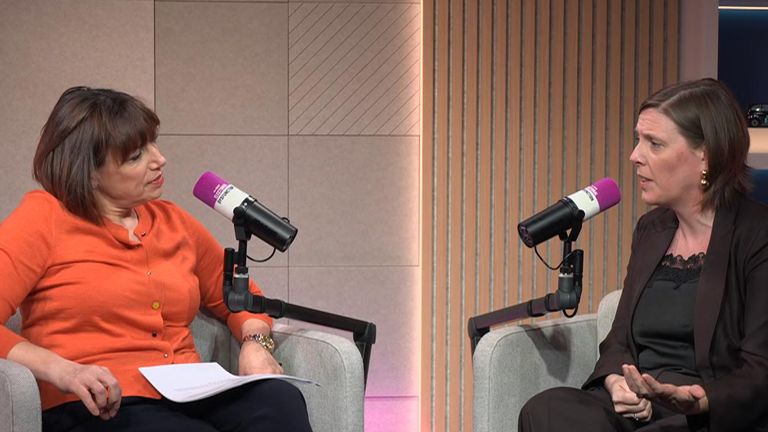
Beth Rigby speaks to Jess Phillips about the plans
Read more:
Teams deployed to tackle violence ’emergency’
Domestic abuse survivors to get NHS help
The government has already announced several other measures to tackle VAWG this week, including introducing specialist rape and sexual offences investigators to every police force, better support for survivors in the NHS, and a £19m funding boost for councils to provide safe housing for domestic abuse survivors.
Investment ‘falls short’
But Dame Nicole Jacobs, the domestic abuse commissioner for England and Wales, said the commitments “do not go far enough” and schools are overburdened already.
“Today’s strategy rightly recognises the scale of this challenge and the need to address the misogynistic attitudes that underpin it, but the level of investment to achieve this falls seriously short,” she said.
Claire Waxman, the incoming victims commissioner, added: “Victim services are not an optional extra to this strategy – they must be the backbone of it.
“Without clear, sustainable investment and cross-government leadership, I am concerned we run the risk of the strategy amounting to less than the sum of its parts; a wish list of tactical measures rather than a bold, unifying strategic framework.”
UK
Jess Phillips on tackling violence against women and girls: ‘I’ve tried to talk to my children about strangulation – it’s not normal sexual behaviour’
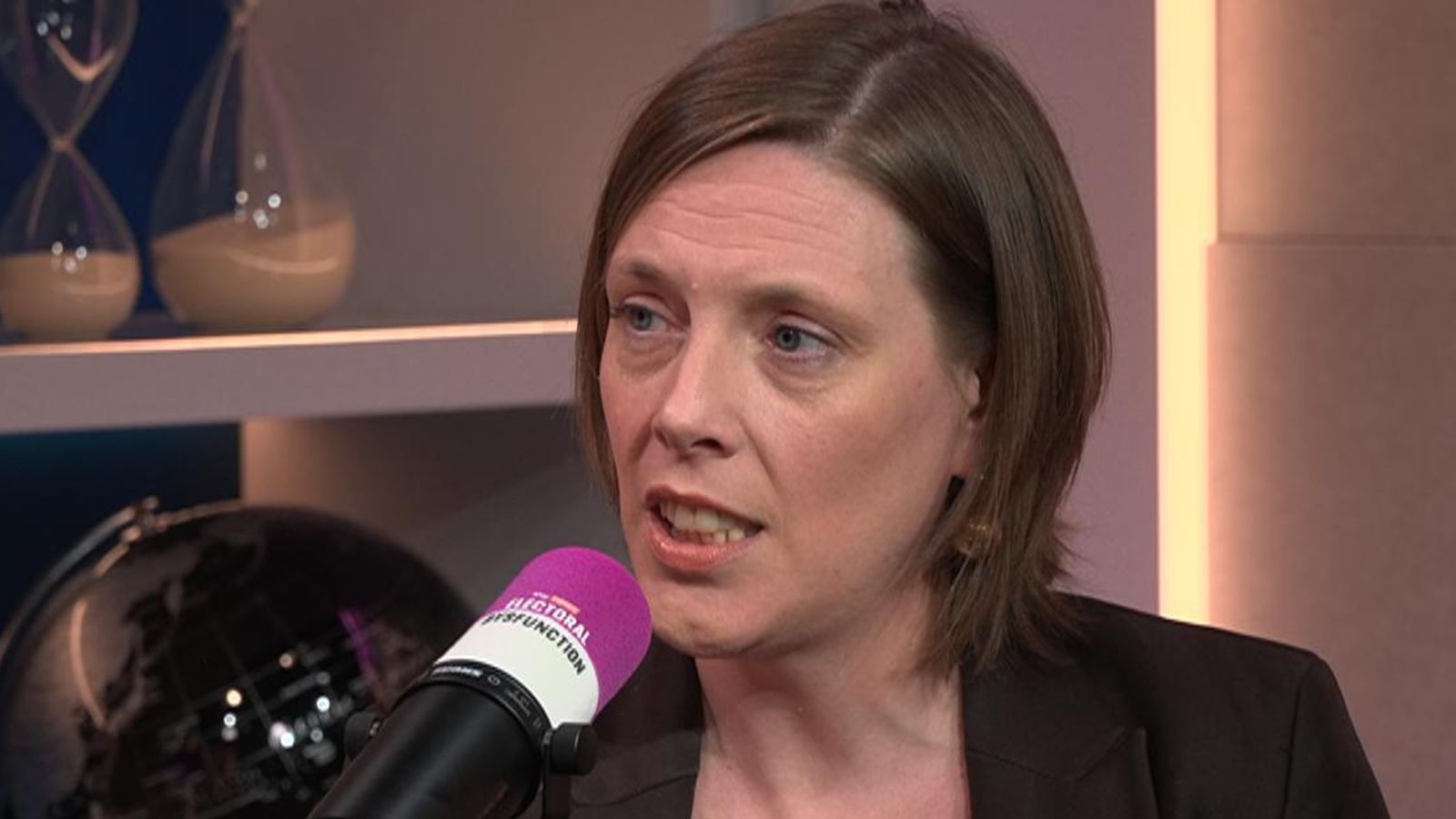
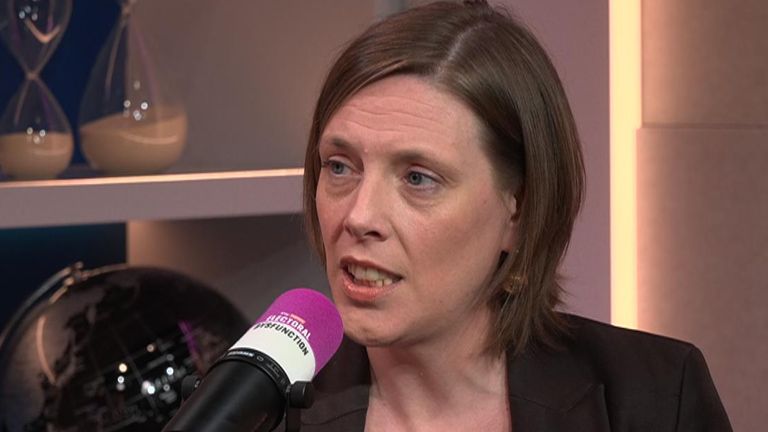
There have been three strategies by three successive governments to tackle violence against women and girls (VAWG) since 2010, and one refresh.
What has been the result of these endeavours? Police chiefs in 2024 described the scale of violence against women and girls as “a national emergency” as over one million incidents were reported in 2022/3, accounting for 20% of all police recorded crime.
At least one in every 12 women will be a victim, but the number is probably higher than that, as this sort of violence is typically underreported.
You will likely know a woman who is the victim of abuse. When you look at the situation, and think of all the mums, sisters, daughters, aunts and friends, it makes you want to put your head in your hands: strategy after strategy, plan after plan, women and girls and the victims of abuse are being let down.
Today, the government will launch a new strategy, drawn up by Jess Phillips, the safeguarding minister, that will attempt to finally put this right.
Jess Phillips
The promise is to halve violence against women and girls in a decade after what has been, as Phillips puts it, “a catalogue of failures”.
That catalogue of failures is long.
Successive governments had “failed to deliver a genuinely whole-of-government approach”, concluded the National Audit Office (NAO) at the beginning of this year, as it detailed a string of shortcomings when it came to VAWG plans: partial implementation; failure to learn from past strategies; no oversight of government funding being used for VAWG; a focus on victim support rather than prevention; and a lack of buy-in from government departments.
Phillips, who spent her career campaigning for victims of domestic violence before becoming an MP, wants to break that chain with her new plan, which has three pillars: prevention, with a focus on boys and young men to challenge misogyny and promote healthy relationships; stopping abusers, with more efforts and power for police forces to track down abusers; and more victim support.
It is a strategy that has been delayed three times. It was first expected in the spring, then the summer, to autumn, before eventually landing 18 months into a Labour government.
The delays have drawn criticism from campaigners, frustrated they “put more lives at risk”.
Read more:
Schools will teach about healthy relationships to tackle misogyny
Beth Rigby and Jess Phillips
‘I’m going to be getting up in everybody’s business’
When I spoke to Phillips about those delays on the Electoral Dysfunction podcast, she made no apology for that: “I could have hit the deadline and missed the point.”
“I’m not really interested in a headline that says, ‘minister delivers a strategy one time’,” she said, explaining she’d had to “bang heads together” in different government departments to get buy-in and coordination (something the NAO said previous strategies lacked).
Phillips said the strategy contains a written action plan with time frames in it, as she insists the target to halve VAWG can be hit within the decade, despite the delay. There will be an inter-ministerial VAWG group to improve cross-government working.
She said: “What we have been doing is going into other government departments and building up relationships with their teams. We have VAWG-specific staff in Number 10 now. That’s never existed before. And we have been in the Department of Health. We have been in the Department of Transport. The real answer is I’m going to be getting up in everybody’s business. That’s the reason it has taken so long.”
Strategy also focuses on men and boys
Speaking to Phillips, you cannot doubt her determination to make it a reality, and much of this strategy focuses on men and boys as well as women and girls, with a big focus on prevention and stopping abuse.
“I would be failing, we would be failing, if we didn’t try to prevent people who were already perpetrating – and stopping people becoming perpetrators in the first place,” she said.
That involves the classroom and more conversations and bringing in men and boys to make them feel they are part of this.

Sarah Everard was murdered in 2021. Pic: PA
Risk of ‘doubling’ VAWG
When I point out to Phillips that one in four 18 to 29-year-olds had favourable views towards Andrew Tate, she was quick to make the point that three out of four don’t.
“If we don’t do something about the situation with what young people, both victims and perpetrators, are exposed to, then not only would we not halve [VAWG in a decade], but I would also be talking about the risk of doubling it,” she said.
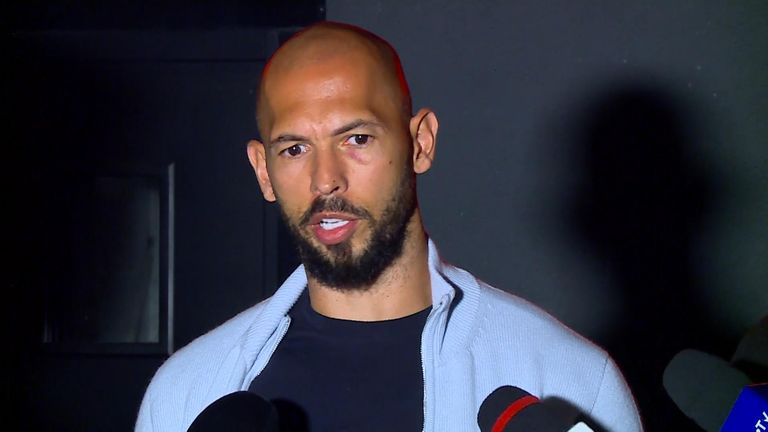
Andrew Tate is a popular among some young men. Pic: ENEX
‘I have spoken to my children in really explicit terms’
What struck me in our conversation, and as a mum of two teenagers myself, is the role Phillips said we all need to take in talking to our children about what they are being exposed to online.
Phillips points out that the age profile of perpetrators is dropping as younger people become more exposed to violent pornography.
One of the elements in the strategy is to ban strangulation in porn. Another is to have mandatory guidance in secondary schools to offer lessons on culture, increasing awareness of artificial intelligence and how pornography links to misogyny.
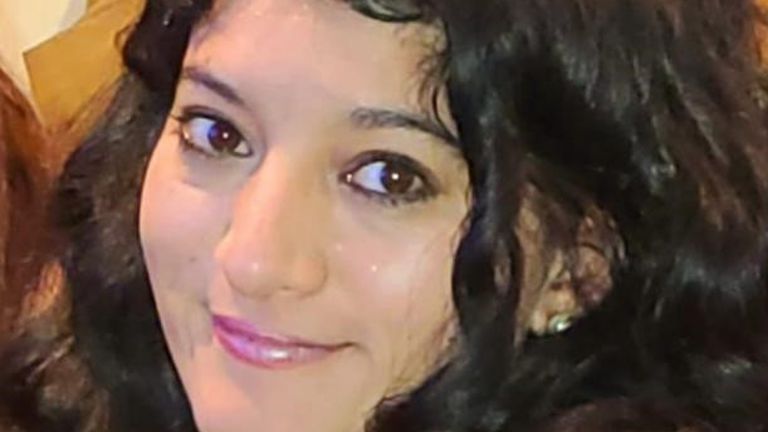
Zara Aleena was sexually assaulted and murdered as she walked home in 2022. Pic: PA
Phillips, who has two sons, said it’s incumbent on all of us to have those conversations with our kids about what is normal sexual behaviour and what is not.
“I have spoken to my children in really explicit terms about the things that I think they might be seeing and think as standardised in sexual practice,” she told me. “I have tried to talk to them about things like strangulation. I have said it is totally and utterly not like normal sexual behaviour because I know what they might be exposed to.”
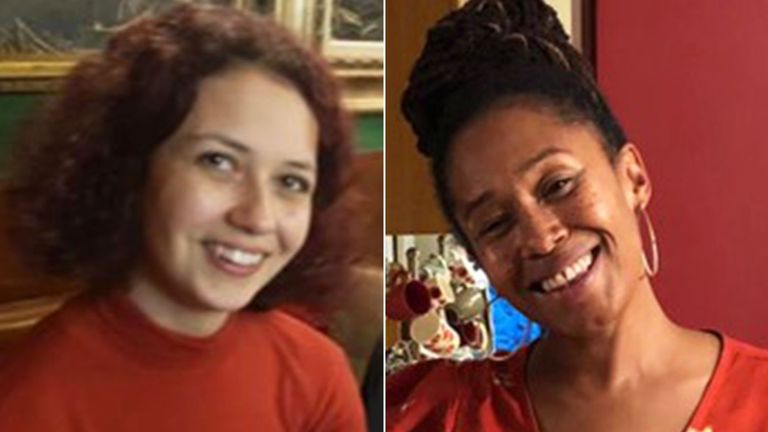
Nicole Smallman and Bibaa Henry were murdered in 2020. Pics: Metropolitan Police
Criticism over handling of grooming gangs
But as a campaigner around domestic violence and now a minister charged with halving VAWG, Phillips has also faced criticism over the government’s handling of grooming gangs.
Fiona Goddard, who was abused by an organised street gang in Bradford, quit her role on the victims panel in the autumn and called for the resignation of the minister over her handling of the inquiry setup, which Phillips admitted she found personally difficult.
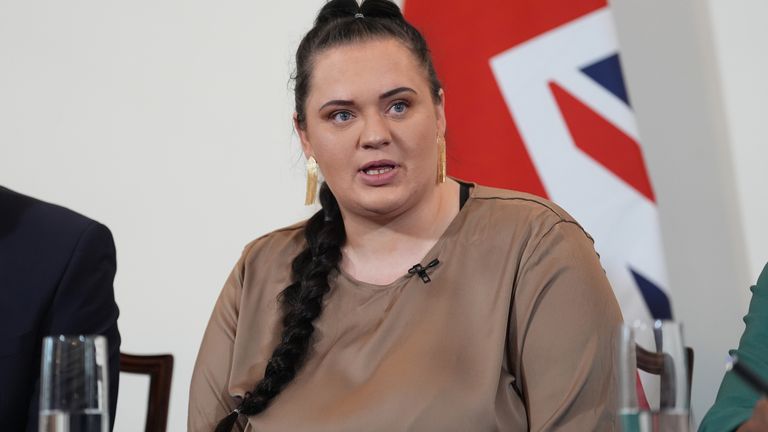
Fiona Goddard. Pic: PA
She said: “I’m not going to lie and pretend that it’s nice when the thing that you care the most about in the world is the thing you are criticised for. And actually, when Fiona Goddard does that, I just take it. Fiona Goddard has every right to criticise me. When other people who never have done a bar’s work in this area, but want to use that to politically criticise, I think that’s cynical.
“One of the things that I think has been hardest about this process is that I am held to a different standard to literally everybody else. Now of course I should be held to a different standard because let’s be honest, Beth, I’m better than most people who’ve had my job before because of my experience.”
‘The strategy isn’t the end, it’s the beginning’
Phillips, the victim herself of a torrent of online abuse from Elon Musk over grooming gangs earlier this year, before the latest furore over the setting up of the national inquiry, now has police protection.
I wonder whether the launch of the strategy might be the moment Phillips steps back, but she’s having none of it.
“The strategy isn’t the end, it’s the beginning. There’s a lot of work to do. I would be lying if I didn’t say it didn’t have a mental toll on me, but I am not the only person doing this work, it isn’t all on me… the upside is better, it’s worth it,” she said.
The strategy Phillips is spearheading is the fourth in 15 years. After a series of false starts, Phillips insisted this time it will be different. For the sake of our women and our girls, I hope she is right.
UK
Labour MPs urge Home Office to ensure settled status changes do not pull support for Hong Kongers


Dozens of Labour MPs have called on the government to ensure changes to permanent residency requirements do not pull support for Hong Kongers and others on humanitarian visas.
The 34 MPs say they have “significant concerns about the potential adverse consequences” of changes announced in November to indefinite leave to remain (IRL), which allows migrants to live, work and study permanently in the UK, then acquire British citizenship.
They have written to migration minister Mike Tapp to ask him to ensure new requirements are not applied retroactively to about 200,000 Hong Kongers who were granted British National Overseas (BNO) visas from 2021 by the previous Conservative government after fleeing a crackdown by Beijing.
Of particular concern is the newly announced requirement for “upper intermediate” (B2) level of English, increased from “intermediate” (B1), and the necessity to have earned more than £12,570 a year for a minimum of three to five years before being able to apply for IRL.
The earliest Hong Kongers who came to the UK on a BNO visa will become eligible to apply for IRL from March 2026, with the MPs fearing they could be prevented from earning settled status after already waiting five years.
They said they are faced with the “prospect of an alarming scenario where a great number of BNO visa holders are locked out of attaining ILR after five years in the UK, as was promised to them when they repatriated to the UK”.
“Returning to Hong Kong is not an option for them,” the MPs warned.
The 34 Labour MPs have written to Mike Tapp
They said pensioners, disabled people, young adults, those at university and homemakers will all fail to meet the minimum salary requirements, which would mean they could be denied IRL.
The MPs said the Home Office should recognise other contributions, such as volunteering, caring responsibilities or being a key worker, and should continue to recognise a degree taught in English at a UK university as meeting the proficiency in English.
‘Historic duty’
Senior Labour MP Sarah Champion, a signatory, told Sky News: “I have BNO constituents who are now hugely anxious about their immigration status.
“The confusion over who is/isn’t eligible to remain with the government’s new immigration policy is severely impacting their mental health.
“The UK has a historic duty to Hong Kong, it was right the last government created the BNO scheme; we now need to make clear that people from Hong Kong are still welcome to remain.”
Research conducted by Labour MP James Naish, who has just under 3,000 BNO holders in his Rushcliffe constituency and organised the letter, found if the new English requirement was rolled out rigidly, only 8% of BNO visa households would be able to fully access ILR after five years in the UK.
His research, a survey of 6,667 BNO holders, found a further 43% of BNO households would have no members of their household eligible.
The MPs also said Hong Kong pensioners in the UK have left behind HK$3.8bn (about £360m) in Hong Kong’s state pension system, which they can only access once they have settled status, and with many having planned for five years this could cause them financial difficulties.
More from Sky News:
Reaction to Trump’s angry speech
Teachers to be trained to spot misogyny
In their letter, the MPs also said all other humanitarian visa routes should be exempt from the changes, as otherwise it would “undermine the humanitarian intent” of the schemes.
Mr Naish told Sky News: “The BNO visa was created with cross-party support to offer a safe route for Hong Kongers following the crackdown on civil liberties in Hong Kong. Many families made life-changing decisions based on the clear promise of a path to settlement after five years.
“It’s essential that the small print of the government’s proposals on earned settlement reflects the government’s headline support for the BNO visa scheme.”
The Committee for Freedom in Hong Kong Foundation said: “The UK must honour its obligations under the Sino-British Joint Declaration and protect Hong Kongers seeking freedom here.”
-
 Sports2 years ago
Story injured on diving stop, exits Red Sox game
-
 Sports3 years ago
‘Storybook stuff’: Inside the night Bryce Harper sent the Phillies to the World Series
-
 Sports2 years ago
Game 1 of WS least-watched in recorded history
-
 Sports3 years ago
Button battles heat exhaustion in NASCAR debut
-
 Sports3 years ago
MLB Rank 2023: Ranking baseball’s top 100 players
-
Sports4 years ago
Team Europe easily wins 4th straight Laver Cup
-
 Environment3 years ago
Japan and South Korea have a lot at stake in a free and open South China Sea
-
 Environment1 year ago
Here are the best electric bikes you can buy at every price level in October 2024