

EU bends to automakers’ pleas to let them lose the EV race to China

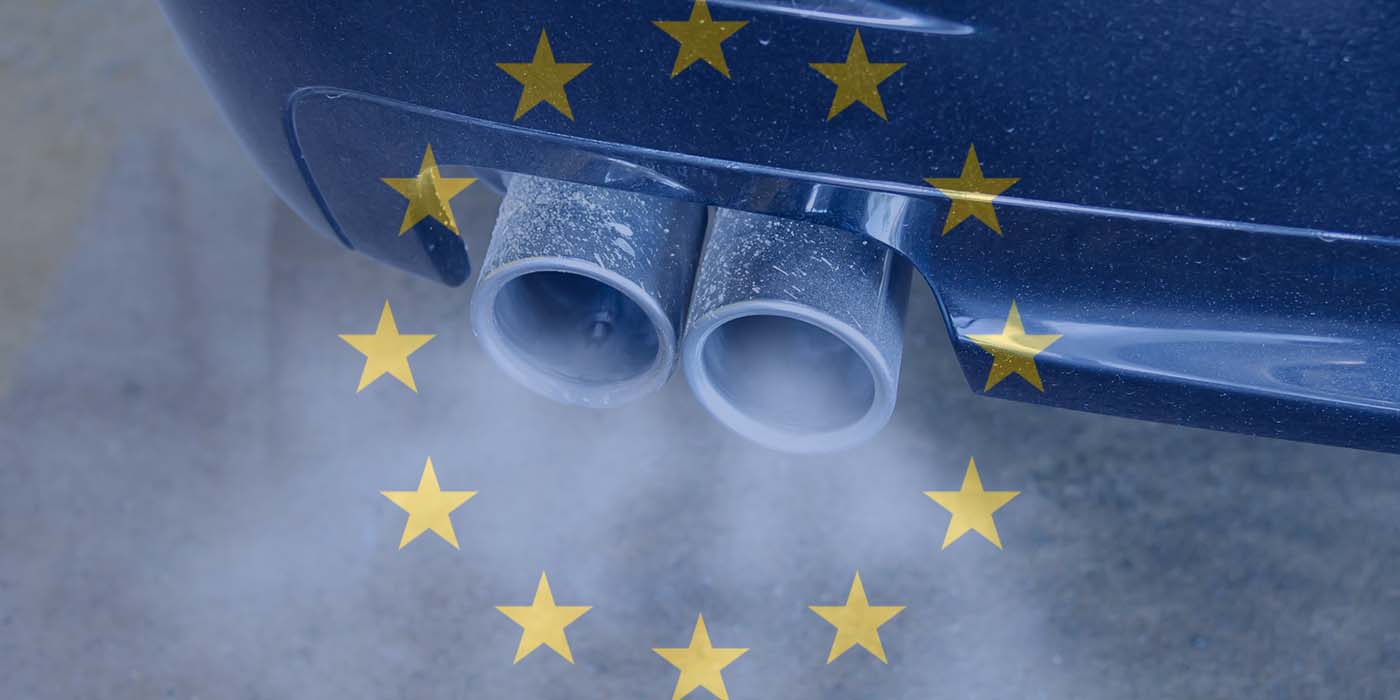
Europe has proposed to roll back its 2035 all-electric target, instead replacing it with a softer 90% reduction in automakers’ fleet CO₂ emissions, in what will be a major blow to the European auto industry’s global competitiveness which they, for some reason, are celebrating.
Back in 2021, Europe announced a target to phase out new gas car sales by 2035, in order to meet an overall goal of 55% emissions reductions by 2030 and full climate neutrality by 2050.
These goals are important given the climate crisis the world is currently in the throes of, and how negatively it will continue to affect all living things on Earth until humans act to solve the problem we are causing. Those effects cannot be negotiated away by governments – they are a matter of physics.
This crisis has been driven largely by overuse of resources by the Western world, though Europe has made some progress at reducing the rate at which it pumps deadly emissions into the atmosphere. And the faster we solve it, the easier it will be to solve.
Cars are a major contributor to this crisis – in rich countries, transportation is the largest-emitting sector, and the majority of transportation emissions come from personal gas-powered vehicles. So this means they are also among the most important things to regulate, given their outsized effect.
Taking stock: the status of Europe’s EV market
At the time the goal was announced, we wondered why Europe was picking such a late target as 2035, and we still do. Cars don’t just stop emitting when they leave the factory gate, they continue on roads putting out pollution for a decade or more after they are produced. Therefore, to reduce climate emissions, you need to stop the sale of new polluting vehicles well before you intend to stop the pollution of existing vehicles.
We had the same reaction to California’s 2035 target, which also should be sooner. Since then, republicans have illegally attempted to reverse California’s policy, despite that they do not have the authority to do so.
Europe is ahead of the US on EV sales – with both California and Europe in the low/mid-20s percent market share for EVs in 2025, and the US languishing at around 10% (with a likely temporary drop due to republican policy actions focused on raising costs and pollution for Americans). Europe is well-equipped for EVs, and EV sales are only getting stronger there – currently, at a faster rate than the other “big three” regions (China, US).
Notably, gas car sales continue to be down from their global 2017 peak, and will never reach that level again, while EV sales continue to rise contrary to lies planted in the media by automakers themselves. So any companies or countries focusing on supplying gas vehicles will face diminishing demand – not typically the sort of product segment you want to increase your focus on.

But, speaking of China, that country has made significant progress on electrification in recent years. While Europe is currently beating China in monthly YoY EV growth, that hasn’t been the case for the last few years.
In particular, export growth has ballooned coming from China, with Chinese EV manufacturers providing affordable high-tech vehicles to every region of the world (well, except the US). This includes the developing world, where China has found a rapidly rising customer base, edging out legacy automakers.
Chinese EV imports have doubled in the last year in Europe, despite big tariffs (that were never going to work and just resulted in more-polluting PHEVs). This has been a challenge for European manufacturers, which haven’t moved as quickly as Chinese ones to ramp their EV efforts, and need to pick up the pace to compete. Had they listened to EV advocates earlier (*cough*), they would perhaps be more ready to confront this challenge.
So, let’s take stock:
- Climate change is happening, and is the most important and largest problem humanity has ever caused and confronted.
- The faster we solve climate change, the easier it will be to solve.
- Transportation is the largest contributor to climate change in rich countries, particularly gas-powered cars, which pollute for a long time after they’re made.
- EVs drastically reduce lifecycle emissions as compared to gas cars.
- The EV market is growing, and gas car sales are down.
- Sales of Chinese EVs are growing more rapidly in Europe than those of domestic manufacturers.
- Europe had a clear policy goal for four years now.
- That policy goal aligned with the interests of domestic manufacturers which need to get their act together and start making better EVs to catch up to foreign competition.
Given all of this, the rules seemed to align with reality and with the current challenge the industry is seeing. And, auto companies like to plan on long schedules, and often complain about changing the rules mid-stream. So, should be settled, right?
Automakers lobby to hand industry to China
Well, apparently not, as Europe’s plan has been subject to intense lobbying by automakers, most of whom seem to support the idea of handing over their industry to China.
This lobbying effort has included a lot of the same sort of disinformation that is commonly used, including automakers lying about their own sales numbers and even changing plans based on those false numbers.
When begging for this rollback, many automakers even explicitly called out the threat from China. Everybody acknowledges that rising competition from a fast-moving new entrant is disruptive to the industry, and everybody acknowledges that China is able to provide cars that are both affordable and advanced and that European offerings are having difficulty keeping up.
But their answer to being behind a faster-moving competitor is to beg to move more slowly. It makes no sense whatsoever.
For example, Ford CEO Jim Farley wrote an opinion piece in the Financial Times saying “Europe is risking the future of its auto industry.” But rather than recognizing the risk of relenting to faster-moving Chinese opposition, Farley made a confused argument which seemed to ask for rollbacks… including asking Europe to set a ten-year plan when it already had a ten-year plan to stop the sale of new gas cars (what’s ten years after 2025, Jim?).
Countries also stepped into the debate, with Germany and Italy pushing for rollbacks despite the harm it will do to the industry that has been so key to those countries over the last century, and Spain correctly calling for Europe to maintain the targets.
A few entities in the industry understand the problem and have been shouting from the rooftops begging regulators to maintain the targets.
Volvo and Polestar, both owned by Chinese auto giant Geely (and thus, they recognize that China will not relent in the face of the West’s floundering), have told the EU to maintain these targets for the health of the industry. Polestar CEO Michael Lohscheller said “moving from a clear 100% zero-emissions target to 90% may seem small, but if we backtrack now, we won’t just hurt the climate. We’ll hurt Europe’s ability to compete.”
And clean transport organization T&E, who we have covered many times, similarly noted that Europe is dawdling while China will continue at full steam.
And some from the traditional auto industry even see the truth. Audi CEO Gernot Döllner said “the electric car is simply the better technology” and that the sort of bickering the auto industry has done for the last couple years has been “counterproductive and unsettle[s] customers.”
It looked for a while that Europe would stand firm on its targets, but today’s announcement is a retreat from the bloc’s previous signals. Indeed, the begging seems to have worked, and Europe has softened that ten year plan, removing the regulatory certainty that industry claims it wants.
Today’s proposal: Automakers get another rollback, harming themselves in the long term
Today, Europe announced a new proposal for auto emissions regulations which rolls back the 2035 all-EV target and instead replaces it with a fleet emissions reduction target.
The fleet emissions reduction target is still significant. The proposal centers around a new 90% fleet emissions reduction target by 2035, down from 100%, which will still require a heavy amount of EV adoption.
The remaining polluting vehicles will need to be produced with “green steel” made domestically in Europe (despite that manufacturing emissions make up a tiny percentage of the lifecycle emissions of a gas car). Those cars will need to use biofuels or so-called “e-fuels.”
E-fuels is the name for synthetic gasoline created from renewable electricity which are carbon-neutral, but still inherently wasteful, and will merely serve to extend the life of the polluting, outdated combustion engine. And since capacity doesn’t exist to produce these at scale, that will need to be built up – expensively – instead of just plugging cars into the electricity infrastructure Europe already has.
Also, there is opportunity for further watering-down of targets based on how Europe accounts for vehicle emissions. One method would be to adjust the “capacity factor” for plug-in hybrids (PHEVs). PHEVs have consistently been shown to be dirtier than we thought, including by the European Commission itself (and by the aforementioned T&E).
That capacity factor has recently been adjusted, but if Europe maintains or rolls back capacity factors to falsely underestimate PHEV emissions, automakers could claim low pollution on paper, but that pollution would still make its way into the air, heating the climate and harming health.
That said, one strength of focusing on a strict emissions target rather than a “ban” is that the targets are then “technology-neutral,” which is to say that they can be met with whatever clean car methods come around. And a 90% reduction, if held, would still require a very high share of non-polluting vehicles anyway.
Other details of the proposal include plans to increase corporate fleet EV usage, and individual country targets related to GDP per capita, with richer companies having stricter rules. The Commission also wants to make an additional category for small EVs produced domestically, giving automakers more credits for each small EV sold.
The proposal is not yet finalized, and will have to gain approval from EU governments and European Parliament. That said, most of these plans do end up going through, having been crafted with consultation from governments and industry.
Today’s rollback comes in addition to another rollback just a few months ago, where Europe gave automakers “breathing room” by rolling back short-term emissions targets. Similarly, today’s proposal rolls back mid-term emissions targets, letting automakers meet the 55% 2030 target in 2032 instead, and lowering the commercial emissions reduction target to 40% instead of 50%.
Ironically, this “breathing room” given to automakers means less “breathing room” for actual people with actual lungs, who will be forced to breathe more of the poison that polluting vehicles put out as a result of their failure to meet eminently achievable pollution reduction goals. And yet, despite that, automakers still begged to poison us more.
Rollbacks make government’s job more difficult in the future
Which brings up the point: why make regulations if you’re just going to roll them back when an industry which isn’t even trying says it can’t meet them?
Automakers have consistently dragged their feet, intentionally so in order to influence regulations. They got what they wanted today, and Europe only gave itself more difficulty in bringing them to heel in the future.
Because when you set a goal 14 years early, and then give up with 10 years left to go, doesn’t that send a signal that nobody should take your goals seriously in the future?
Benchmark Minerals Intelligence said it well: “If manufacturers are given too much license to pull back from plans immediately, demand will suffer before 2030. The knock-on effect will also make it harder to achieve a less ambitious goal in 2035, and we will be in the same position again in five years.”
In short, by pushing back the goal, you only make further rollbacks more likely in the future. The best method to meet a goal is to hold firm, and send a clear signal that everyone needs to work together to meet it.
It could also threaten goals in other countries. The UK has an impressive 2030 goal, which was originally set to 2040 and then improved multiple times by both Tories and Labour. (Though Labour just introduced a poorly-thought-out mileage tax for EVs, sending mixed signals).
But recently, a right-wing UK paper made the argument that if EU is pushing back its targets, the UK should as well – which would mean this European rollback will result in further harm even outside the EU’s borders. Thankfully, UK sounds like it’s sticking with its targets, so far.
Other ambitious goals have been met
Besides, it’s not like places haven’t been able to meet goals before. Norway set an ambitious target to have 100% EV sales by 2025, and succeeded. It never pushed back its goal, it held firm and everyone got there (and in fact, it reached 90%+ three years early).
China had a similar situation, where it announced stricter 2023 emissions rules in 2016, then foreign automakers ignored those rules and EV sales trends and ended up with a huge glut of unsellable ICE cars and begged for a rollback.
They got a slight reprieve of a few months to sell some excess inventory, but the country continued implementation and is now selling more NEVs than ICE-only vehicles. That’s quick acceleration from a country that as recently as 2020 was behind California in EV adoption, and is now competing with the Nordic countries for the highest EV market share.
That’s the sort of acceleration you can see with consistent policy signals and follow-through on those goals from every level of society, business and government.
But if, as a society, you send signals that you can get away with a lack of effort if you just whine a little bit even when you fail to do something easy, then you end up with a society that fails to do anything at all.
But automakers incessantly act like spoiled children
The problem, here, is that automakers don’t know what’s good for themselves. They have an addiction to fighting against any regulation, no matter how important it might be to maintain the health of their industry.
This sort of behavior is common in many industries. Companies very often want to do the absolute minimum effort required of them by government, and then compulsively lobby governments to let them do even less.
They do this even when it’s easy to see that this will cause problems. For example, when President Obama implemented historic auto efficiency standards that harmonized US federal and California emissions laws, it was a big boon for the auto industry – they’d no longer have to play by two sets of rules, something they’d asked for for a long time.
Then, after Obama’s term was over, they lobbied to blow up those standards, got what they wanted, and now have fractured standards again, with California and the US asking separate things of them. The auto industry hasn’t stopped complaining about this since, even though they’re the ones who asked for it in the first place (GM CEO Mary Barra mentioned it just two weeks ago, the same day as another rollback she lobbied for was announced, which compounds the problem of fractured regulatory regimes even further).
And so, with the auto industry acting like ignorant children who don’t know what’s good for them as usual, adults need to enter the room and teach them how to behave. That’s the value in reasonable regulations. And yet, the adults in the room have decided to let the children stick their finger in the light socket in this case.
Just like in real life, there are limits to how much freedom you should give to children to harm themselves. While there might be value in letting them learn some simple lessons by doing, some of those lessons can be lethal. And in this case, European government has failed to teach the auto industry a lesson that it apparently can’t learn by itself – and just like letting your child stick their finger in the light socket, it may lead to permanent or even mortal harm.
So the European government has failed in its duty of care. The auto industry doesn’t know how to care for itself, has been begging to do harmful things, and Europe has shrugged and let it do so.
Normally, you’d call child protective services and take the child away from a parent who acts so irresponsibly. There’s no entity out there to do that – so instead Europe’s bad parenting will leave the child to languish, and a child that has been raised more responsibly will stand successful in the place of the continent that invented the automobile.
But hey, maybe it’s not too late. Given Europe has shown that it can change its mind every 9 months on regulations that were supposed to last for 14 years, maybe 9 months from now it can go back to the initial regulations that should have stuck around anyway. We’re sure the babies in the auto industry will complain again if they do, but they have shown that they were always going to complain anyway, so might as well try to teach them something, as parents should.
But is this change really all that bad?
We have been pretty harsh on this change above, even though it’s not that big of a change. A 90% emissions reduction isn’t far off from a 100% emissions reduction, and given EVs still have some upstream emissions from power generation, if those were counted then this target could still require effectively total ZEV sales.
But T&E’s analysis suggests that the change could result in a ~25% reduction of BEV market share due to the structure of green steel and alternative fuel credits. That’s a lot worse than the 10% reduction in emissions Europe is headlining.
But today’s changes may not matter all that much for another reason: EVs are still popular and gaining popularity as their inherent superiority as a powertrain choice gets found out by more and more drivers. They will continue to grow regardless.
Automakers may do everything they can to try to stop them (and their lobbying and painting a false picture of falling EV sales are examples of that), but those automakers that take them seriously will reap the benefits instead. So this sort of behavior will boost EV startups and Chinese EV makers, sales of which will result in many permanently lost customers for intransigent legacy brands.
And targets may end up getting met anyway – genuinely, who in their right mind would be crazy enough to buy a brand new gas car a decade from now, when EVs are already the better choice today and only getting better as time moves on (and as gas stations get replaced).
Whether we get there or not, this sends all the wrong signals
But the danger is less in the regulation itself, and more in terms of how it could be abused, by opening the door for other tweaks to regulations regarding e-fuels or PHEVs, for example. This could lead to more polluting vehicles on the road, which then put out pollution well into the latter part of this century.
It also makes governments seem unserious, allowing manufacturers to get changes as soon as they invent the slightest sign of difficulty (and it is invented – EV sales are rising, gas car sales are dropping). This then opens the doors for future rollbacks.
So our negativity on this change isn’t with the status of the rules themselves – in a vacuum, 90% reduction by 2035 might have been laudable if it was the first proposal made (though we would have advocated for stronger). The negativity is rather because these rules are moving in the wrong direction, and shouldn’t be moving at all if we want them to seem serious in the first place.
To add salt to the wound, the continent is grappling with an active war in Ukraine which is now in its third year. The invading country, Russia, already went unpunished for a 2014 invasion of Ukraine due to Europe’s addiction to Russia’s oil resources, and pushed further with a 2022 invasion which is still ongoing.
This was enough to get Europe to try to get off Russian gas, but this led to huge energy price spikes in the region as Europe had not prepared for such a sudden change (hmm, perhaps it would have been nice to have more vehicles that don’t need to burn oil?).
With today’s change, Europe signals that it doesn’t mind using oil for a bit longer. And despite that Europe has drastically reduced its oil imports from Russia, where that oil comes from is immaterial in a global oil industry where demand anywhere buoys prices everywhere. Thus, every gallon Europe burns still funds the Russian war effort.
And even worse, this rollback was announced mere days after the 10th anniversary of the Paris Agreement, the landmark climate law where all countries agreed to lower emissions.
This sends another signal that Europe, the bloc responsible for more total emissions than any other entity except the US, is not as serious as it should be about solving the problem it has been so instrumental in causing – despite that so many of the effects of the problem will be disproportionately felt by the parts of the world that it ruined with its colonial past.
For these reasons, even though this change is being marketed as a minor one, it is still unacceptable.
The 30% federal solar tax credit is ending this year. If you’ve ever considered going solar, now’s the time to act. To make sure you find a trusted, reliable solar installer near you that offers competitive pricing, check out EnergySage, a free service that makes it easy for you to go solar. It has hundreds of pre-vetted solar installers competing for your business, ensuring you get high-quality solutions and save 20-30% compared to going it alone. Plus, it’s free to use, and you won’t get sales calls until you select an installer and share your phone number with them.
Your personalized solar quotes are easy to compare online and you’ll get access to unbiased Energy Advisors to help you every step of the way. Get started here.


FTC: We use income earning auto affiliate links. More.

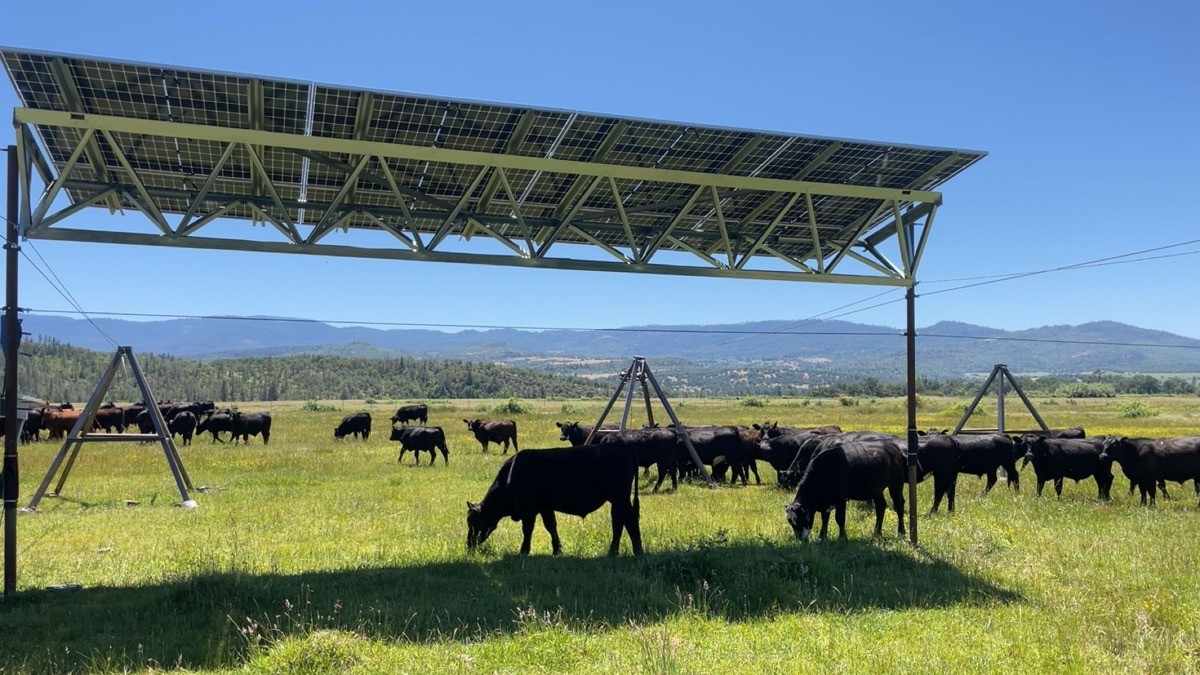
An Angus ranch in southern Oregon has become the test case for a new kind of cattle-friendly solar, hosting RUTE SunTracker’s first commercial project.
The one‑acre, 120‑kilowatt array is the first real‑world installation of RUTE’s patented, cable‑stayed solar tracker designed specifically to coexist with grazing cattle. RUTE supplies the hardware and is also acting as the developer for its first regional cattle‑plus‑solar demonstrations.
What makes the setup different is the clearance. The tracker system provides about 10 feet of headroom, with panel heights reaching up to 16 feet across the array. That gives cattle full access to the pasture underneath while allowing ranchers to keep managing the land as usual. The project is interconnected to Pacific Power’s grid in Jackson County, Oregon.
Projects like this are getting more attention as the solar industry runs into land‑use limits. In the US alone, about 30 gigawatts of new solar capacity installed last year covered roughly 150,000 acres. Meanwhile, the country has close to 120 million acres of cattle pasture, much of it facing rising heat and water stress.
That’s where agrivoltaics come in. By adding solar to working pastureland, ranchers can create a second revenue stream while improving growing conditions for forage through partial shade.
“Within weeks of installing the RUTE canopy, the crew observed leafier forage and increased legume presence inside the array compared to outside,” RUTE president Doug Krause said. “Even on irrigated pasture, direct summer sun can be too intense.”
RUTE’s work has been supported by grants from the US Department of Energy’s American‑Made Solar Prize and the US Department of Agriculture. In October, Oregon State University’s Agrivoltaics Program began quantitative studies at the site to measure pasture production, adding hard data to what ranchers are already seeing on the ground.
Next, RUTE plans to take the project on the road. This winter, the company will present at cattlemen’s association meetings as it looks for ranch partners with onsite electric loads, such as irrigation pivot systems.
“In the near term, our focus is on regional, behind‑the‑meter installations so ranchers and power producers can see the equipment operating in real conditions,” Krause said. “While interconnection timelines are long, these projects allow us to build momentum as we connect with developers and ranches on utility‑scale pipeline.”
Read more: Sunrun + NRG launch a virtual power plant to ease Texas power demand
If you’re looking to replace your old HVAC equipment, it’s always a good idea to get quotes from a few installers. To make sure you’re finding a trusted, reliable HVAC installer near you that offers competitive pricing on heat pumps, check out EnergySage. EnergySage is a free service that makes it easy for you to get a heat pump. They have pre-vetted heat pump installers competing for your business, ensuring you get high quality solutions. Plus, it’s free to use!
Your personalized heat pump quotes are easy to compare online and you’ll get access to unbiased Energy Advisors to help you every step of the way. Get started here. – *ad
FTC: We use income earning auto affiliate links. More.
Environment
Tesla rental fleet that bought into Elon Musk’s self-driving lies goes bankrupt due to depreciation

Dutch leasing company Mistergreen, known for its “Tesla only” fleet and bold bets on a future of autonomous robotaxis, is reportedly facing bankruptcy. The company’s financial collapse highlights the danger of buying into Elon Musk’s claims that Tesla vehicles would become “appreciating assets”—a prediction that has faced a harsh reality check in the used EV market.
According to reports from Europe, the Dutch Tesla-only car rental firm Mistergreen has wiped out its bondholders and is selling off its operations.
Mistergreen had built its entire business model around the premise of operating a fleet of Tesla vehicles that would not only hold their value but eventually generate revenue as robotaxis.
Instead, the company has been forced to write down millions in fleet value as Tesla aggressively cut new car prices over the last two years, pulling the rug out from under used EV prices, and never delivered on its promise of consumer vehicles becoming robotaxis.
Back in 2019, Elon Musk famously claimed that Tesla vehicles were now “appreciating assets” because of their Full Self-Driving (FSD) capability. He stated:
“I think the most profound thing is that if you buy a Tesla today, I believe you are buying an appreciating asset – not a depreciating asset.”
He even went so far as to suggest that a Tesla Model 3 could be worth $100,000 to $200,000 as a revenue-generating robotaxi. Mistergreen bought into that claim and was essentially a leveraged bet on this exact scenario.
They wrote their annual report in 2022:
Our focus is driven by the fact that Tesla’s electric vehicles are currently the highest quality electric vehicles on the market (in terms of battery quality, software updates, efficiency and range, charging network and speed), their hardware and software are prepared for future self-driving cars, and the quality and range of the Tesla (supercharger) charging network is superior. As a result, there is a significant market demand for Tesla’s and we anticipate that Tesla’s will have better residual value in the future due to the good quality of the Tesla’s currently on the market.
However, as we discussed in an article earlier this year about Elon Musk’s biggest lie, the reality has been the exact opposite. Tesla vehicles have depreciated faster than the industry average, exacerbated by Tesla’s own decision to slash prices to maintain demand and by the fact that it never delivered on its promise that software updates would make its consumer vehicles autonomous without supervision.
At its peak, Mistergreen had a fleet of over 4,000 Tesla vehicles, which is impressive, but it meant that it was hit even harder by the depreciation.
For buyers, a cheaper Tesla is great news. For owners or leasing companies holding thousands of them on their books, with high residual-value guarantees, it’s a death sentence.
Mistergreen had issued bonds to buy the Tesla vehicles, but it hasn’t been able to repay them since last year. It’s unclear how much of investors’ money has been wiped out by the bet, but it is in the tens of millions of dollars.
A couple of Dutch, Belgian, and German leasing companies will purchase the remaining fleet.
Electrek reached out to CEO Florian Minderop and co-founder Mark Schreurs for comments, but we didn’t hear back by the time of publishing.
Electrek’s Take
They believed Elon and they lost tens of millions of dollars worth of investors’ money for it.
We have been saying for years that while FSD is impressive, there’s no evidence that it can reach level 4 autonomy in consumer vehicles. Banking on it turning cars into appreciating robotaxis in the near term is financial suicide.
Musk has been promising “1 million robotaxis by the end of the year” since 2020. It’s now late 2025, and while we have seen progress, we only have a small pilot program in a geo-fenced area in Texas under constant supervision, and certainly don’t have a fleet of appreciating assets.
If you bought a Tesla for $50,000 in 2022 expecting it to be worth $100,000 today, you are likely disappointed. If you bought 4,000 of them with borrowed money, you are Mistergreen.
FTC: We use income earning auto affiliate links. More.

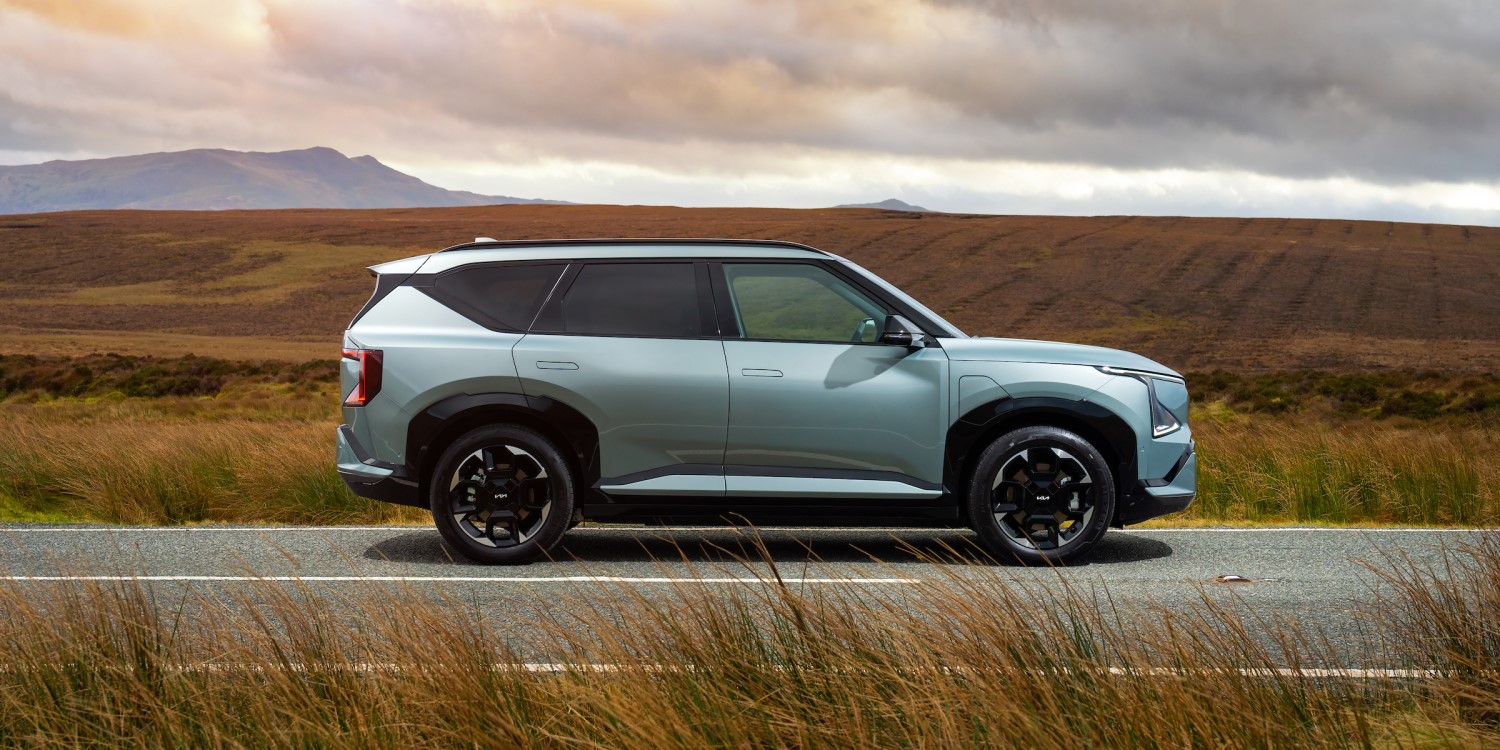
Kia is offering generous discounts on its EVs with low finance rates and thousands in savings across its entire lineup.
What deals is Kia currently running on its EVs?
After launching a promotion in the US offering over $10,000 off the EV6, EV9, and Niro EV this month, Kia is now extending the savings overseas.
Kia introduced a New Year’s offer in the UK on Tuesday, offering savings across its entire range, including electric vehicles.
The new deal offers generous finance deposit contributions (FDC) of up to £3,000 ($4,000) toward all EV3 models, plus the EV4 GT-Line and GT-Line S trims. A £1,500 ($2,000) FDC is available toward the EV4 Fastback (sedan), EV5, EV6, EV6 GT, EV9, and EV9 GT. The EV4 Air grade is available with a £1,000 ($1,300) FDC.
Kia is also offering a low 3.9% APR across its entire EV lineup, considerably lower than the 5.9% APR for the new Sportage and the 7.9% APR for the Picanto, K4, Niro PHEV, and Sorento.
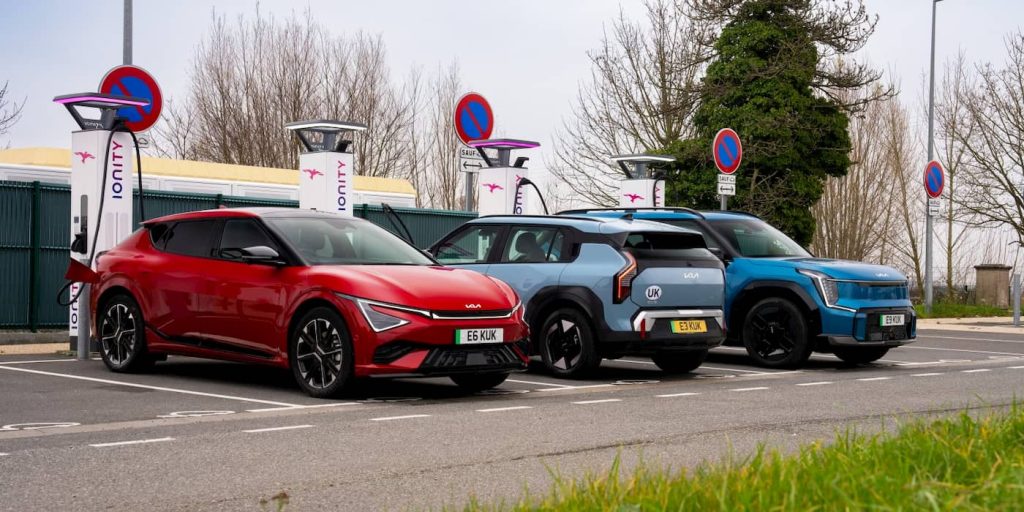
And that’s not all. Current Kia drivers looking to upgrade can save an extra £1,000 ($1,300) with the “Kia EV Finance Upgrade” loyalty incentive.
The New Year’s EV deals run from December 17, 2025, to March 31, 2026. Kia is also offering two years of free service on all electric models through its “Discover Your Kia EV” campaign, available on all EV3, EV4, EV4 Fastback, EV5, EV6, EV9, and PV5 Passenger grades and variants.
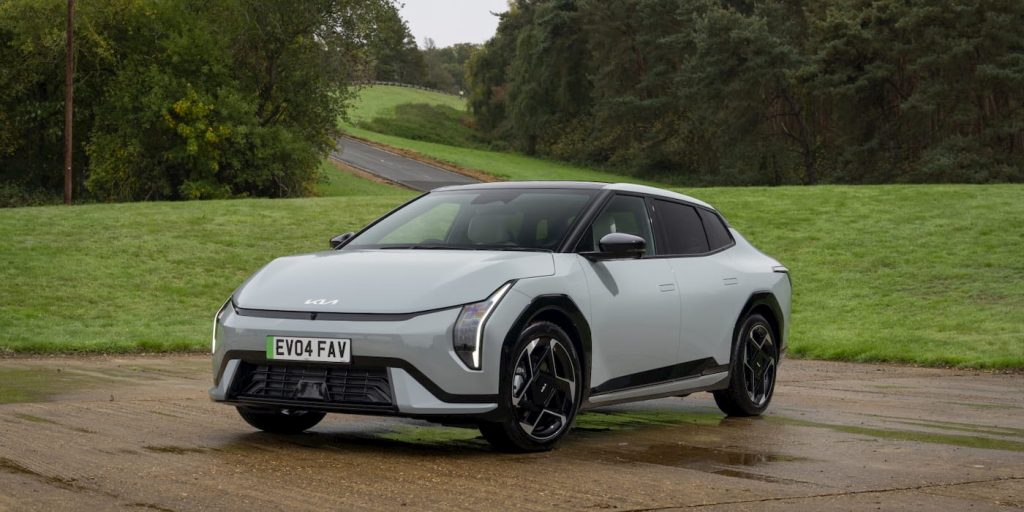
On Friday, the EV4 and PV5 Passenger became the brand’s first vehicle eligible for the UK’s Electric Car Grant. Buyers can now earn £1,500 ($2,000) off the on-the-road purchase price for the EV4 Air and PV5 Passenger Essential and Plus trims.
Although not exactly a promotion, Kia launched the EV4 as Canada’s most affordable EV this week. Starting at under $40,000, Kia’s electric sedan (fastback) is even cheaper than the tiny Fiat 500e.
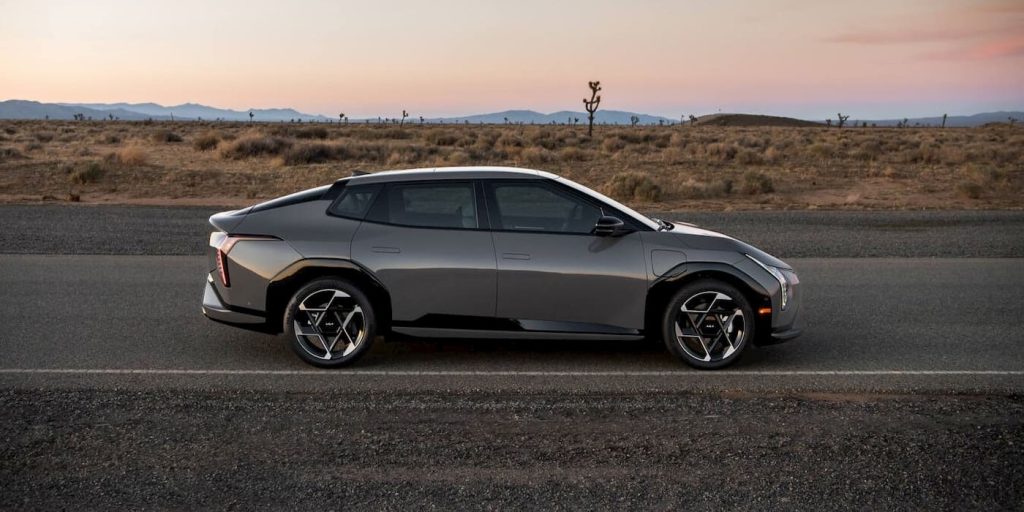
For those in the US, don’t worry, Kia is offering some pretty great year-end deals, including over $10,000 in savings across its entire EV lineup.
The 2025 Kia EV6 and Niro EV are available with up to $11,000 in customer cash, while the larger EV9 is listed with $10,500 in customer cash.

If you’re looking to finance, Kia is offering 0% APR for up to 72 months, plus $3,500 APR Bonus Cash on the EV6 and Niro EV. The three-row Kia EV9 is available with 0% APR for up to 60 months and a $3,000 APR Bonus Cash offer. In the US, Kia’s “New Traditions” sales event runs until January 2, 2026.
Kia’s deals are generous, but its sister company, Hyundai, may have it beat. You can lease a Hyundai IONIQ 5 right now for as low as $189 per month. That’s about as cheap as EV leases get right now.
If you’re wondering what deals are available in your area, you can find local offers using the links below.
FTC: We use income earning auto affiliate links. More.
-
 Sports2 years ago
Story injured on diving stop, exits Red Sox game
-
 Sports3 years ago
‘Storybook stuff’: Inside the night Bryce Harper sent the Phillies to the World Series
-
 Sports2 years ago
Game 1 of WS least-watched in recorded history
-
 Sports3 years ago
Button battles heat exhaustion in NASCAR debut
-
 Sports3 years ago
MLB Rank 2023: Ranking baseball’s top 100 players
-
Sports4 years ago
Team Europe easily wins 4th straight Laver Cup
-
 Environment3 years ago
Japan and South Korea have a lot at stake in a free and open South China Sea
-
 Environment1 year ago
Here are the best electric bikes you can buy at every price level in October 2024