
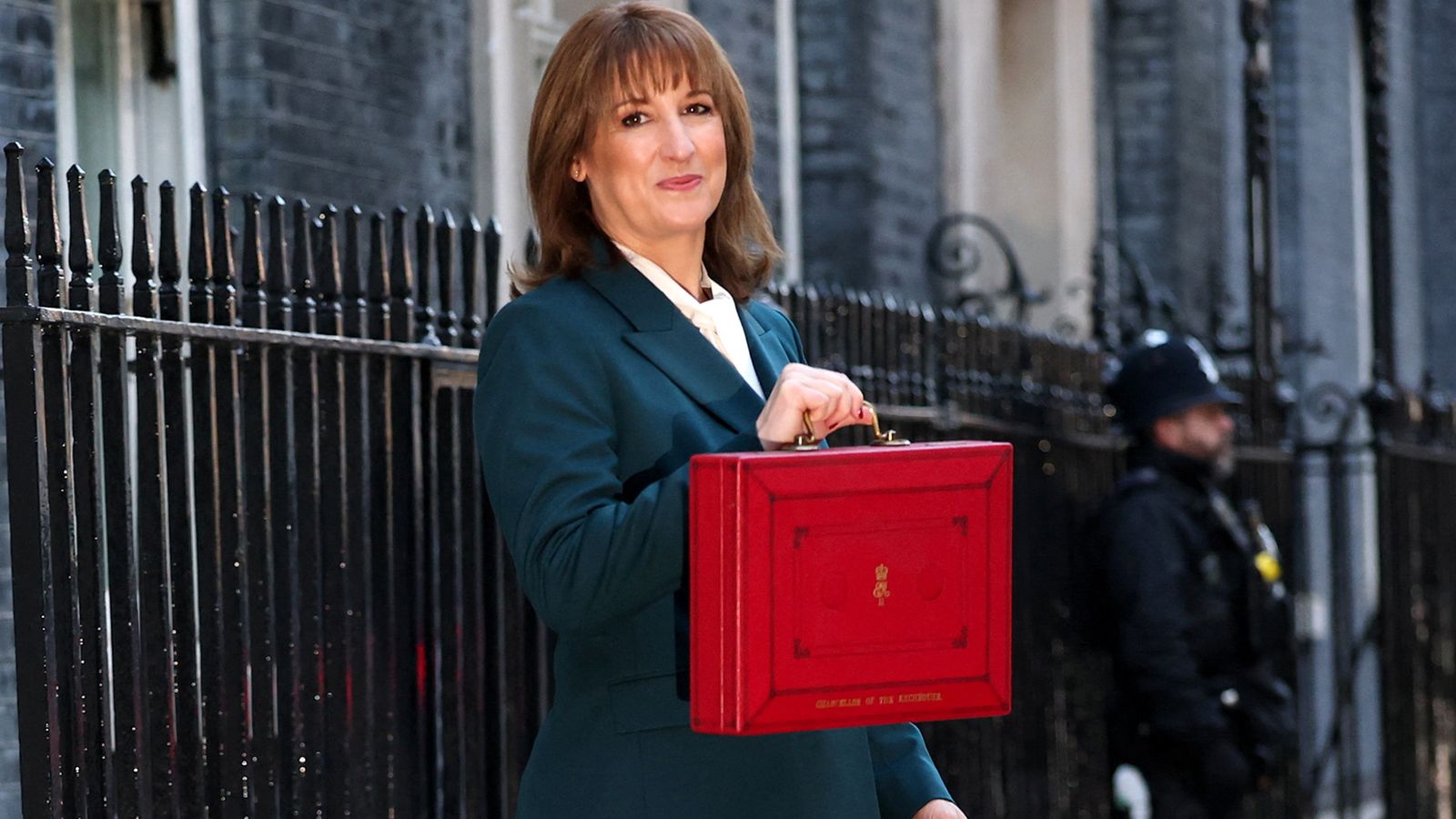
Rachel Reeves’s spring budget date is revealed

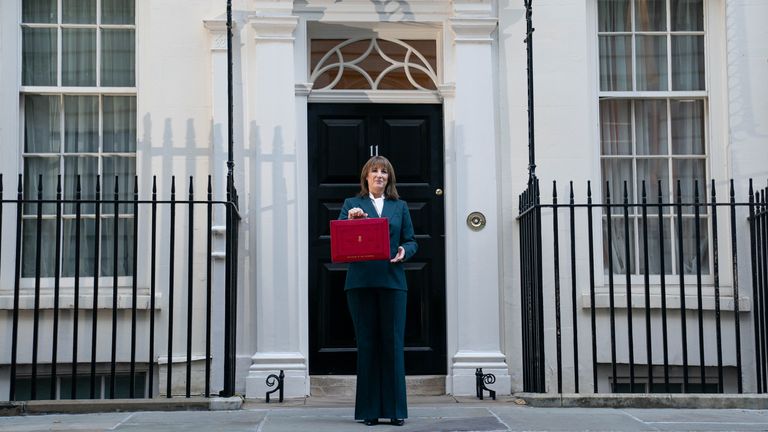
The chancellor’s spring budget will take place in March, the Treasury has announced.
Rachel Reeves will deliver the budget, known as the “spring forecast”, on 3 March 2026.
She has asked the independent budget watchdog, the Office for Budget Responsibility (OBR), to “prepare an economic and fiscal forecast” for publication on the same day.
The Treasury said the government has committed to delivering only one major fiscal event a year, at the autumn budget.
As a result, it said the spring forecast will “not make an assessment of the government’s performance against the fiscal mandate and will instead provide an interim update on the economy and public finances”.
However, the last spring statement saw the chancellor announce a series of welfare cuts, extra money for construction training and defence, and a crackdown on tax avoidance.
The 2026 spring statement is set to be another big political event, due to continuing concern over the state of the economy and the controversy in the build up to November’s budget, when Ms Reeves announced tax hikes.
Her extension to the freeze on tax thresholds last month prompted accusations of breaking Labour’s manifesto pledge not to raise taxes for working people.
She was also accused of not revealing the true state of the nation’s finances in the run-up to the budget after she repeatedly warned about a downgrade to the UK’s economic productivity forecasts.
On the day of the budget, it emerged the OBR told her in mid-September the public finances were in better shape than widely believed.
However, Ms Reeves denied misleading the public.
Read more:
Budget 2025 key points
Post-budget polling makes grim reading for Labour
She said she had been “upfront” about her decision-making, and the OBR figures were clear there had been “less fiscal space than there was”.
All eyes will also be on the OBR during the spring forecast, after it accidentally published details of Ms Reeves’ November budget nearly an hour before the chancellor stood up to deliver it.
The head of the OBR, Richard Hughes, quit over the early release. An investigation found it was due to “leadership failings” over security measures rather than a malicious cyberattack.



Arizona state Senator Wendy Rogers has proposed two bills and a resolution in an effort to change the state’s laws on taxing digital assets.
In legislation prefiled with the Arizona Senate on Friday, Rogers proposed amending state statues to exempt virtual currency from taxation (SB 1044), barring counties, cities and towns from taxing or fining entities running blockchain nodes (SB 1045), and amending the state constitution’s definition of property taxes to clarify rules on digital assets (SCR 1003).
The blockchain node bill may move through the state legislature, but the crypto tax bill and resolution would require a vote by Arizona voters during the next general election, in November 2026.
SCR 1003 would amend Arizona’s constitution to specifically exclude virtual currency from property tax, while SB 1044 would add similar language to the state’s statutes. SB 1045 would prohibit cities, towns and counties in the state from imposing “a tax or fee on a person that runs a node on blockchain technology.”
Arizona is one of the few US states that has a law on the books allowing the government to claim ownership of digital assets that have been abandoned for at least three years. The law was part of efforts by crypto advocates to establish a digital asset reserve in Arizona, but there are other proposals to give the state more authority to invest in cryptocurrencies like Bitcoin (BTC).
Related: New Hampshire governor signs crypto reserve bill into law
Rogers was one of the co-sponsors of a Bitcoin reserve bill vetoed by Arizona Governor Katie Hobbs in May. The senator condemned the move and said she would refile the bill during the next session. Cointelegraph reached out to Rogers for comment but had not received a response at the time of publication.
US states adopt crypto reserve bills, different digital asset policies
Arizona remains one of the few US states with a law establishing a digital asset reserve, along with New Hampshire and Texas. Although some lawmakers in other states have been attempting to gather support for similar bills, there are also many suggesting a different approach to digital asset taxation.
For example, Ohio’s House of Representatives passed a bill that could exempt crypto transactions under $200 from the state’s capital gain taxes. The legislation does not appear to have advanced since June.
New York Assemblymember Phil Steck proposed adding a 0.2% excise tax on “digital asset transactions, including the sale or transfer of digital assets” for the state’s residents. The bill was referred to the ways and means committee and did not appear to have advanced since August.
At the federal level, Wyoming Senator Cynthia Lummis submitted a draft bill in July proposing a de minimis exemption for digital asset transactions and capital gains of $300 or less. Lummis announced on Friday that she would retire from the US Senate in January 2027.
Magazine: When privacy and AML laws conflict: Crypto projects’ impossible choice


US President Donald Trump’s AI and crypto czar has signaled that the White House may have all the pieces in place for digital asset regulation following the confirmation of Michael Selig to chair the Commodity Futures Trading Commission.
In a Monday X post, David Sacks said the US was at a “critical juncture” for crypto regulation, and that Selig and Securities and Exchange Commission Chair Paul Atkins made up a “dream team to define clear regulatory guidelines.” Sacks’ comments were in response to Selig saying that the US Congress was preparing to complete work on a crypto market structure bill.
“We are at a unique moment as a wide range of novel technologies, products, and platforms are emerging, retail participation in the commodity markets is at an all-time high, and Congress is poised to send digital asset market structure legislation that will cement the US as the Crypto Capital of the World to the president’s desk,” said Selig on X.
The market structure bill, called the Responsible Financial Innovation Act in the Senate and building upon the CLARITY Act passed by the House of Representatives in July, is under consideration by the chamber but has been put on hold during the congressional break for the holiday season. The Senate Banking Committee is expected to hold a markup on the legislation in early January before a potential floor vote.
Related: Crypto CLARITY Act set for Senate markup in January, Sacks says
The Senate confirmed Selig last week in a 53 to 43 vote as part of a package of nominees. It’s unclear when he will take over for acting CFTC Chair Caroline Pham, who is expected to leave the commission and join crypto company MoonPay following Selig’s confirmation. Cointelegraph reached out to the CFTC and MoonPay for details on Pham’s departure but had not received a response at the time of publication.
What will the market structure bill mean for the SEC and CFTC?
Although the final text of the Senate’s market structure bill had yet to be finalized for a floor vote, drafts to date suggested that the legislation would give the CFTC more authority to regulate digital assets, a role that previously went through the SEC. Though some Republican leaders said they were moving forward with the bill, other senators have pushed back with concerns over DeFi, potentially slowing progress.
Magazine: When privacy and AML laws conflict: Crypto projects’ impossible choice
-
 Sports2 years ago
Story injured on diving stop, exits Red Sox game
-
 Sports3 years ago
‘Storybook stuff’: Inside the night Bryce Harper sent the Phillies to the World Series
-
 Sports2 years ago
Game 1 of WS least-watched in recorded history
-
 Sports3 years ago
Button battles heat exhaustion in NASCAR debut
-
 Sports3 years ago
MLB Rank 2023: Ranking baseball’s top 100 players
-
Sports4 years ago
Team Europe easily wins 4th straight Laver Cup
-
 Environment3 years ago
Japan and South Korea have a lot at stake in a free and open South China Sea
-
 Environment1 year ago
Here are the best electric bikes you can buy at every price level in October 2024