
‘The Taliban were going to kill me’: Terrified evacuees start their new lives in the ‘hopeful zone’

It’s calmer outside the camp.
The people, thousands of them, know that the processing that might get them on a flight to the UK can’t happen if there is a return to the chaos of the past few days.
In the morning sun, people call to us as we walk, pleading for a pair of eyes to glance at their applications, passports, visa, letters of recommendation, and – more importantly – to listen to their stories.
We stop often and give advice but in reality there is little or nothing we can do.
Afghanistan latest news – follow live updates
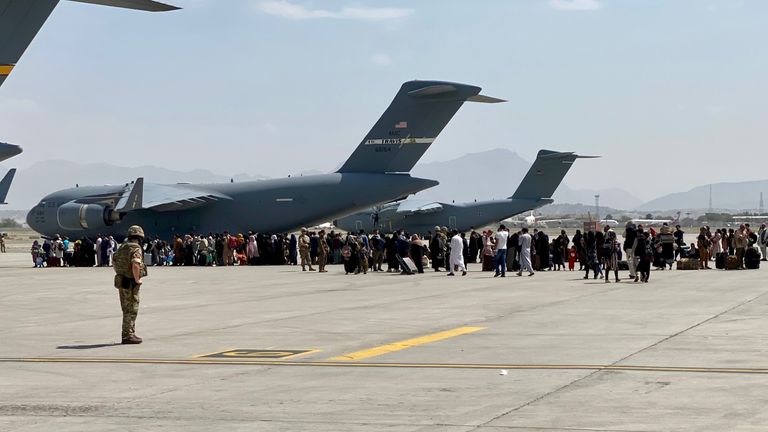
Sky’s chief correspondent Stuart Ramsay is in Kabul as Afghans try to escape the Taliban.
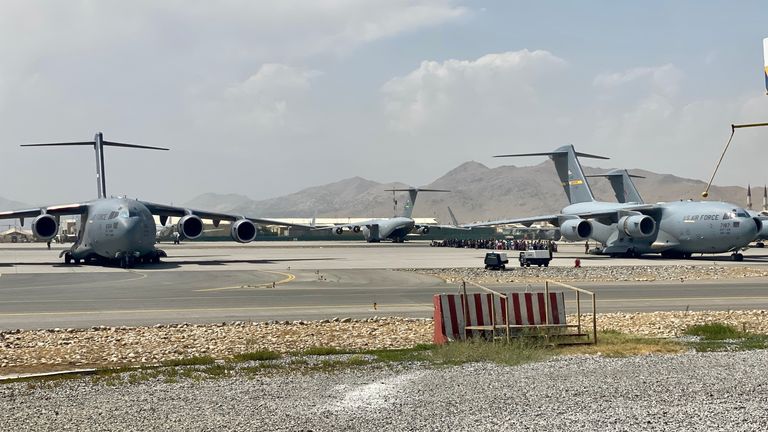
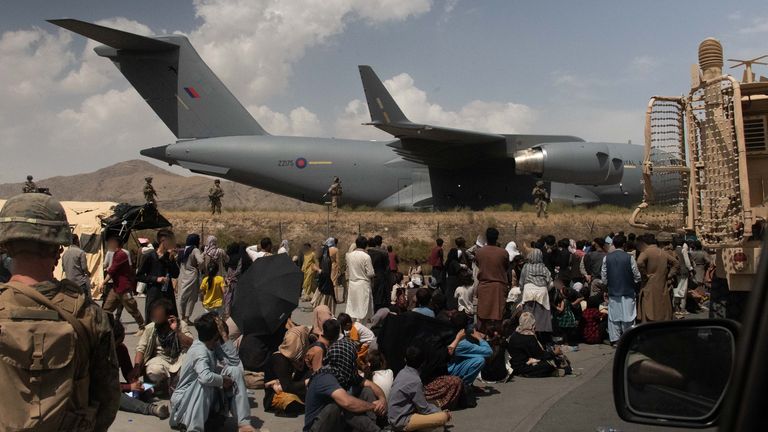
All the time we are shuffled to the side as convoys of people carriers, led by armoured cars, depart the camp gates, turn right, and head towards the airport, winding their way through crowds of would-be evacuees and hundreds of soldiers.
The people stare in envy.
Those cars are full of the people who have been designated fit to fly.
The convoys are the reason for the chaos, the despair and the deaths that have engulfed this tiny part of Kabul.
Nobody but the people who are on board know what the process is like.
So we asked to see the journey.
The people have been sleeping rough for days. When their number is called they stand, brush away the dirt and pick up a single bag – that is all they are allowed.
They are loaded up and begin, arguably, the most important drive they will ever take.
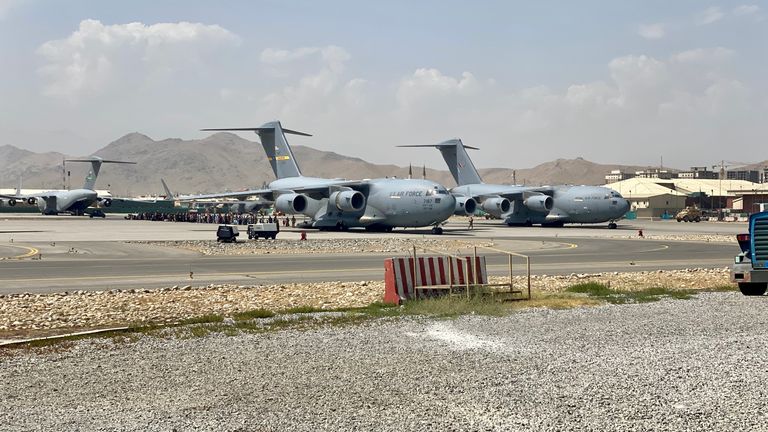
British troops are in a race against time to evacuate
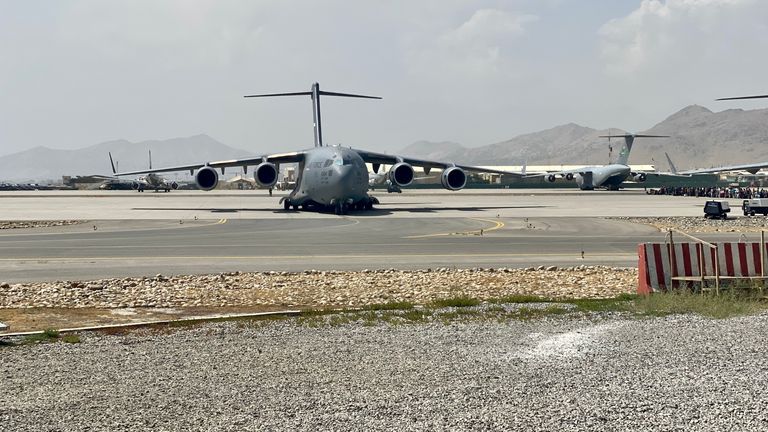
They pass through the heavily-guarded gates of the compound, where their status has been checked and confirmed, back into the territory of the Taliban and the wilderness of the thousands waiting for news.
To the right there’s a sewage canal where the Americans are in charge, a holding pen for people who might have the right paperwork.
This isn’t the hopeless line, it’s the hopeful zone, but it’s utterly awful.
The convoy moves through the soldiers of multiple countries looking for people with a right to enter – and then beyond – away from the queues.
We passed those who have been successful but are still waiting for a flight, temporarily living in what looked like refugee camps.
Suddenly it’s left behind.
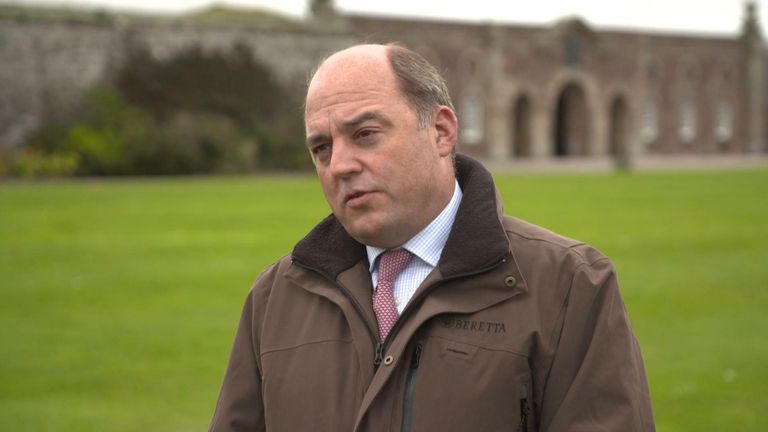
Evacuation ‘down to hours, not weeks’
Inside the wire we watched as the Royal Air Force started processing evacuees before boarding, with airport-style bag checks and security.
All the UK forces are trying to make it feel like an ordinary flight, conscious how much trauma every single person has endured.
Squadron leader Di Bird, in charge of all movements, is a tough, no-nonsense, commander.
Meeting her for just a few minutes, it was clear to me that she would have zero tolerance for nonsense.
Tension over deadline extension in Kabul
She was checking that the men and women in her command were following explicit orders.
The order was to not wear body armour, to greet the evacuees cordially and to process them quickly.
Behind her tough forces exterior, her sentiment was warm and she was kind to the evacuees.
“This isn’t about getting masses of people, herding them together and getting on to planes – everything is about making sure we remember these our are friends, these are people that have worked with us for many years and we treat them that way,” she told me.
“So it’s about being dressed like this as much as possible [without body armour], it’s about showing them that we’re not scared, it’s about making sure that children are fed, that babies are looked after, that anything we do to reduce their stress levels and show them that they’re safe is at the heart of everything we do here.”
Will Taliban in power lead to terrorism?
Amongst the evacuees I met five-year-old twins Asna and Sana in their party dresses. They were with their mum and dad and younger brother – the first twins spotted by the RAF in this airlift.
This is the start of their new life, although everything is clearly very strange, especially being checked with a handheld metal detector while they spun around.
Their father Nooragha Hashimi was a UK military translator in Helmand, working with the Royal Engineers.
This flight will save his and his family’s life for certain, but getting to this point had been terrifying.
I asked him if he thought he was at risk: “Yes – they [the Taliban] were gonna kill me.
“It was like everybody was scared [about] what they’re going to do, and the first time they’re saying we’re gonna do nothing [to] anybody, but nobody knows if it will be the same as 1996.”
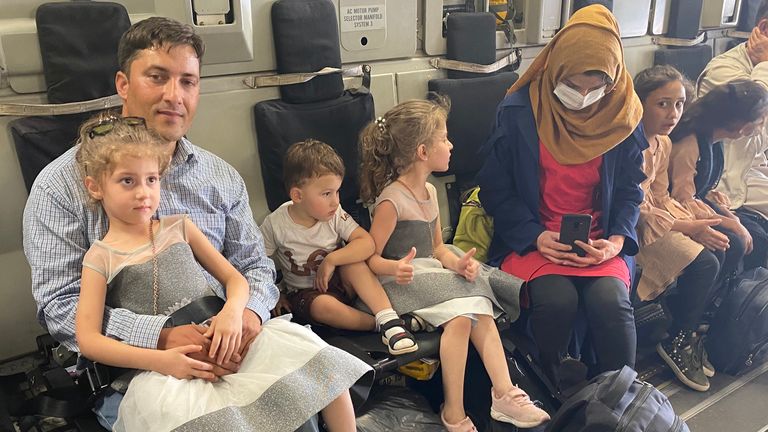
Nooragha Hashimi was a UK military translator in Helmand, working with the Royal Engineers.
The runway and apron are now full flow, this evacuation effort has to be because even though thousands have been moved, more need to be processed.
Behind the enormous transporter planes, rows of people wait to board, buffeted by the backwash of jet engines and propellers.
Lines of people are brought through and positioned, awaiting instructions from the loaders.
This is a huge operation but it’s still probably not enough – there simply may not be enough time.
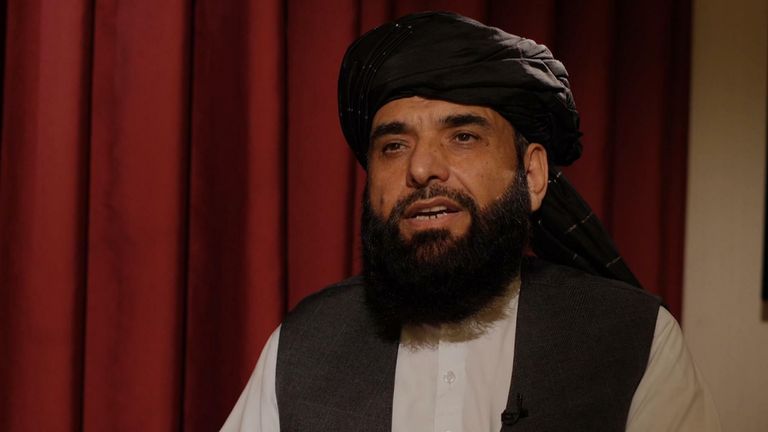
‘Consequences’ if US delays withdrawal
We watched on as the latest British flight boarded, the passengers, including the twins, were guided up the loading ramps.
They were seated along the sides before being directed into rows and secured for the flight using cargo straps – this is only the second time in the RAF’s history they’ve had to do this. The last time was in South Sudan.
As we waved goodbye to Asna, Sana and their family on board, their dad told me they had no plans yet, other than to move to southern England where they believe the weather is better.
After what has happened to their lives in a week, just worrying about the weather has to feel great.
World
More than 800,000 young children seeing social media content ‘designed to hook adults’, figures show


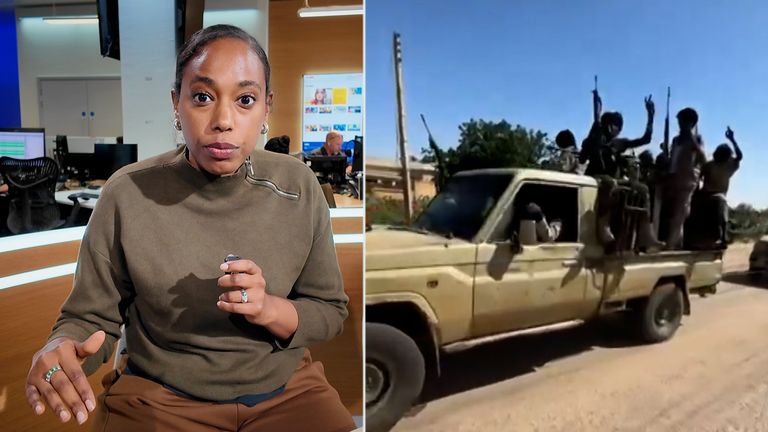
Sudan’s paramilitary Rapid Support Forces says it has captured Babanusa, a transport junction in the south of the country, just a month after the fall of Al Fashir to the same group.
The RSF said in a statement the seizure of the city in West Kordofan state came as it repelled “a surprise attack” by the Sudanese army in what it called “a clear violation of the humanitarian truce”.
The paramilitary group added it had “liberated” the city in the state, which has become the latest frontline in the war in Sudan.
Sky’s Yousra Elbagir explains the unfolding humanitarian crisis
It comes just over a month after the Sudanese Armed Forces (SAF) withdrew from military positions in the heart of Al Fashir, the capital of North Darfur, and the symbolic site was captured by the RSF with no resistance.
The RSF claimed at the time it had taken over the city and completed its military control of the Darfur region, where the administration of former US president Joe Biden has accused the group of committing genocide.
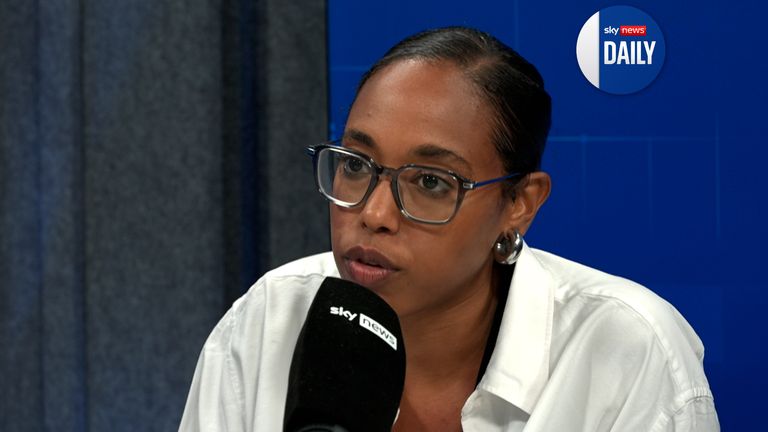
Sky’s Africa correspondent Yousra Elbagir on why evidence suggests there is a genocide in Sudan.
The war between the Sudanese army and the RSF – who were once allies – started in Khartoum in April 2023 but has spread across the country.
About 12 million people are believed to have been displaced and at least 40,000 killed in the civil war, according to the World Health Organization (WHO) – but aid groups say the true death toll could be far greater.
Tom Fletcher, the UN’s under-secretary-general for humanitarian affairs, recently told Sky’s The World With Yalda Hakim the situation was “horrifying”.
“It’s utterly grim right now – it’s the epicentre of suffering in the world,” he said of Sudan.
Read more:
Tens of thousands killed in two days in Sudan city
Sudan’s war: Is it a genocide?
The United States, the United Arab Emirates, Egypt and Saudi Arabia – known as the Quad – earlier in November proposed a plan for a three-month truce followed by peace talks.
The RSF responded by saying it had accepted the plan, but soon after attacked army territory with a barrage of drone strikes.
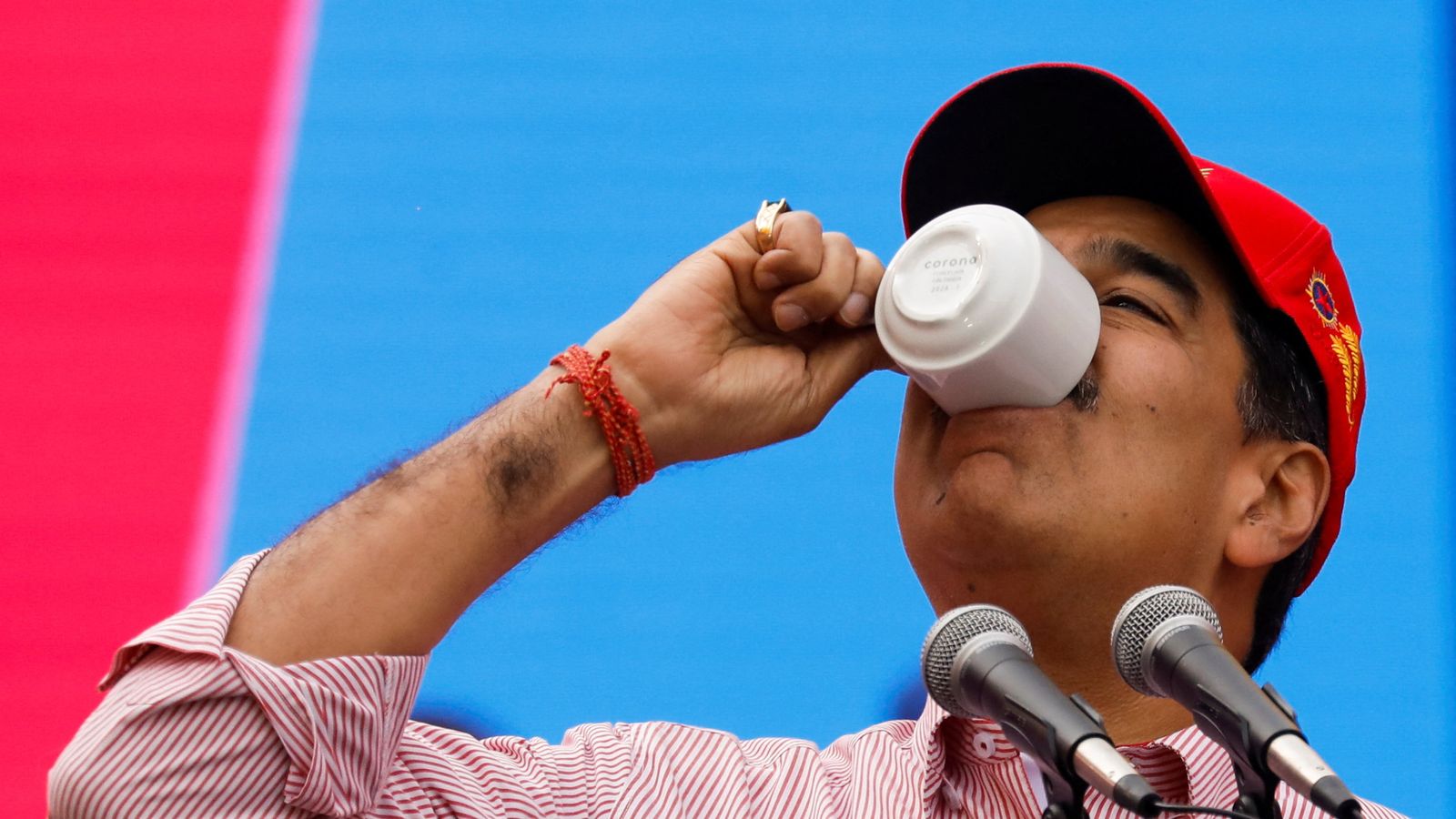
Nicolas Maduro has said Venezuelans are ready to defend their country as the US considers a land attack.
The president held a rally in Caracas amid heightened tensions with Donald Trump’s administration, which has been targeting what it says are boats carrying drug smugglers.
Mr Trump met his national security team on Monday evening, having warned last week that land strikes would start “very soon”.
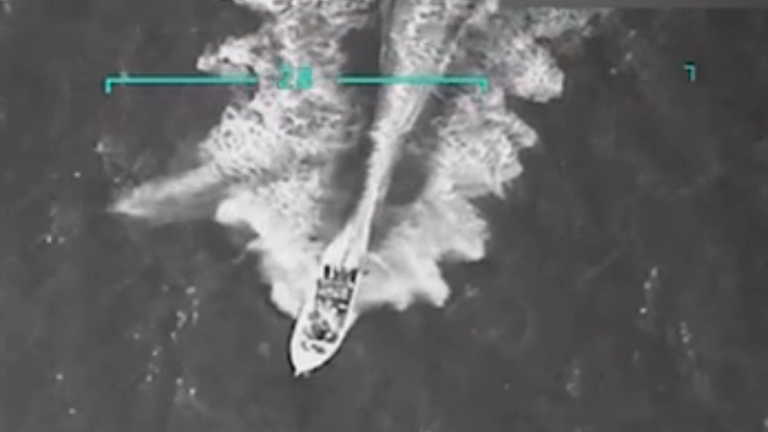
An image of an alleged drug boat being targeted by the US military. Pic: Truth Social
It’s not been confirmed what was discussed at the meeting, but White House press secretary Karoline Leavitt told reporters: “There’s many options at the president’s disposal that are on the table – and I’ll let him speak on those.”
US forces have carried out at least 21 strikes on boats it claims were carrying narcotics to its shores over the last few months, and the White House has accused Mr Maduro of being involved in the drugs trade – a claim he denies.

‘The president has a right to take them out’
‘Psychological terrorism’
Mr Maduro – widely considered a dictator by the West – said on Monday that Venezuelans are ready “to defend [the country] and lead it to the path of peace”.
“We have lived through 22 weeks of aggression that can only be described as psychological terrorism,” he said.
Venezuela has said the boat attacks, which have killed more than 80 people, amount to murder – and that Mr Trump’s true motivation is to oust Mr Maduro and access its oil.
Concerns have been raised over the legality of the US attacks, which the Pentagon has sought to justify by designating the gangs as foreign terror organisations.
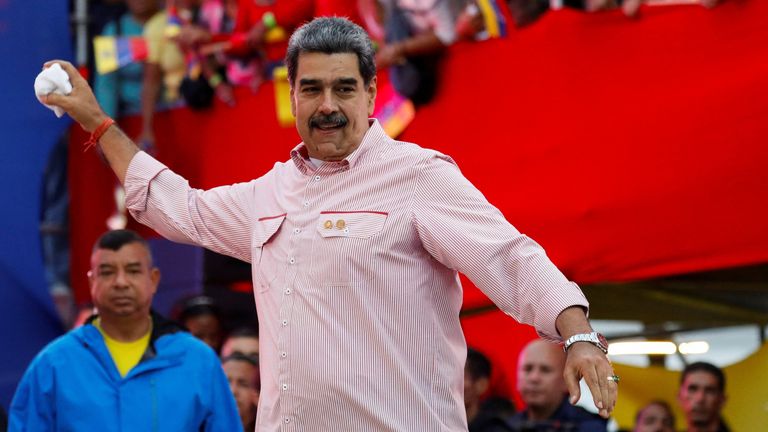
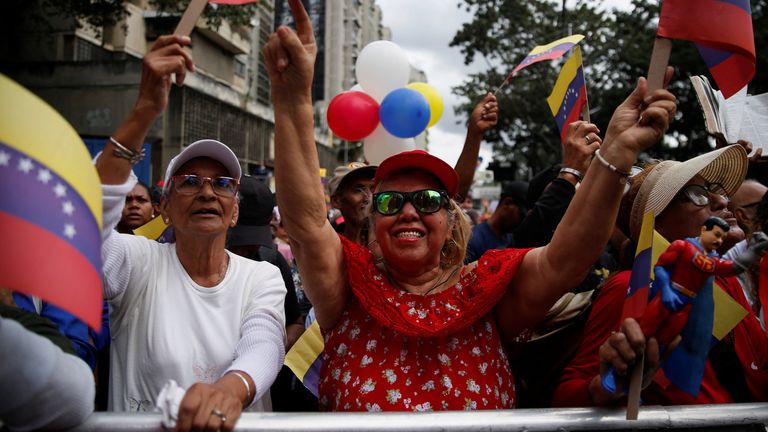
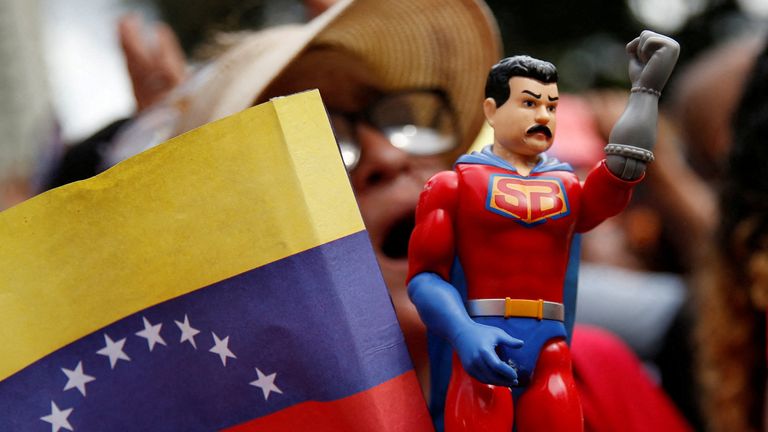
Maduro was championed by supporters as he spoke on Monday. Pics: Reuters
Controversy over US strikes
Tensions remain high over America’s large deployment in the Caribbean Sea and eastern Pacific, which includes its flagship aircraft carrier and thousands of troops.
The US has released videos of boats being blown up but has not provided evidence – such as photos of drugs – to support the smuggling claims.
Controversy also surrounds the first incident, on 2 September, in which 11 people were killed – with a follow-up strike targeting the boat after the first attack left two survivors in the water.
US media reported defence secretary Pete Hegseth gave an order that everyone on board should be killed.
However, there are concerns about the legality of the second strike if the survivors posed no threat.
Mr Hegseth dismissed the reporting as “fake news” and insisted all actions in the region are compliant with US and international law.
“Every trafficker we kill is affiliated with a Designated Terrorist Organization,” he said on X.

Is US about to go to war with Venezuela?
Mr Trump said on Sunday he would not have wanted a second strike and that Mr Hegseth had denied giving such an order.
Ms Leavitt confirmed on Monday that the boat had been hit by a second strike – but denied Mr Hegseth gave the order for the follow-up.
Instead, she said he had authorised US navy vice admiral Frank Bradley to attack, and the admiral acted “well within his authority and the law, directing the engagement to ensure the boat was destroyed and the threat to the US was eliminated”.
Read more from Sky News:
Hong Kong fire: 13 arrested as death toll hits 151
More than 1,100 confirmed dead in Asia floods
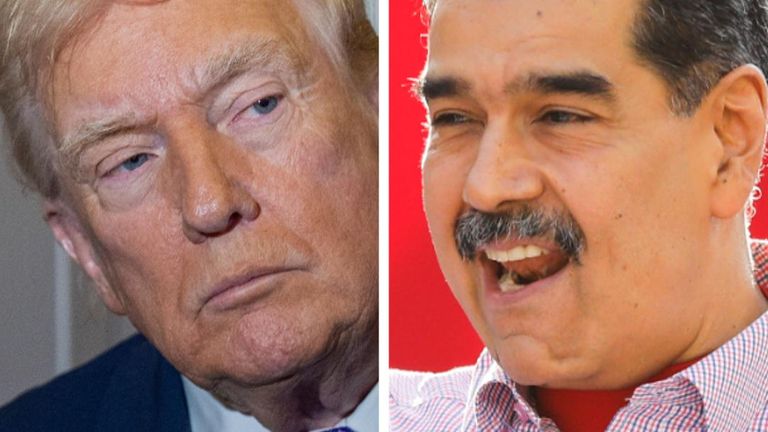
Trump: Maduro call neither ‘went well or badly’
As the US weighs its next steps, Mr Trump said on Sunday he had spoken to Mr Maduro by phone and that the conversation went neither “well or badly”.
In recent days, he also stated that Venezuela’s airspace should be considered closed – with the South American nation calling it a “colonial threat” and “illegal, and unjustified aggression”.
-
 Sports2 years ago
Story injured on diving stop, exits Red Sox game
-
 Sports3 years ago
‘Storybook stuff’: Inside the night Bryce Harper sent the Phillies to the World Series
-
 Sports2 years ago
Game 1 of WS least-watched in recorded history
-
 Sports3 years ago
Button battles heat exhaustion in NASCAR debut
-
 Sports3 years ago
MLB Rank 2023: Ranking baseball’s top 100 players
-
Sports4 years ago
Team Europe easily wins 4th straight Laver Cup
-
 Environment3 years ago
Japan and South Korea have a lot at stake in a free and open South China Sea
-
 Environment1 year ago
Here are the best electric bikes you can buy at every price level in October 2024