
PM buoyed by relaxation of COVID travel rules ahead of White House meeting

US President Joe Biden will welcome Boris Johnson to the White House later.
The prime minister will travel from the UN General Assembly in New York to Washington for the Oval Office meeting which would, in all likelihood, have happened well before now had it not been for the pandemic.
It has been just three months since the Prime Minister and the President last met at the G7 in Cornwall. But what a long tricky summer it has been since then.
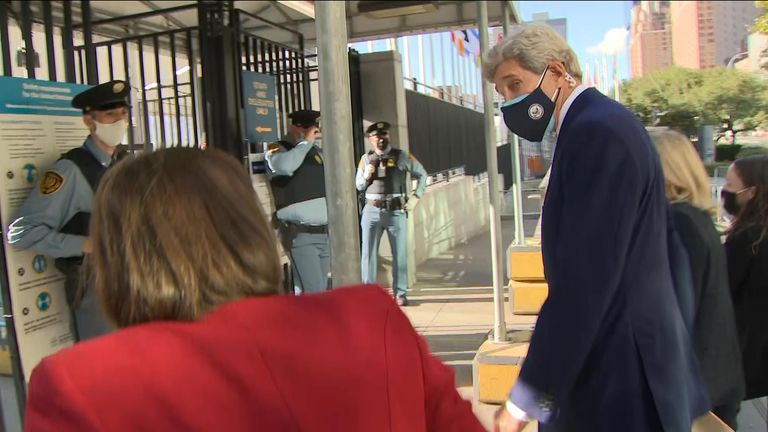
Kerry ‘confident’ of $100bn climate target
Trans-Atlantic relationships have been strained. The worth of NATO has been questioned by the chaotic US withdrawal from Afghanistan.
The pandemic endures, with global vaccination efforts faltering. And November’s high stakes Climate Change summit in Glasgow is ever closer with the risk of it falling short of the pledges made.
The prime minister will arrive in the West Wing of the White House with two unexpected boosts.
The news on Monday that the US will, in November, scrap the COVID-related travel ban for EU and UK travellers was as surprising as it was welcome.
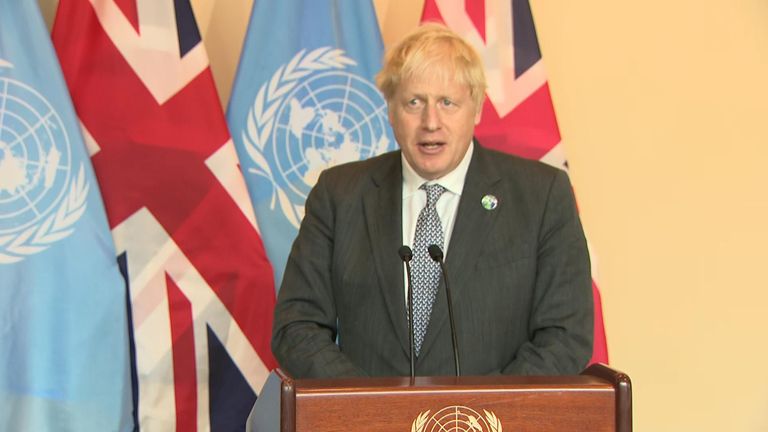
PM: Rich countries must ‘step-up’
And the hints by President Biden’s climate envoy to Sky News that America will commit to funds for developing countries, as called for by Mr Johnson, is a positive move.
“It will make a huge difference and I think it will send a massively powerful signal to the world that we in the industrialised west really do take it seriously,” Mr Johnson said.
With Mr Johnson and Mr Biden both in New York, their meeting could easily have been there too.
But holding it at the White House, in the Oval Office, carries much more weight.
The so-called special relationship looks that much more convincingly special with the Oval Office backdrop.

The last time a UK Prime Minister was hosted at the White House was in 2017
The optics of these monuments through the years are of course important, but it is the results that matter.
On climate, Mr Johnson may get something to take with him to the Glasgow conference he is hosting.
But on that all-important post Brexit US/UK trade deal, do not hold your breath.
Before the Oval Office meeting, there will be other key diplomatic moments to watch through the day too.
President Biden has numerous strained relationships to mend following the Afghanistan withdrawal and he is expected to hold talks with France’s President Macron amid the most extraordinary spat over the supply of nuclear powered submarines to Australia.

Traditional financial markets are moving rapidly onchain as the US Securities and Exchange Commission chair doubled down on the idea of an “innovation exemption” to accelerate tokenization.
“U.S. financial markets are poised to move on-chain,” wrote Paul Atkins, chair of the SEC, in a Friday X post, adding that the agency is “embracing new technologies to enable this onchain future.”
His comments come shortly after the SEC issued a “no action” letter to a subsidiary of the Depository Trust and Clearing Corporation (DTCC), enabling it to offer a new securities market tokenization service.
The DTCC plans to tokenize assets, including the Russell 1000 index, exchange-traded funds tracking major indexes and US Treasury bills and bonds, which Atkins called an “important step towards onchain capital markets.”
“On-chain markets will bring greater predictability, transparency, and efficiency for investors,” he said.
However, the green light for the DTCC’s pilot is only the beginning, as the SEC will consider an innovation exemption to enable builders to start “transitioning our markets onchain,” without being burdened by “cumbersome regulatory requirements,” added Atkins.

Atkins pledged to encourage innovation as the industry moves toward onchain settlement, which would mean settling transactions on a blockchain ledger, removing intermediaries, enabling 24/7 trading and faster transaction finality.
Related: Crypto nears its ‘Netscape moment’ as industry approaches inflection point
Cointelegraph has contacted the SEC for comment on the details and timeline of an innovation exemption for tokenization.
Atkins first proposed an innovation exemption for tokenization during his remarks at the Crypto Task Force Roundtable on DeFi on June 9.
The SEC’s no-action letter means that the agency won’t take enforcement action if the DTCC’s product operates as described. The DTCC provides clearing, settlements and trading services as one of the most important infrastructure providers for US securities.
Asset tokenization involves minting tangible assets on the blockchain ledger, offering more investor access through fractionalized shares and 24/7 trading opportunities.
Related: Bitcoin treasuries stall in Q4, but largest holders keep stacking sats
DTCC pilot and RWA builders push more TradFi onchain
Crypto analysts have praised the SEC’s move to allow the DTCC’s new market tokenization service, which will award tokenized assets the same entitlements and investor protection mechanisms as traditional assets.
“Not sure people fully appreciate how quickly financial markets are heading towards full tokenization… Moving even faster than I expected,” wrote ETF analyst Nate Geraci, in a Friday X post.
Over the past few months, the SEC issued two no-action letters: one for a Solana-based decentralized physical infrastructure network (DePIN) project, and a second no-action letter in September that allowed investment advisers to use state trust companies as crypto custodians.
Meanwhile, crypto projects continue to raise funds to build the infrastructure necessary for tokenized onchain markets.
On Tuesday, asset tokenization network Real Finance closed a $29 million private funding round to build an infrastructure layer for real-world assets (RWAs) that can boost institutional participation.
Magazine: SEC’s U-turn on crypto leaves key questions unanswered

Crypto exchange Binance has added new features to its application programming interface (API), indicating that the platform is preparing to introduce stock trading capabilities.
Binance’s changelog notes that on Thursday, the exchange introduced three new API endpoints, one of which — with a URL including stock/contract — allows users to “sign [a] TradFi-Perps agreement contract.” The two other endpoints introduced on the same day allow users to query “trading session schedules for a one-week period” or “current trading session information.”
Together, this suggests that Binance is planning to introduce perpetual futures trading on its platform. The existing trading schedule endpoints also suggest trading will likely occur in sessions, as in traditional finance, rather than following crypto’s 24/7 nature.
This follows Binance’s launch of tokenized stocks in 2021, a relatively short-lived initiative. Following their announcement in late April, Binance halted tokenized stock sales just months later in mid-July 2021 after attracting the attention of regulators.
Binance acknowledged Cointelegraph’s request for comment, but had not responded by publication.

Related: Ondo wins Liechtenstein approval to offer tokenized stocks in Europe
Tokenized stocks are all the rage
Binance’s initiative follows a series of similar efforts by players in both traditional and crypto finance, taking stock tokenization out of the fringes of finance. Friday reports indicate that top US-based crypto exchange Coinbase is days away from unveiling its push into tokenized stocks and prediction markets.
However, not everyone is enthusiastic about how stock tokenization is being rolled out. Market maker Citadel Securities caused an uproar earlier this month when it recommended that the US Securities and Exchange Commission tighten regulations on tokenized stock trading on decentralized finance (DeFi) platforms.
According to the market maker, DeFi developers, smart-contract coders and self-custody wallet providers should not be given “broad exemptive relief” for offering trading of tokenized US equities. Citadel argued that DeFi platforms likely fall under the definitions of an “exchange” or “broker-dealer” and should be regulated under securities law.
It also claimed that allowing those platforms to operate free from regulations “would create two separate regulatory regimes for the trading of the same security.” The World Federation of Exchanges (WFE) also argued in late November that the SEC shouldn’t grant broad regulatory relief to companies launching tokenized stock offerings.
The WFE said tokenization “is likely a natural evolution in capital markets” and that it was “pro-innovation.” Still, the organization argued that it “must be done in a responsible way that does not put investors or market integrity at risk.”
The comments followed tokenized stocks making their way not only to centralized crypto exchanges, but also to the DeFi ecosystem. At the end of June, more than 60 tokenized stocks had launched on Solana-based DeFi platforms as well as on crypto exchanges Kraken and Bybit.
Related: Robinhood tokenizes nearly 500 US stocks, ETFs on Arbitrum for EU users
Not all of traditional finance sees an issue
Other traditional finance players appeared to follow the “if you can’t beat them, join them” approach to the issue.
Last month, Nasdaq’s head of digital assets strategy, Matt Savarese, said the stock exchange is making SEC approval of its proposal to offer tokenized versions of stocks listed on the exchange a top priority.
The race intensified after the SEC was reported to be developing a plan to allow blockchain-registered versions of stocks to trade on cryptocurrency exchanges by the end of September.
SEC Chair Paul Atkins recently described tokenization as an “innovation” the agency should seek to advance, not restrict. The SEC issued a “no-action” letter Thursday to a subsidiary of the Depository Trust and Clearing Corporation that specializes in tokenizing securities, indicating that the regulator intends to allow the company to offer a new securities market tokenization service.
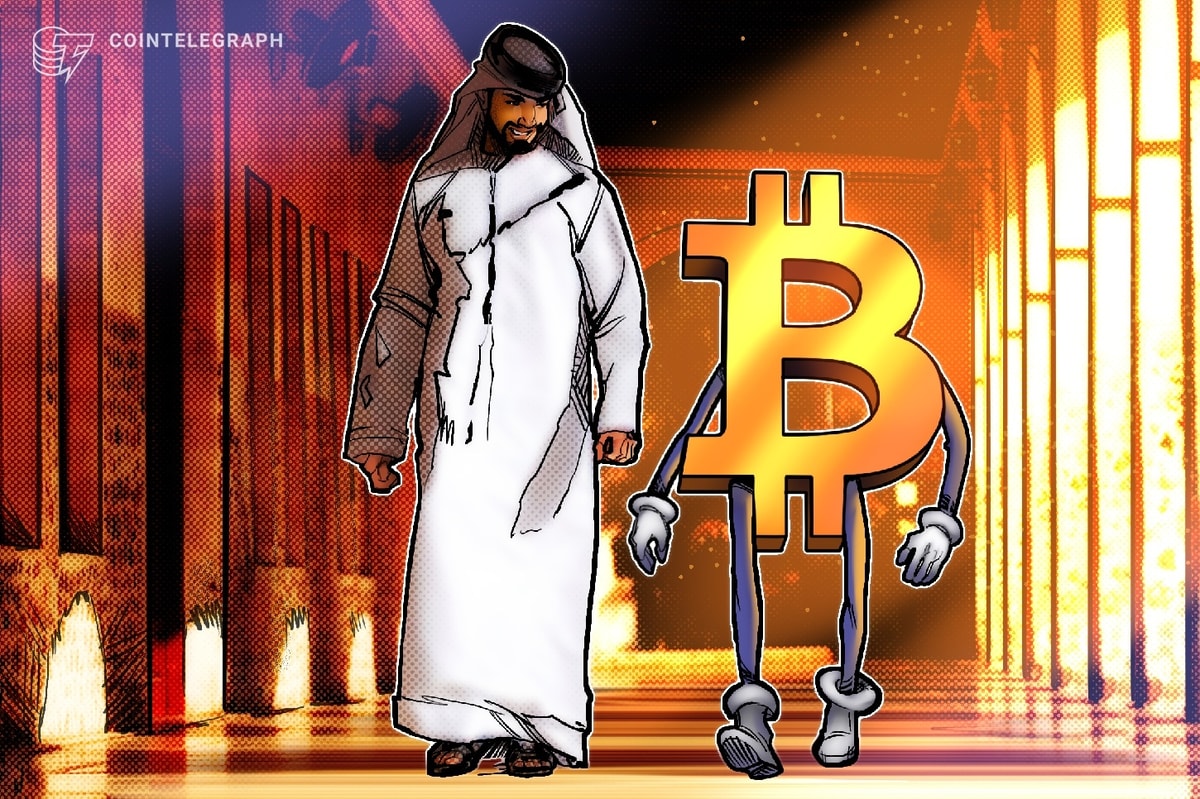
The United Arab Emirates is not choosing between Bitcoin and broader crypto. Instead, it is deliberately building both, in different cities and for different stages of adoption.
Abu Dhabi, the capital of the UAE, has positioned itself as a hub for Bitcoin (BTC)-focused institutional infrastructure, emphasizing custody, over-the-counter (OTC) liquidity, mining and regulated capital markets. Dubai, by contrast, has built a broader crypto economy that spans payments, stablecoins, Web3 apps, gaming, tokenization and consumer-facing products.
While this shows a distinction, industry participants noted that it reflects a layered strategy and not fragmentation. “The two approaches are complementary,” said Gregg Davis, producer of Bitcoin MENA, the largest Bitcoin-focused event in the UAE.
“A broad digital-asset ecosystem naturally directs attention toward the most secure and time-tested asset — Bitcoin. Together, they create a diverse and dynamic market across the UAE,” Davis told Cointelegraph.
Dubai’s ecosystem maximizes participation and real-world usage, according to Matthias Mende, co-founder of the Dubai Blockchain Center and the founder of the Web3 social verification platform Bonuz.
“In simple terms, Abu Dhabi is building ‘crypto Wall Street,’ while Dubai is building the place where people actually use this technology every day,” Mende said.

Abu Dhabi’s Bitcoin-first institutional thesis
Davis argued that Abu Dhabi’s strategy is rooted in a clear distinction between Bitcoin and the broader crypto landscape.
“Abu Dhabi has done the work to understand that Bitcoin stands apart from the broader digital-asset landscape,” Davis said. “Much of what falls under ‘Web3’ remains speculative or built around problems that may not need solving.”
According to Davis, the intent to position Abu Dhabi as a center for institutional Bitcoin is already visible.
“Major entities in Abu Dhabi gaining exposure to Bitcoin is a strong signal of long-term conviction,” he told Cointelegraph. He added that clearer regulatory pathways and public-sector support have made the emirate attractive for Bitcoin-native firms.
Recent developments back up this institutional Bitcoin thesis. Abu Dhabi has emerged as a focal point for large-scale, regulated Bitcoin activity, underscored by the launch of the Bitcoin MENA 2025 event, which brought institutional investors, miners and infrastructure providers to the emirate to discuss custody, mining and treasury strategies.
Global companies, such as Galaxy Digital, have expanded into Abu Dhabi under the ADGM framework, citing regulatory clarity and institutional demand. Meanwhile, crypto exchange Binance secured full regulatory approvals covering trading, clearing and custody.
Dubai builds the crypto economy layer
While Abu Dhabi focuses on institutional rails, Dubai has taken a broader approach, designing a regulatory environment intended to support entire industries built on top of digital assets.
“Dubai is trying to build the full crypto economy around that,” Mende told Cointelegraph. “Consumer apps, brands, payments, gaming, creators and tokenization.”
He told Cointelegraph that the convergence of stablecoins, tokenized real-world assets (RWAs) and consumer-facing apps created a new economic layer that goes beyond trading.
“Stablecoins will be the visible part — simple ‘scan, tap, pay’ flows — while RWAs bring serious institutional capital onchain,” Mende said, adding that blockchain-based digital IDs, non-fungible tokens (NFTs), vouchers and tickets make the whole system human-centric and “useful for daily life.”
Dubai’s regulatory clarity has been a major enabler of the crypto economy vision. “The biggest enabler is clarity,” Mende said. “Founders know which activities are regulated, what license they need and which rulebook they fall under, so they can design products and token models with a clear path.”
That clarity, however, does not eliminate all friction. Mende told Cointelegraph that challenges remain at the interface with traditional finance, particularly banking and fiat on- and off-ramps, and in more experimental areas such as decentralized finance and DAOs, where frameworks are still evolving.
Related: State Street, Galaxy and Ondo join tokenized cash race with 24/7 sweep fund
Stablecoins emerge as the first mass-use rail
As Dubai’s crypto economy develops, multiple industry leaders point to payments and stablecoins as the first area of durable, real-world adoption.
“Payments and stablecoin infrastructure will lead because they solve a universal and urgent problem: cross-border settlement that is slow, expensive and fragmented,” Patrick Ngan, the chief investment officer at Zeta Network Group, told Cointelegraph.
According to Ngan, regulatory clarity provides financial institutions with the confidence to integrate digital settlement rails directly into commerce. “Once those rails are in place, volume follows,” he said. “That is where the first durable, real-world adoption will appear.”
SingularityDAO founder Marcello Mari echoed the sentiment. He said that stablecoins are already more embedded in everyday activity than many outside the region realize.
“In Dubai, USDT and USDC are actually used more than you think — for rent, remittances, real estate and service payments,” Mari said. “Gaming and Web3 creators will follow, but stablecoins are the first bridge to real-world utility.”
Apart from crypto-native companies, stablecoins have caught the attention of mainstream companies in the UAE. On Thursday, state-owned telecom giant e& announced that it’s preparing to test a dirham-backed stablecoin for bill payments.
However, both Ngan and Mari said that while regulatory clarity exists, operational timelines and banking relationships remain the biggest bottlenecks. “The rules are clear, but the process requires patience and strong operational discipline,” Ngan said.
Magazine: Bitcoin $200K soon or 2029? Scott Bessent hangs at Bitcoin bar: Hodler’s Digest
-
 Sports2 years ago
Story injured on diving stop, exits Red Sox game
-
 Sports3 years ago
‘Storybook stuff’: Inside the night Bryce Harper sent the Phillies to the World Series
-
 Sports2 years ago
Game 1 of WS least-watched in recorded history
-
 Sports3 years ago
Button battles heat exhaustion in NASCAR debut
-
 Sports3 years ago
MLB Rank 2023: Ranking baseball’s top 100 players
-
Sports4 years ago
Team Europe easily wins 4th straight Laver Cup
-
 Environment3 years ago
Japan and South Korea have a lot at stake in a free and open South China Sea
-
 Environment1 year ago
Here are the best electric bikes you can buy at every price level in October 2024