
Accelerating Transformation to All-Electric Buildings in NY

By Samantha Wilt, Senior Policy Analyst, Climate & Clean Energy Program
The landmark Climate Leadership and Community Protection Act’s (CLCPA) ambitious goal to reduce greenhouse gas emissions 85% by 2050 will require a transformation of the power, transportation and building sectors. As highlighted in the New York State Energy Research and Development Authority’s (NYSERDA) recently released draft Carbon Neutral Building Roadmap, most of New York’s 6.2 million buildings will need to be carbon neutral, which will require that the water and space heating in these buildings (along with cooking and clothes drying), be provided by highly efficient electric appliances over the next 30 years. To put us on the right path, a recent analysis by Synapse Energy Economics demonstrates that New York should commit to a goal of electrifying 2.1-2.5 million households by 2030. The state must also focus on an equitable transition to efficient, electrified buildings and direct significant resources to provide improved housing in Disadvantaged Communities.

Indeed, New York has already launched several promising pilot initiatives geared at ramping up deployment of electrification technologies, especially for affordable housing which will need additional resources to undertake these capital intensive projects. Through its Low Carbon Pathways for Multifamily Buildings program, NYSERDA is making $7.8 million available for owners or managers of multifamily buildings to implement low carbon solutions as part of planned upgrades. This new incentive complements existing capital planning support and free resources, which together provide a step-by-step pathway to decarbonize buildings. NYSERDA is also partnering with New York State Homes and Community Renewal on their new Clean Energy Initiative with $7.5 million for a pilot initiative to create up to 600 energy-efficient, all-electric affordable housing units. In addition, NYSERDA is also partnering with New York City’s Housing Preservation Department (HPD) on a $24 million pilot to decarbonize affordable housing, which is expected to support upgrades in approximately 1,200 living units of affordable housing and benefit 3,000 low-to-moderate income residents.
Despite ambitious midcentury goals and innovative programming, New York’s current short-term plans for heat pump deployment fall short. The Public Service Commission’s (PSC) January 2020 Order Authorizing Utility Energy Efficiency And Building Electrification Portfolios Through 2025 sets a minimum goal of 3.6 TBtu of net site energy savings from heat pumps through 2025, with a budget of $454 million for utility incentives and market development (read more on the order here and here). Utilities have started to implement these programs, coordinating efforts to ensure that all customers in New York State have access to comparable program offerings and incentives for heat pumps.
However, the 2020-2025 target will put the state in a difficult position to achieve its ultimate goals by 2050. A low near-term goal necessitates a very steep ramp up in heat pump adoption after 2025 and could require more than 1.5 million households to replace existing, still functioning fossil fuel systems in the 2040s (fossil systems that will be installed in the next decade that may have to be scrapped before the end of their useful lives to meet the 2050 goal).
Based on the findings in the Synapse analysis, New York should adopt a 2030 goal of 2.1–2.5 million households for heat pump retrofits, and assure adequate resources, especially for Disadvantaged Communities and low income households, and including market and workforce development, also focused especially on Disadvantaged Communities, to achieve that goal. Adopting this ambitious target will put the state on a trajectory of achieving its nation-leading climate goals in the most equitable and efficient way possible.
Originally published by NRDC, Expert Blog.
Appreciate CleanTechnica’s originality? Consider becoming a CleanTechnica Member, Supporter, Technician, or Ambassador — or a patron on Patreon.


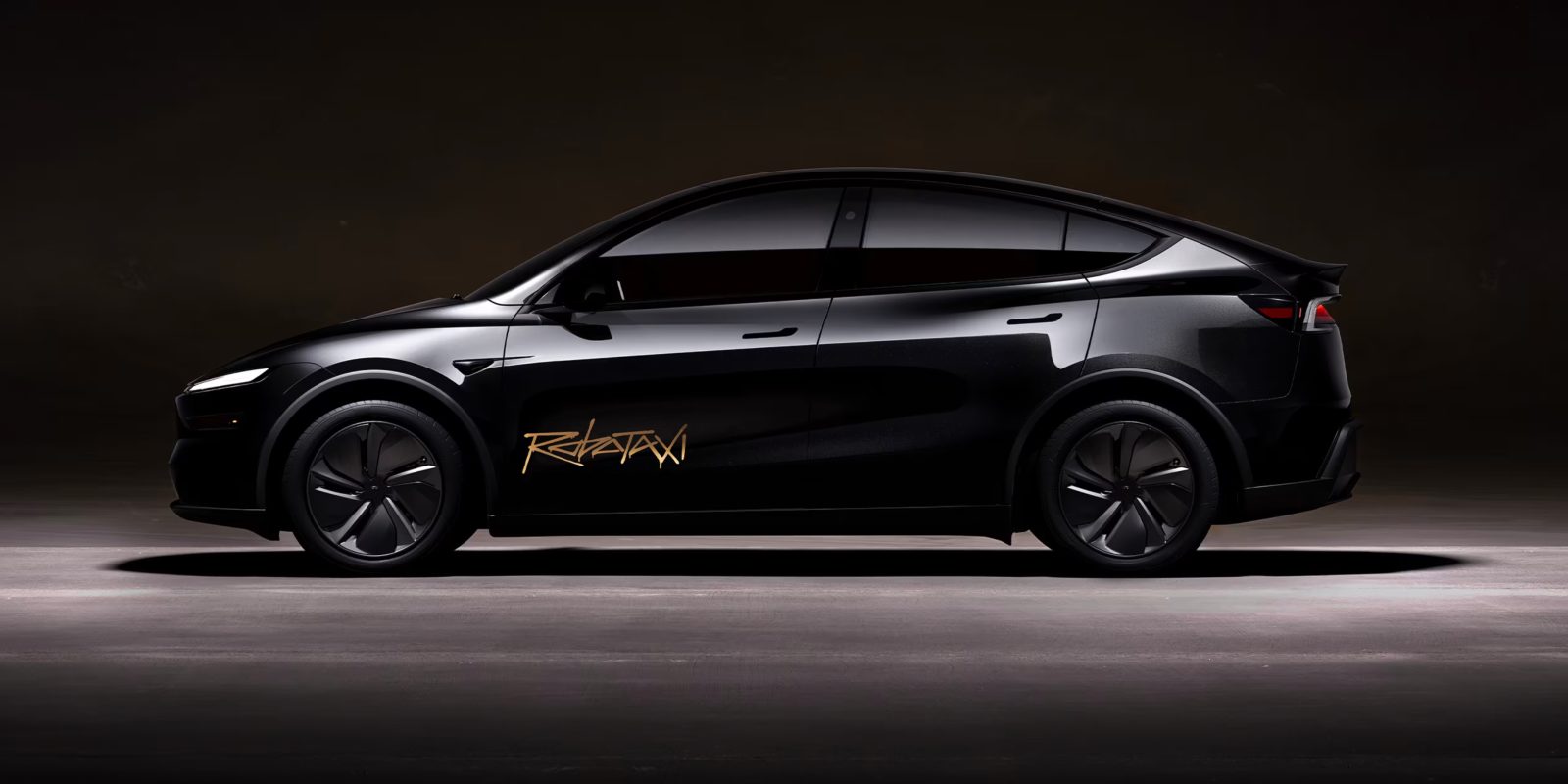
Tesla CEO Elon Musk said the company will remove “safety monitors” from the passenger seats of Tesla’s Robotaxi vehicles in “about three weeks,” which would mean we’d see completely driverless Teslas in the Austin area potentially by the end of the year – if that timeline sticks.
Tesla has been working on a system that would allow vehicles to drive themselves, which has been in “beta” release for over a decade now. It calls this system “Full Self-Driving,” despite the fact that the system does not currently drive itself.
That has not stopped Musk from consistently promising more and more of the system, despite its stagnating capabilities. Over the course of the last decade, Musk has consistently promised driverless vehicles within the coming year, with deadlines consistently passing by without achieving that goal.
One of those promises has been the creation of a driverless taxi network, which Tesla used to call “Tesla Network” and is now calling “Robotaxi.” The idea originally came with the promise that owners could use their cars to make money by running them as taxis, but that hasn’t panned out.
Tesla did roll out its own version of a taxi network, though, in Austin, in June of this year. While it’s done a few cool things, the cars each have a “safety monitor” in the passenger seat who can take control at any time, which means the cars aren’t truly “driverless” since there is an operator, they’ve just been moved to the passenger seat.
In the time since Robotaxi’s rollout, it’s made quite a few mistakes and had a high crash rate. But Tesla also delivered one fully unoccupied vehicle from the factory to a local buyer, which was a cool (and, as yet, still unique) stunt.
Throughout the year, Musk has claimed loudly that the system would improve rapidly, stating that by the end of the year Robotaxis would be available to half of the US population (they are not) and that Tesla’s fleet would grow by more than 10x by the end of the year (it has not).
But now we have another bold prediction from Musk, stating that the safety monitors will be out of a job by the end of the year.
During a videoconference at a hackathon event for xAI, one of Musk’s other companies (which he is trying to get Tesla shareholders to bail out), Musk was asked a question about the barriers to unsupervised full self-driving. Musk answered:
Unsupervised is pretty much solved at this point. There will be Tesla Robotaxis operating in Austin with no one in them, not even anyone in the passenger seat, in about three weeks. I think it’s pretty much a solved problem, we’re just going through validation right now.
The “three weeks” timeline is familiar to longtime Tesla followers. Over the years, Musk has often promised fixes or software updates in “two weeks,” and they often take longer than that.
Three weeks is a lot closer than the “next year” promise that we’ve heard so many times for full autonomy, but given its proximity to the oft-inaccurate two-week timeline, we’re not sure these vehicles will actually be ready in time for New Year’s Eve celebrations.
Nevertheless, it’s a closer timeline than Musk has usually given, so there may be truly driverless Teslas operating sometime soon™.
Also, reading the statement more closely, it sounds like they won’t necessarily remove safety operators from every vehicle, but some vehicles. This could be similar to the singular driverless vehicle delivery that Tesla did – a PR stunt, rather than a full rollout. We’ll have to wait and see.
Tesla’s main competitor in the robotaxi space is Waymo, which has been operating truly driverless vehicles for several years now. The company has also been operating autonomous, driverless vehicles in Austin since March of this year.
Musk went on to talk about future improvements to Tesla’s software and hardware in his answer.
The company is currently on hardware previously deemed HW4, though to cash in on the AI stock market bubble, it now refers to that system as AI4. He said that AI5 will be 10-40 times better than HW4 and go into volume production in 2027, with AI6 coming soon after.
Musk’s mention of future hardware improvements neglects one important aspect of these improvements, which is that for every hardware improvement Tesla puts into its fleet, the more vehicles it will have to upgrade later.
Tesla long promised that its vehicles had all the hardware for self-driving, which means it’s going to have to upgrade a lot of cars – and there are court cases around the world seeking to force the company to do so. Together, these lawsuits and other potential challenges could mean billions of dollars in liabilities for the company.
Musk then closed his statements by claiming that “our” goal is to “to understand the meaning of life and… propagate consciousness out to the stars,” which is not Tesla’s goal. Tesla’s actual goal is to accelerate the transition to sustainable energy. He may have been referring to xAI’s goal, but given the answer was about Tesla, perhaps he was confused (or perhaps he doesn’t care about Tesla anymore, and isn’t a good CEO for the company as a result…)
The 30% federal solar tax credit is ending this year. If you’ve ever considered going solar, now’s the time to act. To make sure you find a trusted, reliable solar installer near you that offers competitive pricing, check out EnergySage, a free service that makes it easy for you to go solar. It has hundreds of pre-vetted solar installers competing for your business, ensuring you get high-quality solutions and save 20-30% compared to going it alone. Plus, it’s free to use, and you won’t get sales calls until you select an installer and share your phone number with them.
Your personalized solar quotes are easy to compare online and you’ll get access to unbiased Energy Advisors to help you every step of the way. Get started here.


FTC: We use income earning auto affiliate links. More.

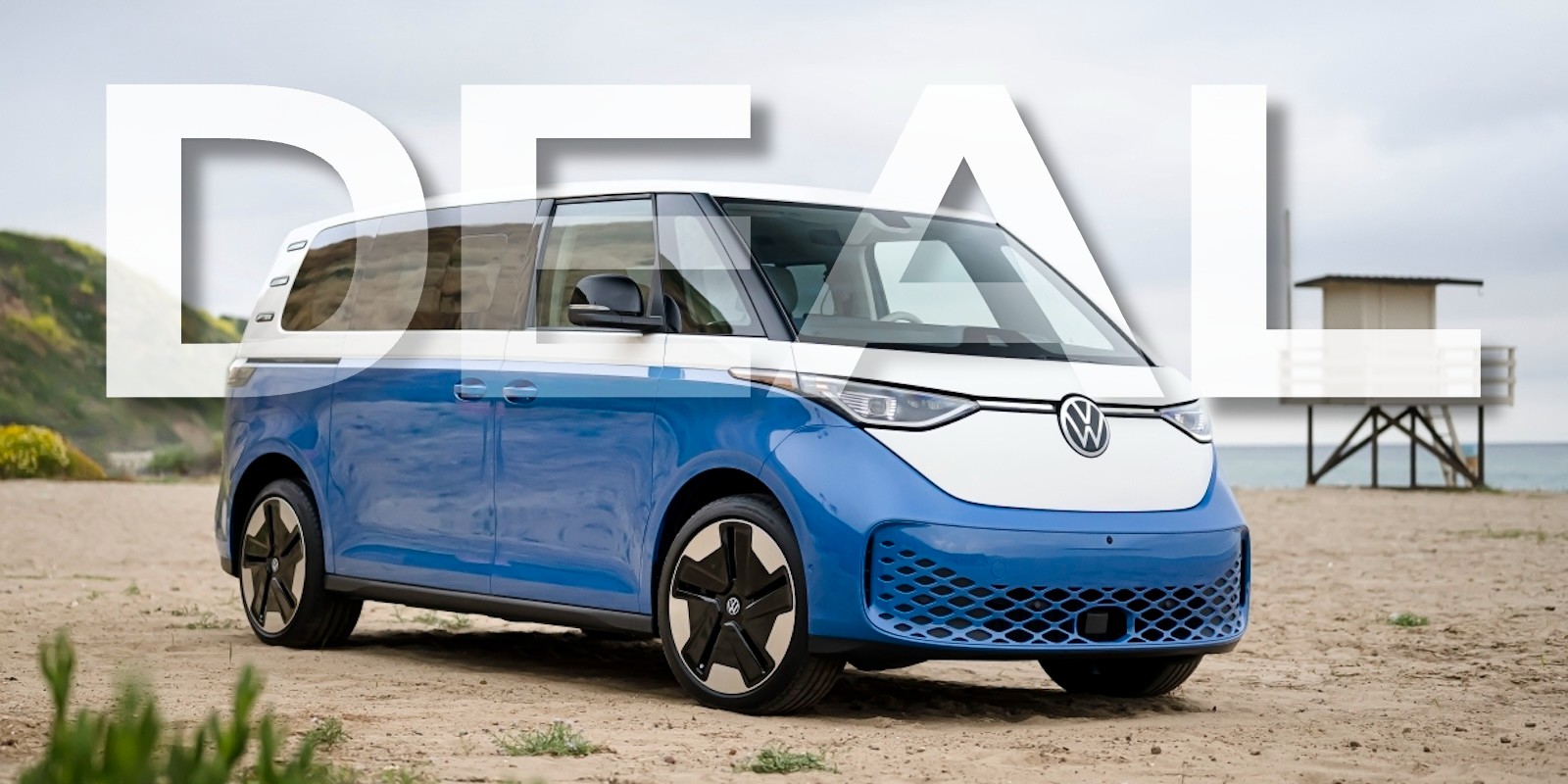
VW’s retro-tastic minivan hasn’t been the sales success the company might have wanted, and a lot of that has to do with the van’s sky high price tag. Now, VW is asking: will a $10,000 discount be enough to create some buzz for the ID.Buzz?
Volkswagen is offering $7,500 in Retail Customer Bonus cash this month – up from the $2,500 the company offered its Black Friday customers – that, along with an additional $2,500 unadvertised dealer cash incentive that CarsDirect is reporting absolutely, definitely exists, adds up to a stout $10,000 total discount on the all-electric VW ID.Buzz … and that’s before you start haggling with your dealer over the MSRP.
It’s a lot

As much as I like the the Volkswagen ID.Buzz, its starting MSRP around $61,545 (incl. destination) puts it at nearly twice what you’d probably expect a minivan to cost if the last time you shopped for one was at a Dodge store. Still, that hefty price tag is some $20,000 higher than the baseline Toyota Sienna hybrid or Honda Odyssey.
That 50% higher price is a lot to swallow even if you do buy into the nostalgia. Still, the ID.Buzz is capable enough, and with ~230 miles of range and 282 hp on offer from its battery/electric motor combo – plus Supercharger access – it’s at least able to keep up with the minivan competition.
So, while that $10,000 discount isn’t going to turn the ID.Buzz into the second coming of the affordable, family-hauling Caravan, it does bring VW’s electric people-mover a little closer to earth. In fact, with a $50K price tag, it’s right in line with the average transaction price of a new vehicles. So, if nothing else, that reduced price could finally gives electric minivan buyers something to buzz about (I tried so hard to work that in, you guys).
If you’ve been shopping for a family-hauler and dig the retro vibe over something like the (excellent) Kia EV9, click through the link below and set up a test drive at your local VW dealer.
SOURCE: CarsDirect; images via VW.

If you’re considering going solar, it’s always a good idea to get quotes from a few installers. To make sure you find a trusted, reliable solar installer near you that offers competitive pricing, check out EnergySage, a free service that makes it easy for you to go solar. It has hundreds of pre-vetted solar installers competing for your business, ensuring you get high-quality solutions and save 20-30% compared to going it alone. Plus, it’s free to use, and you won’t get sales calls until you select an installer and share your phone number with them.
Your personalized solar quotes are easy to compare online and you’ll get access to unbiased Energy Advisors to help you every step of the way. Get started here.
FTC: We use income earning auto affiliate links. More.


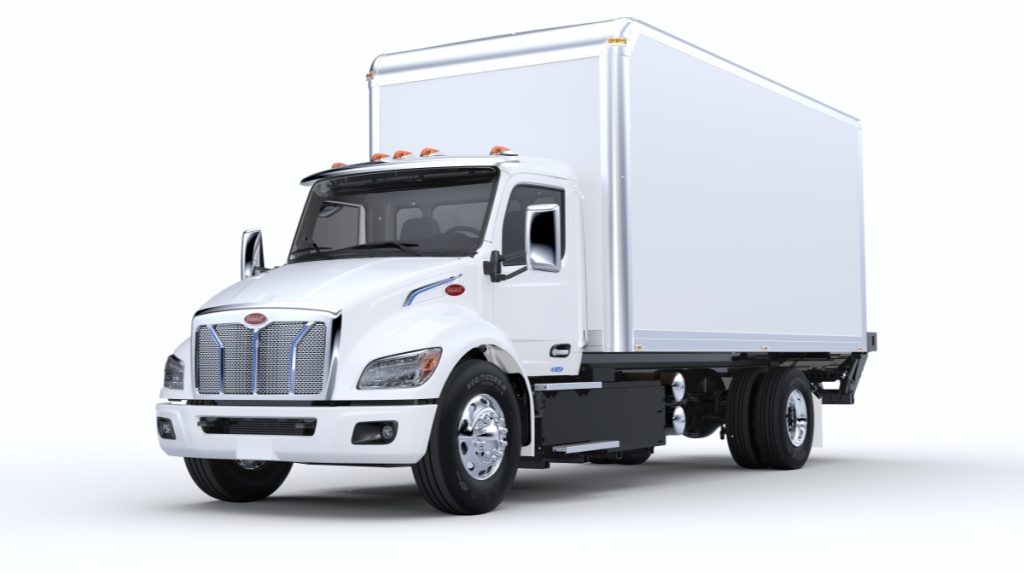
Peterbilt has jumped into the MD truck ring with the launch three new medium-duty electric trucks that deliver zero-emissions power, ultra-fast 350 kW charging, and proven, versatile platforms for delivery, utility service, and vocational upfitting.
The new Peterbilt 536EV, 537EV, and 548EV medium-duty trucks slot into the same versatile medium-duty segments the company’s fleets already know, but swap diesel power for latest PACCAR ePowertrain, with up to 605 hp and 1,850 lb-ft of torque available at 0 rpm. That big motor draws power from a variety of LFP battery packs and be fitted with ePTO options rated for either 25 kW (two-battery option) or 150 kW (three-battery option), making them suitable for that can be sized for daily delivery routes, urban utility work, and municipal fleets looking to cut both emissions and maintenance costs.
What’s more, the new Peterbilt’s flexible architecture allows for integration with existing PACCAR suspension bits to make 4×2 and 6×4 configurations, and any wheelbase of 163 inches or longer, and up to 82,000 lbs. gross combined weight ratings possible.
“[The new trucks are] optimized for the demands of the medium duty segment, the next generation of Peterbilt electric vehicles deliver excellent efficiency, rapid charging and versatile configurations elevating customer productivity across a wide range of applications,” said Erik Johnson, Peterbilt assistant general manager, Sales & Marketing.
In addition to all those goodies, the PACCAR EV tech continues to be top-notch, with the previously-mentioned 350 kW charging, regenerative braking, and industry-leading ergonomics.
Peterbilt’s new MDEVs ship with a blue accented crown and grille for a distinctive exterior look, as well as EV-exclusive panels on the side of the hood. The interior design features laser-etched trim panels on the EV-exclusive Magneto Gray interior, just in case the driver in the quiet, smooth, and stink-free cabin forgets they’re in an electric truck.
Electrek’s Take
Ignore the headlines. The death of the commercial EV market simply hasn’t happened, and won’t happen any time soon.
If you believe the engineers and analysts at MAN Trucks and Orange EV (and, you should), an EV like this can pay for itself in reduced fuel and maintenance costs even without incentives, then you should already know what I’m about to say: the future of trucking is 100% electric.
SOURCE | IMAGES: PACCAR.
If you’re considering going solar, it’s always a good idea to get quotes from a few installers. To make sure you find a trusted, reliable solar installer near you that offers competitive pricing, check out EnergySage, a free service that makes it easy for you to go solar. It has hundreds of pre-vetted solar installers competing for your business, ensuring you get high-quality solutions and save 20-30% compared to going it alone. Plus, it’s free to use, and you won’t get sales calls until you select an installer and share your phone number with them.
Your personalized solar quotes are easy to compare online and you’ll get access to unbiased Energy Advisors to help you every step of the way. Get started here.
FTC: We use income earning auto affiliate links. More.
-
 Sports2 years ago
Story injured on diving stop, exits Red Sox game
-
 Sports3 years ago
‘Storybook stuff’: Inside the night Bryce Harper sent the Phillies to the World Series
-
 Sports2 years ago
Game 1 of WS least-watched in recorded history
-
 Sports3 years ago
Button battles heat exhaustion in NASCAR debut
-
 Sports3 years ago
MLB Rank 2023: Ranking baseball’s top 100 players
-
Sports4 years ago
Team Europe easily wins 4th straight Laver Cup
-
 Environment3 years ago
Japan and South Korea have a lot at stake in a free and open South China Sea
-
 Environment1 year ago
Here are the best electric bikes you can buy at every price level in October 2024