
Energy crisis: Plan for three-hour power blackouts to prioritise heating in event of gas shortages – as EU agrees to cut electricity use

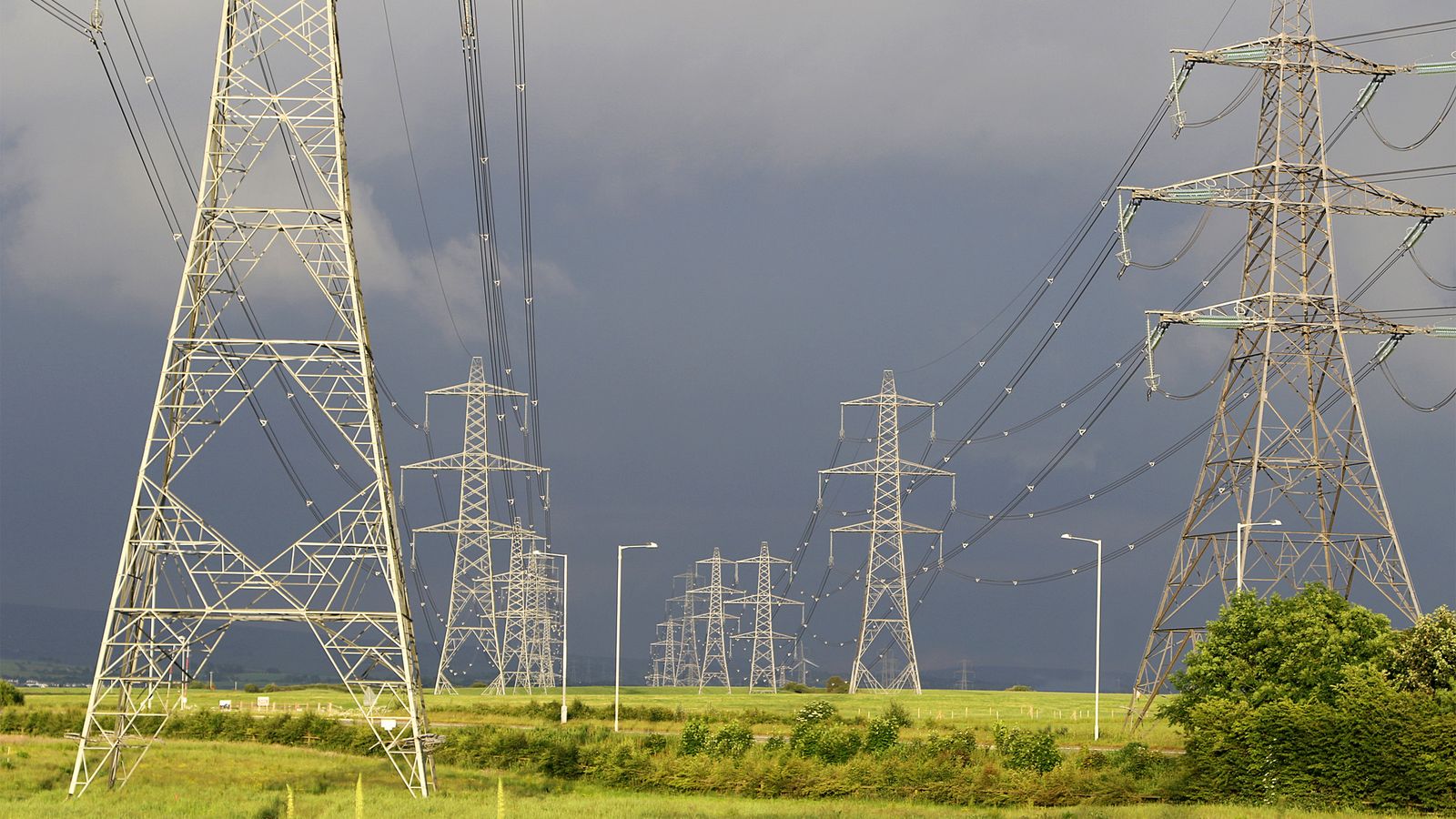
The country has been put on notice that the chances of gas shortages this winter have risen markedly, prompting a contingency plan to prioritise heating.
National Grid’s Electricity System Operator (ESO) warned that planned three-hour power blackouts could be imposed in some areas, in the “unlikely” event supplies of gas fall short of demand.
It revealed the measure in an update on the UK’s state of energy readiness for the cold months ahead but it said that the risk of temporary power cuts could be avoided with help from the public.
The report showed, under a base case scenario, that margins between peak demand and power supply were expected to be sufficient and similar to recent years thanks to secure North Sea gas supplies, imports via Norway and by ship.
It comes as EU countries formally agreed to a voluntary 10% cut in gross electricity consumption and a mandatory reduction of 5% during peak hours – in what have been labelled “extraordinary measures”.
The European Council said: “Member states will identify 10% of their peak hours between 1 December 2022 and 31 March 2023 during which they will reduce the demand.
“Member states will be free to choose the appropriate measures to reduce consumption for both targets in this period.”
The ESO urged households to help manage that balance by signing up to an energy-saving scheme through their supplier, in a bid to help ease the risk of the lights going out.
The “demand flexibility service”, due to start next month, will see bill-payers be paid to save energy during peak hours.
Coal generators, that the operator said would have otherwise closed, will be used to maintain supply. In an effort to generate enough power to supply 600,000 homes the ESO is securing contracts with three generators to keep five coal units open and on standby.
A separate study by National Grid Gas Transmission, which is a separate business to the ESO, saw the potential for the shortfall in gas supplies within continental Europe – as a result of Russia’s war in Ukraine – to impact the UK’s usual ability to attract imports.
It suggested gas needed to power the UK’s electricity grid was expected to rise by nearly 22% – offsetting savings from lower household and business use – largely because of a need for power in France where many nuclear plants are offline.
It saw LNG (liquefied natural gas) from the US and Qatar acting as the new primary source of supply flexibility.
Gas accounts for over 40% of UK power generation – more if the wind fails to blow and other plants are offline for maintenance.
The ESO’s report marked a darkening in the prospect for disruption in the months ahead following a comparatively rosy early view report in July.

Risk of emergency gas shortage
There was a clear sign of a shift in direction earlier this week when it emerged that the energy regulator Ofgem had warned of a “significant risk” of a gas supply emergency.
It blamed the international scramble for supplies because of the war, which has starved continental Europe of its main source of natural gas.
On Thursday, Prime Minister Liz Truss refused to reiterate a promise she made during the Tory leadership election that there will not be blackouts this winter.
Pushed to repeat that promise, she told reporters in Prague: “Well what we’re clear about is we do have a good supply of energy in the UK, we’re in a much better position than many other countries.
“But of course there’s always more we can do.”
A gas supply emergency can be declared when suppliers are unable to safely get gas to homes and businesses.
It could mean that some customers, starting with the largest industrial consumers, will be asked to stop using gas for a temporary period.
The aim would be to keep gas and gas-generated electricity supplies stable for households for as long as possible.
For the electricity market, coal-fired power stations can be brought back online under what is known as a system notice to help fill stopgaps. This has traditionally happened when nuclear plants go offline or the wind fails to blow.
The hope is that these sorts of measures will not be necessary because of the looming demand flexibility service.
It is expected to be implemented at least 12 times, whatever happens, from November to March to ensure a benefit for signatories.

The ESO’s director of corporate affairs, Jake Rigg, said: “If you put your washing machine or other electrical appliances on at night instead of the peak in the early evening, you can get some money back when we all need it.”
Energy bills have rocketed this year but now come under the protection of government caps on wholesale costs, shielding both households and businesses from the worst in the price surge ahead of winter.
It means the taxpayer will foot the bill for wholesale prices above the unit cap level.
The scheme does not cap your bill, which will continue to depend on the amount of energy used.
An Ofgem spokesperson said of the National Grid reports: “We have one of the most reliable energy systems in the world and we are in a favourable position.
“However, it is incumbent on a responsible and prudent energy sector to ensure the right contingency measures are in place, which is why we are working with the government, National Grid and key partners to protect consumers, so that Great Britain is fully prepared for any challenges this winter.”
UK
‘They’re invisible within society’: Whistleblower says asylum seekers disappear ‘daily’ from hotels
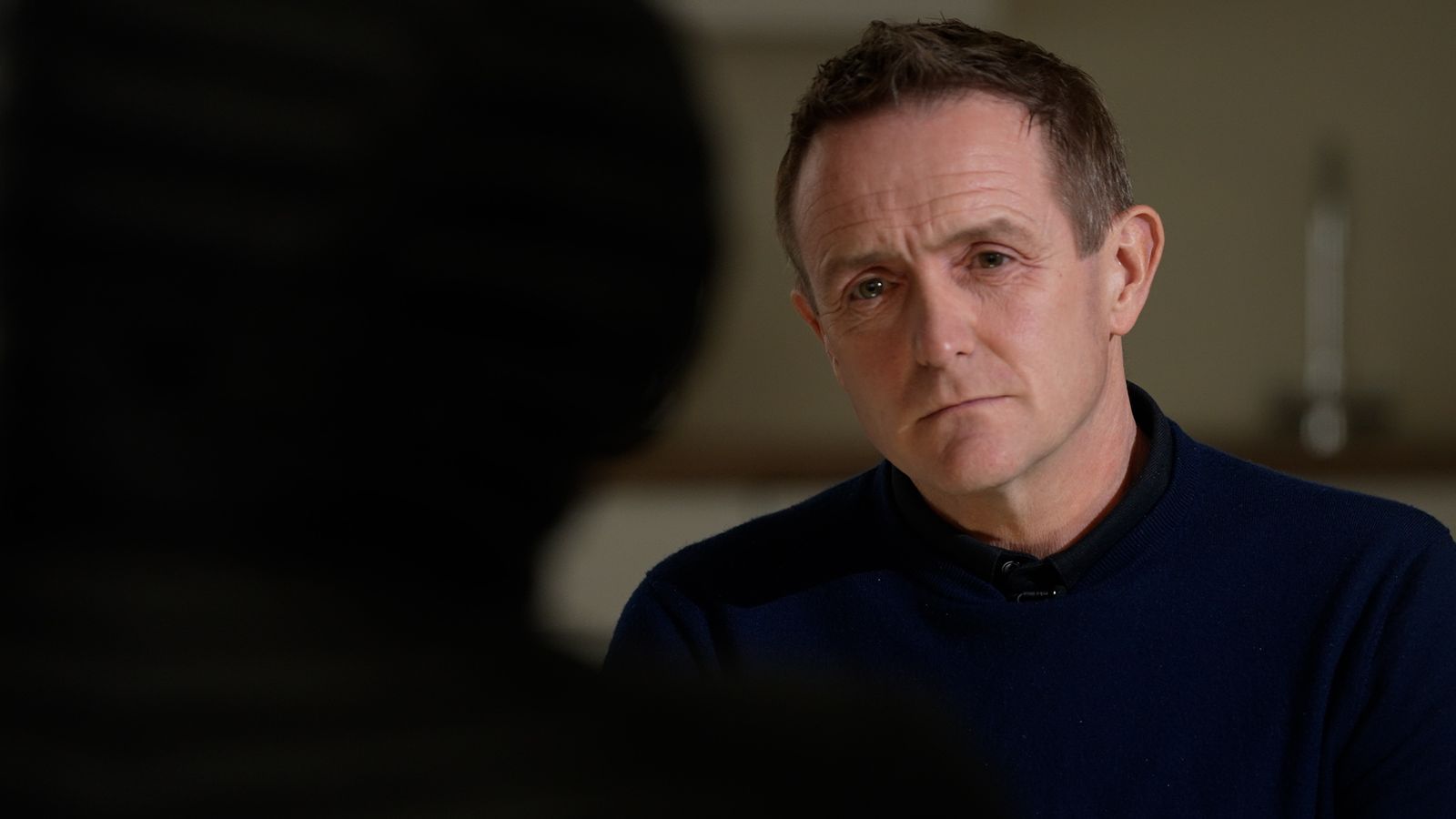
An insider has told Sky News people are still disappearing “daily” from asylum seeker hotels.
In an exclusive interview, the contractor described the chaos he sees within the system as “terrifying” because undocumented people are persistently absconding from hotels.
He spoke to us because he is deeply concerned about the ongoing lack of monitoring at a time when the government has promised to tighten the asylum system.
The man, who we are not naming, works across multiple asylum hotels in one region of England.
“When someone gets to about a week away from the hotel, they’re processed as an absconder,” he said.
“Nothing really happens there. They get marked as ‘left the hotel’ and a notification is sent to the Home Office.
“It’s at least weekly. Most of the time it can be daily.”
The government moved last month to reset its immigration policy by promising to toughen the process for asylum seekers.
The latest figures up to September this year show 36,272 asylum seekers living in hotels.
Failed asylum applicants are given a date to move out by, but they’re not actually picked up by the authorities, the insider says
Overall 110,000 people claimed asylum in the UK between September 2024 and September 2025 – higher than the previous recorded peak of 103,000 in 2002.
The hotel contractor also described to Sky News what he says happens when a resident’s claim for asylum is rejected.
“They get given a date that they need to move out by,” he said.
“You would expect immigration enforcement to go to the hotel to pick these people up. You would expect them to not even be told that they failed their asylum claim.
“You would expect them to just be collected from the hotel… that doesn’t happen.”
He told us that some residents just walk out of the door with no further checks or assistance.
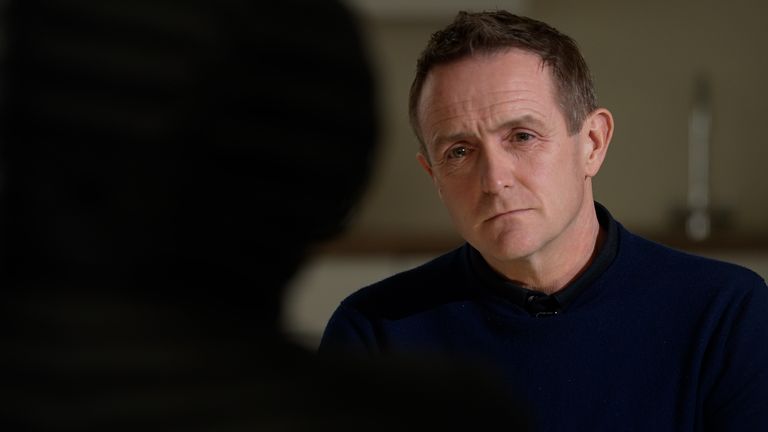
The whistleblower spoke to Sky News’ Tom Parmenter in the exclusive interview
“It must be terrifying for these people as well… ‘what do I do now? I don’t have an address’.
“So what do they do? How do they survive?
“Do they then get forced… to go into an underground world?
“They’re just completely invisible within society.
“For those people to freely be allowed, undetected and unchecked, on the streets of this country is terrifying.”
His account from within the system contrasts with the government’s promises to restore control over the asylum process.
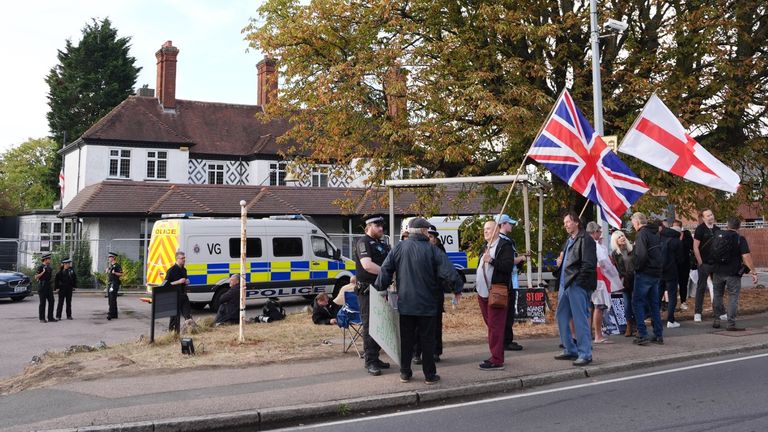
Police and protesters outside the Bell Hotel, Epping, where asylum seekers have been housed. Pic: PA
In response to the interview, a Home Office spokesperson said: “This government will end the use of hotels and have introduced major reforms to the asylum system, to scale up removals of people with no right to be here and address the factors drawing illegal migrants to the UK in the first place.
“Nearly 50,000 people with no right to be in our country have been removed and enforcement arrests to tackle illegal working are at the highest level in recent history.
“A dedicated team in the Home Office works with police, across government and commercial companies to trace absconders. Failure to return to a hotel can also lead to asylum claims and support being withdrawn.”
At a community kitchen in Greater Manchester, organisers told us they regularly see people who are living under the radar – surviving with “cash in hand” jobs.
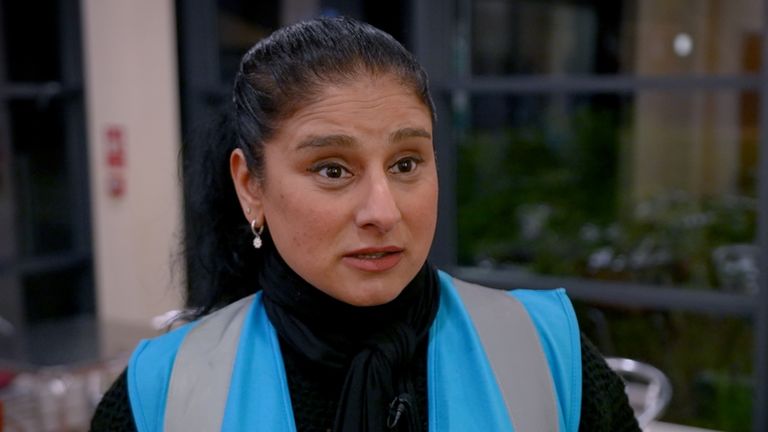
Volunteer Shabana Yunas says the situation is ‘getting worse’ and ‘it is dangerous’
Volunteer Shabana Yunas helps many hungry and desperate people. She also feels the tension it causes in her community.
“People don’t know who they are and I understand a lot of people are afraid… but if there’s those things in place where we can monitor who is around, then everybody can feel a lot safer.
“If people are coming into the UK and we don’t know who they are and they’re just disappearing, crime rates are going to go up, slavery is going to go higher, child exploitation is going to be more exposed.
“They are too afraid to go to the authorities because they are scared of being deported to a country where their lives could be at risk.
“It’s getting worse, it is dangerous and we do need to do something about this where we can support people.”
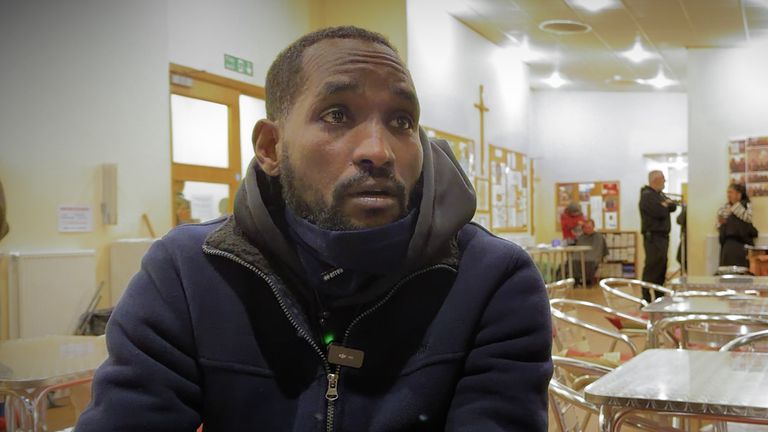
Kitchen volunteer Khalid, from Ethiopia, has had his application for asylum rejected four times
Another volunteer at the kitchen is Khalid.
He arrived in the UK in 2015 having travelled from Ethiopia – he hid on a lorry to get into England.
Read more:
The visa overstayers living under the radar
Stats show rise in asylum seekers being housed in hotels
Britain’s immigration system changes explained
He has applied for asylum and been rejected four times.
He has recently submitted another application and told us political violence at home meant he could not return.
Crucially, he knows plenty of people living off-grid.
“Yeah, they don’t care about what the government thinks, because they already destroyed their life,” he told us.
👉 Listen to Sky News Daily on your podcast app 👈
Although Khalid now has somewhere to stay, he has previously considered turning to crime to give himself the stability of life in prison.
“I was in depression. I was like, I wanna do some criminal and go jail, to stay in a prison.
“Once upon a time, I’d prefer that way.”
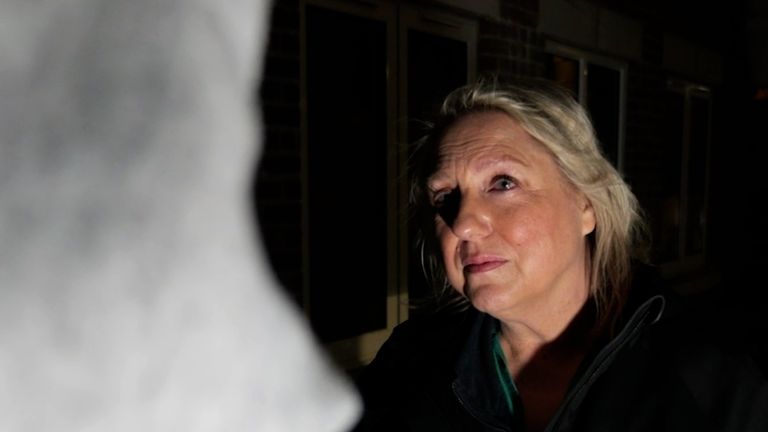
The visa overstayers in ‘soft’ Britain
Khalid is now volunteering to give his life more purpose as he waits for another decision from the Home Office.
He says he doesn’t blame people who think he should be deported back to Ethiopia.
When asked if he should have been, he said: “That is up to Home Office, like up to government.”
Stopping small boats, clearing backlogs, closing hotels, enforcing the rules and restoring faith in the system are all priorities for the Home Office – solving it all is one of the defining challenges for the Starmer government.
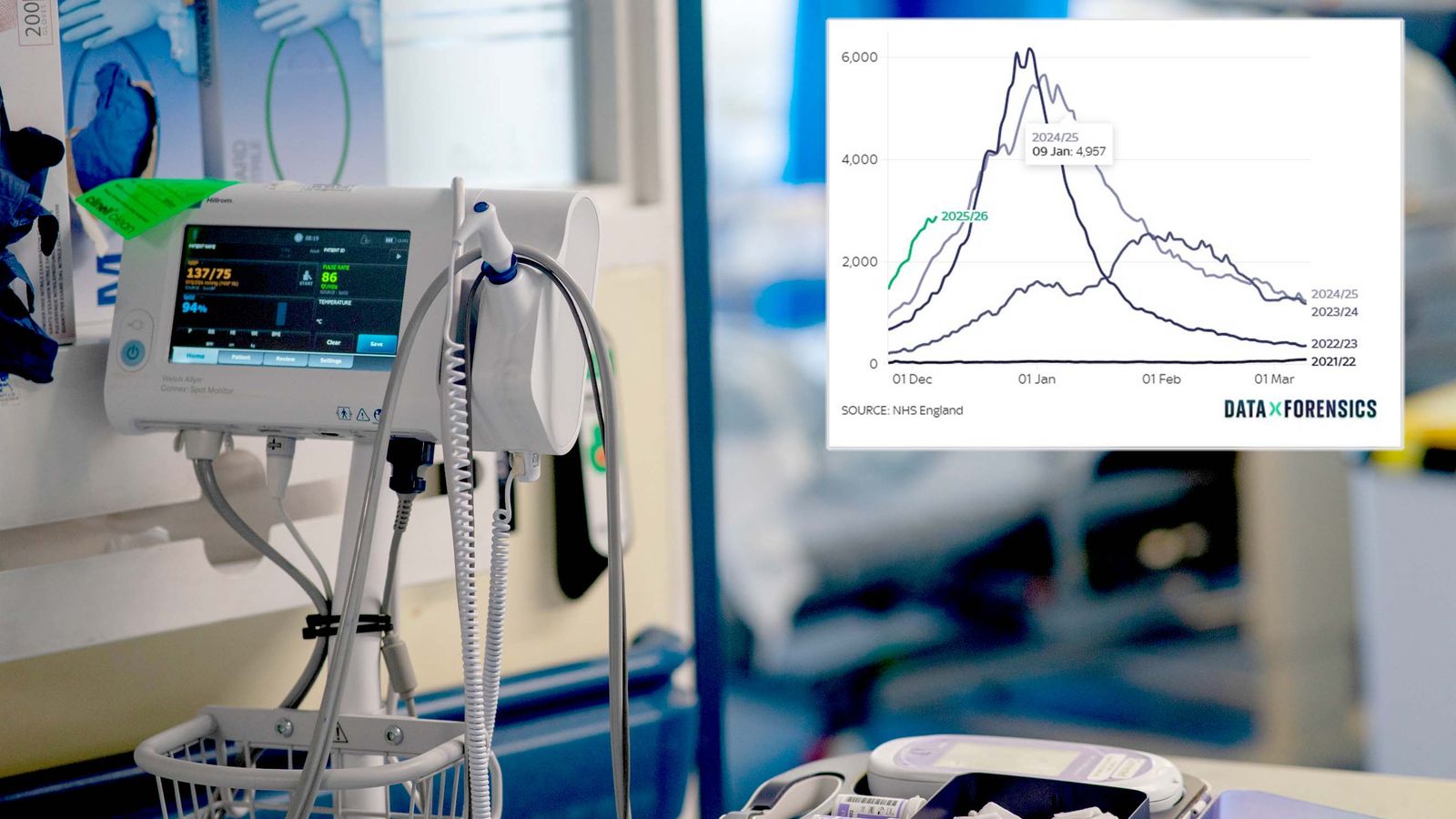
NHS England has warned the health service is facing a “worst case scenario” December with a surge of “super flu”.
The warning comes as new figures revealed the number of people in hospital with flu have increased by more than half in just one week.
Catch up as it happened: NHS warns of ‘worst-case scenario’ as ‘super flu’ surges
Latest figures show:
• An average of 2,660 patients were in hospital per day with flu last week
• This is the highest ever for this time of year and up 55% on last week
• At this point last year the number stood at 1,861 patients, while in 2023 it was just 402
Health service bosses are warning the number of flu patients in hospital has already increased sharply since the week covered by this data – with no peak in sight.
Read more: Why is flu season worse this year?
Virus outbreaks coincide with doctors’ strikes
Weekly flu numbers in England peaked at 5,408 patients last winter and reached 5,441 over the winter of 2022/23, the highest level since the pandemic.
Alongside rocketing flu, the number of norovirus patients in hospital has also risen by 35%.
The NHS is now warning winter viruses are starting to “engulf hospitals”.
Demand for A&Es and ambulance services is also soaring.
New monthly figures show A&E attendances were a record for November at 2.35 million – more than 30,000 higher than November 2024.
In addition, there were 48,814 more ambulance incidents (802,525) compared with last year (753,711).
Some hospitals across the country have asked staff, patients and visitors to wear face masks to cut the spread of flu, while others have gone in and out of critical incident status due to the high number of people attending A&E.
The record-breaking demand on the NHS coincides with a resident doctors’ strike from 17 to 22 December over pay and jobs – sparking fears of major disruption for patients in the run up to Christmas.
People are being advised to attend any planned appointments scheduled during the strikes unless they have been contacted to reschedule.

Will doctors accept late deal to avoid strikes?
Flu vaccinations on the up… who can get one?
The NHS is urging anyone eligible to get their flu vaccination to help prevent them getting seriously ill.
Latest figures show more than 17.4 million people have been vaccinated so far this year, more than 381,000 higher than last year.
You can get it if you:
• Are 65 or over in England, Scotland, Wales and Northern Ireland
• Are pregnant
• Live in a care home
• Are the main carer for an older or disabled person, or receive carer’s allowance
• Live with someone who has a weakened immune system
• Are a frontline health and social care worker
• Are of school age
• Have certain medical conditions (the NHS has a full list)
Wes Streeting, the health secretary, warned of a “tidal wave of flu tearing through our hospitals”.
“We are working with the NHS to make sure it is able to cope with this as best as possible,” he said.
Warning ‘extremely challenging few weeks ahead’
Professor Meghana Pandit, NHS national medical director, warned the health service faces “an extremely challenging few weeks ahead” with “staff being pushed to the limit”.
She said: “With record demand for A&E and ambulances and an impending resident doctors’ strike, this unprecedented wave of super flu is leaving the NHS facing a worst-case scenario for this time of year – with staff being pushed to the limit to keep providing the best possible care for patients.
“The numbers of patients in hospital with flu is extremely high for this time of year. Even worse, it continues to rise and the peak is not in sight yet, so the NHS faces an extremely challenging few weeks ahead.”
She added: “We have prepared earlier for winter than ever before, and stress-tested services to ensure people have a range of ways to get the help they need and avoid needing to go to A&E.
“For non-life-threatening care, people should call NHS 111 or use 111 online, which can direct you to the most appropriate place, and use A&E and 999 for life threatening conditions and serious injuries.”
Read more from Sky News:
US accused of ‘piracy’
Flights diverted in Moscow
Mr Streeting has offered the British Medical Association (BMA) a last-minute deal in the hope doctors will call off the walkout, which starts next Wednesday.
The doctors’ union has agreed to put the offer to members over the coming day, and is expected to announced a decision on Monday, just two days before the planned strike.
The offer includes a fast expansion of specialist training posts as well as covering out-of-pocket expenses such as exam fees, but does not include extra pay.
The spread of subclade K, the super flu, is picking up – and it’s not looking good for the NHS.
An average of just under 2,700 hospital beds a day in England were occupied by patients with flu last week.
There are fears that could jump to somewhere between 5,000 and 8,000 by the end of this week.
That’s on top of COVID and RSV.
And with the possibility of a five-day strike by resident (junior) doctors next week, it’s a perfect storm for hospitals.
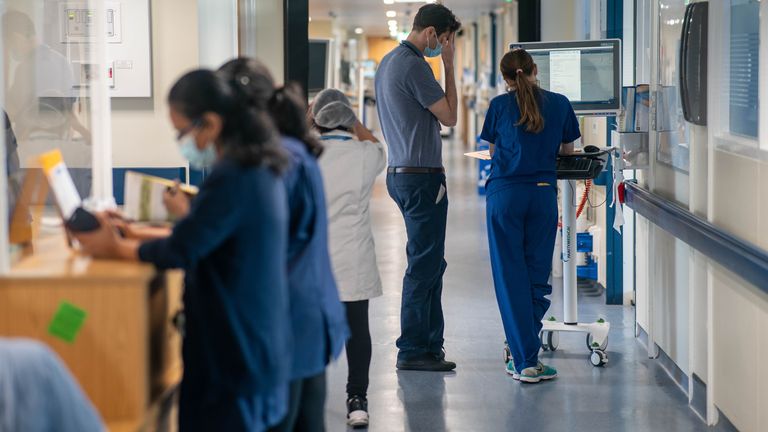
An NHS hospital ward at Ealing Hospital in London. Pic: PA
Christmas flu
Children are the super-spreaders of flu. It races around classrooms and some schools have temporarily shut because of the impact.
The Christmas holidays aren’t far off. They are likely to put the brakes on children passing around the virus.
But it’s also a time of year when families mix with elderly relatives, who are more likely to be hit hard by the infection – perhaps even needing hospital care.
So while the holidays may temporarily slow the overall rise in infections, the impact on hospitals could get much worse.
File pic: PA
Subclade K
Flu is spreading so rapidly at the moment because immunity to subclade K from previous infections and vaccinations is low.
The virus – a variant of the H3N2 flu strain – suddenly acquired seven new mutations in late summer.
Every 100 people infected with seasonal flu would typically pass the virus on to 120 others.
With subclade K, it’s 140.
And that’s why cases are rising so quickly on the charts.
At the moment, 18 in every 100,000 patients in England are consulting their GP with flu-like symptoms. That’s still well short of the peak of around 50 in every 100,000 in 2017/18, the worst flu outbreak in recent years.

File pic: PA
The grim reality of flu
Flu is a really unpleasant disease, nothing like a cold. I’ve had it twice in my life and it physically hurt to get out of bed. It’s grim.
Most people get over it with a few days’ rest and paracetamol to take the edge off the fever.
But vulnerable people can become seriously ill. In the outbreak of 2017/18, around 22,000 died.
Read more:
Nurses ‘deeply concerned about what lies ahead’
NHS braced for ‘toughest winter’ after record-breaking month
That’s why the NHS is urging people in certain groups – the over 65s, those with underlying health conditions, pregnant women, carers and children – to get the jab.
The vaccine isn’t a great match for subclade K, but still reduces the chance of hospital admission by 30-40% in adults.
It’s impossible to say when the spread will peak, but the latest figures suggest the outbreak is far from over.
-
 Sports2 years ago
Story injured on diving stop, exits Red Sox game
-
 Sports3 years ago
‘Storybook stuff’: Inside the night Bryce Harper sent the Phillies to the World Series
-
 Sports2 years ago
Game 1 of WS least-watched in recorded history
-
 Sports3 years ago
Button battles heat exhaustion in NASCAR debut
-
 Sports3 years ago
MLB Rank 2023: Ranking baseball’s top 100 players
-
Sports4 years ago
Team Europe easily wins 4th straight Laver Cup
-
 Environment3 years ago
Japan and South Korea have a lot at stake in a free and open South China Sea
-
 Environment1 year ago
Here are the best electric bikes you can buy at every price level in October 2024