

Liz Truss rules out energy-saving campaign amid power blackout warning


Liz Truss has ruled out launching an energy-saving public information campaign amid warnings planned three-hour power blackouts could be imposed in some areas.
Business Secretary Jacob Rees-Mogg is believed to have backed a £15m campaign this winter, with The Times reporting the idea was blocked by No 10.
It said the campaign was seen as “light touch” and included measures designed to help people save up to £300 a year, which included lowering the temperatures of boilers, turning off radiators in empty rooms and advising people to turn off the heating when they go out.
The paper quoted a government source describing the campaign as a “no-brainer” and saying No 10 had made a “stupid decision,” but it added Ms Truss is said to be “ideologically opposed” to such an approach as it could be too interventionist.
Asked to comment on the report, the Department for Business, Energy and Industrial Strategy issued a statement on behalf of the government in which it insisted ministers are not launching a campaign and “any claim otherwise is untrue”.
Ms Truss earlier sought to downplay concerns, though stopped short of explicitly offering a guarantee of no blackouts.
The National Grid Electricity System Operator (ESO) warned households and businesses might face planned three-hour outages to ensure that the grid does not collapse in the “unlikely” event gas supplies fall short of demand.
A government spokesman said: “The UK has a secure and diverse energy system.
“We have plans to protect households and businesses in the full range of scenarios this winter, in light of Russia’s illegal war in Ukraine.
“To strengthen this position further, we have put plans in place to secure supply and National Grid, working alongside energy suppliers and Ofgem, will launch a voluntary service to reward users who reduce demand at peak times.
“We will continue to work internationally on tackling rising energy prices and ensuring security of supply, but there are no current plans to follow the EU’s decision.
“However, ministers are not launching a public information campaign and any claim otherwise is untrue.”
Risk of emergency gas shortage
The concern over planned blackouts is reminiscent of the 1970s response to the miners’ strikes and oil crisis.
The Three-Day Week was introduced from 1 January 1974, with commercial users of electricity being limited to three consecutive days of consumption each week, with pubs and restaurants closed on quiet days and TV companies barred from broadcasting after 10.30pm.
Essential services such as hospitals, supermarkets and newspaper printing presses, were exempt.
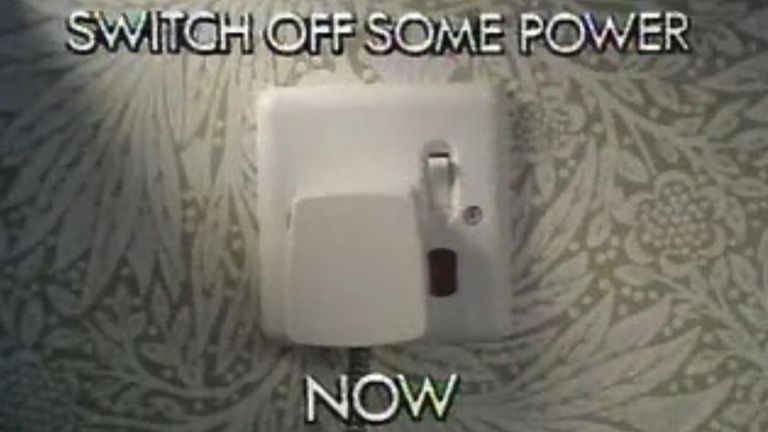
1970s Public Information Film, courtesy: National Archives
The lights will stay on this winter unless the gas-fired power plants that produced 43% of Britain’s electricity over the last year cannot get enough gas to continue operating.
The margins between peak demand and power supply are expected to be sufficient and similar to recent years in the National Grid ESO’s base case scenario for this winter.
But in the face of the “challenging” winter for European energy supplies in the aftermath of Russia’s invasion of Ukraine, the grid operator is planning for what could happen if there were no imports of electricity from Europe.
There are two gigawatts of coal-fired power plants on standby to fire up if needed to meet demand following a loss of imports from France, Belgium and the Netherlands.
Ms Truss, pressed to guarantee there will be no blackouts, told reporters during a visit to the Czech Republic: “What we’re clear about is that we do have a good supply of energy in the UK, we’re in a much better position than many other countries, but of course there’s always more we can do, and that’s why I’m here working with our partners, making sure we do have a secure energy supply into the future.”
Ms Truss added: “We do have good energy supplies in the UK, we can get through the winter, but of course I am always looking for ways that we can improve the price for consumers.
“That’s why we put in place the energy price guarantee as well as making sure we have as much supply as possible.”
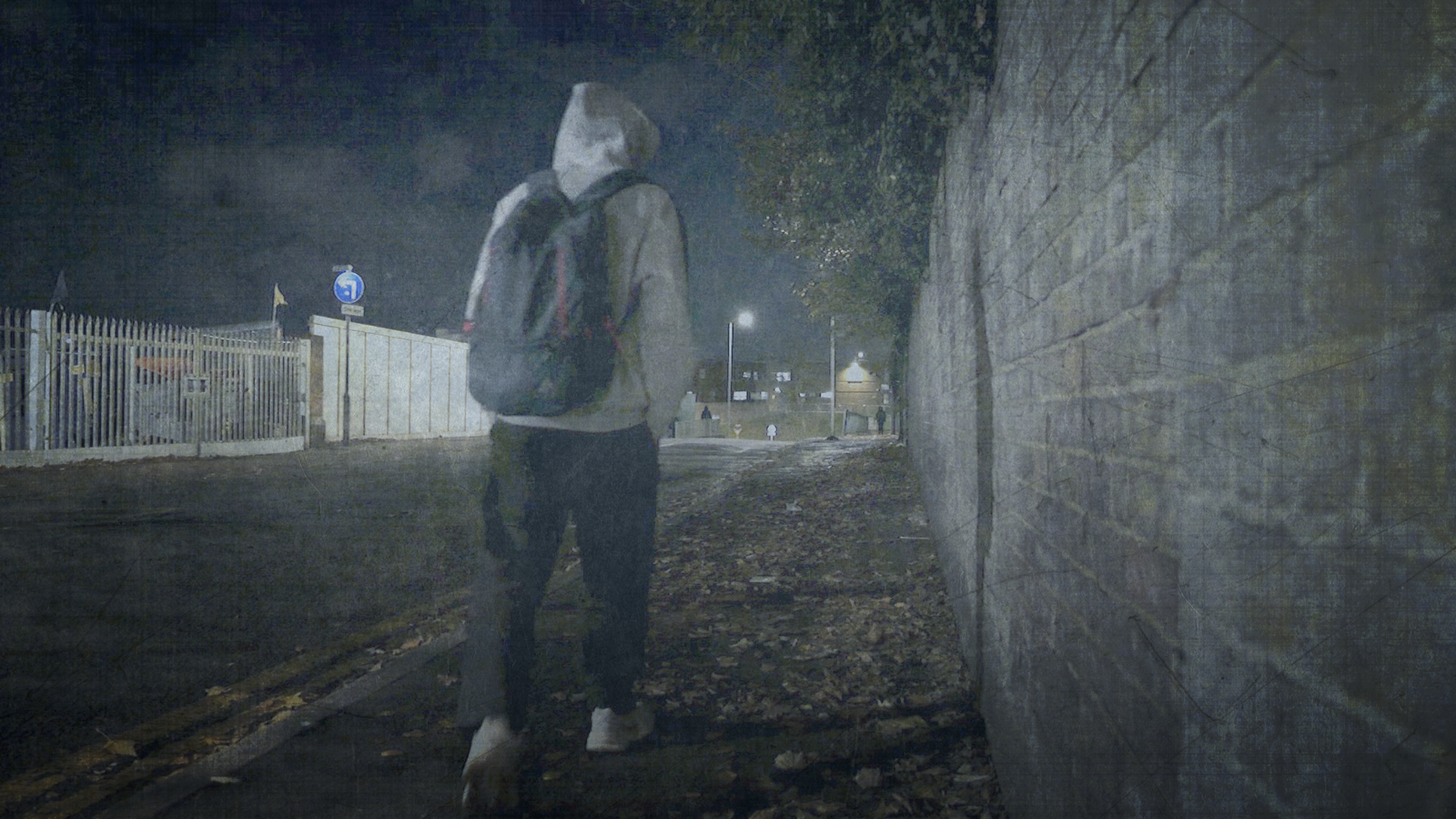
Ramesh lives in fear every day. A police siren is enough to alarm him.
He’s one of up to 400,000 visa overstayers in the UK, one lawyer we spoke to believes.
It’s only an estimate because the Home Office has stopped collecting figures – which were unreliable in the first place.
Britain is being laughed at, one man told us, “because they know it’s a soft country”.
‘Ramesh’ came to the UK from India
We meet Ramesh (not his real name) at a Gurdwara, a Sikh place of worship, where he goes for food and support.
He insists he can’t return to India where he claims he was involved in political activism.
Ramesh says he came to the UK on a student visa in 2023, but it was cancelled when he failed to continue his studies after being involved in a serious accident.
He tells us he is doing cash-in-hand work for people who he knows through the community where he is living and is currently working on a house extension where he gets paid as little as £50 for nine hours labouring.
“It’s very difficult for me to live in the UK without my Indian or Pakistani community – also because there are a lot of Pakistani people who give me work in their houses for cleaning and for household things,” he adds.
‘What will become of people like us?’
Anike has lived in limbo for 12 years.
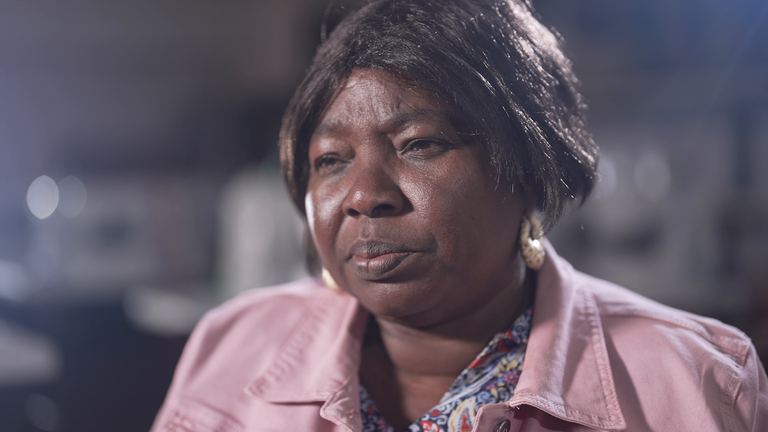
Now living in Greater Manchester, she came to the UK from Nigeria when her sister Esther was diagnosed with a brain tumour – she had a multi-entry visa but was supposed to leave after three months.
Esther had serious complications from brain surgery and says she is reliant on her sister for care.

Immigration officials are in touch with her because she has to digitally sign in every month.
Anike has had seven failed applications for leave to remain on compassionate grounds refused but is now desperate to have her status settled – afraid of the shifting public mood over migration.
“Everybody is thinking ‘what will become of people like us?'” she adds.
‘It’s a shambles’
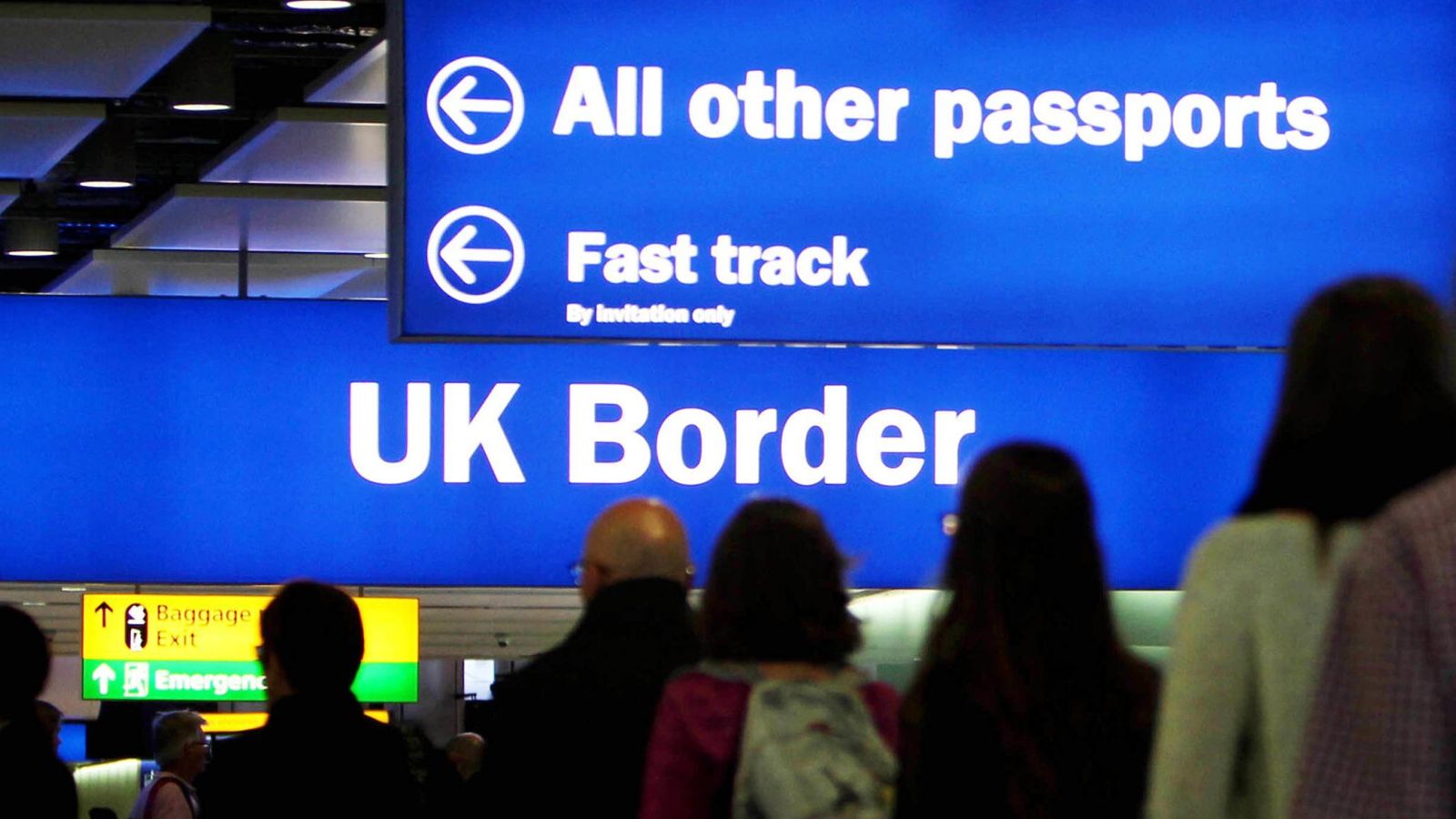
The government can’t say with any degree of accuracy how many visa overstayers there are in Britain – no data has been collated for five-and-a-half years.
But piecing together multiple accounts from community leaders and lawyers the picture we’ve built is stark.
Immigration lawyer Harjap Singh Bhangal told us he believed there could be several hundred thousand visa overstayers currently in Britain.

He says: “At this time, there’s definitely in excess of about 200,000 people overstaying in the UK. It might even be closer to 300,000, it could even be 400,000.”
Asked what evidence he has for this he replies: “Every day I see at least one overstayer, any immigration lawyers like me see overstayers and that is the bulk of the work for immigration lawyers.
“The Home Office doesn’t have any accurate data because we don’t have exit controls. It’s a shambles. It’s an institution where every wall in the building is cracked.”
The number of those who are overstaying visas and working cash in hand is also virtually impossible to measure.
‘They know Britain is a soft country’
“They’re laughing at us because they know Britain is a soft country, where you won’t be picked up easily,” says the local man we’ve arranged to meet as part of our investigation.
We’re in Kingsbury in northwest London – an area which people say has been transformed over the past five years as post-Brexit visa opportunities opened up for people coming from South Asia.
‘Mini-Mumbai’
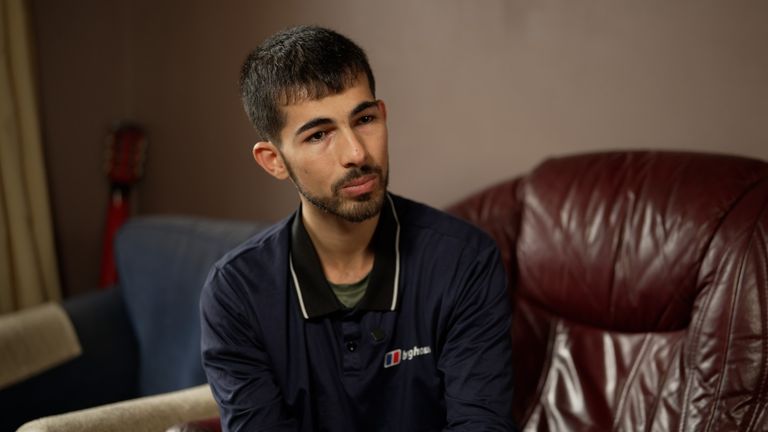
The man we’re talking to lives in the community and helps with events here. He doesn’t want to be identified but raises serious questions about visa abuse.
“Since the last five years, a huge amount of people have come in this country on this visiting visa, and they come with one thing in mind – to overstay and work in cash,” he says.
“This area is easy to live in because they know they can survive. It looks like as if you are walking through mini-Mumbai.”
‘The system is more than broken’
‘It’s taxpayers who are paying’
And he claims economic migrants are regularly arriving – who’ve paid strangers to pretend they’re a friend or relative in order to obtain a visitor visa to get to Britain.
He says: “I’ve come across so many people who have come this way into this country. It’s widespread. When I talk to these people, they literally tell me, ‘Oh, someone is coming tomorrow, day after tomorrow, someone is coming’.
“Because they’re hidden they may not be claiming benefits, but they can access emergency healthcare and their children can go to school.
“And who is paying for it? It’s the taxpayers who are paying for all this,” says the man we’ve met in north London.
Read more from Sky News:
Net migration figures hit four-year low
How Denmark may inspire UK asylum reforms
A Home Office spokesperson said: “We will not tolerate any abuse of our immigration system and anyone found to be breaking the rules will be liable to have enforcement action taken against them.
“In the first year of this government, we have returned 35,000 people with no right to be here – a 13% rise compared to the previous year.
“Arrests and raids for illegal working have soared to their highest levels since records began, up 63% and 51%.”
The government can’t say with accuracy how many visa overstayers there are in Britain – no data has been collated for five-and-a-half years.
Sky News has spoken to immigration lawyers about the numbers, and one believes there could be as many as 400,000 living across the country.
Harjap Singh Bhangal described the situation as a “shambles”.
“The Home Office doesn’t have any accurate data because we don’t have exit controls. It’s a shambles. It’s an institution where every wall in the building is cracked,” he told Sky’s Lisa Holland.
The visa overstayers in ‘soft’ Britain
Why doesn’t the government know?
The Home Office used to gather data on visa overstayers by effectively checking a list of passport numbers associated with visas against a list of passport numbers of people leaving the UK, taken from airlines and other international travel providers.
If there was a passport number match in the arrivals and departures part of their database, that person was recorded to have left when they should have. If there wasn’t, they were a potential overstayer.
They stopped producing the figures because a combination of Brexit and COVID added complications that made the Home Office conclude they wouldn’t be able to get to a reliable number using the same method.
It’s now four and a half years since EU citizens had freedom of movement to the UK revoked, and more than three and a half years since pandemic-era travel restrictions ended.
And yet we are still waiting to see what a new method might look like.
Read more from Sky News:
Is this what the beginning of a war looks like?
There’s one big problem with Australia’s social media ban
The old method wasn’t perfect. If someone changed their passport while in the UK, for example, or if the airline or individual entered the number wrong when they were leaving, there wouldn’t be a match.
The Home Office regarded the statistics as likely overestimating the true number of overstayers, and the Office for National Statistics designated the figures as “experimental” rather than “official” statistics, meaning the conclusions should be treated with caution. But they were a reasonable best guess.
With all that in mind, between April 2016 and March 2020 upwards of 250,000 people were flagged as potential overstayers, equivalent to 63,000 per year.
That’s more than the 190,000 people who are recorded to have arrived in the UK on small boats since 2018.
It represents 3.5% of the seven million visas that expired over that period, so at least 96.5% of people left when they should.
Other Home Office data reveals that more than 13 million visas were issued between 2020 and the end of June 2025, including a record 3.4 million in 2023.
But what we don’t know is how many have expired, which means it’s difficult for us to even guess how many people might have overstayed.
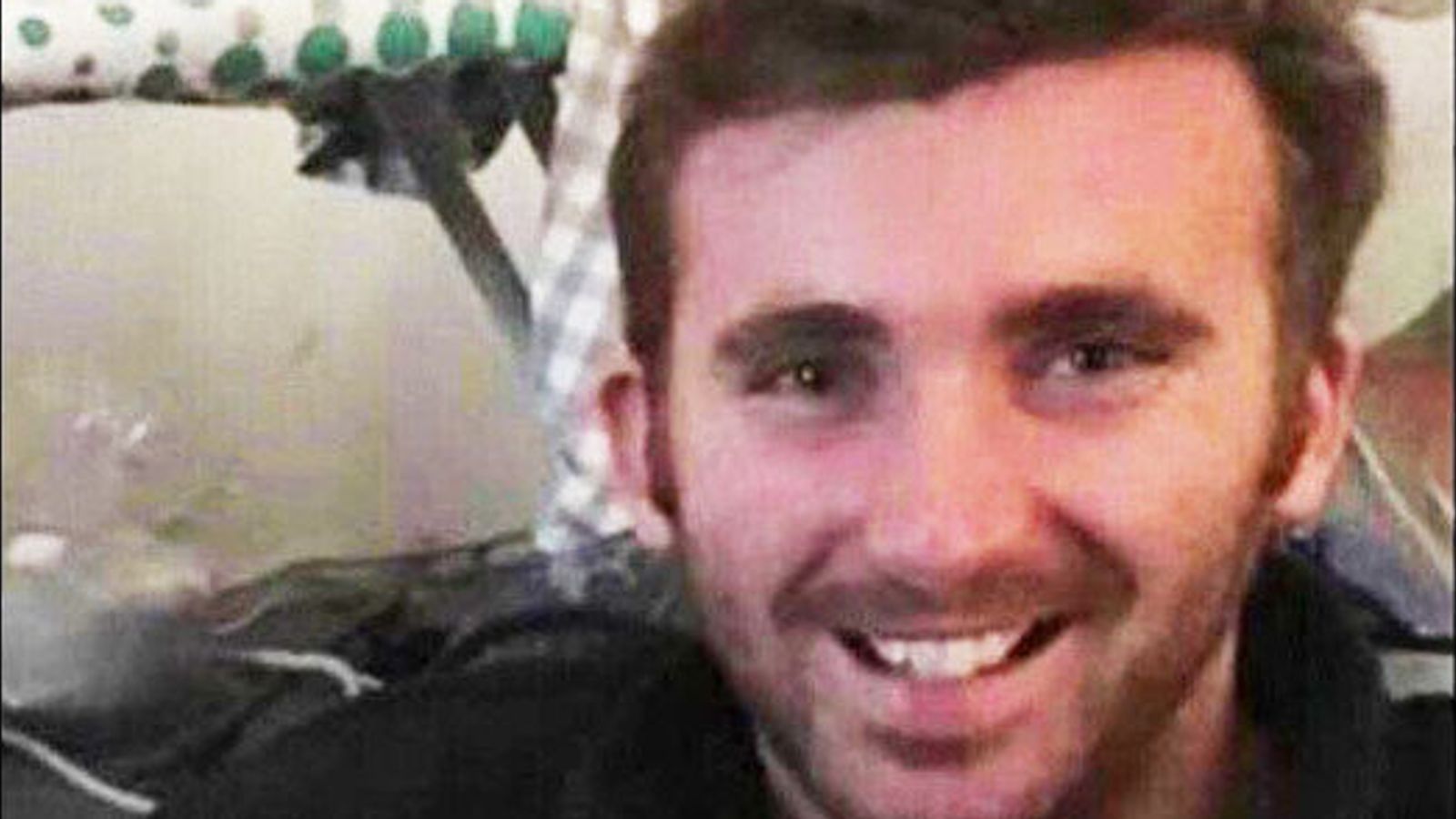
The Ministry of Defence have shared a picture of the British soldier who was killed in a “tragic accident” in Ukraine, as Volodymyr Zelenskyy prepares to give Donald Trump a revised plan for peace with Russia.
The Ukrainian president said his delegation is set to hand Kyiv’s proposal to Washington in the “near future”, ahead of talks between European leaders over the plan next week.
But they will comes after Mr Trump called European leaders “weak” and criticised them for failing to end the war between Russia and Ukraine.
As it happened: Soldier who died in Ukraine pictured for first time
Meanwhile, tributes have come in for Lance Corporal George Hooley, a 28-year-old paratrooper who died on Tuesday while observing Ukrainian forces testing a new defensive capability away from the frontline.
Is Europe’s transatlantic relationship with America on life support?
The MoD said he joined the army in November 2015 and was regarded as “an exceptional soldier and an impressive junior leader with extensive operational experience”.
In a statement released through the ministry, Lance Corporal Hooley’s commanding officer said that the paratrooper had had an “incredibly bright” future in the Parachute Regiment.
“I have no doubt that he would have continued to perform at the very front of his peer-group over the coming years,” they added.
“All members of The Parachute Regiment mourn his loss; however, our sorrow is nothing compared to that being felt by his family, our thoughts and prayers are with them at this incredibly difficult time.”
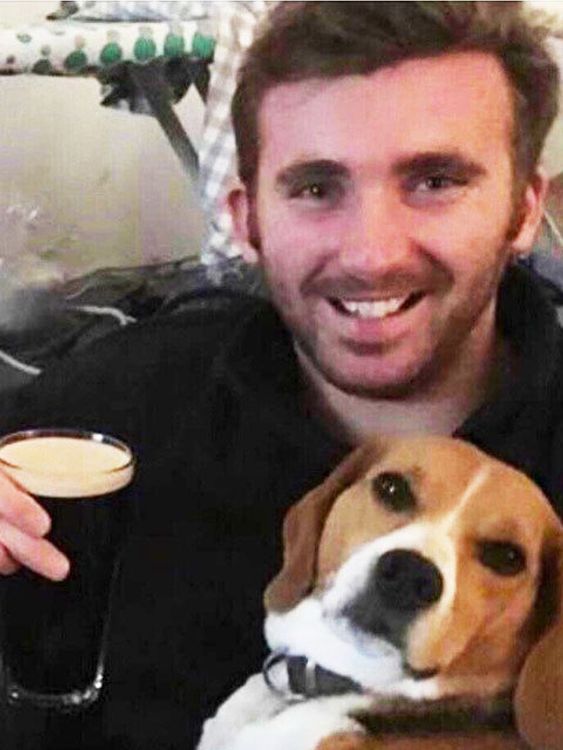
Lance Corporal George Hooley with his dog Mabel. Pic: Ministry of Defence
‘If you met George Hooley, you remembered it’
The company commander added: “If you met George Hooley, you remembered it.” They said the paratrooper had a “rare gift” and was a “model of professionalism”.
Britain’s Defence Secretary John Healey said the Lance Corporal “served our country with distinction and professionalism” and was “an exceptional soldier who will be very deeply missed”.
“The tributes that have been paid to him are a testament to his exceptional attitude and ability,” Mr Healey said. “George’s tragic death reminds us of the courage and commitment with which our outstanding armed forces serve every day to protect our nation.”
Zelenskyy: Ukraine to share peace plan in ‘near future’
Mr Zelenskyy said that Ukraine was finalising a 20-point peace document to share with the United States.
“We are working very productively to guarantee future security and prevent a recurrence of Russian aggression,” he said.
But Mr Trump had accused Mr Zelenskyy of not reading the original American-backed version of the peace proposal, and in an interview with Politico on Tuesday, claimed the Ukrainian president was “using war” to avoid holding an election.
Read more: Trump’s 28-point Ukraine peace plan in full
Later on Wednesday, Mr Zelenskyy said Kyiv’s peace delegation held a “productive conversation” with the US, and “discussed key issues for recovery, various mechanisms, and visions of reconstruction”.
Prime Minister Sir Keir Starmer, German Chancellor Friedrich Merz and French President Emmanuel Macron also spoke with the US president by phone on Wednesday.
In Ukraine shelling at a hospital in the occupied southern Kherson region killed three medical workers and injured two others, according to a governor installed by Russia.
And on Wednesday morning, Ukraine said its energy infrastructure had been targeted by Russian drone strikes in the southern Odesa region.
-
 Sports2 years ago
Story injured on diving stop, exits Red Sox game
-
 Sports3 years ago
‘Storybook stuff’: Inside the night Bryce Harper sent the Phillies to the World Series
-
 Sports2 years ago
Game 1 of WS least-watched in recorded history
-
 Sports3 years ago
Button battles heat exhaustion in NASCAR debut
-
 Sports3 years ago
MLB Rank 2023: Ranking baseball’s top 100 players
-
Sports4 years ago
Team Europe easily wins 4th straight Laver Cup
-
 Environment3 years ago
Japan and South Korea have a lot at stake in a free and open South China Sea
-
 Environment1 year ago
Here are the best electric bikes you can buy at every price level in October 2024