
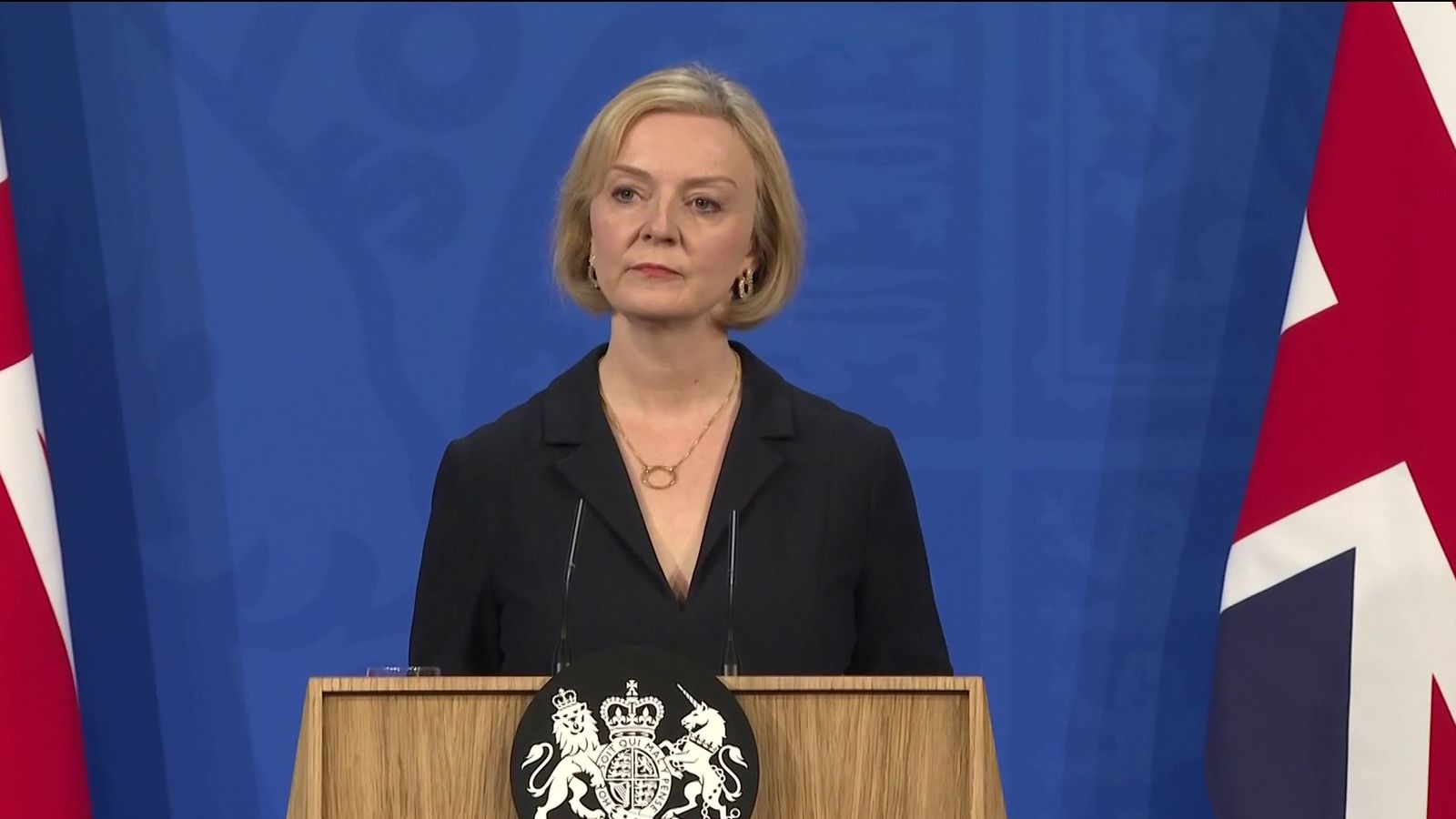
‘The game is up’: Three Tory MPs publicly call for Liz Truss to go as pressure mounts on PM

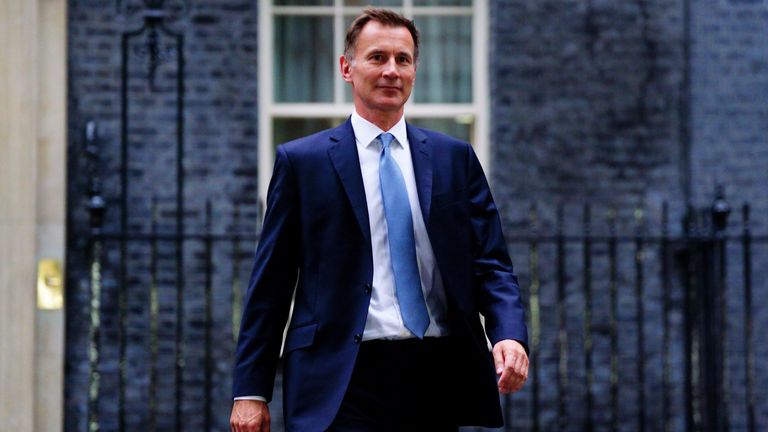
Conservative MPs have started to publicly call for Liz Truss to go as they do not believe she can survive the current political and economic crisis.
Crispin Blunt, former chair of the Foreign Affairs Select Committee, was the first Tory MP to put his head above the parapet since Kwasi Kwarteng was sacked as chancellor on Friday.
He said “the game is up” for Ms Truss after just six weeks as prime minister as he does not believe she can survive the current crisis, which has seen weeks of economic turmoil after the mini-budget.
“I think the game is up and it’s now a question as to how the succession is managed,” he told Channel 4’s Andrew Neil Show.
He later told Sky News it was “blindingly obvious” that Ms Truss had to go.
“The principle emotions of people watching her, doing her best to present, is some combination of pity, contempt or anger,” he said.
“I’m afraid it just won’t wash and we need to make a change.”
Tory MP Andrew Bridgen also called for Ms Truss to quit as PM, telling the Telegraph that his party “cannot carry on like this” and adding: “Our country, its people and our party deserve better.”
Meanwhile, Conservative MP Jamie Wallis tweeted: “In recent weeks, I have watched as the government has undermined Britain’s economic credibility and fractured our party irreparably. Enough is enough.
“I have written to the prime minister to ask her to stand down as she no longer holds the confidence of this country.”
Asked how the party will get rid of her, Mr Blunt, who is standing down at the next election, said: “If there is such a weight of opinion in the parliamentary party that we have to have a change, then it will be effected.
“Exactly how it is done and exactly under what mechanism… but it will happen.”
Under current Conservative Party rules, a confidence vote in a leader cannot take place until they have been in power for at least a year, so she is theoretically safe until next September.
However, there has been talk among MPs of the powerful 1922 backbench committee of Tory MPs of changing the rules to reduce that buffer period.
If enough MPs submit no confidence letters in the PM, then the 1922 executive may have little choice but to change them.
The committee’s treasurer, Sir Geoffrey Clifton-Brown, told Sky News the rules would only be changed if “an overwhelming majority of the party wish us to do that”.
If the committee was satisfied the conditions had been met “then they would agree to change the rules”, he said.
He added, however: “I think we’re a long way off that at the moment.”
Can Jeremy Hunt save Liz Truss?
Truss ‘unlikely to be in No 10 at Christmas’
Andrew Mitchell, who ran new chancellor Jeremy Hunt‘s leadership campaign, told the BBC if Ms Truss “cannot do the job, I’m afraid that she will go”.
Former Chancellor George Osborne said Ms Truss is unlikely to still be in Downing Street by Christmas.
He called her a “PINO – prime minister in name only” and said Ms Truss is “hiding in Number 10” as pressure mounts.
Asked if she can survive, he told the Andrew Neil Show: “Probably not.”
Read more:
Senior Tory says govt behaving like ‘libertarian jihadists
Warning ‘up to a million’ workers could go on strike this winter
How could Lizz Truss be removed as PM?
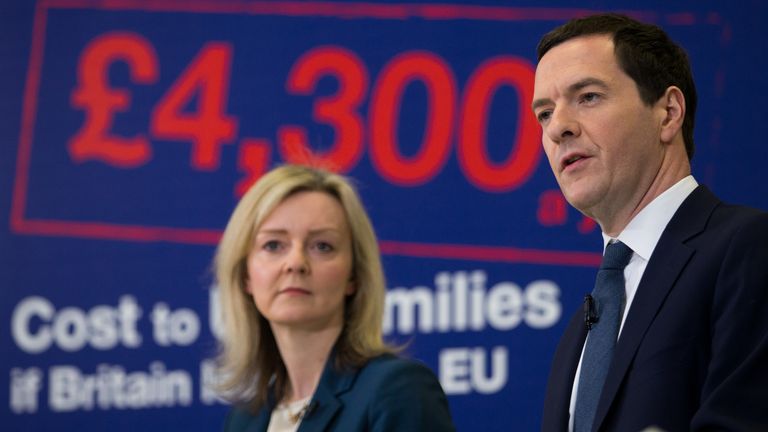
Former Tory chancellor George Osborne said he does not think Liz Truss will be PM by Christmas
And Mark Garnier, Conservative MP for Wyre Forest, today questioned Ms Truss’s position but stayed clear of outright calling for her to go.
He said those who agree with her appointing Mr Hunt as chancellor are split into two camps – those who believe MPs should give Ms Truss time, and those who want to “rip the plaster off”.
“I think power is a very fickle thing, and I think Liz Truss is in office but is not in power,” he told BBC Politics Midlands.
“The question is, do we give her a chance or do we rip the plaster off?
“The really important question is do we feel confident that we should be going into the next general election with Liz Truss? If we don’t, I think we need to rip the plaster off.”
‘Govt is behind Liz Truss’
Party needs a fundamental reset
Alicia Kearns, the new chairwoman of the Commons Foreign Affairs Committee, said the party needed a “fundamental reset” but said it was difficult to know if Ms Truss should go.
“Ultimately it is a very difficult one because I think you know we’ve had the questions around our moral competency,” she told Times Radio.
“We’ve now got questions around our fiscal competency.
“I don’t want further questions around even our ability to continue to govern as a party and our ability to stay united. It’s an incredibly difficult one, and ultimately I need to listen to colleagues and speak to colleagues over coming days.
“But do we need a fundamental reset? Without question.”
Click to subscribe to the Sophy Ridge on Sunday podcast
Tory grandee and pollster Lord Hayward told Sky News it is going to be “very difficult” for Ms Truss to remain as PM after the past few weeks and a new chancellor after just 38 days.
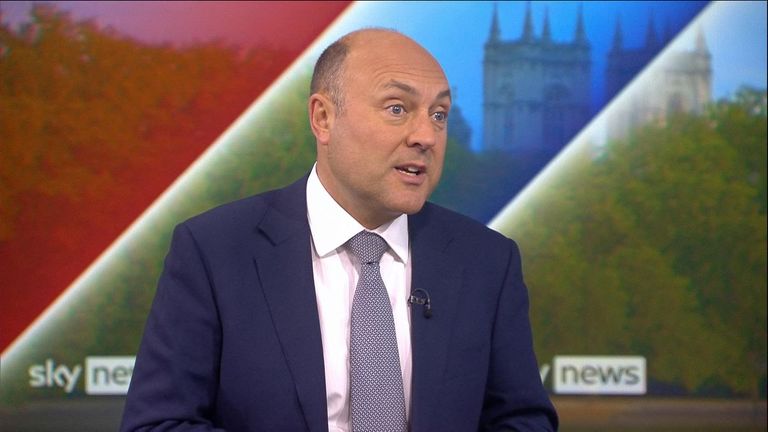
On Sunday morning, both Mr Hunt and Andrew Griffith, financial secretary to the Treasury, said they think Ms Truss will remain as they showed their loyalty to the PM.

To register your interest and share your story, please email TheGreatDebate@sky.uk
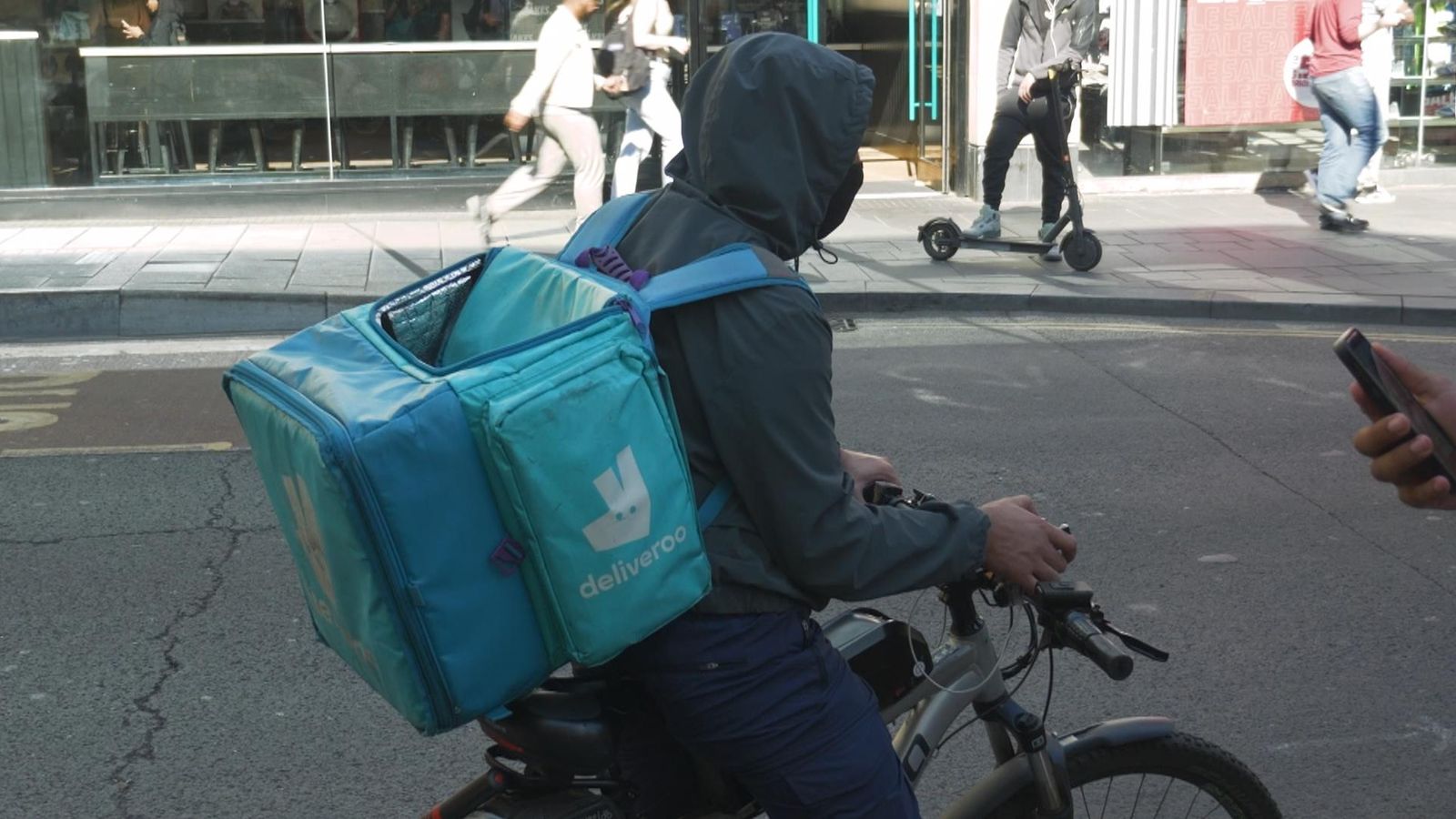
The UK is deporting 60 delivery riders found to be working illegally after an immigration crackdown.
Targeted action against workers in the so-called gig economy led to 171 arrests nationwide last month, the Home Office said.
Those arrested included Chinese nationals working in a restaurant in Solihull, Bangladeshi and Indian riders in east London, and Indian delivery riders in Norwich.
The drive comes as ministers try to crack down on illegal working in the UK, as part of efforts to deter those coming to the country illegally.
Home Office figures show there were 8,232 arrests of illegal workers in the year to September, up 63% compared with the previous 12 months.
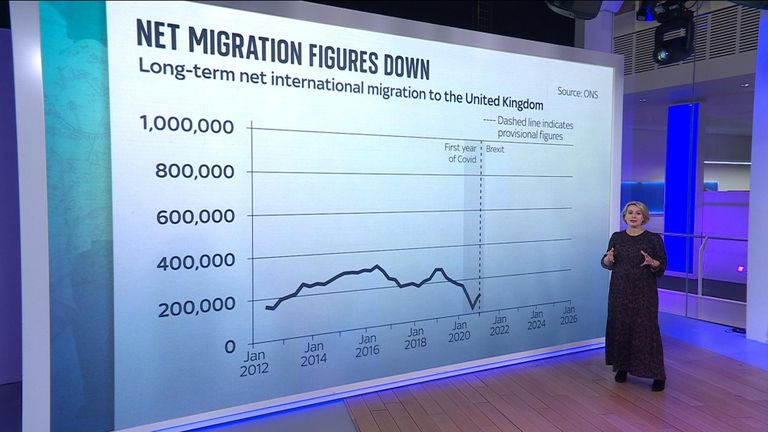
Net migration figures down
Home Secretary Shabana Mahmood set out reforms to the asylum system last month, aimed at making the UK less attractive for illegal migration and making it easier to deport people.
Border security minister Alex Norris said the government was rooting out the criminality of illegal working in the delivery sector from communities.
He went on to say: “These results should send a clear message, if you are working illegally in this country, you will be arrested and removed.
“This action is part of the most sweeping changes to illegal migration in modern times to reduce the incentives that draw illegal migrations here and scale up removals.”
Read more:
France will soon be able to intercept suspected migrant taxi boats
How is Britain’s immigration system actually changing?
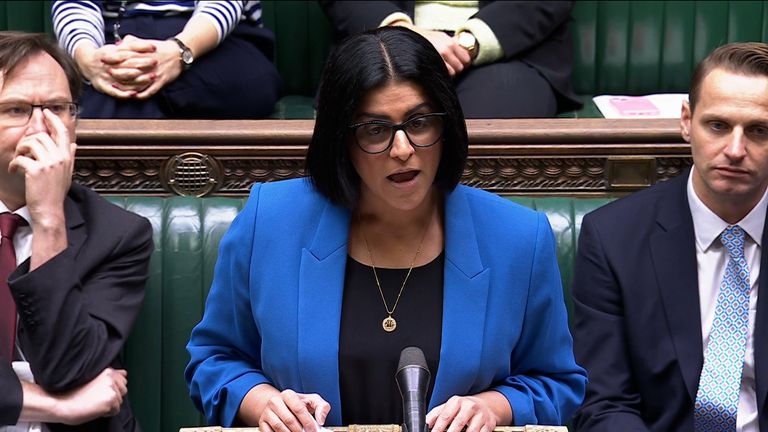
Home secretary sets out migration rules
Ministers have also been working with firms Deliveroo, Just Eat and Uber Eats to address concerns of abuse in the sector and ramping up identity checks to tackle account-sharing.
The Home Office also agreed in July to share asylum hotel locations with food delivery companies, to tackle suspected hot spots of illegal working.
The action also comes as the government’s new Border Security, Asylum and Immigration Act became law on Tuesday, which includes measures to close a “loophole” for casual, temporary or subcontracted workers to also have to prove their status.
Employers who fail to carry out checks could face up to five years in prison, fines of £60,000 for each illegal worker they have employed, and having their business closed.
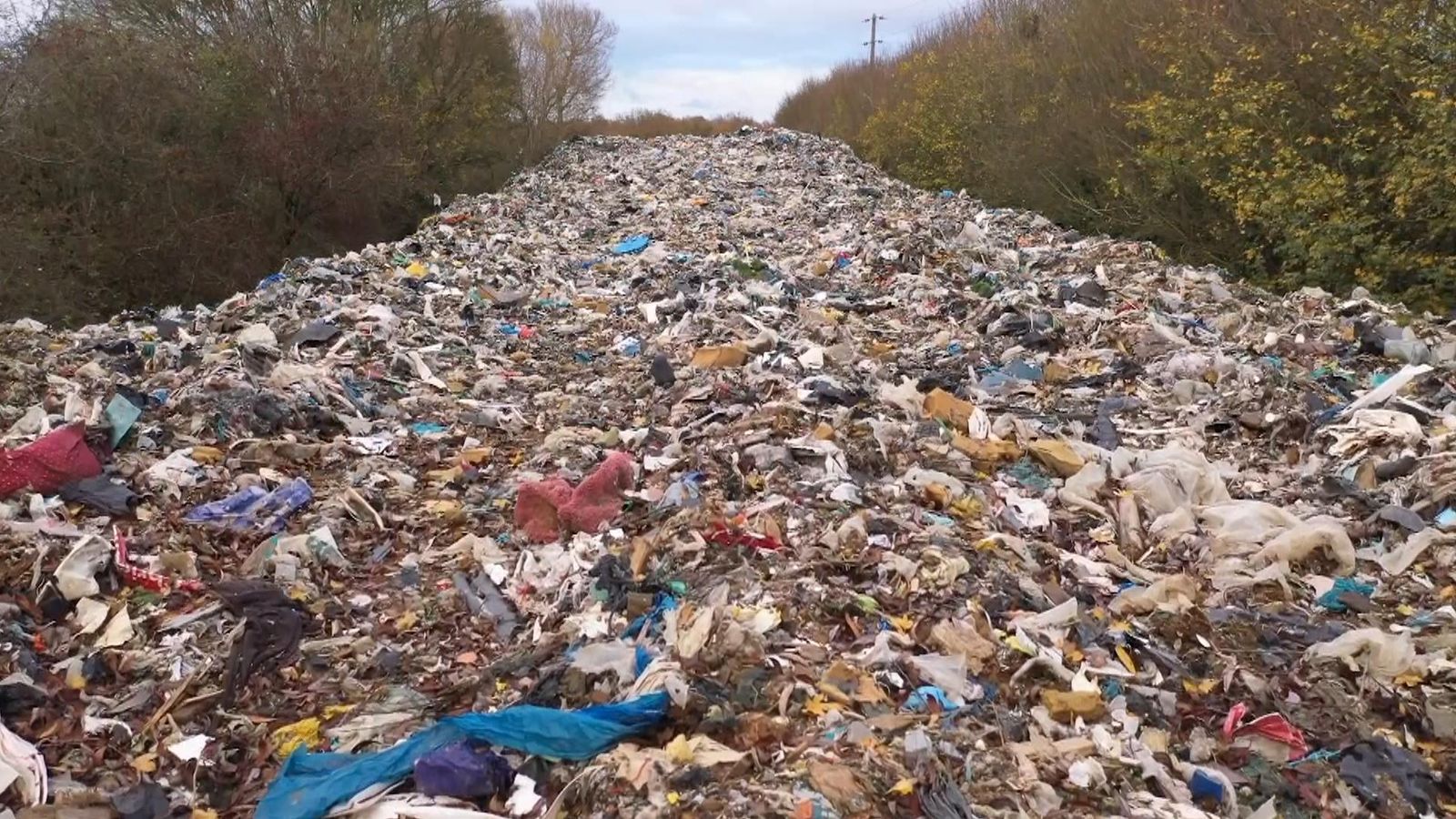
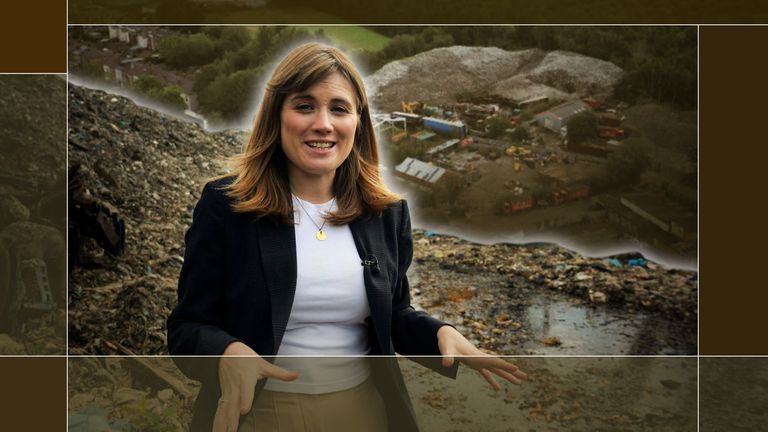
Environment Agency bosses have been accused of “failing” to tell a cross-party committee of peers about three large-scale illegal waste sites – including one that was recently exposed by Sky News.
Our investigation into waste crime in Wigan heard from residents who repeatedly complained to the Environment Agency that 20 to 30 lorries a day drove down their street last winter and dumped industrial amounts of waste.
The rubbish now sits at a staggering 25,000 tonnes. It burnt for nine days in July, and has seen local homes infested with rats and flies.
Since then, a similarly sized site in Kidlington near the River Cherwell in Oxfordshire sparked national outrage. One man has been arrested in connection with the dumping.
‘Epidemic’ of waste crime in Britain
Despite the scale of these two locations – which were well known to the Environment Agency – it neglected to name them when asked by the Lord’s Environment Committee’s inquiry into waste crime how many “significant” sites there were around the country.
Phil Davies and Steve Molyneux of the Environment Agency gave evidence on 17 September.
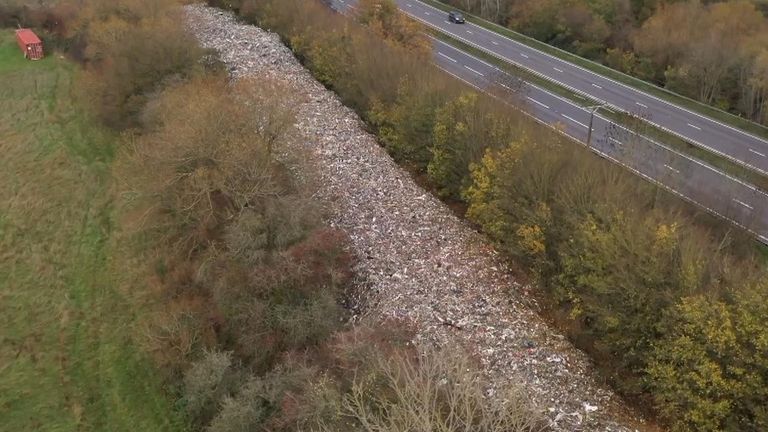
Just six sites were cited, but three more have been exposed in the past few weeks alone. These are Wigan, Kidlington and a mound of dumped waste in Wadborough.
Now, the Lords are worried there are more environmentally destructive locations the public aren’t aware of.
Read more:
A community plagued by 25,000 tonnes of illegal waste
Urgent action needed to stop fly-tipping by gangs, peers say
In a letter to the EA’s chair Alan Lovell and chief executive Philip Duffy, Baroness Sheehan, chair of the Environment and Climate Change Committee, said: “We are increasingly concerned that there may be other sites of a similarly large and environmentally damaging scale.”
She asked how much progress has been made to remove waste from the various sites, why restriction notices in places like Wigan weren’t served sooner – and for a full list of other sites of a similar size.
Baroness Sheehan also expressed her “disappointment” that these three new locations “were not deemed necessary to bring to the committee’s attention”, though she thanked journalists for “bringing these sites to the public attention”.
UK’s ‘biggest ecological disaster’
Her original report saw the Lords call for an independent “root and branch” inquiry into how waste crime is tackled. She said the crime, which costs the UK £1bn every year, has been “critically under-prioritised”.
Sky News has been investigating the scourge of waste crime all year, exposing how criminal gangs involved in drugs, weapons and people trafficking can make “millions” from illegally dumping waste.
In the summer, we tracked down a group of suspected organised fly-tippers who waved wads of cash on TikTok after dumping waste in the countryside.
It’s so lucrative, it was dubbed the “new narcotics” by a former head of the Environment Agency.

A new long-awaited child poverty strategy is promising to lift half a million children out of poverty by the end of this parliament – but critics have branded it unambitious.
The headline announcement in the government’s plan is the pledge to lift the two-child benefit cap, announced in Rachel Reeves’s budget last week.
It also includes:
• Providing upfront childcare support for parents on universal credit returning to work
• An £8m fund to end the placement of families in bed and breakfasts beyond a six-week limit
• Reforms to cut the cost of baby formula
• A new legal duty on councils to notify schools, health visitors, and GPs when a child is placed in temporary accommodation
Many of the measures have previously been announced.
Two-child cap ‘a real victory for the left’
The government also pointed to its plan in the budget to cut energy bills by £150 a year, and its previously promised £950m boost to a local authority housing fund, which it says will deliver 5,000 high-quality homes for better temporary accommodation.
Downing Street said the strategy would lift 550,000 children out of poverty by 2030, saying that would be the biggest reduction in a single parliament since records began.
But charities had been hoping for a 10-year strategy and argue the plan lacks ambition.
A record 4.5 million children (about 31%) are living in poverty in the UK – 900,000 more since 2010/11, according to government figures.
Phillip Anderson, the Strategic Director for External Affairs at the National Children’s Bureau (NCB), told Sky News: “Abolishing the two-child limit is a hell of a centre piece, but beyond that it’s mainly a summary of previously announced policies and commitments.
“The really big thing for me is it misses the opportunity to talk about the longer term. It was supposed to be a 10-year strategy, we wanted to see real ambition and ideally legally binding targets for reducing poverty.
“The government itself says there will still be around four million children living in poverty after these measures and the strategy has very little to say to them.”

‘A budget for benefits street’
‘Budget for benefits street’ row
The biggest measure in the strategy is the plan to lift the two-child benefit cap from April. This is estimated to lift 450,000 children out of poverty by 2030, at a cost of £3bn.
The government has long been under pressure from backbench Labour MPs to scrap the cap, with most experts arguing that it is the quickest, most cost-effective way to drive-down poverty this parliament.
The cap, introduced by Conservative chancellor George Osborne in 2017, means parents can only claim universal credit or tax credits for their first two children. It meant the average affected household losing £4,300 per year, the Institute for Fiscal Studies calculated in 2024.
The government argues that a failure to tackle child poverty holds back the economy, and young people at school, cutting their employment and earning prospects in later life.
However, the Conservatives argue parents on benefits should have to make the same financial choices about children as everyone else.
Shadow chancellor Mel Stride said: “Work is the best way out poverty but since this government took office, unemployment has risen every single month and this budget for Benefits Street will only make the situation worse. “
OBR leak: This has happened before
‘Bring back Sure Start’
Lord Bird, a crossbench peer who founded the Big Issue and grew up in poverty, said while he supported the lifting of the cap there needed to be “more joined up thinking” across government for a longer-term strategy.
He has been pushing for the creation of a government ministry of “poverty prevention and cure”, and for legally binding targets on child poverty.
“You have to be able to measure yourself, you can’t have the government marking its own homework,” he told Sky News.
Lord Bird also said he was a “great believer” in resurrecting Sure Start centres and expanding them beyond early years.
The New Labour programme offered support services for pre-school children and their parents and is widely seen to have improved health and educational outcomes. By its peak in 2009-2010 there were 3,600 centres – the majority of which closed following cuts by the subsequent Conservative government.

Lord Bird on the ‘great distraction’ from child poverty
PM to meet families
Sir Keir Starmer’s government have since announced 1,000 Best Start Family Hubs – but many Labour MPs feel this announcement went under the radar and ministers missed a trick in not calling them “Sure Starts” as it is a name people are familiar with.
The prime minister is expected to meet families and children in Wales on Friday, alongside the Welsh First Minister, to make the case for his strategy and meet those he hopes will benefit from it.
Several other charities have urged ministers to go further. Both Crisis and Shelter called for the government to unfreeze housing benefit and build more social rent homes, while the Children’s Commissioner for England, Dame Rachel de Souza, said that “if we are to end child poverty – not just reduce it” measures like free bus travel for school-age children would be needed.
The strategy comes after the government set up a child poverty taskforce in July 2024, which was initially due to report back in May. The taskforce’s findings have not yet been published – only the government’s response.
Sir Keir said: “Too many children are growing up in poverty, held back from getting on in life, and too many families are struggling without the basics: a secure home, warm meals and the support they need to make ends meet.
“I will not stand by and watch that happen, because the cost of doing nothing is too high for children, for families and for Britain.”
-
 Sports2 years ago
Story injured on diving stop, exits Red Sox game
-
 Sports3 years ago
‘Storybook stuff’: Inside the night Bryce Harper sent the Phillies to the World Series
-
 Sports2 years ago
Game 1 of WS least-watched in recorded history
-
 Sports3 years ago
Button battles heat exhaustion in NASCAR debut
-
 Sports3 years ago
MLB Rank 2023: Ranking baseball’s top 100 players
-
Sports4 years ago
Team Europe easily wins 4th straight Laver Cup
-
 Environment3 years ago
Japan and South Korea have a lot at stake in a free and open South China Sea
-
 Environment1 year ago
Here are the best electric bikes you can buy at every price level in October 2024