Connect with us

Published

on

The government is not planning to open an inquiry solely into the safety of coronavirus vaccines, a health minister has said.

Caroline Johnson added the vaccines will be reviewed as part of the wider UK COVID-19 inquiry.

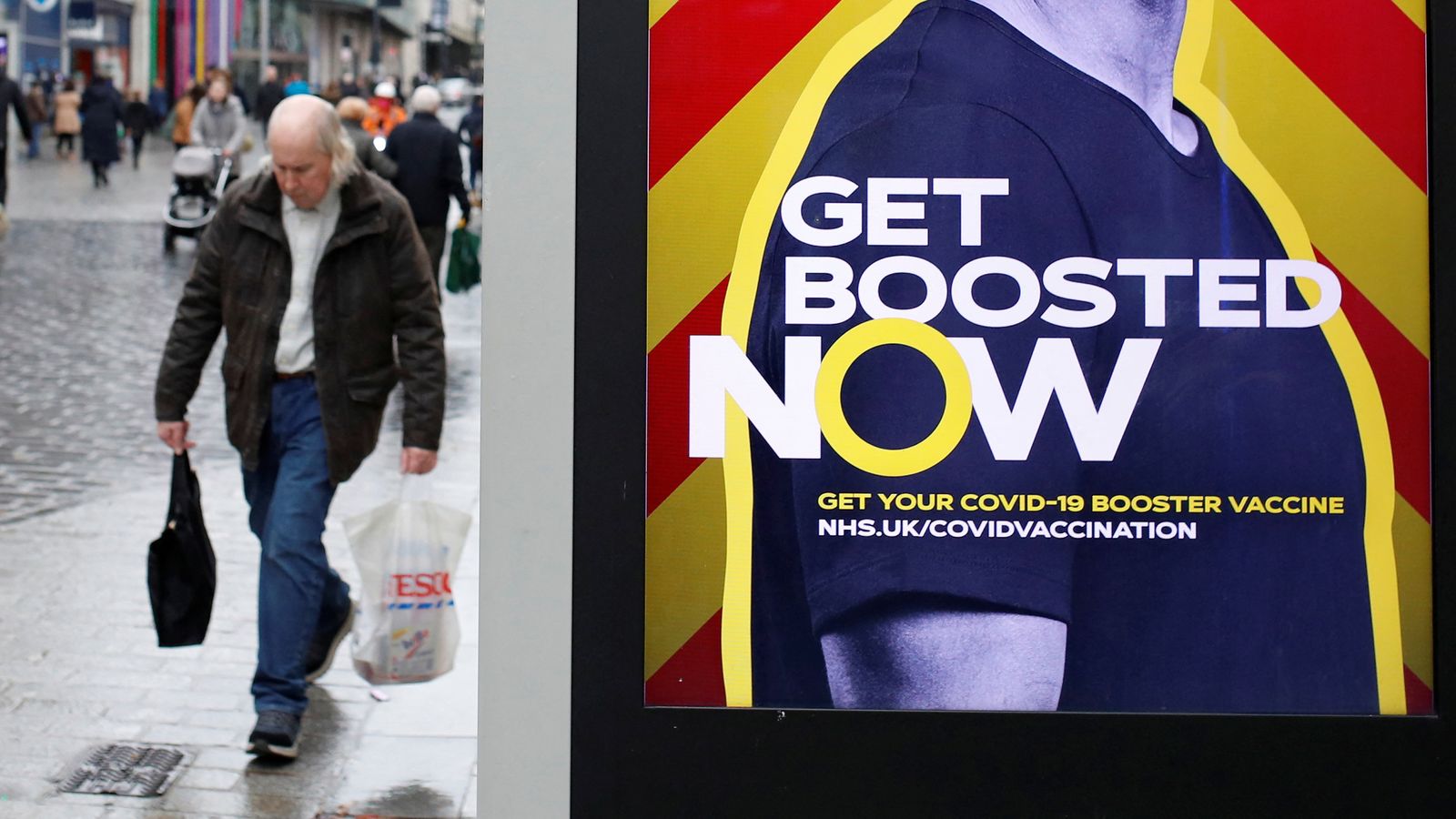
However, Dr Johnson insisted the jabs are safe and encouraged those eligible to come forward for autumn boosters.

She was speaking during a Westminster Hall debate in parliament – held in response to a petition calling for a public inquiry into COVID-19 vaccine safety, which has been signed more than 107,000 times.

A few MPs raised concerns during the debate about the vaccines’ possible side effects, including what some described as data showing a correlation with increased levels of cardiovascular problems.

The NHS website says “reports of serious side effects are very rare” and the “COVID-19 vaccines approved for use in the UK have met strict standards of safety, quality and effectiveness”.

Scottish National Party MP Steven Bonnar said the vaccine programme saved “millions of lives”, adding almost 28,000 of those were in Scotland.

More on Covid

But he added: “Despite this, there has been a significant increase in heart attacks and other related illnesses since the COVID-19 vaccinations started to be distributed in 2021.

“To determine if there is any potential connection with the COVID-19 (vaccine) rollout, I believe this government must conduct an immediate and complete scientific investigation and ensure that the prescribed medical interventions of its response to coronavirus are indeed safe.”

But Mr Bonnar also said he would take his booster when called, and said people can “safely receive” their flu and COVID jabs at the same time as part of the autumn booster plan, saying they have been shown to be effective and “acceptably safe”.

Conservative former minister Sir Christopher Chope said: “I agree with the legitimate concerns of the 100,000-plus people who signed this petition and I share their belief that the recent and increasing volume of data relating to cardiovascular problems is enough of concern to warrant an inquiry into safety.”

Sir Christopher chairs the COVID-19 Vaccine Damage All-Party Parliamentary Group, which has five members: four Conservative and one Labour.

He acknowledged the wider COVID inquiry “is going to cover, I think, a lot of this ground”, but said: “That won’t be for many years.

“And in the meantime people are being encouraged to have more and more boosters, and they want to know, understandably, what the impact of those boosters is upon their health and what the potential risks and rewards are.

“The government seems to be in denial about the risks of these vaccines,” the MP for Christchurch said, saying the booster vaccines “are not perfectly safe, and there’s a question about whether they are effective”.

He warned the vaccine damage payment scheme is “not fit for purpose”, and said: “Many people now would not touch a booster with a barge pole, and I include myself amongst those.

“I am not anti-vax, I had my first two vaccines, but from all that I’ve seen and know about this, I think that the increase in boosters is now, for many people, counterproductive, and for some people it’s also dangerous.”

Read more:
COVID infections in UK rise to two million – but may be nearing peak

COVID pandemic caused ‘changes to global mortality not seen in 70 years’
COVID cases are rising again – do we need to worry?

Conservative MP Elliot Colburn led the debate, but said: “I do not think that the government should be launching a public inquiry into vaccine safety. I think it would be a waste of taxpayers’ money and I do not think it is necessary.

“We know that vaccines are the best way to protect against COVID-19 and it has already saved tens of thousands of lives.”

Dr Johnson, a health minister, said: “The government has already commissioned a public inquiry into the pandemic, and COVID vaccines will be reviewed as part of this inquiry. There are no plans for an inquiry solely on vaccine safety.

“We are facing a tough winter ahead, and collectively we must do everything we can to protect those most vulnerable and to reduce pressure on the National Health Service.

“I would encourage everyone eligible to step forward for their COVID and flu vaccines as soon as they are available.”

She said: “There is no evidence that people are at an increased risk of cardiac arrest in the days and weeks following the vaccine, and the risk of getting myocarditis or pericarditis after the vaccine remains very low.”

Continue Reading

UK

UK has seen longest period without migrants arriving on small boats since 2018, figures show

Published

on

By

UK has seen longest period without migrants arriving on small boats since 2018, figures show

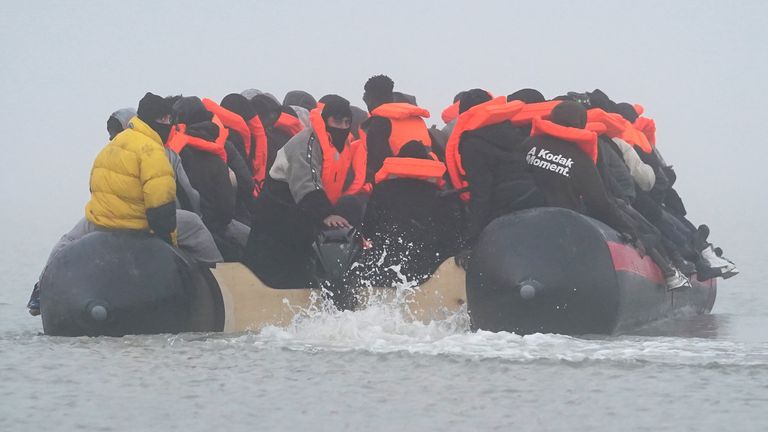
There have been no migrant arrivals in small boats crossing the Channel for 28 days, according to Home Office figures.

The last recorded arrivals were on 14 November, making it the longest uninterrupted run since autumn 2018 after no reported arrivals on Friday.

However, a number of Border Force vessels were active in the English Channel on Saturday morning, indicating that there may be arrivals today.

So far, 39,292 people have crossed to the UK aboard small boats this year – already more than any other year except 2022.

The record that year was set at 45,774 arrivals.

It comes as the government has stepped up efforts in recent months to deter people from risking their lives crossing the Channel – but measures are not expected to have an impact until next year.

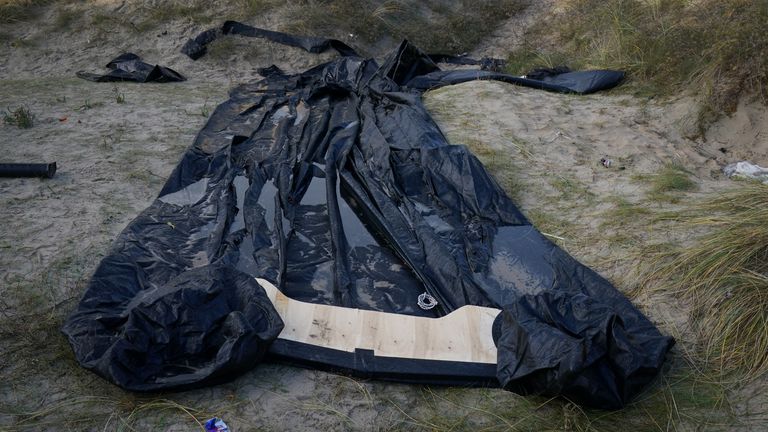
Debris of a small boat used by people thought to be migrants to cross the Channel lays amongst the sand dunes in Gravelines, France. Pic: PA
Image:
Debris of a small boat used by people thought to be migrants to cross the Channel lays amongst the sand dunes in Gravelines, France. Pic: PA

December is normally one of the quietest for Channel crossings, with a combination of poor visibility, low temperatures, less daylight and stormy weather making the perilous journey more difficult.

The most arrivals recorded in the month of December is 3,254, in 2024.

Deputy Prime Minister David Lammy met with ministers from other European countries this week as discussions over possible reform to the European Convention on Human Rights (ECHR) continue.
Please use Chrome browser for a more accessible video player

France agrees to start intercepting small boats

The issue of small boat arrivals – a very small percentage of overall UK immigration – has become a salient issue in British politics in recent years.

Last month, French maritime police announced they would soon be able to intercept boats in the English Channel.
Continue Reading

UK

King reveals ‘good news’ in his battle with cancer and urges people to get checked

Published

on

By

King reveals 'good news' in his battle with cancer and urges people to get checked

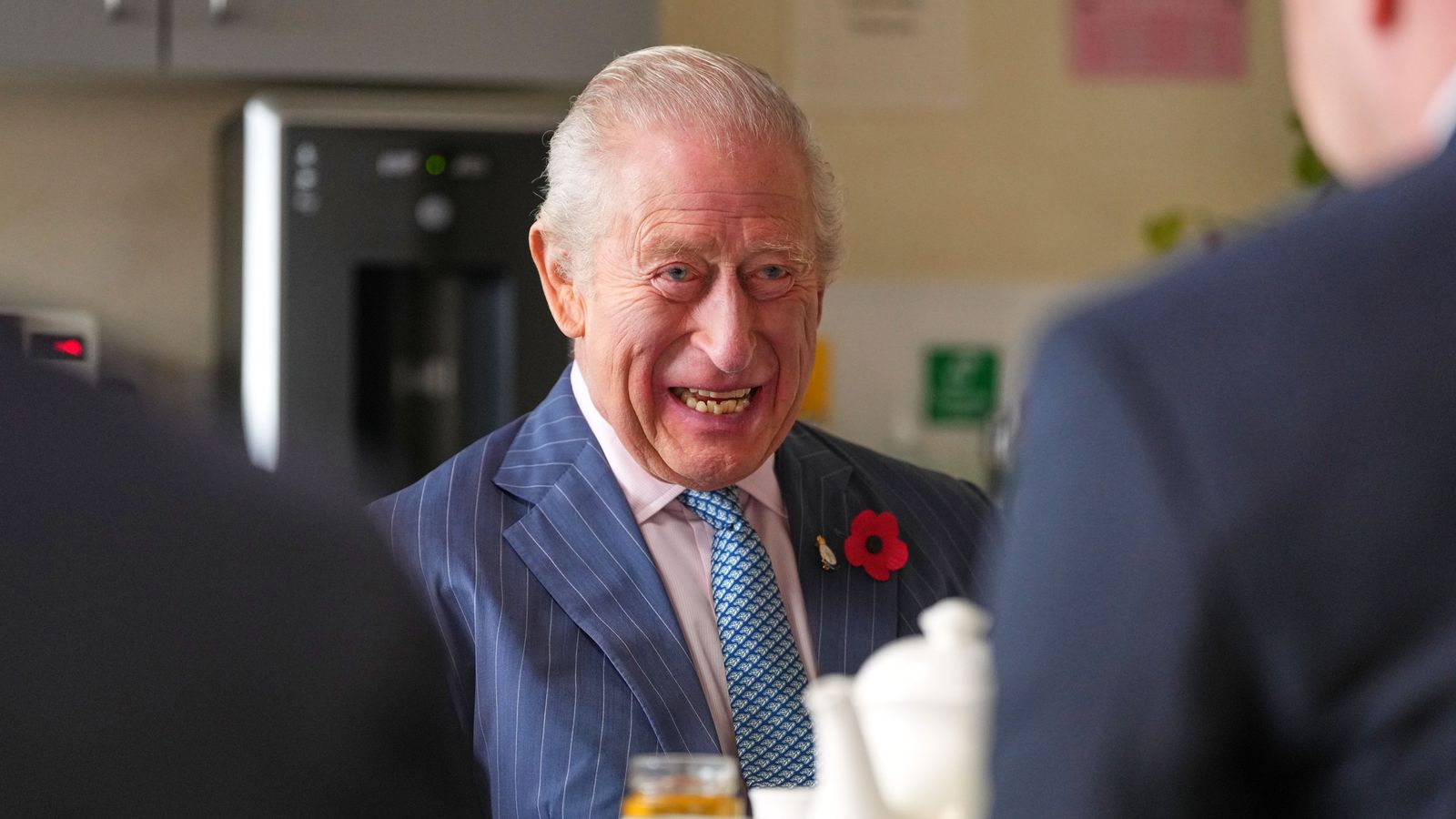
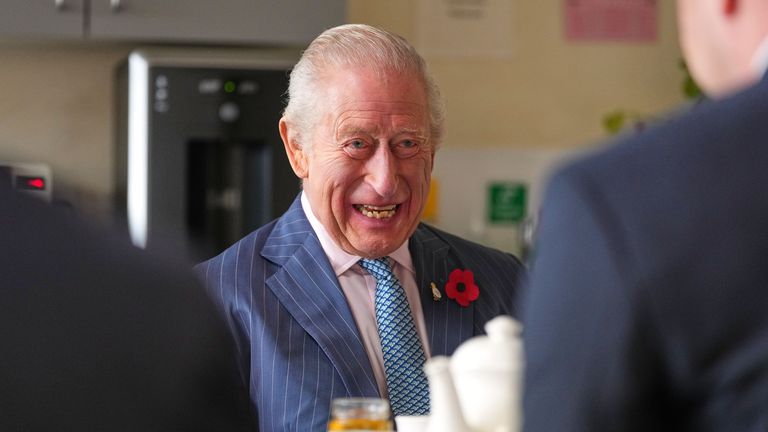
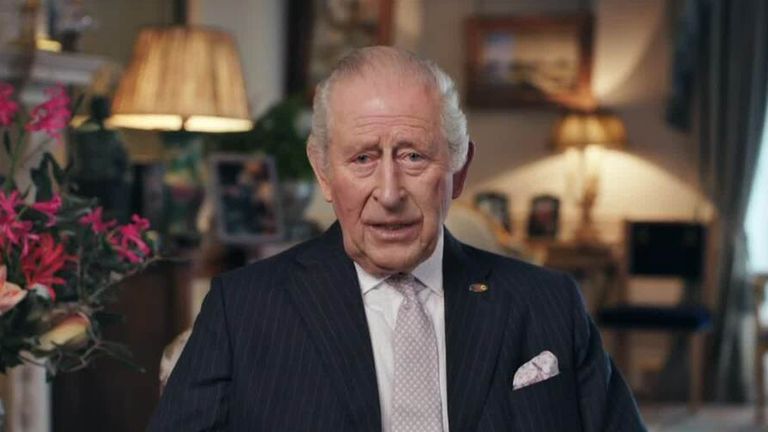
The King has shared in a television address that, thanks to early diagnosis, his cancer treatment can be reduced in the new year.

In a televised address, Charles said his “good news” was “thanks to early diagnosis, effective intervention and adherence to doctors’ orders”.

“This milestone is both a personal blessing and a testimony to the remarkable advances that have been made in cancer care in recent years,” he added.

“Testimony that I hope may give encouragement to the 50% of us who will be diagnosed with the illness at some point in our lives.”

The King announced in February 2024 that he had been diagnosed with cancer and was beginning treatment.

The monarch postponed all public-facing engagements, but continued with his duties as head of state behind palace walls, conducting audiences and Privy Council meetings.

He returned to public duties in April last year and visited University College Hospital Macmillan Cancer Centre in central London with the Queen and discussed his “shock” at being diagnosed when he spoke to a fellow cancer patient.

More on Cancer

Sources suggested last December his treatment would continue in 2025 and was “moving in a positive direction”.

The King began returning to public duties in April last year. File pic: PA
Image:
The King began returning to public duties in April last year. File pic: PA

The King has chosen not to reveal what kind of cancer he has been treated for. Palace sources have partly put that down to the fact that he doesn’t want one type of cancer to appear more significant or attract more attention than others.

In a statement after the speech aired, a Buckingham Palace spokesperson said: “His Majesty has responded exceptionally well to treatment and his doctors advise that ongoing measures will now move into a precautionary phase.”

Sir Keir Starmer praised the video message as “a powerful message,” and said: “I know I speak for the entire country when I say how glad I am that his cancer treatment will be reduced in the new year.

“Early cancer screening saves lives.”
Please use Chrome browser for a more accessible video player

Watch: King Charles gives update on treatment

Early detection can give ‘the precious gift of hope’

His message on Friday was broadcast at 8pm in support of Stand Up To Cancer, a joint campaign by Cancer Research UK and Channel 4.

In an appeal to people to get screened for the disease early, the King said: “I know from my own experience that a cancer diagnosis can feel overwhelming.

“Yet I also know that early detection is the key that can transform treatment journeys, giving invaluable time to medical teams – and, to their patients, the precious gift of hope. These are gifts we can all help deliver.”

Charles noted that “at least nine million people in our country are not up to date with the cancer screenings available to them,” adding: “That is at least nine million opportunities for early diagnosis being missed.

“The statistics speak with stark clarity. To take just one example: When bowel cancer is caught at the earliest stage, around nine in ten people survive for at least five years.

“When diagnosed late, that falls to just one in ten. Early diagnosis quite simply saves lives.”

after months of uncertainty, some relief and reassurance for the King

This is a rare but positive update. The King in his own words speaking about his cancer.

And it’s good news.

Since his diagnosis, he’s received weekly treatment. His work schedule has had to fit around the appointments. And while it’s not stopping, it is being significantly reduced.

He’s responded well, and his recovery has reached, we understand, a very positive stage.

The King’s decision to speak publicly and so personally is unusual.

He has deliberately chosen the moment, supporting the high-profile Stand Up To Cancer campaign, and the launch of a national online screening checker.

It still hasn’t been revealed what kind of cancer he has. And there’s a reason – firstly, it’s private information.

But more importantly, the King knows the power of sharing his story. And with it, the potential to support the wider cancer community.

We are once again seeing a candid openness from the Royal Family. Earlier this year, the Princess of Wales discussed the ups and downs of her cancer journey.

These moments signal a shift towards greater transparency on matters the Royal Family once kept entirely private.

For millions facing cancer, the King’s update is empathy and encouragement from someone who understands.

And after months of uncertainty, for the King himself, some relief and reassurance.

Minor inconvenience of screening ‘a small price to pay’

The King acknowledged that people often avoid screening “because they imagine it may be frightening, embarrassing or uncomfortable”. But, he added: “If and when they do finally take up their invitation, they are glad they took part.

“A few moments of minor inconvenience are a small price to pay for the reassurance that comes for most people when they are either told either they don’t need further tests, or, for some, are given the chance to enable early detection, with the life-saving intervention that can follow.”

Read more from Sky News:
Christmas tree chopped down hours after lights switch-on
More photos from Epstein’s estate released
Taylor Swift breaks down in tears over Southport attacks

Giving his “most heartfelt thanks” to doctors, nurses, researchers and charity workers, the King added: “As I have observed before, the darkest moments of illness can be illuminated by the greatest compassion. But compassion must be paired with action.

“This December, as we gather to reflect on the year past, I pray that we can each pledge, as part of our resolutions for the year ahead, to play our part in helping to catch cancer early.

“Your life – or the life of someone you love – may depend upon it.”
Continue Reading

UK

Man found guilty of murdering wife in rare retrial

Published

on

By

Man found guilty of murdering wife in rare retrial

A 52-year-old carpenter from Surrey has been found guilty of murdering his wife in a rare retrial, eight years after being acquitted.

Robert Rhodes killed his estranged wife, Dawn Rhodes, by slitting her throat with a knife at their family home in Redhill, Surrey, in June 2016.

He was previously found not guilty after a trial at the Old Bailey in 2017, where he convinced jurors that he had acted in self-defence during an argument.

It has since emerged that this was a “cover-up”, after the couple’s child came forward with new evidence that Rhodes killed Ms Rhodes, and they were involved in the murder too.

In 2021, the child, who was under the age of 10 at the time of the murder, told police they had been manipulated into lying about the true version of events by their father.

Both Rhodes and the child were found with knife wounds at the scene, which were initially claimed to have been inflicted in an attack by Ms Rhodes.

The child’s new account stated that after Rhodes killed his wife, he inflicted two wounds to his scalp before instructing the child to inflict two more on their father’s back. He then cut his own child’s arm so deeply that it required stitches under general anaesthetic.

Under the double jeopardy rule a person cannot be tried twice for the same crime, unless new and compelling evidence comes out after an acquittal or conviction for serious offences.

On Friday, jurors at Inner London Crown Court convicted Rhodes of murder and child cruelty.

He was also found guilty of perverting the course of justice and two counts of perjury.

Rhodes will be sentenced on 16 January.

What is the law on double jeopardy?

The double jeopardy rule is a legal principle that prevents a person from being tried twice for the same crime after they have been acquitted or convicted.

It’s a protection for that person from harassment. However, the law permits a retrial where someone was acquitted of a serious offence, but new and compelling evidence has since come to light which indicates the person might actually be guilty.

In this case, the new evidence from the child was compelling enough for the Court of Appeal to quash the acquittal and a retrial to take place.

Crucially, the child’s evidence was so compelling that the Court of Appeal agreed Rhodes needed to be tried again.

Surrey Police told Sky News that the child, who was of primary school age at the time and is below the age of criminal responsibility, was “groomed” by Rhodes into lying.

The Crown Prosecution Service said “the child’s part in the plan was that they would distract the mother by saying to the mother ‘hold out your hands, I’ve got a surprise for you’, and the child would then put a drawing into the hands of the mother”.

Rhodes then cut his wife’s throat. She was found lying face down in a pool of blood in the dining room.

How the case unfolded

2 June 2016 – Dawn Rhodes killed

5 June 2016 – Robert Rhodes charged with murder

2 May 2017 – first trial begins

30 May 2017 – not guilty verdict

18 November 2021 – child gives therapist new account

Late November 2021 – police reopen case

4 June 2024 – Robert Rhodes rearrested and charged the next day

7 November 2024 – Rhodes’s acquittal quashed

2 October 2025 – second trial begins

Libby Clark, specialist prosecutor for the Crown Prosecution Service’s South East Area Complex Casework Unit, said the child showed “great bravery and strength” in coming forward with the truth.

She said: “The child has grown up with the dawning realisation, I would say, that they were part of a plan. They were complicit in the murder of the mother, Dawn Rhodes.”

Legal commentator Joshua Rozenberg said there are “very few cases” where a retrial like this happens.

He said: “It’s very unusual. I don’t think there’s been a case that I can think of where a witness who was present at the scene of the crime has come forward and given evidence, which has led to a conviction.”

Continue Reading

Trending