
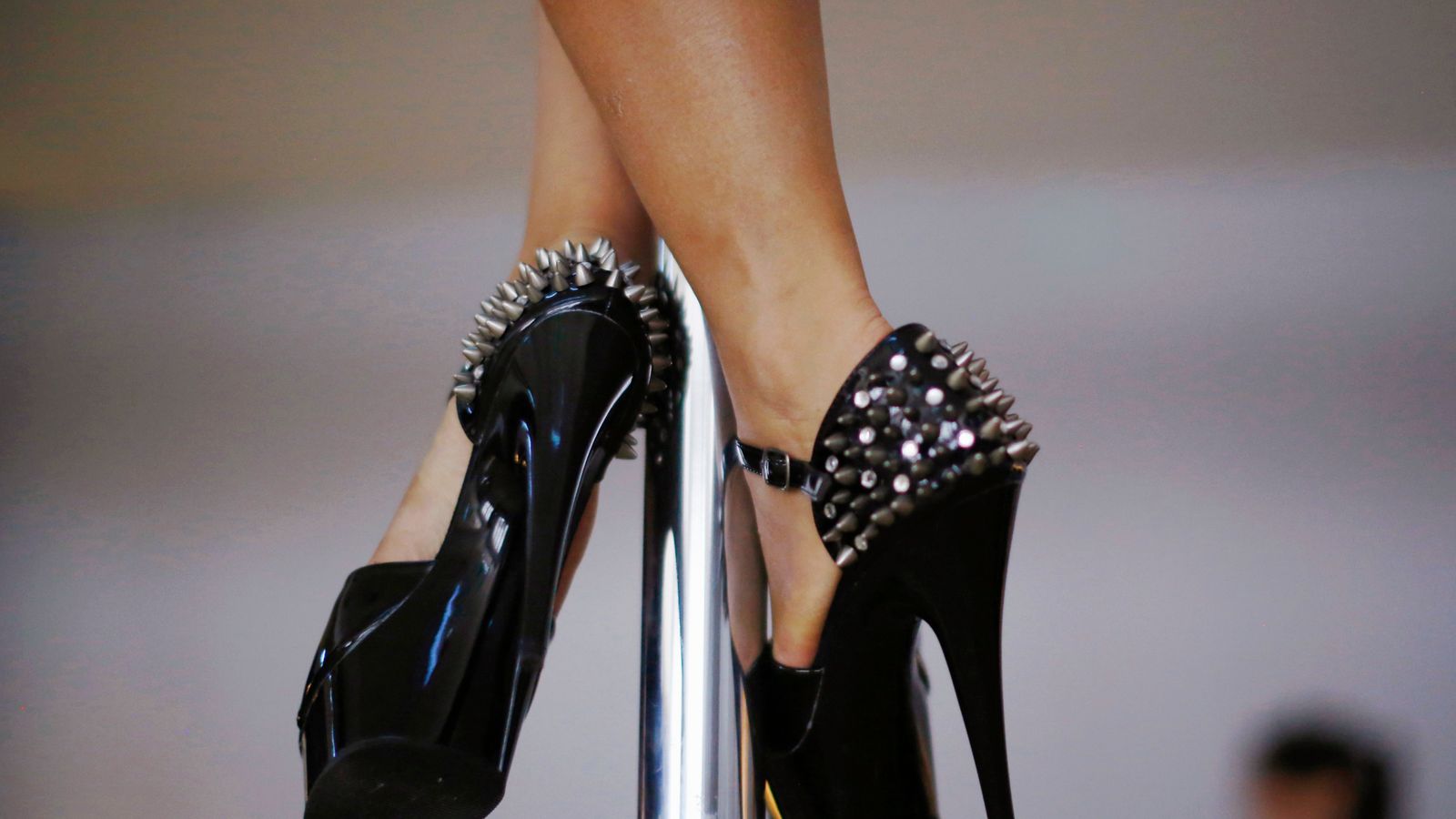
‘Feminists can’t tell us what to do with our bodies’: Sex workers fight council strip club ban in Edinburgh


Strippers in Edinburgh have told Sky News the council’s decision to ban sexual entertainment venues (SEVs) will financially devastate them, as the clubs and the union launch a judicial review to challenge the shutdown of the city’s clubs.
Three Edinburgh clubs (Baby Dolls, The Western and Burke and Hare) and the United Sex Workers (USW) union argue the council vote to limit the number of licensed venues to zero from April 2023 will force the industry underground, making it riskier for the women.
‘It should be my choice’
Edinburgh dancer Sasha told Sky News the choice should be hers to make.
“I think it is our right to choose that and I don’t think it’s right for feminists to tell women what they should and shouldn’t be doing with their bodies, what jobs they should do, and what jobs they shouldn’t do,” she said.
Sasha is an Edinburgh-based stripper
Sasha added that working as a stripper means good money and flexible shifts that helps her as a mother.
“As a parent, I just find it very flexible and there’s a potential for it to be well paid, so it ticks a lot of boxes for me. Particularly the flexibility, the money is never guaranteed, but the flexibility is great.”
Sasha doesn’t believe changing what she does is an option.
“It’s not that easy, we’ve been doing what we’re doing, most of us, for years – and that’s our trade, it’s our industry and that’s what we want to continue doing to make money.”
‘Epitome of the patriarchy’
However, for those campaigning for the ban of strip clubs, they say the choice to do this work shouldn’t be available.
Former Labour councillor and writer Susan Dalgety believes the council’s decision is right for women.
“As a feminist, I think that men paying us for sexual favours is the worst kind of exploitation of our bodies,” she said.
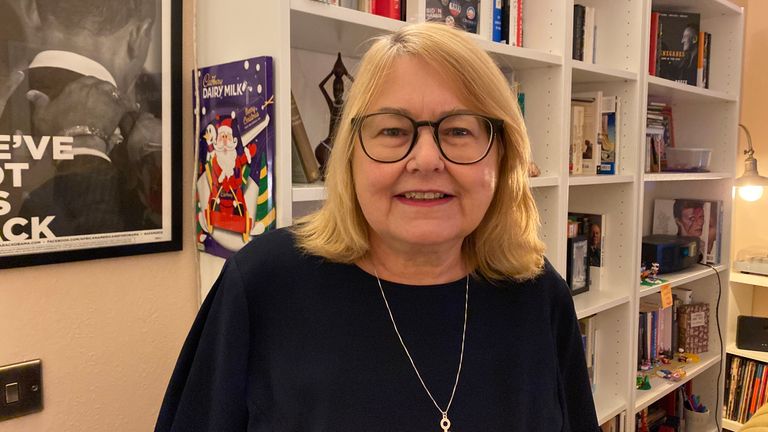
Former Edinburgh Labour councillor Susan Dalgety
“And it is the epitome of the patriarchy that men are much more powerful in society than women, and that all we are there for is either to reproduce the next generation or for the sexual entertainment of men.
“All Edinburgh is doing is saying that in our city we do not want to legitimise sexual entertainment. It’s living pornography.
“It is young women taking their clothes off and dancing sexually for the pleasure of men.”
Read more on Sky News:
How can I save £100 off my energy bills?
No-fault evictions driving up homelessness rates in this region
Ms Dalgety’s views have changed. As a young councillor, she believed such clubs should exist and be properly regulated for the safety of women.
In the 1990s, she voted to licence saunas “knowing full well that they were brothels”.
“Edinburgh was the epicentre of the AIDS epidemic in the UK in the late 1980s and early 1990s, and it was spread through the drug using community,” she said.
“So it was in the heterosexual community and sex workers, unfortunately, were at a much higher risk of it,” Ms Dalgety said, adding the policy choice back then was “a public health decision”, but now she thinks the very existence of any sexual entertainment venue is problematic.
Forcing women into dangerous conditions
Mina from the USW union told Sky News that exploitation isn’t found in the clubs; instead, it is in forcing women into working minimum wage jobs.
“The patriarchy exists across all aspects of society, so clearly stripping is not free from that. However, it is the dancer’s decision to choose that form of work, they’re not being exploited,” she said.

Mina from the United Sex Workers union
“United Sex Workers take the position that shutting down legal, regulated place of work for dancers who are primarily women would force them to work more dangerous conditions, especially in a cost of living crisis.
“Sex workers are not to be blamed for exploitation of actual violence because it splits women into particles of good and bad. And it’s never that simple, and it’s not fair.”
Previously, sex workers have told Sky News that the cost of living crisis means they are unable to say no to dangerous clients.
Decision is for ‘prevention of crime and disorder’
In a statement, Edinburgh City Council told Sky News the decision to close down the strip clubs was for the “preservation of public safety and the prevention of crime and disorder” and that “SEVs can still apply for a licence and a committee would consider them against the agreed policy”.
The judicial review decision is expected to take several weeks, possibly months.
UK
UK special forces unit had ‘deliberate policy’ to ‘kill fighting-aged males’ in Afghanistan, inquiry told
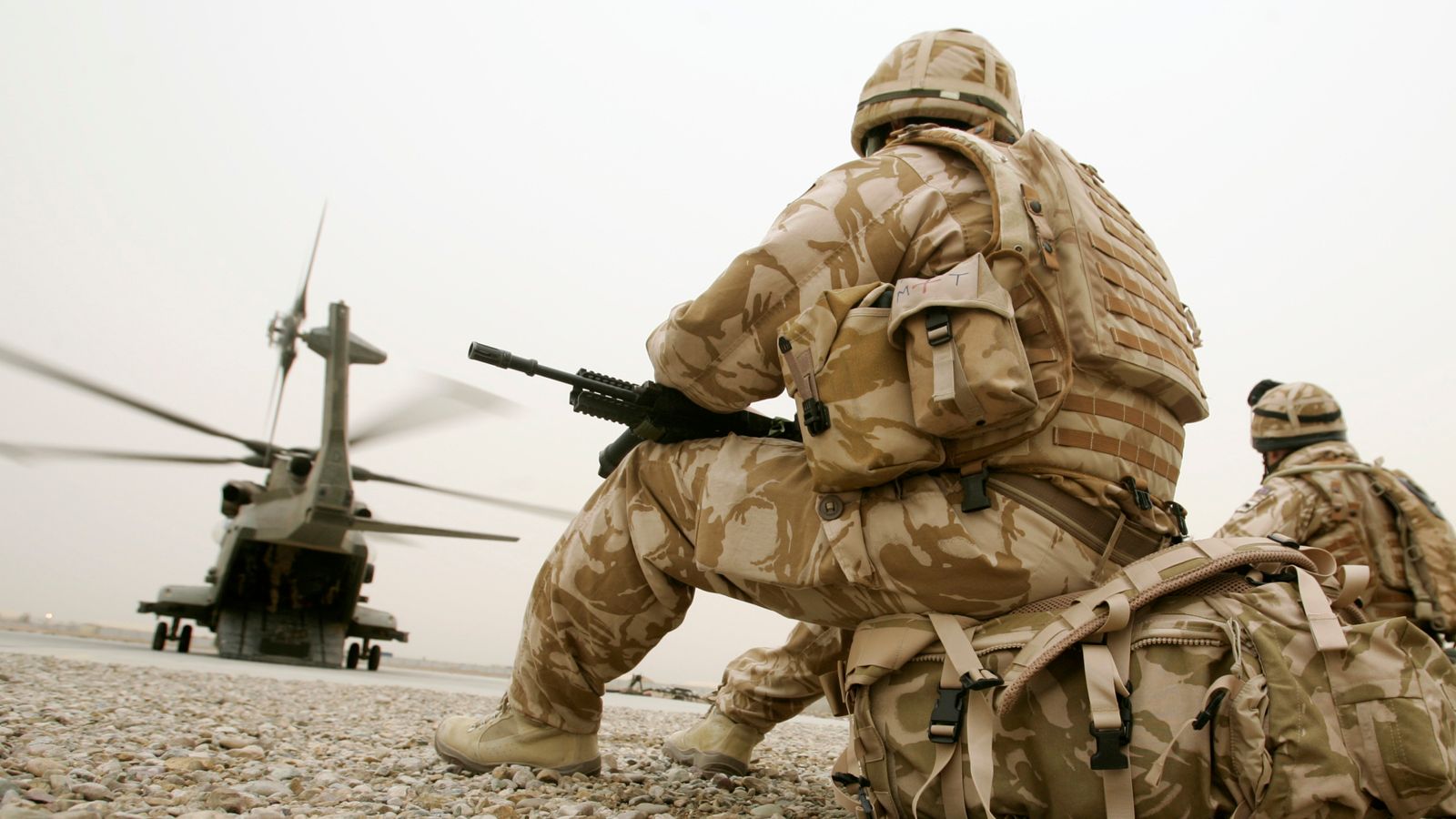
There was a “deliberate policy” to “kill fighting-aged males… even when they did not pose a threat” among some members of a British special forces unit in Afghanistan, an inquiry has heard.
In a note dated 7 April 2011, a senior officer warned the director of UK special forces about the policy, sharing concerns from the unit’s commanding officer.
But the senior officer, codenamed N1466, said a “conscious decision” was made to cover up potential war crimes by the unit, dubbed UKSF1.
British soldiers in Afghanistan in 2010. File pic: Reuters
The document was released by the Afghanistan Inquiry after evidence was given in closed hearings by UK special forces members.
In the note, N1466 – who was assistant chief of staff for operations in UKSF headquarters – described what he’d heard from the unit’s commanding officer.
“He felt that this was… possibly a deliberate policy among the current (sub-unit) to engage and kill fighting-aged males on target even when they did not pose a threat,” the note read.
“He had been approached by some of his men who recounted separate conversations with (trained) members of UKSF1 in which such suggestions had been made.”
The note explained that the unit’s commanding officer “is sure that they are accurately reporting what they are hearing from colleagues”.
And while N1466 conceded that the allegation could be simply a “rumour” or a “wind up”, he said “the context would not support either assertion”.
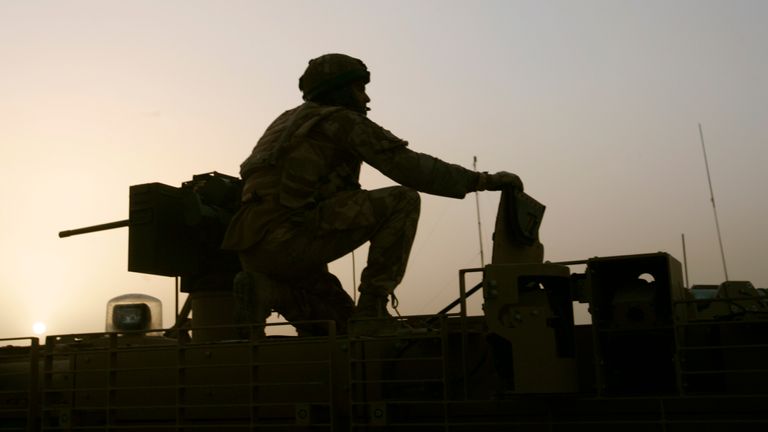
A British soldier in Lashkar Gah, Afghanistan, in 2010. File pic: Reuters
‘Rumour could prove explosive’
He continued: “The very fact that this rumour is circulating is in itself distasteful and in my view unacceptable to UKSF ethos and UKSF dynamics – it could prove explosive.
“Clearly, if there is anything more than rumour behind it then elements of UKSF have strayed into indefensible ethical and legal behaviour.”
He concluded: “My instinct is that this merits deeper investigation.”
However, the director, known to the inquiry as N1802, made a “conscious decision” to cover up potential war crimes, N1466 claimed.
The senior officer further accused the director of controlling information about alleged murders “in a way that I think indicated a desire to keep it low profile”.
N1466 said he became concerned that data from deliberate detention operations (DDOs), including the number of weapons found compared with the number of enemies killed, “didn’t seem credible”.
Soldiers in Afghanistan. Pic: iStock
Read more:
Ex-police chief condemns Afghanistan ‘war crimes’ probe
Ex-veterans minister gives Afghan killings inquiry ‘further information.’
The director shared his view, he believed, but chose to handle the information in a “way which limited the spread of the damage outside the headquarters”.
N1802 failed to “ever talk about possible criminal activity”, the officer alleged, instead initiating a review of the tactics, techniques and procedures (TTPs) used by the sub-unit in question in April 2011.
Review ‘was a charade’
In his witness statement, the officer recalled feeling that the TTP review was intended as a “warning shot across the bows” of the unit.
But, he said, “it was obvious that it was a charade”.
“I was sure at the time and I remain sure that N1802 knew what was happening on the ground,” he said.
“The speed of N1802’s response and the absence of any further mention or investigation of unlawful activity only fortified my belief that he was aware of what was going on.”
Among the documents released by the inquiry was a summary of an interview between N1466 and the Royal Military Police (RMP) in October 2018.
During the exchange, the officer described an incident where members of UKSF1 went to clear a compound and found a room where people were hiding under a mosquito net.
Claims incident was ‘covered up’
The document read: “They did not reveal themselves, so the UKSF1 shot at the net until there was no movement.
“When the net was uncovered it was women and children.
“The incident was covered up and the individual who did the shooting was allegedly given some form of award to make it look legitimate.”
N1466 also told the inquiry why he was speaking out, saying “it’s not loyalty to your organisation to stand by and to watch it go down a sewer”.

A British Puma military helicopter taxiing at dusk in Afghanistan. File pic: iStock
In his remarks, he referred to the alleged 2012 shooting of two children – Imran and Bilal, sons of Hussain Uzbakzai and his wife Ruqquia Haleem – who were in their beds.
He said: “I know a lot of my colleagues… didn’t join UKSF for this sort of behaviour, you know, toddlers to get shot in their beds or random killing.
“It’s not special, it’s not elite, it’s not what we stand for and most of us I don’t believe would either wish to condone it or to cover it up.”
He added: “Even if you subscribe to some sort of idea that most of the people who were killed were Taliban fighters, which I do not… Imran and Bilal, at one-and-a-half and three, certainly were not.”
Concluding, he said: “UKSF units, not least UKSF1, stand out for their proud history; the courageous and extraordinary feats made by truly remarkable people.
“The activity that we have discussed in the last few days does not fit with that and somehow the amount of kills and the amount of trigger time have become the metric by which people judge themselves.”
Afghan families claim UKSF conducted a “campaign of murder” against civilians, and that senior officers and personnel at the Ministry of Defence (MoD) “sought to prevent adequate investigation”.
Operation Northmoor, a £10m investigation set up in 2014 to examine allegations of executions by special forces, including those of children, resulted in no prosecutions.
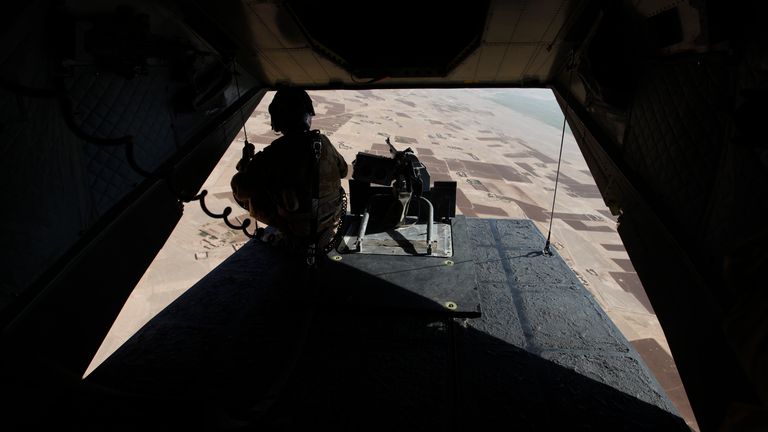
The view from inside a British helicopter flying over Helmand province in Afghanistan in 2010. File pic: Reuters
A RMP investigation, dubbed Operation Cestro, resulted in three soldiers being referred to the Service Prosecuting Authority, but again, none of them were prosecuted.
An MoD spokesperson said: “The government is fully committed to supporting the independent inquiry relating to Afghanistan as it continues its work, and we are hugely grateful to all former and current defence employees who have so far given evidence.
“We also remain committed to providing the support that our special forces deserve, whilst maintaining the transparency and accountability that the British people rightly expect from their armed forces.
“It is appropriate that we await the outcome of the inquiry’s work before commenting further.”
The inquiry continues.
UK
‘Of course I didn’t’ lie about budget forecasts, chancellor tells Sky News – as Badenoch calls for her to resign
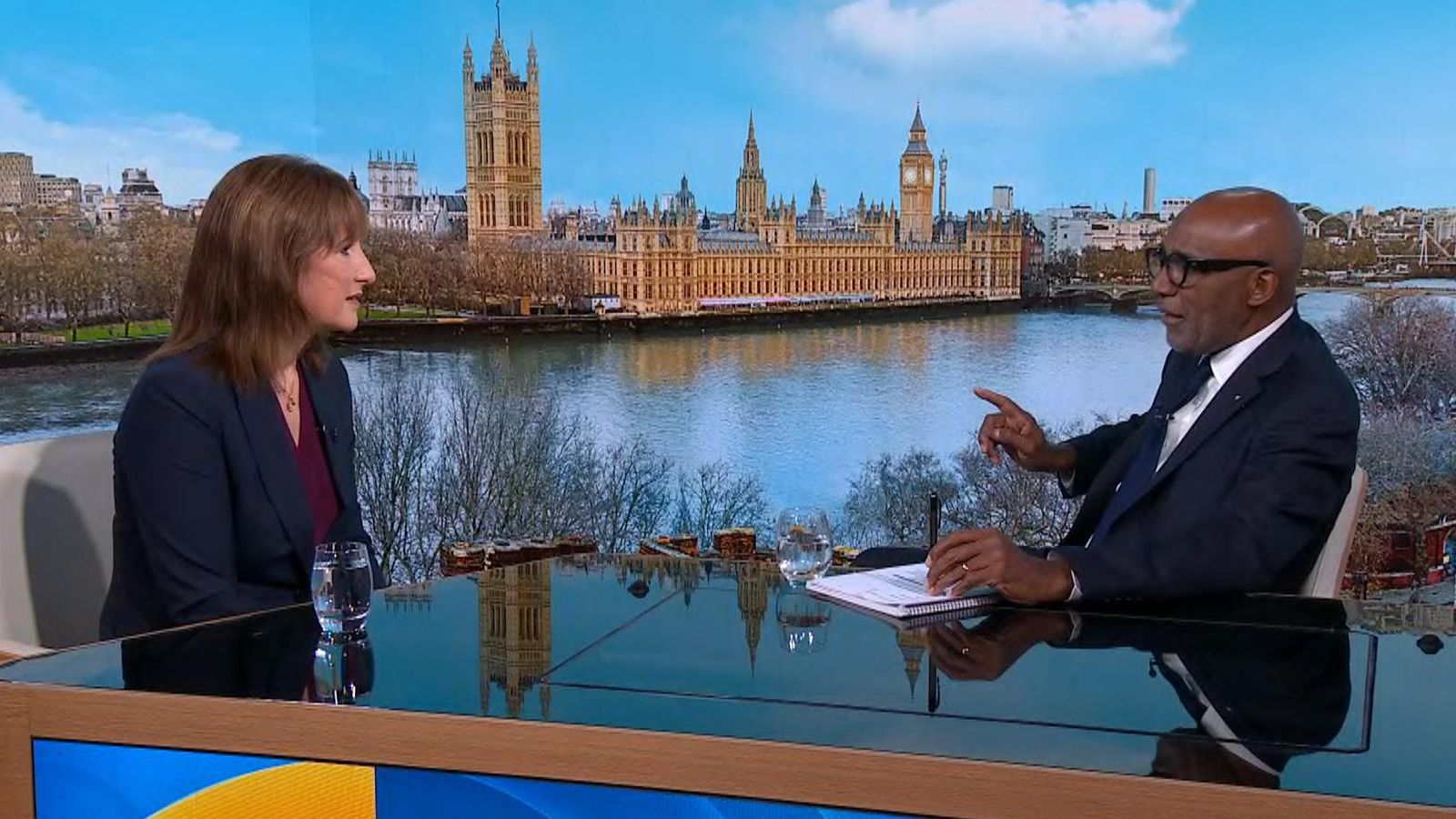
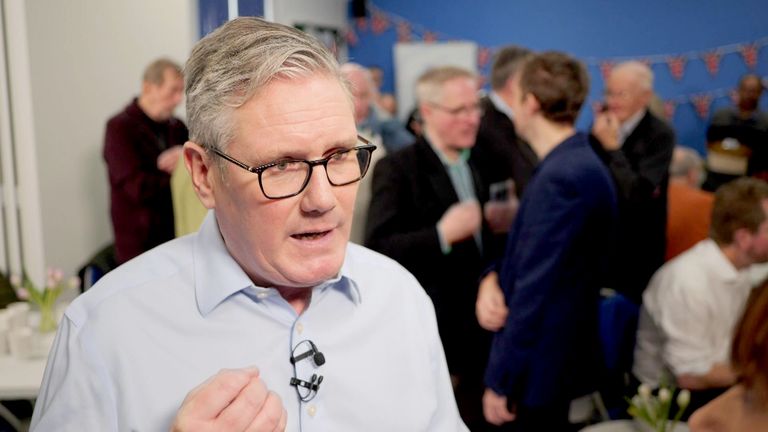
The chancellor has insisted to Sky News that she did not lie to the public about the state of the public finances ahead of the budget.
Rachel Reeves is facing widespread accusations that in a speech from Downing Street on 4 November in which she laid the groundwork for tax rises, she misled the country and led the public to believe the fiscal situation was worse than it actually was.
Asked directly by Sky’s Trevor Phillips if she lied, she said: “Of course I didn’t.”
Follow the latest updates from Westminster
Ms Reeves said the decision by the independent Office for Budget Responsibility (OBR) to review and downgrade productivity meant the forecast for tax receipts was £16bn lower than expected.
As a result, she said she needed tax rises to create more fiscal headroom (the amount by which government can increase spending or cut taxes without breaking its own fiscal rules) to reassure the financial markets and create stability in the economy.
But the OBR has said it told the chancellor in its forecast on 31 October that there was a £4.2bn budget surplus, rather than a black hole following the productivity downgrade, and Trevor challenged her on why she did not say that to the nation and argue that more headroom was needed.
She replied: “I said in that speech that I wanted to achieve three things in the budget – tackling the cost of living, which is why I took £150 off of energy bills and froze prescription charges and rail fares.
“I wanted to continue to cut NHS waiting lists, which is why I protected NHS spending. And I wanted to bring the debt and the borrowing down, which is one of the reasons why I increased the headroom.
“£4bn of headroom would not have been enough, and it would not give the Bank of England space to continue to cut interest rates.”
Ms Reeves also said: “In the context of a downgrade in our productivity, which cost £16bn, I needed to increase taxes, and I was honest and frank about that in the speech that I gave at the beginning of November.”
Prime minister defends the budget
She confirmed that the prime minister was aware of the fiscal forecasts and what she was going to say in her speech on 4 November about the challenges facing the UK economy, saying: “Keir [Starmer] and myself met regularly to discuss the budget and the choices, because these are the choices of this government.
“And I’m really proud of the choices that we made – to cut waiting lists, to cut inflation, and to build up that resilience in our economy.”
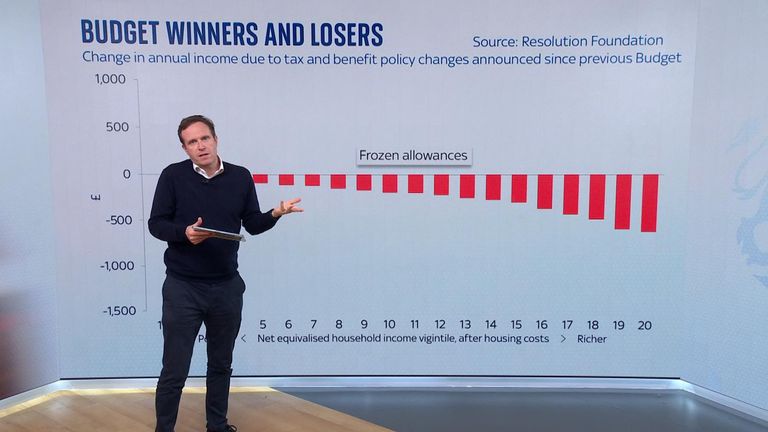
Budget winners and losers
Tax rises ‘not on scale of last year’
Following her budget last year, in which she raised taxes, the chancellor was explicit to Trevor that she would “never need to do that again” or “come back for more”.
But Ms Reeves did raise taxes by freezing income tax thresholds until 2031, and implementing a range of smaller tax rises totalling £26bn, so Trevor put to her that what she said last year was not true.
She replied: “The budget this year was not on the scale of the one last year, but as I set out in my speech at the beginning of November, the context for this budget did change and I did have to ask people to contribute more.”
👉 Listen to Sky News Daily on your podcast app 👈
She conceded that it is “true” that she said she wouldn’t have to raise taxes, and has now done so, but said it was “for reasons not in my control”, pointing to the OBR’s decision to conduct a productivity review.
But Conservative leader Kemi Badenoch hit out at the chancellor’s handling of the economy, telling Trevor: “I think the chancellor has been doing a terrible job. She’s made a mess of the economy, and […] she has told lies. This is a woman who, in my view, should be resigning.”

‘I think the chancellor has been doing a terrible job’
‘I am choosing children’
Ms Reeves also told Trevor that she is “proud to be the chancellor that lifts half a million kids out of poverty” through her decision to lift the two-child cap on benefits from April, which was brought in by the Conservatives in 2017 and meant parents could only claim universal credit or tax credits for their first two children.
Trevor put to her polling that shows that while 84% of Labour members are in favour of scrapping the cap, just 37% of those who voted Labour in 2024 think it should be scrapped.
And asked if she is choosing party over country, the chancellor replied: “I am choosing children, Trevor. This lifts more than half a million children out of poverty, combined with our changes on free breakfast clubs, extending free school meals, 30 hours [of] free childcare for working parents of pre-school age children.
“You can put up those percentages, but the people I was thinking about were kids who I know in my constituency, who go to school hungry and go to bed in cold and damp homes. And from April next year, those parents will have a bit more support to help their kids.”
Liberal Democrat deputy leader Daisy Cooper told Trevor that her party backs the decision, saying: ” First of all, we think it is morally the right thing to do. And secondly, because it saves money for the taxpayer in the longer term, because we know that children growing up in poverty end up costing the taxpayer more because they have worse health outcomes, worse educational outcomes as well.”
But she added that they are “deeply concerned” about “this double whammy stealth tax on both households and on high streets”.
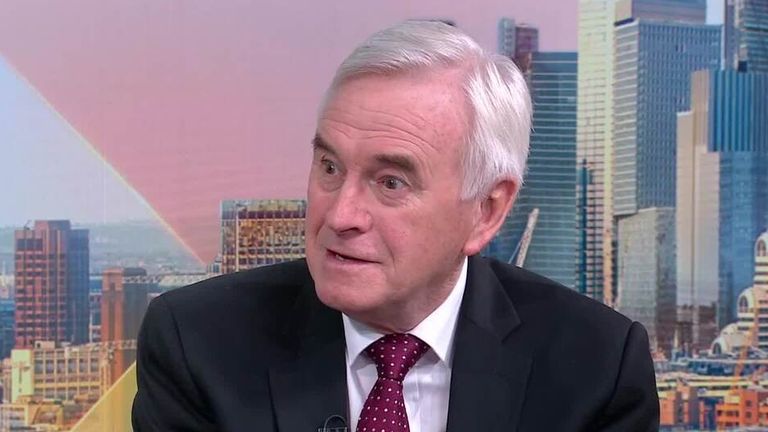
‘A real victory for the left’
‘We need growth in our economy’
But the Tory leader hit out at the decision, telling Trevor that lifting the two-child benefit cap is “not the way” to lift children out of poverty, and saying that it means the government is “taxing a lot of people who are struggling to pay for those on benefits”.
Ms Badenoch said: “About half a million families are going to be getting an uptick of about £5,000. Many other people don’t have £5,000 lying around.
“We believe that people on benefits should have to make the same decisions about having children as everybody else. And remember, we’re not talking about child benefits here. We’re talking about the universal credit element of it. You get child benefit for as many children as you have.
“But at some point, someone needs to draw a line somewhere.”
Read more:
Lammy says justice reforms will reduce victims’ suffering
Reeves accused of imposing ‘stealth tax’ on hospitality
Ms Badenoch argued that the way to ensure children are not in poverty is to “make sure that their parents have jobs and that those jobs pay well”, and said the level of unemployment has increased “every single month” since Labour came to office in July 2024.
“What we need is growth in our economy. Simply taking out from people who are struggling and giving to a different group of people is not making the economy better,” she said.
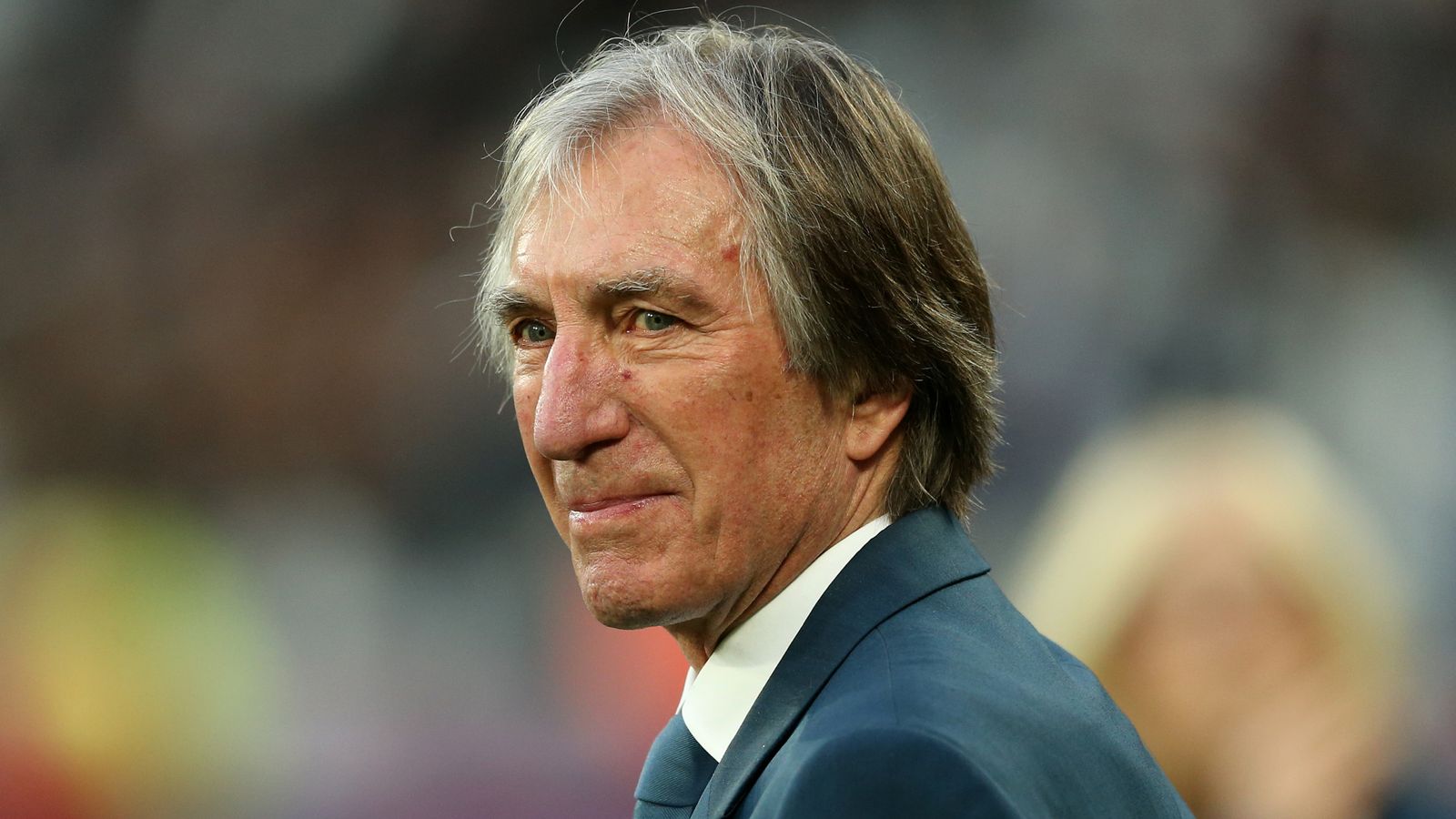
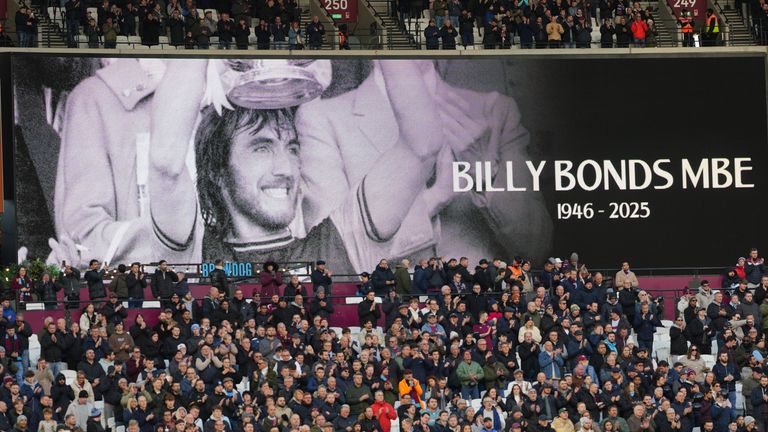
Former West Ham captain and manager Billy Bonds has died at the age of 79, his family has said.
The defender and midfielder, who played 799 games for the Hammers between 1967 and 1988, holds the club’s all-time record for most appearances.
As well as captaining the east London side to FA Cup victories in 1975 and 1980, he also managed them from 1990 to 1994.
A giant screen displays an image of Billy Bonds before a match between West Ham United and Liverpool on Sunday. Pic: AP
During his tenure, the club was promoted to England’s top division, relegated, and then promoted again.
In a statement on West Ham’s website, his family paid tribute, saying: “We are heartbroken to announce that we lost our beloved Dad today.
“He was devoted to his family and was the most kind, loyal, selfless, and loving person.
“Dad loved West Ham United and its wonderful supporters with all his heart and treasured every moment of his time at the club.”
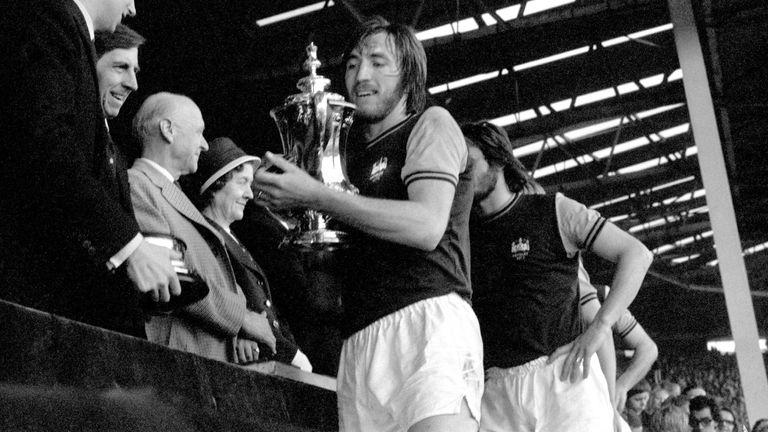
Billy Bonds with the FA Cup after their 1975 triumph against Fulham at Wembley. Pic: PA
West Ham gave Bonds a show of appreciation before Sunday’s Premier League home game against Liverpool, with fans participating in a minute of applause.
Captain Jarrod Bowen, who held Bonds’ number four shirt aloft throughout, spoke about the legacy of his predecessor before the opening whistle.
“He’s probably going to go down as West Ham’s biggest legend and the best club captain they’ve had,” he said.
“He achieved so much here and I’ll never emulate that success, but to put on the captain’s armband like he did is a big thing for me.”
Head Coach Nuno Espírito Santo added: “He represents everything that West Ham is all about – the fight, the desire.
“My thoughts are with his family and with our fans, and let’s use this moment to honour Billy Bonds.”
On its website, West Ham described Bonds as “an extremely private and loyal man” who was “completely devoted to his family”.
The club said he was “never one to crave the limelight,” but was “universally loved, respected and admired by his team-mates, players and supporters”.
West Ham also offered its condolences to Bonds’ daughters, Claire and Katie, and granddaughters, Eloise and Elissa.
“Rest in peace Billy, our courageous, inspirational, lion-hearted leader,” their statement concluded.
Charlton Athletic, where the footballer got his start in 1964, also offered its condolences.
Posting on X, formerly Twitter, the club wrote: “We are deeply saddened to learn of the passing of former player Billy Bonds MBE.
“Our thoughts are with Billy’s family and friends at this extremely difficult time.”
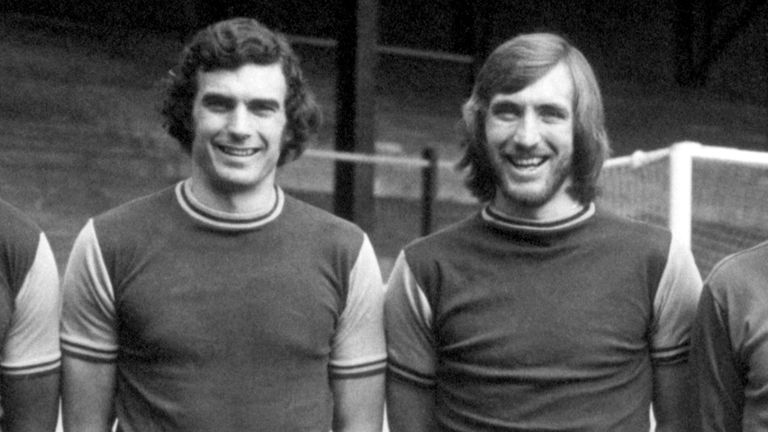
Billy Bonds with fellow West Ham player Trevor Brooking in 1975. Pic: PA
Bonds was born in Woolwich on 17 September, 1946, to football fans Arthur and Barbara, both Charlton supporters.
He had a variety of jobs as a young man, working in a propeller factory, cleaning windows with his dad, and sweeping the terraces at The Valley.
But his true calling was on the field and he would join Charlton as a teenager.
As a teacher at Eltham Green Comprehensive School would tell him: “Your brains, Bonds, are all in your feet.”
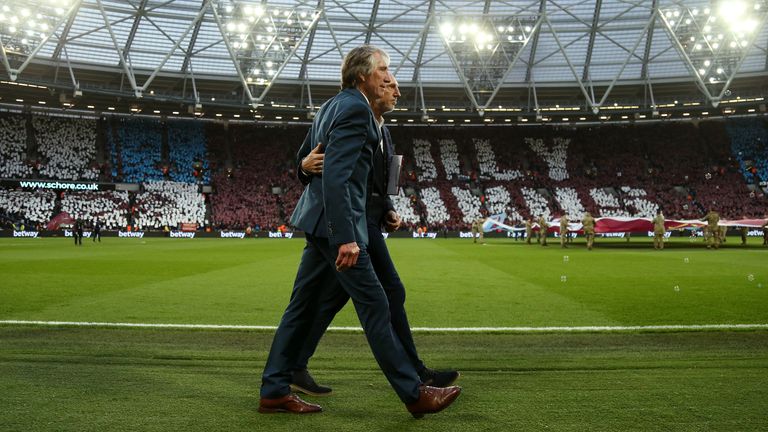
Billy Bonds in front of the stand named for him. Pic: PA
The footballer had honed his skills playing in the street and he competed for his school district and a Sunday-morning side, Moatbridge.
In 1960 he and his Moatbridge teammates were presented with winners’ trophies by another West Ham legend, Bobby Moore.
Bonds recalled: “Being a Charlton fan, I knew that the blond, well-built fella sitting up there was a West Ham player but I didn’t really know any more than that.”
Seven years later they would be teammates.
He would take West Ham’s first-ever Lifetime Achievement award in 2013, and was voted as the club’s greatest ever player in 2018.
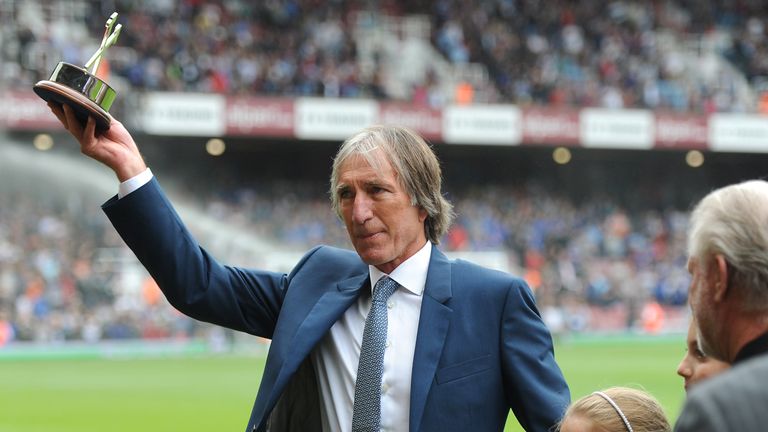
Billy Bonds MBE receives his Hammers’ Lifetime Achievement award in 2013. Pic: PA
Bonds was appointed an MBE (Member of the Order of the British Empire) in January 1988.
He would say afterwards: “A lot more people have done much more valuable things than play football but I’m very proud of that medal.”
The east stand at West Ham’s London Stadium home is named in his honour in 2019.
He used the occasion to reflect on his career.
He said: “I would’ve happily played down the local park for nothing.
“But I was fortunate enough to get paid to be a footballer and, trust me, realise just how lucky I’ve been to have had such a fantastic career.”
-
 Sports2 years ago
Story injured on diving stop, exits Red Sox game
-
 Sports3 years ago
‘Storybook stuff’: Inside the night Bryce Harper sent the Phillies to the World Series
-
 Sports2 years ago
Game 1 of WS least-watched in recorded history
-
 Sports3 years ago
Button battles heat exhaustion in NASCAR debut
-
 Sports3 years ago
MLB Rank 2023: Ranking baseball’s top 100 players
-
Sports4 years ago
Team Europe easily wins 4th straight Laver Cup
-
 Environment3 years ago
Japan and South Korea have a lot at stake in a free and open South China Sea
-
 Environment1 year ago
Here are the best electric bikes you can buy at every price level in October 2024