
Hes back (officially) but did he ever truly go away?
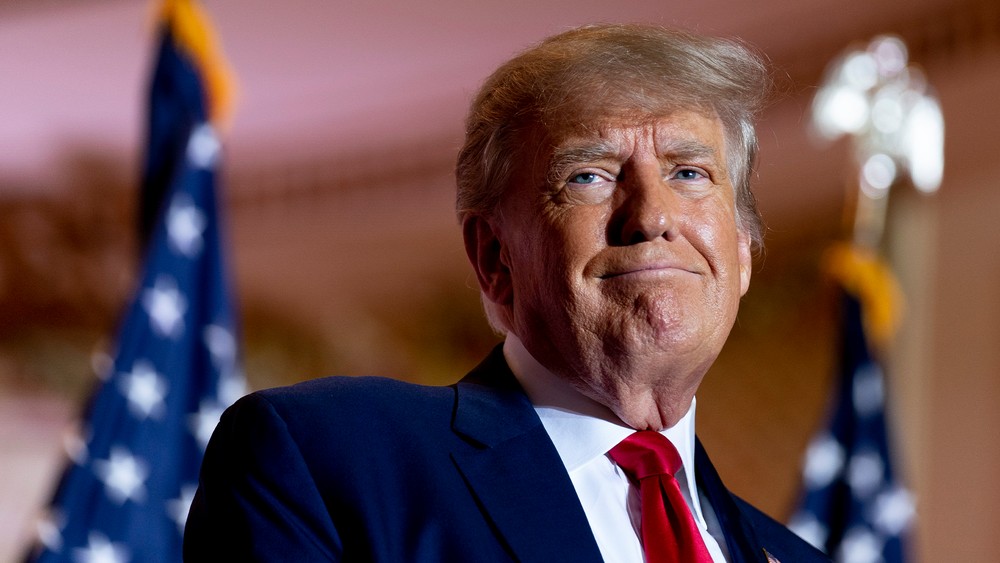
Donald Trump made it official on Tuesday night by announcing he would once again be seeking the Oval Office in 2024.
Yes, the former president who incited an attempted insurrection at the US Capitol with lies about his 2020 election loss lies he continues to spread to this day, having escaped conviction in impeachment proceedings thanks to his Republican allies and who has spent much of the last few years either vowing revenge against political enemies or battling a suite of criminal investigations now wants American voters to let him once again lead the democratic system of government he has worked so tirelessly to undermine.
In order to make America great and glorious again, I am tonight announcing my candidacy for president of the United States, Trump told the crowd at the Mar-a-Lago Club in Palm Beach, Florida.
“America’s comeback starts right now,” he said. “Two years ago, we were a great nation, and soon we will be a great nation again.”
A few minutes before his scheduled 9 p.m. ET announcement on Tuesday, paperwork for his 2024 run was filed with the Federal Election Commission.
His announcement comes as Republicans largely underperformed nationally in last weeks midterm elections. Many in the GOP have blamed Trump for the outcome since many of his endorsed candidates, such as Mehmet Oz in Pennsylvania and Blake Masters and Kari Lake in Arizona, lost to Democrats.
Since the election, Trump has been on the defensive, using his social media platform, Truth Social, to lash out at possible GOP presidential rivals, such as Florida Gov. Ron DeSantis, who coasted to an easy reelection victory.
Trumps announcement also comes as he finds himself in a sea of legal troubles related to the cacophony of investigations into him by both federal and state agencies.
The most imminent and urgent of these for Trump appears to be the investigation into his handling of classified documents since leaving the White House, which culminated in an extraordinary search on his Florida compound Mar-a-Lago over the summer. Attorney General Merrick Garland is under immense pressure as he decides whether to indict the former president for violations of the Espionage Act, mishandling government documents, and obstruction of justice.
But Trump also faces the possibility of charges connected to his sprawling efforts to overturn his loss in the 2020 election. He has been subpoenaed by the congressional committee investigating the Jan. 6 attack on the Capitol, which said he personally orchestrated and oversaw a multi-part effort to overturn the 2020 presidential election and to obstruct the peaceful transition of power. A federal judge has also already said Trump signed court documents he knew were false as part of this scheme.
Thats not to mention the numerous state investigations into his postelection conduct and his business, or the defamation lawsuit from E. Jean Carroll, the woman who said Trump raped her in the mid-1990s.
Trump reportedly ended his first term by wondering whether he could pardon himself; in a possible second one, he will have that opportunity.
After functionally giving up on being chief executive late in his first term while presiding over an unchecked pandemic and hundreds of thousands of American deaths, Trump would be asking for another shot at a job hes only ever been fleetingly interested in carrying out. And hed be reengaging with an electoral system and basic democratic principles that he has spent the last few years single-mindedly fixed on eroding. He would be asking his supporters to once again come out and vote for him in a system he swears is corrupt.
There is still time to see if Trump will actually follow through with a campaign.
Trumps third campaign would be substantially different from the first two, and something unseen in mainstream American political history. He would be an explicitly anti-democratic candidate after pressuring state officials for years to overturn the 2020 election results in his favor.
Pictures of Donald Trump are included among at least 16 documents that have disappeared from the Epstein files released by the Department of Justice (DOJ).
The Democrats from the House Oversight Committee drew attention to the apparent removal of an image showing two printed pictures of Mr Trump in a desk draw.
One picture has Mr Trump standing surrounded by women in bathing suits, while the second appears to be an already known picture – partly obscured – of him, his wife Melania, Ghislaine Maxwell and Jeffrey Epstein.
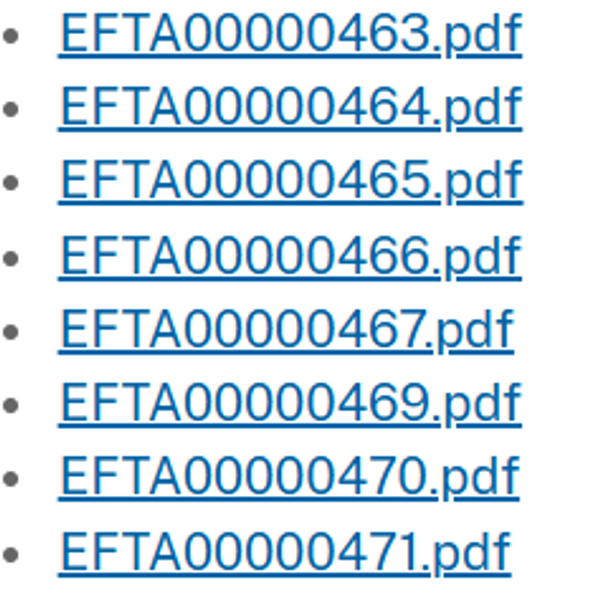
After the Democrats flagged the missing image on Saturday, Sky News went back to the files online and confirmed that it did appear to be missing, despite the fact they downloaded it when the files were initially released on Friday.
Image: List of documents online now shows a gap where the file ending ‘468’ was on Friday

Image: The file ending ‘468’ seen in Sky News’s downloads from Friday
The other photos removed from the trove of documents were almost all nude paintings of women in Epstein’s home.
Mr Trump has not commented on the release of the files and has not been accused of wrongdoing in connection with Epstein’s case.
Sky News has contacted the DOJ for comment.
Questions over heavy redactions
Image: Pic: New York State Division of Criminal Justice Services/Handout via Reuters
Thousands of documents relating to the dead paedophile financier were made public by the DOJ on Friday – hours before a legal deadline following the passing of the Epstein Files Transparency Act.
Many of the pages were either partially or fully redacted, which the DOJ says is to protect the more than 1,200 victims and their families identified in them.
Some of Epstein’s victims, legal experts and members of the public have questioned whether this is the sole reason for the redactions, while the Oversight Democrats have claimed: “This is a White House cover-up.”
Ashley Rubright, who was abused for several years after meeting Epstein in Palm Beach when she was 15, told Sky News: “Seeing […] completely redacted pages, there’s no way that that’s just to protect the victims’ identities, and there better be a good reason. I just don’t know if we’ll ever know what that is.”
Epstein ‘was a monster’: Survivors speak to Sky News
Gloria Allred, a lawyer who has represented some of Epstein’s victims, says she has been told that despite the heavy redactions, some compromising pictures of survivors and their names were left in the files released on Friday.
“We have had to notify the Department of Justice about names that should have been redacted that weren’t redacted,” she told Sky News.
“So this is further trauma to survivors, and apparently also some of the images of some of the survivors appear not to have been redacted, and they are nude or not completely dressed.
“This is a major concern because the law clearly indicates, and the judges have indicated, that the names and any identifying information of the survivors must be redacted.”
In a letter to the judges overseeing the Epstein and Ghislaine Maxwell cases, US attorney for the Southern District of New York Jay Clayton acknowledged that a review “of this size and scope is vulnerable to machine error [or] instances of human error”.
He also said the DOJ had opted to redact the faces of women in photographs with Epstein “even where not all the women are known to be victims,” as it was not viewed as practical for the DOJ to identify every person in all the photos.
The methodology has led to some confusion and misled speculation online.
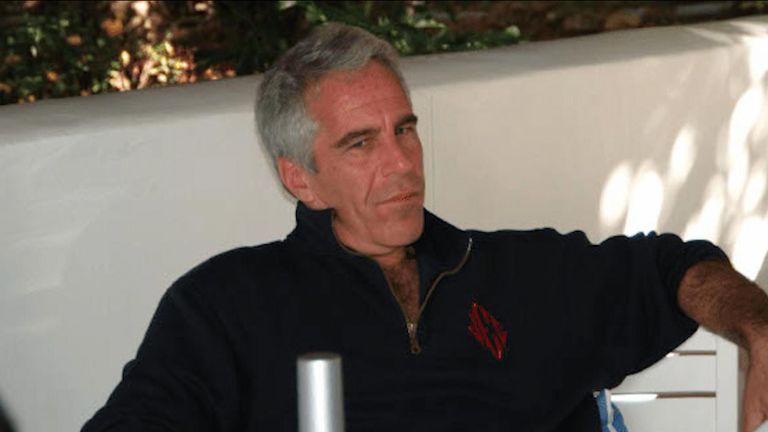
Image: Epstein died in prison in 2019 while awaiting trial on federal sex trafficking charges
Many celebrities and public figures appear with Epstein in the photos published by the DOJ, often included without context.
There is no suggestion that these pictures imply anyone has done anything wrong, and many of those featured in them have denied any wrongdoing in relation to Epstein.
Through its release, the Trump administration has claimed to be the most transparent in history, despite the fact Congress forced their hand by voting to make the files public by 19 December.
But some have been held back, with Todd Blanche, deputy attorney general and a former personal lawyer for Donald Trump, saying more would follow in the coming weeks.
Many Democrats and some Republicans have criticised the partial release as failing to “comply with law,” as have lawyers including Ms Allred.
“So clearly, the law has been violated. And it’s the Department of Justice letting down the survivors once again,” she said.
She labelled the incomplete release of the files a “distraction”, adding: “This is not over, and it won’t be over until we get the truth and transparency for the survivors.”
Sad female worker carrying her belongings while leaving the office after being fired
Isbjorn | Istock | Getty Images
Layoffs have been a defining feature of the job market in 2025, with several major companies announcing thousands of job cuts driven by artificial intelligence.
In fact, AI was responsible for almost 55,000 layoffs in the U.S. this year, according to consulting firm Challenger, Gray & Christmas.
There were in total 1.17 million job cuts through 2025, the highest level since the Covid-19 pandemic in 2020 when there were 2.2 million layoffs announced by the end of the year.
In October, U.S. employers announced 153,000 job cuts, and there were over 71,000 job cuts in November, with AI being cited for over 6,000 for the month, per Challenger.
At a time when inflation bites, tariffs are adding to expenses, and firms are looking to carry out cost-cutting measures, AI has presented an attractive, short-term solution to the problem.
The Massachusetts Institute of Technology released a study in November showing that AI can already do the job of 11.7% of the U.S. labor market and save as much as $1.2 trillion in wages across finance, healthcare, and other professional services.
Not everyone is convinced that AI is the real reason behind the dramatic job cuts, as Fabian Stephany, assistant professor of AI and work at the Oxford Internet Institute, previously told CNBC, that it might be an excuse.
Stephany said many companies that performed well during the pandemic “significantly overhired” and the recent layoffs might just be a “market clearance.”
“It’s to some extent firing people that for whom there had not been a sustainable long term perspective and instead of saying ‘we miscalculated this two, three years ago, they can now come to the scapegoating, and that is saying ‘it’s because of AI though,'” he added.
Here are the top firms that cited AI as part of their layoff and restructuring strategy in 2025.
Amazon
Amazon CEO Andy Jassy speaks during a keynote address at AWS re:Invent 2024, a conference hosted by Amazon Web Services, at The Venetian Las Vegas on December 3, 2024 in Las Vegas, Nevada.
Noah Berger | Getty Images
In October, Amazon announced the largest ever round of layoffs in its history, slashing 14,000 corporate roles, as it looks to invest in its “biggest bets” which includes AI.
“This generation of AI is the most transformative technology we’ve seen since the Internet, and it’s enabling companies to innovate much faster than ever before… we’re convinced that we need to be organized more leanly, with fewer layers and more ownership, to move as quickly as possible for our customers and business,” Beth Galetti, senior vice president of people experience and technology at Amazon, wrote in a blog post.
Amazon CEO Andy Jassy warned of the cuts earlier this year, telling employees that AI will shrink the company’s workforce and that the tech giant will need “fewer people doing some of the jobs that are being done today, and more people doing other types of jobs.”
Microsoft
Microsoft CEO Satya Nadella appears at the CES event in Las Vegas on Jan. 9, 2024. The event typically doubles as a preview of how tech giants and startups will market their wares in the coming year and if early announcements are any indication, AI-branded products will become the new “smart” gadgets of 2024.
David Paul Morris | Bloomberg | Getty Images
Microsoft has cut a total of around 15,000 jobs through 2025, and its most recent announcement in July saw 9,000 roles on the chopping block.
CEO Satya Nadella wrote in a memo to employees that the company needed to “reimagine” its “mission for a new era,” and went on to tout the significance of AI to the company.
“What does empowerment look like in the era of AI? It’s not just about building tools for specific roles or tasks. It’s about building tools that empower everyone to create their own tools. That’s the shift we are driving — from a software factory to an intelligence engine empowering every person and organization to build whatever they need to achieve,” Nadella said.
Salesforce
Marc Benioff, chief executive officer of Salesforce Inc., during the US-Saudi Investment Forum at the Kennedy Center in Washington, DC, US, on Wednesday, Nov. 19, 2025.
Stefani Reynolds | Bloomberg | Getty Images
IBM
CEO of IBM Arvind Krishna looks on during a roundtable discussion hosted by U.S. President Donald Trump in the Roosevelt Room at the White House on Dec. 10, 2025 in Washington, DC.
However, unlike other companies that had cited AI in job cuts, Krishna admitted that the firm had increased hiring in other areas that required more critical thinking, such as software engineering, sales, and marketing.
In November, the company announced a 1% global cut, which could impact nearly 3,000 employees.
Crowdstrike
Founder and CEO of CrowdStrike George Kurtz speaks during the Live Keynote Pregame during the Nvidia GTC (GPU Technology Conference) in Washington, DC, on Oct. 28, 2025.
Jim Watson | AFP | Getty Images
Cybersecurity software maker CrowdStrike said in May that it’s laying off 5% of its workforce or 500 employees, and directly attributed the cuts to AI.
“AI has always been foundational to how we operate,” co-founder and CEO George Kurtz wrote in a memo included in a securities filing. “AI flattens our hiring curve, and helps us innovate from idea to product faster. It streamlines go-to-market, improves customer outcomes, and drives efficiencies across both the front and back office. AI is a force multiplier throughout the business.”
Workday
Carl Eschenbach, CEO of Workday speaks on CNBC’s Squawk Box outside the World Economic Forum in Davos, Switzerland on Jan. 23, 2025.
Gerry Miller | CNBC
In February, HR platform Workday was one of the first companies this year to say its cutting 8.5% of its workforce, amounting to around 1,750 jobs, as the company invests more in AI.
Workday CEO Carl Eschenbach said the layoffs were needed to prioritize AI investment and to free up resources.
US lawmakers have introduced a discussion draft that would ease the tax burden on everyday crypto users by exempting small stablecoin transactions from capital gains taxes and offering a new deferral option for staking and mining rewards.
The proposal, introduced by Representatives Max Miller of Ohio and Steven Horsford of Nevada, seeks to amend the Internal Revenue Code to reflect the growing use of digital assets in payments. The draft is set “to eliminate low-value gain recognition arising from routine consumer payment use of regulated payment stablecoins,” per the draft.
Under the draft, users would not be required to recognize gains or losses on stablecoin transactions of up to $200, provided the asset is issued by a permitted issuer under the GENIUS Act, pegged to the US dollar and maintains a tight trading range around $1.
The bill includes safeguards to prevent abuse. The exemption would not apply if a stablecoin trades outside a narrow price band, and brokers or dealers would be excluded from the benefit. Treasury would also retain authority to issue anti-abuse rules and reporting requirements.
Draft bill explains the reasoning behind tax breaks. Source: House
Beyond payments, the proposal addresses long-standing concerns around “phantom income” from staking and mining. Taxpayers would be allowed to elect to defer income recognition on staking or mining rewards for up to five years, rather than being taxed immediately upon receipt.
“This provision is intended to reflect a necessary compromise between immediate taxation upon dominion & control and full deferral until disposition,” the draft said.
The draft also extends existing securities lending tax treatment to certain digital asset lending arrangements, applies wash sale rules to actively traded crypto assets, and allows traders and dealers to elect mark-to-market accounting for digital assets.
Crypto groups urge Senate to rethink stablecoin rewards ban
Last week, the Blockchain Association sent a letter to the US Senate Banking Committee, signed by more than 125 crypto companies and industry groups, opposing efforts to extend restrictions on stablecoin rewards to third-party platforms.
The group argued that expanding the GENIUS Act’s limits beyond stablecoin issuers would curb innovation and increase market concentration in favor of large incumbents. The letter compared crypto rewards to incentives commonly offered by banks and credit card companies, warning that banning similar features for stablecoins would undermine fair competition.