Connect with us

Published

on

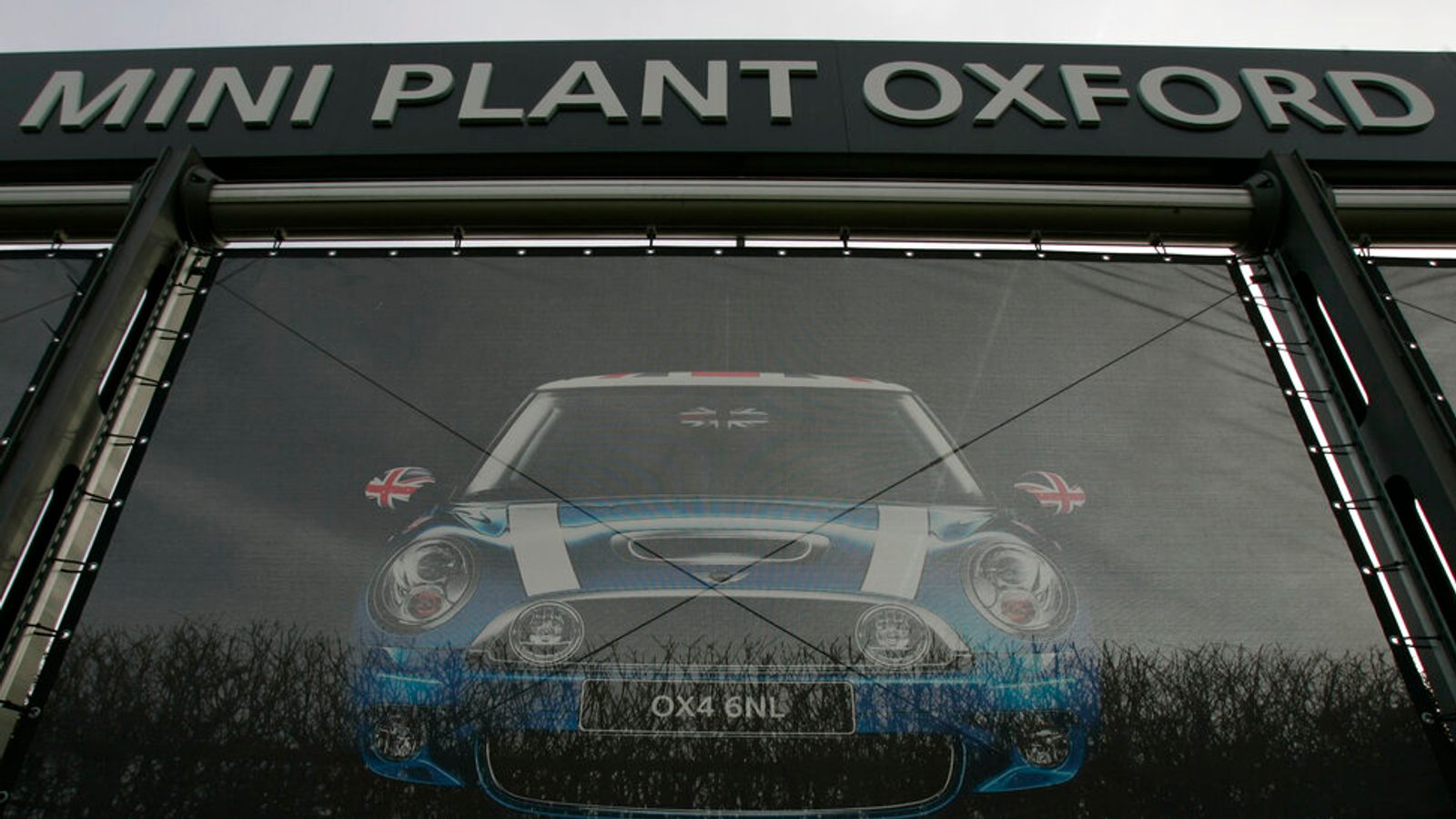
The German automotive giant BMW is in talks with the government about a £75m funding package that would secure production of electric Minis at its Oxfordshire plant.

Sky News has learnt that BMW is negotiating with officials at the Department for Business, Energy and Industrial Strategy (BEIS) over a grant from Whitehall’s Automotive Transformation Fund.

Industry sources said a deal could be finalised between the government and the company within weeks.

One added that the package, which would be worth up to £75m, appeared to have support from both Grant Shapps, the business secretary, and Jeremy Hunt, the chancellor.

It was unclear on Saturday when the funding would be released and when the plant would begin utilising it.

If a deal is finalised, it would provide a boost to the British car industry weeks after it emerged that the sector had had its worst year in production terms since the 1950s.

In 2022, carmakers produced just 775,000 vehicles, a slump of nearly 10%, according to the Society of Motor Manufacturers and Traders (SMMT).

More on Electric Cars

Supply chain issues such as component bottlenecks were a major factor in the decline, but the gloom enveloping the industry has been deepened by the recent collapse of Britishvolt, the fledgling electric vehicle battery manufacturer.

The Financial Times reported on Friday that Recharge Industries, an Australian company, had been chosen by administrators as Britishvolt’s preferred bidder.

Production of the Mini at Cowley dates back to the 1950s, and resumed under BMW’s ownership in the early 2000s.

Roughly 200,000 Minis are built at Oxford each year, with about 80% destined for export markets.

The plant employs about 4,000, making it easily one of the most significant in Britain.

Nissan and Ford have both announced new investments in their UK facilities in the last year, with the latter saying in December that it would spend £150m at its Halewood plant in Liverpool to expand production of electric vehicle parts.

BMW announced in 2021 that it would cease making the electric Mini in Oxford, adding last October that the UK plant would instead build the Mini Cooper three-door and five-door hatch models.

“Additionally the Mini Convertible will be returning to Oxford from 2025 – this is one of our most important cars and a global best-seller,” it said at the time.

“Electric MINIs – a hatchback and small SUV – will start their production in China through our partnership with Great Wall and the electric Countryman will be built in Leipzig [in Germany].

“Beyond this we cannot go at this point.

“Future production plans will be announced in due course.

“Oxford plays an important role in the BMW Group’s production strategy, with its high degree of flexibility, competitiveness and expertise and will remain at the heart of Mini production.”

A BMW spokesman declined to comment this weekend on its funding talks with the government.

A BEIS spokesperson said: “The UK is one of the best locations in the world for automotive manufacturing.

“Investment through the Automotive Transformation Fund will develop a high-value end-to-end electrified automotive supply chain in the UK, and this includes unlocking private investment in gigafactories.

“We’re also working with industry through the Automotive Council’s Skills Working Group to ensure the UK automotive industry can support and develop the skills needed for sustainable success.”

The government did not comment directly on the talks with BMW.

Continue Reading

Business

Burger King UK lands new backing from buyout firm Bridgepoint

Published

on

By

Burger King UK lands new backing from buyout firm Bridgepoint

The private equity backer of Burger King UK has injected millions of pounds of new funding as part of a deal which paves the way for their partnership to be extended into the 2040s.

Sky News understands that Bridgepoint has invested a further £15m into the fast food giant in recent days, with a further sum – thought to be up to £20m – to be deployed over the next 18 months.

The new funding has been committed as Burger King UK’s Master Franchise Agreement with a subsidiary of Restaurant Brands International has been extended to 2044 in a deal which is said to align the interests of its various financial stakeholders more closely.

Burger King’s British operations comprise roughly 575 outlets, and employ approximately 12,000 people.

In results released this week, Burger King UK said it had delivered a “solid performance…amid sector headwinds” in 2024.

Revenue increased by 7% to £408.3m, with underlying earnings before interest, tax, depreciation and amortisation up 12% to £26m.

The company also said it had completed a refinancing process, with the maturity of its bank facilities pushed out to March 2028.

More from Money

Under the leadership of Alasdair Murdoch, its long-serving chief executive, Burger King plans to open roughly 30 new sites next year.

It comes at a challenging time for the UK hospitality sector, with casual dining chains TGI Fridays and Leon both filing to appoint administrators in the last few days.

Industry bosses say that last month’s Budget has piled fresh cost pressures on them.

Bridgepoint declined to comment on the injection of new capital into Burger King UK.

Continue Reading

Business

Hundreds of jobs at risk as LEON moves to cut unprofitable restaurants

Published

on

By

Hundreds of jobs at risk as LEON moves to cut unprofitable restaurants

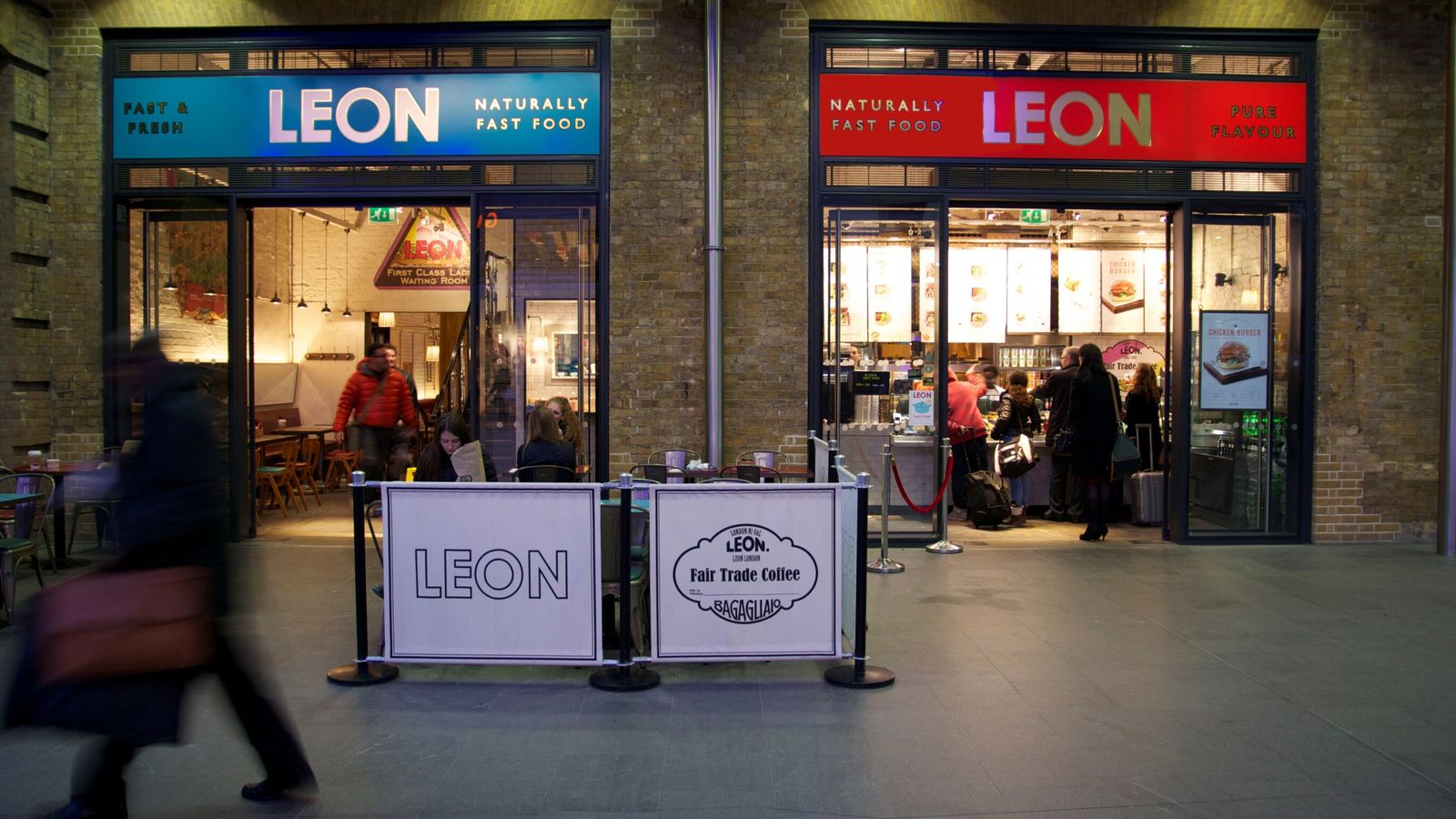
The fast food chain LEON has taken a swipe at “unsustainable taxes” while moving to secure its future through the appointment of an administrator, leaving hundreds of jobs at risk.

The loss-making company, bought back from Asda by its co-founder John Vincent in October, said it had begun a process that aimed to bring forward the closure of unprofitable sites. It was to form part of a turnaround plan to restore the brand to its roots around natural foods.

It was unclear at this stage how many of its 71 restaurants – 44 of them directly owned – and approximately 1,100 staff would be affected by the plans for the so-called Company Voluntary Arrangement (CVA).

Money latest: Big rise in pension drawdowns

“The restructuring will involve the closure of several of LEON’s restaurants and a number of job losses”, a statement said.

“The company has created a programme to support anyone made redundant.”

It added: “LEON and Quantuma intend to spend the next few weeks discussing the plans with its landlords and laying out options for the future of the Company.

More from Money

“LEON then plans to emerge from administration as a leaner business that can return to its founding values and principles more easily.

“In the meantime, all the group’s restaurants remain open, serving customers as usual. The LEON grocery business will not be affected in any way by the CVA.”

Mr Vincent said. “If you look at the performance of LEON’s peers, you will see that everyone is facing challenges – companies are reporting significant losses due to working patterns and increasingly unsustainable taxes.”

Mr Vincent sold the chain to Asda in 2021 for £100m but it struggled, like rivals, to make headway after the pandemic and cost of living crisis that followed the public health emergency.

The hospitality sector has taken aim at the chancellor’s business rates adjustments alongside heightened employer national insurance contributions and minimum wage levels, accusing the government of placing jobs and businesses in further peril.

Continue Reading

Business

Revenues of water company to be cut by regulator Ofwat

Published

on

By

Revenues of water company to be cut by regulator Ofwat

The UK’s biggest water supplier has been dealt another blow as the regulator decided to reduce its income.

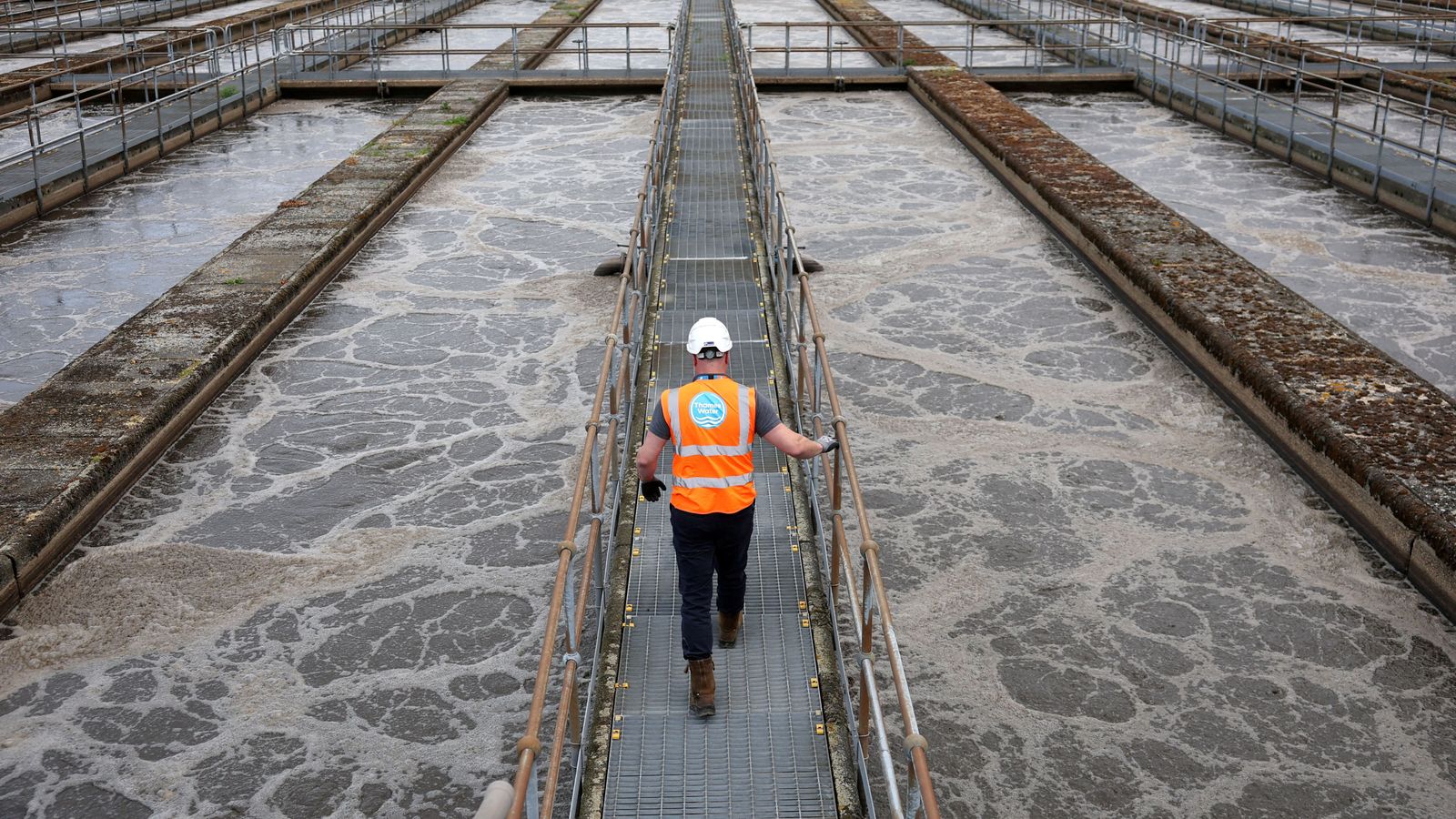
Thames Water, which supplies 16 million people in England, has been told by the watchdog Ofwat its revenues will be cut by more than £187m.

It comes as the utility struggles under a £17.6bn debt pile and the government has lined up insolvency practitioners for its potential collapse.

Money blog: Nine-year-old set up Christmas tree business to pay for university

Overall, water firms face a sector-wide revenue reduction of nearly £309m as a result of Ofwat’s determination. Thames Water’s £187.1m cut is the largest revenue reduction.

This will take effect from next year and up to 2030 as part of water companies’ regulator-approved five-year spending and investment plans.

The downward revenue revision has been made as Ofwat believes the companies will perform better than first thought and therefore require less money.

More on Thames Water

Better financial performance is ultimately good news for customers.

The change published on Wednesday is a technical update; the initial revenue projections published in December 2024 were based on projected financial performance but after financial results were published in the summer and Ofwat was able to apply these figures.

Please use Chrome browser for a more accessible video player

Is Thames Water a step closer to nationalisation?

Thames Water and industry body Water UK have been contacted for comment.

Continue Reading

Trending