
‘High risk of more premeditated extremist attacks’ after violence outside asylum seeker hotel, charities warn

Political leaders should “take a clear stand” and condemn violence against asylum seekers, charities have said – as they warned scenes like those outside a Merseyside hotel could be replicated across the country.
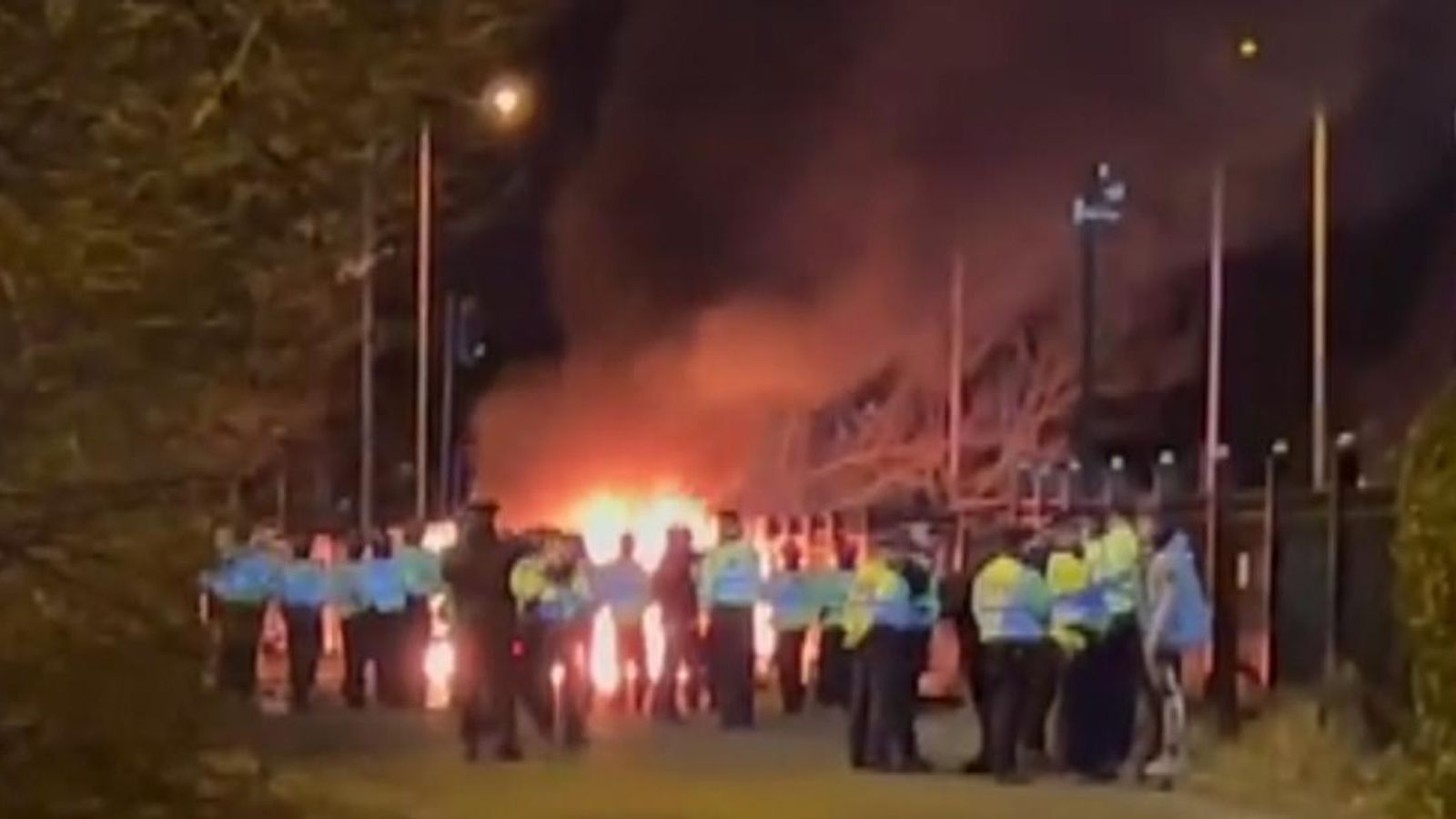
Fifteen people were arrested after “violent scenes” outside the hotel where asylum seekers were staying in Knowsley on Friday.
A demonstration descended into chaos as a police van was set on fire and missiles, including fireworks, were thrown at officers.
Several charitable organisations have now signed an open letter criticising “inflammatory language” and policies that “demonise” people seeking refuge.
The letter, co-ordinated by Together With Refugees, a coalition of more than 500 national and local organisations, also warns of a “high risk of more premeditated extremist attacks around the country” following the violence outside the Suites Hotel.
The letter has more than 100 signatories, including Liverpool City of Sanctuary, Care4Calais, Share Knowsley and the Refugee Council.
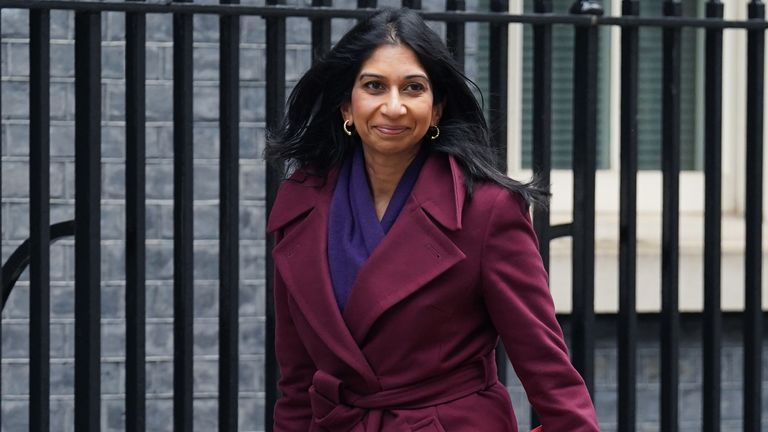
Home Secretary Suella Braverman has faced repeated criticism for her rhetoric describing migrants crossing the English Channel.
Ms Braverman was criticised in November after she told MPs that the south coast was facing an “invasion” of migrants.
The charities write in the letter that people in the asylum system “have already suffered terribly”, fleeing war and persecution in places including Afghanistan, Sudan, Syria and Iran.
They describe Britain’s asylum system as “broken”, and say people seeking refuge are forced into a period of “limbo” as they wait for a decision on their claim to stay in the UK. Asylum seekers are put up in hotels, which the charities call a “completely inappropriate form of accommodation”.
The signatories of the letter call on political leaders to “create a system that is fair and compassionate and brings cohesion instead of division”.
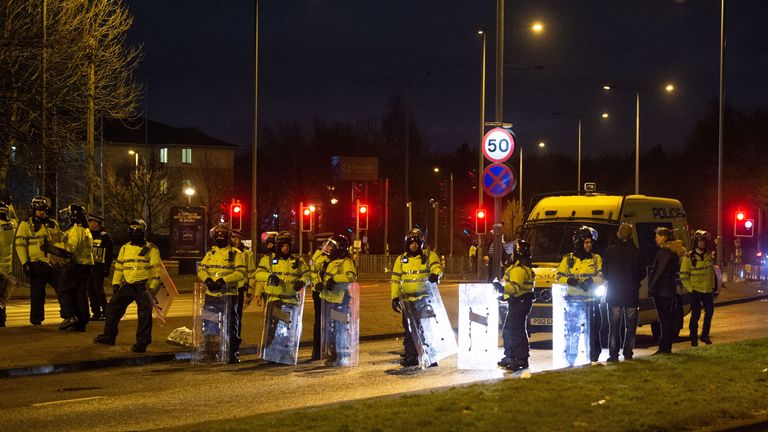
Police attended a demonstration outside the Suites Hotel in riot gear
“Having already experienced great hardship, these men, women and children who come here for protection are now faced with violence, fuelled by inflammatory language of ‘invasion’ and policies that demonise them,” the charities say.
“The responsibility to create a system that is fair and compassionate, and brings cohesion instead of division, lies with our decision makers.
“With the high risk of more premeditated extremist attacks around the country, leaders of all parties must now take a clear stand and condemn any further violence against those who come here to find safety, and set out the action they will take to prevent it.”
Read more:
Disused cruise ships could house asylum seekers
Sunak plans to ban Channel migrants from appealing deportation
The charities add that those responsible for inciting anger and violence like that seen in Knowsley last Friday “bring shame on this country” and are in the minority.
“This does not reflect the people of Britain. This is not who we are,” they say.
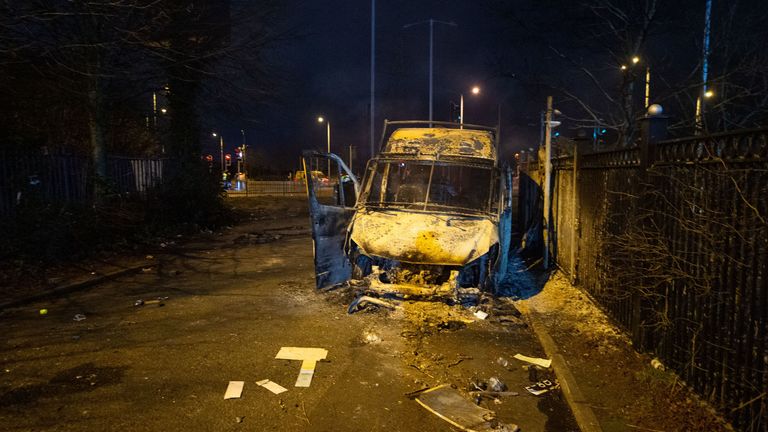
A police van was set alight during the disorder
Ewan Roberts, centre manager of Asylum Link Merseyside, said the area has a “proud history of welcoming refugees and the horrifying incident on Friday night does not represent the people of Knowsley”.
“The people staying in temporary accommodation came to us seeking our help, and instead had the experience of being under siege by a violent mob,” he said.
“We urge politicians to stop using rhetoric that fuels such hatred, condemn this violence and start doing the real work of clearing the backlog instead.”
Click to subscribe to the Sophy Ridge on Sunday podcast
Former refugee Sabir Zazai, who is now chairman of Together With Refugees said the issue is not about party politics but rather “basic human decency”.
“The very least all political leaders could do is to condemn the attack on people seeking sanctuary in our communities,” Mr Zazai said.
“Leaders of all political parties must call for the ending of these hostile policies and hateful language that only fuels division and anger.”
A man appeared in court on Monday charged with violent disorder and assault by beating of an emergency services worker following the violence outside the Suites Hotel.
Jared Skeete, 19, of Aigburth, Liverpool, was remanded in custody to appear before Liverpool Crown Court on 13 March.
The remaining 12 men and two women who were arrested were released on conditional bail.
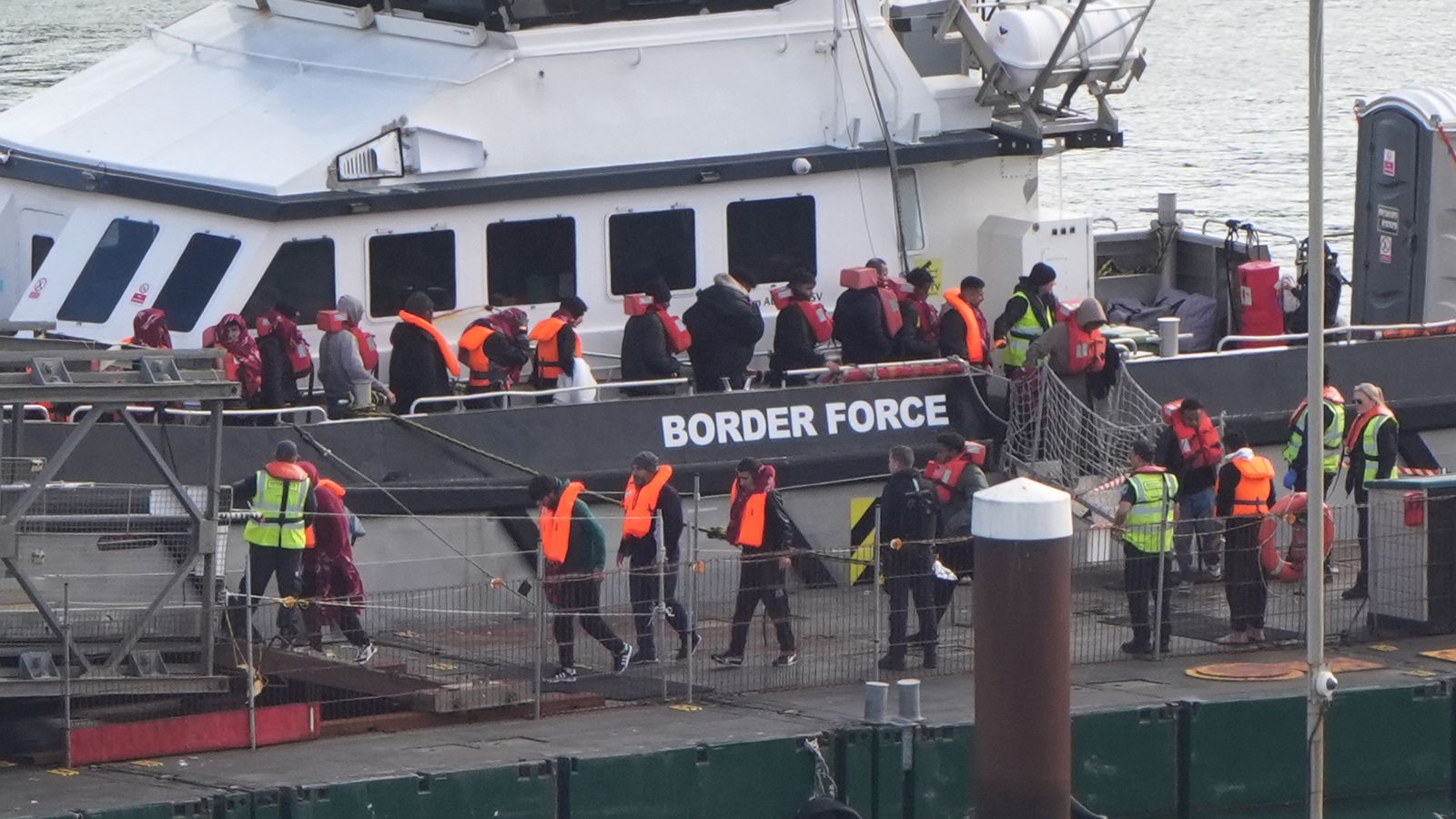
There have been no migrant arrivals in small boats crossing the Channel for 28 days, according to Home Office figures.
The last recorded arrivals were on 14 November, making it the longest uninterrupted run since autumn 2018 after no reported arrivals on Friday.
However, a number of Border Force vessels were active in the English Channel on Saturday morning, indicating that there may be arrivals today.
So far, 39,292 people have crossed to the UK aboard small boats this year – already more than any other year except 2022.
The record that year was set at 45,774 arrivals.
It comes as the government has stepped up efforts in recent months to deter people from risking their lives crossing the Channel – but measures are not expected to have an impact until next year.
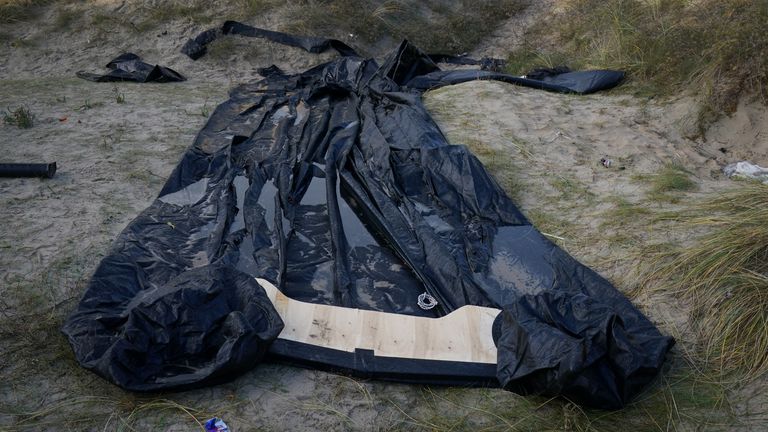
Debris of a small boat used by people thought to be migrants to cross the Channel lays amongst the sand dunes in Gravelines, France. Pic: PA
December is normally one of the quietest for Channel crossings, with a combination of poor visibility, low temperatures, less daylight and stormy weather making the perilous journey more difficult.
The most arrivals recorded in the month of December is 3,254, in 2024.
Deputy Prime Minister David Lammy met with ministers from other European countries this week as discussions over possible reform to the European Convention on Human Rights (ECHR) continue.
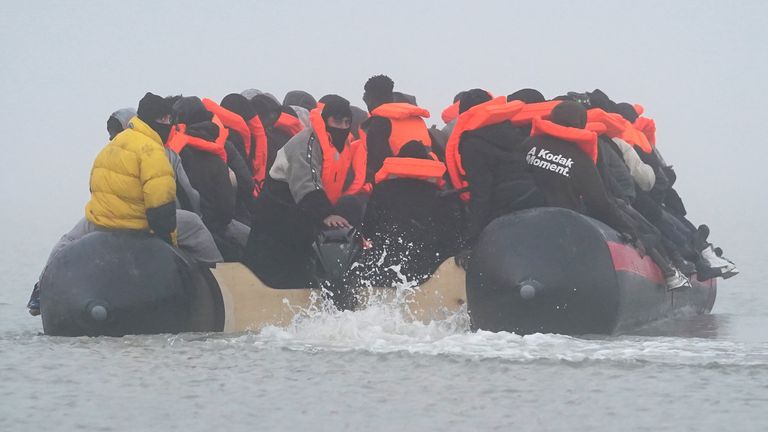
France agrees to start intercepting small boats
The issue of small boat arrivals – a very small percentage of overall UK immigration – has become a salient issue in British politics in recent years.
Last month, French maritime police announced they would soon be able to intercept boats in the English Channel.
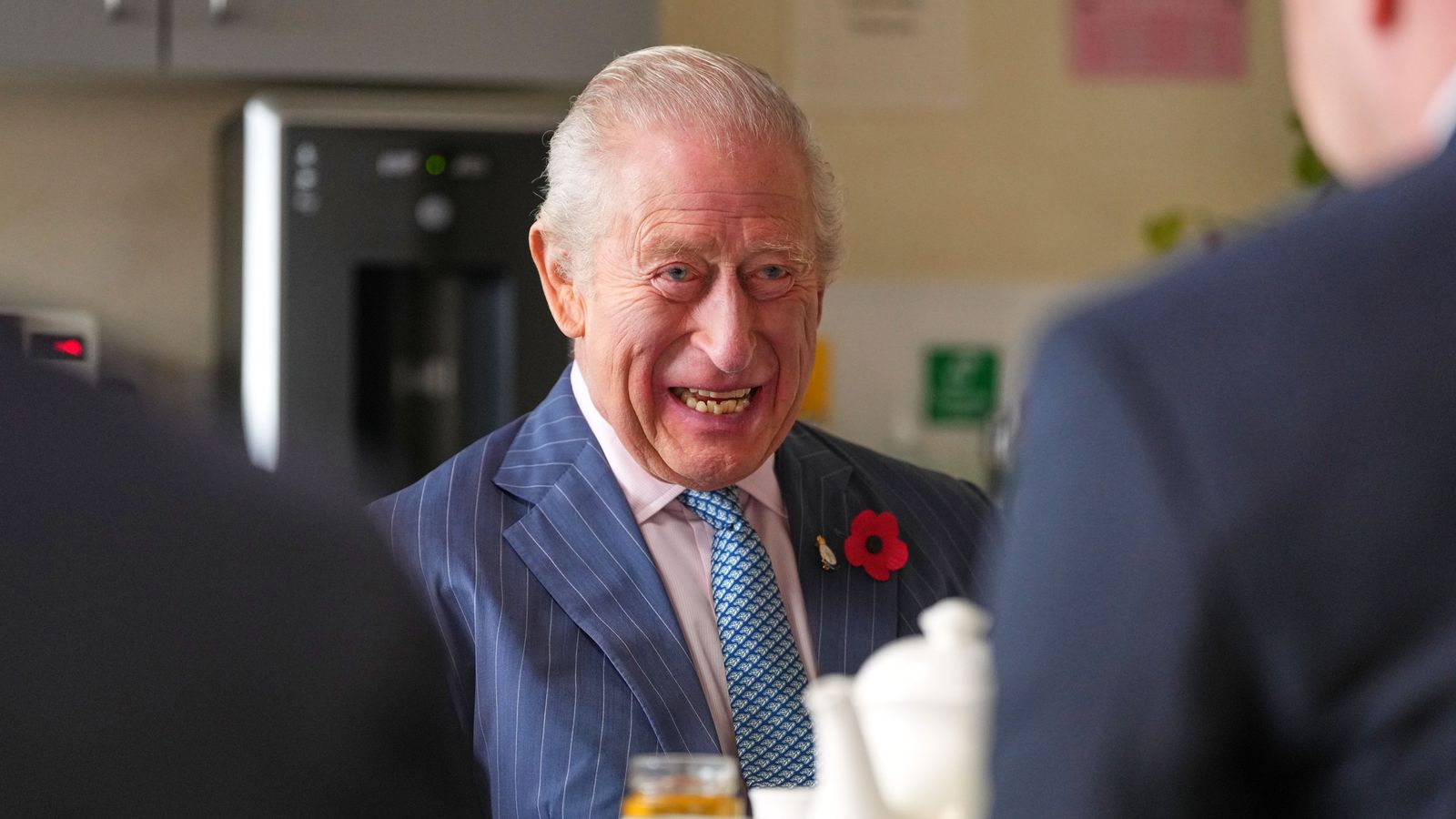
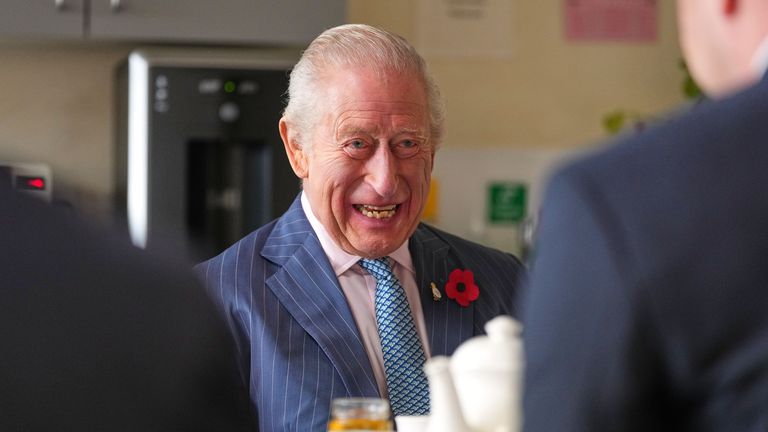
The King has shared in a television address that, thanks to early diagnosis, his cancer treatment can be reduced in the new year.
In a televised address, Charles said his “good news” was “thanks to early diagnosis, effective intervention and adherence to doctors’ orders”.
“This milestone is both a personal blessing and a testimony to the remarkable advances that have been made in cancer care in recent years,” he added.
“Testimony that I hope may give encouragement to the 50% of us who will be diagnosed with the illness at some point in our lives.”
The King announced in February 2024 that he had been diagnosed with cancer and was beginning treatment.
The monarch postponed all public-facing engagements, but continued with his duties as head of state behind palace walls, conducting audiences and Privy Council meetings.
He returned to public duties in April last year and visited University College Hospital Macmillan Cancer Centre in central London with the Queen and discussed his “shock” at being diagnosed when he spoke to a fellow cancer patient.
Sources suggested last December his treatment would continue in 2025 and was “moving in a positive direction”.
The King began returning to public duties in April last year. File pic: PA
The King has chosen not to reveal what kind of cancer he has been treated for. Palace sources have partly put that down to the fact that he doesn’t want one type of cancer to appear more significant or attract more attention than others.
In a statement after the speech aired, a Buckingham Palace spokesperson said: “His Majesty has responded exceptionally well to treatment and his doctors advise that ongoing measures will now move into a precautionary phase.”
Sir Keir Starmer praised the video message as “a powerful message,” and said: “I know I speak for the entire country when I say how glad I am that his cancer treatment will be reduced in the new year.
“Early cancer screening saves lives.”
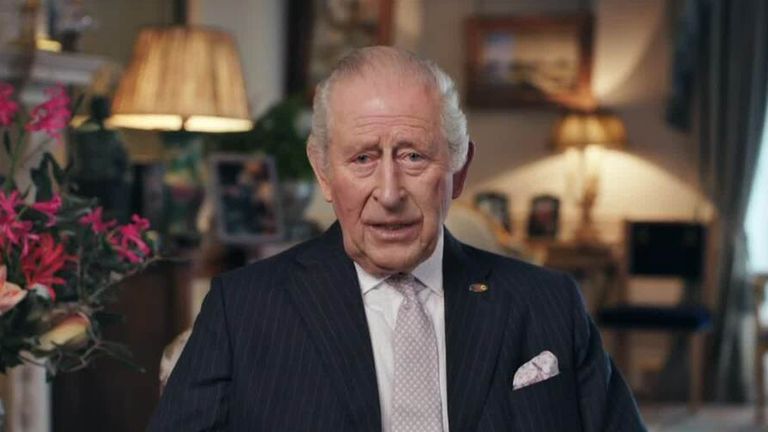
Watch: King Charles gives update on treatment
Early detection can give ‘the precious gift of hope’
His message on Friday was broadcast at 8pm in support of Stand Up To Cancer, a joint campaign by Cancer Research UK and Channel 4.
In an appeal to people to get screened for the disease early, the King said: “I know from my own experience that a cancer diagnosis can feel overwhelming.
“Yet I also know that early detection is the key that can transform treatment journeys, giving invaluable time to medical teams – and, to their patients, the precious gift of hope. These are gifts we can all help deliver.”
Charles noted that “at least nine million people in our country are not up to date with the cancer screenings available to them,” adding: “That is at least nine million opportunities for early diagnosis being missed.
“The statistics speak with stark clarity. To take just one example: When bowel cancer is caught at the earliest stage, around nine in ten people survive for at least five years.
“When diagnosed late, that falls to just one in ten. Early diagnosis quite simply saves lives.”
Minor inconvenience of screening ‘a small price to pay’
The King acknowledged that people often avoid screening “because they imagine it may be frightening, embarrassing or uncomfortable”. But, he added: “If and when they do finally take up their invitation, they are glad they took part.
“A few moments of minor inconvenience are a small price to pay for the reassurance that comes for most people when they are either told either they don’t need further tests, or, for some, are given the chance to enable early detection, with the life-saving intervention that can follow.”
Read more from Sky News:
Christmas tree chopped down hours after lights switch-on
More photos from Epstein’s estate released
Taylor Swift breaks down in tears over Southport attacks
Giving his “most heartfelt thanks” to doctors, nurses, researchers and charity workers, the King added: “As I have observed before, the darkest moments of illness can be illuminated by the greatest compassion. But compassion must be paired with action.
“This December, as we gather to reflect on the year past, I pray that we can each pledge, as part of our resolutions for the year ahead, to play our part in helping to catch cancer early.
“Your life – or the life of someone you love – may depend upon it.”
-
 Sports2 years ago
Story injured on diving stop, exits Red Sox game
-
 Sports3 years ago
‘Storybook stuff’: Inside the night Bryce Harper sent the Phillies to the World Series
-
 Sports2 years ago
Game 1 of WS least-watched in recorded history
-
 Sports3 years ago
Button battles heat exhaustion in NASCAR debut
-
 Sports3 years ago
MLB Rank 2023: Ranking baseball’s top 100 players
-
Sports4 years ago
Team Europe easily wins 4th straight Laver Cup
-
 Environment3 years ago
Japan and South Korea have a lot at stake in a free and open South China Sea
-
 Environment1 year ago
Here are the best electric bikes you can buy at every price level in October 2024