
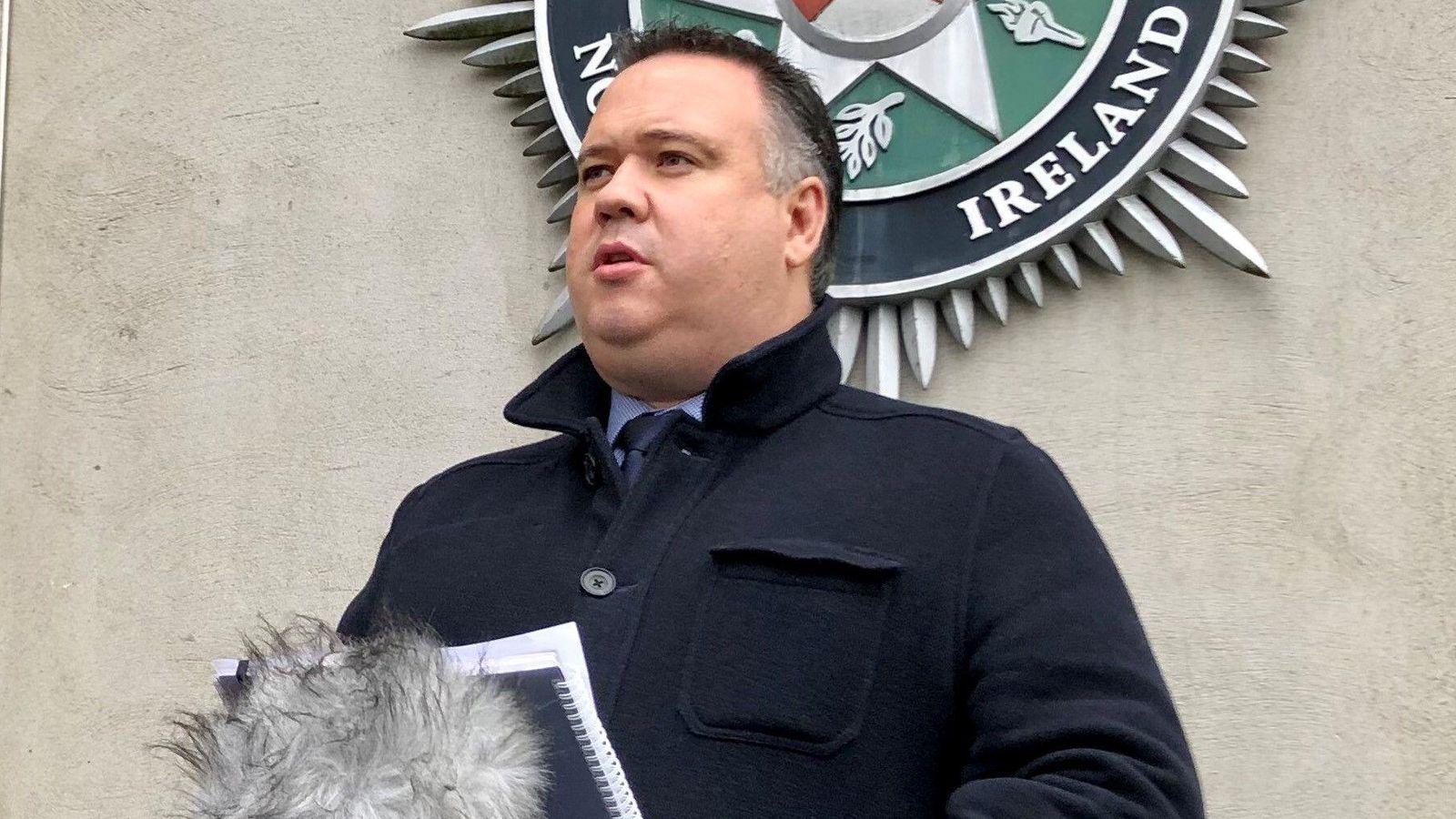
Three men arrested after detective shot in Northern Ireland – as police say New IRA is ‘primary focus’ of investigation


Three men have been arrested for attempted murder of an off-duty officer shot in Northern Ireland.
The officer, named as Detective Chief Inspector John Caldwell, was shot multiple times in front of young people he had been coaching at a sports centre just before 8pm on Wednesday, in Omagh, Co Tyrone.
Police say the dissident republican group, the New IRA, is the “primary focus” of the force’s investigation.
The attack happened while DCI Caldwell was loading footballs into the boot of his car when the two men opened fire, according to Assistant Chief Constable Mark McEwan of Police Service Northern Ireland (PSNI).
Detective Chief Inspector John Caldwell has been named as the off-duty police officer injured in a shooting in Omagh
Speaking at a press conference on Thursday, ACC McEwan said the officer ran a short distance after the first shots were fired and that his attackers continued to fire as he fell to the floor.
“There were many other young people, children, awaiting pick-up by their parents. Those children ran for cover in sheer terror towards the centre,” ACC McEwan added.
He said DCI Caldwell’s young son was also present, adding: “The trauma inflicted on this young boy is just horrific and he will never forget seeing his dad shot multiple times.
“The gunmen fired from close range in the busy sports training area, which could also quite easily have killed or seriously injured children who were present at the time of the shooting.”
DCI Caldwell remains in a critical but stable condition in hospital, where he underwent surgery overnight.
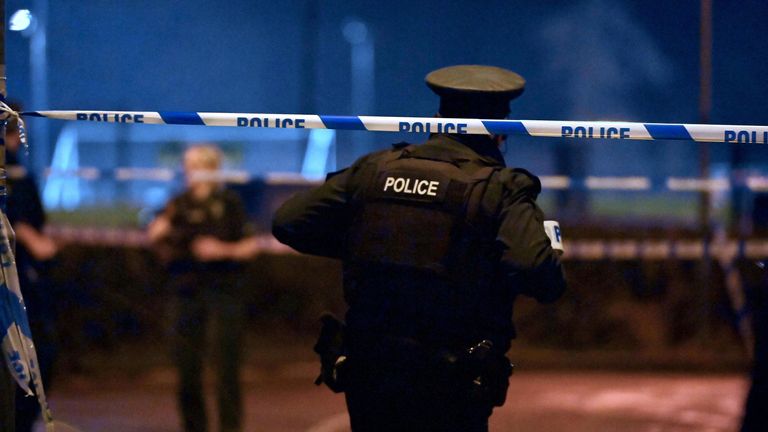
He is a high-profile officer who has led a number of major investigations, including taking a leading role in the murder probe following the killing of Natalie McNally in Lurgan in December.
‘A valued and active member of his community’
Speaking about the shooting, Chief Constable of PSNI, Simon Byre, said: “Clearly as an organisation, we are utterly shocked and angered by last night’s brazen and calculated attack.
“John is a father, husband and colleague, and a valued and active member of his local community.”
He said Mr Caldwell has been a valued police officer for 26 years “committed to public service as a senior investigating officer supporting victims and their families in bringing offenders to justice”.
He also confirmed that three men, aged 38, 45 and 47, had been arrested on Thursday morning in connection with the police’s attempted murder investigation.
Asked if there is a concern for wider security and safety, and whether action would be taken to improve security for some police officers, ACC McEwan told BBC Radio Ulster: “On an ongoing basis, we see these elements continually trying to carry out attacks of this nature.
“We are supporting our officers and staff. We continually review our security arrangements and advise our officers on security arrangements and that’s on an ongoing basis.”
Read more:
Northern Ireland election delayed until January 2024
Minister refuses to confirm if MPs will get vote on new Northern Ireland deal
He said the country’s terror threat level at the moment remained “substantial”, meaning that an attack is “highly likely”.
ACC McEwan also paid tribute to a “brave” member of the public who ran towards DCI Caldwell during the attack and administered first aid.
“I would also like to thank our partners in the ambulance service. If it hadn’t been for their quick action in getting John to hospital we might have been looking at something very different this morning,” he added.
‘A cowardly and callous attack’
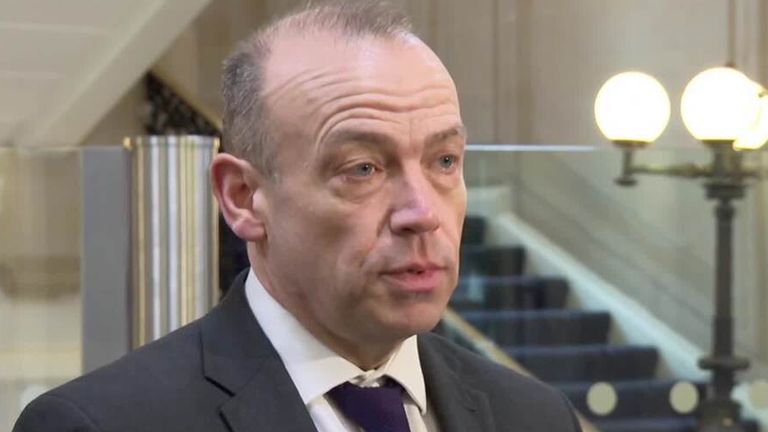
The Northern Ireland secretary responds to the shooting of Detective Chief Inspector John Caldwell in Omagh
Northern Ireland Secretary Chris Heaton-Harris also commented on the shooting, describing it as “a cowardly and callous attack”.
He said: “This is a really significant event. It’s a very serious event. A well-known local police officer is now in a critical condition.
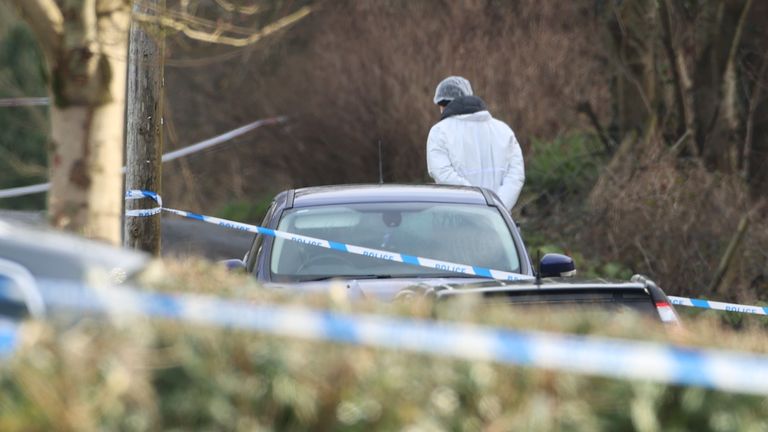
A police forensic officer at the scene
“My thoughts are with him and his family and everyone in the policing community and the community of Omagh.
“Society has moved on in Northern Ireland – there is no place for violence like this.”
Irish police are working closely in co-operation with their counterparts in the PSNI, and have intensified patrols amid suspicions the gunmen may have fled across the border.
In a statement last night, the Garda said it is “currently responding to an ongoing incident which took place earlier this evening in Northern Ireland”.
N Ireland: Police officer shot
“A Garda Siochana has intensified patrolling in border counties.”
PSNI Temporary Detective Chief Superintendent Eamonn Corrigan said: “Our investigation is now under way and I would appeal to anyone who was in the area and witnessed what happened or could help with our enquiries to make contact with police on 101.”
‘A grotesque act of attempted murder’
The shooting has been condemned by politicians across the UK and Ireland.
Prime Minister Rishi Sunak said he was appalled by the “disgraceful shooting of an off-duty police officer in Omagh”.
Irish premier Leo Varadkar condemned the “grotesque act of attempted murder”.
“Our thoughts are with the injured officer, his family, colleagues and friends at this difficult time,” the Taoiseach said.
“I utterly condemn this grotesque act of attempted murder.”
Sinn Fein vice president Michelle O’Neill said it was an “outrageous and shameful attack”.
“My immediate thoughts are with the officer and his family,” she said.
“I unreservedly condemn this reprehensible attempt to murder a police officer.”
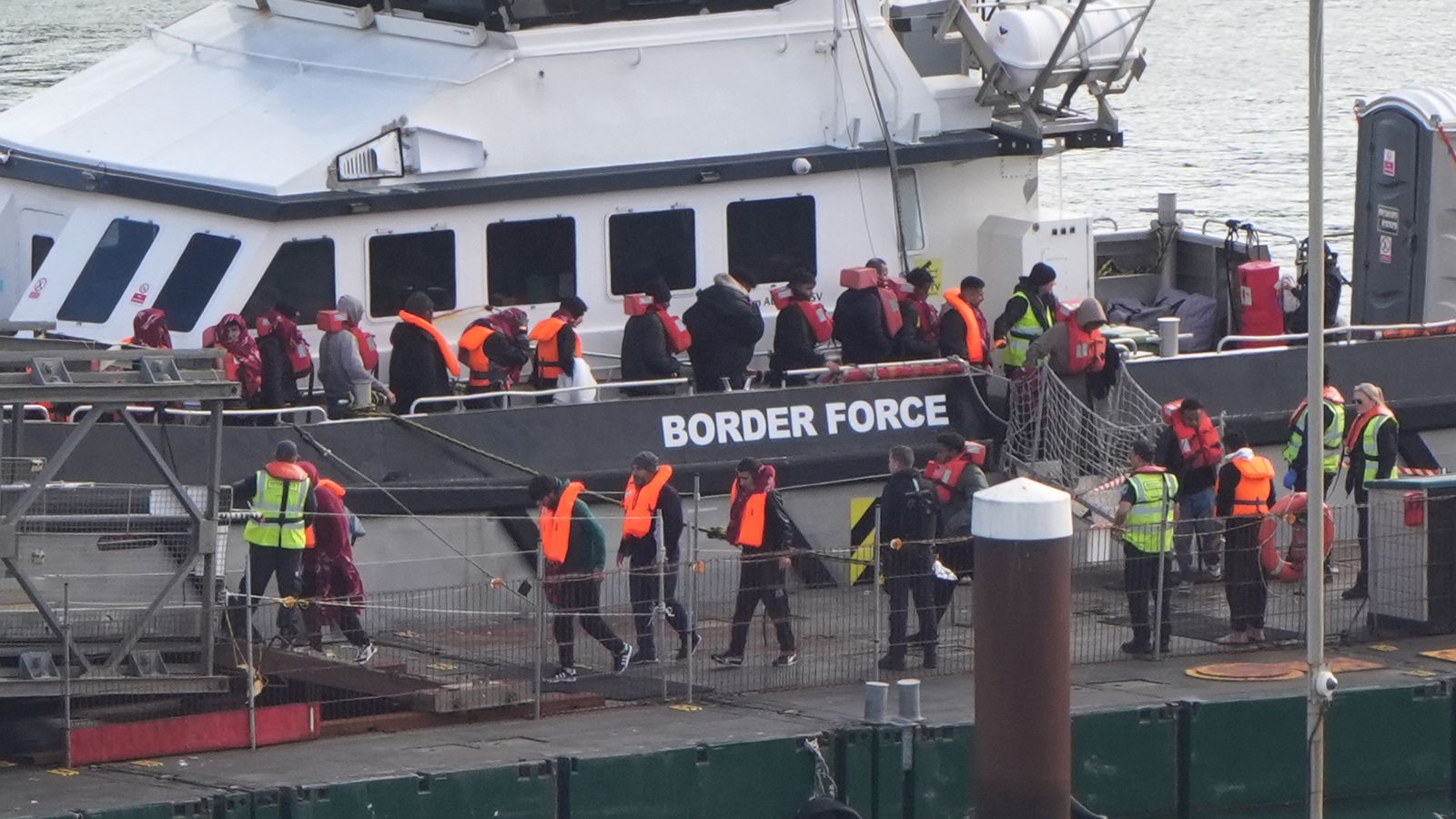
There have been no migrant arrivals in small boats crossing the Channel for 28 days, according to Home Office figures.
The last recorded arrivals were on 14 November, making it the longest uninterrupted run since autumn 2018 after no reported arrivals on Friday.
However, a number of Border Force vessels were active in the English Channel on Saturday morning, indicating that there may be arrivals today.
So far, 39,292 people have crossed to the UK aboard small boats this year – already more than any other year except 2022.
The record that year was set at 45,774 arrivals.
It comes as the government has stepped up efforts in recent months to deter people from risking their lives crossing the Channel – but measures are not expected to have an impact until next year.
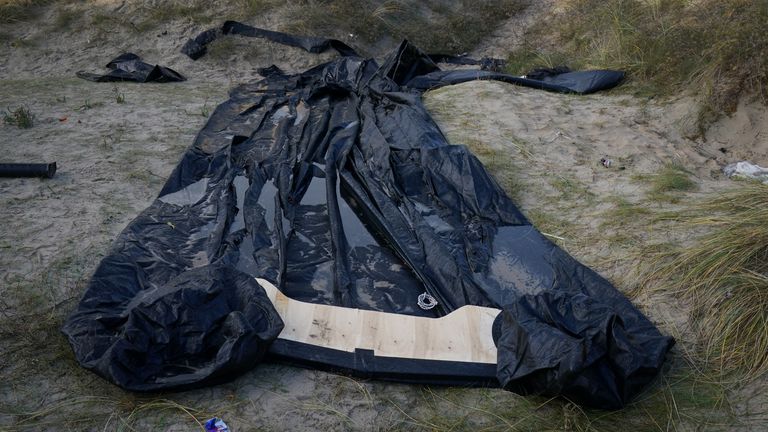
Debris of a small boat used by people thought to be migrants to cross the Channel lays amongst the sand dunes in Gravelines, France. Pic: PA
December is normally one of the quietest for Channel crossings, with a combination of poor visibility, low temperatures, less daylight and stormy weather making the perilous journey more difficult.
The most arrivals recorded in the month of December is 3,254, in 2024.
Deputy Prime Minister David Lammy met with ministers from other European countries this week as discussions over possible reform to the European Convention on Human Rights (ECHR) continue.
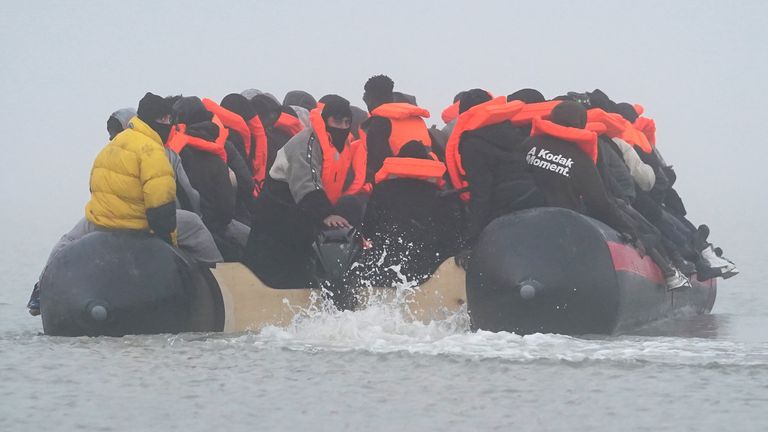
France agrees to start intercepting small boats
The issue of small boat arrivals – a very small percentage of overall UK immigration – has become a salient issue in British politics in recent years.
Last month, French maritime police announced they would soon be able to intercept boats in the English Channel.
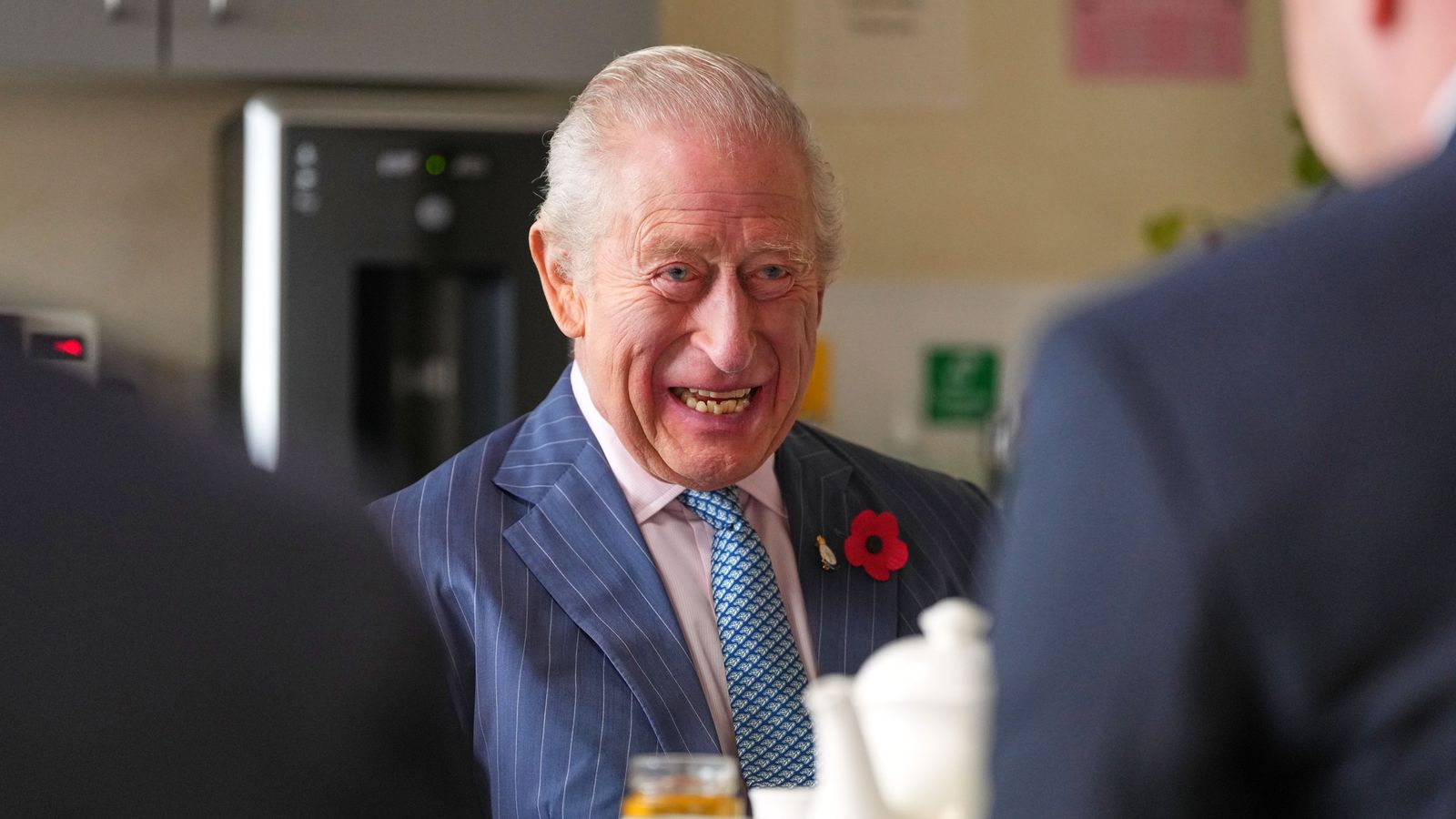
The King has shared in a television address that, thanks to early diagnosis, his cancer treatment can be reduced in the new year.
In a televised address, Charles said his “good news” was “thanks to early diagnosis, effective intervention and adherence to doctors’ orders”.
“This milestone is both a personal blessing and a testimony to the remarkable advances that have been made in cancer care in recent years,” he added.
“Testimony that I hope may give encouragement to the 50% of us who will be diagnosed with the illness at some point in our lives.”
The King announced in February 2024 that he had been diagnosed with cancer and was beginning treatment.
The monarch postponed all public-facing engagements, but continued with his duties as head of state behind palace walls, conducting audiences and Privy Council meetings.
He returned to public duties in April last year and visited University College Hospital Macmillan Cancer Centre in central London with the Queen and discussed his “shock” at being diagnosed when he spoke to a fellow cancer patient.
Sources suggested last December his treatment would continue in 2025 and was “moving in a positive direction”.
The King began returning to public duties in April last year. File pic: PA
The King has chosen not to reveal what kind of cancer he has been treated for. Palace sources have partly put that down to the fact that he doesn’t want one type of cancer to appear more significant or attract more attention than others.
In a statement after the speech aired, a Buckingham Palace spokesperson said: “His Majesty has responded exceptionally well to treatment and his doctors advise that ongoing measures will now move into a precautionary phase.”
Sir Keir Starmer praised the video message as “a powerful message,” and said: “I know I speak for the entire country when I say how glad I am that his cancer treatment will be reduced in the new year.
“Early cancer screening saves lives.”
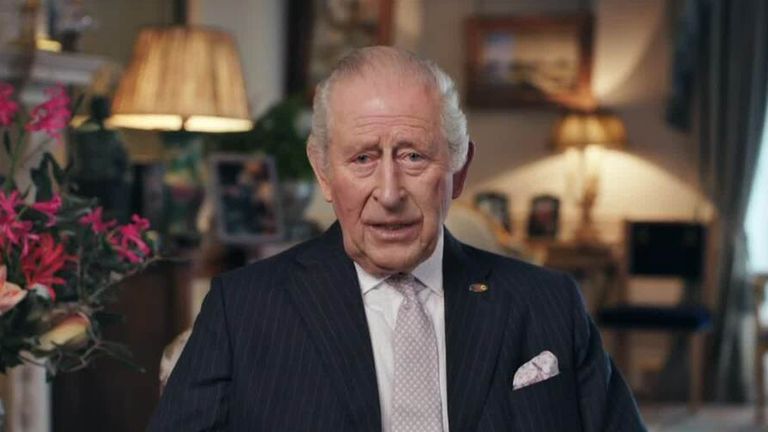
Watch: King Charles gives update on treatment
Early detection can give ‘the precious gift of hope’
His message on Friday was broadcast at 8pm in support of Stand Up To Cancer, a joint campaign by Cancer Research UK and Channel 4.
In an appeal to people to get screened for the disease early, the King said: “I know from my own experience that a cancer diagnosis can feel overwhelming.
“Yet I also know that early detection is the key that can transform treatment journeys, giving invaluable time to medical teams – and, to their patients, the precious gift of hope. These are gifts we can all help deliver.”
Charles noted that “at least nine million people in our country are not up to date with the cancer screenings available to them,” adding: “That is at least nine million opportunities for early diagnosis being missed.
“The statistics speak with stark clarity. To take just one example: When bowel cancer is caught at the earliest stage, around nine in ten people survive for at least five years.
“When diagnosed late, that falls to just one in ten. Early diagnosis quite simply saves lives.”
Minor inconvenience of screening ‘a small price to pay’
The King acknowledged that people often avoid screening “because they imagine it may be frightening, embarrassing or uncomfortable”. But, he added: “If and when they do finally take up their invitation, they are glad they took part.
“A few moments of minor inconvenience are a small price to pay for the reassurance that comes for most people when they are either told either they don’t need further tests, or, for some, are given the chance to enable early detection, with the life-saving intervention that can follow.”
Read more from Sky News:
Christmas tree chopped down hours after lights switch-on
More photos from Epstein’s estate released
Taylor Swift breaks down in tears over Southport attacks
Giving his “most heartfelt thanks” to doctors, nurses, researchers and charity workers, the King added: “As I have observed before, the darkest moments of illness can be illuminated by the greatest compassion. But compassion must be paired with action.
“This December, as we gather to reflect on the year past, I pray that we can each pledge, as part of our resolutions for the year ahead, to play our part in helping to catch cancer early.
“Your life – or the life of someone you love – may depend upon it.”
-
 Sports2 years ago
Story injured on diving stop, exits Red Sox game
-
 Sports3 years ago
‘Storybook stuff’: Inside the night Bryce Harper sent the Phillies to the World Series
-
 Sports2 years ago
Game 1 of WS least-watched in recorded history
-
 Sports3 years ago
Button battles heat exhaustion in NASCAR debut
-
 Sports3 years ago
MLB Rank 2023: Ranking baseball’s top 100 players
-
Sports4 years ago
Team Europe easily wins 4th straight Laver Cup
-
 Environment3 years ago
Japan and South Korea have a lot at stake in a free and open South China Sea
-
 Environment1 year ago
Here are the best electric bikes you can buy at every price level in October 2024