
Apple analyst Kuo says headset faces 1-2 month delay, prompting uncertainty over WWDC launch

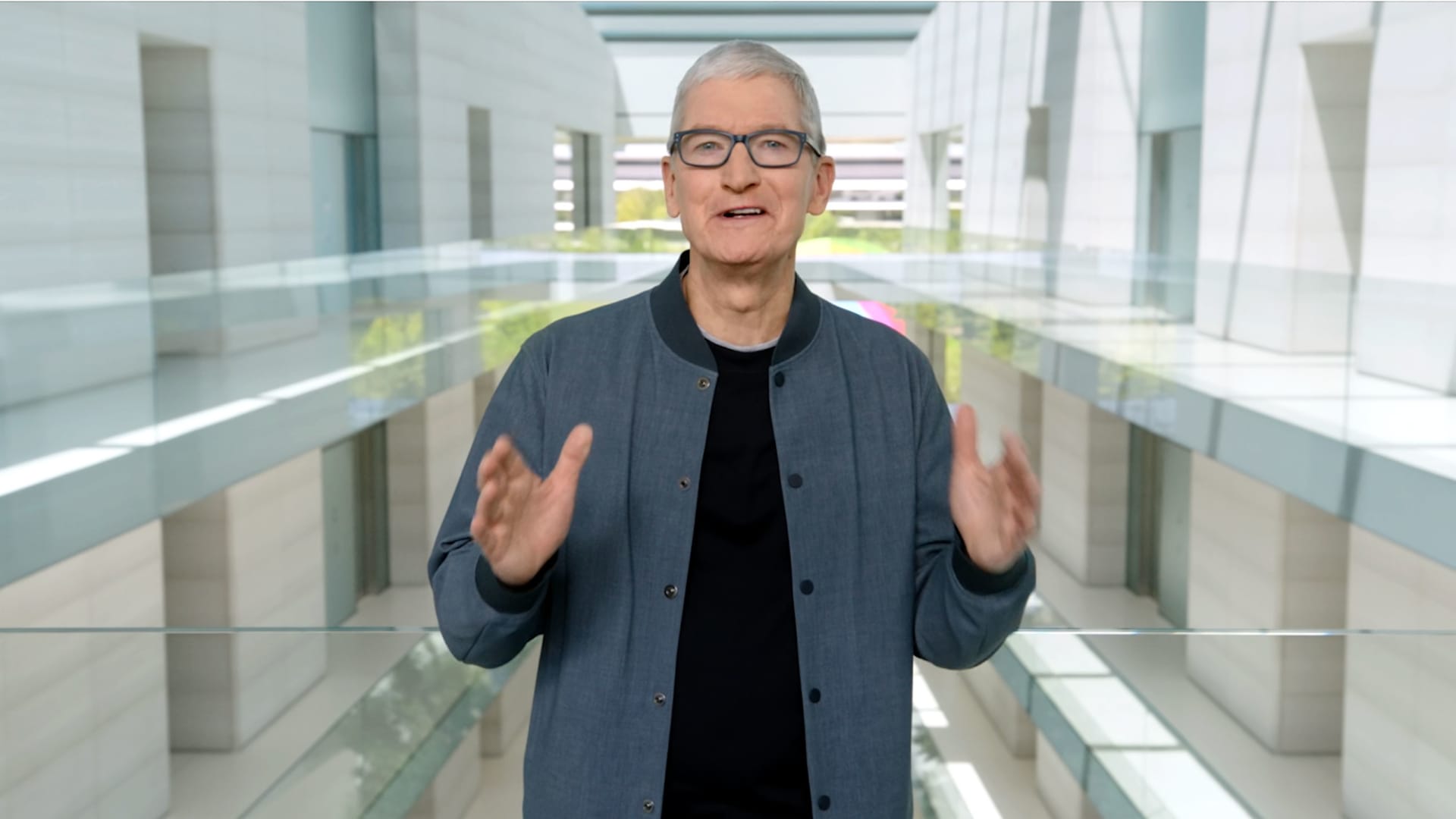
Tim Cook during WWDC 2022 Event
Source: Apple
Apple’s widely anticipated mixed-reality headset may not be ready in time for the company’s June WWDC event, top Apple analyst, TFI Securities’ Ming-Chi Kuo, wrote on Twitter Thursday.
Kuo tweeted that the company wasn’t optimistic that the yearslong project would get the “astounding ‘iPhone moment'” reception that Apple had hoped for, prompting a slowed production schedule to “mid-to-late” third quarter 2023. He said Apple pushed back mass assembly by another 1-2 months to mid-to-late Q3.
related investing news

In the past, however, Apple has teased some of its new products months before they launch. The Apple Watch was announced in Sept. 2014 but didn’t launch until April 2015.
Kuo said the main concerns for Apple are the broader economic downturn, “compromises” the company made for the sake of mass production, an uncertain ecosystem and developer reception, and a relatively high price. Kuo anticipates Apple will price the headset from $3,000 to $4,000, or more.
Apple expects to sell at most 300,000 headsets in 2023, Kuo wrote. Bloomberg reported Sunday that Apple executives think the company will sell “about a million units” of the headset, which Bloomberg reported would be dubbed the “Reality Pro” or “Reality One,” in the first full year of sales.
The best hope for Apple is that headset growth matches the trajectory of the Apple Watch, evolving from a “small portion” of the company’s business into a “centerpiece,” Gurman wrote.
Kuo is regarded as one of the most accurate Apple analysts, and has reported on Apple’s shifting approach to the launch of its long-awaited headsets.
Apple did not immediately respond to a request for comment.


Waymo co-CEOs (L-R): Tekedra Mawakana and Dmitri Dolgov
Waymo
Self-driving car company Waymo is in talks to raise $15 billion in funding in the new year.
The robotaxi company plans to raise billions from Alphabet, its parent company, as well as outside investors at a valuation as high as $110 billion, according to a person familiar with the discussions.
The latest funding discussions are indicative of Waymo’s status as the leader of the pack in the U.S. robotaxi market. The company has been spending heavily to ramp up its fleet and continue expanding to more regions. Waymo is now either operating its robotaxis, planning to launch service or starting to test its vehicles in 26 markets, in the U.S. and abroad.
Alphabet CEO Sundar Pichai said Waymo will “meaningfully” contribute to Alphabet’s financials as soon as 2027, CNBC reported Tuesday.
If the Google sister company winds up raising as much as $15 billion, that would represent more than double the amount of its last funding round. That was a series C round of $5.6 billion at a $45 billion valuation, which closed in October 2024. Alphabet had committed $5 billion in a multiyear investment to Waymo at the time.
That round was led by Alphabet alongside previous backers, including Andreessen Horowitz, Fidelity, Perry Creek, Silver Lake, Tiger Global and T. Rowe Price. At the time, Waymo co-CEOs Tekedra Mawakana and Dmitri Dolgov said the funding would go toward expanding its robotaxi service.
Waymo currently serves paid rides to the public in the Austin, San Francisco Bay Area, Phoenix, Atlanta and Los Angeles markets.
Earlier this month, CNBC reported that Waymo crossed an estimated 450,000 weekly paid rides, and the company in December said it had served 14 million trips in 2025, putting it on pace to end the year at more than 20 million trips total since launching in 2020.
The company plans to open service next year in Dallas, Denver, Detroit, Houston, Las Vegas, Miami, Nashville, Orlando, San Antonio, San Diego and Washington, D.C. Waymo also announced plans to launch its service in London in 2026, which will mark the company’s first overseas service region.
Amazon’s Zoox this year began offering free driverless rides to the public around the Las Vegas Strip and certain San Francisco neighborhoods. Tesla launched a Robotaxi-branded service in Austin and the San Francisco Bay Area, but those cars still had human drivers or safety supervisors on board as of mid-December.
Fundraising plans were first reported by The Information.
WATCH: 2025: The year that the robotaxi went mainstream with Waymo leading the pack

-
 Sports2 years ago
Story injured on diving stop, exits Red Sox game
-
 Sports3 years ago
‘Storybook stuff’: Inside the night Bryce Harper sent the Phillies to the World Series
-
 Sports2 years ago
Game 1 of WS least-watched in recorded history
-
 Sports3 years ago
Button battles heat exhaustion in NASCAR debut
-
 Sports3 years ago
MLB Rank 2023: Ranking baseball’s top 100 players
-
Sports4 years ago
Team Europe easily wins 4th straight Laver Cup
-
 Environment3 years ago
Japan and South Korea have a lot at stake in a free and open South China Sea
-
 Environment1 year ago
Here are the best electric bikes you can buy at every price level in October 2024