

MLB Power Rankings: Are the Yankees back? And which NL power is on the rise?


Seven weeks into the season, we’re still seeing dominant performances from a number of American League teams, with seven of our top 10 teams residing in the AL.
That has not been the case in the National League, with preseason juggernauts like the Mets and Padres — teams that went big this offseason to put together playoff-caliber rosters — struggling. Both are currently below .500 and stumbling in their divisional races, though the Mets’ 8-7 walk-off win Wednesday night over the Rays could be the catalyst they needed to get going.
Two teams, however, have risen above the rest to vie for the title of best NL team. After stumbling out of the gate, the Dodgers have overtaken the Braves for best record in the league. Who will reign supreme?
Our expert panel has combined to rank every team in baseball based on a combination of what we’ve seen and what we already knew going into the 162-game marathon that is a full baseball season. We also asked ESPN MLB writers David Schoenfield, Bradford Doolittle, Jesse Rogers, Alden Gonzalez and Joon Lee to weigh in with an observation for all 30 teams.
Record: 32-12
Previous ranking: 1
The Rays’ pitching factory is truly being put to the test, with Drew Rasmussen, Jeffrey Springs, Shane Baz and Tyler Glasnow all on the injured list. As it currently stands, the Rays are taking things day by day with their rotation — they haven’t officially announced their starting pitchers for the next four days. But Tampa Bay will likely be relying on arms like Jalen Beeks, who has made two opener-type starts in the past week, allowing no runs in six innings. The Rays do have a cushion to figure things out, currently sitting 3.5 games ahead of the second-place Orioles. — Lee

Record: 28-16
Previous ranking: 3
The Dodgers snapped a six-game winning streak when they lost to the Twins on Tuesday, the end of a stretch that saw them win 17 of 21 games. Their offense is clicking, their starters have been effective and their bullpen has turned things around. And as if that wasn’t enough, Walker Buehler, who’s recovering from his second Tommy John surgery, told reporters he hopes to be a member of the rotation by the start of September. Manager Dave Roberts says that might be a little overly aggressive, but Buehler in any capacity — in the rotation or out of the bullpen — would be a major lift. For now, though, the Dodgers seem to have plenty. — Gonzalez

Record: 27-16
Previous ranking: 2
The Braves were cruising along until they lost four straight to the Red Sox and Blue Jays in the past week — with A.J. Minter receiving the “L” in two of the games, dropping his record to 2-5 with an 8.06 ERA. His overall stats aren’t as bad as the ERA indicates, with two home runs in 19 innings and a fine 24-to-6 strikeout-to-walk ratio, but he has allowed a .500 average with runners in scoring position and a .340/.385/.511 slash line in “late and close” situations — thus the five losses.
“He’s a year removed from being one of the most effective relievers in baseball. This game’s cruel. It just keeps testing you,” manager Brian Snitker said. “He’s just going to have to keep getting after it and competing … and not be careful.” The Braves do have a cushion in the National League East, and given that there aren’t severe home run or control issues here, they’ll likely keep him in high-leverage situations for now. — Schoenfield

Record: 26-17
Previous ranking: 5
We’re not quite at Memorial Day — a common time to assess teams’ standings — but it’s looking more and more like Texas is in the race for the long haul. Playing the A’s over the course of four games doesn’t hurt either, as the Rangers took three of four over the weekend, but that doesn’t mean they’ll walk away with a division title. A wild-card spot still seems to be the most likely outcome, despite their current place atop the American League West.
In the absence of Jacob deGrom, Nathan Eovaldi has emerged as the leader of the rotation. He had gone three straight starts without giving up a run, all lasting at least eight innings, before giving up three runs in seven innings in Wednesday night’s loss to the Braves. Shutting down the A’s is one thing, but when he did the same against the Yankees and Angels, it made people take notice. Yes, New York had some injuries in its lineup, but Eovaldi passed the eye test either way. His stuff has been electric. — Rogers

Record: 25-18
Previous ranking: 4
The concerns about Alek Manoah‘s start to the season are getting more and more real. Through nine starts, Manoah has a 5.40 ERA, 1.80 WHIP and -0.4 bWAR. He has given significantly more hard contact this season and has not been throwing as many strikes, a problem for a pitcher who does not rely on strikeouts to get batters out. If Toronto hopes to achieve its World Series aspirations, it will need more from a pitcher it expected to lead the rotation. The team has gotten strong performances from Kevin Gausman, Yusei Kikuchi and Chris Bassitt, which has helped lessen the impact of Manoah’s struggles. — Lee

Record: 28-15
Previous ranking: 7
Baltimore continues to dazzle in the early going of the season. Its most impressive pitcher hasn’t been a starter — rather, it’s rookie reliever Yennier Cano, who has 25 strikeouts with no runs or walks in 21⅔ innings pitched. The Orioles’ bullpen duo of Cano and established reliever Felix Bautista looks like one of the most dynamic late-inning combos across the game. Combine that with Adley Rutschman putting together a season that could vault him in the MVP conversation and it’s hard to imagine this Baltimore team fading into irrelevance. — Lee

Record: 25-20
Previous ranking: 9
Yankees fans are inching away from the panic button after the team put together a strong week against the lowly Athletics, a series split against the Rays and high-scoring outputs against the Blue Jays (though, New York was shut out by Toronto on Wednesday). In the past week, Aaron Judge and Anthony Rizzo have carried the offense, hitting five and three homers, respectively. Meanwhile, rookie shortstop Anthony Volpe‘s statistics continue to creep up after a slow start — he has hit three homers in the past week. — Lee

Record: 24-19
Previous ranking: 6
Jose Altuve has been on a rehab assignment in the minors and his return from a thumb injury is approaching. Once Altuve resumes his place as the Astros’ everyday second baseman and leadoff hitter, the question then becomes: What does manager Dusty Baker do about Mauricio Dubon? It’s a good problem to have, since Dubon has sparkled as Altuve’s replacement, with a league-average bat (albeit one fueled by a sky-high BABIP) supported by terrific defense and production on the basepaths. Dubon has been particularly lethal against lefties, and you wonder if he might usurp some of Jake Meyers’ playing time in center field when a southpaw is on the mound. Dubon has started 79 games in center over the past three years but has yet to appear at the position in 2023. — Doolittle

Record: 24-20
Previous ranking: 12
Wrist injuries have hampered the progress of Alex Kirilloff over the past couple of seasons. While it’s still early, now that he’s healthy, he has been producing like the All-Star in the making that he was once ordained to be. After getting his feet wet with a few outings at Class A, Kirilloff advanced to Triple-A St. Paul, where he mashed a .316/.435/.605 line over 10 games. That propelled him back to the big league roster, and 10 games after that promotion, he put up pretty much the same line: .313/.450/.563.
Manager Rocco Baldelli is still limiting Kirilloff’s exposure to lefties, and as long as that’s the case, we can’t declare him a finished product. But if he keeps mashing righties the way that he has, Baldelli might be forced to expand his role. It might be happening already: Kirilloff was in the lineup May 16 at Dodger Stadium when the Twins were going up against future Hall of Famer Clayton Kershaw. — Doolittle

Record: 24-19
Previous ranking: 11
Milwaukee has quietly returned to the top of the NL Central after a series sweep of the Royals over the weekend. However, the Brewers’ 18-1 drubbing at the hands of the Cardinals on Monday was a reminder that nothing comes easy in the mediocre NL Central, though they did follow that up with a solid win over the Cardinals on Tuesday. Milwaukee’s top hitter (Rowdy Tellez) ranks just 39th in the majors in OPS while its top pitcher (Corbin Burnes) ranks 37th in ERA, but manager Craig Counsell’s group is doing what it always does — hanging around the top of the division. The Rays and Astros will be a big test over the next week. — Rogers

Record: 25-19
Previous ranking: 14
Brandon Pfaadt, the D-backs’ highly touted pitching prospect, was charged with 13 runs in 9⅔ innings during his first two starts but bounced back Sunday, pitching five innings of one-run ball against the Giants. D-backs manager Torey Lovullo had a talk with Pfaadt in the wake of those first two outings, essentially telling him he was capable of more and that something needed to be figured out. “He took that as a personal challenge,” Lovullo said.
Pfaadt benefited from getting back some of the late life on his fastball, heeding the advice of assistant pitching coach Barry Enright to get his fingers on top of the baseball and throw it more downhill, according to MLB.com. The D-backs need someone to step up in their rotation beyond Zac Gallen and Merrill Kelly, and perhaps Pfaadt, 24, can be that guy. — Gonzalez

Record: 24-20
Previous ranking: 10
Boston fell back down to earth after rattling off an eight-game winning streak, dropping six of eight against the Phillies, Braves, Cardinals and Mariners. The Red Sox face questions about who will fill out their rotation following the return of James Paxton from the IL. After Wednesday’s victory over the Mariners, manager Alex Cora announced his decision to send a floundering Nick Pivetta to the bullpen, where he’ll work as a multi-inning reliever, while others like Corey Kluber have also struggled mightily this season. If Boston hopes to compete in the division, it will need more from its rotation. Every pitcher with at least three starts has an ERA above 4.45.— Lee

Record: 21-22
Previous ranking: 16
George Kirby is pitching his way into the All-Star discussion — and it would be in front of home fans, with the All-Star Game in Seattle this summer. After allowing one hit in 6⅔ innings to beat the Red Sox on Monday, he ran his record to 5-2 with a 2.45 ERA.
Following an impressive rookie season in which he walked just 22 batters in 130 innings, Kirby continues to pound the strike zone like few starters have ever done. He has walked just four batters in 51⅓ innings — at 0.7 walks per nine, that’s a better rate than Greg Maddux ever had (and would rank eighth best since 1901). His strikeout rate isn’t anything special, but he’s not allowing a ton of hard contact, with just two home runs and a hard-hit rate that ranks in the 79th percentile. It’s a unique profile in today’s game, but he’s proving that the old adage of “get ahead of the batter” is still an effective way to pitch. — Schoenfield

Record: 20-24
Previous ranking: 8
The perception from the outside was that the NL West had flipped. The Padres defeated the Dodgers in last year’s NL Division Series, then signed Xander Bogaerts — leading up to Fernando Tatis Jr.’s return — while the Dodgers mainly stood pat. But the Padres’ regular-season struggles against the Dodgers continue. They lost a combined five of six games to their bitter rivals on back-to-back weekends and have now dropped 11 consecutive regular-season series against them dating to 2021. When this week began, the Padres’ vaunted offense was amazingly batting just .198 with runners in scoring position, dead last in the majors. — Gonzalez

Record: 22-22
Previous ranking: 15
Shohei Ohtani is navigating through what is probably the worst pitching slump of his major league career, posting a 6.12 ERA over his past four starts. Ohtani allowed five runs in the first five innings in Baltimore on Monday — but he still recorded 21 outs, unleashed a 456-foot home run, fell just shy of the cycle for the second time in less than three weeks and wound up as the winning pitcher. In typical Ohtani fashion, he managed to attain greatness amid struggle. He’s helping to keep the Angels afloat within a hypercompetitive AL West. — Gonzalez

Record: 20-23
Previous ranking: 17
Ranger Suarez finally returned to make his first start since getting injured in the World Baseball Classic, and while he allowed seven hits and three runs in four innings, it was in Colorado and he gave up a couple of cheap ones (and the Phillies won anyway).
Meanwhile, the Phillies demoted Bailey Falter, which is not a surprise given he’s 0-7 in eight starts with a 5.13 ERA. It’s just hard for a lefty with a low strikeout rate to survive in today’s game, and Falter has allowed a .301 average and .825 OPS. Still, he’ll probably be back at some point, which leads us to this factoid: The record for most losses in a season without a win in Phillies history belongs to Russ Miller, who went 0-12 in 1928. You might remember Brad Lidge went 0-8 in 2009 as the closer — despite the Phillies advancing to the World Series (where he would lose a game, although he did get a win in the NLCS). — Schoenfield

Record: 21-23
Previous ranking: 13
Is it time to start panicking? Maybe not, after the Mets’ walk-off win over the Rays on Wednesday night, but New York still went a disastrous 4-9 in a stretch against the Tigers, Rockies, Reds and Nationals — probably the easiest four-series stretch it’ll have all season. Then on Tuesday against the Rays, Justin Verlander made his first home start for the Mets and allowed six runs and eight hits in five innings, serving up two home runs to Isaac Paredes, one with two runners on and one with a runner on. Verlander is hardly the biggest problem, as David Peterson got shelled again Sunday to fall to 1-5 with an 8.08 ERA and was optioned to Triple-A. Carlos Carrasco looks ready to return from the IL and take Peterson’s place in the rotation. — Schoenfield

Record: 19-23
Previous ranking: 20
The Guardians’ quest to generate some semblance of a contention-worthy offense is ongoing. They did get some good news on that front, though. Josh Naylor remarkably hit eighth-inning, go-ahead homers in three straight games over the weekend against the Angels, and he did so with nary a reprise of the baby-rocking celebration he unleashed on us all during last season’s playoffs. Cleveland’s offensive issues have been widespread, but Naylor has certainly been a part of the problem, with an OPS+ of just 84 despite the recent surge. Naylor and Josh Bell, who has struggled just as much, have occupied the 4- and 5-spots in the batting order for most of the season. The Guardians rank in the bottom third of the majors in OPS at those slots. — Doolittle

Record: 23-20
Previous ranking: 18
There’s a reason the Pirates were never that highly rated in our power rankings, as their place in the standings was bound to take a hit. It’s just hard to see their pitching staff, outside of Mitch Keller, performing at a high level over 162 games. Having said all that, Keller is a current Cy Young candidate who might be in the midst of a magical season. He followed up a complete-game shutout over the Rockies with a seven-inning, 13-strikeout scoreless performance over the vaunted Orioles. It was one of the better pitching performances of the season. Keller’s fastball has been electric, which makes his cutter just as dangerous. He’s a fun watch on the mound. — Rogers

Record: 18-26
Previous ranking: 23
The long-awaited turnaround for St. Louis has begun. Was the very public benching of Willson Contreras the catalyst? Maybe. Maybe not. But it certainly got the attention of the whole team, as the Cardinals had to answer for their own issues as they came to Contreras’ defense.
Slowly but surely the rotation is performing better — a notion that probably has little to do with Contreras. Miles Mikolas has found some mojo after a brutal start to his season. He has given up five runs in his past 16 innings in three May starts. With a potent offense behind him — Nolan Arenado is on fire — that kind of production from St. Louis’ pitching might be all the team needs to get back in the race. The Cardinals are not completely back, but their sweep of the Red Sox last week in Boston was as good a sign as any that they’re headed in the right direction. — Rogers

Record: 19-24
Previous ranking: 19
A brutal three-city road trip combined with key injuries has led to a poor May for Chicago. The Cubs are a decent team, but they have holes in every part of their game right now. One bright spot is Christopher Morel. He hit three 400-plus-foot home runs in the span of four days last week. One went for 461 feet, one of the longest in baseball this season. Teams should begin to pitch him inside as his power comes from extension. And fans have a right to question why he didn’t make the team out of spring training after he hit 16 home runs in a limited time span last season. — Rogers

Record: 22-21
Previous ranking: 21
The Marlins finally lost a one-run game on Saturday, when the Reds scored three runs in the eighth to take a 6-4 lead. Miami rallied with a run in the bottom of the ninth and had the bases loaded with two outs, but Alexis Diaz fanned Yuli Gurriel to close out the game. But the Marlins improved to 13-1 in one-run games on Tuesday (and then 14-1 on Wednesday) with a dramatic three-run rally in the bottom of the ninth to beat the Nationals 5-4. Garrett Cooper doubled with two outs, Luis Arraez singled him home and then Jorge Soler hit a walk-off home run.
The other big news was the MLB debut for 20-year-old right-hander Eury Perez, regarded by many as the top pitching prospect in the game. He allowed two runs in 4⅔ innings against the Reds with seven K’s, although those two runs were both homers. He averaged 97 mph with his fastball and got three strikeouts apiece with his slider and curveball. With 16 swinging strikes in just 18 pitches, his stuff was as good as advertised and he looks ready to contribute. — Schoenfield

Record: 20-23
Previous ranking: 22
Perhaps Michael Conforto is finally beginning to heat up. After a dreadful first six weeks of the season, Conforto has accumulated 10 hits — including three home runs — over his past 24 at-bats, adding 117 points of OPS in the process. The All-Star outfielder spent all of last season recovering from shoulder surgery. A slow start was to be expected. But if Conforto can get back to his production from as recently as 2020, it will serve as a major boost for a lineup that is also experiencing a resurgence from center fielder Mike Yastrzemski. — Gonzalez

Record: 19-24
Previous ranking: 25
Cincinnati is very quietly hanging around the edges of the NL Central race. Of course, every team in the division has a chance right now, as no one is running away with it. But considering their place in their rebuilding cycle, the Reds might be the most surprising team in the division. They won series against the Mets and Marlins over the past week — with the latter coming on the road. Perhaps it will all crater, though, as Cincinnati ranks in the bottom third in hitting and pitching — and the Reds are under .500 after all. But, catching the Cubs for third place earlier this week is a nice May feather in their baseball cap. — Rogers

Record: 19-22
Previous ranking: 24
Detroit’s run prevention has continued to trend in the right direction. Its park-adjusted runs allowed per game reached league average over the past month, a remarkable turnaround from the early weeks of the season. Through April 15, the Tigers were on pace to give up an unsightly 1,007 runs. Say what you will about early-season paces, but that’s not good. Detroit was giving up 6⅔ runs per game at that point.
Since then, the Tigers have given up just 3.6 runs per game and are on pace to allow 741 runs on the season through Tuesday. And while that is indeed just average once you adjust for Comerica Park, being average in something as a member of the AL Central is good enough to flirt with second place and be in a position where one short winning streak can vault you into the division lead. — Doolittle

Record: 18-25
Previous ranking: 28
The Nationals have played .500 baseball since their 4-11 start and CJ Abrams continues to show improvement at the plate. He’s up to four home runs after homering twice in the Mets series, has his OPS just below .700 and, perhaps most surprisingly of all, his hard-hit rate sits in the 45th percentile after he showed little pop as a rookie. The chase rate is still way too high at 41.4% and his defense at shortstop also remains a work in progress as he has made eight errors and ranks at the bottom of Statcast’s outs above average metric. Abrams is still just 22 and played just 114 games in the minors, so he’s a young and inexperienced player whose career could still go in any number of directions. — Schoenfield

Record: 19-25
Previous ranking: 27
The Rockies suffered a close loss to the Reds on Tuesday, but Chase Anderson, claimed off waivers to make that start, allowed only two baserunners over the course of five scoreless innings. The Rockies’ rotation is exceedingly short-handed at the moment, with German Marquez (Tommy John surgery), Ryan Feltner (skull fracture suffered on a comebacker) and Antonio Senzatela (ulnar collateral ligament sprain) all either out for the year or facing lengthy absences. The Rockies are enjoying a much better month of May, in all phases, but they’ll need more performances like Anderson’s if they hope to remain relevant. — Gonzalez

Record: 16-28
Previous ranking: 26
The White Sox are getting healthier, but it certainly has not been a linear process. Jake Burger returned to the lineup from an oblique strain and has seemingly picked up his power stroke where he left it. Yoan Moncada is back in the fold as well after mostly recovering from back trouble that kept him out of the lineup for over a month. Eloy Jimenez is still recovering from an appendectomy but is at least back with the team. Reliever Garrett Crochet rejoined the big league roster after completing the long road back from Tommy John surgery, and Liam Hendriks could be back in the big league bullpen any day now.
On the other hand, starting second baseman Elvis Andrus is now on the shelf with an oblique injury. The White Sox have not been whole all season and it might be a while before we see the full version of their roster. If Chicago doesn’t start playing better with some consistency, there might not be much left to play for by the time everyone is back, even in baseball’s worst division. — Doolittle

Record: 14-31
Previous ranking: 29
Salvador Perez‘s recent surge at the plate has lifted all of his numbers to better-than-career-norm levels. He very much looks like an experienced backstop with plenty of productive years left ahead of him, as he turned 33 last week, and is still remarkable to watch at the plate. He’ll swing at almost anything, with a chase rate that ranks in the last percentile of the majors. But his exit velocities are outstanding and he’s in the 87th percentile in hard-hit rate. This season, somehow, he has even cut down on strikeouts despite a swing percentage that is the highest in baseball. In more ways than one, Perez remains one of a kind. — Doolittle

Record: 10-35
Previous ranking: 30
Most of the news around the Athletics centers around their looming move to Las Vegas, but don’t discount the performance by left fielder and designated hitter Brent Rooker. He has put together a strong start to the season, hitting .295/.498/.605 with 11 homers through 38 games this season, placing him among the 15 most valuable position players in the game by Baseball Reference WAR (bWAR). This comes, though, as the A’s came to a binding agreement for $1.5 billion to develop a potential stadium on the Las Vegas Strip at the site of the Tropicana Hotel. Whether Rooker or anyone on this current roster is on that team is a whole other question. — Lee

-
David Hale
The first College Football Playoff rankings came out five weeks ago. They looked a lot like tonight’s rankings.
We’ve had precious little movement at the top, with a few teams jockeying up or down a slot, but effectively no seismic shifts in the landscape. BYU and Texas are the only two teams that were projected in the field in the committee’s first ranking that aren’t now — and they’re just barely on the outside with reasonable arguments for inclusion.
Teams ranked in the top 18 by the committee this year are a combined 55-9, with six of those losses coming to other teams ranked in the top 18. All three outliers are courtesy of — you guessed it — the ACC (Louisville to Cal, Virginia to Wake and Georgia Tech to Pitt).
That’s a massive anomaly. Last year, top-18 teams at this point had lost 19 games, including 14 to teams outside their own grouping. Top-10 teams are 33-4 this year. In the first 11 years of the playoff, top-10 teams had lost an average of nine games by this point in the season.
The two words that best describe this year’s playoff push are “status quo.”
That, of course, has been bad news for all the teams on the outside looking in — from those with valid cases such as Miami, BYU and Vanderbilt, to underdogs such as USC, Utah or Arizona that might’ve had a shot in a more chaotic year.
But the real loser in this copy and paste rankings season is all the fans who just want to see things get weird. It’s a sad state of affairs when we’re left to rely on MACtion and the ACC to do all the heavy lifting when it comes to college football drama. The power players need to step up — or, perhaps, ratchet down — their game to add a bit more drama.
The good news is, the committee’s ad hoc reasoning, mushmouthed explanations and mind-boggling about-faces still leave plenty to argue about, even if the big picture hasn’t changed all that much.
Here’s this week’s biggest slights, snubs and shenanigans.


It’s not entirely clear how this committee values wins. For the past month, the priority has certainly appeared to be about which team has the better losses (unless, of course, you’re Alabama).
That seems a foolish way to prioritize playoff teams, since the goal of the playoff isn’t to lose to good teams but to win games.
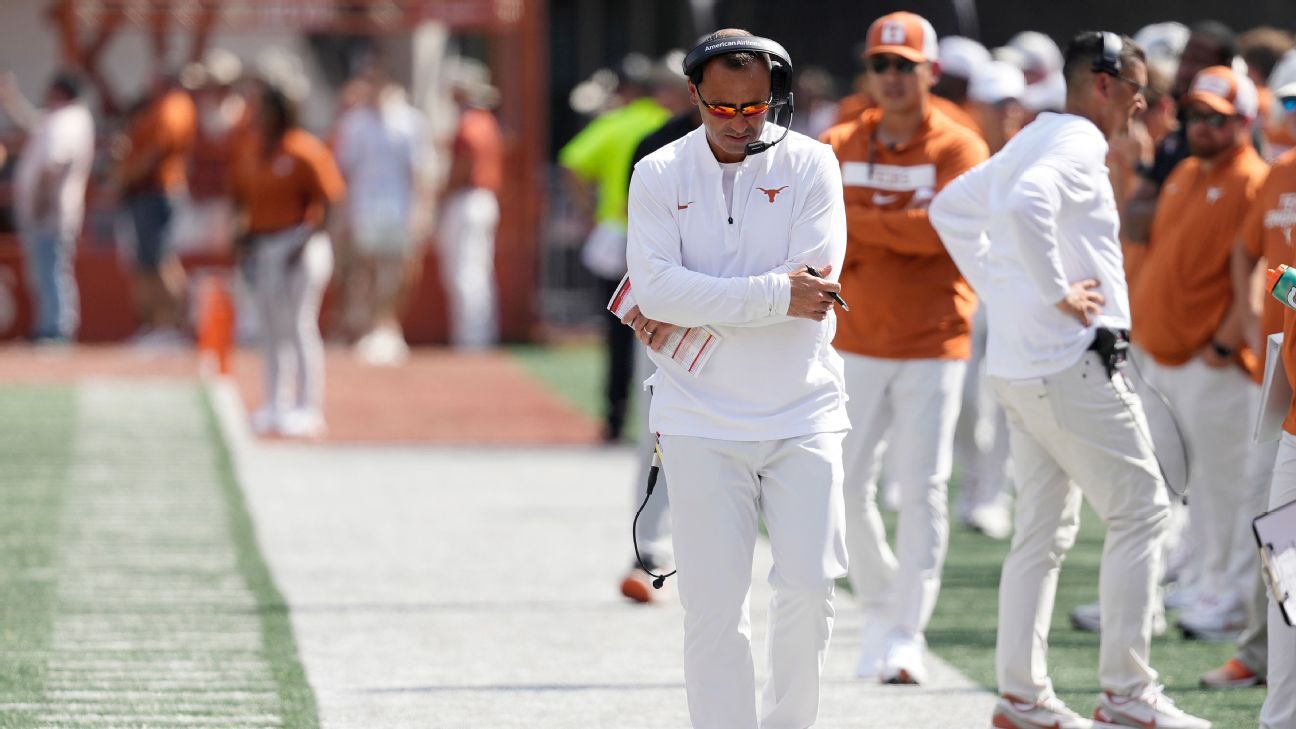
Does Texas have a bad loss? Yes. A 29-21 defeat to woeful Florida — even if the Gators also played Georgia and Ole Miss close and just walloped a team that beat Alabama head-to-head — is problematic.
But look who Texas has beaten: No. 7 Texas A&M by 10, No. 8 Oklahoma by 17 and No. 14 Vandy by three (in a game they led by 24 in the fourth quarter). That’s the résumé of a team capable of winning a national championship — even if the Horns were also capable of losing to a second-rate SEC team.
Are we trying to find teams with the most upside or give participation trophies to the ones which have not lost an ugly one? (Except, again, Alabama.)
And it’s not as if the committee believes an extra loss is disqualifying. Oklahoma, Alabama, Notre Dame and Miami all have two losses and are ranked ahead of one-loss BYU (more on that in a moment), so what’s the harm of moving a three-loss Texas ahead of a two-loss team that has accomplished less?
This all comes back to the most frequent and justified criticism of the committee: The same rules aren’t applied evenly. In some cases, record matters. In some cases, best wins matter. In some cases, better losses matter. The standard varies based on the team being considered. But if the committee is going to err in favor of any team, it should probably do so for one that’s proved — not once, not twice, but three times — that it can beat an elite opponent.
Oh, and moving Texas up ahead of, say, Notre Dame would also have the added bonus of allowing the committee to sidestep another tricky situation. Which leads us to…


We’re putting these two teams together because we’ve already lamented the committee’s utterly disingenuous evaluation of them repeatedly, so it feels redundant to keep going down the same rabbit hole. But, for the sake of two programs being astonishingly misevaluated, let’s do one more round.
For Miami, the logic is obvious: The Canes beat Notre Dame head-to-head.
But let’s keep going. Miami’s two losses — SMU and Louisville — would rank as the fourth- and fifth-toughest games on Notre Dame’s schedule, had the Irish played them. Instead, Notre Dame has cruised through an essentially listless slate. Six of Notre Dame’s 10 wins came against teams that beat zero or one other Power 4 opponent. Stanford — seriously, Stanford! — is Notre Dame’s fourth-best win (by record). Yes, Notre Dame played well enough in losses to two very good teams, but one of those teams has the same record and is somehow ranked lower! Even if this is strictly about the “eye test,” there’s little argument for ignoring the head-to-head outcome. Notre Dame’s strength of record is 13th. Miami’s is 14th. Notre Dame’s game control is fifth. Miami’s is sixth. If all else is the same, how is head-to-head not the deciding factor?
Yet, here’s a little more salt in the wound for the Canes: Had Florida State finished 6-2 instead of 2-6 in ACC play, Miami would’ve won the (fifth) tiebreaker for a spot in the ACC title game and could’ve locked up its place in the playoff by simply beating Virginia. Instead, the Canes will sit at home and watch and hope and, at this point, probably get left out. Chess, not checkers, by rival FSU.
As for BYU, the committee’s desire to overlook the Cougars makes no sense. Let’s take a look at a blind résumé, shall we? (Note: Best wins and composite top 40 based on an average of SP+, FPI and Sagarin ratings.)
Team A: No. 6 strength of record, No. 14 game control, best win vs. No. 11, next vs. No. 28, loss to No. 5, four wins vs. composite top 40, five wins vs. teams that finished 7-5 or better
Team B: No. 7 strength of record, No. 10 game control, best win vs. No. 13, next vs. No. 27, loss to No. 7, three wins vs. composite top-40, two wins vs. teams that finished 7-5 or better
Now, just based on that information, Team A would seem the obvious choice. Now what if I told you Team B just lost its head coach, too?
That’s right, Team A is BYU and Team B is Ole Miss. Every bit of data here suggests the Cougars are, at worst, on even footing with the Rebels or ahead, and yet the committee has Ole Miss ranked five spots higher.
This is, arguably, the second year in a row in which BYU was clearly the most overlooked team in the country.

A week ago, Notre Dame was ranked one spot ahead of Alabama.
Then on Saturday, the Irish beat 4-8 Stanford by 29 (in a game they at one point led 42-3), while Alabama beat 5-7 Auburn by seven (in a game the Tigers had a chance to tie before fumbling in Tide territory late).
The committee looked at those two results and said, “You know what, we like what we saw from the Tide! Move ’em up!”
What could possibly be the logic for shifting opinions on these two teams? The only other team that jumped another winning team was Texas, and the Longhorns beat the No. 3 team in the country emphatically, not a second-tier team that fired its head coach a month ago.
Oh, and hasn’t the committee made it pretty clear losses are supposed to matter? Well, Notre Dame has two losses to teams ranked in the top 12. Alabama got beat by a Florida State team that finished 5-7.
Even by the eye test, this makes little sense. Notre Dame has proved to be one of the most complete, dominant teams in the country, with a secondary that’s near impossible to throw on, a rookie quarterback who has been nearly flawless and a running back who might well be the best player in the country. Alabama, on the other hand, has a one-note offense that can’t run the football.
We’re not believers in using advanced metrics as a ranking of accomplishment, but if this is simply a “who’s better” debate…
-
SP+ ranks Notre Dame fifth and Alabama 12th.
-
FPI ranks Notre Dame third and Alabama sixth.
-
Sagarin ranks Notre Dame second and Alabama seventh.
-
FEI ranks Notre Dame fourth and Alabama ninth.
So, again, we ask: Why would the committee possibly make this change?
We’d wager you know the answer. That sticky Canes vs. Irish head-to-head debate is a real headache for the committee. But if Notre Dame’s currently the last team in and something unexpected happens this weekend (hello, BYU over Texas Tech), then the committee can do as it did in 2014 and wash its hands of a tough choice and keep both Notre Dame and Miami out.
(It’s also interesting that a seven-point win over a team with a losing record is enough to jump Notre Dame, but a 31-point win over a ranked Pitt did nothing for Miami’s relative placement with the Irish despite — and we’re not sure anyone has mentioned this yet — a head-to-head win!)
But, speaking of Alabama…


4. Championship game participants
Step into the time machine with us for a moment, all the way back to championship week 2024. Here’s the state of play: Alabama, at 9-3, is ranked No. 11, the first team out of the playoff and also out of the SEC title game. Still, the Tide and the SEC hope there’s a pathway to salvation because SMU — 11-1 and ranked eighth — still has a game to play against Clemson in the ACC championship. If the Mustangs were to lose, couldn’t the committee then justify slotting SMU behind Alabama based on another data point, even though the Tide were simply sitting at home watching the action?
This was the case being made throughout the run up to the ACC championship last season. SMU, which should’ve been celebrating a miraculously successful first season in the Power 4, spent hours upon hours defending itself against criticism that it didn’t belong in the same conversation with big, bad Bama. Rhett Lashlee hinted he thought the committee’s vote was rigged, SMU players lamented their status on the chopping block despite a ranking that should’ve put them safely in the playoff field, and SEC commissioner Greg Sankey made the rounds arguing that Alabama’s (and Ole Miss’ and South Carolina’s) strength of schedule ought to put them ahead of SMU (and others).
OK, back to the present day. Here we are with Alabama sitting perilously on the dividing line between in the field and out — a week ago, it would have been the last team in, but of course the committee had other ideas this time around — with a game to play against Georgia in the SEC championship. An ACC team (Miami) sits just a tick behind the Tide in the rankings, but it will be off this week.
So, what happens if Alabama loses?
The comparison to last year’s SMU isn’t even a particularly fair one. The Mustangs were at No. 8 before the ACC title game. Alabama is at No. 9 (and probably should be a spot or two lower). SMU’s game against Clemson was new territory. A loss to Georgia will actually undermine Alabama’s best argument for inclusion — the three-point win in Athens in September. And while SMU did make the playoff field last year, a last-second loss on a 56-yard field goal still dropped the Mustangs from No. 8 to No. 10 in the rankings.
Play this scenario out now: Alabama, ranked at No. 9, plays a team that currently counts as the Tide’s best win. Imagine if Georgia wins the rematch and does so convincingly. The committee docked SMU two spots for a last-second loss, so surely it will do at least that much to Alabama for a more convincing defeat, right? And here’s the other thing: Even with the ACC title game loss last year, SMU was 11-2 — one less loss than Alabama had. A Tide loss in the SEC title game will be defeat No. 3 — one more than Notre Dame or Miami or (presumably) BYU.
It’s hard not to see a conspiracy here given the committee’s inexplicable flip-flop between Alabama and Notre Dame. It’s hard not to see brand bias in how the Tide’s championship week narrative diverges from SMU’s a year ago. It’s not at all hard to envision a scenario where Alabama loses to Georgia, gets in as the last team anyway, and it’s all explained away as a completely reasonable decision.

Well, the committee finally weighed in on more than one team outside the Power 4 — mostly because it was just impossible to find enough Power 4 teams worth ranking — and the news isn’t good for JMU. With the committee deciding already that North Texas is the higher ranked team, the Dukes’ only hope for the playoff would seem to be a Duke win in the ACC title game.
But what exactly has the committee seen to warrant that decision? Check out the numbers.
Best win (by average FPI, SP+ and Sagarin ranking)
JMU: No. 54 Old Dominion
UNT: No. 62 Washington State
Next best
JMU: No. 62 Washington State
UNT: No. 68 Navy
Loss
JMU: No. 29 Louisville
UNT: No. 24 USF
Wins vs. bowl-eligible
JMU: six
UNT: five
Strength of record
JMU: 18th
UNT: 22nd
FPI
JMU: 28th
UNT: 37th
There are certainly some check marks in North Texas’ favor, including a more impressive win over common opponent Washington State and a slightly better SP+ ranking, but on the whole, James Madison has had the tougher path here. That can change should UNT beat Tulane, but the committee should’ve waited for that to happen. Instead, it has made it clear JMU isn’t sniffing the playoff unless it comes at the expense of the ACC.
Also angry this week: Vanderbilt Commodores (10-2, No. 14); The ACC leadership who voted on its tiebreaker policies; Manny Diaz, who has to try to make a coherent argument for his five-loss Duke Blue Devils getting in ahead of a one-loss JMU; Every 8-4 team with a markedly better résumé than 9-3 Houston, which isn’t ranked this week; and Lane Kiffin’s yoga instructor and Juice Kiffin’s dog walker.
Welcome to the party, James Madison.
With the inclusion of JMU at No. 25 in the selection committee’s penultimate ranking — its first appearance all season — the possibility of the ACC being excluded from the playoff entirely just got real. Five-loss Duke is nowhere to be found in the ranking.
If Duke beats Virginia in the ACC championship game, it’s not guaranteed a spot in the 12-team field. It could open the door for two Group of 5 conference champions to compete for a national title, and if the playoff were today, it would be Tulane out of the American and JMU from the Sun Belt. The ACC’s best team, Miami, is still on the outside.
At No. 12, the Hurricanes still need some help, but Alabama increased its chances of earning a spot as the SEC runner-up with a small promotion to No. 9. The conference championship games can still alter the picture, but hope on the bubble is dwindling.
Bubble Watch accounts for what we have learned from the committee so far — and historical knowledge of what it means for teams clinging to hope. Teams with Would be in status below are looking good after the committee’s fifth ranking. For each Power 4 conference, we’ve also listed Still in the mix. Teams that are Out will have to wait until next year.
The conferences below are listed in order of the number of bids they would receive, ranked from the most to least, based on the selection committee’s latest ranking.
Jump to a conference:
ACC | Big 12 | Big Ten
SEC | Independent | Group of 5
Bracket
SEC


Would be in: Alabama, Georgia, Oklahoma, Ole Miss, Texas A&M. Right now, the Crimson Tide are the last SEC at-large team in the field. Alabama will face Georgia in the SEC championship game, but the committee could have a difficult decision if Alabama loses and finishes as a three-loss runner-up. The Tide would have defeated Georgia during the regular season but lost to the Bulldogs in the championship game. Even in moving up a spot to No. 9 this week — ahead of Notre Dame — it still seems as if they have a little more margin for error, but how the SEC title game unfolds could matter. And how far Alabama drops could determine if the SEC gets four or five teams in the field. Alabama could finish as the committee’s highest-ranked three-loss team and still be excluded from the playoff to make room for a conference champion — as they were last year.
A Georgia win should lock up a first-round bye and a top-four finish for the Bulldogs, while a loss should still put them in position to host a first-round game. Georgia beat Ole Miss, so it would be surprising to see the Bulldogs drop below the Rebels with a loss, even though the Bulldogs would have one more defeat. With a 35-10 drubbing of Texas also on its résumé, Georgia would still have a strong enough case to finish as the committee’s top two-loss team.
At No. 6, the selection committee moved the Rebels up one spot, so clearly the departure of coach Lane Kiffin to LSU didn’t hurt Ole Miss or its chances of hosting a first-round home game. The bigger reasoning was a promotion after winning the Egg Bowl combined with Texas A&M losing to Texas.
Still in the mix: Texas. The Longhorns moved up to No. 13, but the win against Texas A&M wasn’t enough to put them into the field after the fifth ranking. Texas is stuck behind Miami in part because of its loss to Florida, which Miami beat. Even if BYU and Alabama were knocked out with title game losses, that still probably won’t be enough for Texas to get into the field because the bracket has to make room for conference champions.
Out: Arkansas, Auburn, Florida, Kentucky, LSU, Mississippi State, Missouri, South Carolina, Tennessee, Vanderbilt
Big Ten


Would be in: Indiana, Ohio State, Oregon. Both Indiana and Ohio State are CFP locks — even if they lose in the conference title game — and the runner-up will still have a strong case for a top-four finish and a first-round bye. The loser’s only loss will be to a top-two team, but it could fall behind Georgia in the top four if the Bulldogs win the SEC, and/or Texas Tech if it wins the Big 12.
The Ducks punctuated their résumé with a respectable win at Washington and should be secure in their playoff position, probably hosting a first-round game. Oregon received a small boost to No. 5 after Texas A&M lost to Texas.
Still in the mix: None.
Out: Illinois, Iowa, Maryland, Michigan, Michigan State, Minnesota, Nebraska, Northwestern, Penn State, Purdue, Rutgers, UCLA, USC, Washington, Wisconsin
Big 12

Would be in: Texas Tech. The Red Raiders will play BYU in the Big 12 title game and have a great case to be in the playoff regardless of the outcome. It’s highly unlikely the selection committee would drop the Red Raiders out of the field as a two-loss Big 12 runner-up — especially considering they would have a regular-season win against the eventual conference champion. It’s also possible Texas Tech earns a first-round bye as a top-four seed if the Red Raiders win the Big 12. The committee moved them into the top four Tuesday night following Texas A&M’s loss during Rivalry Week.
Still in the mix: BYU. If BYU doesn’t win the Big 12, it’s unlikely to earn an at-large bid as the conference runner-up because the Cougars are already on the bubble and would be eliminated during the seeding process if the playoff were today. It’s not impossible, though. If Alabama finishes as a three-loss SEC runner-up, it could at least open the door for debate. BYU would have lost to Texas Tech twice, and Alabama would have defeated Georgia, the eventual SEC champ once — and it was on the road. If BYU wins the Big 12, it’s the ideal scenario for the conference because it would have two teams in the playoff.
Out: Arizona, Arizona State, Baylor, Cincinnati, Colorado, Houston, Iowa State, Kansas, Kansas State, Oklahoma State, TCU, UCF, Utah, West Virginia
ACC


Would be in: TBD. The ACC championship game will feature Virginia and Duke, and if five-loss Duke wins, it’s possible the ACC is excluded from the playoff since Duke is not part of the CFP rankings. If Virginia wins, it will represent the league in the playoff, as the two-loss Cavaliers are ranked in the top 20. And no, Miami did not play Duke or Virginia during the regular season. Duke lost to Tulane, which is the top Group of 5 playoff contender and will reach the playoff if it wins the American. Duke also lost to UConn. And it has already lost to Virginia 34-17 on Nov. 15.
Still in the mix: Miami. The Canes are still the committee’s highest-ranked ACC team, but they would be excluded if the playoff were today to make room for a conference champion. That means the ACC winner could knock the league’s best team out of the playoff. The committee isn’t ignoring Miami’s head-to-head win against Notre Dame, but it also isn’t comparing the Canes only to the Irish. Miami also needs to earn an edge against BYU — which the committee has deemed better than Miami to this point. Miami inched closer to Notre Dame because Bama moved up Tuesday, but with neither team playing in a conference championship game, would the committee flip them on Selection Day with a BYU loss?
Out: Boston College, Cal, Clemson, Florida State, Georgia Tech, Louisville, North Carolina, NC State, Pitt, SMU, Stanford, Syracuse, Virginia Tech, Wake Forest
Independent
Would be in: Notre Dame. The Irish have done everything right since their 0-2 start, running the table and doing it with consistent dominance regardless of opponent. At No.10, Notre Dame is in a precarious position. If BYU wins the Big 12 and enters the field, that could bump out the Irish. If BYU wins the Big 12, both BYU and Texas Tech are highly likely to make the playoff, which means someone currently in the top 10 would have to be excluded.
Group of 5

Would be in: Tulane. If the Green Wave win the American, they will represent the Group of 5 in the playoff. Tulane is currently the highest ranked Group of 5 team, but if North Texas beats Tulane on Friday, the Mean Green would be the most likely team to reach the CFP, given the overall strength of the American Conference this season.

Still in the mix: James Madison, North Texas. JMU (11-1) has clinched the East Division and a spot in the Sun Belt Conference championship game, where it will face Troy (8-4) on Friday. North Texas will face Tulane in the American, and if it wins, it’s more likely to represent the Group of 5 in the playoff than JMU because of its schedule strength. JMU could still be considered, though, if Duke wins the ACC, giving the Group of 5 two playoff teams in the 12-team field. With JMU earning a spot in the top 25 this week, the situation became more probable.
Bracket
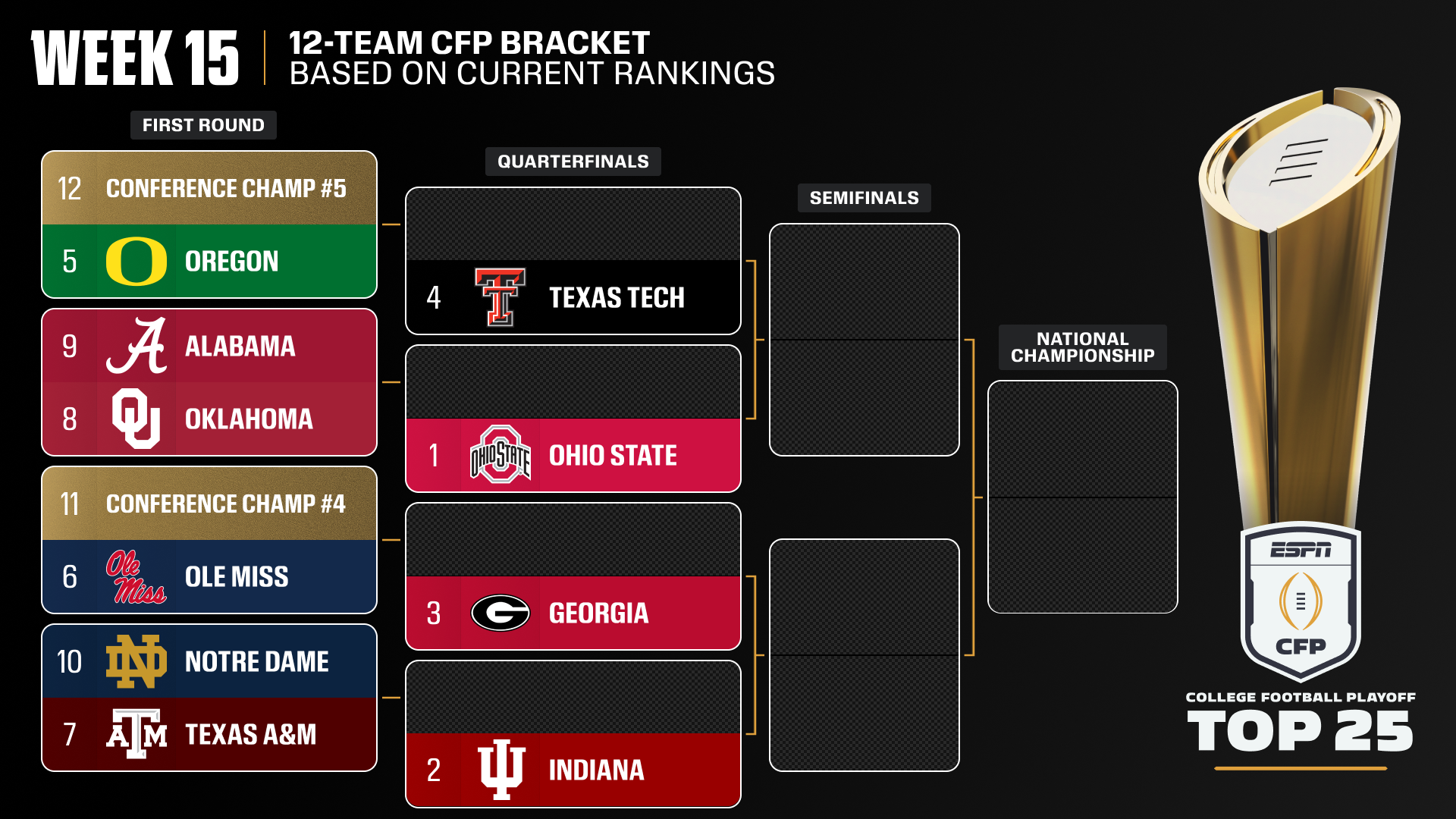
Based on the committee’s fifth ranking, the seeding would be:
First-round byes
No. 1 Ohio State (Big Ten champ)
No. 2 Indiana
No. 3 Georgia (SEC champ)
No. 4 Texas Tech (Big 12 champ)
First-round games
On campus, Dec. 19 and 20
No. 12 Tulane (American champ) at No. 5 Oregon
No. 11 Virginia (ACC champ) at No. 6 Ole Miss
No. 10 Notre Dame at No. 7 Texas A&M
No. 9 Alabama at No. 8 Oklahoma
Quarterfinal games
At the Goodyear Cotton Bowl, Capital One Orange Bowl, Rose Bowl Presented by Prudential and Allstate Sugar Bowl on Dec. 31 and Jan. 1.
No. 12 Tulane/No. 5 Oregon winner vs. No. 4 Texas Tech
No. 11 Virginia/No. 6 Ole Miss winner vs. No. 3 Georgia
No. 10 Notre Dame/No. 7 Texas A&M winner vs. No. 2 Indiana
No. 9 Alabama/No. 8 Oklahoma winner vs. No. 1 Ohio State

-
Eli Lederman
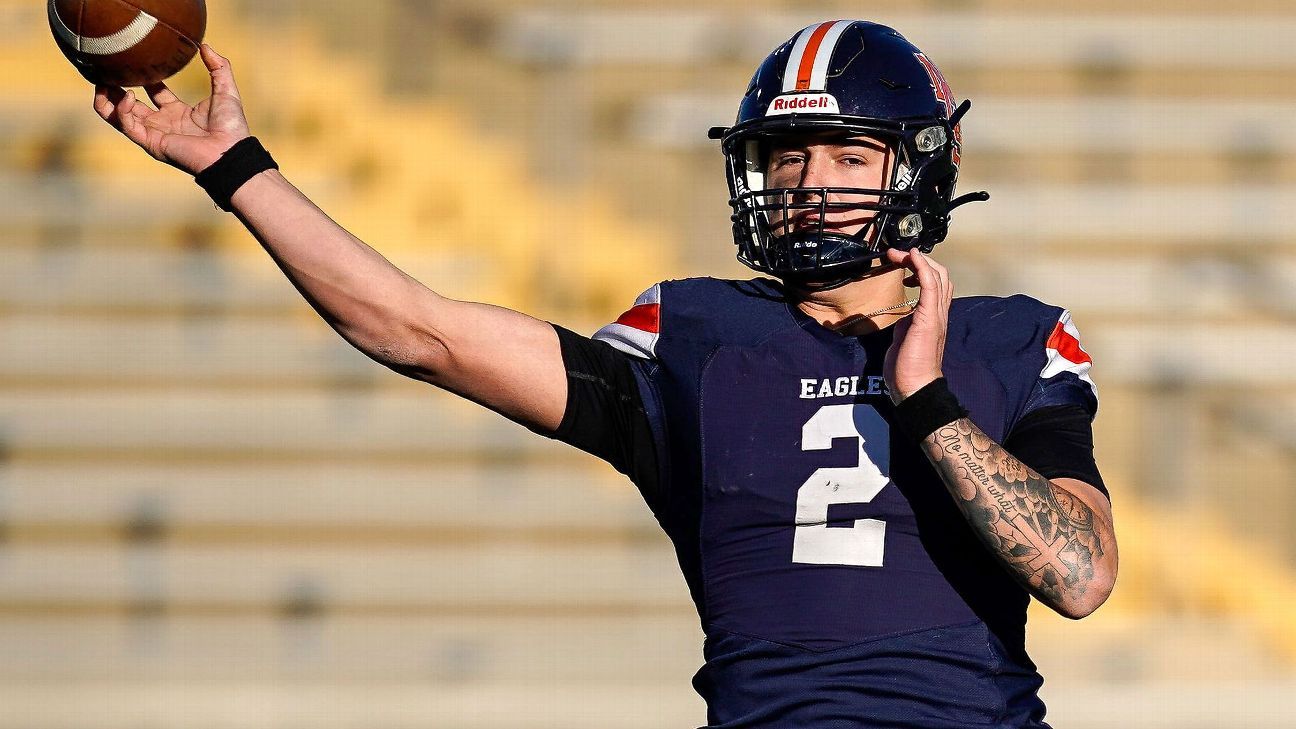
Five-star quarterback Jared Curtis, ESPN’s No. 1 pocket passer prospect, has flipped his commitment from Georgia to Vanderbilt, he announced Tuesday night, sealing a seismic move atop the 2026 class less than 24 hours before the start of the early signing period.
Curtis, a senior at Nashville (Tennessee) Christian School, is the No. 5 recruit in the 2026 ESPN 300. Multiple sources told ESPN earlier on Tuesday that Curtis’ intention was to commit to the hometown Commodores during this week’s early signing period before closing his high school career at the Division II-A state championship Thursday night.
Curtis initially shot down reports that he’d made a final decision Tuesday afternoon. According to sources close to his recruitment, he finalized the move Tuesday night and announced his pledge to Vanderbilt following phone calls with each coaching staff. He’ll sign with the Commodores on Wednesday morning as the highest-ranked signee in program history.
“Being here in Nashville and seeing what Vandy has been doing this season has been amazing and over the past few weeks, I felt more and more that I wanna be a part of that, to be close to home, to play in front of family and friends and to be what I love to be, an underdog,” Curtis wrote in a statement posted to social media. “I am excited to be a [Commodore] and excited to be part of building something here at home with Coach [Clark] Lea.”
Curtis’ flip ends a winding recruitment for ESPN’s No. 2 quarterback, who first committed to Georgia in 2024. Per ESPN sources, Vanderbilt escalated its pursuit of Curtis in October, selling the 6-foot-4, 225-pound quarterback on the chance to stay home and the lure of early playing time as a potential day one successor to Heisman Trophy contender Diego Pavia.
That push continued into November after the Commodores hosted Curtis during the program’s 17-10 win over Missouri on Oct. 25. Although Curtis affirmed his commitment to Georgia’s coaching staff multiple times over the past month, per ESPN sources, conversations between Curtis’ camp and Vanderbilt continued into the final weeks of his senior season.
Per sources close to Curtis’ recruitment, Commodores coach Lea’s potential candidacy for multiple job openings across the country remained a sticking point among Curtis’ camp in recent weeks. After Lea agreed to a reported six-year contract extension on Nov. 28, sources told ESPN that Vanderbilt’s efforts with Curtis intensified further, culminating in his flip on Tuesday.
Curtis’ pledge marks the latest victory for the Commodores amid a historic season in which Vanderbilt achieved its highest AP Top 25 ranking since 1937 earlier this fall. He now stands as the cornerstone member of the program’s 19-man recruiting class in 2026, which ranked 50th in ESPN’s class rankings for the cycle prior to his commitment.
Curtis’ signature will hand Vanderbilt its first ESPN 300 addition since cornerback Martel Hight (No. 274) in the 2023 class. The program’s first-ever five-star signee, he’ll soon replace wide receiver Jordan Cunningham (No. 107 in the 2013 ESPN 300) as the Commodores’ highest-ranked recruit in school history. Curtis will also represent Vanderbilt’s first top-10 quarterback signee since Kyle Shurmer arrived as ESPN’s No. 7 pocket passer in the 2015 class.
Curtis rose to status as one of the nation’s top pocket passers as a four-year starter at Nashville Christian. He threw for 7,637 yards and 92 touchdowns across his first three varsity seasons and led Nashville Christian to a Division II-A state championship as a junior in 2024.
Curtis initially committed to Georgia in March 2024 before reopening his process late last fall. He rejoined the Bulldogs’ incoming class on May 5, picking Georgia over Oregon in a tight, two-school recruiting battle, and Curtis remained the program’s top-ranked 2026 pledge until Tuesday, maintaining frequent contact with the school’s coaching staff this fall.
His decommitment leaves Georgia without a quarterback commitment in the nation’s second-ranked recruiting class. First-year Bulldogs starter Gunner Stockton holds another season of eligibility beyond 2025. Behind him, Georgia’s current quarterback depth includes redshirt freshman Ryan Puglisi and class of 2025 signees Ryan Montgomery and Hezekiah Millender. It is not immediately clear whether the Bulldogs will pursue another quarterback in the 2026 class.
Wednesday marks the start of the three-day early signing period for the 2026 class. The recruiting cycle will officially close with national signing day on Feb. 4.
-
 Sports2 years ago
Story injured on diving stop, exits Red Sox game
-
 Sports3 years ago
‘Storybook stuff’: Inside the night Bryce Harper sent the Phillies to the World Series
-
 Sports2 years ago
Game 1 of WS least-watched in recorded history
-
 Sports3 years ago
Button battles heat exhaustion in NASCAR debut
-
 Sports3 years ago
MLB Rank 2023: Ranking baseball’s top 100 players
-
Sports4 years ago
Team Europe easily wins 4th straight Laver Cup
-
 Environment3 years ago
Japan and South Korea have a lot at stake in a free and open South China Sea
-
 Environment1 year ago
Here are the best electric bikes you can buy at every price level in October 2024