
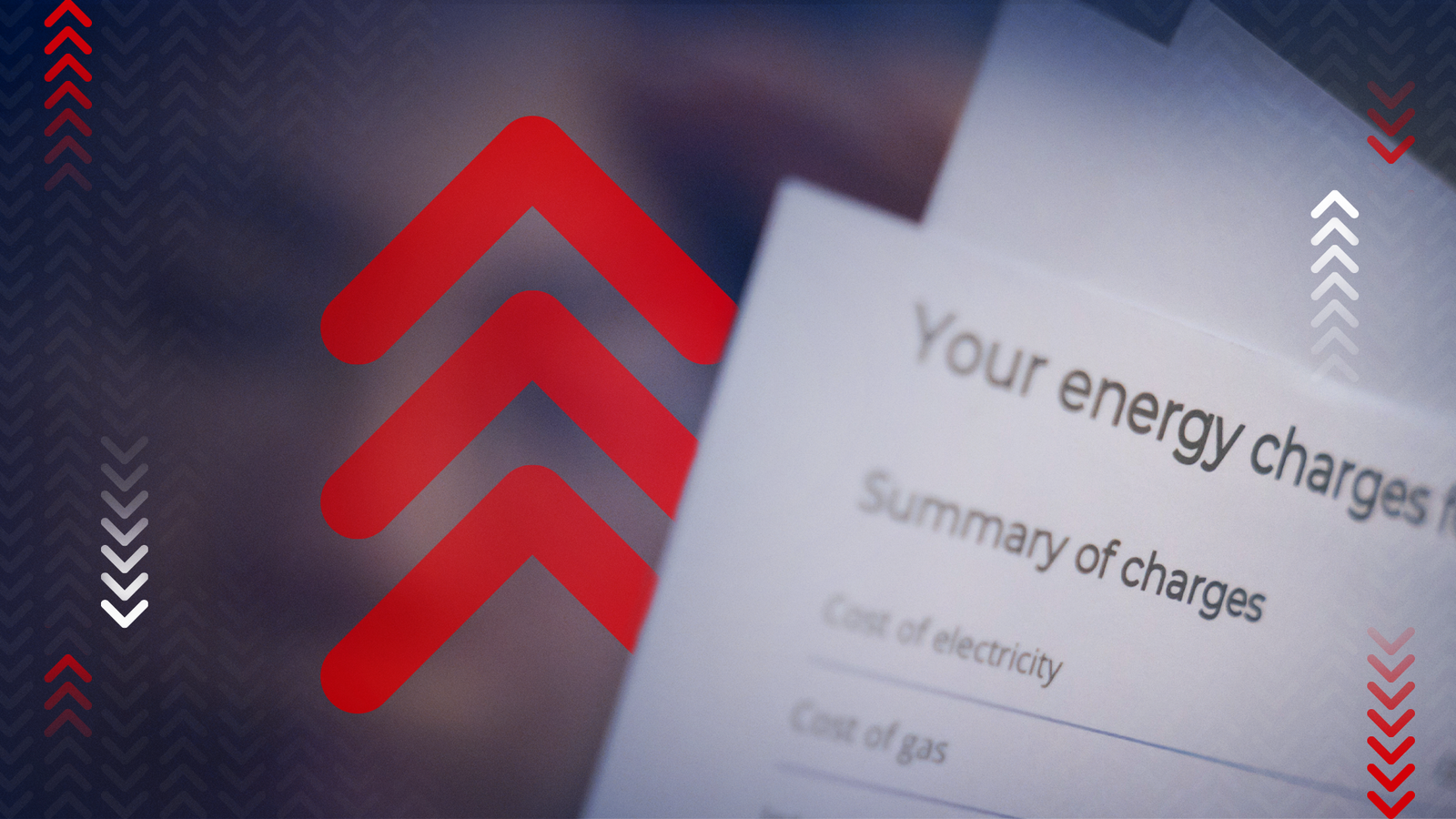
Significant easing of inflation as energy costs stabilise, latest ONS figures show

The rate of inflation is finally back in single digits for the first time since last summer, easing to 8.7% last month – but food inflation remains near 20% and core price inflation is at a 30-year high.
The Office for National Statistics (ONS) said the decline in the consumer prices index measure (CPI) was mainly driven by gas and electricity costs remaining stable in April when compared with the unprecedented leap recorded in the same month last year.
April last year saw the energy price cap lifted by 54% to £1,971 to reflect, for the first time, the impact of Russia’s war in Ukraine on European gas and electricity supplies.
Energy costs have been the main source of the cost of living crisis since the invasion, fuelling not only household energy bills but also manufacturing and transport prices, which continue to filter through the economy.
But while the pace of price rises slowed, it did not fall as much as economists polled by Reuters and the Bank of England expected. A rate of 8.2% had been forecast by economists while 8.4% was expected by the Bank.
And there is no great relief in the squeeze on family budgets because earnings continue to lag the pace of price rises. While the rate of inflation has eased, it doesn’t mean prices are coming down, they are still rising.
Food inflation stood at 19.1% in April, a slight decrease from 19.2% in March.
Jeremy Hunt: ‘No room for complacency’ over inflation battle
The Bank of England has been trying to combat upwards pressure on prices through interest rate hikes to dampen demand in the economy.
There is much speculation on whether the Bank rate will be raised further next month following 12 consecutive increases.
In its latest assessment of the UK economy, the International Monetary Fund suggested more rate rises were needed as it significantly upgraded its expectations for economic growth.
The Bank is worried about stubborn core inflation, which strips out volatile elements such as fuel and food.
That core rate of inflation rose to 6.8% last month, the highest since 1992 and up from 6.2% in March. The rate was expected to stay the same.
There is concern too among rate-setters that inflation-fighting pay awards risk fuelling price growth ahead.
Read more:
Bank of England accepts it has ‘a lot to learn about operating monetary policy in a world of big shocks’
Why are food prices rising so much?
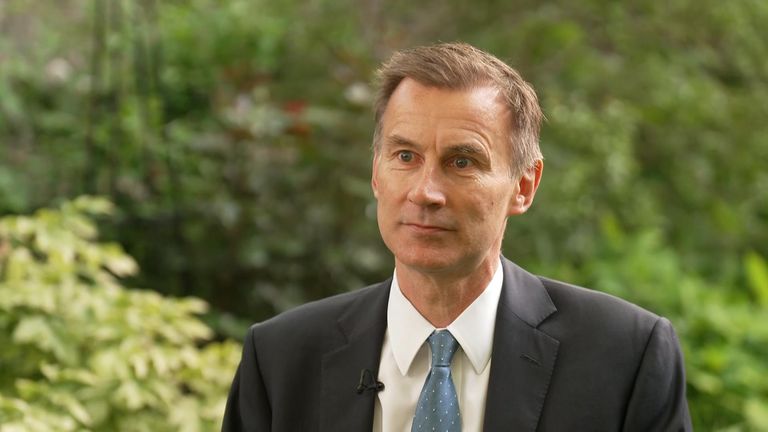
Chancellor Jeremy Hunt said: “The IMF said yesterday we’ve acted decisively to tackle inflation but although it is positive that it is now in single digits, food prices are still rising too fast.
“So as well as helping families with around £3,000 of cost of living support this year and last, we must stick resolutely to the plan to get inflation down.”
IMF expects UK to avoid recession
Economists see the inflation rate easing further as the year progresses, in line with a government target to halve inflation, but say there are risks associated with the looming winter due to continuing energy supply constraints.
A recent forecast by Pantheon Macroeconomics showed CPI inflation likely to be stable this month but slowing to 7.3% in June and hitting 3.3% in December, reflecting falls in wholesale energy costs over the year to date compared with the stampede for prices seen during 2022.
Energy regulator Ofgem is tipped to reveal on Thursday that the price cap will fall to £2,053 per year from July to September.
That is down from the £3,280 level set for March to June, which was largely irrelevant as the government’s Energy Price Guarantee was in place.
That taxpayer support ends at the end of June.

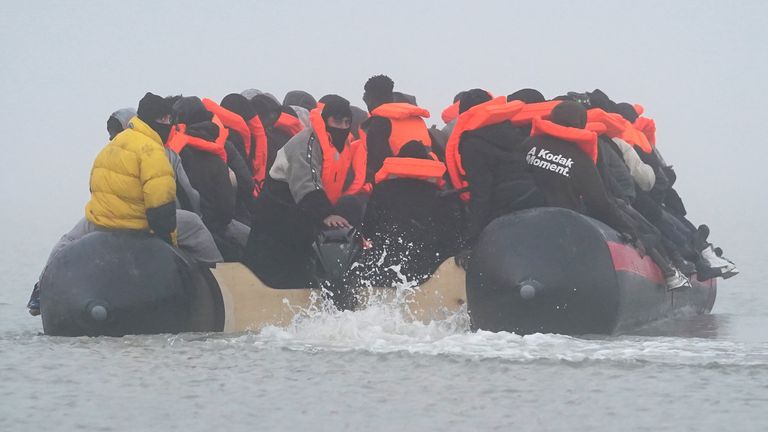
There have been no migrant arrivals in small boats crossing the Channel for 28 days, according to Home Office figures.
The last recorded arrivals were on 14 November, making it the longest uninterrupted run since autumn 2018 after no reported arrivals on Friday.
However, a number of Border Force vessels were active in the English Channel on Saturday morning, indicating that there may be arrivals today.
So far, 39,292 people have crossed to the UK aboard small boats this year – already more than any other year except 2022.
The record that year was set at 45,774 arrivals.
It comes as the government has stepped up efforts in recent months to deter people from risking their lives crossing the Channel – but measures are not expected to have an impact until next year.
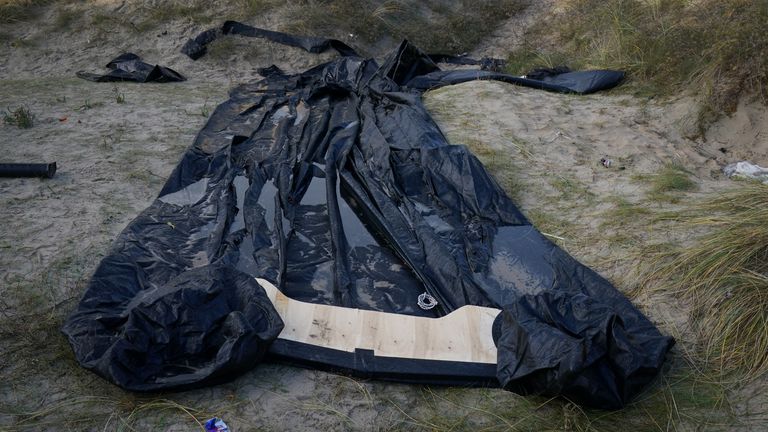
Debris of a small boat used by people thought to be migrants to cross the Channel lays amongst the sand dunes in Gravelines, France. Pic: PA
December is normally one of the quietest for Channel crossings, with a combination of poor visibility, low temperatures, less daylight and stormy weather making the perilous journey more difficult.
The most arrivals recorded in the month of December is 3,254, in 2024.
Deputy Prime Minister David Lammy met with ministers from other European countries this week as discussions over possible reform to the European Convention on Human Rights (ECHR) continue.
France agrees to start intercepting small boats
The issue of small boat arrivals – a very small percentage of overall UK immigration – has become a salient issue in British politics in recent years.
Last month, French maritime police announced they would soon be able to intercept boats in the English Channel.
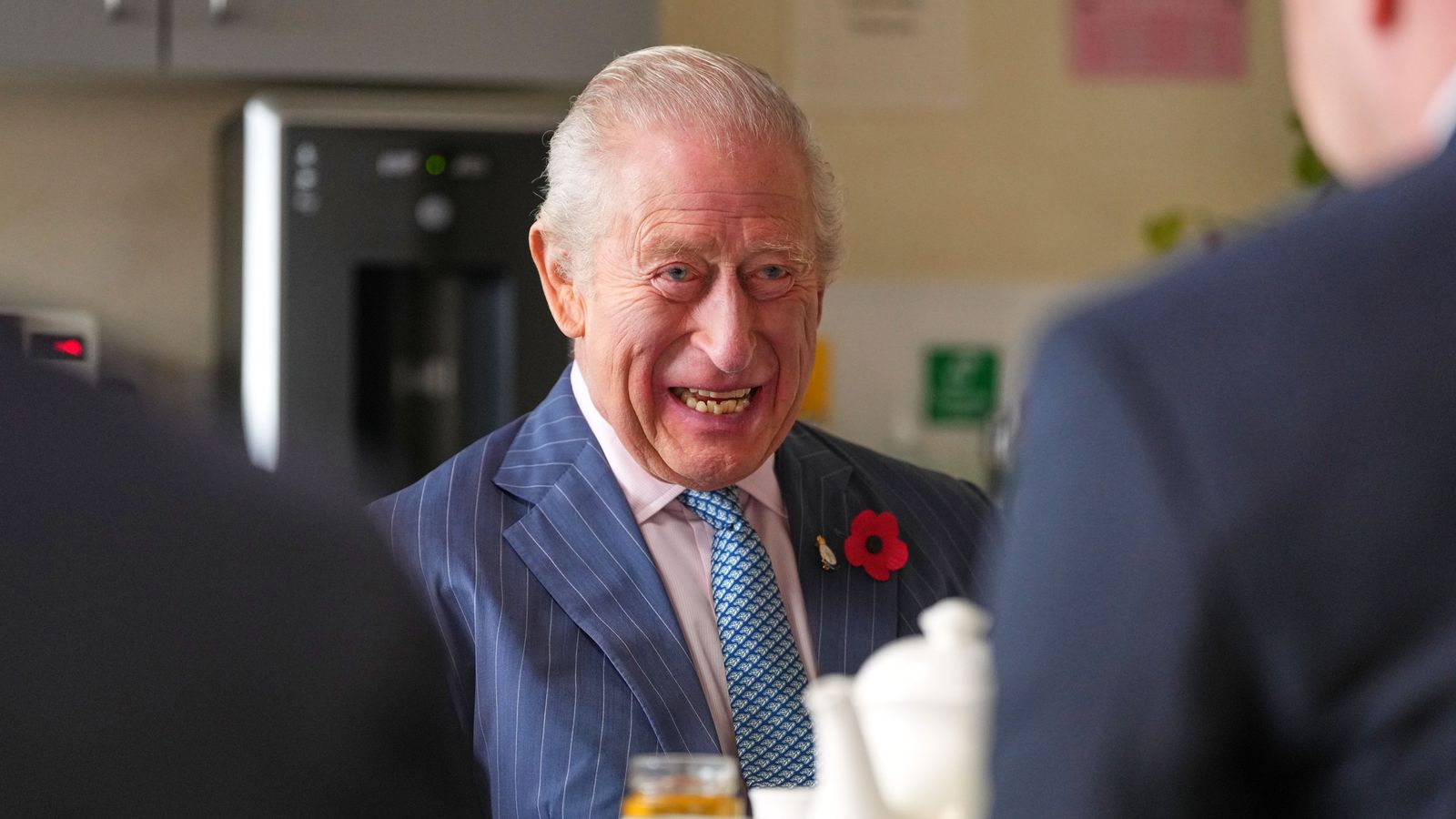
The King has shared in a television address that, thanks to early diagnosis, his cancer treatment can be reduced in the new year.
In a televised address, Charles said his “good news” was “thanks to early diagnosis, effective intervention and adherence to doctors’ orders”.
“This milestone is both a personal blessing and a testimony to the remarkable advances that have been made in cancer care in recent years,” he added.
“Testimony that I hope may give encouragement to the 50% of us who will be diagnosed with the illness at some point in our lives.”
The King announced in February 2024 that he had been diagnosed with cancer and was beginning treatment.
The monarch postponed all public-facing engagements, but continued with his duties as head of state behind palace walls, conducting audiences and Privy Council meetings.
He returned to public duties in April last year and visited University College Hospital Macmillan Cancer Centre in central London with the Queen and discussed his “shock” at being diagnosed when he spoke to a fellow cancer patient.
Sources suggested last December his treatment would continue in 2025 and was “moving in a positive direction”.
The King began returning to public duties in April last year. File pic: PA
The King has chosen not to reveal what kind of cancer he has been treated for. Palace sources have partly put that down to the fact that he doesn’t want one type of cancer to appear more significant or attract more attention than others.
In a statement after the speech aired, a Buckingham Palace spokesperson said: “His Majesty has responded exceptionally well to treatment and his doctors advise that ongoing measures will now move into a precautionary phase.”
Sir Keir Starmer praised the video message as “a powerful message,” and said: “I know I speak for the entire country when I say how glad I am that his cancer treatment will be reduced in the new year.
“Early cancer screening saves lives.”
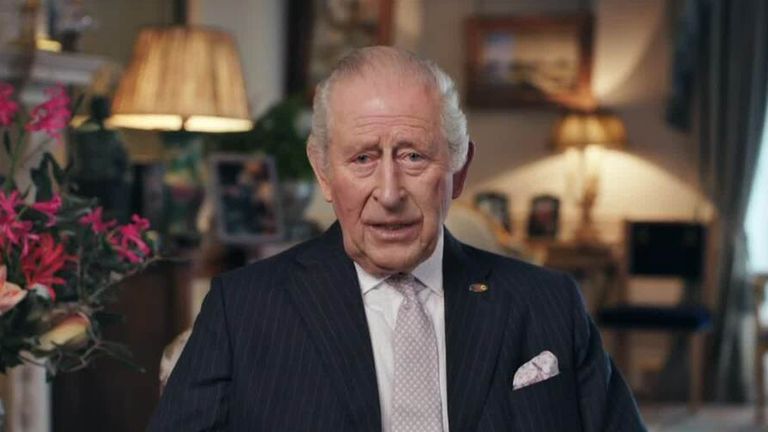
Watch: King Charles gives update on treatment
Early detection can give ‘the precious gift of hope’
His message on Friday was broadcast at 8pm in support of Stand Up To Cancer, a joint campaign by Cancer Research UK and Channel 4.
In an appeal to people to get screened for the disease early, the King said: “I know from my own experience that a cancer diagnosis can feel overwhelming.
“Yet I also know that early detection is the key that can transform treatment journeys, giving invaluable time to medical teams – and, to their patients, the precious gift of hope. These are gifts we can all help deliver.”
Charles noted that “at least nine million people in our country are not up to date with the cancer screenings available to them,” adding: “That is at least nine million opportunities for early diagnosis being missed.
“The statistics speak with stark clarity. To take just one example: When bowel cancer is caught at the earliest stage, around nine in ten people survive for at least five years.
“When diagnosed late, that falls to just one in ten. Early diagnosis quite simply saves lives.”
Minor inconvenience of screening ‘a small price to pay’
The King acknowledged that people often avoid screening “because they imagine it may be frightening, embarrassing or uncomfortable”. But, he added: “If and when they do finally take up their invitation, they are glad they took part.
“A few moments of minor inconvenience are a small price to pay for the reassurance that comes for most people when they are either told either they don’t need further tests, or, for some, are given the chance to enable early detection, with the life-saving intervention that can follow.”
Read more from Sky News:
Christmas tree chopped down hours after lights switch-on
More photos from Epstein’s estate released
Taylor Swift breaks down in tears over Southport attacks
Giving his “most heartfelt thanks” to doctors, nurses, researchers and charity workers, the King added: “As I have observed before, the darkest moments of illness can be illuminated by the greatest compassion. But compassion must be paired with action.
“This December, as we gather to reflect on the year past, I pray that we can each pledge, as part of our resolutions for the year ahead, to play our part in helping to catch cancer early.
“Your life – or the life of someone you love – may depend upon it.”
-
 Sports2 years ago
Story injured on diving stop, exits Red Sox game
-
 Sports3 years ago
‘Storybook stuff’: Inside the night Bryce Harper sent the Phillies to the World Series
-
 Sports2 years ago
Game 1 of WS least-watched in recorded history
-
 Sports3 years ago
Button battles heat exhaustion in NASCAR debut
-
 Sports3 years ago
MLB Rank 2023: Ranking baseball’s top 100 players
-
Sports4 years ago
Team Europe easily wins 4th straight Laver Cup
-
 Environment3 years ago
Japan and South Korea have a lot at stake in a free and open South China Sea
-
 Environment1 year ago
Here are the best electric bikes you can buy at every price level in October 2024