
Wes Streeting ‘100% behind’ Starmer and says Corbyn supporters should ‘dry their eyes’ after ‘shipwreck’ leadership


Supporters of Jeremy Corbyn should “dry their eyes” and accept his leadership was a “shipwreck”, according to Wes Streeting, who has defended Labour’s “tight” spending plans.
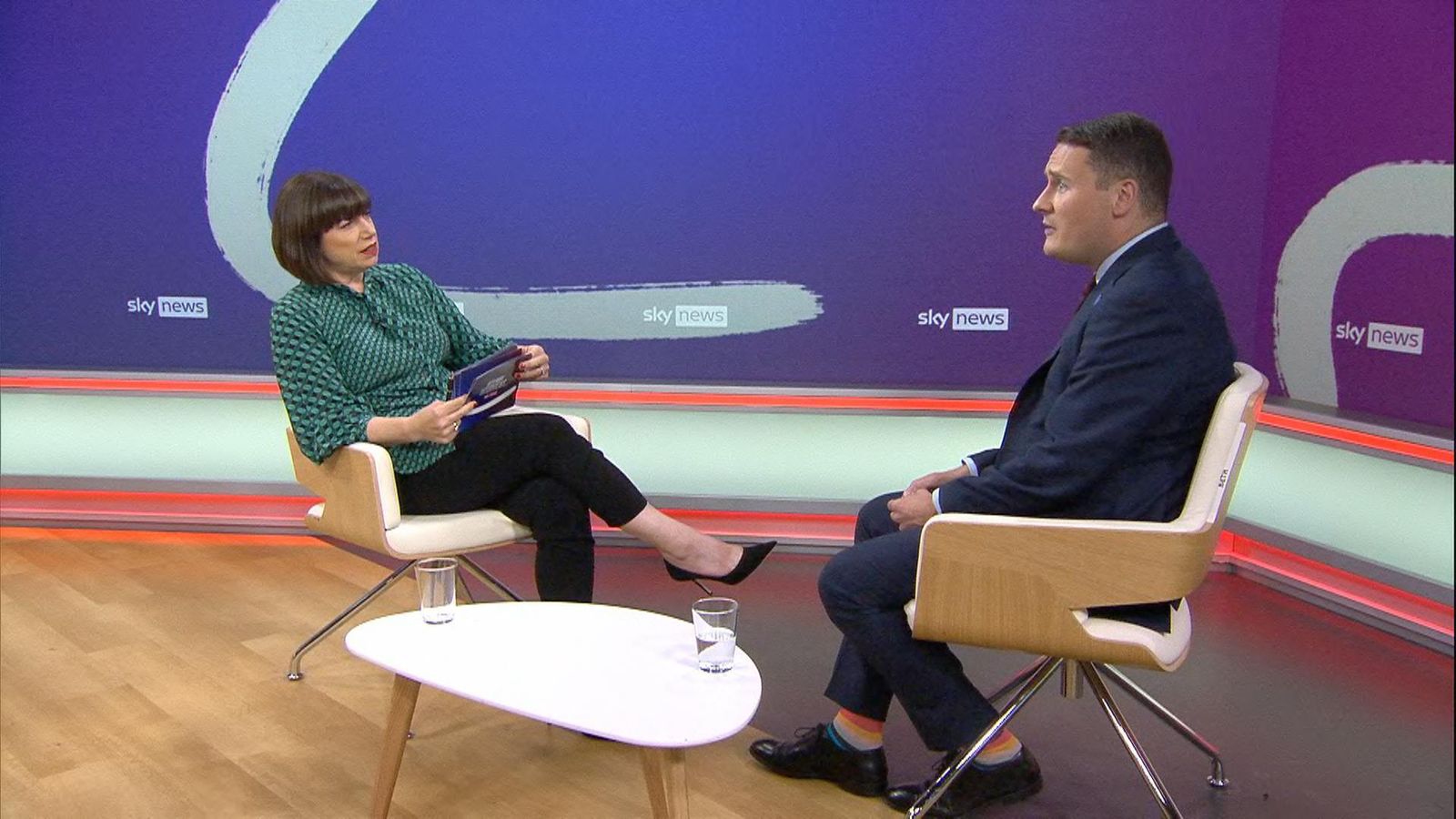
Speaking on Beth Rigby Interviews… the shadow health secretary rejected claims his party’s offer on the NHS is too similar to the Conservative government’s but refused to give a financial commitment as the next election approaches.
Politics live: Climate protesters interrupt Starmer’s big speech
He acknowledged there is “frustration” when Labour is pressed to outline its spending plans but “the answer is either no or not yet confirmed”.
“But that’s because we are absolutely determined, both to rebuild trust in politics, but also to rebuild stability in the public finances,” Mr Streeting said.
Labour has promised to build an NHS “fit for the future” with a focus on reforms and prevention.
Steve Barclay, the current Tory health secretary, has also said the health service should “evolve” to focus on prevention – amid warnings it is in “critical condition” and may not make its 100th anniversary in 2048.
But Mr Streeting said “shoot me now” when it was put to him that Labour’s focus on reform over funding sounded similar to what’s on offer from the Conservatives.
“Look, funding’s important, but it’s not always just about spending more money,” he said.
“Steve Barclay’s talking as if he’s just walked in off the street taken over the Department of Health and decided he’s got a reform agenda. They’ve been in power for 13 years. Where is it?”
Mr Streeting went on to admit that it’s “tough for shadow cabinet members like me who have to follow these tight fiscal rules”, amid criticism from some within the party that Labour’s spending plans are not ambitious enough.
But he said he is “100% behind” Labour leader Sir Keir Starmer and shadow chancellor Rachel Reeves “when they’re making those tough calls”.
He told Beth Rigby: “One of the reasons why we have lost not just the last two general elections, but the last four general elections, was because people said, can we trust you with the money?
“What you are seeing from Keir and Rachel, and the rest of our team, is that we are going to be careful with the public finances because Liz Truss and the Conservative Party shows exactly what happens when you go on a spending spree without any idea about how you’ll pay for your promises.”
Keir Starmer and Wes Streeting
Corbyn years ‘a shipwreck’
Sir Keir and Ms Reeves have been working to show that Labour is fiscally responsible.
The pair have largely avoided making large spending commitments – drawing a firm line under the economic arguments of the Corbyn years.
Last month, Ms Reeves watered down Labour’s flagship £28bn green prosperity plan, blaming rising interest rates and the “damage” the Conservatives have done to the economy.
However, critics saw it as the latest U-turn, with Sir Keir previously backing away from leadership pledges to abolish tuition fees, nationalise public utilities, scrap Universal Credit and increase income tax for the top 5% of earners.
The Labour leader was interrupted on Thursday by climate protesters angry about the climate fund U-turn, while he was trying to give a speech on the party’s plans for overhauling education.
But Mr Streeting dismissed left-wing critics who might feel “betrayed” by Sir Keir backtracking on promises he made to Labour members in order to win the party’s leadership contest in 2020.
“Well, I’m afraid they have to dry their eyes and be glad of the fact that we might finally, after 13 years, get this Conservative government out and have a Labour government able to change our country once again,” he told Sky News.
He also said it was “extraordinary” for former shadow chancellor, John McDonnell, to use a recent BBC interview to accuse Sir Keir Starmer of being “drunk with power”.
Mr Streeting said: “To be honest I thought that was extraordinary. I thought it was extraordinary, because, what Keir has done is take the Labour Party from its worst defeat since 1935, when we weren’t trusted on a whole range of issues, and where people had been bullied and hounded out of the Labour Party, not least through the issue of antisemitism.
“And he has taken that absolute shipwreck that the Labour Party was in 2019, and now made it seaworthy, and I hope on course for a general election victory.”
You can watch the full discussion with Wes Streeting on Beth Rigby Interviews at 9pm tonight on Sky News.
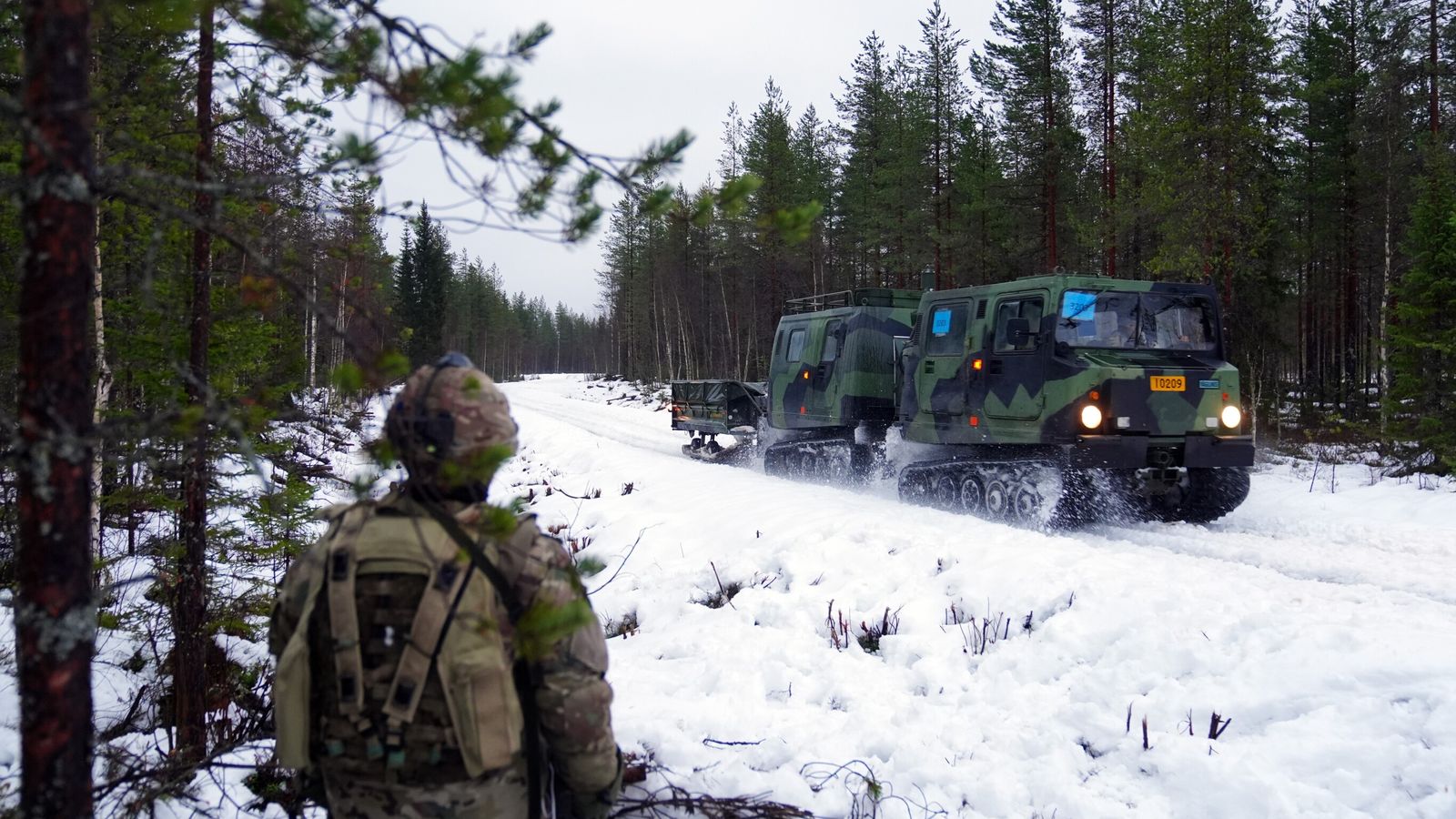
The whole of the UK – not just its armed forces – needs to step up to deter the threat posed by Russia of a wider war in Europe, Britain’s military chief will say.
In the kind of nation-wide call to action that has not been heard since the height of the Cold War, Air Chief Marshal Sir Richard Knighton will use a speech in London on Monday evening to urge the British public to make defence and resilience “a higher priority”.
He will say Russia’s war in Ukraine shows that Vladimir Putin’s willingness to target his neighbours “threatens the whole of NATO, including the UK. The Russian leadership has made clear that it wishes to challenge, limit, divide and ultimately destroy NATO”.
Yet there was nothing in excerpts of the speech – released in advance by the Ministry of Defence – that pointed to any push by Sir Keir Starmer’s government to increase defence spending faster than planned, despite the flashing warning signs and concerns among senior military officers that the budget is currently set to grow too slowly.
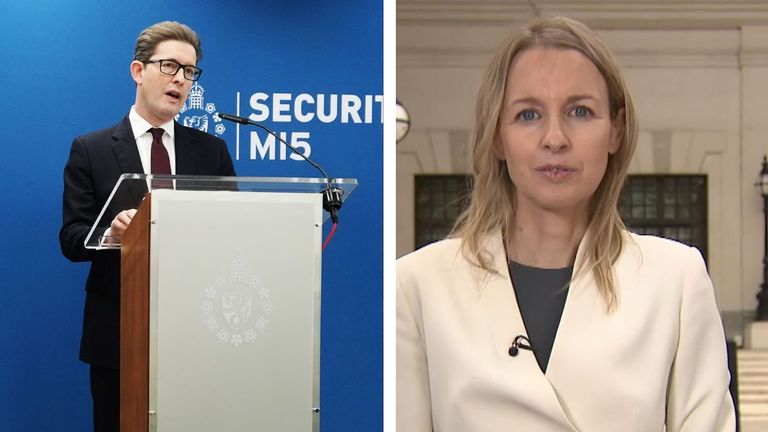
In a further articulation of the threat, Blaise Metreweli, the new head of MI6, will use a separate speech on Monday to warn that the “front line is everywhere” in a new “age of uncertainty”.
“The export of chaos is a feature not a bug in the Russian approach to international engagement,” she will say, in her first public comments since becoming the first female chief of the Secret Intelligence Service in October.
“We should be ready for this to continue until Putin is forced to change his calculus.”
Read more:
Head of MI6: ‘Never seen the world in a more dangerous state’
NATO chief calls for 400% increase in air and missile defence
Defence and security chiefs across the NATO alliance are increasingly sounding the alarm about the potential for Russia’s war in Ukraine to ignite a much wider conflict.
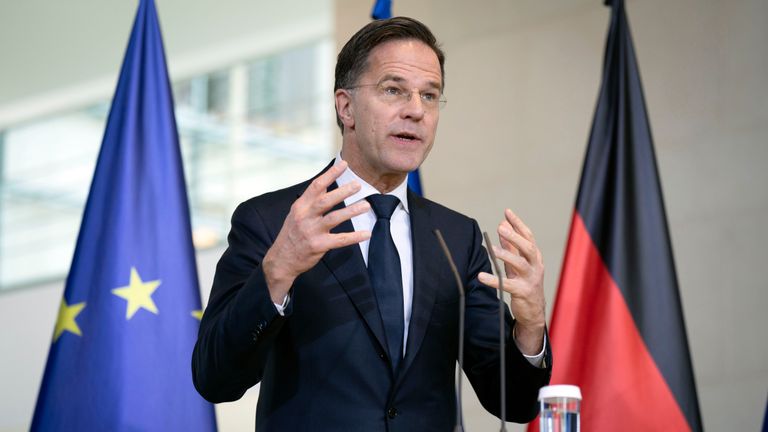
NATO ‘must prepare for scale of war our grandparents faced’, warns chief Mark Rutte
Mark Rutte, the head of NATO, last week said Europe must ready itself for a confrontation with Russia on the kind of scale “our grandparents and great-grandparents endured” – a reference to the First and Second World Wars.
At the same time, Al Carns, the UK’s armed forces minister, said Britain is “rapidly developing” plans to ready the entire country for the possible outbreak of war.
Sky News revealed last year that the UK had no national plan for the defence of the country or the mobilisation of its people.
By contrast, a detailed blueprint for the transition from a state of peace to one of war existed throughout the Cold War, setting out not just what the armed forces, emergency services and local governments had to do in the event of conflict, but also wider society, including people working in industry, schools and public transport.
‘New era’ of threats from Russia, China and Iran
However, this Government War Book was quietly shelved after the Soviet Union collapsed and successive governments took a so-called “peace dividend”, shifting investment out of defence and into other priorities such as health and welfare.
Sky News and Tortoise have documented the hollowing out of the UK’s armed forces and wider national resilience in a podcast series called The Wargame.
The expected comments by Air Chief Marshal Knighton in an annual lecture at the Royal United Services Institute (RUSI) appear to signal an attempt by the government to put the country back on more of a war footing in the face of rising threats.
But military insiders have warned that a timeline set out by the government of 10 years to boost defence spending to 3.5% of GDP from 2.3% is far too slow.
👉 Click here to listen to The Wargame on your podcast app 👈
The chief of the defence staff will say: “The situation is more dangerous than I have known during my career and the response requires more than simply strengthening our armed forces. A new era for defence doesn’t just mean our military and government stepping up – as we are – it means our whole nation stepping up.”
He will nod to the planned uplift in spending, noting “the price of peace is increasing”.
He is set to say: “The war in Ukraine shows that Putin’s willingness to target neighbouring states, including their civilian populations, potentially with such novel and destructive weapons, threatens the whole of NATO, including the UK.”
This is a threat that wider society needs to prepare for as well as the military.
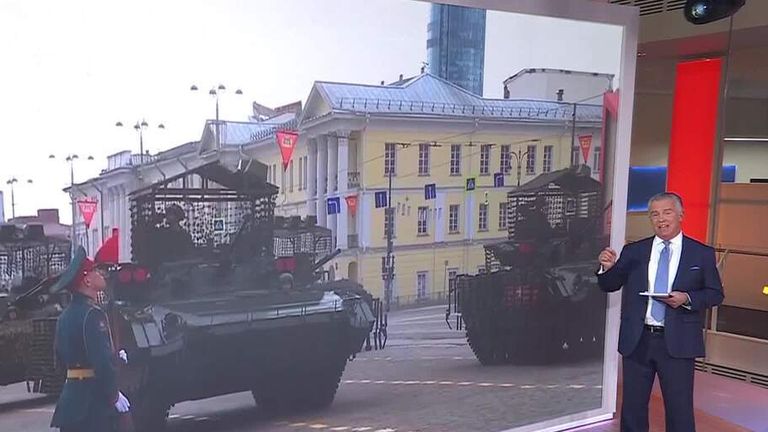
Military analyst Sean Bell looks at the threat Russia poses
“Our armed forces always need to be ready to fight and win – that’s why readiness is such a priority,” Air Chief Marshal Knighton will say.
“But deterrence is also about our resilience to these threats, it’s about how we harness all our national power, from universities, to industry, the rail network to the NHS. It’s about our defence and resilience being a higher national priority for all of us. An ‘all-in’ mentality.”
It is a highly unusual intervention that has echoes of the Cold War when the UK last involved all of society in a programme of national defence and resilience against the threat of World War Three and potential nuclear Armageddon posed by the then Soviet Union.
“We are heading into uncertainty, and that uncertainty is becoming more profound, both as our adversaries become more capable and unpredictable, and as unprecedented technology change manifests itself,” Air Chief Marshal Knighton will say.
UK
Specialist teams and online investigators deployed across England and Wales to tackle ‘national emergency’ of violence against women and girls

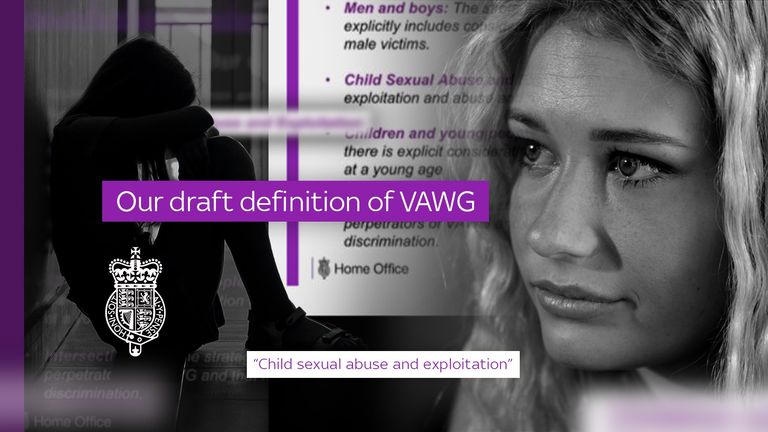
Specialist investigation teams for rape and sexual offences are to be created across England and Wales as the Home Secretary declares violence against women and girls a “national emergency”.
Shabana Mahmood said the dedicated units will be in place across every force by 2029 as part of Labour’s violence against women and girls (VAWG) strategy due to be launched later this week.
The use of Domestic Abuse Protection Orders (DAPOs), which had been trialled in several areas, will also be rolled out across England and Wales. They are designed to target abusers by imposing curfews, electronic tags and exclusion zones.
The orders cover all forms of domestic abuse, including economic abuse, coercive and controlling behaviour, stalking and ‘honour’-based abuse. Breaching the terms can carry a prison term of up to 5 years.
Govt ‘thinking again’ on abuse strategy
Nearly £2m will also be spent funding a network of officers to target offenders operating within the online space.
Teams will use covert and intelligence techniques to tackle violence against women and girls via apps and websites.
A similar undercover network funded by the Home Office to examine child sexual abuse has arrested over 1,700 perpetrators.
Abuse is ‘national emergency’
Home Secretary Shabana Mahmood said in a statement: “This government has declared violence against women and girls a national emergency.
“For too long, these crimes have been considered a fact of life. That’s not good enough. We will halve it in a decade.
“Today we announce a range of measures to bear down on abusers, stopping them in their tracks. Rapists, sex offenders and abusers will have nowhere to hide.”
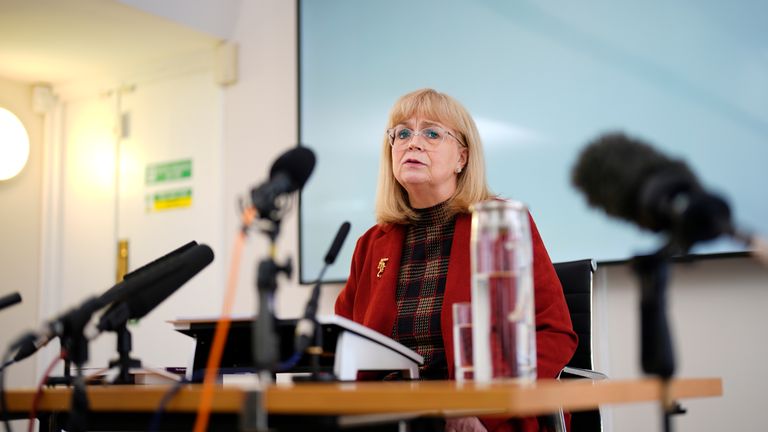
Angiolini Inquiry: Recommendations are ‘not difficult’
The target to halve violence against women and girls in a decade is a Labour manifesto pledge.
The government said the measures build on existing policy, including facial recognition technology to identify offenders, improving protections for stalking victims, making strangulation a criminal offence and establishing domestic abuse specialists in 999 control rooms.
Read more from Sky News:
Demands for violence and abuse reforms
Women still feel unsafe on streets
Minister ‘clarifies’ violence strategy
Labour has ‘failed women’
But the Conservatives said Labour had “failed women” and “broken its promises” by delaying the publication of the violence against women and girls strategy.
Shadow Home Secretary, Chris Philp, said that Labour “shrinks from uncomfortable truths, voting against tougher sentences and presiding over falling sex-offender convictions. At every turn, Labour has failed women.”
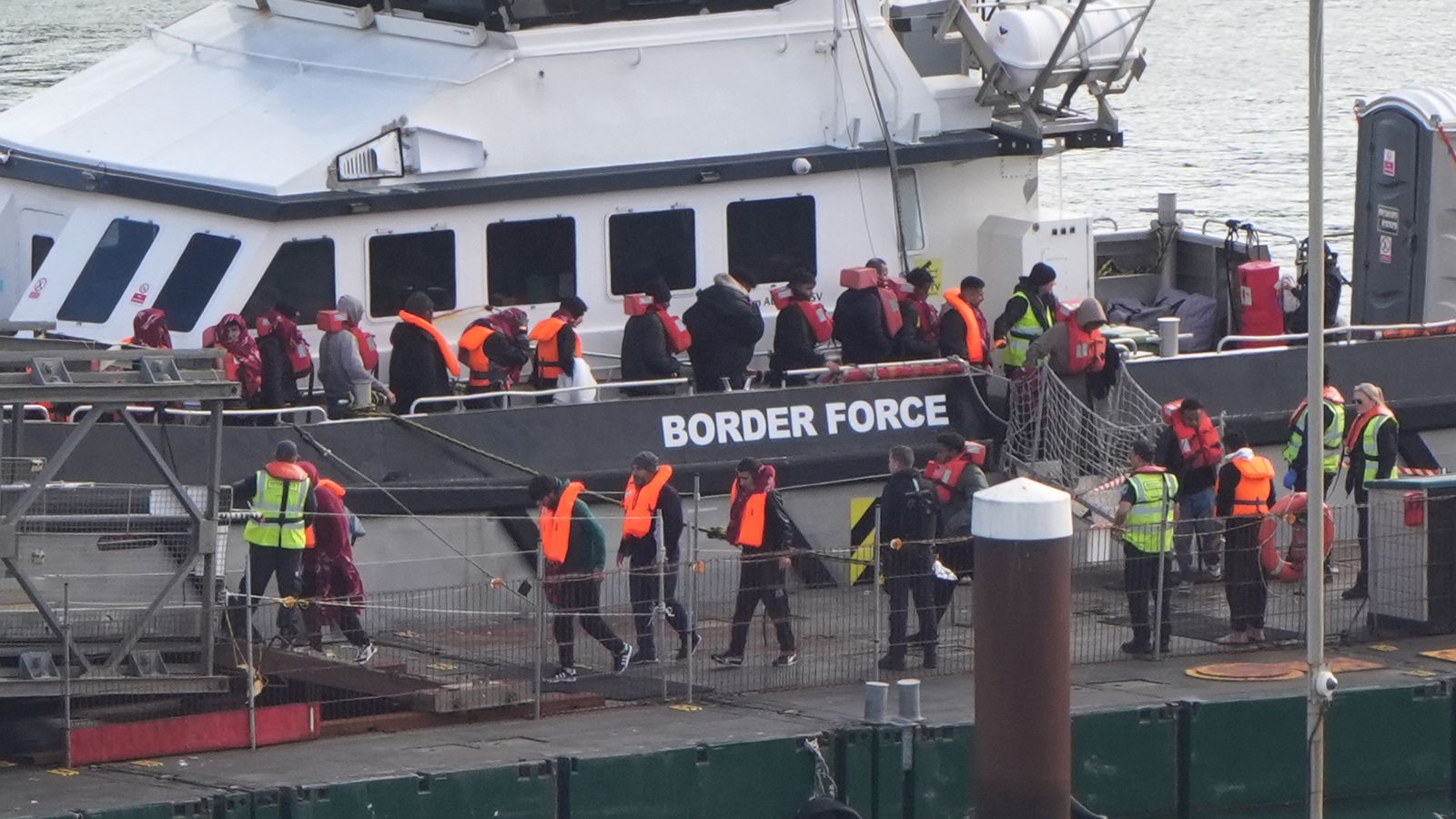
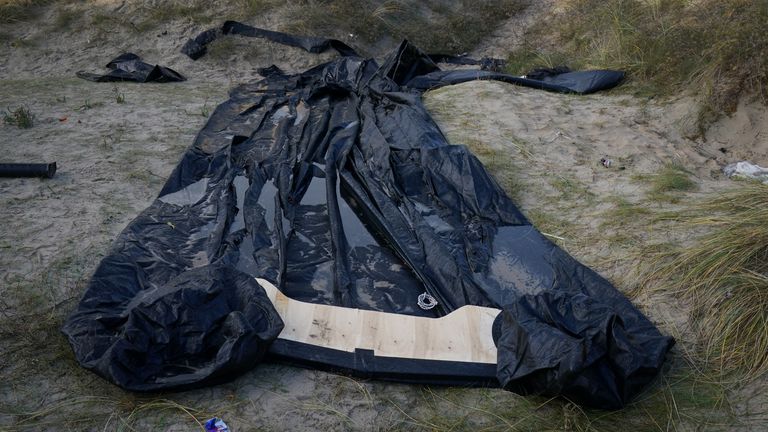
There have been no migrant arrivals in small boats crossing the Channel for 28 days, according to Home Office figures.
The last recorded arrivals were on 14 November, making it the longest uninterrupted run since autumn 2018 after no reported arrivals on Friday.
However, a number of Border Force vessels were active in the English Channel on Saturday morning, indicating that there may be arrivals today.
So far, 39,292 people have crossed to the UK aboard small boats this year – already more than any other year except 2022.
The record that year was set at 45,774 arrivals.
It comes as the government has stepped up efforts in recent months to deter people from risking their lives crossing the Channel – but measures are not expected to have an impact until next year.
Debris of a small boat used by people thought to be migrants to cross the Channel lays amongst the sand dunes in Gravelines, France. Pic: PA
December is normally one of the quietest for Channel crossings, with a combination of poor visibility, low temperatures, less daylight and stormy weather making the perilous journey more difficult.
The most arrivals recorded in the month of December is 3,254, in 2024.
Deputy Prime Minister David Lammy met with ministers from other European countries this week as discussions over possible reform to the European Convention on Human Rights (ECHR) continue.
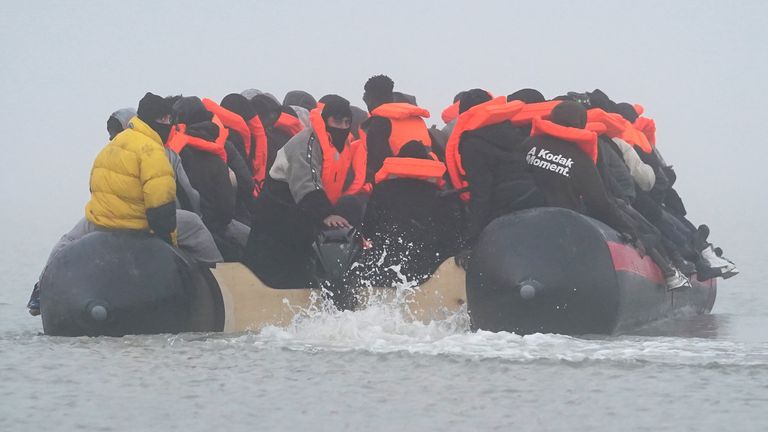
France agrees to start intercepting small boats
The issue of small boat arrivals – a very small percentage of overall UK immigration – has become a salient issue in British politics in recent years.
Last month, French maritime police announced they would soon be able to intercept boats in the English Channel.
-
 Sports2 years ago
Story injured on diving stop, exits Red Sox game
-
 Sports3 years ago
‘Storybook stuff’: Inside the night Bryce Harper sent the Phillies to the World Series
-
 Sports2 years ago
Game 1 of WS least-watched in recorded history
-
 Sports3 years ago
Button battles heat exhaustion in NASCAR debut
-
 Sports3 years ago
MLB Rank 2023: Ranking baseball’s top 100 players
-
Sports4 years ago
Team Europe easily wins 4th straight Laver Cup
-
 Environment3 years ago
Japan and South Korea have a lot at stake in a free and open South China Sea
-
 Environment1 year ago
Here are the best electric bikes you can buy at every price level in October 2024