

USD-backed stablecoin pilot project launched by Pacific island nation of Palau


The government of Palau is set to begin a pilot project for a United States dollar-backed stablecoin on July 26. The new coin will be issued on XRP Ledger.
The country will release the first Palau Stablecoins (PSCs) in the pilot project to government employees. This comes after several days of testing using volunteers to make purchases with various devices.
The PSC, nicknamed the Kluk, possibly due to its bird logo, is the latest project to run on the Ripple CBDC Platform that debuted in May. Ripple claimed at that time to be in talks with over 20 governments about central bank digital currency (CBDC) issuance. The agreement with Palau predates the new Ripple product, however. Ripple’s partnership with Palau was announced in 2021, with a target launch date in 2022.
Palau is spread across a group of islands in the Oceania region of the Pacific Ocean. It has a population of slightly more than 18,000 and uses the U.S. dollar as its national currency.
Related: Montenegro’s central bank teams up with Ripple on digital currency pilot project
The country already has a digital residency program and issues ID supported by Cryptic Labs that is available as a nonfungible token on the Binance BNB blockchain. Palau’s Root Name System ID is valid for identification and Know Your Customer purposes and is recognized by several major international entities. It costs just over $20 per month.
So far during this limited pilot we have successfully tested PSC with WebApp and Android Wallets (multiple OS versions and smartphone models).
iPhone wallet app is coming soon
✔️Minted by Republic of Palau National Treasury
✔️Distribution by Ministry of Finance
✔️Wallet to… pic.twitter.com/I3Gvt9PV7X— Jay Hunter Anson (@JHX_1138) July 19, 2023
Pacific island nations have been a hotbed of crypto development in recent years. For example, the Republic of the Marshall Islands is launching a CBDC and has legalized decentralized autonomous organizations (DAOs). Vanuatu hosts the Satoshi Island “place for the crypto community to call home.” Tonga announced plans to introduce Bitcoin as legal tender, although it seems to have missed its planned January 2023 launch.
Magazine: Why are crypto fans obsessed with micronations and seasteading?
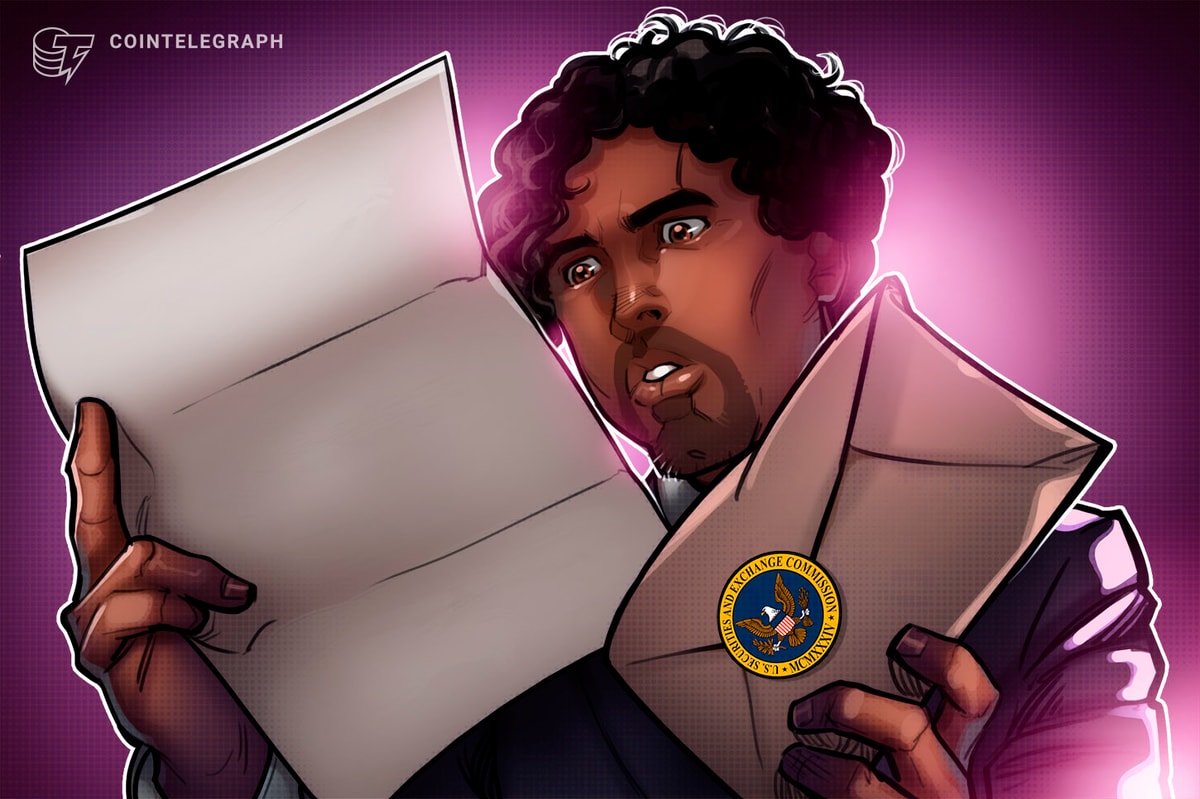
The US Securities and Exchange Commission (SEC) sent warning letters to several exchange-traded fund (ETF) providers, halting applications for leveraged ETFs that offer more than 200% exposure to the underlying asset.
ETF issuers Direxion, ProShares, and Tidal received letters from the SEC citing legal provisions under the Investment Company Act of 1940.
The law caps exposure of investment funds at 200% of their value-at-risk, defined by a “reference portfolio” of unleveraged, underlying assets or benchmark indexes. The SEC said:
“The fund’s designated reference portfolio provides the unleveraged baseline against which to compare the fund’s leveraged portfolio for purposes of identifying the fund’s leverage risk under the rule.”

The SEC directed issuers to reduce the amount of leverage in accordance with the existing regulations before the applications would be considered, putting a damper on 3-5x crypto leveraged ETFs in the US.
SEC regulators posted the warning letters the same day they were sent to the issuer, in an “unusually speedy move” that signals officials are keen on communicating their concerns about leveraged products to the investing public, according to Bloomberg.
The crypto market took a nosedive in October after a flash crash caused $20 billion in leveraged liquidations, the most severe single-day liquidation event in crypto history, sparking discussions among analysts and investors over the dangers of leverage and its effect on the crypto market.
Related: Vanguard’s 50M+ clients will soon have access to crypto ETFs
Leverage in crypto heats up, amplifying gains, losses, and suppressing markets
“Leverage is clearly out of control,” analysts at The Kobeissi Letter said in response to the SEC warning letters.
Crypto liquidations have nearly tripled this market cycle, according to crypto analysis platform Glassnode.

Liquidations in the crypto futures market during the last cycle averaged about $28 million in long positions and $15 million in shorts per day.
The current cycle is clocking about $68 million in long liquidations and $45 million in short liquidations daily, according to Glassnode.
Demand for leveraged crypto ETFs surged following the 2024 presidential election in the United States, in anticipation of a better regulatory climate for crypto in the US.
Leveraged ETFs are not subject to margin calls and automated liquidations like leveraged crypto derivatives, but can still deal a serious blow to investor capital in a bear market or even a sideways market, as losses compound more quickly than gains.
Magazine: Stop piling into leveraged Bitcoin ETFs and consider this instead


Former US Securities and Exchange Commission Chair Gary Gensler renewed his warning to investors about the risks of cryptocurrencies, calling most of the market “highly speculative” in a new Bloomberg interview on Tuesday.
He carved out Bitcoin (BTC) as comparatively closer to a commodity while stressing that most tokens don’t offer “a dividend” or “usual returns.”
Gensler framed the current market backdrop as a reckoning consistent with warnings he made while in office that the global public’s fascination with cryptocurrencies doesn’t equate to fundamentals.
“All the thousands of other tokens, not the stablecoins that are backed by US dollars, but all the thousands of other tokens, you have to ask yourself, what are the fundamentals? What’s underlying it… The investing public just needs to be aware of those risks,” he said.
Gensler’s record and industry backlash
Gensler led the SEC from April 17, 2021, to Jan. 20, 2025, overseeing an aggressive enforcement agenda that included lawsuits against major crypto intermediaries and the view that many tokens are unregistered securities.
Related: House Republicans to probe Gary Gensler’s deleted texts
The industry winced at high‑profile actions against exchanges and staking programs, as well as the posture that most token issuers fell afoul of registration rules.

Under Gensler’s tenure, Coinbase was sued by the SEC for operating as an unregistered exchange, broker and clearing agency, and for offering an unregistered staking-as-a-service program. Kraken was also forced to shut its US staking program and pay a $30 million penalty.
The politicization of crypto
Pushed on the politicization of crypto, including references to the Trump family’s crypto involvement by the Bloomberg interviewer, the former chair rejected the framing.
“No, I don’t think so,” he said, arguing it’s more about capital markets fairness and “commonsense rules of the road,” than a “Democrat versus Republican thing.”
He added: “When you buy and sell a stock or a bond, you want to get various information,” and “the same treatment as the big investors.” That’s the fairness underpinning US capital markets.
Related: Coinbase files FOIA to see how much the SEC’s ‘war on crypto’ cost
ETFs and the drift to centralization
On ETFs, Gensler said finance “ever since antiquity… goes toward centralization,” so it’s unsurprising that an ecosystem born decentralized has become “more integrated and more centralized.”
He noted that investors can already express themselves in gold and silver through exchange‑traded funds, and that during his tenure, the first US Bitcoin futures ETFs were approved, tying parts of crypto’s plumbing more closely to traditional markets.
Gensler’s latest comments draw a familiar line: Bitcoin sits in a different bucket, while most other tokens remain, in his view, speculative and light on fundamentals.
Even out of office, his framing will echo through courts, compliance desks and allocation committees weighing BTC’s status against persistent regulatory caution of altcoins.
Magazine: Solana vs Ethereum ETFs, Facebook’s influence on Bitwise — Hunter Horsley
-
 Sports2 years ago
Story injured on diving stop, exits Red Sox game
-
 Sports3 years ago
‘Storybook stuff’: Inside the night Bryce Harper sent the Phillies to the World Series
-
 Sports2 years ago
Game 1 of WS least-watched in recorded history
-
 Sports3 years ago
Button battles heat exhaustion in NASCAR debut
-
 Sports3 years ago
MLB Rank 2023: Ranking baseball’s top 100 players
-
Sports4 years ago
Team Europe easily wins 4th straight Laver Cup
-
 Environment3 years ago
Japan and South Korea have a lot at stake in a free and open South China Sea
-
 Environment1 year ago
Here are the best electric bikes you can buy at every price level in October 2024