

Connect with us

Published

on

Billionaire Elon Musk says Twitter the social media company he is in the midst of rebranding as “X” will keep its headquarters in San Francisco despite the “doom loop” the city is facing as big-name businesses head for the exits.

Musk, who led a group of investors in acquiring Twitter that took the company private in a $44 billion deal last year, tweeted Saturday that the companys headquarters will remain in San Francisco despite receiving offers aimed at enticing the company to relocate.

“Many have offered rich incentives for X (fka Twitter) to move its HQ out of San Francisco. Moreover, the city is in a doom spiral with one company after another left or leaving. Therefore, they expect X will move too. We will not,” Musk explained.

“You only know who your real friends are when the chips are down. San Francisco, beautiful San Francisco, though others forsake you, we will always be your friend,” Musks tweet concluded.

San Franciscos economy has suffered from an exodus of businesses and residents in the last few years, creating a “doom loop” in which a local government enters a downward fiscal spiral as its tax base declines.

An urban doom loop involves a decline in workers present in offices in city centers, which results in businesses shrinking their office footprint and rental overhead.

The decline in demand causes real estate prices to fall, which in turn reduces property tax revenue while other sources of tax revenue, like sales tax, also take a hit due to the reduced traffic in downtown areas.

As the overall tax base declines, it becomes harder for city governments to fund public services like law enforcement as theyre forced to make trade-offs that include things like budget cuts or tax hikes to stabilize their finances both of which can drive more businesses and residents to depart if those policies have a negative effect on the economic climate or overall quality of life.

The growing popularity of remote work has accelerated that trend, decreasing the number of workers heading to the office on a daily basis as it becomes easier than ever for workers to live in suburban and rural areas without commuting.

The tech-heavy economy of San Francisco and criticisms of the city governments record on public safety issues have made it a case study in the dynamics that drive urban doom loops.

According to data from the Census Bureau, the population of San Francisco County declined by 7.5% from April 1, 2020, to July 1, 2022.

Commercial real estate firm CBRE released data in early July that showed that San Francisco had an overall office vacancy rate of 31.6% in the second quarter of 2023.

The CBRE report noted that in the last quarter “negative net absorption accelerated due to slow leasing activity, combined with a high volume of lease expirations and several new sublease listings.

This resulted in 1.83 million sq. ft. of occupancy loss, which increased the market-wide vacancy rate from 29.4% to 31.6%.”

Although Twitter isnt relocating its headquarters, the company has sought to shrink its office footprint in San Francisco and faced a lawsuit from its landlord earlier this year over unpaid rent  although the social media company has faced similar suits at offices in Denver, Oakland and London since Musk acquired Twitter and began a broad cost-cutting push to stabilize its finances.

Amid Twitters rebrand to X, city officials filed a complaint and opened an investigation into whether the company had the proper permits to install an illuminated “X” atop its downtown headquarters.

Police had stopped the installation last week but later said there was a “misunderstanding” and that the incident was not a police matter.

City officials say a permit is required to change letters or signs on buildings or to erect a new sign on top of a building.

Continue Reading

Entertainment

Industrial action on agenda as actors balloted by Equity over AI scanning concerns

Published

on

By

Industrial action on agenda as actors balloted by Equity over AI scanning concerns

Thousands of members of actors’ trade union Equity are being asked whether they would support industrial action over artificial intelligence protections.

The organisation has launched an indicative ballot among about 7,000 members working in film and TV.

Performers are being asked whether they are prepared to refuse to be digitally scanned on set in order to secure adequate artificial intelligence protections.

It will be the first time the performing arts and entertainment trade union has asked this whole section of its membership to vote in a ballot.

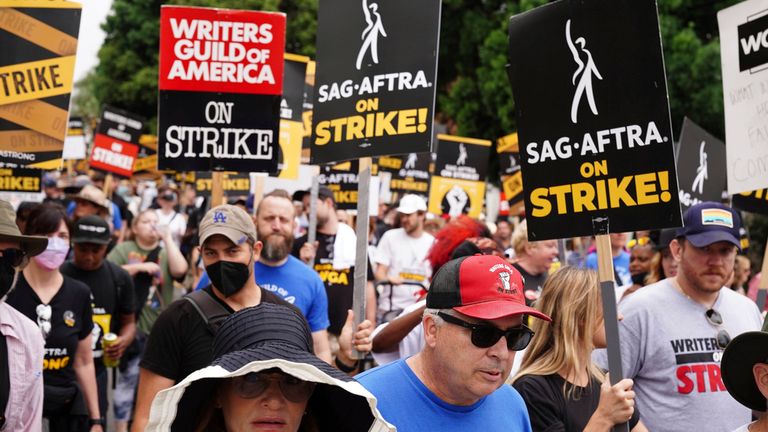
The Hollywood strikes took place in 2023. File pic: AP
Image:
The Hollywood strikes took place in 2023. File pic: AP

The announcement follows the Hollywood strikes in 2023, when members of Equity’s sister union in the US, SAG-AFTRA, and writers, went on strike over issues including AI.

Video game actors in the US also protested over the use of AI, ending almost a year of industrial action earlier in 2025.

Equity’s ballot opens on Thursday and runs for two weeks, and will show the level of support the union has for action short of a strike.

Another statutory ballot would have to be made before any industrial action is taken.

“While tech companies get away with stealing artists’ likeness or work, and the government and decision makers fret over whether to act, unions including Equity are at the forefront of the fight to ensure working people are protected from artificial intelligence misuse,” Equity general secretary Paul W Fleming said in a statement.

“If bosses can’t ensure someone’s likeness and work won’t be used without their consent, why should performers consent to be digitally scanned in the first place?”

Mr Fleming said the ballot would give members the opportunity to “send a clear message to the industry: that it is a basic right of performers to have autonomy over their own personhood and identity”.

The union has no choice but to recommend members support industrial action, he said.

“It’s time for the bosses to step away from the brink and offer us a package, including on AI protections, which respects our members,” added Mr Fleming.

Continue Reading

Entertainment

Spotify Wrapped: How does it work – and who are this year’s top artists?

Published

on

By

Spotify Wrapped: How does it work - and who are this year's top artists?

The hotly anticipated Spotify Wrapped is revealing our top tracks, artists and albums for 2025.

But how does the streaming service calculate personalised summaries of users’ listening habits and rank the UK’s hottest artists?

Here’s a look at how your data is used.

The platform describes the annual statistics as “a chance to look back on your year in sound”.

It says data is captured between January and mid-November on every account, although it mostly excludes anything streamed in private mode. (Don’t worry, your passion for the Spice Girls can be kept secret.)

Wrapped presents personalised listening statistics, which Spotify calls the “real story of your year of listening”, alongside global figures for comparison.

The streaming service says Minutes Listened reflects the actual time spent listening to audio on the platform.

More on Spotify

Once a user streams at least 30 tracks, Spotify generates a list of Your Top Songs. Similarly, Your Top Artists ranks artists based on total minutes listening to a particular performer.

Other metrics identify the top genres users have played, as well as podcasts and audiobooks ranked by total minutes listened. And if you’ve listened to at least 70% of tracks on a record, you’ll see top albums too.

Spotify also creates Your Listening Age, a guesstimate of your age based on the era of the music “you feel most connected to”.

The streaming service says the statistic is calculated using a five-year span of music which users engaged with more than other listeners of a similar age.

Spotify has been summing up 2025's most listened to tracks. Pic: Spotify
Image:
Spotify has been summing up 2025’s most listened to tracks. Pic: Spotify

Swift vs Bunny

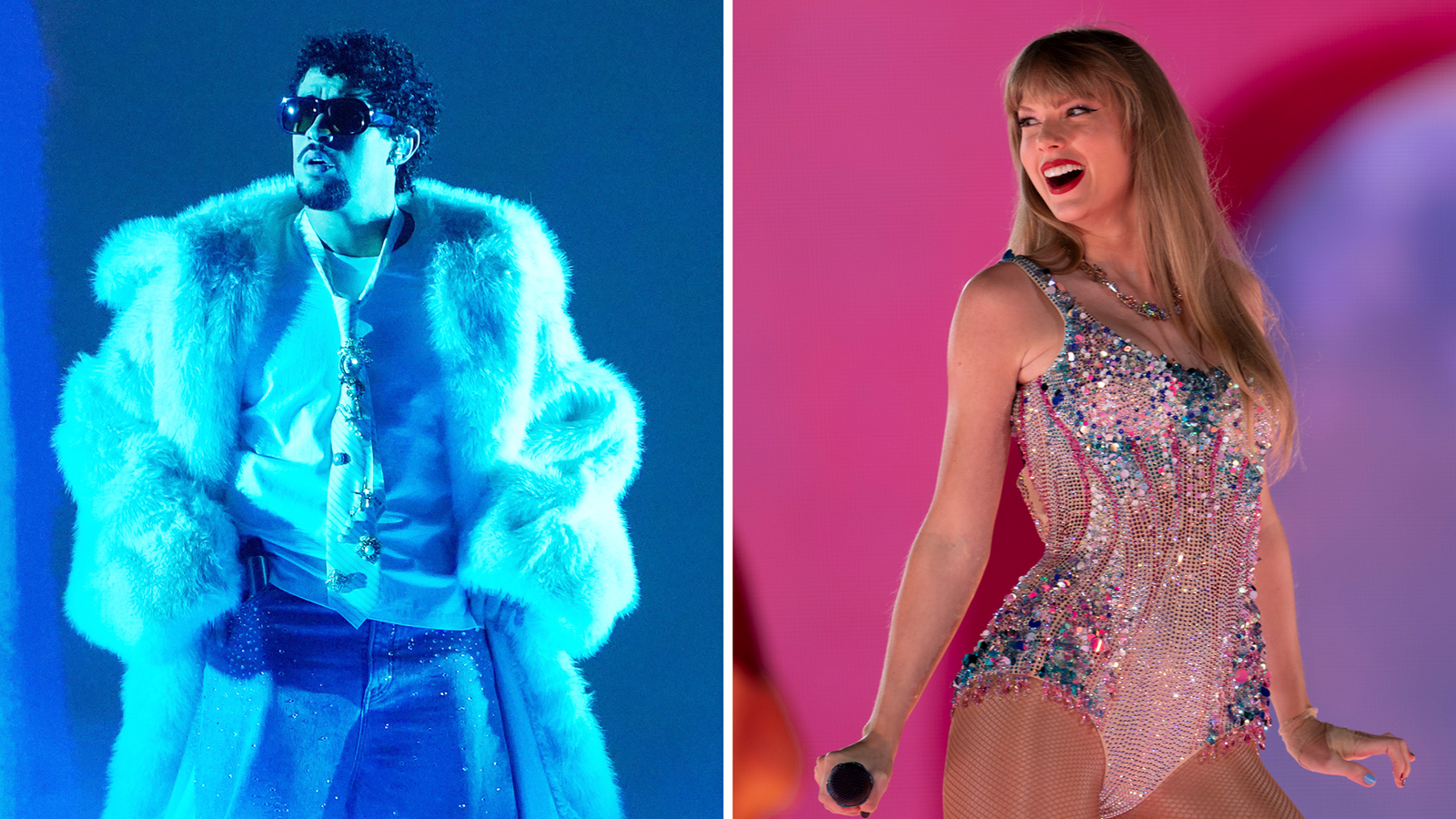
Pop superstar Taylor Swift has been named the UK’s most-streamed artist on Spotify for the third year in a row.

But she dropped out of the top spot in the global rankings, coming second to Puerto Rican superstar Bad Bunny, who secured more than 19.8 billion streams. Third were The Weeknd, followed by Drake and Billie Eilish.

Bad Bunny’s LP Debi Tirar Mas Fotos was the most listened-to album worldwide.

Read more from Sky News:
Sabrina Carpenter fury at video
Drake’s lawsuit dismissed
Spotify hikes UK prices

Spotify revealed Drake was the UK’s second most-listened to artist, followed by Sabrina Carpenter in third, The Weeknd in fourth and Billie Eilish in fifth.

Despite being the most listened-to artist, Swift failed to break into the UK’s top five most listened-to songs and albums of the year.

Alex Warren’s Ordinary was the most-streamed song, and Short ‘N’ Sweet, released by Carpenter last year, the top album.
Continue Reading

Entertainment

Israel allowed to take part in Eurovision 2026 – as at least three countries withdraw

Published

on

By

Israel allowed to take part in Eurovision 2026 - as at least three countries withdraw

Israel will be allowed to compete in next year’s Eurovision Song Contest – with several broadcasters saying they will now boycott the event.

Dutch broadcaster AVROTROS, Spain’s RTVE and Ireland’s RTE immediately issued statements saying they will not participate in the 2026 contest following the European Broadcasting Union’s general assembly meeting on Thursday.

Sky News understands Slovenia’s broadcaster will also pull out.

Members were asked to vote in a secret ballot on whether they were happy with new rules announced last month, without going ahead with a vote on participation next year.

In a statement, the EBU said members had shown “clear support for reforms to reinforce trust and protect neutrality”.

Ahead of the assembly, Israel’s public broadcaster KAN said its chief executive Golan Yochpaz and representative to the EBU, Ayala Mizrahi, would present KAN’s position “regarding attempts to disqualify Israel from the competition”.

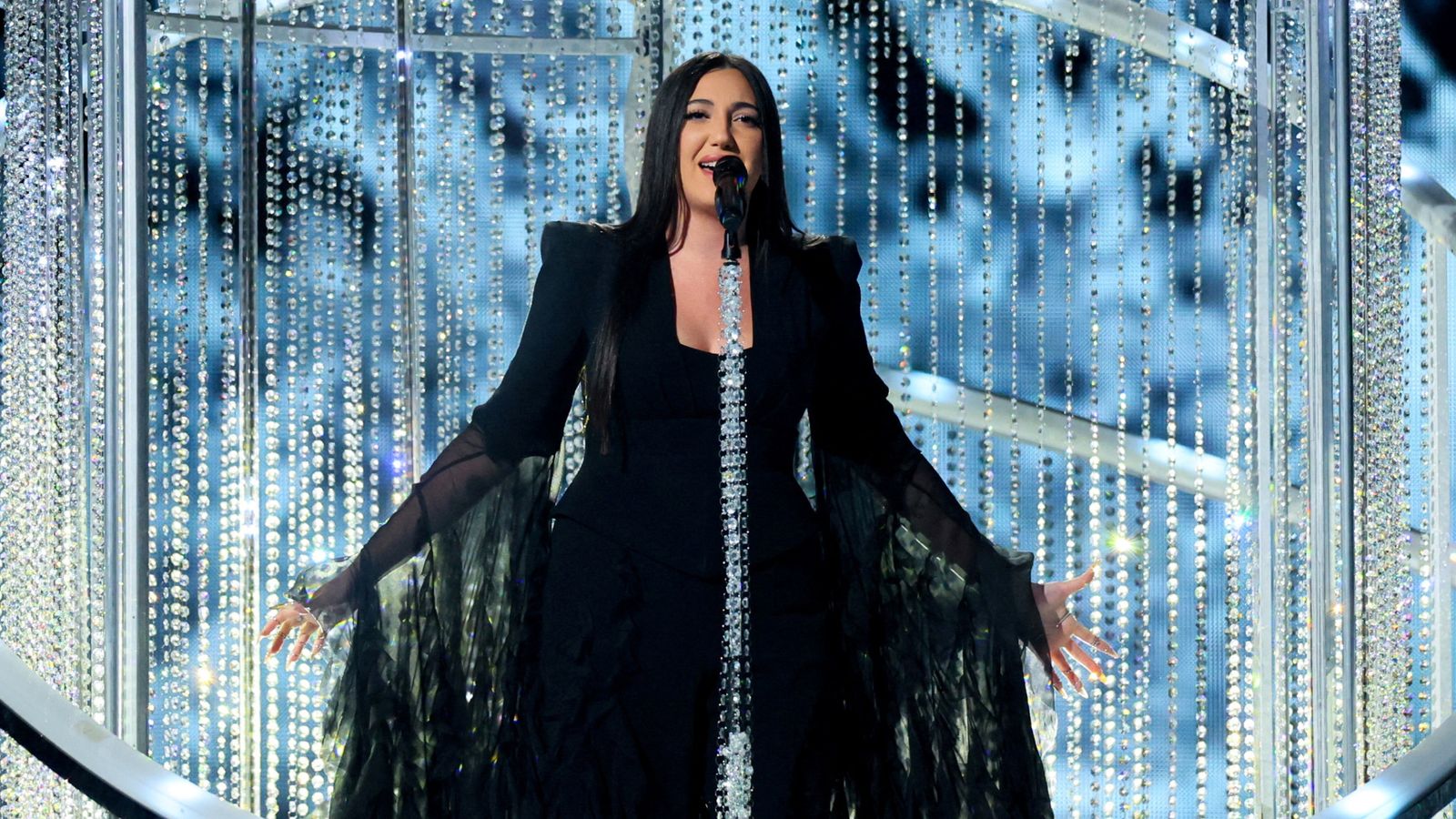
The rule changes annnounced in November came after Israeli singer Yuval Raphael received the largest number of votes from the public at this year’s contest, held in Basel, Switzerland, in May – ultimately finishing as runner-up to Austria’s entry after the jury votes were counted.

More on Eurovision

This breaking news story is being updated and more details will be published shortly.

Please refresh the page for the latest version.

You can receive breaking news alerts on a smartphone or tablet via the Sky News app. You can also follow us on WhatsApp and subscribe to our YouTube channel to keep up with the latest news.

Continue Reading

Trending





