

Uber is buying 100 Tesla Model Ys to deploy in Tokyo


Uber announced that it is buying 100 Tesla Model Y electric vehicles to deploy in Tokyo as part of a new program.
In 2020, Hertz announced an important effort to electrify its fleet of rental cars, led by a massive purchase of 100,000 Tesla Model 3 vehicles to be delivered over the next year.
Shortly after, Hertz announced that on top of adding Tesla vehicles to its rental fleet, the company also made a deal with Uber to offer its drivers access to the Tesla vehicles. Fifty-thousand Tesla vehicles will be offered for rent to Uber drivers, and the company has an option for more if the program is successful.
Since then, Uber has increasingly used Tesla vehicles to electrify its ride-hailing service – primarily in North America and Europe.
Now Uber is looking to extend its electric vehicle offering to Japan with Tesla.
Uber announced that it is working with Tesla Japan and Hinomaru Kotsu, a local taxi service, to make 100 Tesla Model Y vehicles available through its “Uber Premium” service.
The first 30 Model Ys are expected to arrive in November, and they will be based at Hinomaru Kotsu’s offices. All 100 of them are expected to be deployed by the end of 2024.
Shiro Yamanaka, Uber executive in Japan, commented on the announcement:
I am very pleased to be able to work with Hinomaru Kotsu and Tesla Japan to promote zero-emission vehicles. Uber Premium is a service that allows you to easily and reasonably call a luxury vehicle using the Uber app. in the deployment area.We expect that the demand for Uber Premium will increase further with the introduction of the Tesla Model Y, which is popular as a luxury vehicle, as a dedicated vehicle.
Ryokusai Inoue, Country Manager for Tesla in Japan, added:
We are also focusing on the taxi and hire business, mainly in North America, and we are very pleased to be able to realize an initiative of 100 units in Japan as well. We believe that business owners will also benefit greatly from this, and We will continue to have everyone experience the appeal of Tesla and expand it widely throughout Japan, regardless of whether it is a corporation or an individual.
Tesla has had issues penetrating the Japanese auto market, which notoriously favors domestic brands and has favored hydrogen fuel cells over battery-electric vehicles.
The use of Tesla vehicles in local ride-hailing services might help familiarize people with the vehicles.
FTC: We use income earning auto affiliate links. More.
Environment
Aptera (SEV) shows off assembly line for solar electric ‘car’, updates on battery and testing


Solar electric vehicle startup Aptera Motors released a new update today, giving us a first look at its validation vehicle assembly line, along with progress on battery production and efficiency testing as it moves closer to its goal of low-volume production.
The update comes just weeks after the company began trading on the Nasdaq under the ticker symbol $SEV.
The move, along with a deal to sell some shares, secured access to up to $75 million in financing for Aptera, which was struggling financially.
It enabled Aptera to get busy, and now the company has released an update about its progress over the last few weeks.
You can watch the full update video here:
On the personnel front, highlighting an expanded team across engineering, operations, and manufacturing. In the video, several new hires introduced themselves, including directors of supply chain and various engineers, signaling that the company is trying to staff up for the next phase.
But the meat of the update is on the manufacturing floor.
Aptera’s Validation Assembly Line

Steve Fambro, Aptera’s co-CEO, walked us through the facility, which he says is now “buzzing with activity”, with a few interesting time-lapse videos that showed progress.
The company has begun the buildout of its validation vehicle assembly line.
Unlike the hand-assembled prototypes we’ve seen in the past, Aptera says this new setup is designed to operate as a “normal vehicle manufacturing line” with a multi-step process. This includes receiving, inventory, kitting, and progressive installation of vehicle systems at individual stations.
At the heart of this new line is a large-scale precision assembly fixture. This is a critical piece of equipment for Aptera’s unique two-piece composite body structure.
Fambro explained the importance of this fixture:
“It’s a major step forward from the original hand-assembled approach we used on the BinC (Body in Carbon) for the first three validation vehicles. With this new fixture, we can now assemble BinCs with far greater repeatability and tighter control over final geometry.”
We also got a look at the frames, which Aptera says are robust and optimized for weight and strength.
Battery Production and ‘Gemini’ Testing
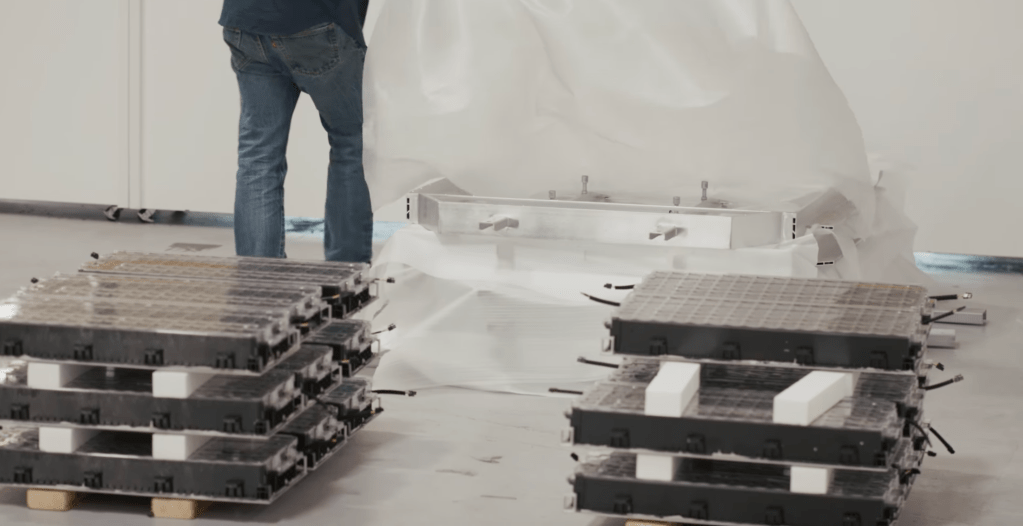
Another significant update is the battery assembly. Aptera’s battery partner, CTNS, is now on-site building battery modules.
This is the first time CTNS has assembled modules directly in Aptera’s facility. The video shows what look to be clean, precise modules ready for integration. This is a good sign for the supply chain, as the battery pack is often a major bottleneck for EV startups.
On the testing front, Aptera has been conducting internal efficiency evaluations with “Gemini,” its third production-intent vehicle.
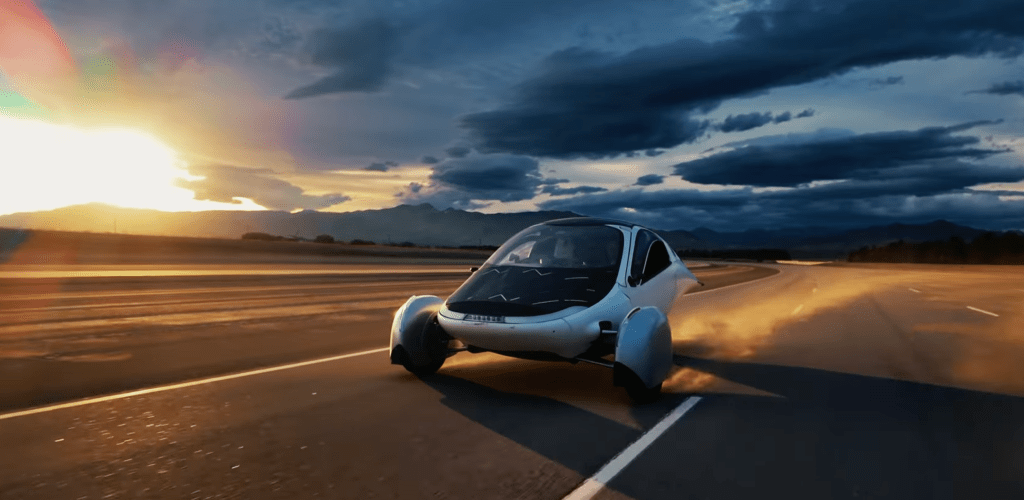
The company claims preliminary results from combined drive cycles (high speed, stop-and-go, urban) are “encouraging.” They plan to move to more formal regulatory testing soon with the new and bigger fleet of validation vehicles.
Electrek’s Take
This is a nice progress update from Aptera. I am cautiously starting to get hope that Aptera might end up delivering a few of these vehicles.
Now, let’s be honest, there’s still a lot of work to do. The assembly line that Aptera showed today is clearly a work in progress.
$75 million might sound like a lot, but it’s nothing in the automotive manufacturing industry.
The question remains whether that capital will be enough to get them through this validation phase and into meaningful low-volume production.
As a disclosure, I have a small amount of Aptera shares from the crowdfunding days. I’ve always said I don’t see a significant chance of success, but I wish it, as I love the company’s ethos of efficiency.


FTC: We use income earning auto affiliate links. More.
![Kia previews the EV2, its most affordable electric vehicle yet [Images]](https://i0.wp.com/electrek.co/wp-content/uploads/sites/3/2025/12/Kia-EV2-teaser-affordable-EV.jpeg?resize=1200,628&quality=82&strip=all&ssl=1)
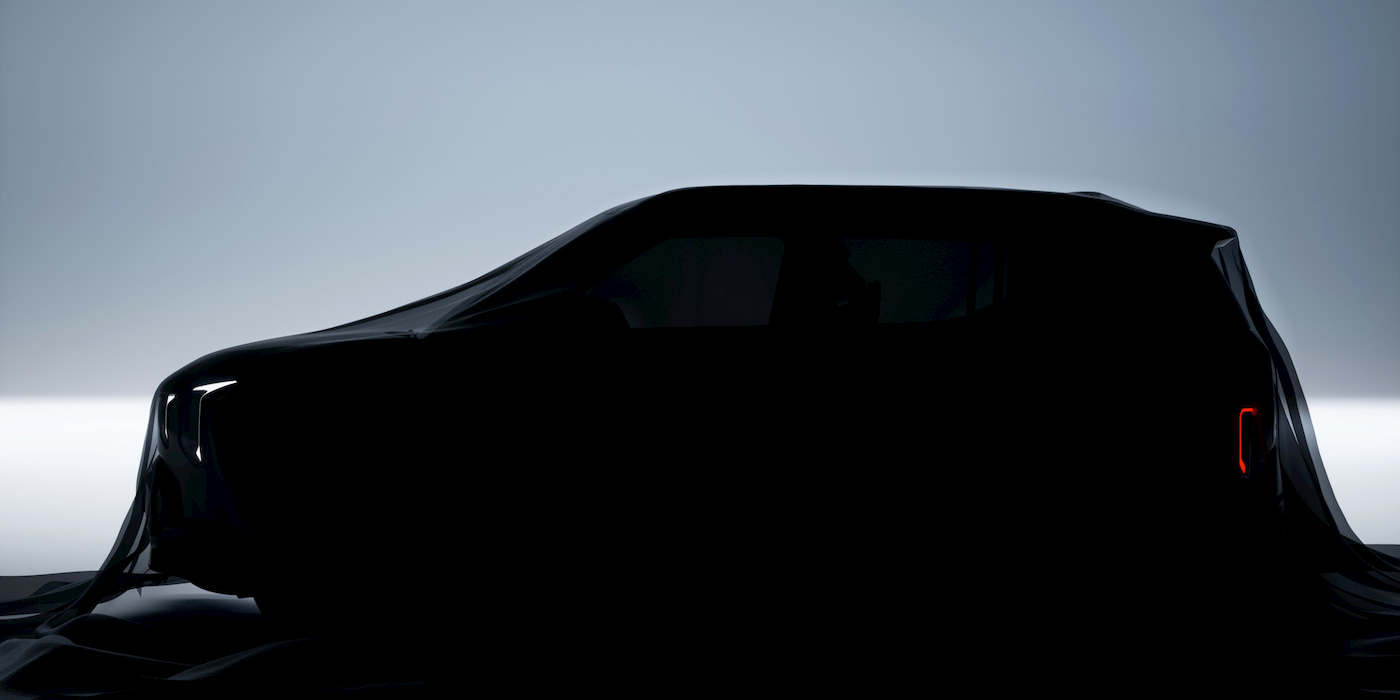
With its official debut just around the corner, Kia offered a closer look at the EV2. The new electric SUV will be Kia’s smallest, most affordable EV to date.
Kia confirms the EV2 will debut as its most affordable EV
Kia confirmed that the EV2, its new electric B-segment SUV, will debut at the Brussels Motor Show next month. The EV2 will sit below the EV3 as Kia’s new entry-level electric car.
“With the EV2, we reaffirm our commitment to make electric mobility truly accessible to a broader audience – without compromise,” Kia Europe president and CEO, Marc Hedrich, said on Tuesday.
The EV2 will be built at Kia’s sole European manufacturing plant in Zilina, Slovakia, to speed up production and deliveries.
Designed, developed, and soon to be made in Europe, Kia is confident that the EV2 will play a “pivotal role” in the shift to cleaner, more sustainable travel.
Although it’s the smallest EV in its lineup, Kia promises it won’t feel like it when you’re inside. The interior design is inspired by “a picnic in the city,” according to Kia, with flexible seating and smart storage options that can open up to create a retreat from the busy city life.


Kia has yet to reveal prices or final specs, but given the EV3 is around 4,300 mm (169.3″) long, the EV2 is expected to be slightly shorter at about 4,000 mm (157″).
That’s about the length of the Hyundai Inster (3,825 mm). However, previous spy shots show the EV2 has a more upright stance than the Inster, closer to Kia’s larger SUVs, like the EV9 and EV5.
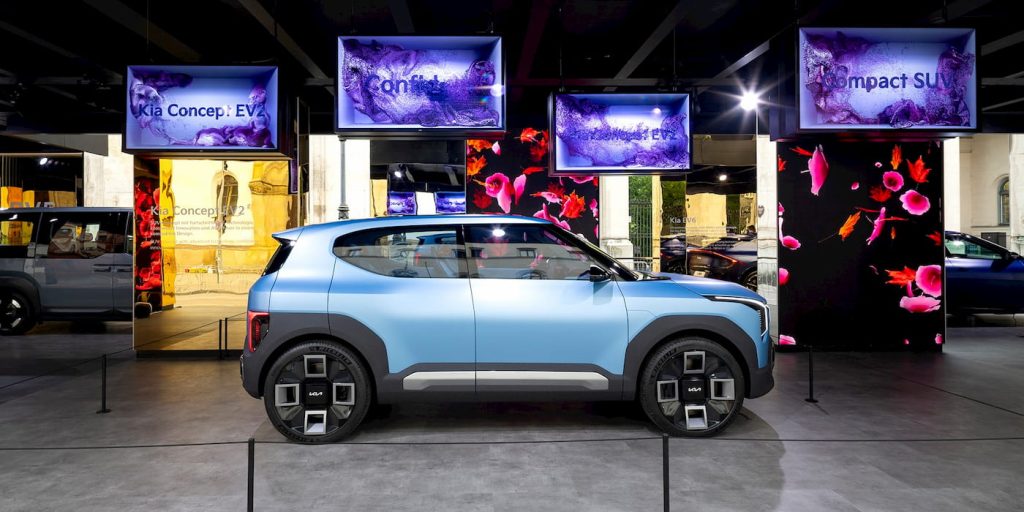
The EV3 is on sale in Europe, starting at about €36,000 ($42,000), so EV2 prices will likely start at closer to €30,000 ($35,000).
Based on Hyundai’s E-GMP platform, the Kia EV3 is available with 58.3 kWh and 81.4 kWh battery options, providing a WLTP range of 410 km (255 miles) and 560 km (348 miles), respectively. The EV2 is likely to be offered with similar battery pack options.
Kia will unveil the EV2 during a press conference on Friday, January 9, 2026, starting at 10:40 am (CET). Check back for more info leading up to the event. We’ll keep you updated with the latest.
FTC: We use income earning auto affiliate links. More.

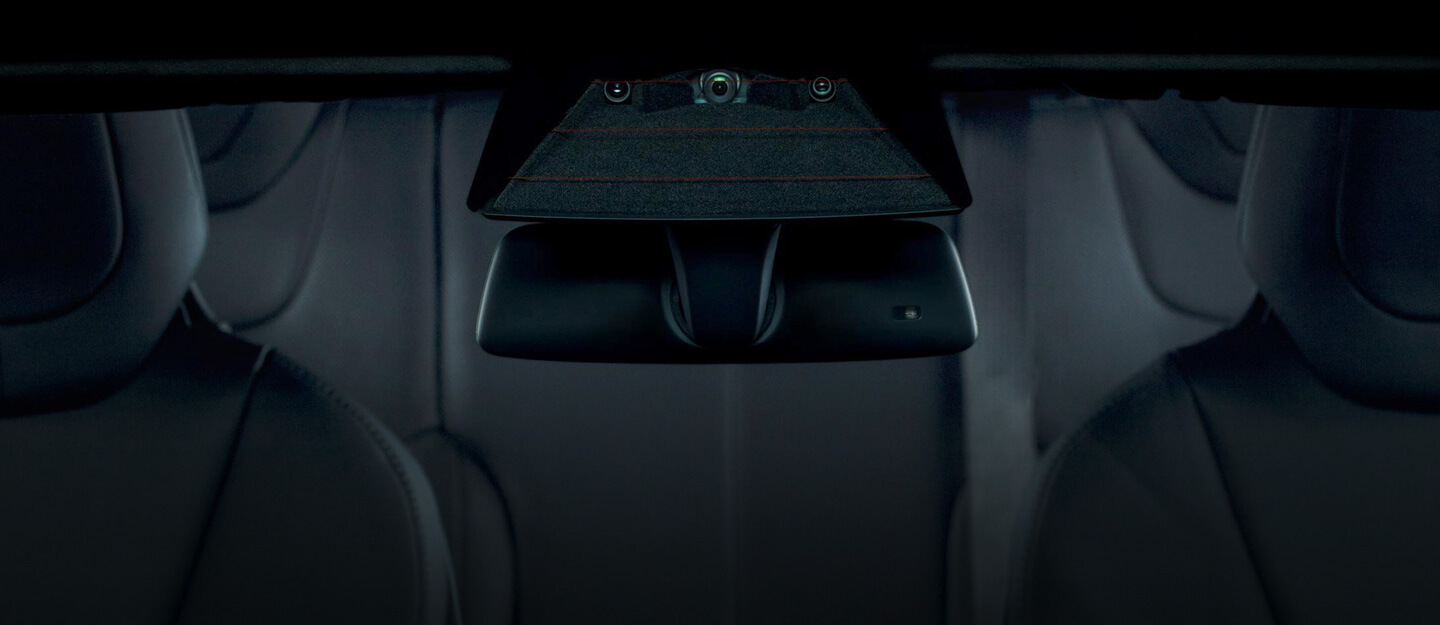
Tesla appears to be preparing to introduce yet another new camera sensor to its hardware suite, according to code found in the automaker’s latest firmware. While hardware improvements are generally good news, this latest discovery adds to the mounting evidence that Tesla is continuously moving the goalposts for self-driving, potentially leaving millions of owners with “older” hardware in the dust… again.
The discovery comes from longtime Tesla hacker and researcher @greentheonly, who frequently digs into Tesla’s software updates to find unannounced features and hardware changes.
According to Green, Tesla’s firmware now references a new sensor model: IMX00N.
Looks like Tesla is changing (upgrading?) cameras in (some?) new cars produced.
Where as HW4 to date used exterior cameras with IMX963, now they (might potentially) have something called IMX00N.
This would ostensibly replace or complement the Sony IMX963 sensors currently used in Hardware 4.0 (AI4) vehicles. The IMX963 is the 5-megapixel sensor that replaced the 1.2-megapixel Aptina sensors found in Hardware 3 cars just two years ago.
We don’t have the specifications for the “IMX00N” yet. It could be a custom Sony SKU for Tesla or a placeholder name for a new image sensor.
Here are the specs comparisons between the camera sensors in HW3 and AI4 Tesla vehicles:
| Specification | Hardware 3.0 (HW3) | Hardware 4.0 (AI4) | Technical Implication |
| Sensor Resolution | 1.2 Megapixels (1280 × 960) | ~5 Megapixels (2896 × 1876) | 4X Data Density. Allows detection of objects at >300m and digital cropping. |
| Sensor Model | Onsemi AR0136AT | Sony IMX490 (Estimated) | Flagship Automotive Sensor. Simultaneous HDR & LFM. |
| Color Filter Array | RCCC (Red-Clear-Clear-Clear) | RGGB (Red-Green-Green-Blue) | Semantic Fidelity. True color perception for signs, lights, and road markings. |
| Dynamic Range | ~110 dB | >120 dB (Single Exposure) | Contrast Mastery. No motion artifacts in tunnel exits or night driving. |
| Data Interface | FPD-Link III (Likely) | GMSL2 or MIPI A-PHY | High Bandwidth. Supports uncompressed 5MP streams at high frame rates. |
| Front Cameras | 3 (Main, Narrow, Wide) | 2 (Main, Wide) | Optical Simplification. Digital zoom replaces the physical telephoto lens. |
| Lens Coating | Standard | Deep Red IR Cut / Anti-Glare | Glare Mitigation. Reduces blinding from headlights and sun. |
| Heaters | Passive (Waste Heat) | Active Heating Elements | All-Weather Resilience. Rapid defogging and de-icing. |
| Retrofit | N/A | Impossible for HW3 cars | Fleet Fragmentation. HW3 cars are permanently hardware-limited. |
Electrek’s Take
Of course, you would expect Tesla to improve its vehicles, including its sensor suite, gradually. It is a good thing in and of itself.
There are three problems with Tesla updating its hardware suite for autonomous driving:
- It promised to all owners since 2016 that their vehicles have all the required hardware to achieve “Full Self-Driving,” and at the time, CEO Elon Musk said that it would mean “unsupervised self-driving.”
- It has yet to achieve that, and it promised to offer free hardware retrofit if needed, but it has yet to offer those.
- When Tesla launches a new autonomous driving hardware suite, it rapidly puts less effort into software that works with its previous hardware suite.
If the current cameras in HW4 (let alone HW3) are sufficient for Level 4 autonomy, why is Tesla spending resources to integrate a new sensor? The most logical answer is that the current sensors have limitations, whether it’s glare handling, low-light performance, or resolution, that limit the system’s reliability.
If that’s the case, can we expect Tesla to update all the vehicles that are supposed to have the hardware to reach level 4? I wouldn’t bet on it.
CEO Elon Musk already admitted that the HW3 computer won’t support it back in January 2025, almost a year ago, and instead of announcing a solution, Tesla owners were only promised a “mini version” of FSD v14, which itself is not the promised unsupervised self-driving.
At this point, it’s hard to put hope on Tesla doing the right thing here.
FTC: We use income earning auto affiliate links. More.
-
 Sports2 years ago
Story injured on diving stop, exits Red Sox game
-
 Sports3 years ago
‘Storybook stuff’: Inside the night Bryce Harper sent the Phillies to the World Series
-
 Sports2 years ago
Game 1 of WS least-watched in recorded history
-
 Sports3 years ago
Button battles heat exhaustion in NASCAR debut
-
 Sports3 years ago
MLB Rank 2023: Ranking baseball’s top 100 players
-
Sports4 years ago
Team Europe easily wins 4th straight Laver Cup
-
 Environment3 years ago
Japan and South Korea have a lot at stake in a free and open South China Sea
-
 Environment1 year ago
Here are the best electric bikes you can buy at every price level in October 2024