

Tax on wines and spirits increases from today, but some good news if you’re going to the pub for a pint


Wine and gin drinkers will have to shell out more from today as alcohol taxes rise.
The shake-up aims to encourage drinkers to cut back by taxing all alcohol based on its strength, rather than the previous categories of wine, beer, spirits and ciders.
The increase will see duty rise by 44p on a bottle of wine – something announced a few months ago in the budget.
When combined with VAT, the real increase per bottle will be 53p, the Wine and Spirit Trade Association (WSTA) said.
Cost of living – latest: Scale of housing market downturn
Chancellor Jeremy Hunt said in March that a freeze on alcohol duty would end on 1 August and increase in line with the Retail Price Index measure of inflation, which was 10.7% last month.
All types of tipple are therefore affected.
Duty on an 18% cream sherry will go up from £2.98 to £3.85.
Combined with VAT, it adds up to an increase of more than £1 a bottle, while a bottle of port will go up by more than £1.50.
The total tax on a bottle of gin or vodka will rise by about 90p.
For beer drinkers, Mr Hunt is cutting the duty on draught pints across the UK by 11p.
It is seen as a measure designed to boost pubs, many of which have been closing.

Prime Minister Rishi Sunak hailed the move as beneficial to “thousands of businesses across the country”.
However, the British Beer and Pub Association said brewers will pay 10.1% more tax on bottles and cans of beer from Tuesday.
It means duty will make up about 30% of the cost of a 500ml bottle.
Scotch Whisky Association director of strategy Graeme Littlejohn described the 10.1% duty increase as a “hammer blow for distillers and consumers”.
He warned: “Pubs and other on-trade businesses are about far more than beer and cider.”
Read more:
Food price inflation slows to lowest level this year
Consumer borrowing hits five-year high
The Treasury has said that more than 38,000 UK pubs will benefit from tax relief that effectively freezes or cuts the alcohol duty on beer poured from tap from Tuesday.
Mr Hunt said: “British pubs are the beating heart of our communities and as they face rising costs, we’re doing all we can to help them out. Through our Brexit Pubs Guarantee, we’re protecting the price of a pint.
“The changes we’re making to the way we tax alcohol catapults us into the 21st century, reflecting the popularity of low alcohol drinks and boosting growth in the sector by supporting small producers financially.”

Crypto companies seeking a US federal bank charter should be treated no differently than other financial institutions, says Jonathan Gould, the head of the Office of the Comptroller of the Currency (OCC).
Gould told a blockchain conference on Monday that some new charter applicants in the digital or fintech spaces could be seen as offering novel activities for a national trust bank, but noted “custody and safekeeping services have been happening electronically for decades.”
“There is simply no justification for considering digital assets differently,” he added. “Additionally, it is important that we do not confine banks, including current national trust banks, to the technologies or businesses of the past.”
The OCC regulates national banks and has previously seen crypto companies as a risk to the banking system. Only two crypto banks are OCC-licensed: Anchorage Digital, which has held a charter since 2021, and Erebor, which got a preliminary banking charter in October.
Crypto “should have” a way to supervision
Gould said that the banking system has the “capacity to evolve from the telegraph to the blockchain.”
He added that the OCC had received 14 applications to start a new bank so far this year, “including some from entities engaged in novel or digital asset activities,” which was nearly equal to the number of similar applications that the OCC received over the last four years.

“Chartering helps ensure that the banking system continues to keep pace with the evolution of finance and supports our modern economy,” he added. “That is why entities that engage in activities involving digital assets and other novel technologies should have a pathway to become federally supervised banks.”
Gould brushes off banks’ concerns
Gould noted that banks and financial trade groups had raised concerns about crypto companies getting banking charters and the OCC’s ability to oversee them.
Related: Argentina weighs letting traditional banks trade crypto: Report
“Such concerns risk reversing innovations that would better serve bank customers and support local economies,” he said. “The OCC has also had years of experience supervising a crypto-native national trust bank.”
Gould said the regulator was “hearing from existing national banks, on a near daily basis, about their own initiatives for exciting and innovative products and services.”
“All of this reinforces my confidence in the OCC’s ability to effectively supervise new entrants as well as new activities of existing banks in a fair and even-handed manner,” he added.
Legal Panel: Crypto wanted to overthrow banks, now it’s becoming them in stablecoin fight

The US Commodity Futures Trading Commission has issued updated guidance for tokenized collateral in derivatives markets, paving the way for a pilot program to test how cryptocurrencies can be used as collateral in derivatives markets.
Collateral in derivatives markets serves as a security deposit, acting as a guarantee to ensure that a trader can cover any potential losses.
The digital asset pilot, announced by CFTC acting chairman Caroline Pham on Monday, will allow futures commission merchants (FCM) — a company that facilitates futures trades for clients — to accept Bitcoin (BTC), Ether (ETH) and Circle’s stablecoin USDC (USDC) for margin collateral.
The CFTC pilot is another step toward integrating crypto into regulated markets, and Circle CEO Heath Tarbert said it will also protect customers, reduce settlement frictions and assist with risk reduction.
Pham said in a statement that the pilot program also “establishes clear guardrails to protect customer assets and provides enhanced CFTC monitoring and reporting.”
As part of the pilot, participating FCMs will be subject to strict reporting criteria, which require weekly reports on total customer holdings and any significant issues that may affect the use of crypto as collateral.

Updated CFTC guidance for tokenized assets
The CFTC’s Market Participants Division, Division of Market Oversight, and Division of Clearing and Risk also issued updated guidance on the use of tokenized assets as collateral in the trading of futures and swaps.
The guidance covers tokenized real-world assets, including US Treasury’s money market funds, and topics such as eligible tokenized assets, legal enforceability, segregation and control arrangements.
Pham said in an X post on Monday that the “guidance provides regulatory clarity and opens the door for more digital assets to be added as collateral by exchanges and brokers, in addition to US Treasurys and money market funds.”
The Market Participants Division also issued a “no-action position” on specific requirements regarding the use of payment stablecoins as customer margin collateral and the holding of certain proprietary payment stablecoins in segregated customer accounts.
A CFTC Staff Advisory that restricted FCMs’ ability to accept crypto as customer collateral, Staff Advisory 20-34, was also withdrawn because it is “outdated and no longer relevant,” in part due to the GENIUS Act.
Crypto execs back CFTC move
Several crypto executives applauded the move by the CFTC.
Katherine Kirkpatrick Bos, the general counsel at blockchain company StarkWare, said the use of “tokenized collateral in the derivatives markets is MASSIVE.”
Related: US regulators dismiss SEC-CFTC merger rumors, move to dispel crypto ‘FUD’
“Atomic settlement, transparency, automation, capital efficiency, savings. Feels abrupt but who recalls the tokenization summit in 2/24, a glimmer of hope in the darkness,” she said.
Coinbase chief legal officer Paul Grewal also supported the action, calling Staff Advisory 20-34 a “concrete ceiling on innovation.”
“It relied on outdated info, went well beyond the bounds of regulation and frustrated the goals of the PWG.”

Salman Banaei, the general counsel at layer-1 blockchain the Plume Network, said it was a “major move” by the CFTC, and another push toward wider adoption.
“This is a step toward the use of onchain infra to automate settlement for the biggest asset class in the world: OTC derivatives, swaps,” he added.
Magazine: XRP’s ‘now or never’ moment, Kalshi taps Solana: Hodler’s Digest, Nov. 30 – Dec. 6
Politics
Rayner’s combative, defiant performance in Commons signals to Labour MPs she’s here to make a comeback and shows them what they’ve been missing
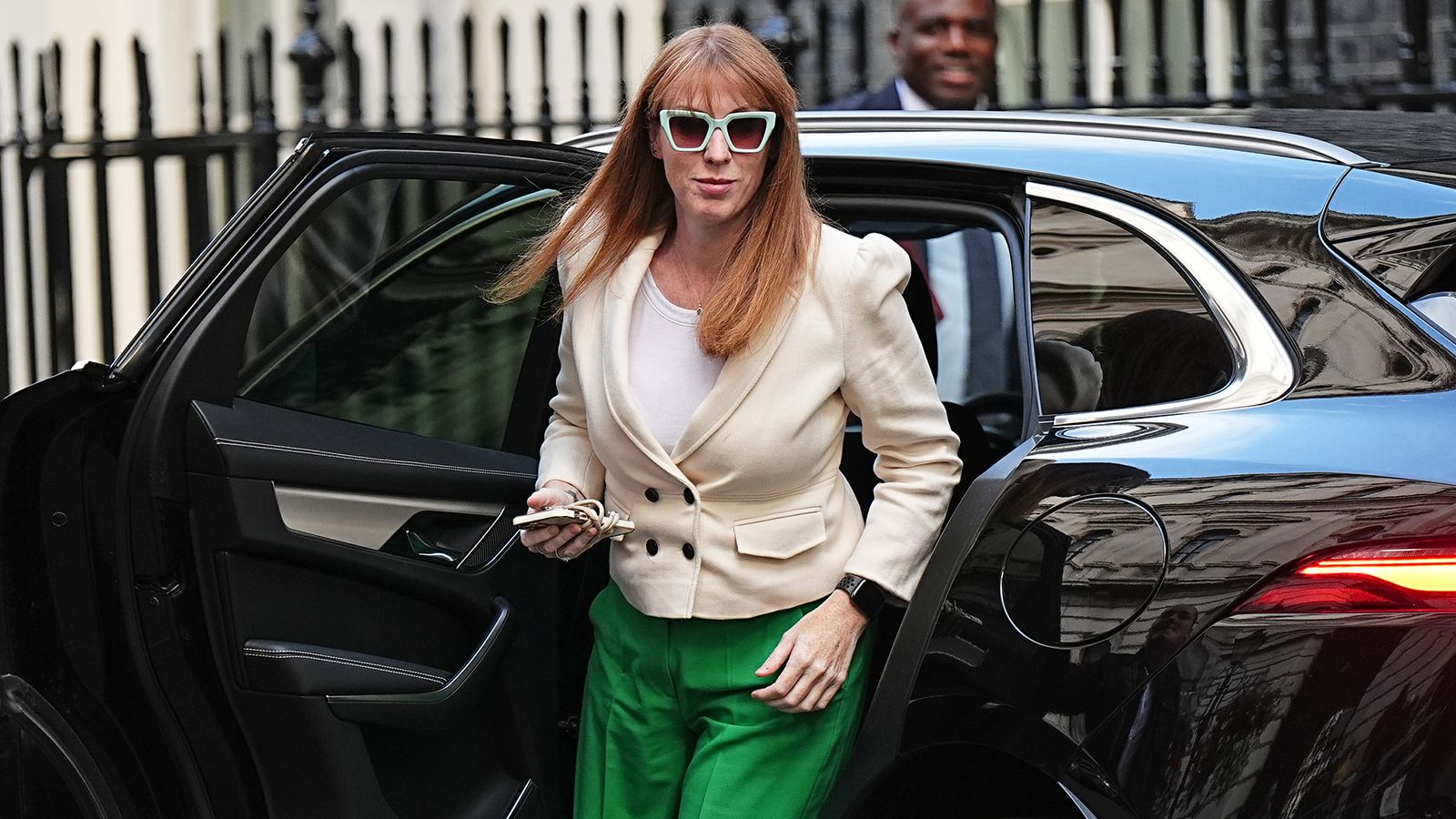
The day after Sir Keir Starmer said he wanted Angela Rayner back in the cabinet, she showed Labour MPs what they’ve been missing.
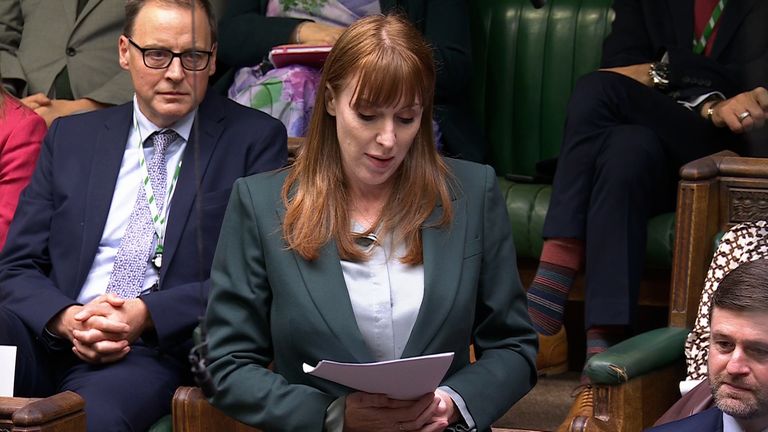
The former deputy prime minister delighted Labour backbenchers with a powerful Commons speech defending her workers’ rights legislation on Monday evening.
With the House of Lords locked in a battle of parliamentary “ping pong” with MPs, she told ministers: “Now is not the time to blink or buckle.”
Her very public intervention came amid claims that her next move has the Labour Party on tenterhooks and that she’s the favourite to succeed Sir Keir if she wants the job.
And her speech, delivered from notes and clearly meticulously prepared, appeared to send a message to Labour MPs: I’m here to make a comeback.
The government’s flagship Employment Rights Bill was championed by Ms Rayner when she was deputy PM, in the face of bitter opposition from the Conservatives.
In a bid to end the deadlock with the Lords, ministers have backed down on unfair dismissal protection from day one, proposing a compromise of six months.
Backing the compromise, brokered with the TUC, Ms Rayner said: “I know ministers had faced difficult decisions and difficult discussions with the employers and worker representatives.
“But I strongly believe that the work that has been done has been necessary, and we should be able to move forward now.”
Could Rayner come back?
Attacking the upper chamber for delaying the legislation, she said: “There is now no more time to waste.
“Vested interests worked with the Tories and the Lib Dems and, cheered on by Reform and backed by the Greens, to resist the manifesto on which we were elected.
“And now there can be no excuses. We have a mandate for a new deal for working people, and we must, and we will deliver it.
And she concluded: “It has been a battle to pass this bill, but progress is always a struggle that we fought for. Its passage will be a historic achievement for this Labour government.
Angela Rayner’s resignation speech
“It will benefit working people now and into the future. Now is not the time to blink or buckle. Let’s not waste a minute more. It’s time to deliver.”
It was the sort of fighting talk and defiance of the government’s opponents that will have cheered up Labour MPs and boosted her hopes of a comeback and even a leadership bid.
It came as speculation over Sir Keir’s future grows more frenzied by the day, with claims that even some of his own supporters have begun the hunt for his successor.
The thinktank that ran his leadership campaign in 2020, Labour Together, is reported to be canvassing party members on candidates to replace him.

Wes Streeting and Angela Rayner.
There was even a claim last week that allies of Wes Streeting were sounding out Labour MPs about a pact with Ms Rayner and a joint ticket for the leadership.
The health secretary dismissed that claim as a “silly season story”, while a Rayner ally said: “There’s no vacancy and there’s no pact”. They added that she will not “be played like a pawn”.
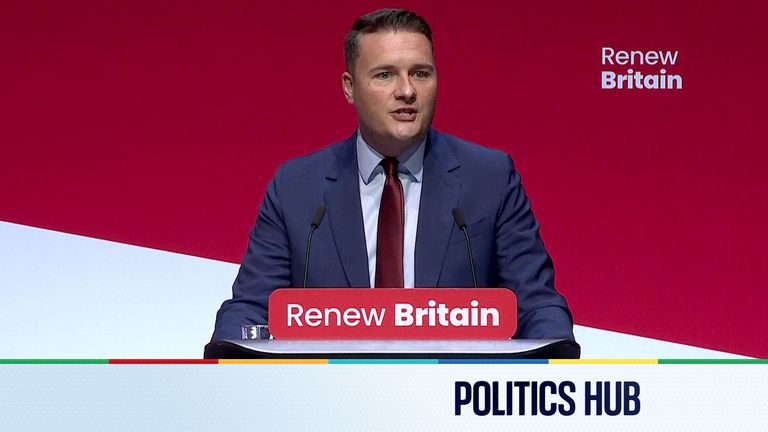
Mr Streeting did, however, start speculation himself when he said in his Labour conference speech: “We want her back. We need her back.”
Fuelling more speculation, Sir Keir went further than he had previously on Sunday, when he was asked in an Observer interview if he missed her and replied; “Yes, of course I do. I was really sad that we lost her.”
And asked if she would return to the cabinet, the prime minister said: “Yes. She’s hugely talented.”
‘Angela Rayner, this achievement is yours.’
Sir Keir also described Ms Rayner, who left school at 16 without any qualifications, as “the best social mobility story this country has ever seen”.
But a swift return to the cabinet would be hugely controversial, because the PM’s ethic adviser, Sir Laurie Magner, ruled that she breached the ministerial code by underpaying stamp duty when she bought a flat.
But she has been linked to speculation about possible efforts to remove Sir Keir if – as predicted – Labour performs badly in the Scottish, Welsh and local elections next May.
Her supporters also claim she will eventually be cleared by HMRC over her stamp duty breach, clearing the way for her to come back.
And her latest speech – combative, defiant and yet loyal – will have boosted her hopes, and reminded Labour MPs what they’ve missed since she quit in September.
-
 Sports2 years ago
Story injured on diving stop, exits Red Sox game
-
 Sports3 years ago
‘Storybook stuff’: Inside the night Bryce Harper sent the Phillies to the World Series
-
 Sports2 years ago
Game 1 of WS least-watched in recorded history
-
 Sports3 years ago
Button battles heat exhaustion in NASCAR debut
-
 Sports3 years ago
MLB Rank 2023: Ranking baseball’s top 100 players
-
Sports4 years ago
Team Europe easily wins 4th straight Laver Cup
-
 Environment3 years ago
Japan and South Korea have a lot at stake in a free and open South China Sea
-
 Environment1 year ago
Here are the best electric bikes you can buy at every price level in October 2024