

Grails’ lucky dip of famous NFT artists, new hope for PFP holders: NFT Collector

Grails by PROOF Season IV
Collecting art is historically not just about the art itself but who the artist is and the story behind the piece. The emergence of NFTs as a way to attribute provenance to digital objects has seen an explosion of interest in the past few years, even if that’s currently seeing something of a lull.
The work of artists like Alotta Money, Josie Bellini, Trevor Jones, Coldie, Snowfro, Beeple, and collections such as Fidenzas and Ringers, show that digital art is here to stay, even as many pockets of the NFT space are reportedly down 95% from all-time highs.


But with the artists playing such an important role in the market, it’s been intriguing to see Grails by PROOF flip this paradigm on its head by abstracting away who the artist is. A gamification mechanic reveals between 20–25 pieces of art to 1,000 whitelisted collectors prior to a minting window — but the catch is no one knows who the artists are behind each respective piece.
This creates a special dynamic that introduces a different type of speculation about who the artist could be behind each work. Some collectors mint a piece they like purely based on their assessment of the art itself, while others take a punt on their ability to guess who the artist might be behind.

Grails was the brainchild of PROOF co-founder Kevin Rose, with the inaugural season launched in February 2022 and the first-ever reveal on March 6, 2022. Eli Scheinman, head of art at PROOF, explains the concept aims:
“To engage collectors in a way that abstracted away some of the financialization of collecting NFTs that was, and still is, in many ways so rampant. By taking away an artist’s name, it really demanded or challenged all of the collectors to really go deep and spend a lot of time with each of these artworks.”
The three seasons so far have attracted some of the biggest names in NFT land, including Snowfro, Larva Labs, Tyler Hobbs, Claire Silver, Dmitri Cherniak, Deafbeef, Emily Xie, Justin Aversano, Alpha Centauri Kid, Josie Bellini and Matt Kane. Plus, names that are lesser known for their art but have celebrity status and are involved with the NFT space, like Gary Vaynerchuk, Alexis Ohanian and Tim Ferriss.

Curtain coming up on Season IV
Season IV (4) of Grails is set for reveal on Aug. 11, with Scheinman continuing to experiment with the mechanics and double down on the storytelling and production value of the reveal.
“We try to maintain that sense of it being special and unique, so that means we’re constantly trying to iterate and improve the experience in new ways,” Scheinman says, explaining that season three had introduced the notion of a series, enabling a single artist to contribute multiple unique pieces as part of a collection.
“In season four, we’re taking that a step further in that three of the five series that are in this exhibition are true long-form generative projects using the Art Blocks engine. Those outputs, when minted, are really generated live in that moment. Whereas in the past, these were pre-curated outputs, meaning an artist would provide us with the files ahead of time, and then we would distribute those on mint.”
“I think storytelling is fundamental to connecting through a piece of artwork, and the way that we do Grails, for example, is really this fun way of playing with that notion in that you go from zero context to 100% context.”
Watch previous Grails reveals: Season 1 / Season 2 / Season 3
Read also
What’s hot in NFT art markets
Notable sales came from Autoglyphs, Alpha Centauri Kid and Drifter Shoots.
We also saw Chinese contemporary artist Yue Minjun release his first NFT collection titled ‘Kingdom of the Laughing Man. The 999 pieces minted for between 0.35–0.39 ETH and now sit at a 0.55 ETH floor on OpenSea.


Read also
Luca Netz claps back at idea PFP holders are doomed
Deep into an NFT bear market where volumes have tested new 12-month lows, the question that persistently gets asked by PFP collections holders is, “How does this drive value back to holders?”
Luca Netz, CEO of Pudgy Penguins, clapped back at a tweet suggesting PFP holders have no stake in the enterprise and outlined why he believes PFP holders are not doomed if they pick the right project. Netz explained that “building a globally recognized brand is the best path to accruing value for the NFT holder.”

Brands that are striving to build household IP, such as Pudgy Penguins, VeeFriends and Doodles, all are diversifying their brand offerings, including real-world offerings, ensuring their IP has many more touch points outside of the NFT ecosystem.

From VeeFriends physical collector cards and multiple collaborations, including their recent announcement with Reebok for physical sneakers, to Doodles last week announcing its partnership with Crocs, to Pudgy Penguins showing up at Comic Con in San Diego in July.
Having holders to appease can be both a gift and a curse, but some founders are navigating this terrain better than others; Netz is one of those. The serial entrepreneur, who has done over $500 million in consumer packaged goods sales, took over the Pudgy project after issues with the original founding team and has arguably threaded the needle better than others.
It still remains to be seen how Netz’s masterplan plays out, but this well-thought-out thread articulates a future that many NFT collectors could get behind, validated by the 1,000+ bookmarks the thread already has.
Amazon Prime dips its toe into the Web3 gaming waters with Mojo Melee
In a small preview of what is to come, Amazon Prime has partnered with Mojo Melee to give away NFTs for its Prime subscribers.
The auto battler game is built on Polygon and played via web browsers and Android devices. The offer for Prime subscribers is set to expire in just under three weeks.
Tweet of the week
Subscribe
The most engaging reads in blockchain. Delivered once a
week.


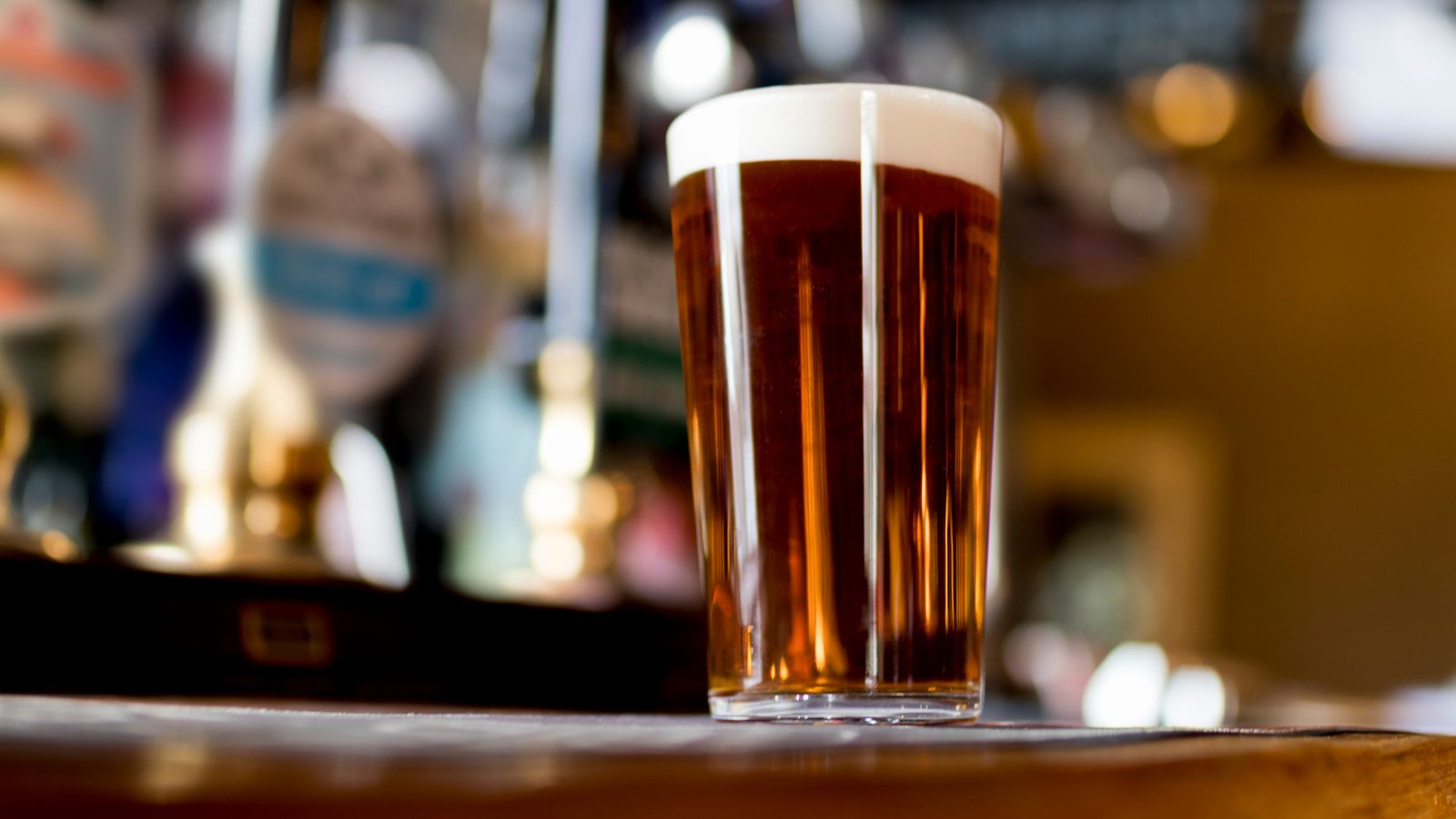
A millionaires’ playground, Poole in Dorset boasts some of the most expensive properties in the UK, and has been called Britain’s Palm Beach.
Away from the yachts and the mansions of Sandbanks, however, Poole is also a beer drinkers’ paradise, with 58 pubs in the parliamentary constituency alone.
But now many of Dorset’s pub landlords have joined a bitter backlash against rises in business rates of up to £30,000 in Rachel Reeves’s November budget.
Across the UK, it is claimed up to 1,000 publicans have even banned Labour MPs from their pubs, after the chancellor axed a 40% rates discount, introduced during COVID, from next April.
The row over the rises, brewing since the budget, came to a head in a clash between Kemi Badenoch and Sir Keir Starmer in the final Prime Minister’s Questions of 2025.
“He gave his word that he would help pubs,” said the Tory leader.
“Yet they face a 15% rise in business rates because of his budget. Will he be honest and admit that his taxes are forcing pubs to close?”
The PM replied that the temporary relief introduced during COVID – a scheme the Conservatives put in place and Labour supported, he said – had come to an end.
“But it was always a temporary scheme coming to an end,” he said.
“We have now put in place a £4bn transitional relief.”
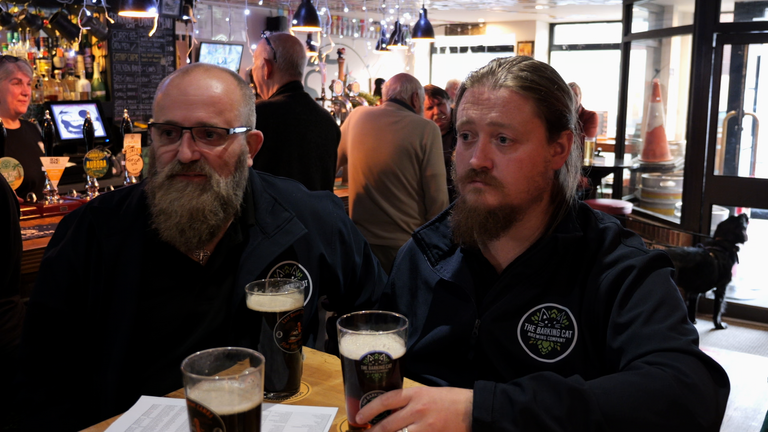
Mark and Michael Ambrose, father and son co-landlords of The Barking Cat, said the increases are a ‘pub destroyer’
But in the Barking Cat Ale House in Poole, facing an increase in business rates of nearly £9,000 a year, the father and son co-landlords fear the rises could mean last orders for many pubs.
“We’re sort of in the average area at 157%, but we’ve got a lot of local pubs that are increasing by 600%, and another one by 800%,” Ambrose senior, Mark, told Sky News.
“It’s a pub destroyer. Pubs can’t survive these kinds of increases. It’s not viable. Most pubs are just about scraping by anyway. If you add these massive increases your profit margins are wiped out.
“We struggle as it is. You can’t have that kind of increase and expect businesses to succeed.
“Fortunately, the customers understand. But they still don’t want to have to spend an extra 30 or 50 pence a pint.”
Son Michael added: “It’s all back to front. It’s really these bigger pub companies and supermarkets that need to be facing increased taxes. We can’t handle them. They can.”
Michelle Smith, landlady of the Poole Arms, the oldest pub on the town’s quay, dating back to 1635, said: “Our rates per value is due to go up £9,000 in April, so it’s quite a deal.”
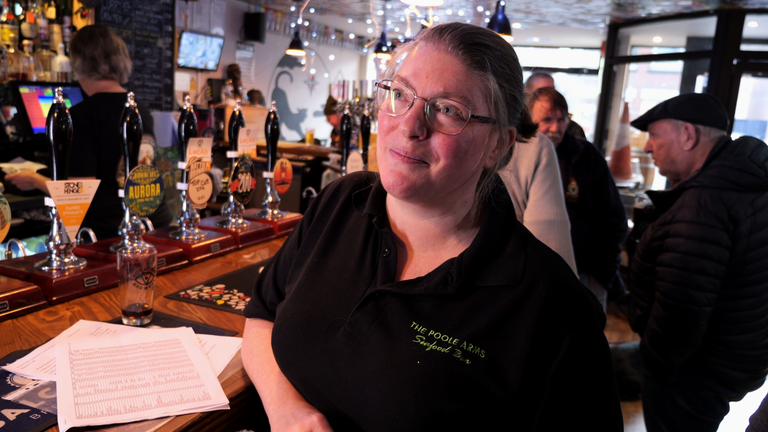
Michelle Smith, landlady of The Poole Arms, said all her prices are going up
“And we had a rates increase just gone as well,” she added. “So our rates had already increased over £1,000 a month last April. So another hit is quite considerable really.
“Prices definitely have to go up with all the different price increases that we’ve got throughout: business rates, wage increases, the beer goes up from the breweries. Everything is going up.”
Backing the publicans, Neil Duncan-Jordan, who became Poole’s first ever Labour MP last year, has written to the chancellor demanding a rethink. He said he is prepared to vote against the tax rise in the Commons.
“They’ve got to listen,” he told Sky News.
“They’ve got to listen to the high street, to publicans, people who run social clubs and listen to problems that they’re facing and the impact that these changes have made.”
Mr Duncan-Jordan said he was prepared to support an amendment to the Finance Bill, which turns the budget into law and had its second reading in the Commons last week.
Despite being suspended for four months for rebelling against welfare cuts earlier this year, he said: “I was discussing this with some MPs just this morning and I’ll be happy to support those. Sometimes you just have to say what you think is right.”
As chancellor, Ms Reeves has regularly raised a glass to pubs and promised to protect them from rising costs.
But Sir Keir has faced the wrath of a publican before, when he was thrown out of a pub in Bath during COVID by an anti-lockdown landlord.
This time, without a U-turn by the chancellor on the business rates increases, pub landlords fear the government has them over a barrel.



The US Commodity Futures Trading Commission has officially undergone a change in leadership, with acting chair Caroline Pham saying she will leave the agency on Monday and Mike Selig being sworn in as chair.
Pham, who had been serving as the CFTC’s acting chair since January and its sole commissioner since August, said on Monday that it would be her last day at the agency.
Meanwhile, the CFTC confirmed that Selig was sworn in as the agency’s 16th chairman on Monday after being nominated for the role by President Donald Trump on Oct. 27 and confirmed by the Senate on Thursday.
Pham’s departure leaves Selig as the CFTC’s sole commissioner. He is widely seen as pro-crypto and previously served as the chief counsel of the Securities and Exchange Commission’s Crypto Task Force.
Selig to continue positive momentum in crypto oversight
Selig will now serve a term that will expire in April 2029, and has previously vowed to support growth in innovative technologies such as crypto and blockchain by avoiding a so-called “regulation by enforcement” approach.
“I’m grateful for the confidence President Trump has placed in me and for the opportunity to lead the CFTC at this pivotal time,” Selig said.
“We are at a unique moment as a wide range of novel technologies, products, and platforms are emerging, retail participation in the commodity markets is at an all-time high, and Congress is poised to send digital asset market structure legislation to the President’s desk, cementing the US as the Crypto Capital of the World.”
On Monday, White House crypto czar David Sacks said Selig and SEC chair Paul Atkins were a “dream team to define clear regulatory guidelines.”
Pham shifts to crypto after steering CFTC
Pham has long said she would leave the CFTC once Congress confirmed someone to lead the agency, and on Wednesday, MoonPay confirmed earlier reports that Pham was headed to the crypto fintech company.
Pham’s time as acting chair saw her take a proactive approach to supporting crypto regulation.
Related: Wall Street’s bid on crypto dominated 2025 but what’s the demand outlook for 2026?
Pham said in her departing statement that the CFTC had “refocused on our mandate to promote responsible innovation and fair competition as the CFTC prepares to take on expanded oversight of new markets and new products like digital assets, crypto, and prediction markets.”
“I am thrilled to welcome Michael Selig as the 16th Chairman of the CFTC. His pragmatic, common-sense approach will ensure the CFTC strikes the right balance of innovation and market integrity,” she added.
Magazine: Meet the onchain crypto detectives fighting crime better than the cops
-
 Sports2 years ago
Story injured on diving stop, exits Red Sox game
-
 Sports3 years ago
‘Storybook stuff’: Inside the night Bryce Harper sent the Phillies to the World Series
-
 Sports2 years ago
Game 1 of WS least-watched in recorded history
-
 Sports3 years ago
Button battles heat exhaustion in NASCAR debut
-
 Sports3 years ago
MLB Rank 2023: Ranking baseball’s top 100 players
-
Sports4 years ago
Team Europe easily wins 4th straight Laver Cup
-
 Environment3 years ago
Japan and South Korea have a lot at stake in a free and open South China Sea
-
 Environment1 year ago
Here are the best electric bikes you can buy at every price level in October 2024