

Hong Kong’s crypto stance: Execs weigh in on Web3 in the region

JPMorgan CEO Jamie Dimon has denied debanking customers based on their religious or political affiliation and stated that he has actually been working to change the rules surrounding debanking for over a decade.
During an interview with Fox News’ “Sunday Morning Futures” on Sunday, Dimon said his bank has cut off services to people from all walks of life, but political affiliations have never been a factor.
Devin Nunes, the chair of the president’s intelligence advisory board and CEO of Trump Media, alleges the company was debanked by JPMorgan and that it was among more than 400 Trump‑linked individuals and organizations that had banking records subpoenaed by special counsel Jack Smith as part of an investigation.
Jack Mallers, the CEO of the Bitcoin Lightning Network payments company Strike, also accused JPMorgan of closing his personal accounts without explanation last month, which sparked concerns about another Operation Chokepoint 2.0.
Houston Morgan, the head of marketing at non-custodial crypto trading platform ShapeShift, shared a similar story in November.

“People have to grow up here, OK, and stop making up things and stuff like that,” Dimon said. “I can’t talk about an individual account. We do not debank people for religious or political affiliations.
“We do debank them. They have religious or political affiliations. We debank people who are Democrats. We debank people who are Republicans. We have debanked different religious folks. Never was that for that reason.”
Dimon said he wants debanking rules to change
Crypto firms have been facing account closures and denials of banking services for years, and many in the industry have stated that these actions are part of a policy-driven effort to suppress the digital assets sector.
However, Dimon said he doesn’t like debanking and wants the rules around reporting requirements that can lead to debanking to change.
“I actually applaud the Trump administration, who’s trying to say that debanking is bad and we should change the rules. Well, damn it, I have been asking to change the rules now for 15 years. So change the rules.”
“It is really customer unfriendly, and we’re debanking people because of suspected things, or negative media, or all these various things,” Dimon added.
In August, US President Donald Trump signed an executive order directing banking regulators to investigate claims of debanking made by the crypto sector and conservatives.
JPMorgan made recommendations to curb debanking: Dimon
Dimon said one of the rules banks are required to follow is sharing information with the government when subpoenaed, but he also claims JPMorgan has provided recommendations to reduce reporting and instances of debanking.
Related: Republicans urge action on market structure bill over debanking claims
“We don’t give information to the government just because they ask. We’re subpoenaed. We are required by court to give it to the government. And I have been following subpoenas with this administration, the last administration, the administration before that and the one before that. And I don’t agree with a lot of it,” Dimon said.
“The government does a lot of things that can anger banks. So, let’s just take a deep breath and fix the problems, as opposed to, like, blame someone who’s put in that position,” he added.
At the same time, Dimon said both sides of politics are equal offenders when it comes to leaning on banks.
“Democratic and Republican governments have come after us both; let’s not act like this is just one side doing this. This has been going on for a long time. And we should stop militarizing the government that kind of way.”
Magazine: When privacy and AML laws conflict: Crypto projects’ impossible choice
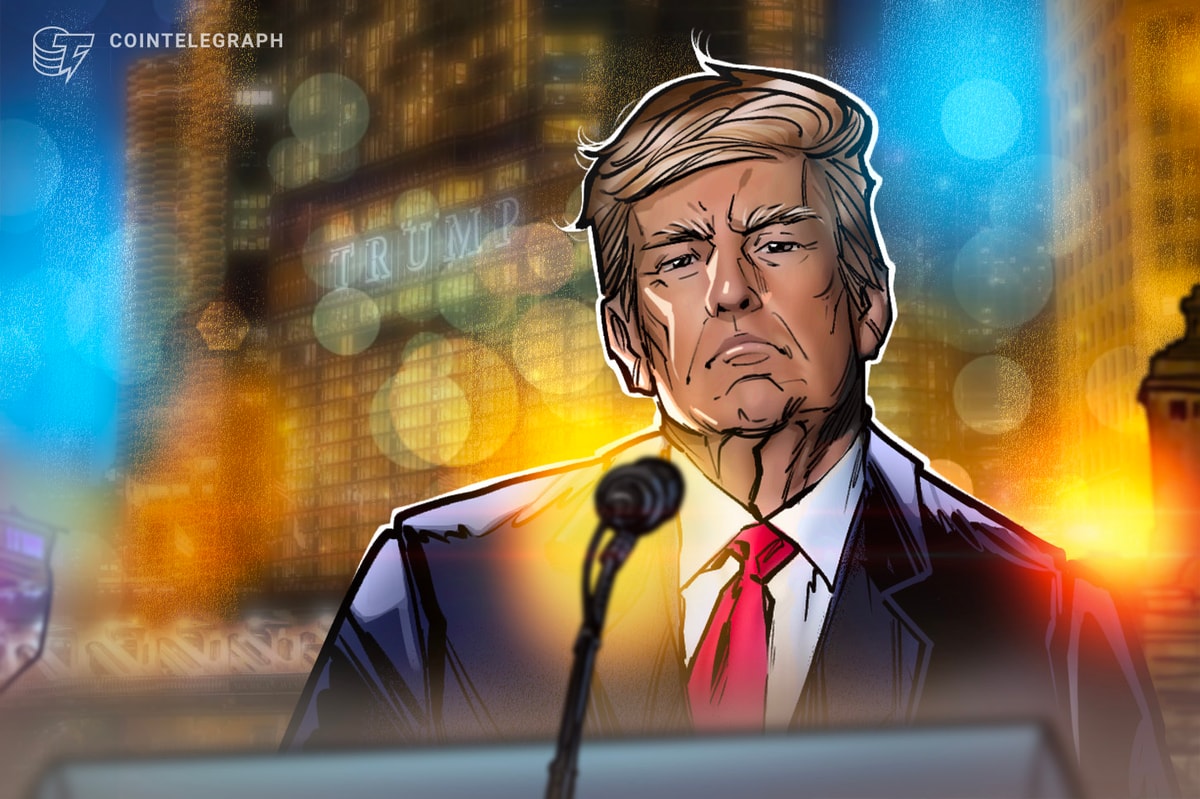
The Trump administration did not mention cryptocurrency or blockchain in its latest national security strategy, despite the industry’s growing ties to the financial system and President Donald Trump’s claim of increased competition from overseas.
Trump’s national security strategy, outlining his administration’s priorities, released on Friday, instead said the “core, vital national interests” of the US revolved around artificial intelligence and quantum computing.
“We want to ensure that US technology and US standards — particularly in AI, biotech, and quantum computing — drive the world forward,” the administration said.
The omission of crypto from the national security strategy comes despite Trump telling CBS’ 60 Minutes last month that he did not want to “have China be number one in the world in crypto” and has previously said he wants all Bitcoin (BTC) mining to take place in the US.
CIA Deputy Director Michael Ellis also said in May that crypto was “another area of technological competition where we need to make sure the United States is well-positioned against China and other adversaries.”
There is, however, one section of the document that states that Trump wants to preserve and grow “America’s financial sector dominance” by using the country’s “leadership in digital finance and innovation” to ensure market liquidity and security, which could be a hint at crypto.

Trump has pushed forward crypto policies
The Trump administration has been supportive of crypto this year, moving forward with a slew of promised policies that have led to more financial institution adoption of the technology.
Trump helped the stablecoin-regulating GENIUS Act become law and has signed executive orders creating a crypto task force and banning a central bank digital currency, while also overseeing federal agencies’ abandonment of many crypto-related enforcement actions.
Related: EU may consolidate crypto regulations, IMF warns of stablecoin risk: Global Express
The administration has also established a Bitcoin reserve and crypto stockpile, comprising forfeited digital assets, while the government is exploring “budget-neutral” methods of acquiring more.
Bitcoin traded below $90,000 over the weekend as the market digested the national security strategy document, which called on US allies to “contribute far more” to defence.
It asked NATO countries to spend 5% of their GDP, up from the current 2%, which would mean heightened government borrowing that would drive up inflation, making it harder for central banks to cut interest rates.
The Federal Reserve’s interest rate decision this week is what is driving crypto markets, with many hoping for a cut that historically spurs investors to make riskier bets.
The market is expecting interest rates to drop when the Fed meets on Tuesday and Wednesday, with CME’s FedWatch showing nearly 88.5% betting on a 25 basis point cut.
Magazine: Quitting Trump’s top crypto job wasn’t easy: Bo Hines
Politics
Young people may lose benefits if they don’t engage with help from new £820m scheme, government warns



Young people could lose their right to universal credit if they refuse to engage with help from a new scheme without good reason, the government has warned.
Almost one million will gain from plans to get them off benefits and into the workforce, according to officials.
Latest updates from the Politics Hub
Pic: iStock
It comes as the number of young people not in employment, education or training (NEET) has risen by more than a quarter since the COVID pandemic, with around 940,000 16 to 24-year-olds considered as NEET as of September this year, said the Office for National Statistics.
That is an increase of 195,000 in the last two years, mainly driven by increasing sickness and disability rates.
The £820m package includes funding to create 350,000 new workplace opportunities, including training and work experience, which will be offered in industries including construction, hospitality and healthcare.
Around 900,000 people on universal credit will be given a “dedicated work support session”.
That will be followed by four weeks of “intensive support” to help them find work in one of up to six “pathways”, which are: work, work experience, apprenticeships, wider training, learning, or a workplace training programme with a guaranteed interview at the end.
However, Work and Pensions Secretary Pat McFadden has warned that young people could lose some of their benefits if they refuse to engage with the scheme without good reason.
“Doing nothing should not be an option,” he told Sky News’ Sunday Morning with Trevor Phillips.
“If someone just took that attitude, yes, they would then be subject to, you know, the obligations that are already part of the system.”
“What I want to see is young people in the habit of getting up in the morning, doing the right thing, going to work,” he added.
“That experience of that obligation, but also the sense of pride and purpose that comes with having a job.”

Some young people on benefits will be offered job opportunities in construction. Pic: iStock
Read more from Sky News:
Child poverty strategy unveiled – but not everyone’s happy
Universal credit claimants soar by over million in a year
The government says these pathways will be delivered in coordination with employers, while government-backed guaranteed jobs will be provided for up to 55,000 young people from spring 2026, but only in those areas with the highest need.
However, shadow work and pensions secretary Helen Whately, from the Conservatives, said the scheme is “an admission the government has no plan for growth, no plan to create real jobs, and no way of measuring whether any of this money delivers results”.
She told Sky News the proposals are a “classic Labour approach” for tackling youth unemployment.
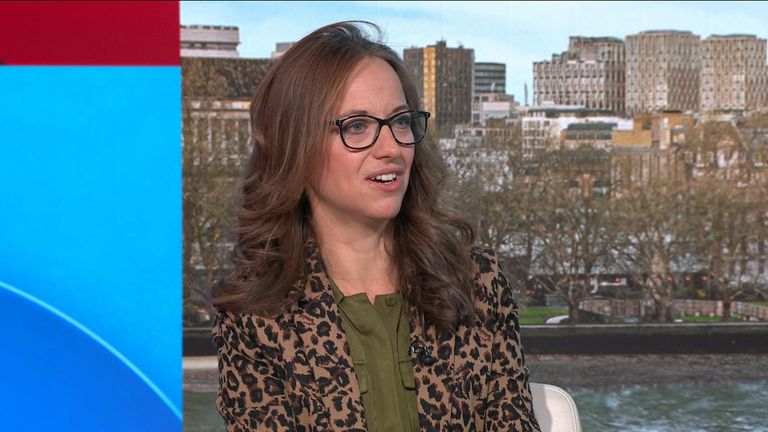
Youth jobs plan ‘the wrong answer’
“What we’ve seen today announced by the government is funding the best part of £1bn on work placements, and government-created jobs for young people. That sounds all very well,” she told Sunday Morning with Trevor Phillips.
“But the fact is, and that’s the absurdity of it is, just two weeks ago, we had a budget from the chancellor, which is expected to destroy 200,000 jobs.
“So the problem we have here is a government whose policies are destroying jobs, destroying opportunities for young people, now saying they’re going to spend taxpayers’ money on creating work placements. It’s just simply the wrong answer.”
Ms Whately also said the government needs to tackle people who are unmotivated to work at all, and agreed with Mr McFadden on taking away the right to universal credit if they refuse opportunities to work.
But she said the “main reason” young people are out of work is because “they’re moving on to sickness benefits”.
Ms Whately also pointed to the government’s diminished attempt to slash benefits earlier in the year, where planned welfare cuts were significantly scaled down after opposition from their own MPs.
The funding will also expand youth hubs to help provide advice on writing CVs or seeking training, and also provide housing and mental health support.
Some £34m from the funding will be used to launch a new “Risk of NEET indicator tool”, aimed at identifying those young people who need support before they leave education and become unemployed.
Monitoring of attendance in further education will be bolstered, and automatic enrolment in further education will also be piloted for young people without a place.
-
 Sports2 years ago
Story injured on diving stop, exits Red Sox game
-
 Sports3 years ago
‘Storybook stuff’: Inside the night Bryce Harper sent the Phillies to the World Series
-
 Sports2 years ago
Game 1 of WS least-watched in recorded history
-
 Sports3 years ago
Button battles heat exhaustion in NASCAR debut
-
 Sports3 years ago
MLB Rank 2023: Ranking baseball’s top 100 players
-
Sports4 years ago
Team Europe easily wins 4th straight Laver Cup
-
 Environment3 years ago
Japan and South Korea have a lot at stake in a free and open South China Sea
-
 Environment1 year ago
Here are the best electric bikes you can buy at every price level in October 2024