

Crypto games need EVO-style viral moment, Nitro Nation review: Web3 Gamer


Blockchain gaming needs its own ‘EVO Moment 37’?
While the Web3 gaming ecosystem is still trying to find its footing in the mainstream gaming world, a key element missing from almost all the Web3 titles is inspiration. To achieve a broader audience, Web3 gaming needs a “wow” moment to go viral and into the records of gaming history.
Web3 gaming studios are falling into the same trap that many of their traditional predecessors fell into: Better visuals, more rewards and a larger cast of characters. Sure, these are some vital elements of the gaming experience, but in order to expand a whole ecosystem, developers need to think beyond that.
With Street Fighter 6 just released and Mortal Kombat 1 on the horizon, it’s safe to say that the fighting games are having a big comeback. But let’s remember the exact moment that showed players worldwide the joy of fighting games for the first time: The EVO Moment 37.
In 2004, during the golden years of home consoles, the fighting game-focused tournament EVO saw a magical moment where two legendary players competed with each other and one of them — Daigo Umehara — pulled a move that was then considered impossible. YouTube was not a thing back then, so that moment was captured by the official DVD that was released the following year. It was named “Evo Moment 37” and became a major trigger for wide audiences to take fighting games seriously.
Web3 gaming needs that. Web3 studios need to add inspiration, “wow” moment potential and an aspect of virality to their products. It will be a tough road to gain the interest of mainstream audiences until then.
Om Nom enters the metaverse
Games like Angry Birds, Fruit Ninja, and Cut the Rope assumed the role of catalyzers during the dawn of mobile gaming: They catapulted smartphones and tablets to the hands of a mainstream audience with vivid visuals, cute characters and intuitive gameplays that used then-groundbreaking frictionless touch screen in innovative ways. That’s why ZeptoLab partnering with The Sandbox to bring Om Nom — the green monster from the Cut the Rope franchise — to Web3 is big news for old schoolers.
Players will have a chance to explore a virtual world inspired by the franchise in Om Nom’s Social Hub. The event will host familiar characters from Cut the Rope with the end goal of discovering Om Nom’s origin story.
ZeptoLab business development director Kristina Truvaleva says bringing the classic title to the metaverse will give players “a feeling that they have been transported into a whole new world — permeated with nostalgia but full of fresh challenges.”
Read also
The virtual world went live on Aug. 10. Players who complete all quests and requirements will have a chance to share a pool of 120,000 SAND. A real-life prize called Om Nom’s Money Box will also be sent to 1:1 avatar holders that pass all of Om Nom’s Social Hub quests.
Axie builders get the Greenlight
Axie Infinity creator Sky Mavis recently introduced Mavis Hub: Greenlight, a program for developers to share their early game builds with the community. The program allows players to playtest and includes a voting system that lets the community vote on the games they are most excited about, driving competition between developers.
The games must be at the playable beta stage to be eligible for the program, meaning the core game loop should be complete and provide at least one complete game session. Successful games on Greenlight may receive extra support, such as additional grants and user acquisition budgets for soft launches.
The program echoes similar exercises in Web2 gaming, like the now-defunct Steam Greenlight, which has been turned into Steam Direct. They streamline the process for developers and provide valuable feedback from the community, driving engagement as players decide who stays and who goes.

Interested players can try out two debut games on Greenlight called Mini Tri-Force and Culinary Wars. In the former, the player tries to save their Axie clan in a poisoned forest by combatting youkai – ghosts in Japanese folklore. The latter is a co-op cooking game that heavily resembles Overcooked, where players take the role of chefs and make haste to fulfill orders in a short amount of time – often resulting in chaos.
Mavis Hub: Greenlight has been launched on the Mavis Hub Desktop App, while a web-based version is also in the works.
$150K inducements to join the dark side
Layer-1 blockchain network Aelf launched its Aelevate program, dangling the offer of up to $150,000 per Web2 studio to help developers transition to blockchain technology and create games on the Aelf network.
The company’s track record so far lacks any gaming ventures, but Aelf aims to break into the gaming world with this program. Considering the blockchain gaming market is projected to be over $60 billion by 2027 – nearly 15 times its $4.6 billion market size from 2022 – Aelf’s enthusiasm is understandable.
“Our goal is to break the daunting barriers studios face in integrating blockchain technology into their games, particularly in the current uncertain and challenging crypto climate,” said Tavia Wong, head of commercial at Aelf, adding:
Through Aelevate, we are pledging our support for the Web3 gaming space as we provide crucial infrastructural support and expert industry guidance for our participants to thrive and succeed in this new Web3 frontier.”
Aelf presents its suite of decentralized applications to successful applicants, streamlining the blockchain transition process with asset integration, token creation and the development of smart contracts. The program also assists the business side of Web3 with mentorships, market strategies and fundraising opportunities.
Read also
The program applications are open until Sept. 30, with the first round of grants scheduled to be awarded in October.
Hot Take – Nitro Nation: World Tour
Mythical Games’ Nitro Nation: World Tour is a free Web3 drag racing game on mobile and is a great option to blow off a long day’s steam. It combines simple gameplay mechanics with beautiful graphics – for a mobile game, of course.
The controls are straightforward to grasp, as there are only two buttons. The first is the gas button which is used to keep the indicator in the green zone at the beginning of the race. As the race starts, this button turns into the “Gear Shift” button, which should be pressed when the indicator is in the green zone to keep a steady pace. The second is the nitro button, which gives the car a little boost.

Players can upgrade and tune their cars to have an edge on the streets. The game also provides a wide range of customization options that can be bought using the in-game currency and boasts a vast roster of fully licensed cars ranging from Subarus and Mazdas to Aston Martins and Paganis.

Web3 elements come into play as NFT cars, which can be dropped from purchasable car packs or directly bought from and sold on the marketplace. The NFT cars come pre-tuned and with better stats. The game is perfectly playable without NFT cars, so mainstream free-to-play (F2P) players aren’t forced into these Web3 elements. Nitro Nation: World Tour offers simpler gameplay than your usual Forzas and Need for Speeds but manages to keep it fun. If you are into cars, racing or NFTs, consider trying out Nitro Nation: World Tour.
More from crypto gaming space:
– Bandai Namco, the world-renowned publisher of Dark Souls and Tekken games, collaborated with blockchain network Oasys and startup Attructure to unveil an AI-enhanced virtual pet game that features NFT-based digital creatures.
– Amazon Prime Gaming partnered up with Web3 auto chess game Mojo Melee to offer free exclusive drops to Amazon Prime members.
– Web3 Mahjong game Mahjong Meta went live after its two-month-long open beta phase.
– nWay’s mech fighting game Wreck League collaborates with Yuga Labs to host Yuga-themed mech NFTs.
– NFT-based open-world social MMO game Dininho released on Arbitrum.
Subscribe
The most engaging reads in blockchain. Delivered once a
week.



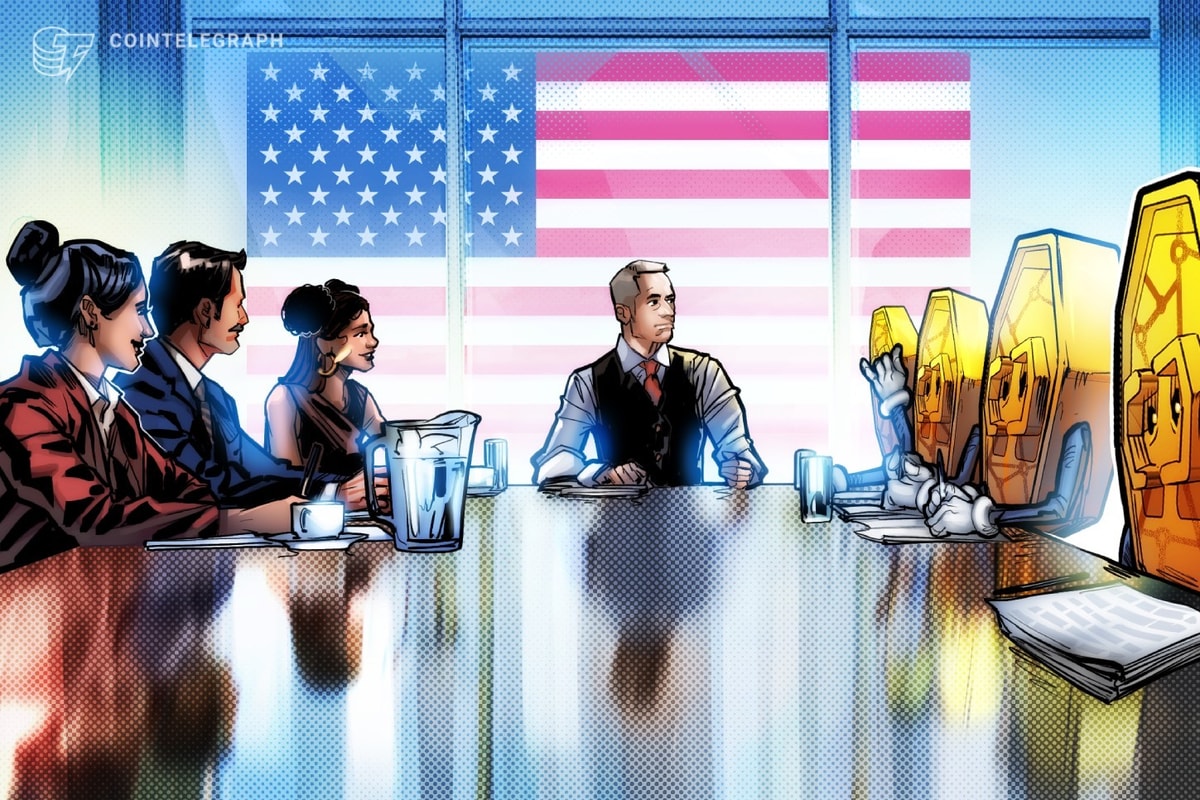
A growing rift has emerged in Washington, D.C., between the cryptocurrency industry and labor unions as lawmakers debate whether to ease rules allowing cryptocurrencies in 401(k) retirement accounts.
The dispute centers on proposed market structure legislation that would allow retirement accounts to gain exposure to crypto, a move labor groups say could expose workers to speculative risk. In a letter sent on Wednesday to the US Senate Banking Committee, the American Federation of Teachers argued that cryptocurrencies are too volatile for pension and retirement savings, warning that workers could face significant losses.
The letter drew immediate pushback from crypto investors and industry figures. “The American Federation of Teachers has somehow developed the most logically incoherent, least educated take one could possibly author on the matter of crypto market structure regulation,” a crypto investor said on X.

In response to the letter, Castle Island Ventures partner Sean Judge said the bill would improve oversight and reduce systemic risk, while enabling pension funds to access an asset class that has delivered strong long-term returns.
Consensys attorney Bill Hughes said the AFT’s opposition to the crypto market structure bill was politically motivated, accusing the group of acting as an extension of Democratic lawmakers.

Related: Atkins says SEC has ‘enough authority’ to drive crypto rules forward in 2026
Opposition to crypto in retirement and pension funds mounts
Proponents of allowing crypto in retirement portfolios, on the other hand, argue that it democratizes finance, while trade unions have voiced strong opposition to relaxing current regulations, claiming that crypto is too risky for traditional retirement plans.
“Unregulated, risky currencies and investments are not where we should put pensions and retirement savings. The wild, wild west is not what we need, whether it’s crypto, AI, or social media,” AFT president Randi Weingarten said on Thursday.
The AFT represents 1.8 million teachers and educational professionals in the US and is one of the largest teachers’ unions in the country.
According to Better Markets, a nonprofit and nonpartisan advocacy organization, cryptocurrencies are too volatile for traditional retirement portfolios, and their high volatility can create time-horizon mismatches for pension investors seeking a predictable, low-volatility retirement plan.

In October, the American Federation of Labor and Congress of Industrial Organizations (AFL-CIO) also wrote to Congress opposing provisions within the crypto market structure regulatory bill.
The AFL-CIO, the largest federation of trade unions in the US, wrote that cryptocurrencies are volatile and pose a systemic risk to pension funds and the broader financial system.
Magazine: 13 Christmas gifts that Bitcoin and crypto degens will love

-
 Sports2 years ago
Story injured on diving stop, exits Red Sox game
-
 Sports3 years ago
‘Storybook stuff’: Inside the night Bryce Harper sent the Phillies to the World Series
-
 Sports2 years ago
Game 1 of WS least-watched in recorded history
-
 Sports3 years ago
Button battles heat exhaustion in NASCAR debut
-
 Sports3 years ago
MLB Rank 2023: Ranking baseball’s top 100 players
-
Sports4 years ago
Team Europe easily wins 4th straight Laver Cup
-
 Environment3 years ago
Japan and South Korea have a lot at stake in a free and open South China Sea
-
 Environment1 year ago
Here are the best electric bikes you can buy at every price level in October 2024