
From Dodgers castoff to face of the Cubs? How 2019 MVP Cody Bellinger revived his career


-
Jesse Rogers, ESPN Staff Writer
IT WAS AN early Saturday morning at Wrigley Field. Most of the Chicago Cubs‘ roster wouldn’t arrive for their game against the Kansas City Royals for hours. But at 8:30 a.m., about six hours before first pitch, Cubs center fielder/first baseman Cody Bellinger and hitting coach Dustin Kelly took the field.
Bellinger had been unhappy with his approach at the plate in the previous game, a 4-3 defeat. He went 0-for-5 with a strikeout, uncharacteristically swinging at pitches outside the strike zone. And so he and Kelly went through an extended batting practice, working on reading pitches and keeping his hip from flying open.
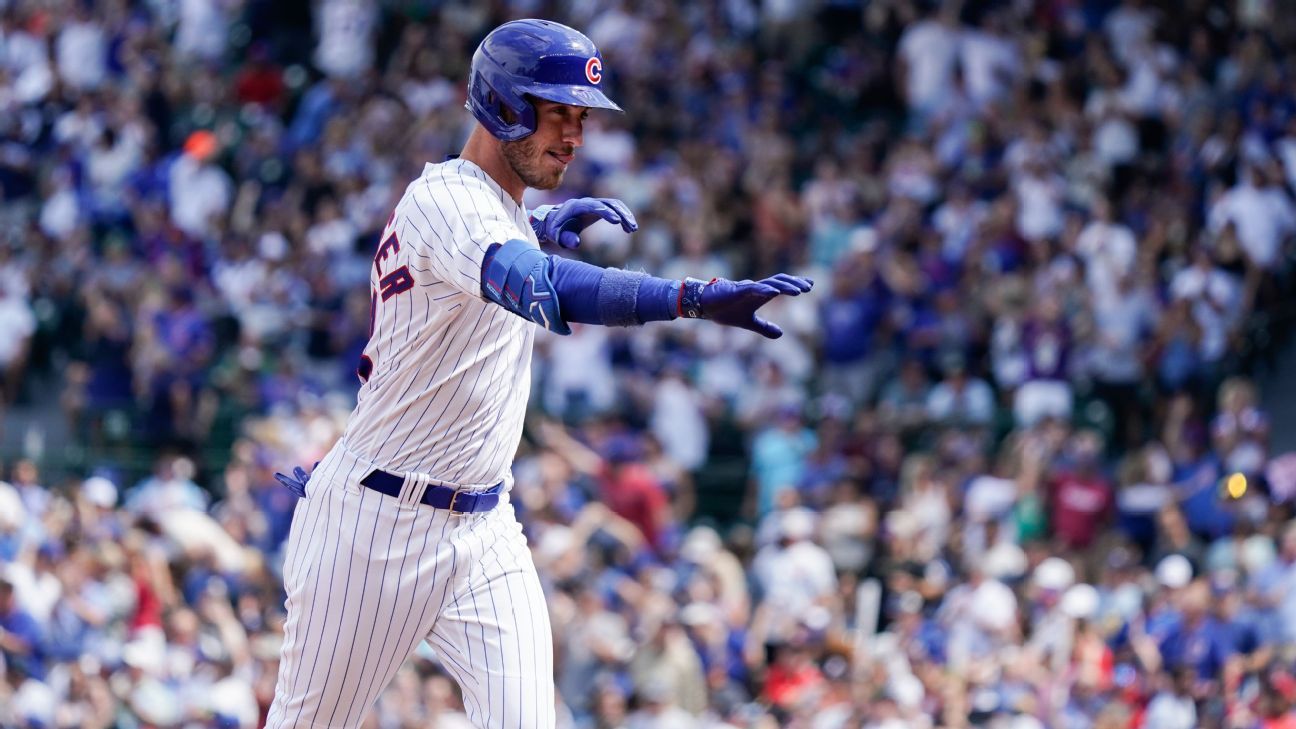
The work paid off. Later that day, Bellinger had his 17th career multihomer game and surpassed the 20 home run mark in a season for the first time since 2019 — the year he won the National League Most Valuable Player Award for the Los Angeles Dodgers.
Back then, Bellinger’s career arc had him on track to be one of the great players of his era. A Rookie of the Year Award in 2017 was followed by the MVP in 2019 — which came with a Gold Glove, as well. In between, he played in 162 games in 2018. Durable and productive, at one of the game’s premier positions, the 6-foot-4 lefty swinger was also working his way toward a massive payday.
And then he dislocated his right shoulder celebrating a home run in the 2020 National League Championship Series while leaping into the air to meet teammate Enrique Hernandez for a forearm bash. And everything changed.
“I came back as soon as possible from it, not knowing anything,” Bellinger told ESPN. “I never dealt with an injury. I never thought how surgery would really affect me. Didn’t even know that it did until later on in that year (2021) when I did some one-hand drills. I was like, ‘I had no idea where anything [with the shoulder] is right now.'”
“This is about barrel control,” his agent, Scott Boras, said in a phone interview. “You have to have the strength to have the barrel control in your front arm. He couldn’t keep his barrel on plane. He couldn’t extend it. He just couldn’t execute the normal, Cody Bellinger swing.”
Some of the circumstances were out of his control. The pandemic got in the way of his recovery from the shoulder surgery in 2020.
“Then we had a lockout and I couldn’t work with people that I wanted to work with,” Bellinger said. “I never got to get back to who I was until this offseason.”
As a result, his numbers plummeted; Bellinger compiled an OPS+ of just 44 in 2021 and 81 in 2022. He hit .165 in 95 games in 2021, limited by the shoulder and a foot injury. His .210 batting average in 2022 came with just 38 walks and 150 strikeouts. His days in Los Angeles were done. He wasn’t offered a contract for the 2023 season.
“With an actual injury, it can be tough, because it can feel like you’re putting all your energy into just going out to play,” Cubs teammate Dansby Swanson said. “It can rob you of your joy of playing and being present, in the moment.”
Swanson speaks from experience. In 2018, an injured wrist impacted him early and late that season, forcing him to miss the playoffs.
“Mentally, it’s a grind,” he said. “Without knowing it you may be protecting yourself a little bit. ‘I’m trying to do this with my swing, but my body is not allowing me to do what I want to do.'”
It’s the same experience Bellinger had — but this past offseason was a difference-maker. He was healthy and more relaxed, working out with family, including dad Clay, a former big league player.
“I was hitting at my high school with him,” the younger Bellinger said. “Just having fun on the baseball field, remembering again it’s just a game. It’s the same game I was playing since I was 7.”
Bellinger, finally healthy, has found his stroke again in Chicago. He has been so good the surprising Cubs elected not to deal him at the trade deadline despite some high-profile suitors — and instead he has become the face of an unlikely contender. And though his immediate focus is a wild-card spot, if not an NL Central title, Bellinger will become one of baseball’s most sought-after free agents after the season.
NO ONE IN Bellinger’s orbit was shocked when the Dodgers non-tendered him. Even with two down seasons, the arbitration system still meant a hefty salary for 2023, and there were lingering question marks about his game. Could a team contending for a World Series afford the gamble?
“The point I made to [Cubs president] Jed [Hoyer] and others is when a player has 1.000 OPS and .900 OPS seasons, and never below .800, and is ROY/MVP all in three years, then has a .550 and .650 OPS, it’s obviously not skill,” Boras said. “It’s lack of shoulder strength due to surgery.
“Jed agreed. A healthy Cody is the five-tool MVP Cody.”
The Cubs signed him to a one-year, $17.5 million contract in mid-December. They were in the middle of a retooling phase and could afford whatever Bellinger could give them. If he was good, and it helped them win, great. If he was good, but the team wasn’t, they could try flipping him in July. If Bellinger couldn’t return to form, Hoyer could fall back on an old baseball adage: There are no bad one-year deals. Bellinger would move on in 2024, making room for top prospect Pete Crow-Armstrong.
Instead, Bellinger has been great, alternating between center field and first base, playing elite defense while putting up big offensive numbers. His .924 OPS ranks fifth in the NL, as does his WRC+ of 145. He’s not likely to win the NL MVP but he’ll get plenty of down-ballot votes. And he has easily been the MVP of the Cubs, who went 11-15 for exactly a month without him in the lineup because of a knee injury. More telling, their team OPS dropped more than 100 points without him, from .763 to .651.
Bellinger’s average exit velocity (87.2 mph) is actually the lowest of his career, and there’s no one in MLB with a bigger difference between his expected (.266) and actual (.321) batting average. His .333 batting average on balls in play helps in that department, but he gets credit for making more contact than ever. His strikeout percentage has crashed, from a career-high 27.3% last season to a career-low 15.7% this year.
“Being able to control the bat and hit more pitches,” Bellinger explained about what being healthy means. “It doesn’t have to be in one spot of the zone anymore. Able to consistently put my swing on the ball, and that creates results.”
His comeback began in January in those batting sessions with his father, then continued with Cubs hitting coaches with whom he had familiarity — former Dodgers coaches Kelly and Johnny Washington.
“It worked out that I lived super close to the spring complex [in Mesa, Arizona],” Bellinger said. “And I knew those guys. The transition was easy.”
Kelly was asked for some technical reasons for Bellinger finding his groove again, now that he’s healthy:
“A lot of it is setup,” Kelly explained. “He’s grounded in with his back leg a little bit more. He has a little more flex in his back hip. There’s a slight bend in his back knee. And he’s kind of set his hands slightly higher than they had been. We got him back up by his ear. It’s allowed him to set his line. When he’s lined up in the box and kind of gets that release point from the pitcher, he’s got a really good posture and line that he sticks to. I think that’s the feeling he’s been searching for.”
Getting his shoulder right and then his mechanics was half the battle. Baseball might be the only sport for which even stars need constant reassurance. Building up their hitters is also half the job for hitting coaches.
“The game will beat you up,” Kelly said. “We’re constantly reminding them you’re really good. There aren’t a lot of guys in this league that do what you do.
“[The pitcher’s] name doesn’t say Bellinger on the back of his jersey. Confidence is a big deal. We try to pump him up every so often.”
AS BELLINGER FOUND success in the first half, the Cubs were still figuring out the course of their season. Would they be contending at the trade deadline — or offloading? Chicago’s front office executed resets in each of the past two seasons, taking criticism for trading away 2016 World Series stars Javy Baez, Kris Bryant and Anthony Rizzo. Those deals look brilliant in hindsight.
For Bellinger’s part, he understood what he was getting into when he signed: “I knew that getting traded was a possibility. You can’t think that far ahead.”
As the trade deadline shook out, with few hitters on the market, it became more clear the Cubs would not only save salary by moving Bellinger, but also likely get a haul in return.
“He was a popular guy,” Hoyer said. “Clearly, he was going to be the best bat available. A lot of teams checked in on him.”
None were ready to be more aggressive than the New York Yankees, according to sources familiar with the situation. But as the days to the deadline ticked down, the Cubs kept on winning.
Scoring eight unanswered runs against the White Sox on July 26 after falling behind 7-2 secured one victory, then, two days later, a two-out, ninth-inning, over-the-wall catch by Mike Tauchman in St. Louis clinched another one. What was going to be a tough deadline strategy decision for Hoyer turned into an easy one: Serious offers for Bellinger, Marcus Stroman and others were never discussed.
“By the time we got to that point, it became obvious,” Hoyer said. “Teams were calling, saying, ‘You’re not selling. You guys are good, you guys are going to buy.’ People stopped taking us seriously as a seller.”
One scout following Bellinger joked, “He wasted my expense account, following this guy around.”
At this point, Hoyer was having daily conversations with ownership involving one simple question: Can the team compete for the playoffs if it adds instead of subtracts at the trade deadline?
“Over the course of those last two weeks of July, the answer kept coming back yes,” Cubs owner Tom Ricketts told ESPN. “We always have the ability to improve in the middle of the season. The players get to decide for us. If we play well enough to add, we do it. If we don’t, then we have to think about the future.
“This is Jed’s call. In the end, he’s responsible for the performance on the field, both the current season and future seasons, so it’s a tough spot to put him in, but that’s his responsibility. We talk every day, but thankfully the team played its way into being really comfortable [in the standings].”
But Ricketts wasn’t the only one Hoyer was hearing from. Swanson, on the IL because of a heel injury, inserted himself into the process, too.
“Dansby on the IL was a dangerous thing,” Hoyer said recently on ESPN 1000 in Chicago. “He was almost a front office member at that point because he was bored.
“He kept on saying, ‘We’re trying to build something and you can’t just snap your fingers and say now we’re winning.’ He wanted to keep pushing. ‘We may make it, we may not, but we’ll continue to have a winning culture.’ That was his point.
“He’s a better shortstop than a front office member, but he was really helpful in the process.”
On trade deadline day, Bellinger had three hits. He would add 16 more over the next 10 games helping the Cubs move further into wild-card contention. The NL Central title is also in reach. His 1.018 OPS in August is seventh in the NL. Barring a terrible September, Bellinger will enter free agency as the best player on the market this side of Shohei Ohtani. A package worth upward of $150 million to $200 million — or more — isn’t out of the question.
Bellinger is waving off questions about his future.
“There’s still so much to do,” he said. “We’re in the playoff hunt. It gives us purpose every day we come to the park.”
But when pushed about staying in Chicago — perhaps at first base as Crow-Armstrong matures to the big leagues — Bellinger added:
“Wrigley Field is an amazing place to play baseball. It’s cool coming here on the road, but it’s something different playing for the home team. It really is one of the best places to play.”
He noted that his former team seemed to visit Chicago early in the season, mostly in April and May, in recent years.
“I never saw the ivy,” Bellinger said with a smile. “It’s cool.”

-
David Hale
The first College Football Playoff rankings came out five weeks ago. They looked a lot like tonight’s rankings.
We’ve had precious little movement at the top, with a few teams jockeying up or down a slot, but effectively no seismic shifts in the landscape. BYU and Texas are the only two teams that were projected in the field in the committee’s first ranking that aren’t now — and they’re just barely on the outside with reasonable arguments for inclusion.
Teams ranked in the top 18 by the committee this year are a combined 55-9, with six of those losses coming to other teams ranked in the top 18. All three outliers are courtesy of — you guessed it — the ACC (Louisville to Cal, Virginia to Wake and Georgia Tech to Pitt).
That’s a massive anomaly. Last year, top-18 teams at this point had lost 19 games, including 14 to teams outside their own grouping. Top-10 teams are 33-4 this year. In the first 11 years of the playoff, top-10 teams had lost an average of nine games by this point in the season.
The two words that best describe this year’s playoff push are “status quo.”
That, of course, has been bad news for all the teams on the outside looking in — from those with valid cases such as Miami, BYU and Vanderbilt, to underdogs such as USC, Utah or Arizona that might’ve had a shot in a more chaotic year.
But the real loser in this copy and paste rankings season is all the fans who just want to see things get weird. It’s a sad state of affairs when we’re left to rely on MACtion and the ACC to do all the heavy lifting when it comes to college football drama. The power players need to step up — or, perhaps, ratchet down — their game to add a bit more drama.
The good news is, the committee’s ad hoc reasoning, mushmouthed explanations and mind-boggling about-faces still leave plenty to argue about, even if the big picture hasn’t changed all that much.
Here’s this week’s biggest slights, snubs and shenanigans.


It’s not entirely clear how this committee values wins. For the past month, the priority has certainly appeared to be about which team has the better losses (unless, of course, you’re Alabama).
That seems a foolish way to prioritize playoff teams, since the goal of the playoff isn’t to lose to good teams but to win games.
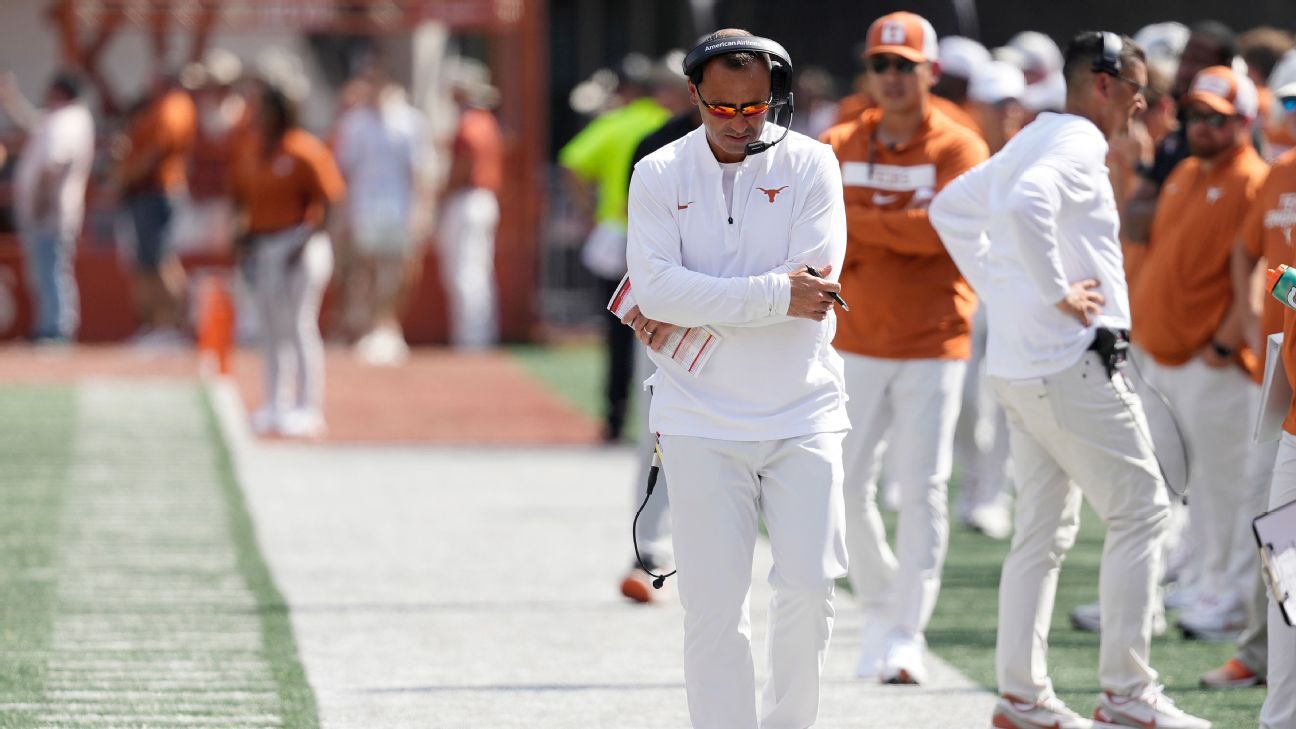
Does Texas have a bad loss? Yes. A 29-21 defeat to woeful Florida — even if the Gators also played Georgia and Ole Miss close and just walloped a team that beat Alabama head-to-head — is problematic.
But look who Texas has beaten: No. 7 Texas A&M by 10, No. 8 Oklahoma by 17 and No. 14 Vandy by three (in a game they led by 24 in the fourth quarter). That’s the résumé of a team capable of winning a national championship — even if the Horns were also capable of losing to a second-rate SEC team.
Are we trying to find teams with the most upside or give participation trophies to the ones which have not lost an ugly one? (Except, again, Alabama.)
And it’s not as if the committee believes an extra loss is disqualifying. Oklahoma, Alabama, Notre Dame and Miami all have two losses and are ranked ahead of one-loss BYU (more on that in a moment), so what’s the harm of moving a three-loss Texas ahead of a two-loss team that has accomplished less?
This all comes back to the most frequent and justified criticism of the committee: The same rules aren’t applied evenly. In some cases, record matters. In some cases, best wins matter. In some cases, better losses matter. The standard varies based on the team being considered. But if the committee is going to err in favor of any team, it should probably do so for one that’s proved — not once, not twice, but three times — that it can beat an elite opponent.
Oh, and moving Texas up ahead of, say, Notre Dame would also have the added bonus of allowing the committee to sidestep another tricky situation. Which leads us to…


We’re putting these two teams together because we’ve already lamented the committee’s utterly disingenuous evaluation of them repeatedly, so it feels redundant to keep going down the same rabbit hole. But, for the sake of two programs being astonishingly misevaluated, let’s do one more round.
For Miami, the logic is obvious: The Canes beat Notre Dame head-to-head.
But let’s keep going. Miami’s two losses — SMU and Louisville — would rank as the fourth- and fifth-toughest games on Notre Dame’s schedule, had the Irish played them. Instead, Notre Dame has cruised through an essentially listless slate. Six of Notre Dame’s 10 wins came against teams that beat zero or one other Power 4 opponent. Stanford — seriously, Stanford! — is Notre Dame’s fourth-best win (by record). Yes, Notre Dame played well enough in losses to two very good teams, but one of those teams has the same record and is somehow ranked lower! Even if this is strictly about the “eye test,” there’s little argument for ignoring the head-to-head outcome. Notre Dame’s strength of record is 13th. Miami’s is 14th. Notre Dame’s game control is fifth. Miami’s is sixth. If all else is the same, how is head-to-head not the deciding factor?
Yet, here’s a little more salt in the wound for the Canes: Had Florida State finished 6-2 instead of 2-6 in ACC play, Miami would’ve won the (fifth) tiebreaker for a spot in the ACC title game and could’ve locked up its place in the playoff by simply beating Virginia. Instead, the Canes will sit at home and watch and hope and, at this point, probably get left out. Chess, not checkers, by rival FSU.
As for BYU, the committee’s desire to overlook the Cougars makes no sense. Let’s take a look at a blind résumé, shall we? (Note: Best wins and composite top 40 based on an average of SP+, FPI and Sagarin ratings.)
Team A: No. 6 strength of record, No. 14 game control, best win vs. No. 11, next vs. No. 28, loss to No. 5, four wins vs. composite top 40, five wins vs. teams that finished 7-5 or better
Team B: No. 7 strength of record, No. 10 game control, best win vs. No. 13, next vs. No. 27, loss to No. 7, three wins vs. composite top-40, two wins vs. teams that finished 7-5 or better
Now, just based on that information, Team A would seem the obvious choice. Now what if I told you Team B just lost its head coach, too?
That’s right, Team A is BYU and Team B is Ole Miss. Every bit of data here suggests the Cougars are, at worst, on even footing with the Rebels or ahead, and yet the committee has Ole Miss ranked five spots higher.
This is, arguably, the second year in a row in which BYU was clearly the most overlooked team in the country.

A week ago, Notre Dame was ranked one spot ahead of Alabama.
Then on Saturday, the Irish beat 4-8 Stanford by 29 (in a game they at one point led 42-3), while Alabama beat 5-7 Auburn by seven (in a game the Tigers had a chance to tie before fumbling in Tide territory late).
The committee looked at those two results and said, “You know what, we like what we saw from the Tide! Move ’em up!”
What could possibly be the logic for shifting opinions on these two teams? The only other team that jumped another winning team was Texas, and the Longhorns beat the No. 3 team in the country emphatically, not a second-tier team that fired its head coach a month ago.
Oh, and hasn’t the committee made it pretty clear losses are supposed to matter? Well, Notre Dame has two losses to teams ranked in the top 12. Alabama got beat by a Florida State team that finished 5-7.
Even by the eye test, this makes little sense. Notre Dame has proved to be one of the most complete, dominant teams in the country, with a secondary that’s near impossible to throw on, a rookie quarterback who has been nearly flawless and a running back who might well be the best player in the country. Alabama, on the other hand, has a one-note offense that can’t run the football.
We’re not believers in using advanced metrics as a ranking of accomplishment, but if this is simply a “who’s better” debate…
-
SP+ ranks Notre Dame fifth and Alabama 12th.
-
FPI ranks Notre Dame third and Alabama sixth.
-
Sagarin ranks Notre Dame second and Alabama seventh.
-
FEI ranks Notre Dame fourth and Alabama ninth.
So, again, we ask: Why would the committee possibly make this change?
We’d wager you know the answer. That sticky Canes vs. Irish head-to-head debate is a real headache for the committee. But if Notre Dame’s currently the last team in and something unexpected happens this weekend (hello, BYU over Texas Tech), then the committee can do as it did in 2014 and wash its hands of a tough choice and keep both Notre Dame and Miami out.
(It’s also interesting that a seven-point win over a team with a losing record is enough to jump Notre Dame, but a 31-point win over a ranked Pitt did nothing for Miami’s relative placement with the Irish despite — and we’re not sure anyone has mentioned this yet — a head-to-head win!)
But, speaking of Alabama…


4. Championship game participants
Step into the time machine with us for a moment, all the way back to championship week 2024. Here’s the state of play: Alabama, at 9-3, is ranked No. 11, the first team out of the playoff and also out of the SEC title game. Still, the Tide and the SEC hope there’s a pathway to salvation because SMU — 11-1 and ranked eighth — still has a game to play against Clemson in the ACC championship. If the Mustangs were to lose, couldn’t the committee then justify slotting SMU behind Alabama based on another data point, even though the Tide were simply sitting at home watching the action?
This was the case being made throughout the run up to the ACC championship last season. SMU, which should’ve been celebrating a miraculously successful first season in the Power 4, spent hours upon hours defending itself against criticism that it didn’t belong in the same conversation with big, bad Bama. Rhett Lashlee hinted he thought the committee’s vote was rigged, SMU players lamented their status on the chopping block despite a ranking that should’ve put them safely in the playoff field, and SEC commissioner Greg Sankey made the rounds arguing that Alabama’s (and Ole Miss’ and South Carolina’s) strength of schedule ought to put them ahead of SMU (and others).
OK, back to the present day. Here we are with Alabama sitting perilously on the dividing line between in the field and out — a week ago, it would have been the last team in, but of course the committee had other ideas this time around — with a game to play against Georgia in the SEC championship. An ACC team (Miami) sits just a tick behind the Tide in the rankings, but it will be off this week.
So, what happens if Alabama loses?
The comparison to last year’s SMU isn’t even a particularly fair one. The Mustangs were at No. 8 before the ACC title game. Alabama is at No. 9 (and probably should be a spot or two lower). SMU’s game against Clemson was new territory. A loss to Georgia will actually undermine Alabama’s best argument for inclusion — the three-point win in Athens in September. And while SMU did make the playoff field last year, a last-second loss on a 56-yard field goal still dropped the Mustangs from No. 8 to No. 10 in the rankings.
Play this scenario out now: Alabama, ranked at No. 9, plays a team that currently counts as the Tide’s best win. Imagine if Georgia wins the rematch and does so convincingly. The committee docked SMU two spots for a last-second loss, so surely it will do at least that much to Alabama for a more convincing defeat, right? And here’s the other thing: Even with the ACC title game loss last year, SMU was 11-2 — one less loss than Alabama had. A Tide loss in the SEC title game will be defeat No. 3 — one more than Notre Dame or Miami or (presumably) BYU.
It’s hard not to see a conspiracy here given the committee’s inexplicable flip-flop between Alabama and Notre Dame. It’s hard not to see brand bias in how the Tide’s championship week narrative diverges from SMU’s a year ago. It’s not at all hard to envision a scenario where Alabama loses to Georgia, gets in as the last team anyway, and it’s all explained away as a completely reasonable decision.

Well, the committee finally weighed in on more than one team outside the Power 4 — mostly because it was just impossible to find enough Power 4 teams worth ranking — and the news isn’t good for JMU. With the committee deciding already that North Texas is the higher ranked team, the Dukes’ only hope for the playoff would seem to be a Duke win in the ACC title game.
But what exactly has the committee seen to warrant that decision? Check out the numbers.
Best win (by average FPI, SP+ and Sagarin ranking)
JMU: No. 54 Old Dominion
UNT: No. 62 Washington State
Next best
JMU: No. 62 Washington State
UNT: No. 68 Navy
Loss
JMU: No. 29 Louisville
UNT: No. 24 USF
Wins vs. bowl-eligible
JMU: six
UNT: five
Strength of record
JMU: 18th
UNT: 22nd
FPI
JMU: 28th
UNT: 37th
There are certainly some check marks in North Texas’ favor, including a more impressive win over common opponent Washington State and a slightly better SP+ ranking, but on the whole, James Madison has had the tougher path here. That can change should UNT beat Tulane, but the committee should’ve waited for that to happen. Instead, it has made it clear JMU isn’t sniffing the playoff unless it comes at the expense of the ACC.
Also angry this week: Vanderbilt Commodores (10-2, No. 14); The ACC leadership who voted on its tiebreaker policies; Manny Diaz, who has to try to make a coherent argument for his five-loss Duke Blue Devils getting in ahead of a one-loss JMU; Every 8-4 team with a markedly better résumé than 9-3 Houston, which isn’t ranked this week; and Lane Kiffin’s yoga instructor and Juice Kiffin’s dog walker.
Welcome to the party, James Madison.
With the inclusion of JMU at No. 25 in the selection committee’s penultimate ranking — its first appearance all season — the possibility of the ACC being excluded from the playoff entirely just got real. Five-loss Duke is nowhere to be found in the ranking.
If Duke beats Virginia in the ACC championship game, it’s not guaranteed a spot in the 12-team field. It could open the door for two Group of 5 conference champions to compete for a national title, and if the playoff were today, it would be Tulane out of the American and JMU from the Sun Belt. The ACC’s best team, Miami, is still on the outside.
At No. 12, the Hurricanes still need some help, but Alabama increased its chances of earning a spot as the SEC runner-up with a small promotion to No. 9. The conference championship games can still alter the picture, but hope on the bubble is dwindling.
Bubble Watch accounts for what we have learned from the committee so far — and historical knowledge of what it means for teams clinging to hope. Teams with Would be in status below are looking good after the committee’s fifth ranking. For each Power 4 conference, we’ve also listed Still in the mix. Teams that are Out will have to wait until next year.
The conferences below are listed in order of the number of bids they would receive, ranked from the most to least, based on the selection committee’s latest ranking.
Jump to a conference:
ACC | Big 12 | Big Ten
SEC | Independent | Group of 5
Bracket
SEC


Would be in: Alabama, Georgia, Oklahoma, Ole Miss, Texas A&M. Right now, the Crimson Tide are the last SEC at-large team in the field. Alabama will face Georgia in the SEC championship game, but the committee could have a difficult decision if Alabama loses and finishes as a three-loss runner-up. The Tide would have defeated Georgia during the regular season but lost to the Bulldogs in the championship game. Even in moving up a spot to No. 9 this week — ahead of Notre Dame — it still seems as if they have a little more margin for error, but how the SEC title game unfolds could matter. And how far Alabama drops could determine if the SEC gets four or five teams in the field. Alabama could finish as the committee’s highest-ranked three-loss team and still be excluded from the playoff to make room for a conference champion — as they were last year.
A Georgia win should lock up a first-round bye and a top-four finish for the Bulldogs, while a loss should still put them in position to host a first-round game. Georgia beat Ole Miss, so it would be surprising to see the Bulldogs drop below the Rebels with a loss, even though the Bulldogs would have one more defeat. With a 35-10 drubbing of Texas also on its résumé, Georgia would still have a strong enough case to finish as the committee’s top two-loss team.
At No. 6, the selection committee moved the Rebels up one spot, so clearly the departure of coach Lane Kiffin to LSU didn’t hurt Ole Miss or its chances of hosting a first-round home game. The bigger reasoning was a promotion after winning the Egg Bowl combined with Texas A&M losing to Texas.
Still in the mix: Texas. The Longhorns moved up to No. 13, but the win against Texas A&M wasn’t enough to put them into the field after the fifth ranking. Texas is stuck behind Miami in part because of its loss to Florida, which Miami beat. Even if BYU and Alabama were knocked out with title game losses, that still probably won’t be enough for Texas to get into the field because the bracket has to make room for conference champions.
Out: Arkansas, Auburn, Florida, Kentucky, LSU, Mississippi State, Missouri, South Carolina, Tennessee, Vanderbilt
Big Ten


Would be in: Indiana, Ohio State, Oregon. Both Indiana and Ohio State are CFP locks — even if they lose in the conference title game — and the runner-up will still have a strong case for a top-four finish and a first-round bye. The loser’s only loss will be to a top-two team, but it could fall behind Georgia in the top four if the Bulldogs win the SEC, and/or Texas Tech if it wins the Big 12.
The Ducks punctuated their résumé with a respectable win at Washington and should be secure in their playoff position, probably hosting a first-round game. Oregon received a small boost to No. 5 after Texas A&M lost to Texas.
Still in the mix: None.
Out: Illinois, Iowa, Maryland, Michigan, Michigan State, Minnesota, Nebraska, Northwestern, Penn State, Purdue, Rutgers, UCLA, USC, Washington, Wisconsin
Big 12

Would be in: Texas Tech. The Red Raiders will play BYU in the Big 12 title game and have a great case to be in the playoff regardless of the outcome. It’s highly unlikely the selection committee would drop the Red Raiders out of the field as a two-loss Big 12 runner-up — especially considering they would have a regular-season win against the eventual conference champion. It’s also possible Texas Tech earns a first-round bye as a top-four seed if the Red Raiders win the Big 12. The committee moved them into the top four Tuesday night following Texas A&M’s loss during Rivalry Week.
Still in the mix: BYU. If BYU doesn’t win the Big 12, it’s unlikely to earn an at-large bid as the conference runner-up because the Cougars are already on the bubble and would be eliminated during the seeding process if the playoff were today. It’s not impossible, though. If Alabama finishes as a three-loss SEC runner-up, it could at least open the door for debate. BYU would have lost to Texas Tech twice, and Alabama would have defeated Georgia, the eventual SEC champ once — and it was on the road. If BYU wins the Big 12, it’s the ideal scenario for the conference because it would have two teams in the playoff.
Out: Arizona, Arizona State, Baylor, Cincinnati, Colorado, Houston, Iowa State, Kansas, Kansas State, Oklahoma State, TCU, UCF, Utah, West Virginia
ACC


Would be in: TBD. The ACC championship game will feature Virginia and Duke, and if five-loss Duke wins, it’s possible the ACC is excluded from the playoff since Duke is not part of the CFP rankings. If Virginia wins, it will represent the league in the playoff, as the two-loss Cavaliers are ranked in the top 20. And no, Miami did not play Duke or Virginia during the regular season. Duke lost to Tulane, which is the top Group of 5 playoff contender and will reach the playoff if it wins the American. Duke also lost to UConn. And it has already lost to Virginia 34-17 on Nov. 15.
Still in the mix: Miami. The Canes are still the committee’s highest-ranked ACC team, but they would be excluded if the playoff were today to make room for a conference champion. That means the ACC winner could knock the league’s best team out of the playoff. The committee isn’t ignoring Miami’s head-to-head win against Notre Dame, but it also isn’t comparing the Canes only to the Irish. Miami also needs to earn an edge against BYU — which the committee has deemed better than Miami to this point. Miami inched closer to Notre Dame because Bama moved up Tuesday, but with neither team playing in a conference championship game, would the committee flip them on Selection Day with a BYU loss?
Out: Boston College, Cal, Clemson, Florida State, Georgia Tech, Louisville, North Carolina, NC State, Pitt, SMU, Stanford, Syracuse, Virginia Tech, Wake Forest
Independent
Would be in: Notre Dame. The Irish have done everything right since their 0-2 start, running the table and doing it with consistent dominance regardless of opponent. At No.10, Notre Dame is in a precarious position. If BYU wins the Big 12 and enters the field, that could bump out the Irish. If BYU wins the Big 12, both BYU and Texas Tech are highly likely to make the playoff, which means someone currently in the top 10 would have to be excluded.
Group of 5

Would be in: Tulane. If the Green Wave win the American, they will represent the Group of 5 in the playoff. Tulane is currently the highest ranked Group of 5 team, but if North Texas beats Tulane on Friday, the Mean Green would be the most likely team to reach the CFP, given the overall strength of the American Conference this season.

Still in the mix: James Madison, North Texas. JMU (11-1) has clinched the East Division and a spot in the Sun Belt Conference championship game, where it will face Troy (8-4) on Friday. North Texas will face Tulane in the American, and if it wins, it’s more likely to represent the Group of 5 in the playoff than JMU because of its schedule strength. JMU could still be considered, though, if Duke wins the ACC, giving the Group of 5 two playoff teams in the 12-team field. With JMU earning a spot in the top 25 this week, the situation became more probable.
Bracket
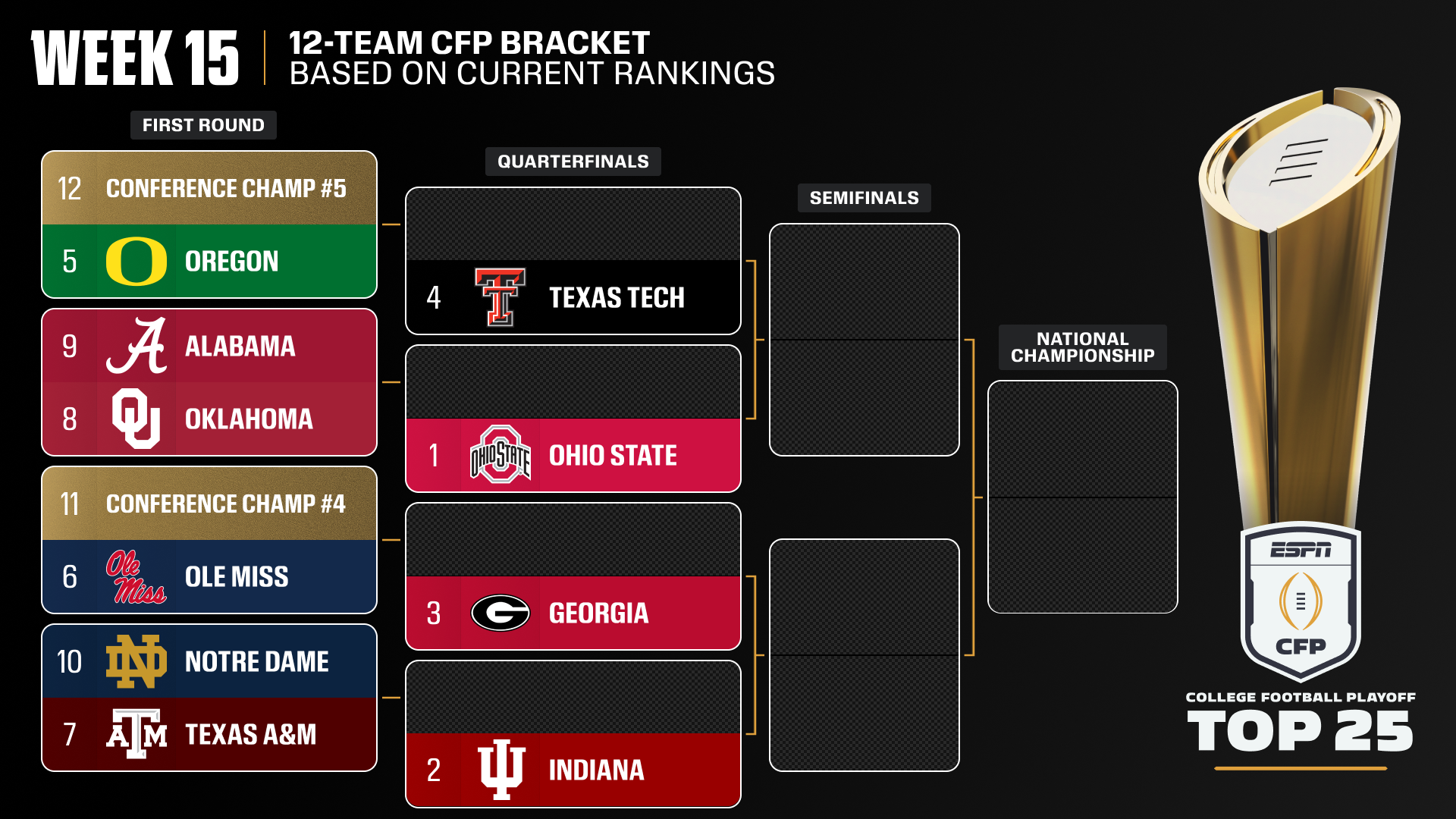
Based on the committee’s fifth ranking, the seeding would be:
First-round byes
No. 1 Ohio State (Big Ten champ)
No. 2 Indiana
No. 3 Georgia (SEC champ)
No. 4 Texas Tech (Big 12 champ)
First-round games
On campus, Dec. 19 and 20
No. 12 Tulane (American champ) at No. 5 Oregon
No. 11 Virginia (ACC champ) at No. 6 Ole Miss
No. 10 Notre Dame at No. 7 Texas A&M
No. 9 Alabama at No. 8 Oklahoma
Quarterfinal games
At the Goodyear Cotton Bowl, Capital One Orange Bowl, Rose Bowl Presented by Prudential and Allstate Sugar Bowl on Dec. 31 and Jan. 1.
No. 12 Tulane/No. 5 Oregon winner vs. No. 4 Texas Tech
No. 11 Virginia/No. 6 Ole Miss winner vs. No. 3 Georgia
No. 10 Notre Dame/No. 7 Texas A&M winner vs. No. 2 Indiana
No. 9 Alabama/No. 8 Oklahoma winner vs. No. 1 Ohio State
-
 Sports2 years ago
Story injured on diving stop, exits Red Sox game
-
 Sports3 years ago
‘Storybook stuff’: Inside the night Bryce Harper sent the Phillies to the World Series
-
 Sports2 years ago
Game 1 of WS least-watched in recorded history
-
 Sports3 years ago
Button battles heat exhaustion in NASCAR debut
-
 Sports3 years ago
MLB Rank 2023: Ranking baseball’s top 100 players
-
Sports4 years ago
Team Europe easily wins 4th straight Laver Cup
-
 Environment3 years ago
Japan and South Korea have a lot at stake in a free and open South China Sea
-
 Environment1 year ago
Here are the best electric bikes you can buy at every price level in October 2024