

6 Questions for Leila Ismailova


Leila Ismailova began her professional career at the age of 15 as a broadcasting star in Belarus, the Russian-neighboring Eastern European country that plays home to 9.3 million citizens. She continued in the role for 10 years, she says, before reaching what she felt was a “professional ceiling” and beginning a journey that led to Web3.
“I remember my audacity as a child, just sneaking into the buildings with newspapers and magazines — it was called the House of Press,” Ismailova recalls in an interview with Cointelegraph. “I would handwrite my stories and sneak into the building — because I didn’t have a pass — by making up stories that I was someone’s granddaughter, or by just going in when someone else entered. And I would find the doors that said ‘editor’ or ‘editor-in-chief,’ and I would just walk in and give them my articles. People smiled, and I’m sure they felt I was naive, but I felt they also had some respect for me doing this work.”
Her renegade news career led to television in a matter of years. She joined the country’s First National Channel at the age of 15, where she started on a show that covered news and culture for younger viewers.
“My first audition went horribly,” Ismailova says. “I turned purple. I was thinking really fast, but they still wanted me to come for the second round.”
Also read: How brands are using digital fashion in real life
Ismailova moved to the United States in 2016, setting off what she calls a “season of migration” for her family, including her brother, Bahram, and sister, Esmira. Bahram is a serial tech entrepreneur whose inventions include Peech App and Yope, among many others, while Esmira is an author whose published works include On the Shores of Bosphorus. (You won’t find it in English yet, so don’t spend too much time scouring Amazon.)
Ismailova’s and her siblings’ success came despite hardship. Their father died when they were children (Bahram was just 1), fighting for Azerbaijan in the country’s war with Armenia over the Nagorno-Karabakh region.
“It happened very abruptly,” Ismailova says. “Of course, no one planned for it, so we went very fast from being a well-off family living in the capital of Baku to being a very scared family. We were pretty much on our own in a country that was going through the war with Armenia and, on top of that, separating from the Soviet Union. It was a very harsh time for everybody.”
Ismailova says that experience inspired her to launch a charity during her broadcast career that offered mentoring for orphans, an activity she would like to resume in the future.
“It seemed like these girls, even though the government provided very simple basics for them to start life, didn’t have parental guidance,” Ismailova recalls. “It seemed like a lot of orphan girls were insecure because no one told them they were beautiful. Our goal was to create that guidance and to give them a confidence boost. […] For me, it was very important to do, and I was so lucky that I had a chance and a bit of influence. Right now, I miss it very much.”
Read also
Today, she’s a Web3 veteran after spending three years at Artisant, a digital fashion brand she co-founded — inspired, in part, by her career in journalism. “As a child, I didn’t have access to a lot of beautiful dresses,” Ismailova says. “But I always appreciated the elegant and beautiful part of fashion, and when I watched TV, I always saw TV hosts and red carpets. It always looked stunning.”
Ismailova left Artisant in July to launch a new chapter of her career as a consultant for digital-savvy fashion brands. “I’m sort of coming back to reality,” Ismailova explains. “Artisant was a digital fashion brand, but there was no physical product.”
1. You moved from Belarus, where you were a TV journalist, to the United States. What’s the story behind that?
I’m the only one from my family who moved, at first. I opened the “season of migration” for my family, as right after I moved, my sister moved, and then my brother. He didn’t just move — he ran away in August 2020, right after the Belarusian presidential election, when they started hunting people down. He had to run. His two co-founders were arrested.

My personal story is that I was a pretty successful TV host back home, I started when I was 15. I wanted to be a TV host because I wanted to wear beautiful dresses. I was very happy. It was my dream job! I started working early, and I think I was very hungry for success. I got all the national awards I dreamed of at a very young age, hosted all the shows I wanted to, and reached the professional ceiling back home.
2. What got you into crypto?
Well, my first stop in the United States was California — this was before I moved to Miami. I got into graduate school for a master’s program at USC Annenberg. (To be honest, I’m still struggling to connect to American society.) I’ve always been a nerd, and school seemed like a safe environment to connect to people. I started learning about entrepreneurship during the first wave of crypto in 2017, and then I invested in my first crypto… and “lost” it. I bought Litecoin at $250. But I started working in crypto only in 2020.
3. What brought you to Miami?
I felt very limited in Los Angeles with the COVID-19 restrictions, and very isolated. I couldn’t even walk my dog because they closed the parks. So, I got into digital fashion. It got me very curious about how something that didn’t exist could make someone feel so good. That was when I met my Artisant co-founder, Regina [Turbina], in 2020. We were talking, and I started helping with little things. In 2021, I joined Artisant full-time.
Related: Blockchain games aren’t really decentralized… but that’s about to change
Things were flowing, so I quit my job and took a leap of faith — which brought me to Miami. And since I joined crypto, never have I met so many bright, prominent people with open minds. Everyone has been very welcoming, even though I knew far less in the beginning than I know now. People were willing to spend hours on the phone with me, sharing knowledge. I think the welcoming environment encouraged me to stay.
4. How do you see digital fashion evolving over the next five years?
Looking at the last bull run, I think it was awesome, but it’s over. We have this romantic notion that we’re all moving to the metaverse, and our avatars will all need clothes someday. I want to see technology become a tool that makes people more well-rounded, sustainable — wholesome.
Related: An eclectic display at the 2nd Metaverse Fashion Week
We have this vicious circle in the Western world of buying goods we don’t need. Brands manipulate us into buying things. Consequently, we need to produce more goods, and we have this vicious circle of overproduction and overconsumption. We have a situation where fashion, the most beautiful business in the world, is responsible for 10% of carbon emissions.
We have a huge problem at hand, and I see digital fashion and technology as a possible solution. We’re moving from the notion of building digital clothes for the metaverse to looking at how digital fashion can be useful right now. Look at Dior and their B33 sneaker collection with NFC chips built into the sole. It’s an amazing technology that allows you to link them to digital assets. So, this is a very good way for brands to solve the problem of counterfeit products.
5. You recently left Artisant. Where are you going next?
I’m starting consulting jobs, and I want to start writing more. For now, I want to focus on companies that deal in digital fashion. Companies that provide digital fashion services as an agency. I have a brand that wants me to consult their team, and they do an amazing clothing line that has augmented reality storytelling built into it. I’m sort of coming back to reality. Artisant was a digital fashion brand — but there was no physical product.
Seeing Artisant grow — not just in numbers but in real people who defined Artisant as their community — meant the whole world to me. But I came to a point where I gave everything I could to the project. Technology has a huge mission in reforming the world of fashion, and I want to contribute. While I am still pondering my next big professional adventure, I know it will be fun and will serve humanity.
6. What’s your life like outside of crypto?
I love having a balanced life. I have a dog. (That’s a hobby, right?) I play chess. For me, chess is a very important game that helps me a lot in business and in analyzing situations. I also like sports. For me, it’s very important to keep moving. Yoga has been part of my life for quite some time. Since I live in Miami, I do things like paddleboarding and kite surfing. And I take dance classes. That was one of my first dreams, actually — to become a dancer.
Subscribe
The most engaging reads in blockchain. Delivered once a
week.


US Representative Stephen Lynch pressed Federal Reserve Vice Chair Michelle Bowman on Tuesday over her past remarks encouraging banks to “engage fully” with digital assets, questioning the Fed’s role in advancing crypto frameworks while showing confusion over the definition of stablecoins.
In a Tuesday oversight hearing, Lynch asked Bowman, the Fed vice chair for supervision, about remarks she had made at the Santander International Banking Conference in November. According to the congressman, Bowman said she supported banks “[engaging] fully” with respect to digital assets.
However, according to Bowman’s comments at the conference, she referred to “digital assets” rather than specifically cryptocurrencies. The questioning turned into Lynch asking Bowman about distinctions between digital assets and stablecoins.
The Fed official said that the central bank had been authorized by Congress — specifically, the GENIUS Act, a bill aimed at regulating payment stablecoins — to explore a framework for digital assets.
“The GENIUS Act requires us to promulgate regulations to allow these types of activities,” said Bowman.

While the price of many cryptocurrencies can be volatile, stablecoins, like those pegged to the US dollar, are generally “stable,” as the name suggests. Though there have been instances where some coins have depegged from their respective currencies, such as the crash of Terra’s algorithmic stablecoin in 2022, the overwhelming majority of stablecoins rarely fluctuate past 1% of their peg.
Related: Atkins says SEC has ‘enough authority’ to drive crypto rules forward in 2026
Bowman said in August that staff at the Fed should be permitted to hold small “amounts of crypto or other types of digital assets” to gain an understanding of the technology.
FDIC acting chair says stablecoin framework is coming soon
Also testifying at the Tuesday hearing was Travis Hill, acting chair of the Federal Deposit Insurance Corporation. The government agency is one of many responsible for implementing the GENIUS Act, which US President Donald Trump signed into law in July.
According to Hill, the FDIC will propose a stablecoin framework “later this month,” which will include requirements for supervising issuers.
Magazine: When privacy and AML laws conflict: Crypto projects’ impossible choice
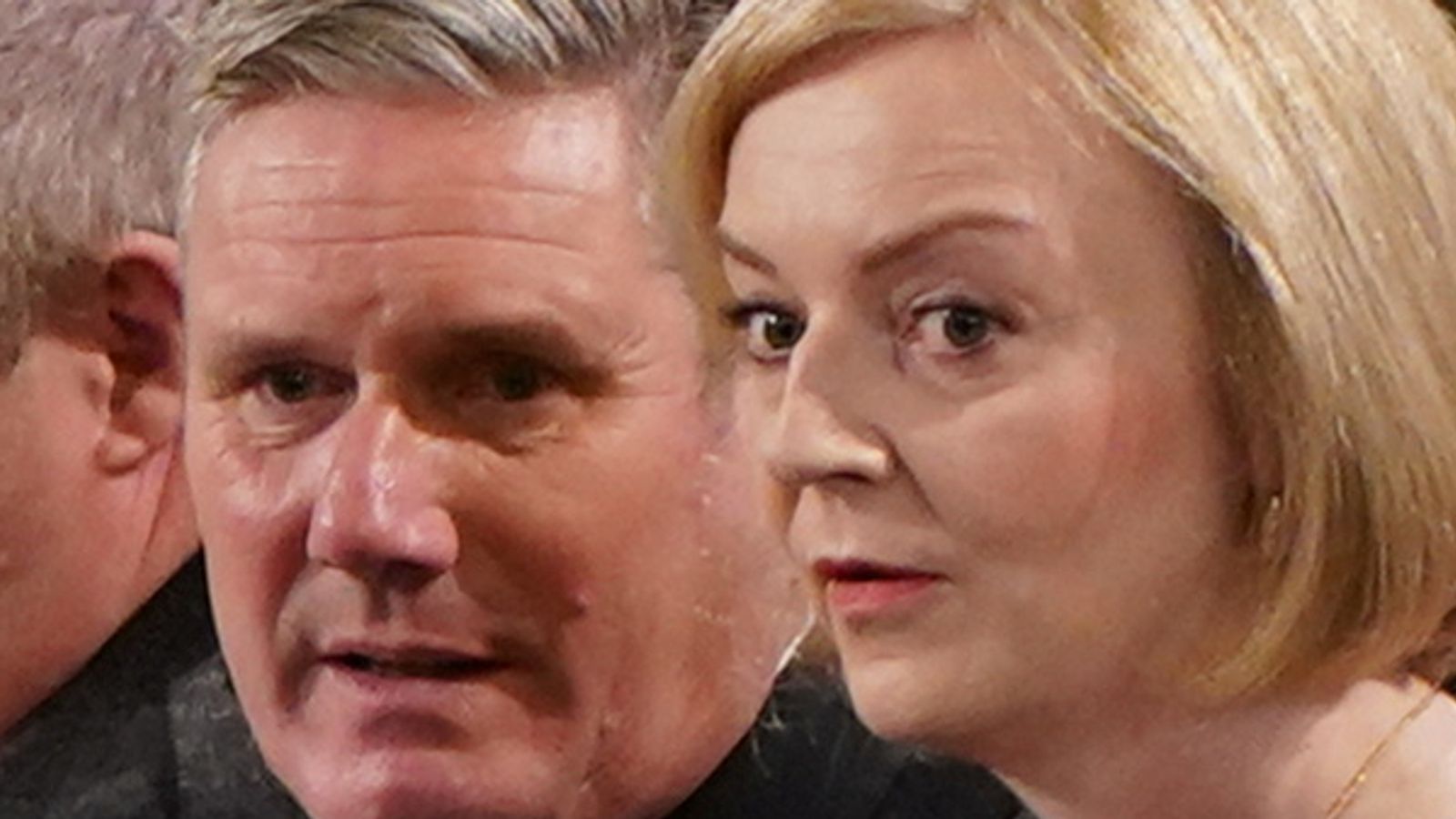
Over a third of people think Rachel Reeves exaggerated economic bad news in the run-up to the budget – twice as many as thought the chancellor was being honest, a new Sky News poll has found.
Some 37% told a YouGov-Sky News poll that Ms Reeves made out things were worse than they really are. This is much higher than the 18% who said she was broadly honest, and the 13% who said things were better than she presented.
This comes in an in-depth look at the public reaction to the budget by YouGov, which suggests widespread disenchantment in the performance of the chancellor.
Just 8% think the budget will leave the country as a whole better off, while 2% think it will leave them and their family better off.
Some 52% think the country will be worse off because of the budget, and 50% think they and their family will be worse off.
This suggests the prime minister and chancellor will struggle to sell last week’s set-piece as one that helps with the cost of living.
Some 20% think the budget worried too much about help for older people and didn’t have enough for younger people, while 23% think the reverse.
The poll found 57% think the chancellor broke Labour’s election promises, while 13% think she did not and 30% are not sure. Some 54% said the budget was unfair, including 16% of Labour voters.
And it arguably gets worse…
This comes as the latest Sky News-Times-YouGov poll showed Labour and the Tories are now neck and neck among voters.
The two parties are tied on 19% each, behind Reform UK on 26%. The Greens are on 16%, while the Liberal Democrats are on 14%.
This is broadly consistent with last week, suggesting the budget has not had a dramatic impact on people’s views.
However, the verdict on Labour’s economic competence has declined further post-budget.
Asked who they would trust with the economy, Labour are now on 10% – lower than Liz Truss, who oversaw the 2022 mini-budget, and also lower than Jeremy Corbyn in the 2019 election.
The Tories come top of the list of parties trusted on the economy on 17%, with Reform UK second on 13%, Greens on 8% and Lib Dems on 5%. Nearly half, 47%, don’t know or say none of them.
Only 57% of current Labour voters say the party would do the best job at managing the economy, falling to 25% among those who voted Labour in the 2024 election.
Some 63% of voters think Ms Reeves is doing a bad job, including 20% of current Labour voters, while just 11% of all voters think she is doing a good job.
A higher proportion – 69% – think Sir Keir Starmer is doing a bad job.
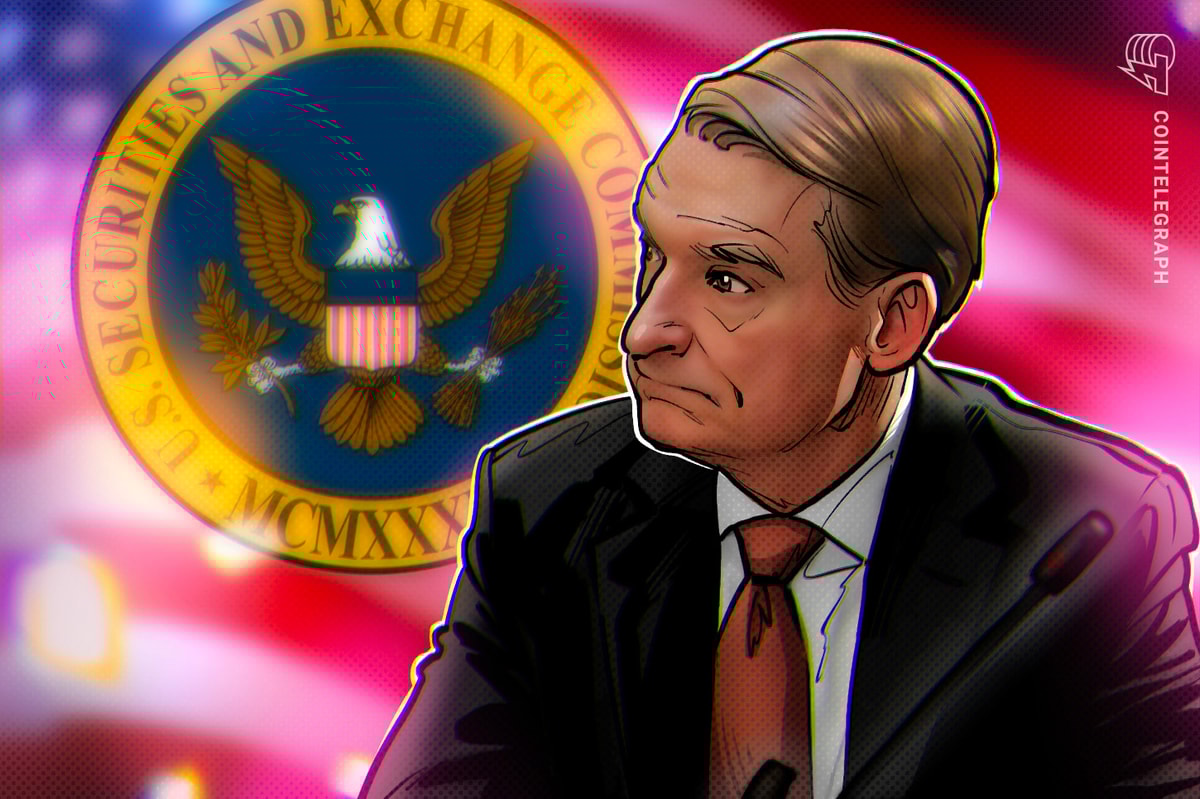
Paul Atkins, chair of the US Securities and Exchange Commission, said that the agency can continue advancing digital asset regulation without legislation from Congress, signaling his expectations for the industry in 2026.
In a CNBC interview released on Tuesday, Atkins said the SEC was providing “technical assistance” as Congress considered legislation for digital asset regulation, likely referring to the market structure bill working its way through the US Senate. Atkins said that although the agency’s operations were impacted by the longest US government shutdown in the country’s history, he continued to make progress on “rules that are focused on helping [the crypto] sector.”
“We have enough authority to drive forward,” said Atkins. “I’m looking forward to having an innovation exemption that we’ve been talking about now. We’ll be able to get that out in a month or so.”

Atkins, whom the US Senate confirmed to chair the SEC in April after his nomination by US President Donald Trump, has taken steps to reduce the number of enforcement actions against crypto companies, including by issuing no-action letters for decentralized physical infrastructure networks.
His actions align with many of the policy directives from the White House under Trump, who has issued several executive orders touching on crypto and blockchain.
Related: Republicans urge action on market structure bill over debanking claims
The SEC chair rang the opening bell at the NYSE on Tuesday, outlining his plans for the agency “on the cusp of America’s 250th anniversary.”
US regulators are still awaiting progress on a market structure bill
Lawmakers on the US Senate Agriculture Committee and the Senate Banking Committee are taking steps to move forward with a digital asset market structure bill, which will outline the regulatory authority of agencies, including the SEC and Commodity Futures Trading Commission, over cryptocurrencies.
Senate Banking Chair Tim Scott said that the committee planned to have the bill ready for markup in December.
Magazine: When privacy and AML laws conflict: Crypto projects’ impossible choice
-
 Sports2 years ago
Story injured on diving stop, exits Red Sox game
-
 Sports3 years ago
‘Storybook stuff’: Inside the night Bryce Harper sent the Phillies to the World Series
-
 Sports2 years ago
Game 1 of WS least-watched in recorded history
-
 Sports3 years ago
Button battles heat exhaustion in NASCAR debut
-
 Sports3 years ago
MLB Rank 2023: Ranking baseball’s top 100 players
-
Sports4 years ago
Team Europe easily wins 4th straight Laver Cup
-
 Environment3 years ago
Japan and South Korea have a lot at stake in a free and open South China Sea
-
 Environment1 year ago
Here are the best electric bikes you can buy at every price level in October 2024