

Lectric eBikes recalls 45,000 XP 3.0 e-bikes due to mechanical brake issue

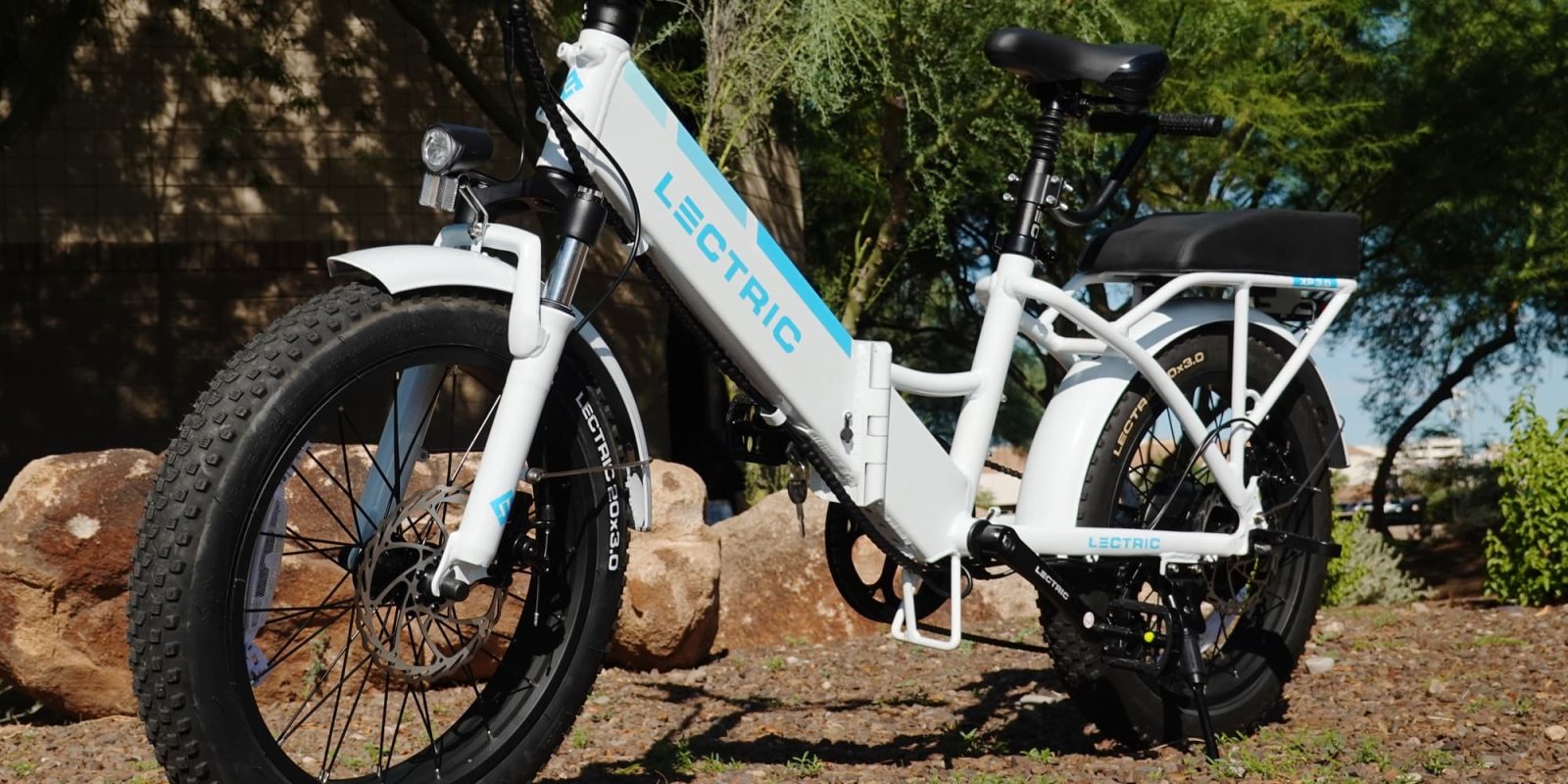
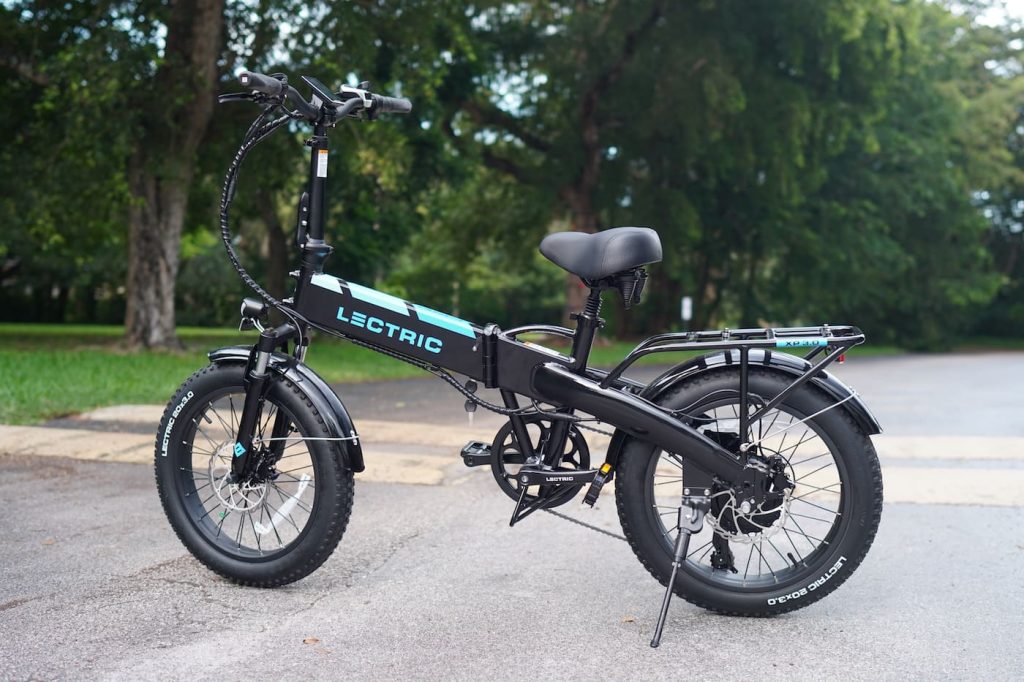
Lectric eBikes, one of the largest suppliers of electric bicycles in the US, made a joint announcement today with the Consumer Product Safety Commission (CPSC) of a voluntary recall for many of the Lectric XP 3.0 electric bikes produced and sold earlier this year.
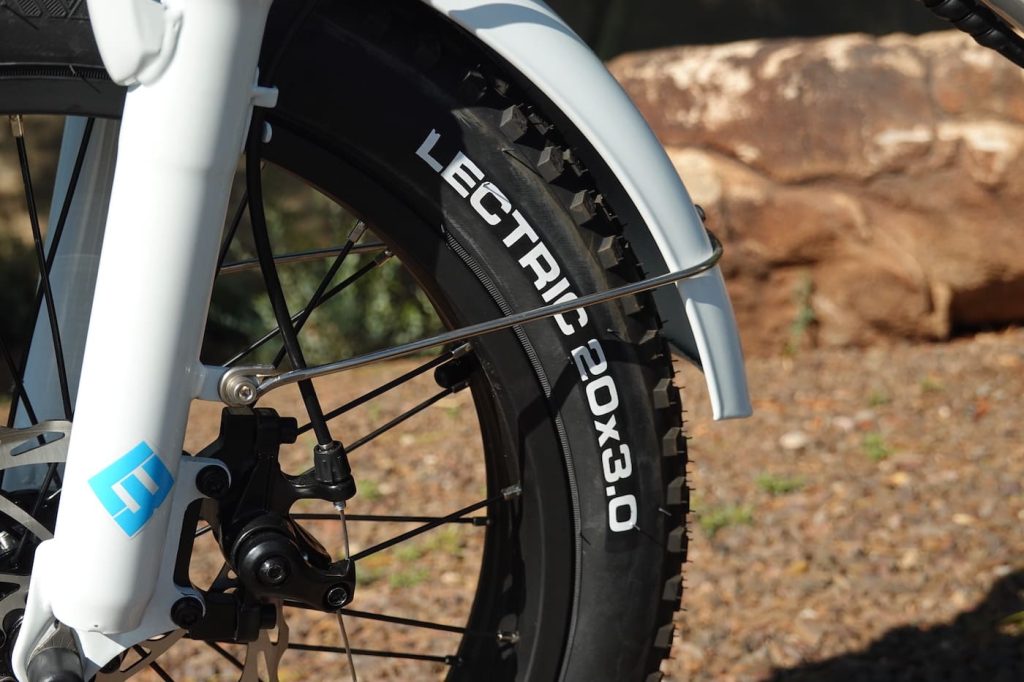
The recall is related to a braking issue with the mechanical brake calipers on the bikes.
According to the announcement, “the mechanical disc brake calipers located on the front and rear of the e-bike can fail resulting in loss of control, posing crash and injury hazards to the rider.” The recall covers approximately 45,000 Lectric XP 3.0 electric bikes with mechanical brakes sold between November 2022 and May 2023.
Among those 45,000 e-bikes, there were four instances reported of brake failure due to a faulty part in the brakes produced by one of Lectric eBikes’ suppliers. Two of those instances resulted in injuries to the rider.
That model hasn’t been sold since May of this year when Lectric eBikes switched the XP 3.0 over to hydraulic disc brakes.
Recalled e-bikes to get at-home upgrade kits
Lectric eBikes has prepared a remedy for the affected bikes that includes a hydraulic disc brake upgrade kit. The kit is designed to be simple enough for most riders to install on the bikes themselves in 10 to 15 minutes, but Lectric will pay for a bike shop to professionally install the hydraulic disc brakes for anyone who doesn’t want to install the new brake kit alone.
The hydraulic disc brake upgrade kits are already available, and Lectric eBikes is contacting owners of all affected bikes to get their hydraulic brake kits sent out immediately.
I spoke with Lectric eBikes cofounder and CEO Levi Conlow about the recall, and he explained that “once we learned of the issue, we immediately stopped selling those e-bikes with mechanical disc brakes.”
They then reached out to the CPSC to begin the process of a voluntary recall.
The four instances of brake failure only occurred under a certain scenario when the brake cable was not properly adjusted, and so the company also sent out a service bulletin to its riders explaining how to check and adjust their brakes to ensure that any potentially affected brake calipers would be properly adjusted to prevent any future failures. The company also began offering its hydraulic brake upgrade kit for free to any XP 3.0 e-bike owners back in May, and around half of its customers have already taken the company up on the offer to receive a free hydraulic brake replacement in advance of the recall announcement today.
Despite Lectric eBikes electing to enroll in the Fast Track Recall program, it is common for companies engaging in recalls with the CPSC to be barred from officially announcing the recall until the CPSC makes a joint statement. In this case, it looks like Lectric stopped selling the models in May when it announced its hydraulic brake upgrades, but the CPSC’s announcement only came in September.

Lectric eBikes had already been in the process of moving the Lectric XP 3.0 e-bike line to hydraulic disc brakes, but expedited those plans when it discovered the mechanical brake issue. “We moved up our hydraulic brake timeline by around six months,” Conlow explained. “It was supposed to be our big November launch.”
But for the company, it was important to make those changes quickly despite the small number of brake failures. “We knew we were going to do the right thing. We weren’t going to cheap out or wait until 200 incidents were reported.”
For Conlow, the most important thing in the days following the discovery was to act quickly as they could and make the process as easy and safe for riders as possible. “For us, it was important to spare no expense. We’re paying for shop installations. We have the replacement kits in stock already, right now. In fact, I probably bought way too many of them, but we knew we had to have enough to have everyone covered right away.”
Anyone seeking more information on the recall can reach out to Lectric eBikes at 879-479-5422 or find more information online at https://www.lectricbikesrecall.expertinquiry.com or at www.lectricbikes.com under the recalls tab for more information.
E-bike industry recalls
The last few years have seen several large recalls in the e-bike industry. One of the freshest on the minds of many riders involved the RadWagon 4, a cargo e-bike that was recalled due to a wheel issue. Over 29,000 of those models were recalled after 137 reports of tire failures, and riders were left waiting several months for upgrade kits to arrive.
Trek recently issued a recall for over 96,000 bikes that had a separate braking issue related to the brake cables and housing. In that case, the bikes continued to be sold over a nearly two-year period from June 2021 to March 2023 until the recall was issued in June of 2023. A total of 195 cases of brake failure were reported.
Electrek’s Take
This is certainly an unfortunate turn of events, and anyone who owns a Lectric XP 3.0 with mechanical disc brakes should absolutely reach out to Lectric to get their free hydraulic upgrade kit. Even if your brakes appear to be fine, you never know if there’s a defect inside your brake caliper. Plus, higher quality hydraulic disc brakes are a great upgrade – and there’s no price better than free!
Unfortunately recalls do happen from time to time in any consumer product industry, but I’m glad to see that Lectric appears to be handling it quite well. The problem seems to have been related to a small number of improperly produced brake calipers (with only four reported failures), but since Lectric couldn’t know exactly how many or which bikes were affected, they immediately reached out to all XP 3.0 customers to help them adjust their brakes properly to prevent the issue from occurring even if the brakes contained the manufacturing defect. Then it seems to me like they’ve worked to officially recall the bikes as fast as they were allowed to by the CPSC, and they already have the solution in stock and shipping out. As far as recalls go, this is about as good as it gets, in my opinion.
Obviously it would be better if the brake defect had been found before it ever made it out, but this also highlights a unique advantage of the direct-to-consumer business model. For example, in the case of Trek, their brake recall included nearly 100,000 bikes across over a dozen models. And since they sell through dealers, Trek was somewhat hamstrung in contacting customers since it simply didn’t know where all of its bikes were. With D2C sales like Lectric’s and many other value-priced electric bike manufacturers, direct sales mean the company knows who all of its customers are and can contact them directly. D2C isn’t better for everything, but in this case it appears to have been an advantage.
Lastly, the recall gives us interesting insight into Lectric’s sales figures. In a six-month period from November 2022 to May 2023, Lectric seems to have sold 45,000 of its XP 3.0 models. Extrapolated to 90,000 bikes annually (though that may not be entirely accurate due to seasonal sales impacts) in just one of the company’s several model lines, those are some impressive sales numbers.
FTC: We use income earning auto affiliate links. More.


Europe is pressing ahead with plans to ban Russian gas imports by the end of 2027, effectively capping Moscow’s energy future in the region and leaving a bevy of stranded assets in its wake.
The dual Nord Stream 1 and 2 subsea pipelines were early casualties of Russia’s invasion of Ukraine, with the infrastructure being sabotaged in late 2022 and the latter pipeline — costing $11 billion to build and aimed at doubling cheap Russian gas flows to Germany — never being certified for use.
There had been speculation that the major energy infrastructure could eventually be resurrected if, or rather when, the war between Russia and Ukraine ends and there’s a peace agreement between the parties.
However, talks to try to establish the grounds for a ceasefire have been moving at a snail’s pace with neither side willing to cross “red lines” regarding the permanent surrender of territory, be it sovereign or occupied. Speaking with British news website UnHerd, Vance said Monday that while the U.S. is going to “try to get this thing solved,” he “wouldn’t say with confidence that we’re going to get a peaceful resolution.”
Hopes of a deal have led to questions over what economic and energy links between Russia and the rest of the world could be re-established and, when it comes to Europe, whether a ceasefire could lead to a reintegration of Russian gas and the resurrection of the Nord Stream gas pipelines.
Such a move would be highly contentious and divisive on the continent, given Russia’s full-scale invasion of Ukraine in 2022 and attempts in the region to wean itself off cheaper Russian gas.
In 2021, before the war, Russian imports accounted for about 45% of the European gas consumption. This year, estimates expect imports of 13%.
Ukraine would be outraged by any move that benefited its invader, and Poland has called for the pipelines — one of which has never been used — to be “dismantled.”
That said, Ukraine itself benefited from an older pipeline that passes through the country as it collected transit fees. The Russia–Ukraine gas transit agreement expired at the end of 2024, with the two countries opting not to renew it given the war. The Nord Stream pipelines were specifically designed to circumvent Ukraine and avoid such fees, but the transit agreement could be one of many levers to use during negotiations if the tap is turned back on.
The U.S. would likely baulk at the return of Nord Stream as it has hoped to muscle out Moscow and increase its market share of liquefied natural gas (LNG) sales to Europe. But Germany, which is directly connected to the pipeline and whose industries are struggling with high energy costs, might find the lure and return of Russian gas supplies hard to resist.
The European Council and Parliament in December struck a provisional agreement on regulation to phase out imports of Russian gas. It is set to implement a full ban on liquefied natural gas (LNG) and pipeline gas imports from the end of 2026 and autumn 2027, respectively.
Is Nord Stream salvageable?
The Danish Energy Agency in January granted permission for Nord Stream 2 to carry out preservation work on its damaged pipelines that are located within Denmark’s exclusive economic zone (EEZ) in the Baltic Sea.
“The purpose of the works is to prevent further gas blowout and the ingress of oxygenated seawater, that could potentially lead to corrosion,” the agency told CNBC, although the preservation works on Nord Stream 2 have not commenced yet.
The permit has been granted on a number of conditions, the agency said, that are intended to ensure safe operation of the pipeline. It added that, among other conditions, the company must submit an annual plan for the pipeline facility “so that the Danish Energy Agency can continuously monitor the company’s plans for the facility’s future.”

“Furthermore, all conditions in such permits would have to be fulfilled before the pipelines can be put into operation. The Danish Energy Agency has not received any such applications,” it said.
But are the Norstream pipelines even salvageable now?
Sergey Vakulenko, senior fellow at the Carnegie Russia Eurasia Center, told CNBC that the pipeline that was damaged in the sabotage incidents would need replacing in part, and the remaining undamaged one would not cost “much money at all” to resurrect.
“I think they’re still repairable, salvageable. So you could have to cut a few miles of [the damaged] pipeline and replace it. But this could be done,” he told CNBC in October.
“It could easily cost $1 billion or something like that, but there’s still one [pipeline] at operational strength so that could be used,” he said. Asked if the pipelines — which are filled with stagnant gas — are being looked after currently, Vakulenko said: “They’re not looked after at all.”
Can Europe stomach Russian gas, again?
Whether Europe could resume purchases from Russia again is the big question.
“Each of the Nord Streams [pipelines] were 55 million cubic meters. So that one remaining is 27.5 million cubic meters … and that’s probably the top of what Europe would be prepared to buy from Russia,” Vakulenko said.
He said that if there was a change of government in Russia and Putin was no longer president, Europe would be “quite willing to buy some Russian gas,” but not if the same amounts it was buying before.
“Then Nord Stream would come in handy. But that’s [a] very big ‘IF,'” he added.
“On the one hand, Europe, or at least there are parties [countries] in Europe, who wouldn’t mind having at least some Russian gas in the European energy mix for a number of reasons, to not be too reliant on U.S. supply. Russia is the lowest cost supplier to Europe,” he said.
The continent has not fully recovered from the energy crisis stemming from the full-scale invasion of its neighbour. The Dutch Title Transfer Facility, Europe’s main benchmark for natural gas prices, was double its pre-war prices in early 2025, per the IEA. Energy constraints are compounded further by the AI race, which has shifted public narratives from energy transition to energy addition.
“So if you’re not too squeamish to buy Russian gas, if you don’t have to hold your nose too tight by buying it, then sure, there’s a lot of commercial and economic reasons as to why [to do it]. If it becomes politically, ethically palatable, then there will be quite a lot of stimuli to do so, but that’s again for the time when there is indeed some rapprochement between Russia and Europe, and that’s [a] big ‘if’,” Vakulenko said.
However, Tancrede Fulop, utilities and renewables analyst at Morningstar, told CNBC that it would be too difficult to reintegrate Russian gas, at least in the short term, because of the fresh European legislation. He noted, however, that the legislation does include some exceptions for Hungary and Slovakia in emergency situations.
The policy shift was also rooted in a drive for energy independence after Russia’s “weaponisation of gas supplies,” the EU said. As a result, member states are likely to stay clear of an overreliance on one state going forward and instead invest in boosting overall domestic capacity.
Does Russia want European business?
Whether Russia would want to sell its gas to Europe is another looming question.
“Everybody thinks the energy crisis started with war in Ukraine, but it actually started in 2021,” Fulop said, noting several drivers of a cold winter, low wind speeds, and therefore high gas consumption.
Adding to the crisis was the fact that the EU was late to clear Nord Stream 2 for operations. “And so Russia started to reduce the flows of gas sent to the EU,” before the war started, he said. This suggests that the move from Russia may have been intended to add pressure on Europe to pick up the pace with Nord Stream 2.
On the other hand, “Russia is not in a very strong negotiating position,” according to Vakulenko. “For Russia, that gas is a stranded resource. So you could expect [that Europe] could negotiate a good deal.”
Russia has also looked to Asia as an alternative partner to Europe and has deepened ties with China via the Power of Siberia pipeline.
Even if a peace deal with Ukraine is reached, “the message is quite alarming” around another potential conflict with Russia, Fulop said, given the flouting of European airspace in recent months.
Ultimately, a renewed embrace of Russian gas “doesn’t seem like the most realistic scenario.”
It helps that gas prices have fallen lately, he added, perhaps with market watchers pricing in a peace deal. The EU will also benefit from the new export terminals in the U.S.
“This is bearish for gas prices, positive for Europe, and that could offset the end of Russian gas imports,” Fulop said.

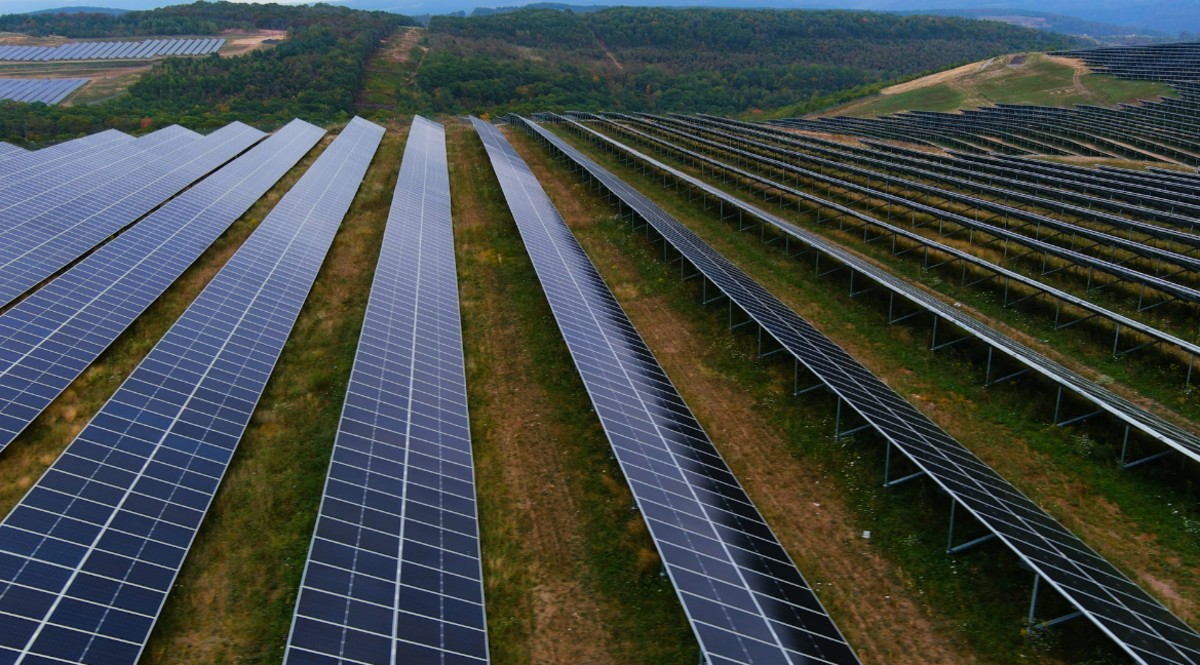
A former coal mine in western Maryland is now generating solar power – and it’s the largest solar farm in the state. Competitive Power Ventures (CPV) has brought Maryland’s largest solar project online in Garrett County, turning reclaimed coal mine land into a source of clean electricity.
CPV Renewable Power, an affiliate of CPV, and investment partner Harrison Street Asset Management have started commercial operations at CPV Backbone Solar, a 160-megawatt solar project in western Maryland. The site sits on a reclaimed, decommissioned coal mine, turning previously disturbed land into a new source of clean power.
Construction of the project was handled by Vanguard Energy Partners, a solar engineering, procurement, and construction firm.
The project comprises approximately 324,000 solar panels and is expected to generate enough electricity to power around 30,000 homes. For Maryland, it adds new in‑state generation while giving former fossil fuel land a second life.
CPV says that the project aims to demonstrate the role of brownfield redevelopment in the energy transition. The company’s CEO, Sherman Knight, said Backbone Solar shows “how brownfield redevelopment, innovative engineering, and strategic partnerships can meet complex project challenges and deliver new power generation in Maryland.”
Local officials have welcomed the project. Garrett County Board Chairman Paul Edwards said bringing the solar facility to the county helps protect the region’s natural landscape while also creating economic value for local residents.
CPV Backbone Solar also includes a community and environmental investment tied to the project. CPV has committed $100,000 over four years to the Deep Creek Watershed Foundation.
Backbone Solar becomes part of CPV’s growing renewable portfolio, which includes four operating wind and solar projects. The company also says it has a 4.8-gigawatt renewable development pipeline.
A second phase of the Backbone Solar project is already under construction. Once completed, it’s expected to increase the site’s total installed capacity from 160 MW to 175 MW.
Read more: Fast charge your EV while grabbing Royal Farms fried chicken

If you’re looking to replace your old HVAC equipment, it’s always a good idea to get quotes from a few installers. To make sure you’re finding a trusted, reliable HVAC installer near you that offers competitive pricing on heat pumps, check out EnergySage. EnergySage is a free service that makes it easy for you to get a heat pump. They have pre-vetted heat pump installers competing for your business, ensuring you get high quality solutions. Plus, it’s free to use!
Your personalized heat pump quotes are easy to compare online and you’ll get access to unbiased Energy Advisors to help you every step of the way. Get started here. – *ad


FTC: We use income earning auto affiliate links. More.
-
 Sports2 years ago
Story injured on diving stop, exits Red Sox game
-
 Sports3 years ago
‘Storybook stuff’: Inside the night Bryce Harper sent the Phillies to the World Series
-
 Sports2 years ago
Game 1 of WS least-watched in recorded history
-
 Sports3 years ago
Button battles heat exhaustion in NASCAR debut
-
 Sports3 years ago
MLB Rank 2023: Ranking baseball’s top 100 players
-
Sports4 years ago
Team Europe easily wins 4th straight Laver Cup
-
 Environment3 years ago
Japan and South Korea have a lot at stake in a free and open South China Sea
-
 Environment1 year ago
Here are the best electric bikes you can buy at every price level in October 2024