
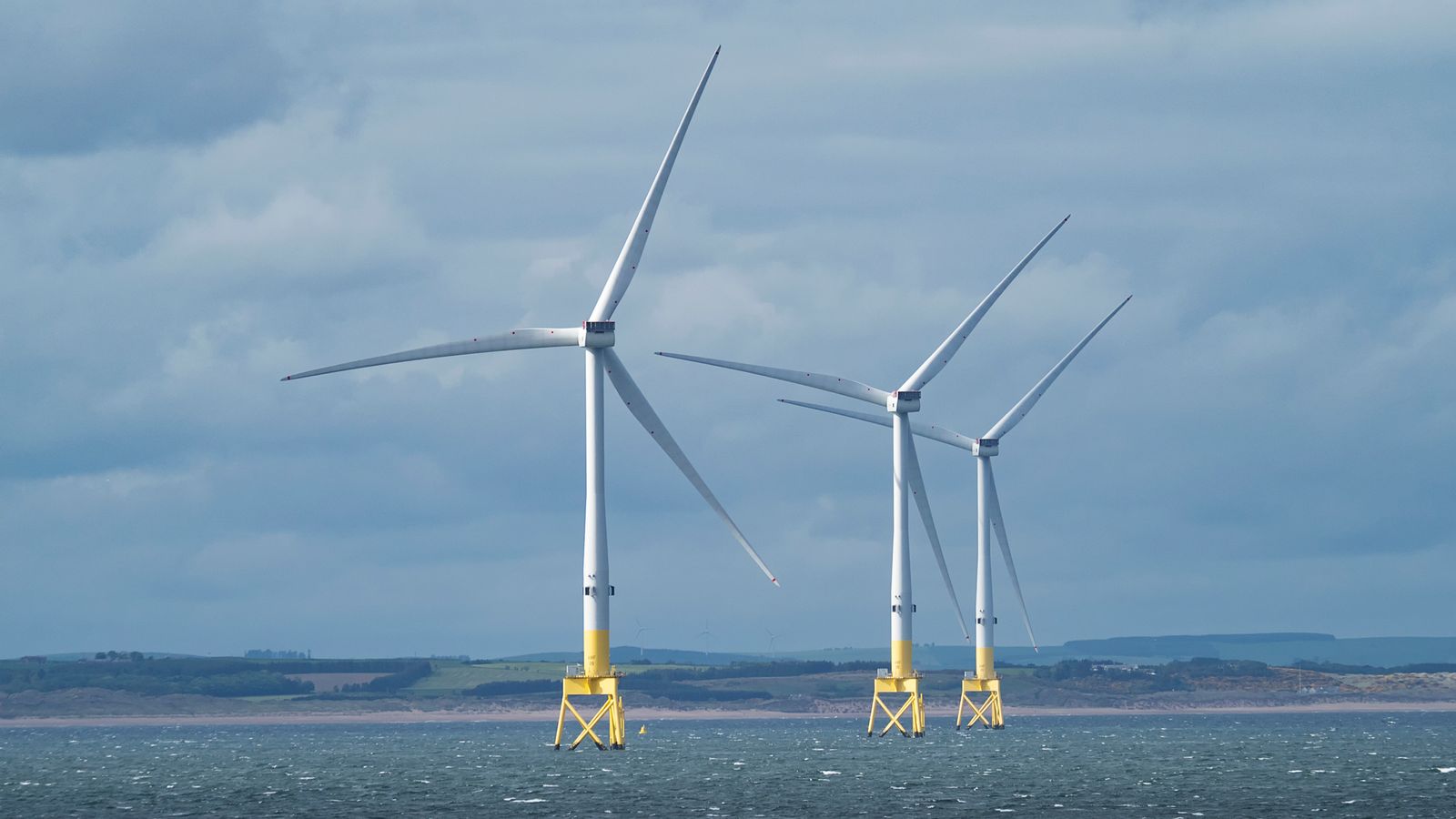
Blow for green energy plans as no firms bid for offshore wind contracts

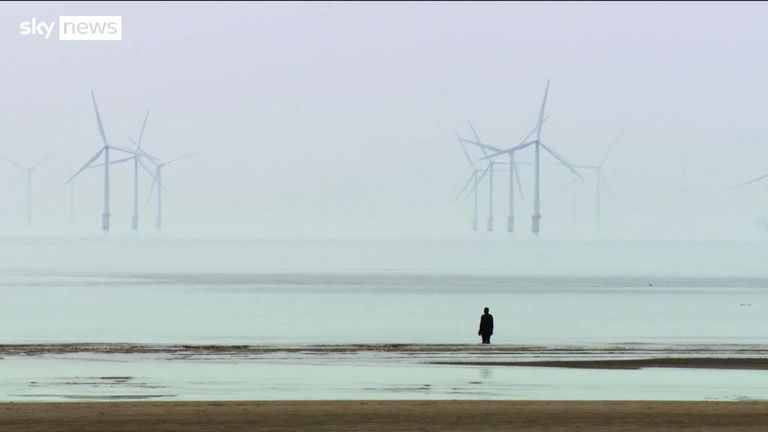
The government’s green energy plans have been dealt a blow after firms snubbed an auction for contracts to run new offshore wind sites, sparking warnings of higher household bills.
There were successful bids for onshore wind, solar, tidal and geothermal projects to supply the grid with electricity.
However, there were none for offshore turbines, which provide the backbone of the UK’s renewables system.
Insiders had warned the process had struggled to attract bidders because the government has set the maximum price generators can receive as too low, failing to reflect the rising costs of manufacturing and installing turbines.
The industry has been hit by inflation that has seen the price of steel rise by 40%, supply chain pressures and increases in the cost of financing.
This year offshore wind producers were allowed a maximum bid of £44 per megawatt hour (MWh) of electricity, compared to £155 per MWh in 2015, based on adjusted figures.
The outcome of the auction is a setback to ministers’ pledge to deliver 50 gigawatts (GW) of offshore wind by 2030, from 14 GW currently.
Energy and climate change minister Graham Stuart said: “We are delighted that our first annual contracts for difference auction has seen a record number of successful projects across solar, onshore wind, tidal power and, for the first time, geo-thermal.
“Offshore wind is central to our ambitions to decarbonise our electricity supply and our ambition to build 50GW of offshore wind capacity by 2030, including up to 5GW of floating wind, remains firm.
“The UK installed 300 new turbines last year and we will work with industry to make sure we retain our global leadership in this vital technology.”
‘Prices have been set too low for the sums to add up’
With offshore wind turbines now producing electricity much cheaper than gas power plants, experts have warned the failure to expand the sector threatens higher bills, undermines the country’s energy security and risks the UK’s position as a world leader in the industry.
Keith Anderson, the chief executive of ScottishPower, which is one of the key builders of wind power in the UK, said: “This is a multi-billion pound lost opportunity to deliver low-cost energy for consumers and a wake-up call for government.
“ScottishPower is in the business of building wind farms and our track record is second-to-none in terms of getting projects over the line when others haven’t been able to. But the economics simply did not stand up this time around.”
Read more:
Government to relax onshore wind planning rules
Could an onshore wind farm end up on your doorstep?
Labour’s Ed Miliband branded the outcome of the auction an “energy security disaster” that would push up household bills.
The shadow energy security secretary said: “The Conservatives have now trashed the industry that was meant to be the crown jewels of the British energy system, blocking the cheap, clean, homegrown power we need.
“Ministers were warned time and again that this would happen, but they did not listen.
“They simply don’t understand how to deliver the green sprint, and Rishi Sunak’s government is too weak and divided to deliver the clean power Britain needs.”
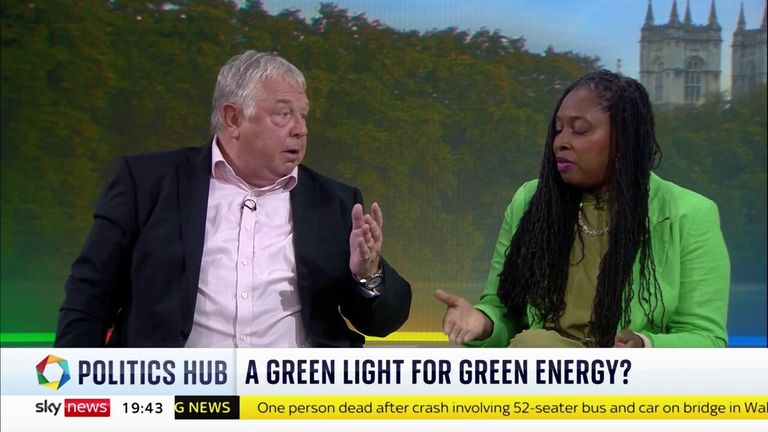
“Who wants to open their curtains to a wind turbine?”
Sue Ferns of the Propsect union said: “Businesses and workers stand ready to deliver a rapid rollout of renewables but the government’s failure to set sustainable prices is holding the industry back.”
Greenpeace UK’s policy director, Doug Parr, said: “This monumental failure is the biggest disaster for clean energy in almost a decade.
“Thanks to cost pressures and inept government policy, this auction round has completely flopped – denying bill payers access to cheap, clean energy and putting the UK’s legally binding target of decarbonising power by 2035 in greater jeopardy.”
Luke Murphy of the IPPR think tank said “This was an avoidable yet deeply harmful failure of government policy and planning.
“The UK will miss out on billions in green investment, cheaper energy bills, and lower emissions as a result, and cement the idea that the UK has somersaulted from a clean energy leader to laggard.”
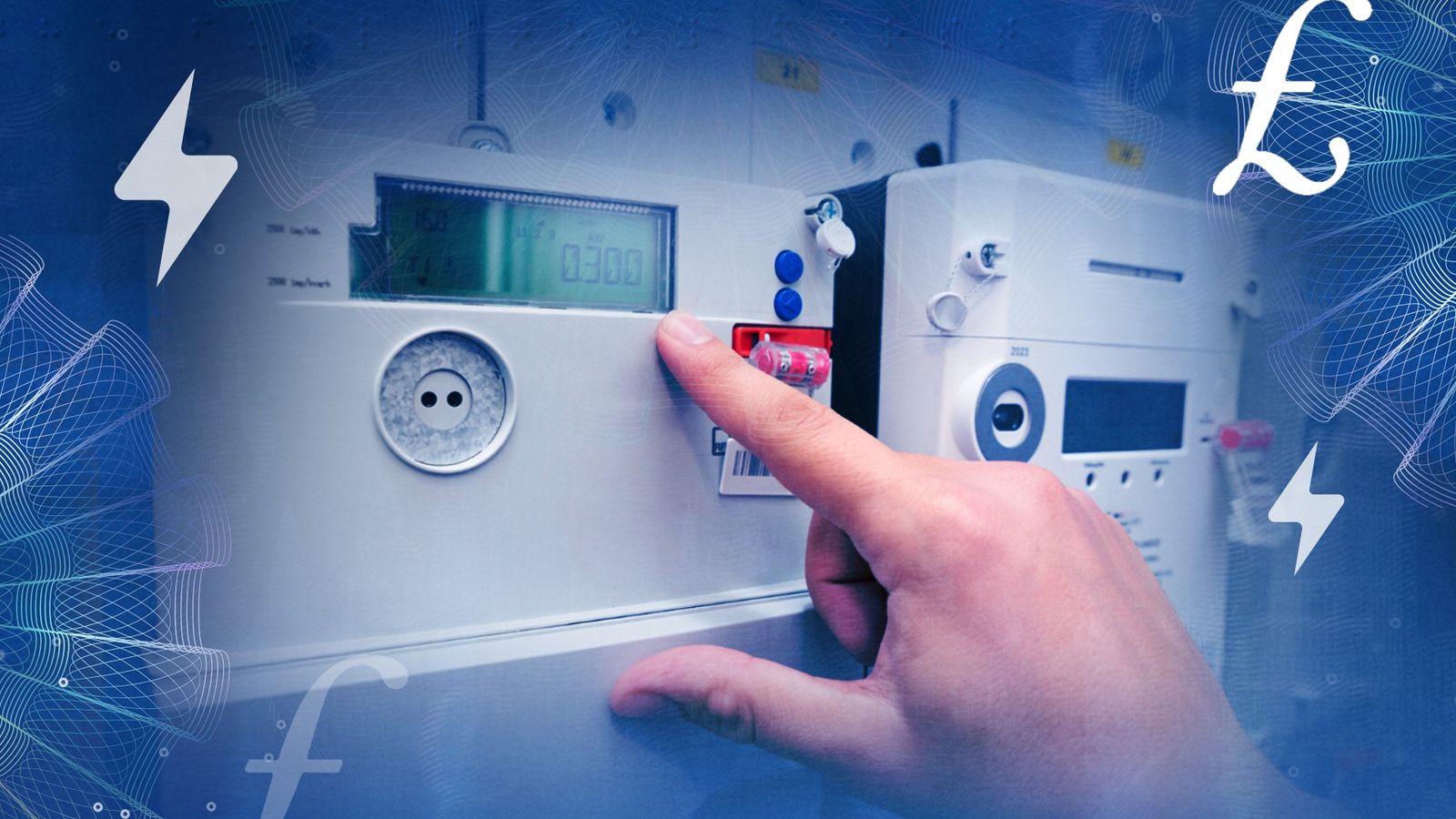

The energy regulator has confirmed plans for a massive upgrade to the UK’s energy grids, adding £108 to customer bills by 2031.
Ofgem said on Thursday that the £28bn investment over the next five years would bolster resilience in the transition to a renewable energy future and that much of the bill would be offset by increased efficiency.
It pointed to estimated savings for households of around £80 because of the planned investment in gas and power infrastructure, leaving a net additional contribution of £28.
Money latest: Is property still a good investment?
Ofgem said the £28bn sum formed part of an estimated £90bn to be invested in the energy networks by 2031, with “adaptive” funding arrangements helping to shield customers from volatility in the market.
Most of the funding announced on Thursday will go towards maintaining gas networks, which will remain a key source of energy as green power capacity is built up further.
“Investing now to maintain world-class resilience and expand grid capacity is the most cost-effective way to harness clean power, support economic growth and protect the country from gas price shocks like the one seen in 2022”, Ofgem said.
What’s driving energy prices higher?
Then, Russia’s invasion of Ukraine and Europe’s refusal to buy Russian gas in response, meant that energy bills hit unprecedented levels and gave birth to the wider cost-of-living crisis as higher energy costs were passed on across the economy.
Read more: Paying up front for energy future should lead to tangible savings
Ofgem made its announcement as costs of government energy policy and other upgrades make the biggest upwards contributions to household bills. However, the budget moved to take away some costs from April next year.
Ofgem boss Jonathan Brearley said: “The funding announced today will keep Britain’s energy network among the safest, most secure and resilient in the world. The investment will support the transition to new forms of energy and support new industrial customers to help drive economic growth and insulate us from volatile gas prices.
“But this is not investment at any price. Every pound must deliver value for consumers. Ofgem will hold network companies accountable for delivering on time and on budget, and we make no apologies for the efficiency challenge we’re setting as the industry scales up investment.
“We’ve built strong consumer protections into these contracts, meaning funds will only be released when needed and clawed back if not used. Households and businesses must get value for money, and we will ensure they do.”

‘It’s either keep warm or eat’
A Department for Energy Security and Net Zero spokesperson said: “This government is taking action to bring down energy bills for families, with the budget taking an average £150 of costs off bills in April, and expanding our £150 Warm Home Discount to over six million families.
“Upgrading our gas and electricity networks after years of underinvestment is essential to keep the lights on and ensure energy security for our country. Without these plans, which were first set out under the previous government, costs would spiral and our security would be compromised.
“The only way to bring down bills for good and get off the fossil fuel rollercoaster is with this government’s mission to deliver clean homegrown that we control.”


The UK government is being urged to take even stronger action to tackle the ongoing crisis of families unable to afford baby formula milk.
The prime minister backed limited reforms to the market to help parents save money but will not yet support more radical changes.
Sir Keir Starmer confirmed support for better public health messaging to inform parents that cheaper brands are nutritionally equivalent when compared with the most expensive.
A ban on spending store loyalty points on baby formula will also be lifted.
They were among recommendations made by the Competition and Markets Authority which investigated the baby formula industry and described the price rises in recent years as unjustifiable.
A newborn. File Pic: iStock
In the House of Commons the prime minister said: “For too long parents have been pushed into spending more on infant formula.
“They were told they’re paying for better quality and left hundreds of pounds out of pocket.
“I can announce today that we’re changing that. We will take action to give parents and carers the confidence to access infant formula at more affordable prices, with clearer guidance for retailers on helping new parents use loyalty points and vouchers together.”
It comes two-and-a-half years after a Sky News investigation revealed the extreme measures families were taking to feed their babies.

Rising cost of baby formula has hidden dangers
Read more:
Affordability of formula milk a ‘constant’ pressure
Genetics testing start-up offers to ‘genetically optimise’ would-be parents’ babies
Parents described how they had resorted to stealing to feed their infants, some were watering down formula milk or substituting it for condensed milk.
The British Pregnancy Advisory Service described the situation in 2023 as a “national scandal”.
Campaigners told Sky News the UK government needed to go further to address the crisis.
Co-founder of Feed UK Erin Williams told Sky News: “It is progress, they promised to look at this enormous nationwide problem and they have.
“At the moment women are still not routinely getting important information before giving birth – this should be given proactively to everybody and that will be a big win.
“The prime minister though needs to be tougher on the baby formula companies.
“Their marketing claims, their unjustified pricing – it’s stacked against families who just need to feed their babies safely.”
The UK government stopped short of accepting all of the recommendations made by the CMA.
More radical ideas such as a price cap on baby formula are not being considered.
Charities have also told Sky News the situations some families find themselves in have not eased.
Founder of the Hartlepool Baby Bank, Emilie De Bruijn, told Sky News the demand they see from desperate families is “constant and unmanageable”.
She said: “Parents are really feeling the pinch right now, and demands on baby banks are rising and it can feel quite relentless.
“We are pleased to see the extension of the National Breastfeeding Helpline alongside measures such as allowing parents to use points and vouchers.
“It is important that parents are supported to feed their children in whatever way they want and we hope that steps will continue to be taken to reduce the cost of formula and increase understanding that all brands are nutritionally the same.”
-
 Sports2 years ago
Story injured on diving stop, exits Red Sox game
-
 Sports3 years ago
‘Storybook stuff’: Inside the night Bryce Harper sent the Phillies to the World Series
-
 Sports2 years ago
Game 1 of WS least-watched in recorded history
-
 Sports3 years ago
Button battles heat exhaustion in NASCAR debut
-
 Sports3 years ago
MLB Rank 2023: Ranking baseball’s top 100 players
-
Sports4 years ago
Team Europe easily wins 4th straight Laver Cup
-
 Environment3 years ago
Japan and South Korea have a lot at stake in a free and open South China Sea
-
 Environment1 year ago
Here are the best electric bikes you can buy at every price level in October 2024