Connect with us

Published

on

As a fourth-year ophthalmology resident at Emory University School of Medicine, Riley Lyons biggest responsibilities include triage: When a patient comes in with an eye-related complaint, Lyons must make an immediate assessment of its urgency. Use Our Content

It can be republished for free. Are you covered by Medi-Cal?

We want to hear about your experiences and, with your permission, may incorporate your story into our coverage. Please tell us what it has been like for you as you have sought and received care, including the good and the bad, the obstacles and the successes.Share Your Story

He often finds patients have already turned to Dr. Google. Online, Lyons said, they are likely to find that any number of terrible things could be going on based on the symptoms that they’re experiencing.

So, when two of Lyons fellow ophthalmologists at Emory came to him and suggested evaluating the accuracy of the AI chatbot ChatGPT in diagnosing eye-related complaints, he jumped at the chance.

In June, Lyons and his colleagues reported in medRxiv, an online publisher of health science preprints, that ChatGPT compared quite well to human doctors who reviewed the same symptoms and performed vastly better than the symptom checker on the popular health website WebMD. And despite the much-publicized hallucination problem known to afflict ChatGPT its habit of occasionally making outright false statements the Emory study reported that the most recent version of ChatGPT made zero grossly inaccurate statements when presented with a standard set of eye complaints.

The relative proficiency of ChatGPT, which debuted in November 2022, was a surprise to Lyons and his co-authors. The artificial intelligence engine is definitely an improvement over just putting something into a Google search bar and seeing what you find, said co-author Nieraj Jain, an assistant professor at the Emory Eye Center who specializes in vitreoretinal surgery and disease.

But the findings underscore a challenge facing the health care industry as it assesses the promise and pitfalls of generative AI, the type of artificial intelligence used by ChatGPT: The accuracy of chatbot-delivered medical information may represent an improvement over Dr. Google, but there are still many questions about how to integrate this new technology into health care systems with the same safeguards historically applied to the introduction of new drugs or medical devices.

The smooth syntax, authoritative tone, and dexterity of generative AI have drawn extraordinary attention from all sectors of society, with some comparing its future impact to that of the internet itself. In health care, companies are working feverishly to implement generative AI in areas such as radiology and medical records. Email Sign-Up

Subscribe to KFF Health News' free Morning Briefing. Your Email Address Sign Up

When it comes to consumer chatbots, though, there is still caution, even though the technology is already widely available and better than many alternatives. Many doctors believe AI-based medical tools should undergo an approval process similar to the FDAs regime for drugs, but that would be years away. Its unclear how such a regime might apply to general-purpose AIs like ChatGPT.

There’s no question we have issues with access to care, and whether or not it is a good idea to deploy ChatGPT to cover the holes or fill the gaps in access, it’s going to happen and it’s happening already, said Jain. People have already discovered its utility. So, we need to understand the potential advantages and the pitfalls.

The Emory study is not alone in ratifying the relative accuracy of the new generation of AI chatbots. A report published in Nature in early July by a group led by Google computer scientists said answers generated by Med-PaLM, an AI chatbot the company built specifically for medical use, compare favorably with answers given by clinicians.

AI may also have better bedside manner. Another study, published in April by researchers from the University of California-San Diego and other institutions, even noted that health care professionals rated ChatGPT answers as more empathetic than responses from human doctors.

Indeed, a number of companies are exploring how chatbots could be used for mental health therapy, and some investors in the companies are betting that healthy people might also enjoy chatting and even bonding with an AI friend. The company behind Replika, one of the most advanced of that genre, markets its chatbot as, The AI companion who cares. Always here to listen and talk. Always on your side.

We need physicians to start realizing that these new tools are here to stay and they’re offering new capabilities both to physicians and patients, said James Benoit, an AI consultant. While a postdoctoral fellow in nursing at the University of Alberta in Canada, he published a study in February reporting that ChatGPT significantly outperformed online symptom checkers in evaluating a set of medical scenarios. They are accurate enough at this point to start meriting some consideration, he said.

Still, even the researchers who have demonstrated ChatGPTs relative reliability are cautious about recommending that patients put their full trust in the current state of AI. For many medical professionals, AI chatbots are an invitation to trouble: They cite a host of issues relating to privacy, safety, bias, liability, transparency, and the current absence of regulatory oversight.

The proposition that AI should be embraced because it represents a marginal improvement over Dr. Google is unconvincing, these critics say.

That’s a little bit of a disappointing bar to set, isn’t it? said Mason Marks, a professor and MD who specializes in health law at Florida State University. He recently wrote an opinion piece on AI chatbots and privacy in the Journal of the American Medical Association. I don’t know how helpful it is to say, Well, let’s just throw this conversational AI on as a band-aid to make up for these deeper systemic issues, he said to KFF Health News.

The biggest danger, in his view, is the likelihood that market incentives will result in AI interfaces designed to steer patients to particular drugs or medical services. Companies might want to push a particular product over another, said Marks. The potential for exploitation of people and the commercialization of data is unprecedented.

OpenAI, the company that developed ChatGPT, also urged caution.

OpenAIs models are not fine-tuned to provide medical information, a company spokesperson said. You should never use our models to provide diagnostic or treatment services for serious medical conditions.

John Ayers, a computational epidemiologist who was the lead author of the UCSD study, said that as with other medical interventions, the focus should be on patient outcomes.

If regulators came out and said that if you want to provide patient services using a chatbot, you have to demonstrate that chatbots improve patient outcomes, then randomized controlled trials would be registered tomorrow for a host of outcomes, Ayers said.

He would like to see a more urgent stance from regulators.

One hundred million people have ChatGPT on their phone, said Ayers, and are asking questions right now. People are going to use chatbots with or without us.

At present, though, there are few signs that rigorous testing of AIs for safety and effectiveness is imminent. In May, Robert Califf, the commissioner of the FDA, described the regulation of large language models as critical to our future, but aside from recommending that regulators be nimble in their approach, he offered few details.

In the meantime, the race is on. In July, The Wall Street Journal reported that the Mayo Clinic was partnering with Google to integrate the Med-PaLM 2 chatbot into its system. In June, WebMD announced it was partnering with a Pasadena, California-based startup, HIA Technologies Inc., to provide interactive diital health assistants. And the ongoing integration of AI into both Microsofts Bing and Google Search suggests that Dr. Google is already well on its way to being replaced by Dr. Chatbot.

This article was produced by KFF Health News, which publishes California Healthline, an editorially independent service of the California Health Care Foundation. Related Topics California Health Industry States Georgia Contact Us Submit a Story Tip

Continue Reading

Sports

Lightning sign McDonagh to 3-year, $12.3M deal

Published

on

By

Lightning sign McDonagh to 3-year, .3M deal

TAMPA, Fla. — The Tampa Bay Lightning have signed veteran defenseman Ryan McDonagh to a three-year extension worth $12.3 million.

General manager Julien BriseBois announced the deal Thursday. McDonagh will be 37 when the new contract kicks in; it counts $4.1 million against the salary cap through the 2028-29 season.

McDonagh helped the Lightning win back-to-back Stanley Cups in 2020 and 2021 and reach the Final in 2022 before losing in six games to the Colorado Avalanche.

They traded him to the Nashville Predators that summer to clear cap space at a time when it was not going up much because of the pandemic and reacquired him in 2024.

Record cap increases will have McDonagh account for less than 4% of the cap each of the next three years.

McDonagh is currently injured, one of several players Tampa Bay has been missing, along with No. 1 defenseman Victor Hedman. The team has still won 16 of 26 games and leads the Atlantic Division.

Continue Reading

UK

Officials accused of ‘failing’ to tell Lords about three large-scale illegal waste sites

Published

on

By

Officials accused of 'failing' to tell Lords about three large-scale illegal waste sites

Environment Agency bosses have been accused of “failing” to tell a cross-party committee of peers about three large-scale illegal waste sites – including one that was recently exposed by Sky News. 

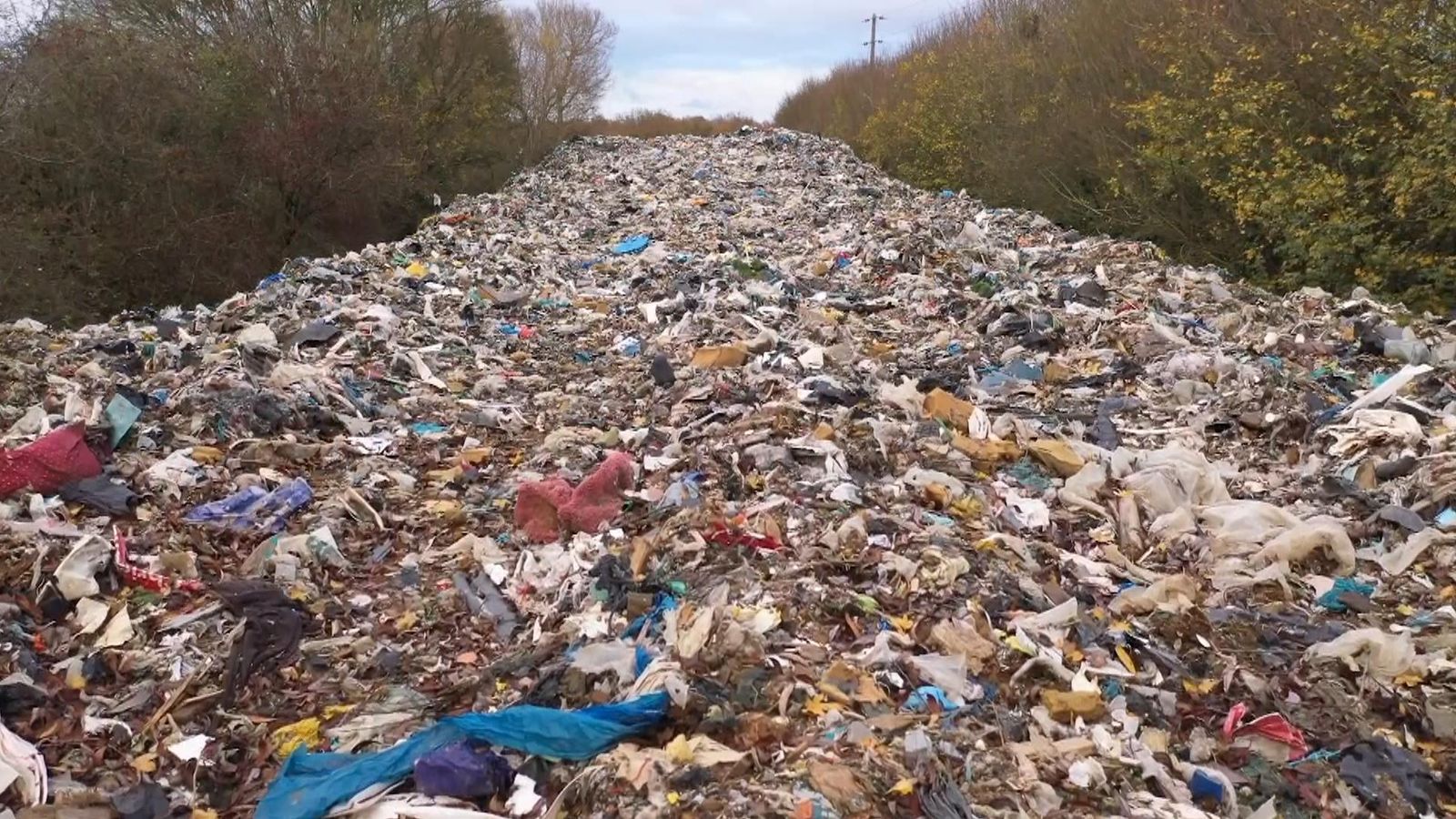
Our investigation into waste crime in Wigan heard from residents who repeatedly complained to the Environment Agency that 20 to 30 lorries a day drove down their street last winter and dumped industrial amounts of waste.

The rubbish now sits at a staggering 25,000 tonnes. It burnt for nine days in July, and has seen local homes infested with rats and flies.

Since then, a similarly sized site in Kidlington near the River Cherwell in Oxfordshire sparked national outrage. One man has been arrested in connection with the dumping.

Please use Chrome browser for a more accessible video player

‘Epidemic’ of waste crime in Britain

Despite the scale of these two locations – which were well known to the Environment Agency – it neglected to name them when asked by the Lord’s Environment Committee’s inquiry into waste crime how many “significant” sites there were around the country.

Phil Davies and Steve Molyneux of the Environment Agency gave evidence on 17 September.

Just six sites were cited, but three more have been exposed in the past few weeks alone. These are Wigan, Kidlington and a mound of dumped waste in Wadborough.

Now, the Lords are worried there are more environmentally destructive locations the public aren’t aware of.

Read more:
A community plagued by 25,000 tonnes of illegal waste

Urgent action needed to stop fly-tipping by gangs, peers say

In a letter to the EA’s chair Alan Lovell and chief executive Philip Duffy, Baroness Sheehan, chair of the Environment and Climate Change Committee, said: “We are increasingly concerned that there may be other sites of a similarly large and environmentally damaging scale.”

She asked how much progress has been made to remove waste from the various sites, why restriction notices in places like Wigan weren’t served sooner – and for a full list of other sites of a similar size.

Baroness Sheehan also expressed her “disappointment” that these three new locations “were not deemed necessary to bring to the committee’s attention”, though she thanked journalists for “bringing these sites to the public attention”.

Please use Chrome browser for a more accessible video player

UK’s ‘biggest ecological disaster’

Her original report saw the Lords call for an independent “root and branch” inquiry into how waste crime is tackled. She said the crime, which costs the UK £1bn every year, has been “critically under-prioritised”.

Sky News has been investigating the scourge of waste crime all year, exposing how criminal gangs involved in drugs, weapons and people trafficking can make “millions” from illegally dumping waste.

In the summer, we tracked down a group of suspected organised fly-tippers who waved wads of cash on TikTok after dumping waste in the countryside.

It’s so lucrative, it was dubbed the “new narcotics” by a former head of the Environment Agency.

Continue Reading

UK

Starmer wants to lift half a million children out of poverty – but does his plan go far enough?

Published

on

By

Starmer wants to lift half a million children out of poverty - but does his plan go far enough?

A new long-awaited child poverty strategy is promising to lift half a million children out of poverty by the end of this parliament – but critics have branded it unambitious. 

The headline announcement in the government’s plan is the pledge to lift the two-child benefit cap, announced in Rachel Reeves’s budget last week.

It also includes:

• Providing upfront childcare support for parents on universal credit returning to work
• An £8m fund to end the placement of families in bed and breakfasts beyond a six-week limit
• Reforms to cut the cost of baby formula
• A new legal duty on councils to notify schools, health visitors, and GPs when a child is placed in temporary accommodation

Many of the measures have previously been announced.

Please use Chrome browser for a more accessible video player

Two-child cap ‘a real victory for the left’

The government also pointed to its plan in the budget to cut energy bills by £150 a year, and its previously promised £950m boost to a local authority housing fund, which it says will deliver 5,000 high-quality homes for better temporary accommodation.

Downing Street said the strategy would lift 550,000 children out of poverty by 2030, saying that would be the biggest reduction in a single parliament since records began.

More on Poverty

But charities had been hoping for a 10-year strategy and argue the plan lacks ambition.

A record 4.5 million children (about 31%) are living in poverty in the UK – 900,000 more since 2010/11, according to government figures.

Phillip Anderson, the Strategic Director for External Affairs at the National Children’s Bureau (NCB), told Sky News: “Abolishing the two-child limit is a hell of a centre piece, but beyond that it’s mainly a summary of previously announced policies and commitments.

“The really big thing for me is it misses the opportunity to talk about the longer term. It was supposed to be a 10-year strategy, we wanted to see real ambition and ideally legally binding targets for reducing poverty.

“The government itself says there will still be around four million children living in poverty after these measures and the strategy has very little to say to them.”

Please use Chrome browser for a more accessible video player

‘A budget for benefits street’

‘Budget for benefits street’ row

The biggest measure in the strategy is the plan to lift the two-child benefit cap from April. This is estimated to lift 450,000 children out of poverty by 2030, at a cost of £3bn.

The government has long been under pressure from backbench Labour MPs to scrap the cap, with most experts arguing that it is the quickest, most cost-effective way to drive-down poverty this parliament.

The cap, introduced by Conservative chancellor George Osborne in 2017, means parents can only claim universal credit or tax credits for their first two children. It meant the average affected household losing £4,300 per year, the Institute for Fiscal Studies calculated in 2024.

The government argues that a failure to tackle child poverty holds back the economy, and young people at school, cutting their employment and earning prospects in later life.

However, the Conservatives argue parents on benefits should have to make the same financial choices about children as everyone else.

Shadow chancellor Mel Stride said: “Work is the best way out poverty but since this government took office, unemployment has risen every single month and this budget for Benefits Street will only make the situation worse. “
Please use Chrome browser for a more accessible video player

OBR leak: This has happened before

‘Bring back Sure Start’

Lord Bird, a crossbench peer who founded the Big Issue and grew up in poverty, said while he supported the lifting of the cap there needed to be “more joined up thinking” across government for a longer-term strategy.

He has been pushing for the creation of a government ministry of “poverty prevention and cure”, and for legally binding targets on child poverty.

“You have to be able to measure yourself, you can’t have the government marking its own homework,” he told Sky News.

Lord Bird also said he was a “great believer” in resurrecting Sure Start centres and expanding them beyond early years.

The New Labour programme offered support services for pre-school children and their parents and is widely seen to have improved health and educational outcomes. By its peak in 2009-2010 there were 3,600 centres – the majority of which closed following cuts by the subsequent Conservative government.
Please use Chrome browser for a more accessible video player

Lord Bird on the ‘great distraction’ from child poverty

PM to meet families

Sir Keir Starmer’s government have since announced 1,000 Best Start Family Hubs – but many Labour MPs feel this announcement went under the radar and ministers missed a trick in not calling them “Sure Starts” as it is a name people are familiar with.

The prime minister is expected to meet families and children in Wales on Friday, alongside the Welsh First Minister, to make the case for his strategy and meet those he hopes will benefit from it.

Several other charities have urged ministers to go further. Both Crisis and Shelter called for the government to unfreeze housing benefit and build more social rent homes, while the Children’s Commissioner for England, Dame Rachel de Souza, said that “if we are to end child poverty – not just reduce it” measures like free bus travel for school-age children would be needed.

The strategy comes after the government set up a child poverty taskforce in July 2024, which was initially due to report back in May. The taskforce’s findings have not yet been published – only the government’s response.

Sir Keir said: “Too many children are growing up in poverty, held back from getting on in life, and too many families are struggling without the basics: a secure home, warm meals and the support they need to make ends meet.

“I will not stand by and watch that happen, because the cost of doing nothing is too high for children, for families and for Britain.”

Continue Reading

Trending