
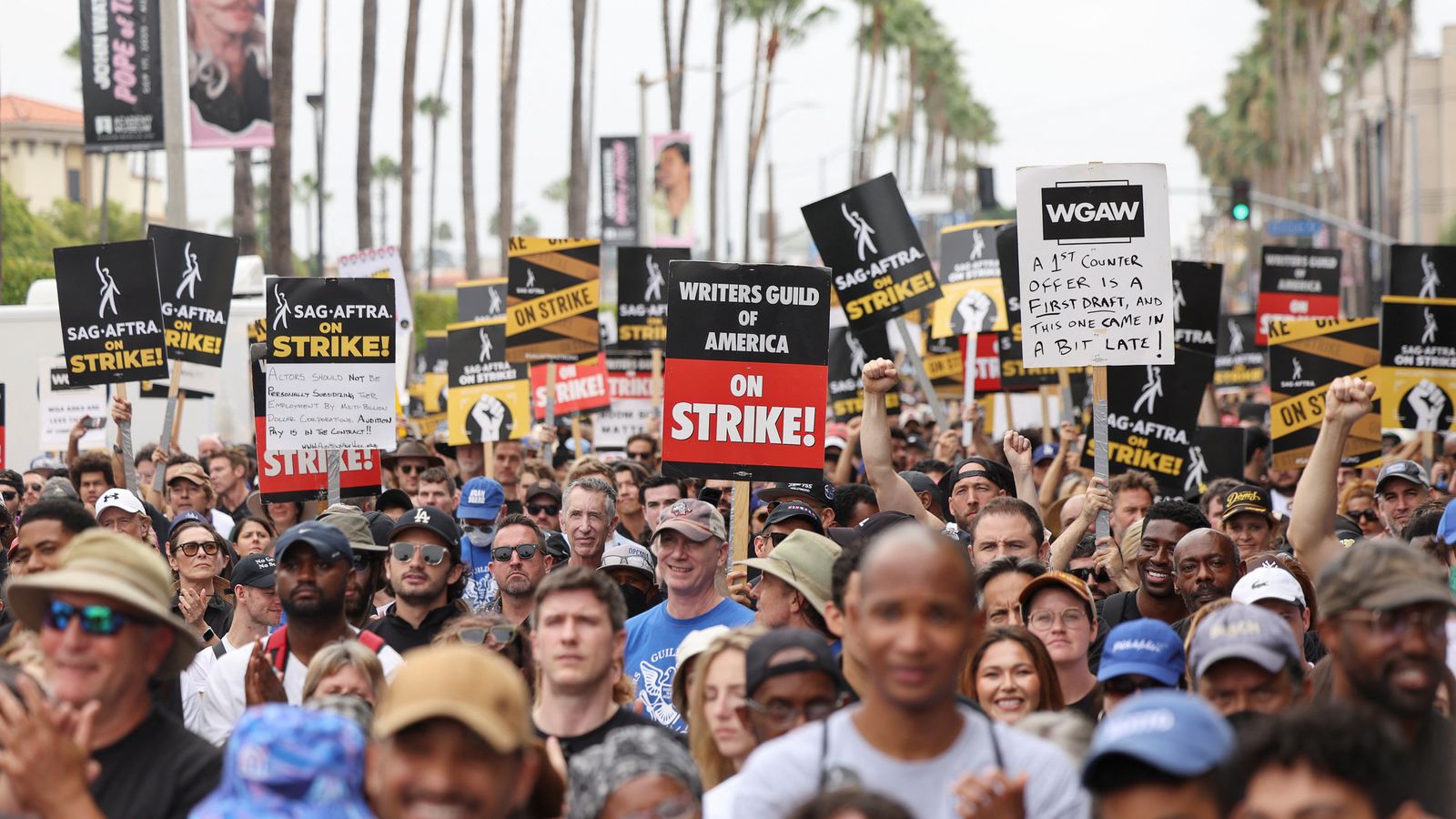
Writers’ strike: UK film and TV workers forced to put homes up for sale due to US action

Out of work British film and TV crew members are being forced to put their homes up for sale as a result of the knock-on effects of striking writers and actors in the US.
Philippa Childs, the head of entertainment union BECTU, said some people are considering changing career.
“I’ve had people saying to me they’re having to sell their house, their cars, we had one of our representatives the other day say she was going to leave the profession because she’d had enough,” she said.
As a result of more than two months of A-lister industrial action, some of the UK’s busiest sound stages are now more like ghost towns.
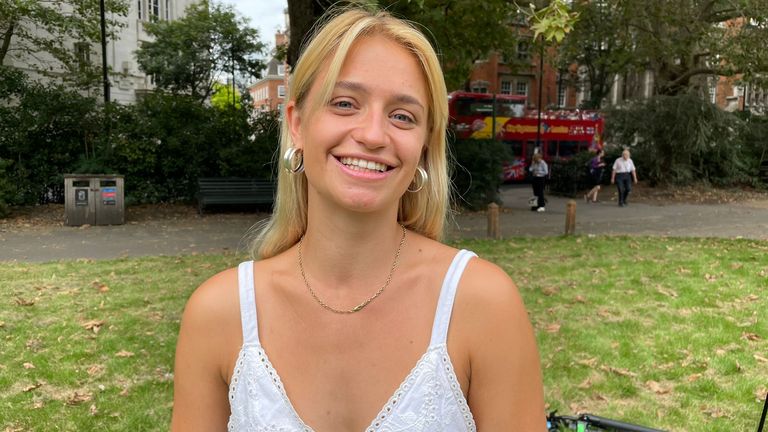
Elle Moore, 24, an experienced production assistant, has struggled to book any jobs.
“I’ve basically gone from two years of work, to on-off work for summer, to in the last six weeks no work at all. There’s just no work to apply for.”
Read more on Hollywood strikes:
Drew Barrymore dropped as awards host for filming talk show despite strikes
How much of a threat is AI?
Production assistant Elle Moore
With more than two-thirds of the UK’s total film spend coming from the US, the impact of striking Hollywood writers and actors – taking on the studios over issues including AI and repeat residuals – has been severe.
Graham Webb, managing director of construction specialist 4Wood, said: “It’s absolutely brought large parts of the industry to a grinding halt and straight after COVID, that’s difficult.”
Specialists in high-end TV and film, they have relied on theatre and live events to make up for lost work.
Side hustles like providing set storage are a vital revenue stream.
“When it goes quiet and people are fighting for less and less work in the marketplace, that’s unsettling for everyone,” Mr Webb added.

Graham Webb, managing director of construction specialist 4Wood
Fewer projects mean fierce competition to book jobs on British projects that can still shoot and some workers are reporting certain production companies are taking advantage of the situation to undercut established pay rates.
Ms Childs of BECTU added: “The industry shouldn’t be exploiting the situation and they should be paying rates people deserve.”
More than 30,000 people have signed a petition urging the government to consider a furlough-type scheme for those who have been impacted severely because of the precarious nature of the contract work they do.
Ms Childs said: “Our message to the government is they need to put some mechanisms in place for when things are tough because otherwise they’re going to lose skills they desperately need.”
Read more:
Seth Rogen: Streamers and studios ‘hate each other’
Billy Porter says he will have to sell house
But the government has said it has no plans to introduce an income replacement scheme, steering freelancers instead to the help already available to delay tax payments to HMRC through its Time to Pay scheme.
Anecdotally, Sky News spoke to multiple highly skilled film and TV workers who said they were now taking temporary work as delivery drivers or in bars just to cover their mounting bills.
For the 100,000 people, employed directly and indirectly in British film, the uncertainty of how long the strikes will last is a terrifying prospect.
OpenAI has signed its first major licensing deal to bring well-known characters to life on its Sora video generation tool.
The company said the agreement with Walt Disney was part of a push to ensure the rights of creators in the generative artificial intelligence (AI) space amid growing concerns over copyright, fakes and misinformation.
It forms part of a $1bn Disney investment in OpenAI, that will see the entertainment firm roll out ChatGPT to its staff and grow its AI capabilities.
Money latest: Urgent warning over tumble dryers
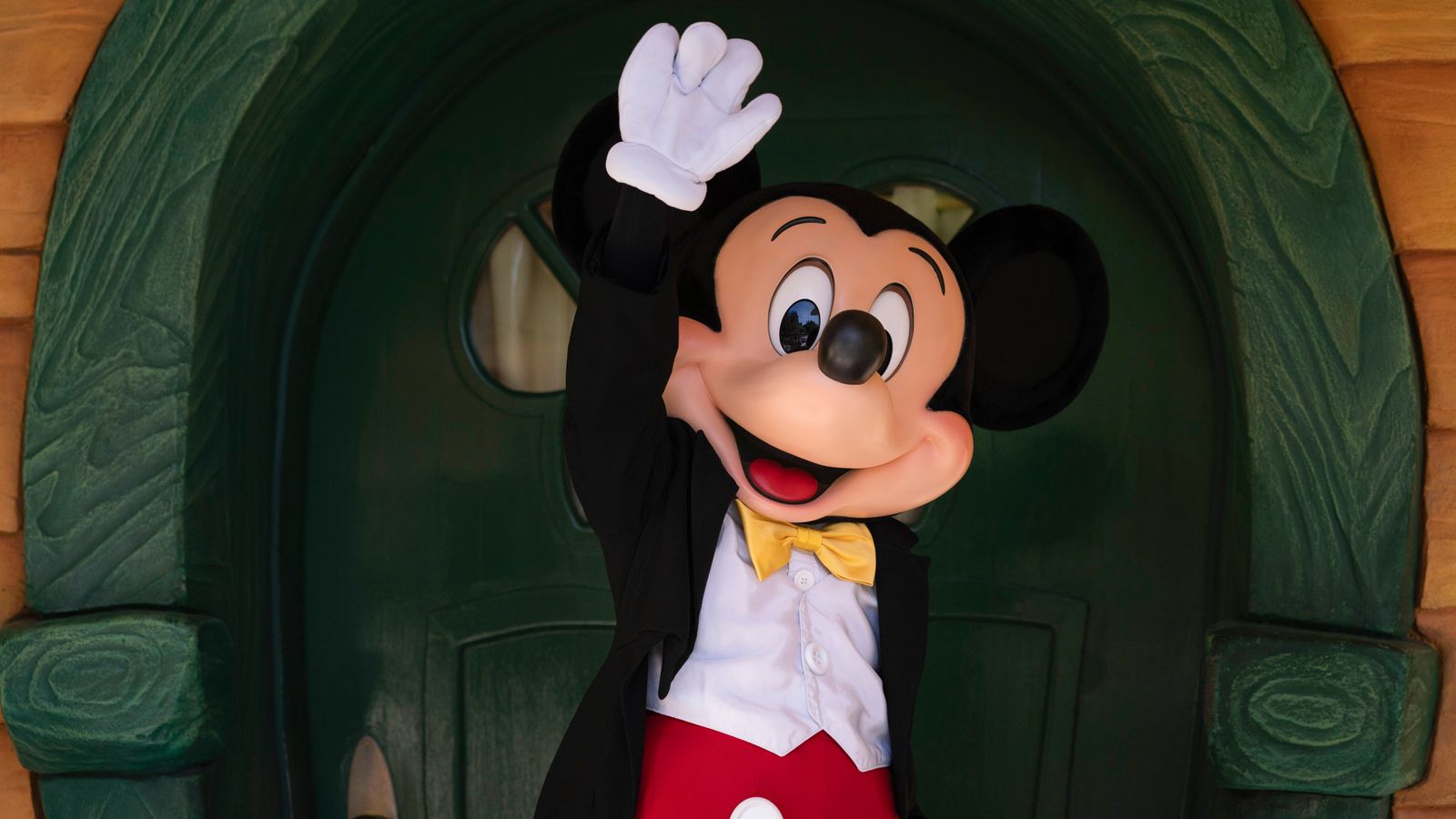
The initial three-year licensing deal will allow Sora users to generate and share videos based on more than 200 Disney, Marvel, Pixar and Star Wars characters.
These include Mickey Mouse, Cinderella and Luke Skywalker.
Sora allows people to quickly create realistic clips based merely on text prompts.
Why authors may be right to fear AI
Disney and OpenAI said they were committed to responsible use of AI amid the backlash from critics who have pointed to widespread misuse of generative AI in the social media space – a practice known as AI slop.
Some have depicted fake messages from celebrities and even used the dead.
OpenAI CEO Sam Altman said: “This agreement shows how AI companies and creative leaders can work together responsibly to promote innovation that benefits society, respect the importance of creativity, and help works reach vast new audiences.
His counterpart at Disney, Bob Iger, added that the partnership would “extend the reach of our storytelling through generative AI, while respecting and protecting creators and their works”.
As part of the deal, some user-generated Sora videos will be made available on the Disney+ streaming service.
Dan Coatsworth, head of markets at AJ Bell, said of the tie-up: “It’s a win-win situation for Disney and OpenAI. Disney gets to deploy its beloved brands in the world of AI while keeping control of the intellectual property.
“Fans can use Disney characters to make videos and take social media content to another level. That could drive significant traffic to OpenAI’s Sora social media platform, turning a relatively unknown entity into a household name in a flash.
“As part owner of the business, Disney will be able to use the equity stake in OpenAI to ensure its characters are used in a controlled environment.
“It’s a significant step forward for the concept of fan fiction”, he concluded.
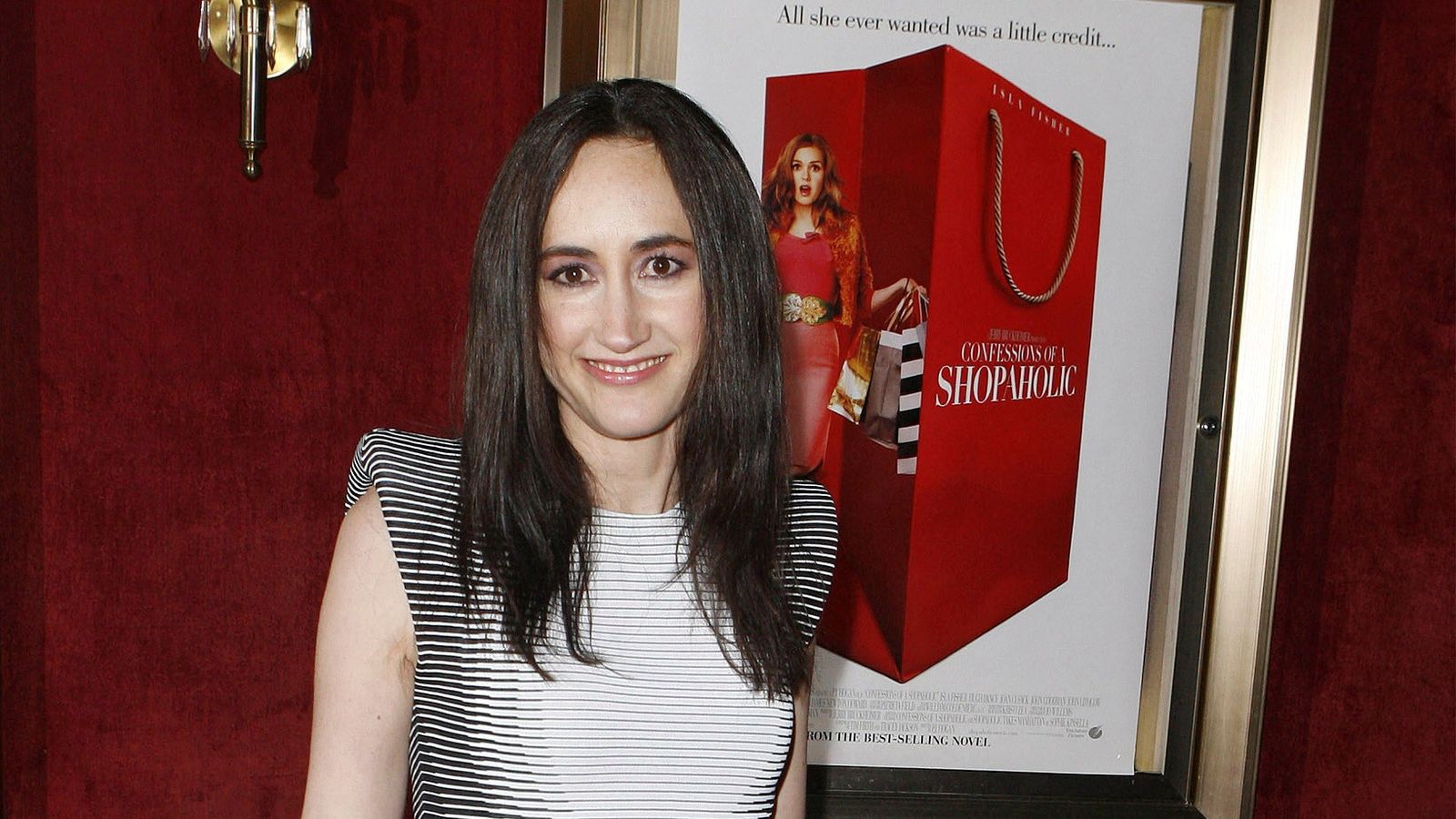

Sophie Kinsella, author of the Shopaholic series of novels, has been hailed as a “graceful” inspiration who left her readers feeling better about themselves, following her death at the age of 55.
The writer, whose real name was Madeleine Sophie Wickham, revealed last year she had been diagnosed with an aggressive form of brain cancer in 2022.
A statement posted to her Instagram account read: “We are heartbroken to announce the passing this morning of our beloved Sophie (aka Maddy, aka Mummy). She died peacefully, with her final days filled with her true loves: family and music and warmth and Christmas and joy.
“We can’t imagine what life will be like without her radiance and love of life.
“Despite her illness, which she bore with unimaginable courage, Sophie counted herself truly blessed – to have such wonderful family and friends, and to have had the extraordinary success of her writing career. She took nothing for granted and was forever grateful for the love she received.
“She will be missed so much our hearts are breaking.”
‘Made you feel better about yourself’
Kinsella’s novels have sold more than 45 million copies in more than 60 countries, and have been translated into more than 40 languages.
Speaking to The UK Tonight With Sarah-Jane Mee, fellow author Jojo Moyes, who was friends with Kinsella for decades, described her as a “graceful”, “kind” and “encouraging” mentor.
Those who knew her “will always be grateful to have had her in our lives”, she said.
Her characters “were flawed and messy, but they were also relatable, and you always finished a Sophie Kinsella book feeling better about yourself”.
“If the thing that you are remembered for is joy and grace and kindness, as well as your talent, what more can any of us ask?”
Jojo Moyes on the Sophie Kinsella she knew
In a post on social media last year, Kinsella revealed she had been receiving chemotherapy and radiotherapy at London‘s University College Hospital, and had undergone “successful” surgery.
She said she “wanted for a long time to share with you a health update, and I’ve been waiting for the strength to do so”.
“At the end of 2022 I was diagnosed with glioblastoma, a form of aggressive brain cancer,” she said.
“I did not share this before because I wanted to make sure that my children were able to hear and process the news in privacy and adapt to our ‘new normal’.
“At the moment all is stable and I am feeling generally very well, though I get very tired and my memory is even worse than it was before!
“I am so grateful to my family and close friends who have been an incredible support to me, and to the wonderful doctors and nurses who have treated me.”
Kinsella’s most recent book is What Does it Feel Like?, published in October 2024 and which “is fiction, but it is my most autobiographical work to date”, the author wrote on her website.
Other books by the London-born author include The Burnout, released in October 2023, Can You Keep A Secret? and The Undomestic Goddess.
The first two novels in her hit eight-book Shopaholic series, The Secret Dreamworld Of A Shopaholic and Shopaholic Abroad, were adapted into the 2009 film Confessions Of A Shopaholic, starring Isla Fisher.
She is survived by her children, four sons and a daughter, and her husband Henry Wickham.
Read more:
‘Unacceptable’ prostate ads banned
David Cameron treated for prostate cancer
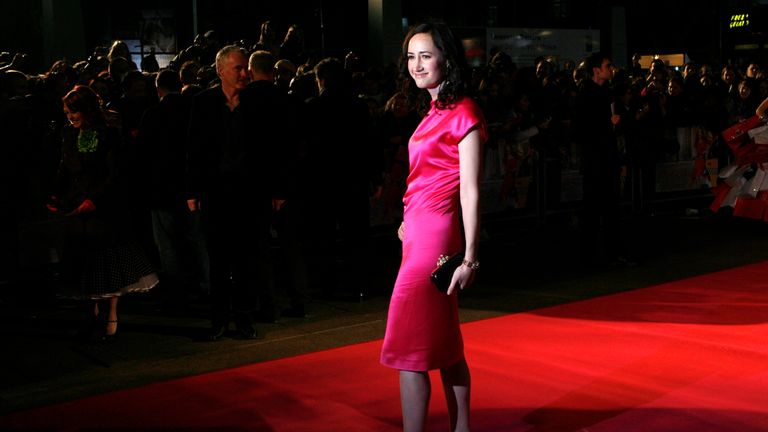
Kinsella at the premiere of the Confessions of a Shopaholic film adaption in 2009. Pic: Reuters
Bill Scott-Kerr, publisher at Transworld, the publishing home of Kinsella for the past 30 years, said: “She has been such an unshakeable pillar of our publishing at Transworld for so many years that the thought of a year without a Sophie Kinsella to publish is inconceivable.”
He added: “Maddy leaves behind a glorious and indelible legacy: a unique voice, an unquenchable spirit, a goodness of intent and a body of work that will continue to inspire us to reach higher and be better, just like so many of her characters.
“On a personal level Maddy was the embodiment of joy, an extraordinarily clever, funny, sassy, impish, kind and generous collaborator who brought light into our lives. She was as part of this company as anyone, and we will all truly miss her.”
Entertainment
Live music venues warn of ‘devastating consequences’ of budget tax changes in letter to Sir Keir Starmer

Tax changes announced in the budget could have “devastating, unintended consequences” on live music venues, including widespread closures and job losses, trade bodies have warned.
The bodies, representing nearly 1,000 live music venues, including grassroots sites as well as arenas such as the OVO Wembley Arena, The O2, and Co-op Live, are calling for an urgent rethink on the chancellor’s changes to the business rates system.
If not, they warn that hundreds of venues could close, ticket prices could increase, and thousands could lose their jobs across the country.
Politics latest: Ex-Olympic swimmer nominated for peerages
Business rates, which are a tax on commercial properties in England and Wales, are calculated through a complex formula of the value of the property, assessed by a government agency every three years. That is then combined with a national “multiplier” set by the Treasury, giving a final cash amount.
The chancellor declared in her budget speech that although she is removing the business rates discount for small hospitality businesses, they would benefit from “permanently lower tax rates”. The burden, she said, would instead be shifted onto large companies with big spaces, such as Amazon.
But both small and large companies have seen the assessed values of their properties shoot up, which more than wipes out any discount on the tax rate for small businesses, and will see the bills of arena spaces increase dramatically.
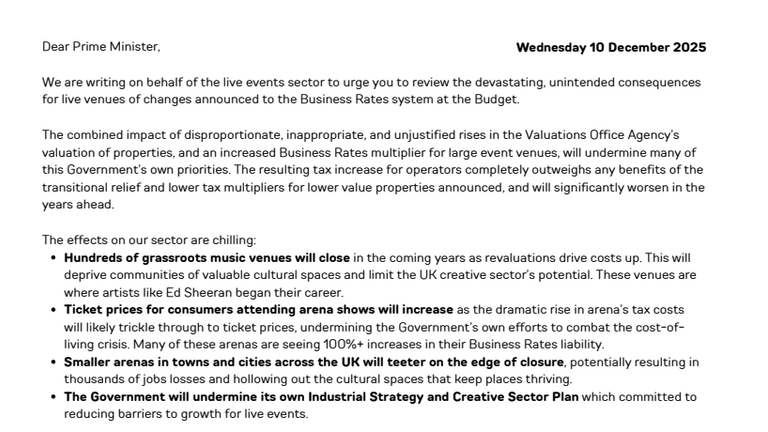
In the letter, coordinated by Live, the trade bodies write that the effect of Rachel Reeves’s changes are “chilling”, saying: “Hundreds of grassroots music venues will close in the coming years as revaluations drive costs up. This will deprive communities of valuable cultural spaces and limit the UK creative sector’s potential. These venues are where artists like Ed Sheeran began their career.
“Ticket prices for consumers attending arena shows will increase as the dramatic rise in arena’s tax costs will likely trickle through to ticket prices, undermining the government’s own efforts to combat the cost of living crisis. Many of these arenas are seeing 100%+ increases in their business rates liability.
“Smaller arenas in towns and cities across the UK will teeter on the edge of closure, potentially resulting in thousands of jobs losses and hollowing out the cultural spaces that keep places thriving.”
The full letter from trade bodies to the prime minister.
They go on to warn that the government will “undermine its own Industrial Strategy and Creative Sector Plan which committed to reducing barriers to growth for live events”, and will also reduce spending in hotels, bars, restaurants and other high street businesses across the country.
To mitigate the impact of the tax changes, they are calling for an immediate 40% discount on business rates for live venues, in line with film studios, as well as “fundamental reform” to the system used to value commercial properties in the UK, and a “rapid inquiry” into how events spaces are valued.
Sky’s Jess Sharp explains how the budget could impact your money
In response, a Treasury spokesperson told Sky News: “With Covid support ending and valuations rising, some music venues may face higher costs – so we have stepped in to cap bills with a £4.3bn support package and by keeping corporation tax at 25% – the lowest rate in the G7.
“For the music sector, we are also relaxing temporary admission rules to cut the cost of bringing in equipment for gigs, providing 40% orchestra tax relief for live concerts, and investing up to £10m to support venues and live music.”
But Conservative shadow business secretary Andrew Griffith told Sky News: “The government has failed to deliver the reform to business rates they promised, and need to change course before more jobs and venues are lost forever.”
The warning from the live music industry comes after small retail, hospitality and leisure businesses warned of the potential for widespread closures due to the changes to the business rates system.
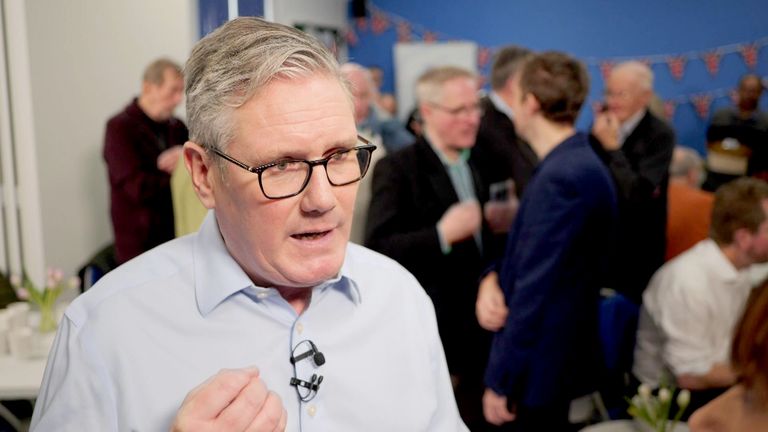
Sky’s political editor Beth Rigby challenged Prime Minister Sir Keir Starmer on the tax rises in the budget.
Sky News reported after the budget that the increase in business rates over the next three years following vast increases in the assessed values of commercial properties has left small retail, hospitality and leisure businesses questioning whether their businesses will be viable beyond April next year.
Analysis by UK Hospitality, the trade body that represents hospitality businesses, has found that over the next three years, the average pub will pay an extra £12,900 in business rates, even with the transitional arrangements, while an average hotel will see its bill soar by £205,200.
Read more: Hospitality pleads for ‘lifeline’
A Treasury spokesperson said their cap for small businesses will see “a typical independent pub pay around £4,800 less next year than they otherwise would have”.
“This comes on top of cutting licensing costs to help more venues offer pavement drinks and al fresco dining, maintaining our cut to alcohol duty on draught pints, and capping corporation tax,” they added.
-
 Sports2 years ago
Story injured on diving stop, exits Red Sox game
-
 Sports3 years ago
‘Storybook stuff’: Inside the night Bryce Harper sent the Phillies to the World Series
-
 Sports2 years ago
Game 1 of WS least-watched in recorded history
-
 Sports3 years ago
Button battles heat exhaustion in NASCAR debut
-
 Sports3 years ago
MLB Rank 2023: Ranking baseball’s top 100 players
-
Sports4 years ago
Team Europe easily wins 4th straight Laver Cup
-
 Environment3 years ago
Japan and South Korea have a lot at stake in a free and open South China Sea
-
 Environment1 year ago
Here are the best electric bikes you can buy at every price level in October 2024